

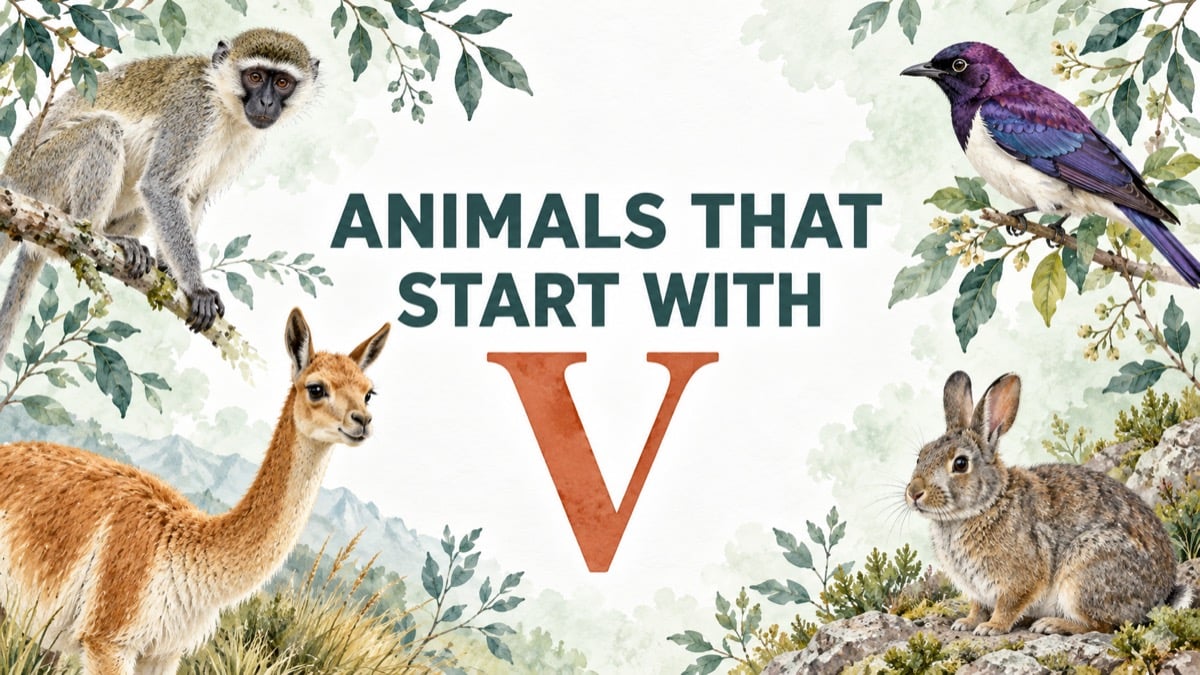
From the smallest porpoise to birds with brilliant purple feathers, animals that start with V have plenty of surprises in store. Some names, like vampire bat and volcano rabbit, hint at unusual habits or habitats. Others belong to animals you might spot along a beach or in your own backyard.
This list brings together 42 animals from forests, grasslands, mountains and oceans. Take a closer look at familiar favorites and less well-known species, with a picture and facts about each animal’s habitat, size and diet.
List of Animals
Here are 42 animals that start with the letter V.
Click an animal name to jump to its full description, image, and more below.
| Animal | Type | Region |
|---|---|---|
| Vampire Bat | Mammal | Mexico, Central and South America |
| Vampire Ground Finch | Bird | Darwin and Wolf islands, Galápagos |
| Vampire Squid | Cephalopod | Temperate and tropical oceans |
| Vaquita | Mammal | Northern Gulf of California, Mexico |
| Variable Hawk | Bird | South America |
| Variable Oystercatcher | Bird | New Zealand |
| Variable Sunbird | Bird | Sub-Saharan Africa |
| Varied Bunting | Bird | Southwestern United States, Mexico and northern Central America |
| Varied Lorikeet | Bird | Northern Australia |
| Varied Sittella | Bird | Australia |
| Varied Thrush | Bird | Western North America |
| Varied Tit | Bird | East Asia, including Japan and Korea |
| Variegated Fairy-wren | Bird | Eastern Australia |
| Variegated Squirrel | Mammal | Southern Mexico to Panama |
| Vasa Parrot | Bird | Madagascar and the Comoros |
| Vaux’s Swift | Bird | Western North America and Central America |
| Veery | Bird | North and South America |
| Velvet Asity | Bird | Madagascar |
| Velvet Scoter | Bird | Europe and Asia |
| Velvet Worm | Invertebrate | Tropical and southern temperate regions |
| Venezuelan Red Howler | Mammal | Northern South America |
| Venezuelan Troupial | Bird | Northern South America |
| Vermilion Flycatcher | Bird | Southwestern North America, Central and South America |
| Verreaux’s Eagle | Bird | Africa |
| Verreaux’s Eagle-Owl | Bird | Sub-Saharan Africa |
| Verreaux’s Sifaka | Mammal | Western and southwestern Madagascar |
| Vervet Monkey | Mammal | Eastern and southern Africa |
| Vesper Sparrow | Bird | North America |
| Vicuña | Mammal | Andes of South America |
| Violet Turaco | Bird | West Africa |
| Violet-backed Starling | Bird | Sub-Saharan Africa |
| Violet-crowned Hummingbird | Bird | Southwestern United States and Mexico |
| Violet-green Swallow | Bird | Western North America and Central America |
| Viperine Water Snake | Reptile | Southwestern Europe and northwestern Africa |
| Virginia Opossum | Mammal | North and Central America |
| Virginia Rail | Bird | North America |
| Visayan Hornbill | Bird | Central Philippines |
| Visayan Spotted Deer | Mammal | Panay and Negros, Philippines |
| Visayan Warty Pig | Mammal | Panay and Negros, Philippines |
| Vlamingii Tang | Fish | Tropical Indian and Pacific oceans |
| Volcano Rabbit | Mammal | Mountains of central Mexico |
| Vulturine Guineafowl | Bird | Eastern Africa |
1. Vampire Bat
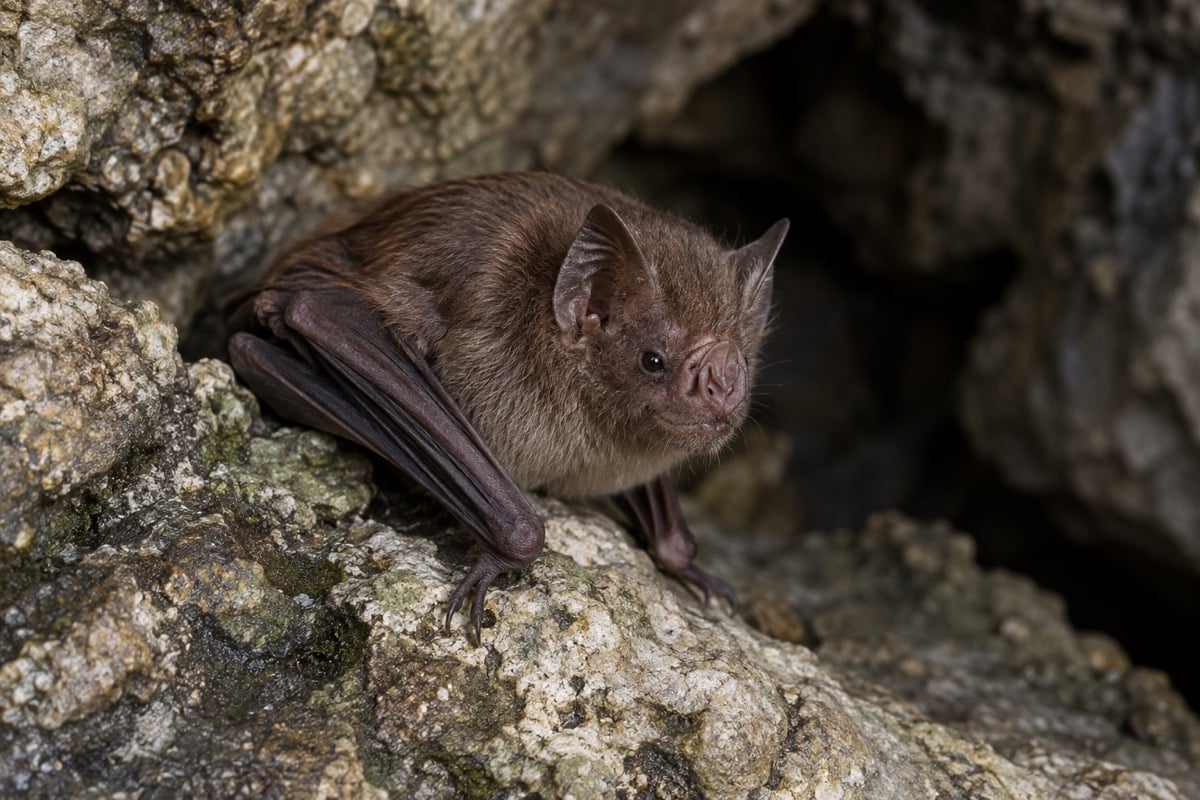
- Scientific Name: Desmodus rotundus
- Habitat: Warm forests and open country; roosts in caves, hollow trees and sheltered structures
- Size: Body 7–9 cm (2.8–3.5 in); wingspan 35–40 cm (14–16 in)
- Diet: Blood, mainly from mammals
A vampire bat does not suck blood through its teeth. It makes a small cut with sharp incisors and laps up the blood, while substances in its saliva help keep the meal flowing. The common vampire bat is one of three bat species with this specialized diet. It is also unusually nimble on the ground, using strong hind legs and modified thumbs to move toward a host. Inside the roost, its social life is more cooperative than its name might suggest: females groom one another and sometimes share food with companions.
2. Vampire Ground Finch
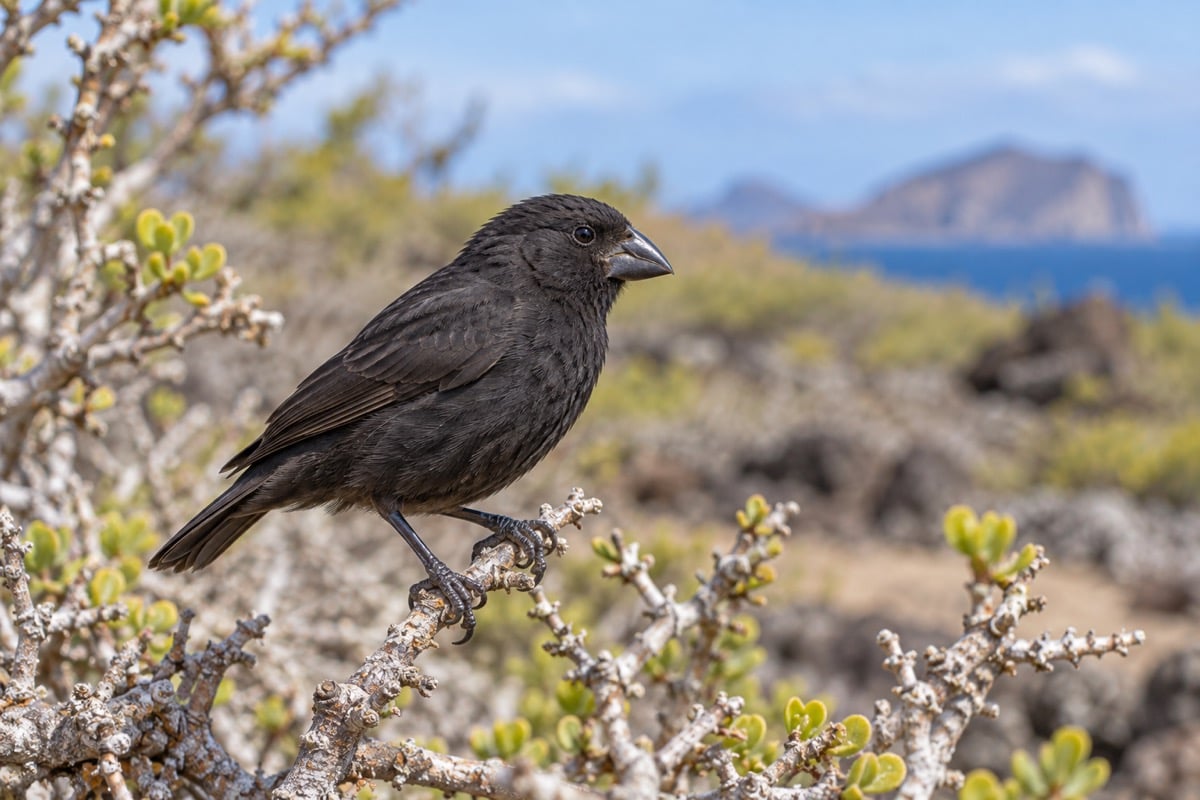
- Scientific Name: Geospiza septentrionalis
- Habitat: Dry scrub and rocky coastal areas
- Size: About 20–25 g (0.7–0.9 oz)
- Diet: Seeds, small invertebrates, and occasionally seabird blood or eggs
The vampire ground finch has a pointed bill and an unusual way of finding food on two remote islands. It sometimes pecks at a booby’s skin and drinks blood from the small wound. That behavior explains its memorable name, but blood is only part of its diet. Seeds and invertebrates are important too. Living on dry, isolated islands means making use of foods that become available as conditions change.
3. Vampire Squid
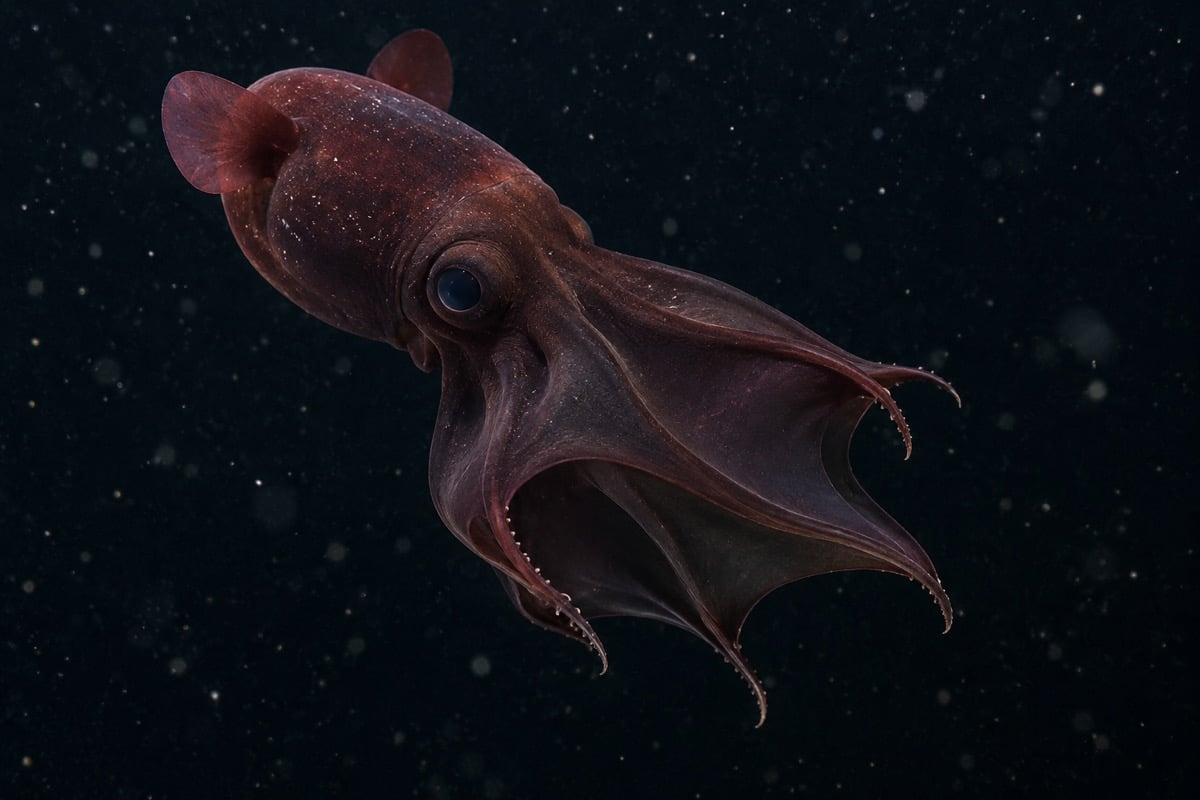
- Scientific Name: Vampyroteuthis infernalis
- Habitat: Deep ocean water, including oxygen-poor layers
- Size: Up to about 30 cm (12 in) long
- Diet: Drifting organic debris known as marine snow
The vampire squid has a dramatic name, but its feeding habits are much less frightening. It collects drifting organic material with long, fine filaments. This marine snow includes the remains and waste of other ocean organisms. A web joins its eight arms, giving them the appearance of a small cloak. Despite the name, it belongs to a distinct cephalopod lineage rather than the true squids. Its large eyes help it cope with the darkness of the deep sea; the bright blue appearance sometimes seen in footage comes from reflected light, not blue light produced by the eyes.
4. Vaquita
- Scientific Name: Phocoena sinus
- Habitat: Shallow coastal waters
- Size: About 1.2–1.5 m (4–5 ft) long
- Diet: Small fish, squid and crustaceans
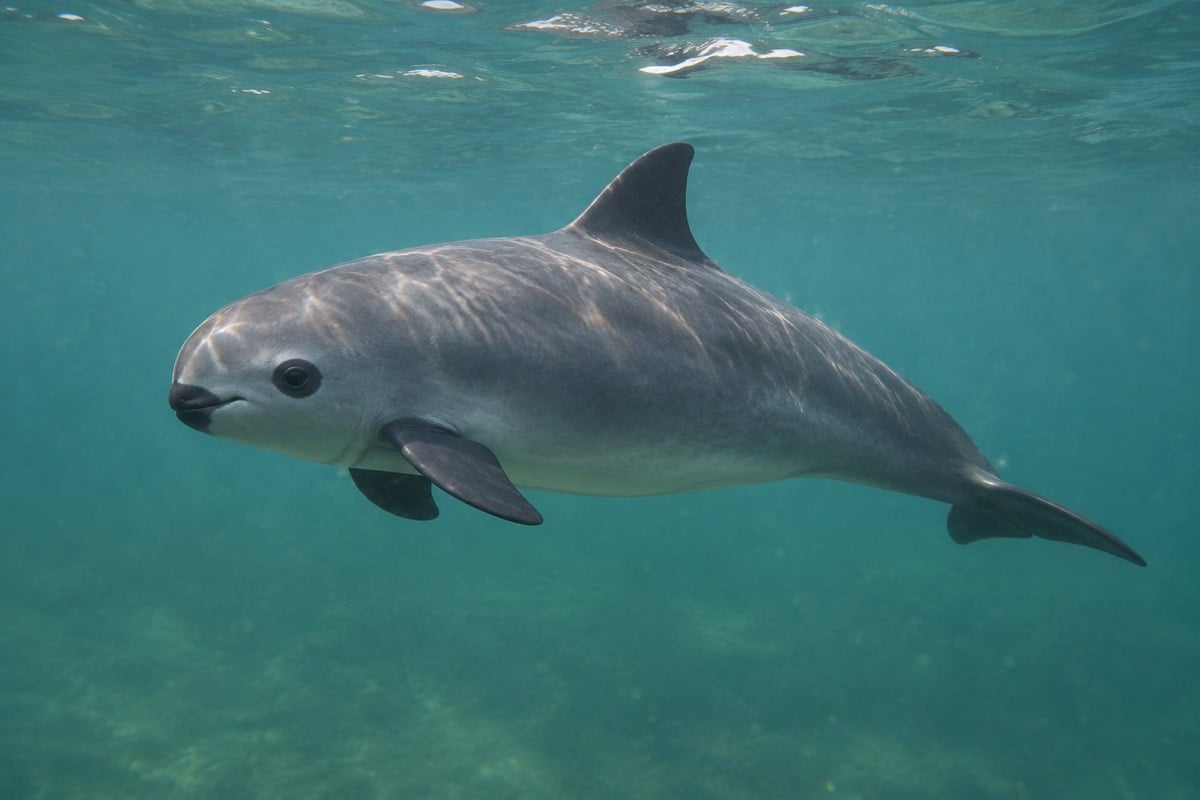
Dark patches around the eyes and lips make the vaquita recognizable among porpoises. It has a rounded head without the projecting beak seen in many dolphins, and a tall triangular dorsal fin. Usually encountered alone or in pairs, it is a small, elusive marine mammal. Its entire natural range lies in one part of Mexico’s Gulf of California. That restricted home makes accidental entanglement in fishing nets especially serious. A vaquita must surface to breathe, so becoming trapped underwater can be fatal. Protecting this species depends on preventing those encounters with gillnets.
5. Variable Hawk
- Scientific Name: Geranoaetus polyosoma
- Habitat: Open grassland, scrub, mountain slopes and coastal country
- Size: About 45–55 cm (18–22 in) long
- Diet: Mostly small mammals, with birds, reptiles and other prey
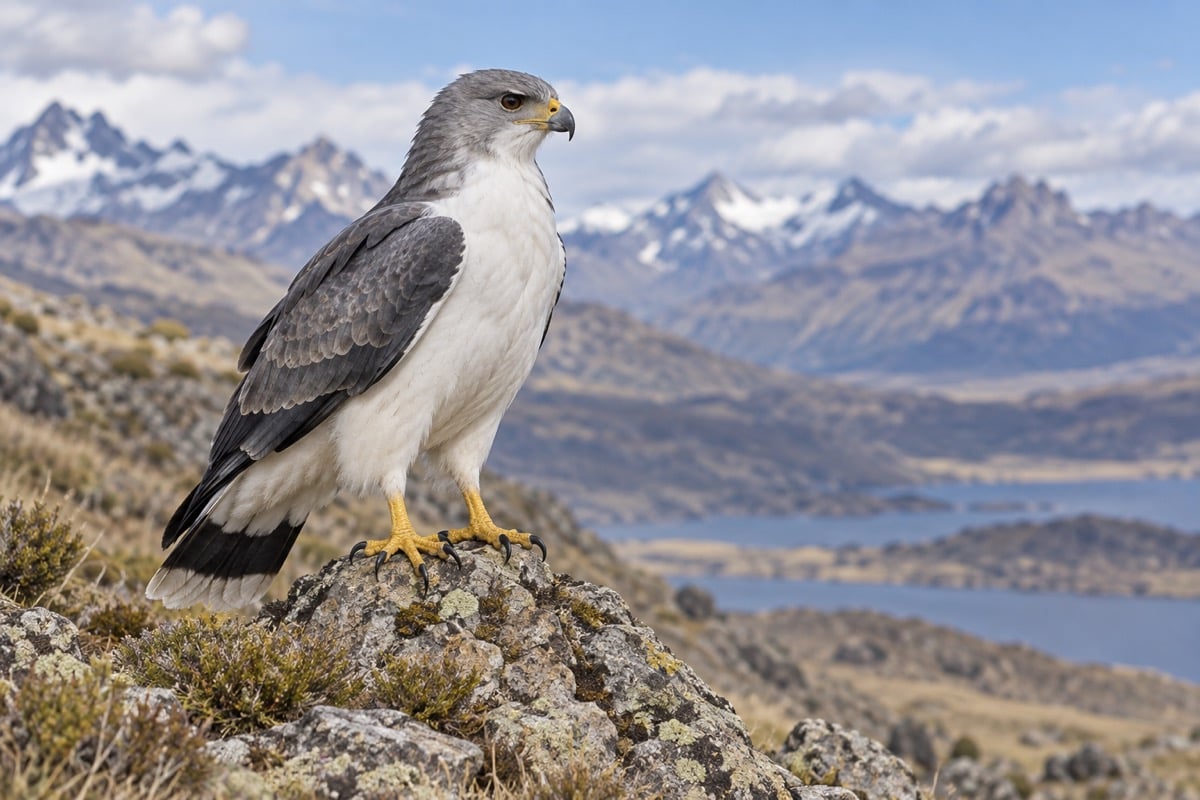
Variable hawks can look surprisingly different from one another. Some are mostly dark, while pale birds may have white underparts and gray upperparts. A pale tail crossed by a broad dark band is a useful clue on adults. These hawks watch from exposed perches or circle over open ground before dropping toward prey. Rodents make up much of their food, although the menu changes with the animals available in each habitat.
6. Variable Oystercatcher
- Scientific Name: Haematopus unicolor
- Habitat: Rocky shores, sandy beaches and coastal estuaries
- Size: About 48 cm (19 in) long
- Diet: Shellfish, worms and crustaceans
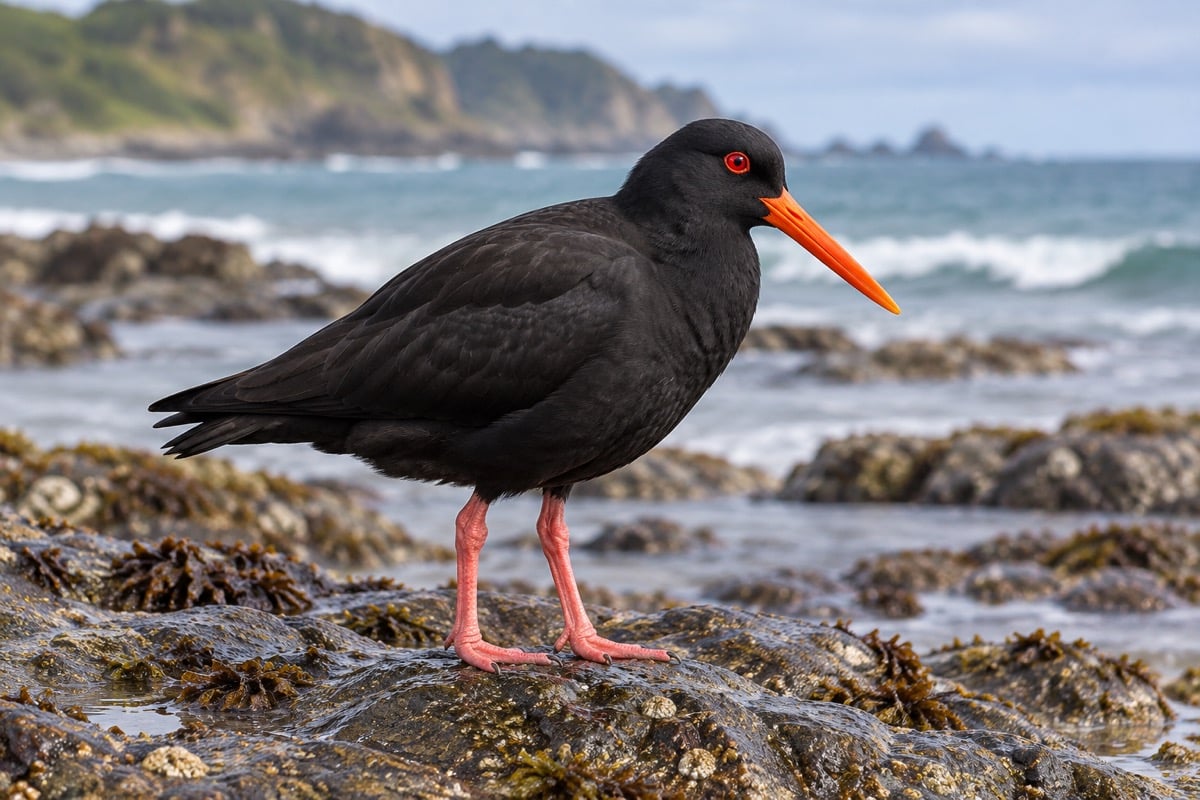
A variable oystercatcher may be entirely black or have a white belly, with many patterns between those extremes. Those birds belong to the same species and can breed together. All have a long orange bill, pink legs and a red ring around the eye. Along the shore, they probe for food or work at shellfish with their strong bills. Pairs nest on open ground near the coast, where eggs can blend into sand and stones.
7. Variable Sunbird
- Scientific Name: Cinnyris venustus
- Habitat: Woodland, scrub, gardens and cultivated areas
- Size: About 10 cm (4 in) long
- Diet: Nectar and small insects
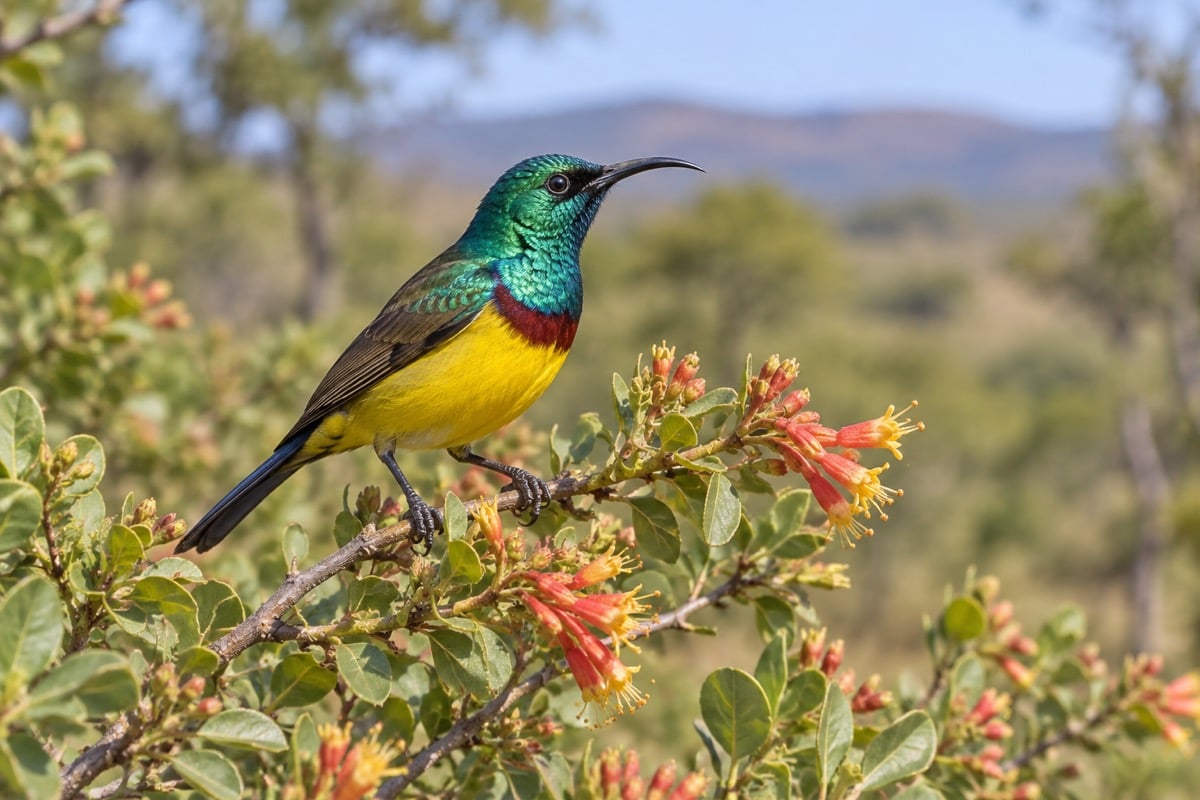
The variable sunbird is a tiny flower visitor with a slender, curved bill. Males have a glossy green head and throat, often above a reddish breast band and yellow belly; the belly color varies across its range. Females are much plainer. As a bird reaches into a flower for nectar, pollen may brush onto its head and later reach another bloom. Insects add another source of food to its largely nectar-based meals.
8. Varied Bunting
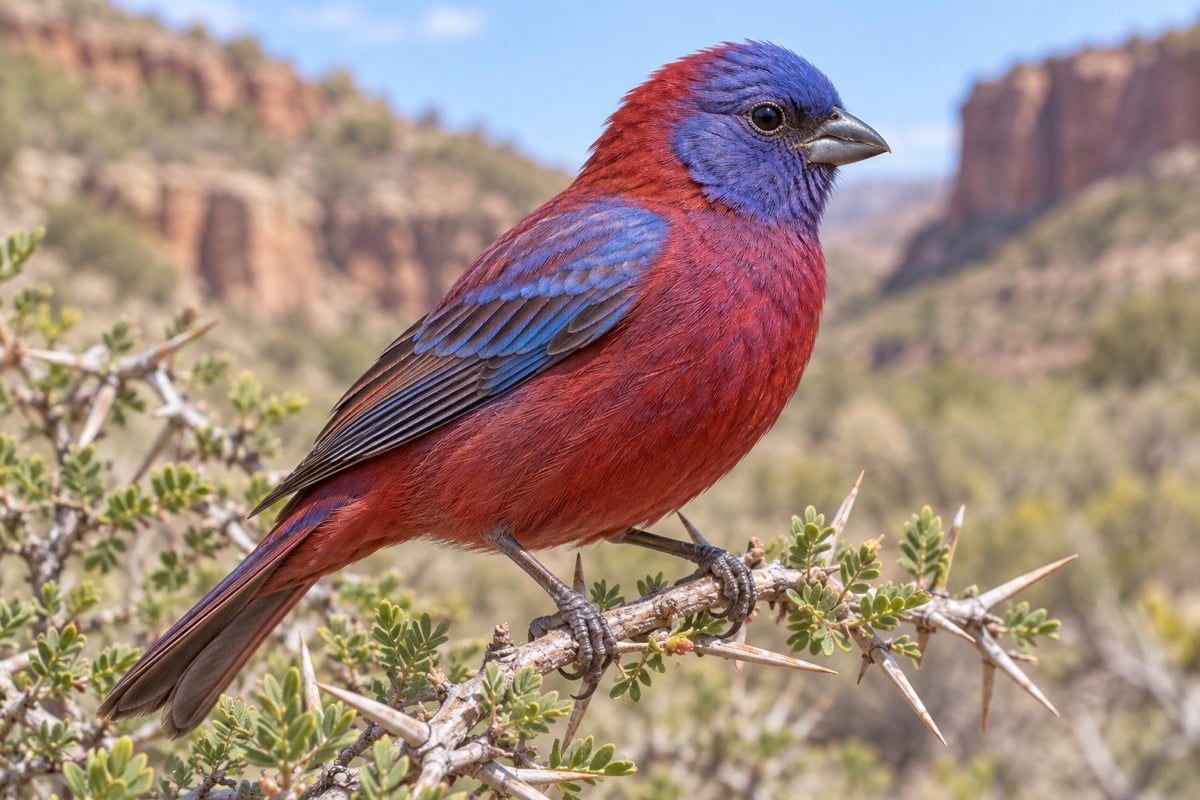
- Scientific Name: Passerina versicolor
- Habitat: Thorn scrub, dry canyons and brushy washes
- Size: About 11–14 cm (4.3–5.5 in) long
- Diet: Insects, seeds and fruit
A male varied bunting can appear dark until sunlight brings out its purple, red and blue feathers. Females wear a much simpler brown coat, which helps them disappear among dry branches. These small birds spend much of their time in dense, thorny vegetation, searching for seeds, fruit and insects. A singing male may climb to a more exposed perch, offering a brief look at colors that are easy to miss in the shade.
9. Varied Lorikeet
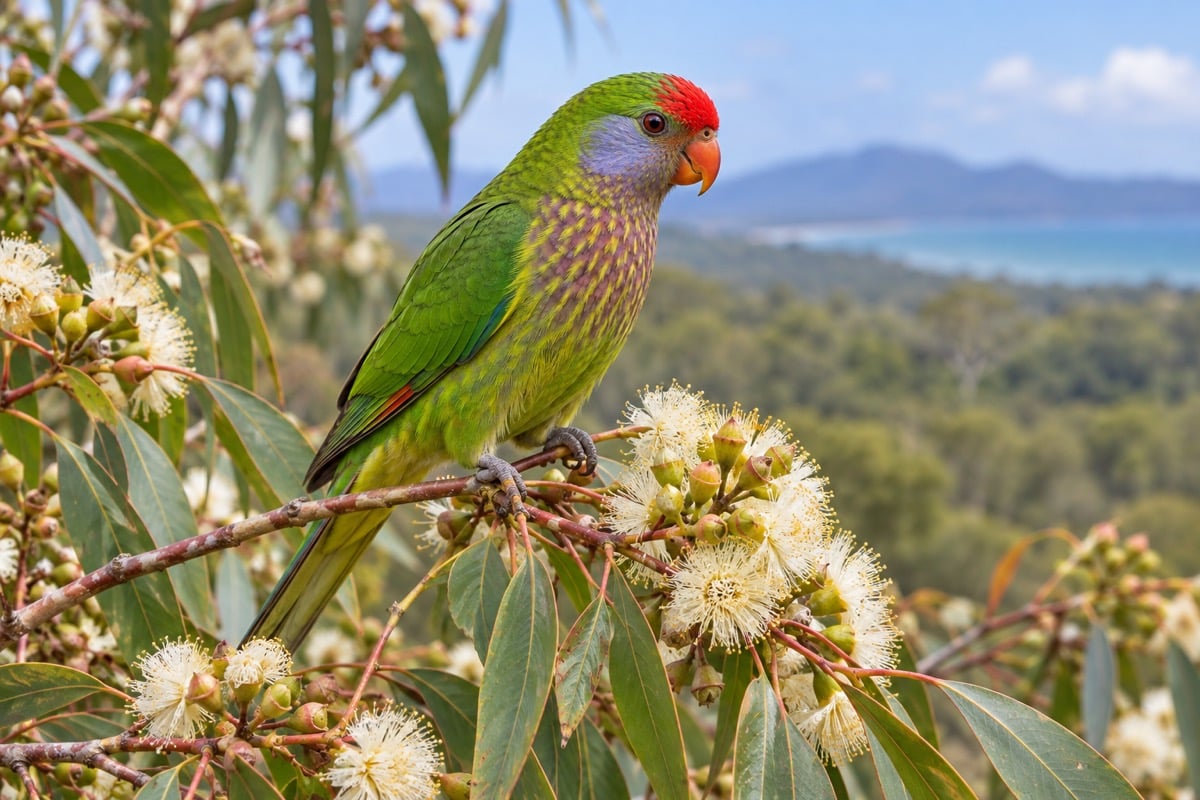
- Scientific Name: Psitteuteles versicolor
- Habitat: Eucalypt woodland, paperbark forest and wooded watercourses
- Size: About 19 cm (7.5 in) long
- Diet: Nectar and pollen
The varied lorikeet is a small green parrot with a red crown, pale eye ring and pinkish streaking across the breast. Flowering trees draw pairs and flocks into their branches, where the birds gather nectar and pollen. They can become quite noisy around a good food source. Rain offers a chance to bathe: a bird may rub its body against wet leaves. Hollow limbs and tree cavities provide sheltered places to nest.
10. Varied Sittella
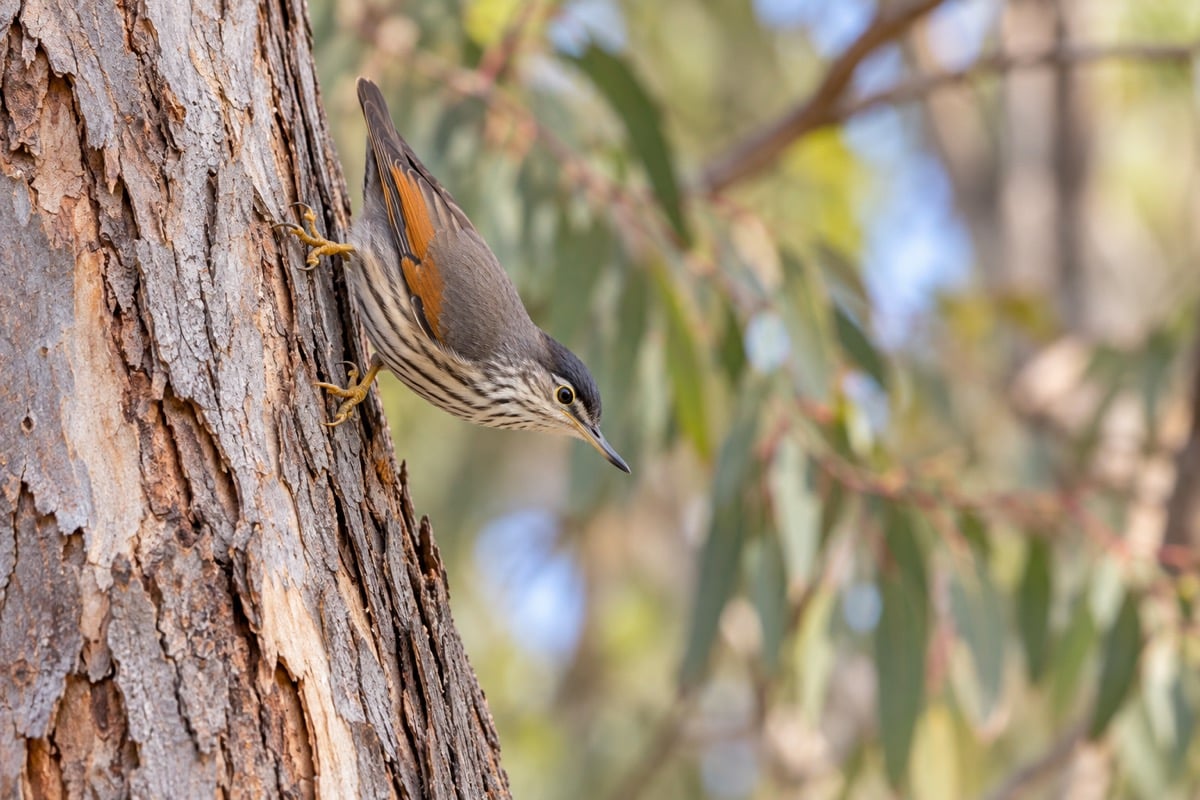
- Scientific Name: Daphoenositta chrysoptera
- Habitat: Eucalypt woodland and forest with mature, rough-barked trees
- Size: About 10–14 cm (4–5.5 in) long
- Diet: Insects and other small invertebrates
A varied sittella often works its way headfirst down a tree trunk, picking small prey from cracks in the bark. Its slender, slightly upturned bill helps it reach into narrow spaces. Small flocks move through woodland together, searching trunks and branches from different angles. Head colors differ across Australia, which helps explain the name. Breeding can be a group effort too, with several birds helping to feed the young at one nest.
11. Varied Thrush
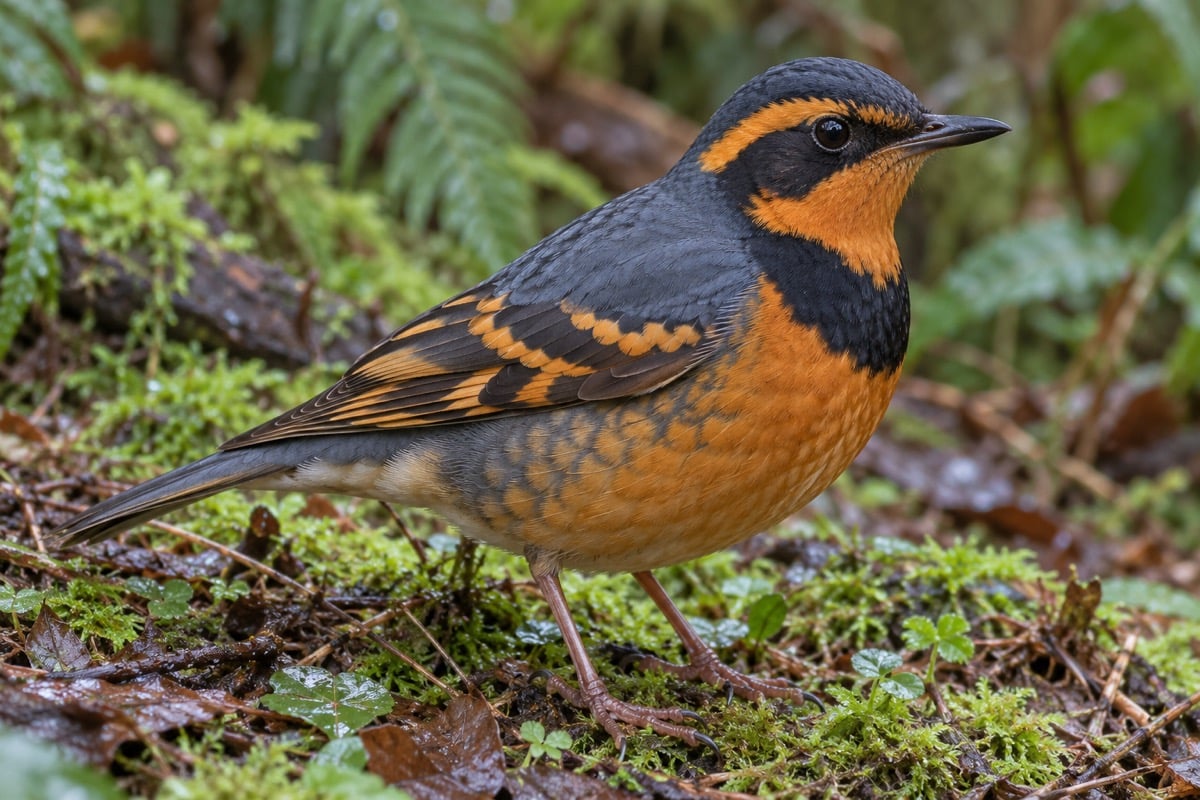
- Scientific Name: Ixoreus naevius
- Habitat: Damp evergreen and mixed forests
- Size: About 19–26 cm (7.5–10 in) long
- Diet: Insects and other invertebrates, fruit and nuts
An orange breast crossed by a dark band gives the varied thrush a distinctive appearance. Males also have slate-blue upperparts and an orange eyebrow, while females usually show softer colors. It spends much of its feeding time on the forest floor, hopping among leaves and moss. Its diet changes with the season, from many insects in summer to more fruit and nuts in winter. The male’s long, whistling notes can carry through a quiet forest.
12. Varied Tit
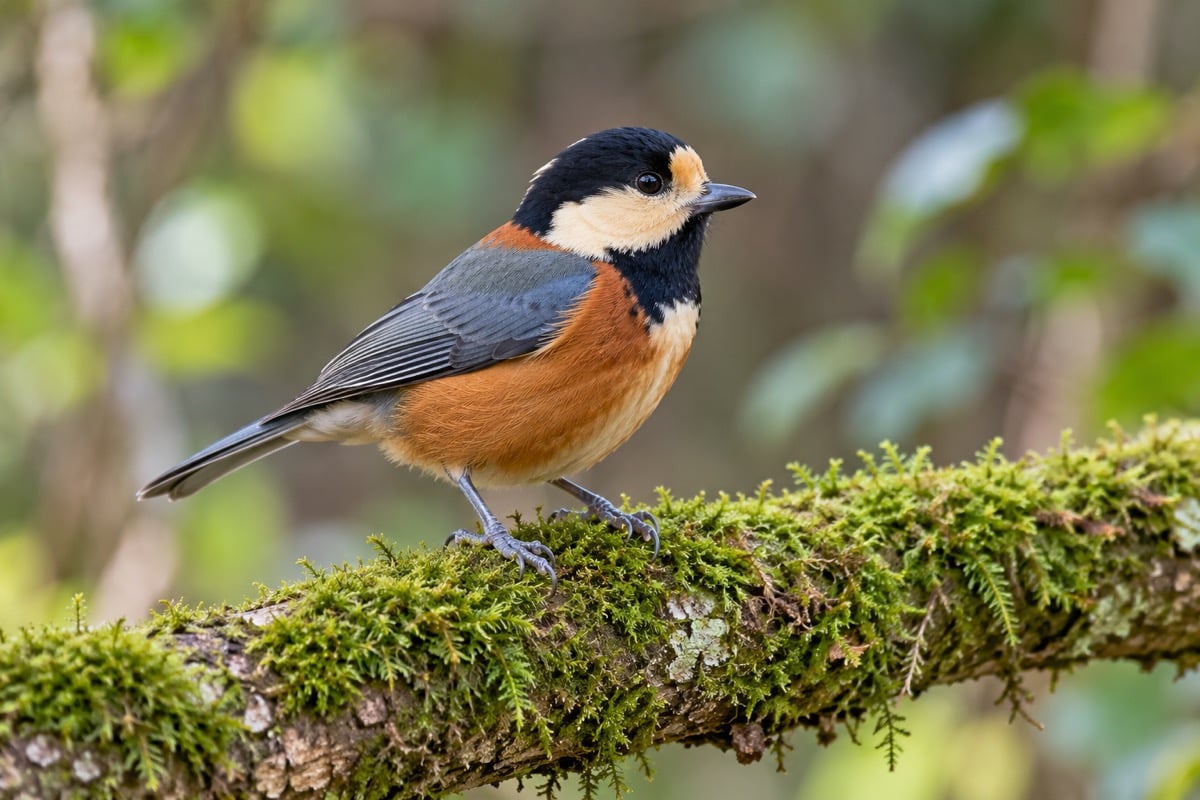
- Scientific Name: Sittiparus varius
- Habitat: Broadleaf woodland, especially evergreen forest
- Size: About 14 cm (5.5 in) long
- Diet: Insects, seeds and nuts
The varied tit has warm chestnut underparts, gray wings and a dark cap above pale cheeks. Its strong little bill is useful for opening seeds as well as picking up insects. A bird may hold an acorn with its feet while pecking into it. Some food is tucked into crevices or buried for later, making storage an important part of its routine. Tree holes, including old woodpecker cavities, offer places to nest.
13. Variegated Fairy-wren
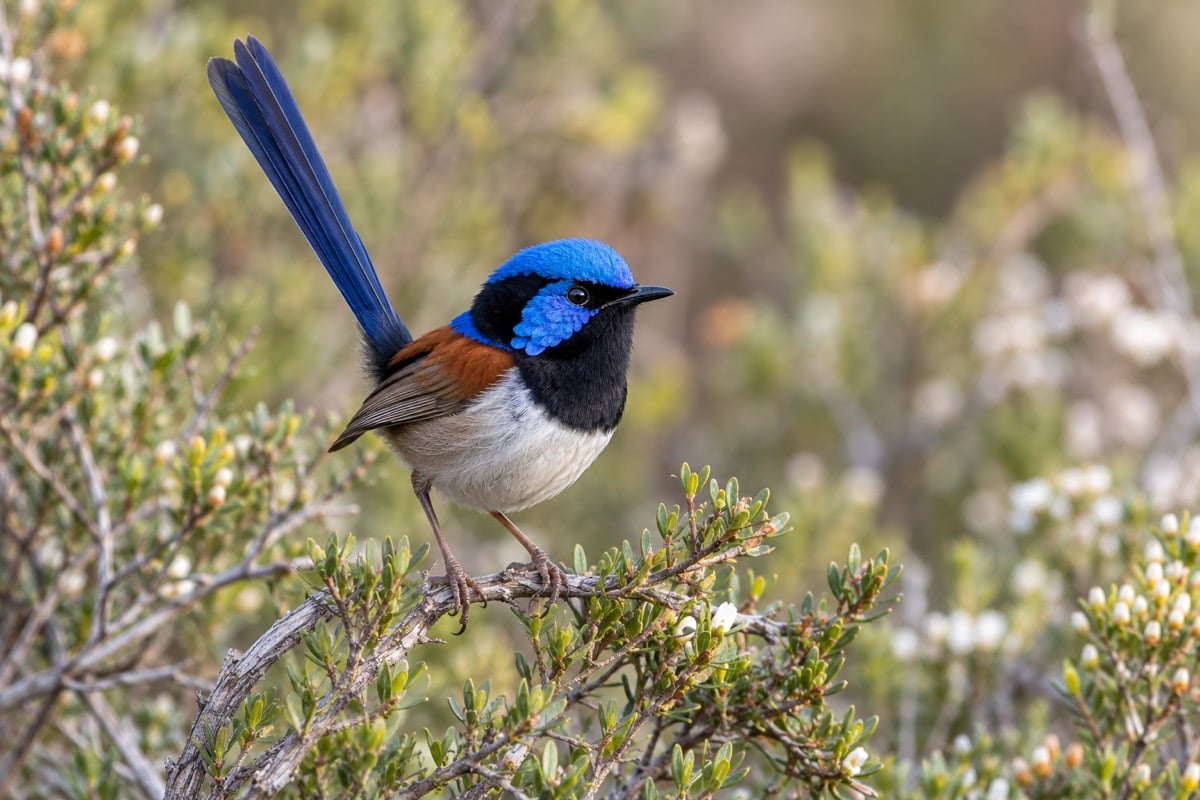
- Scientific Name: Malurus lamberti
- Habitat: Dense undergrowth in woodland, forest edges and scrub
- Size: About 12–14 cm (4.7–5.5 in) long
- Diet: Mostly insects, with some seeds
A breeding male variegated fairy-wren has a bright blue head, black chest and rich chestnut shoulders. Females are mainly brown, but both sexes have the long tail often held upright. These little birds stay close to protective vegetation as they search for insects. A female builds a domed nest low in a shrub or other cover. Family life can extend beyond a pair, with helpers assisting the parents in feeding their chicks.
14. Variegated Squirrel
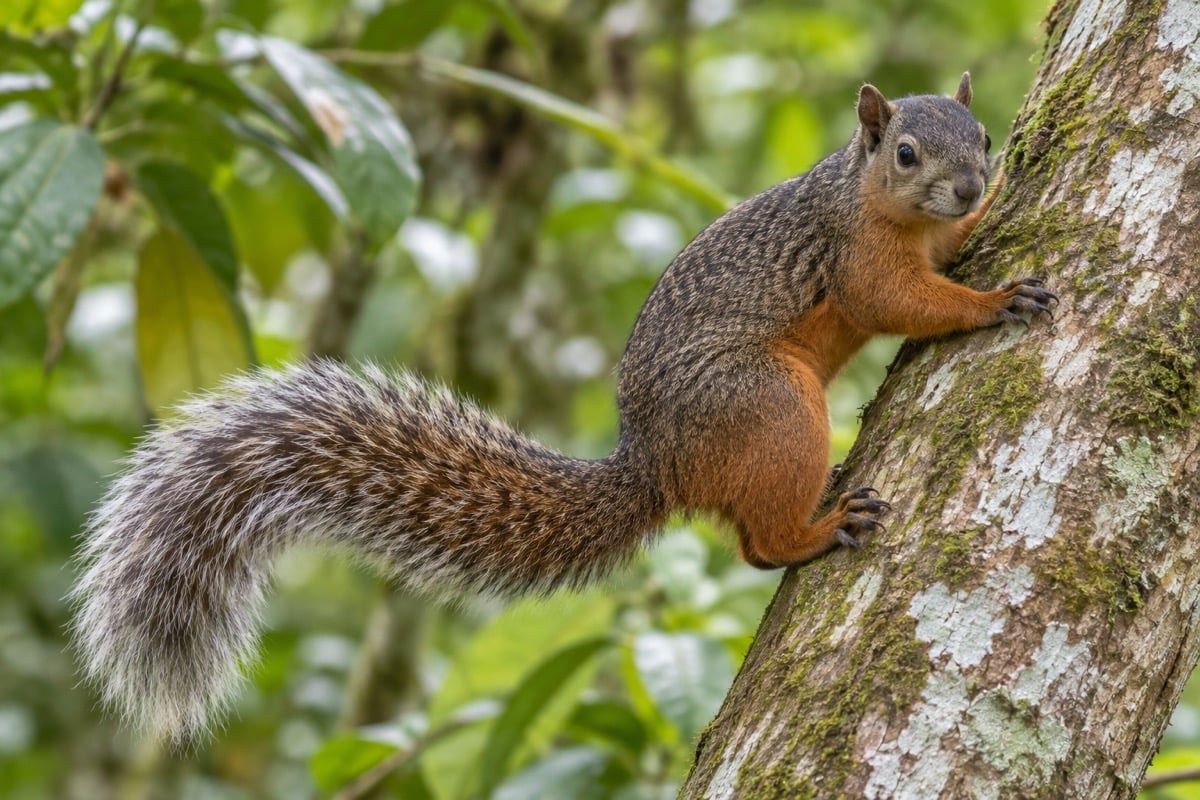
- Scientific Name: Sciurus variegatoides
- Habitat: Tropical forest, open woodland and plantations
- Size: Body about 22–34 cm (8.7–13 in), plus a long tail
- Diet: Fruit, nuts, seeds, flowers and fungi
Variegated squirrels live up to their name: their fur can mix gray, black, reddish brown and pale patches in different patterns. A large, bushy tail follows the animal as it runs along branches. These squirrels are active by day and spend much of their time in trees, where fruit and seeds are readily available. They also use open woodland and planted areas, moving along tree lines to cross gaps between feeding places.
15. Vasa Parrot
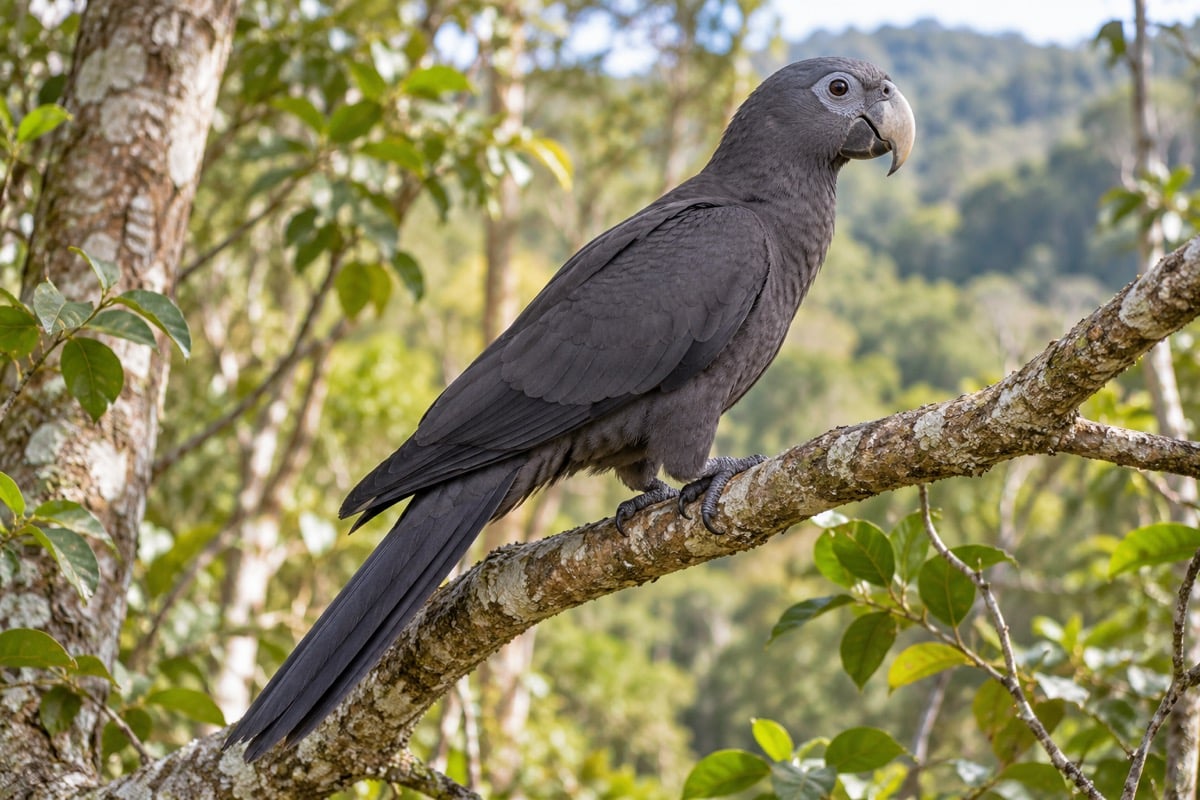
- Scientific Name: Coracopsis vasa
- Habitat: Forest, woodland and savanna
- Size: About 50 cm (20 in) long
- Diet: Seeds, nuts, fruit and berries
The vasa parrot has smoky gray plumage and a long tail, a quieter color scheme than many tropical parrots. Its breeding changes are much less ordinary. A female may lose feathers from her head, exposing yellow or orange skin, while some of her remaining plumage becomes brownish. Vasa parrots gather in noisy groups to feed on plant foods. This entry describes the greater vasa parrot, which is larger than the related lesser vasa parrot.
16. Vaux’s Swift
- Scientific Name: Chaetura vauxi
- Habitat: Forests and open air above woodland, water and towns
- Size: About 11 cm (4.3 in) long
- Diet: Flying insects
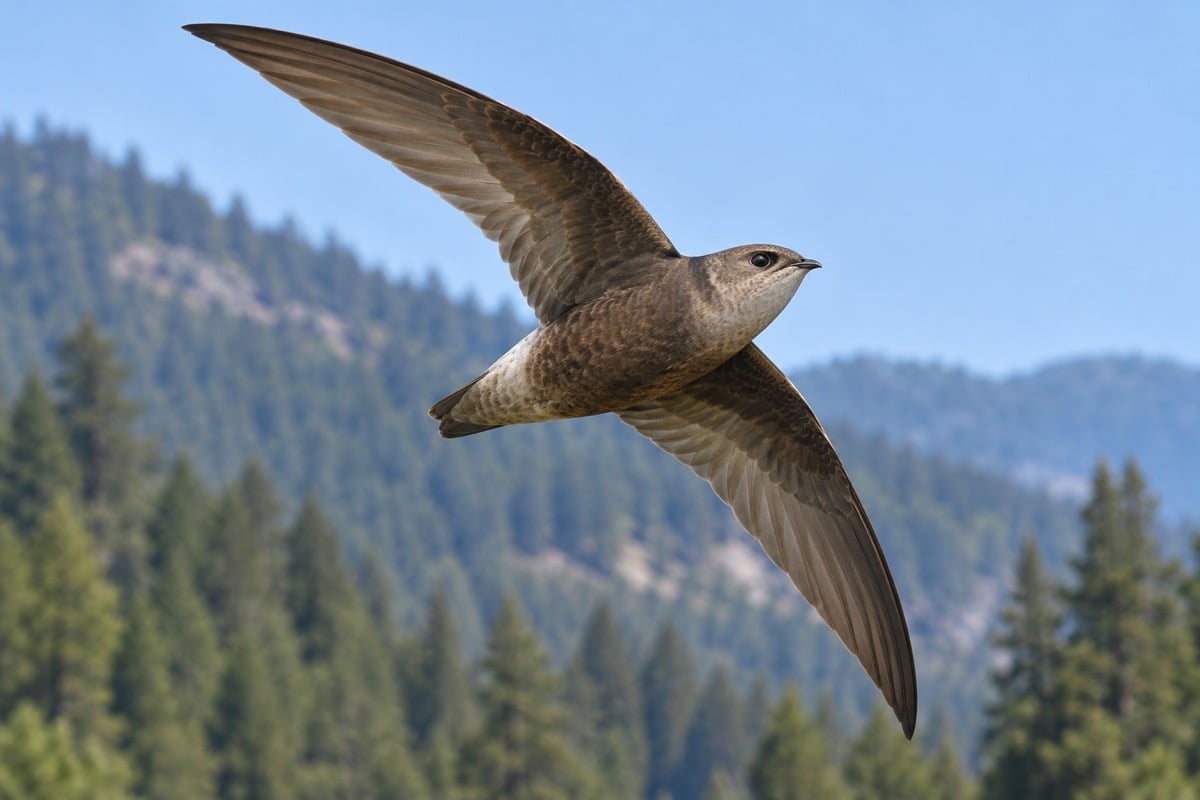
Vaux’s swift spends much of its day in the air, catching insects with quick turns and repeated wingbeats. Its short tail and narrow wings give it a different outline from a swallow. Large hollow trees provide traditional roosting places, but some birds use chimneys instead. During migration, hundreds or even thousands may gather at a suitable roost before dropping inside at dusk. Their small brown bodies can be difficult to follow against a bright sky.
17. Veery
- Scientific Name: Catharus fuscescens
- Habitat: Damp woodland with a leafy understory
- Size: About 17–18 cm (6.7–7.1 in) long
- Diet: Insects and other invertebrates; also fruit
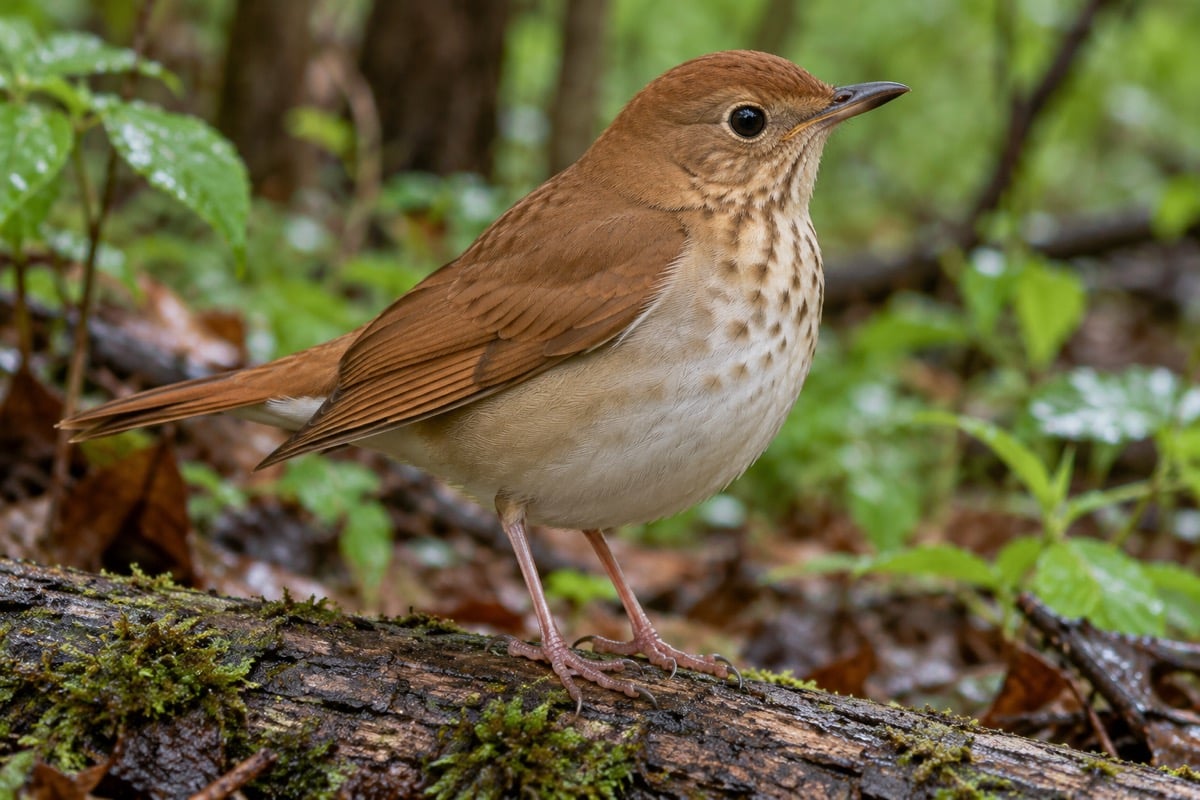
The veery is a cinnamon-brown thrush with only faint spotting on its pale breast. It is often heard before it is seen: the male’s song has a rolling, downward-spiraling quality that carries through woodland. Between songs, a bird may hop across the ground or pause on a low log. Leaf litter provides places to search for small invertebrates. Its quiet movements and warm brown plumage help it disappear into the forest’s shaded understory.
18. Velvet Asity
- Scientific Name: Philepitta castanea
- Habitat: Humid forest
- Size: About 14–17 cm (5.5–6.7 in) long
- Diet: Mostly fruit, with some small invertebrates
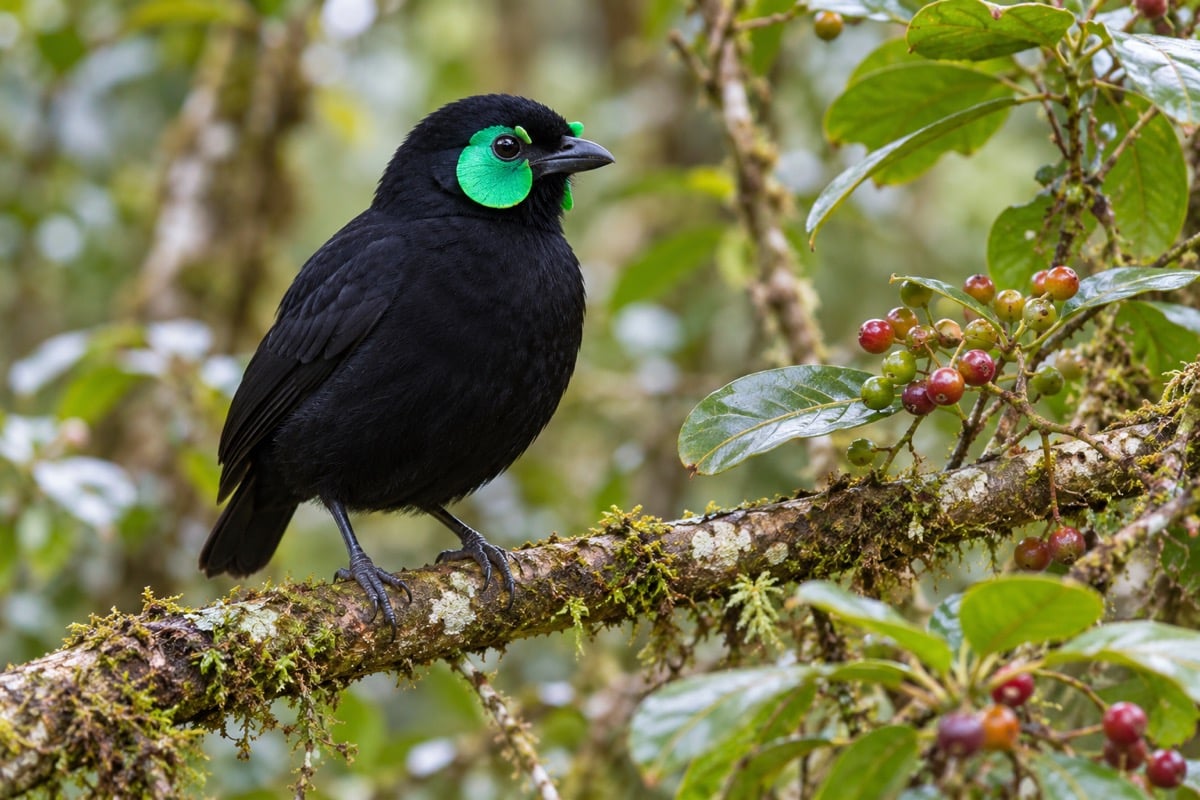
A male velvet asity looks almost entirely black until its vivid green facial ornaments come into view. These fleshy patches stand out beside the eyes during the breeding season. Females have much plainer greenish plumage with streaked underparts. Asities pick small fruits in Madagascar’s forests and can carry seeds away from the parent plant. Their compact bodies and short tails make a rather different shape from the island’s many long-tailed forest birds.
19. Velvet Scoter
- Scientific Name: Melanitta fusca
- Habitat: Northern breeding lakes and coastal wintering waters
- Size: About 51–58 cm (20–23 in) long
- Diet: Mollusks, crustaceans and other aquatic invertebrates
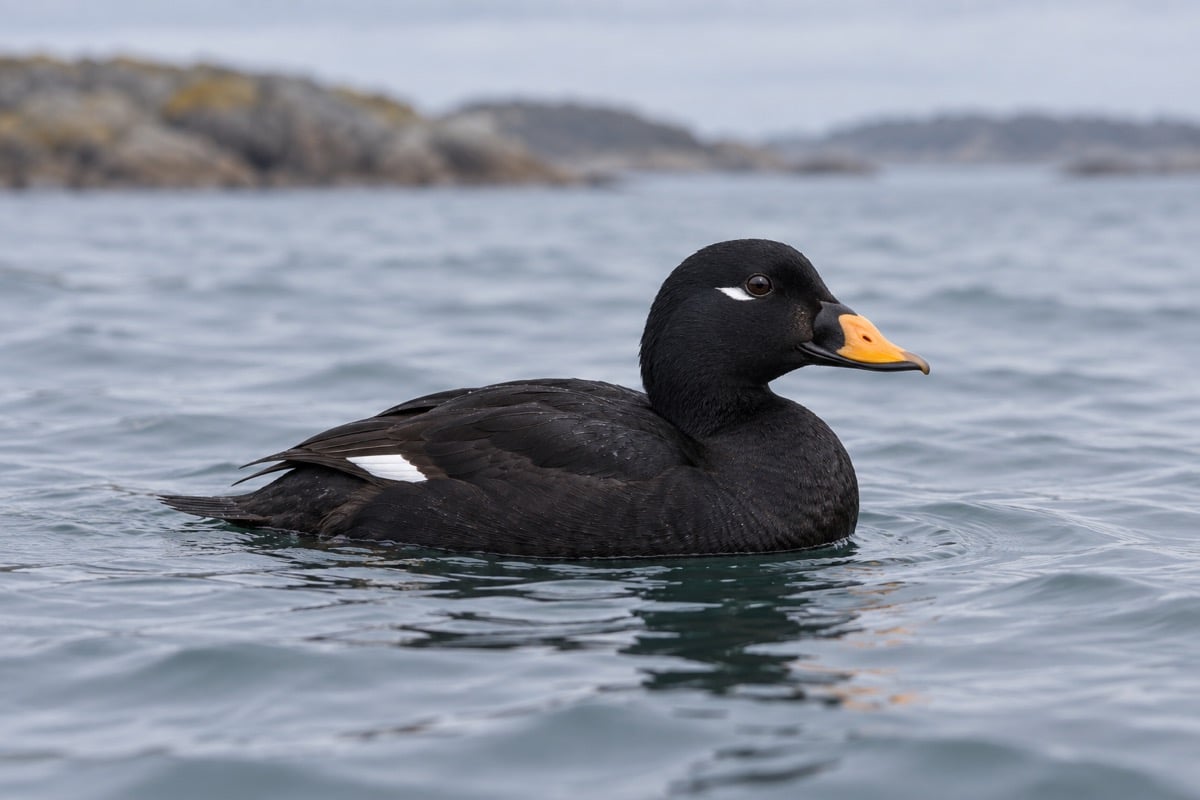
The velvet scoter is a large diving duck with a white wing patch that becomes especially noticeable in flight. Males are dark, with a pale mark beneath the eye and an orange-and-black bill. Females are browner and have pale patches on the face. These ducks spend winter on coastal water, diving for food on or near the bottom. In the breeding season, they move inland to northern lakes, often well away from busy shorelines.
20. Velvet Worm
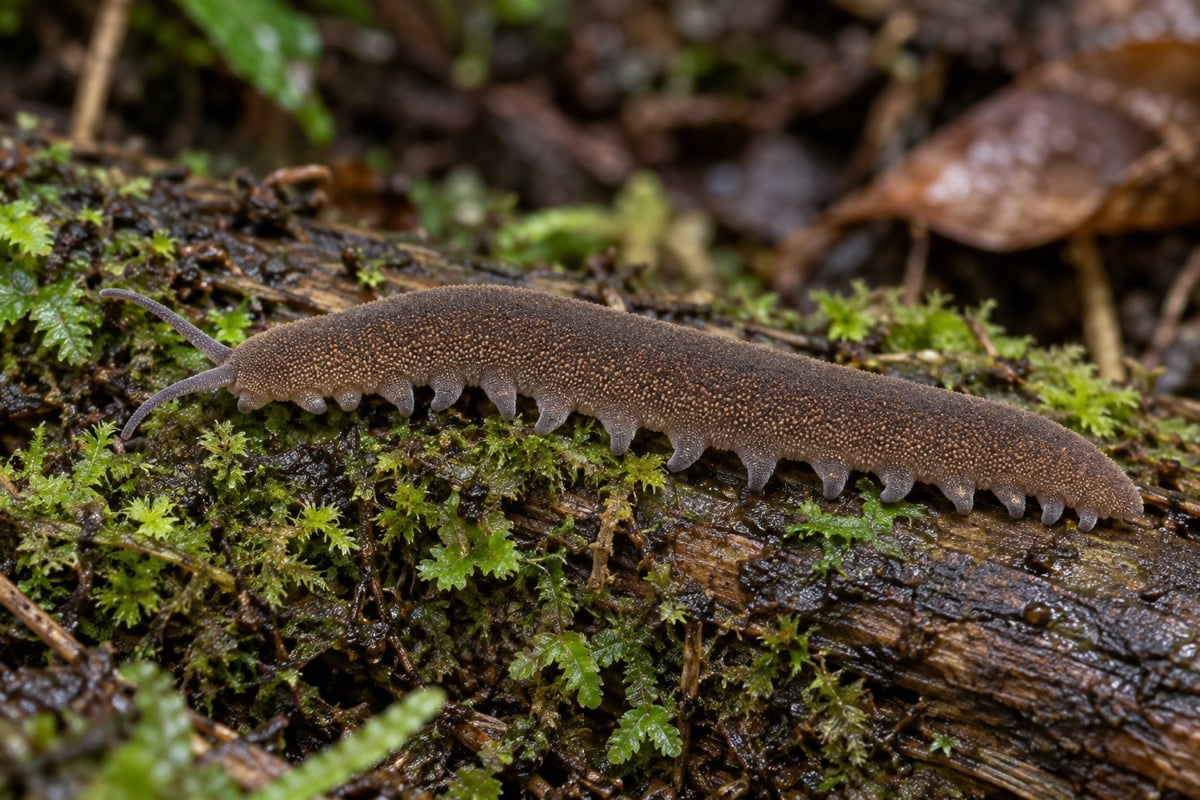
- Scientific Name: Onychophora (phylum)
- Habitat: Moist leaf litter, rotting wood and other sheltered forest places
- Size: Often 2–10 cm (0.8–4 in), depending on species; some grow larger
- Diet: Small invertebrates, including insects and spiders
A velvet worm looks a little like a caterpillar, but it belongs to a separate animal group. Its soft body carries rows of short legs, and tiny structures on the skin create the velvety appearance behind its name. When prey comes close, it can spray sticky slime that tangles the victim’s legs. The same material can discourage an attacker. Moisture is essential to these hunters: their bodies lose water readily, so damp logs and leaf litter are important shelter. ‘Velvet worm’ is a name for many species, not a single animal with one fixed size or color.
21. Venezuelan Red Howler
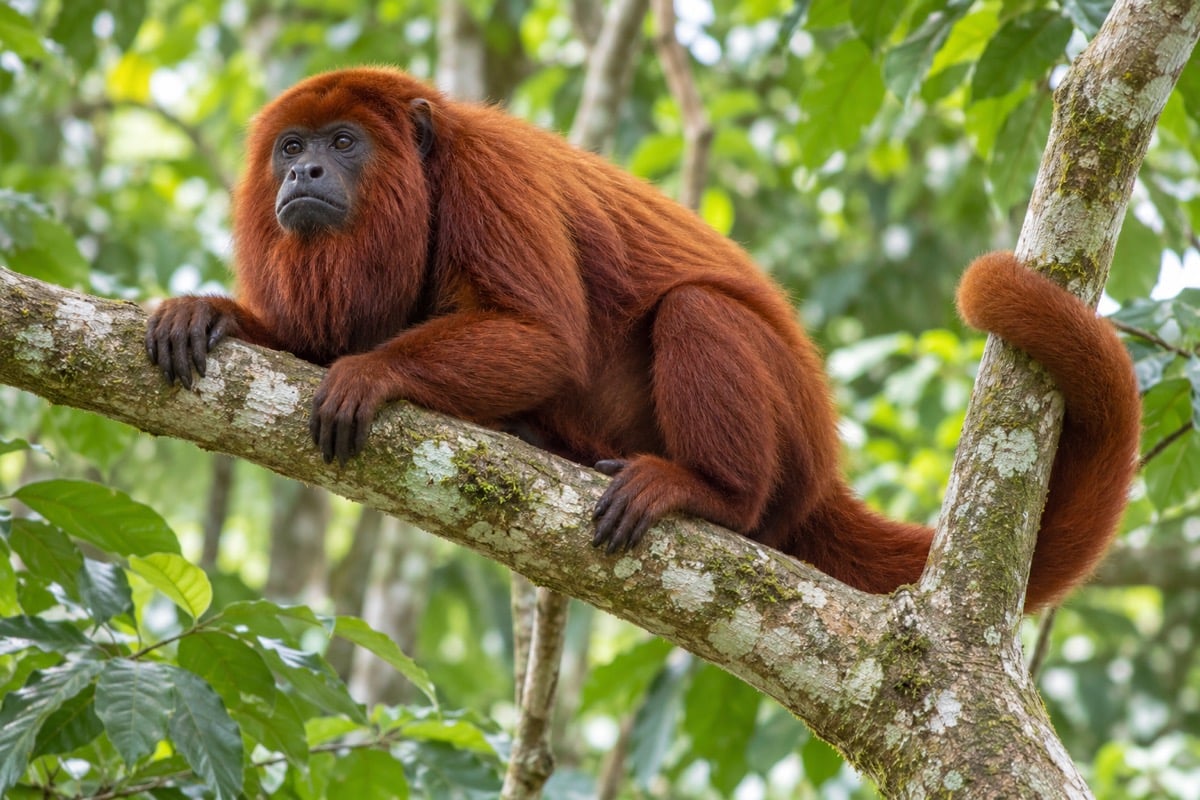
- Scientific Name: Alouatta seniculus
- Habitat: Tropical forest canopy
- Size: Body about 46–72 cm (18–28 in), excluding the tail
- Diet: Leaves, fruit and flowers
The Venezuelan red howler has reddish fur and a long, grasping tail that helps support it among branches. Its deep calls can travel well beyond the tree in which it is sitting. An enlarged structure in the throat helps produce that powerful sound, allowing groups to announce their presence without coming close. Much of the day is quieter: eating leaves requires time for digestion, so these monkeys spend long periods resting in the canopy.
22. Venezuelan Troupial
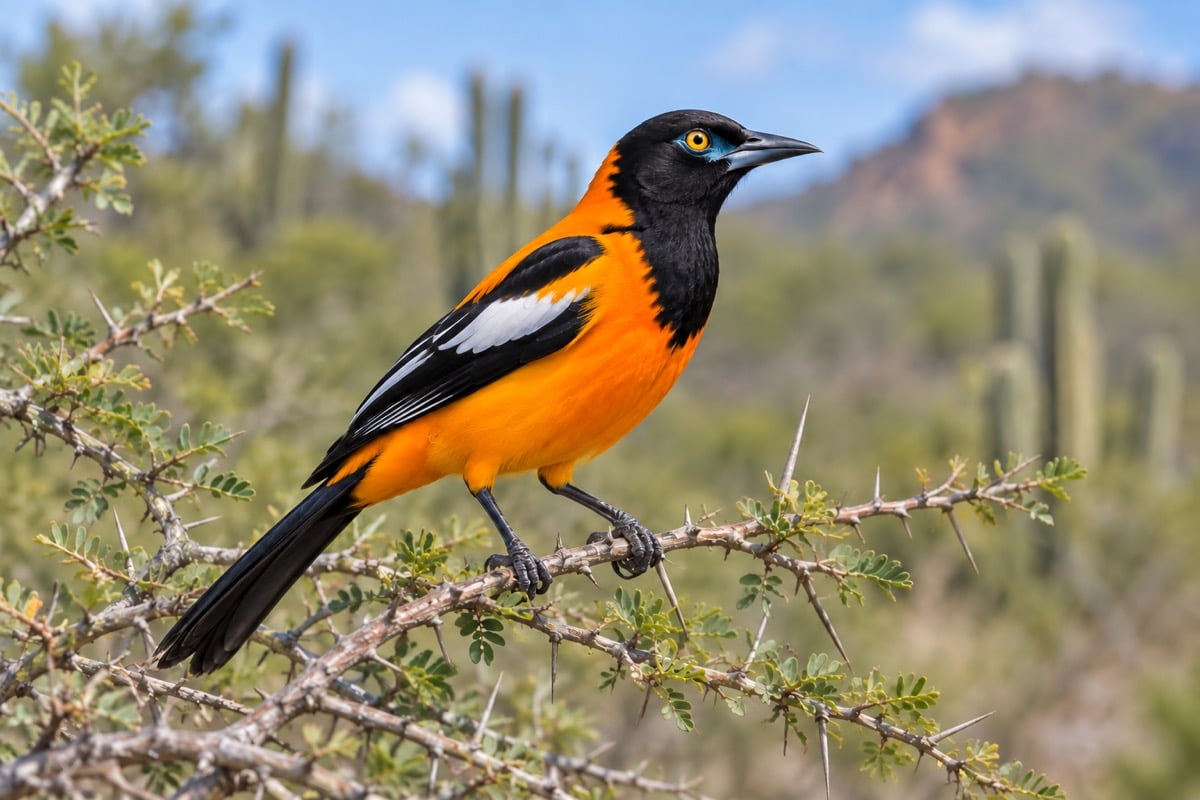
- Scientific Name: Icterus icterus
- Habitat: Dry woodland, scrub and savanna
- Size: About 23–25 cm (9–10 in) long
- Diet: Fruit, insects and seeds
Orange body feathers, a black head and a bold white wing patch make the Venezuelan troupial hard to overlook. A patch of blue skin surrounds each eye. It belongs to the New World blackbird family rather than the true orioles of Europe and Asia, despite a similar color pattern. Fruit and insects both feature in its diet. Its bright plumage is matched by a strong, clear voice that carries through open woodland and scrub.
23. Vermilion Flycatcher
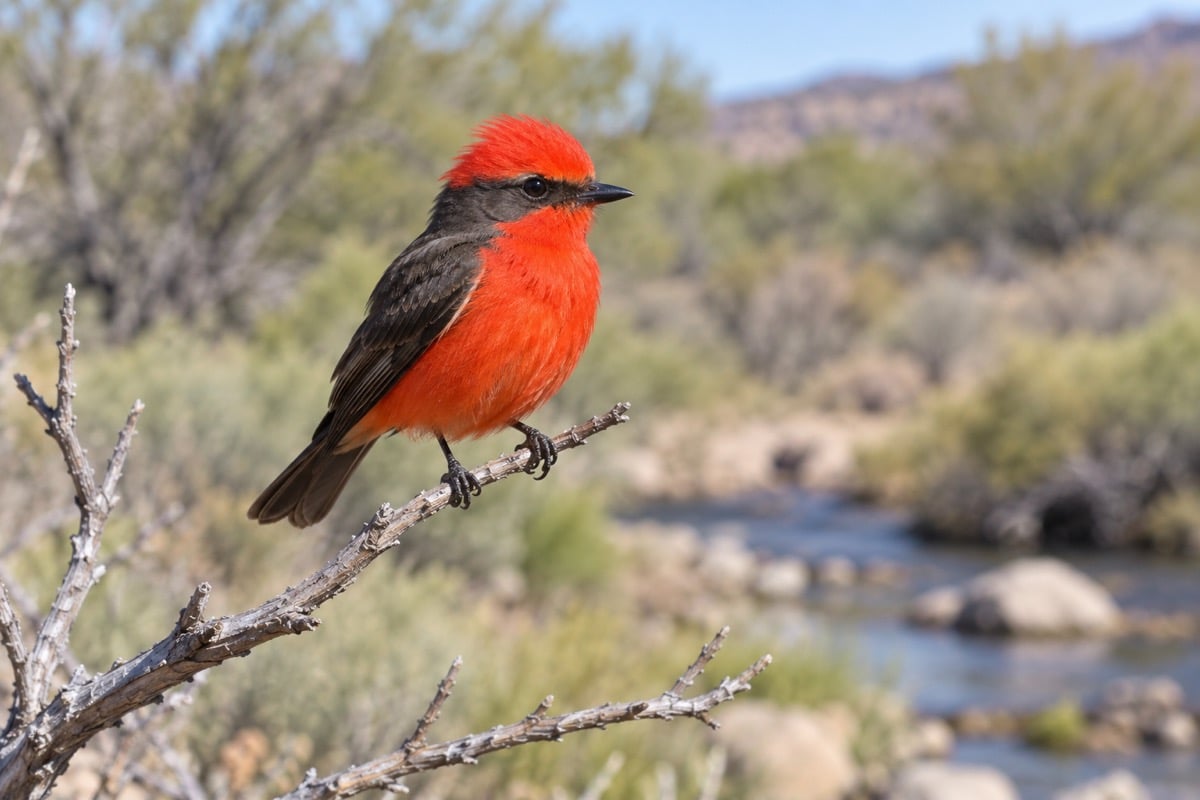
- Scientific Name: Pyrocephalus rubinus
- Habitat: Open scrub, river corridors, farmland edges and lightly wooded country
- Size: About 12–14 cm (4.8–5.4 in) long
- Diet: Insects
A male vermilion flycatcher can be hard to miss, with orange-red underparts and a red crown set against darker wings and back. Females are much less showy, usually gray-brown above with a softer pinkish or salmon wash below. Watch its perch and its hunting method becomes clear. The bird waits in an exposed position, darts out to catch an insect, then often returns to the same spot. Streamside vegetation offers especially useful feeding and nesting places in otherwise dry country. Its small cup nest may be held together with spiderweb and decorated with bits of lichen.
24. Verreaux’s Eagle
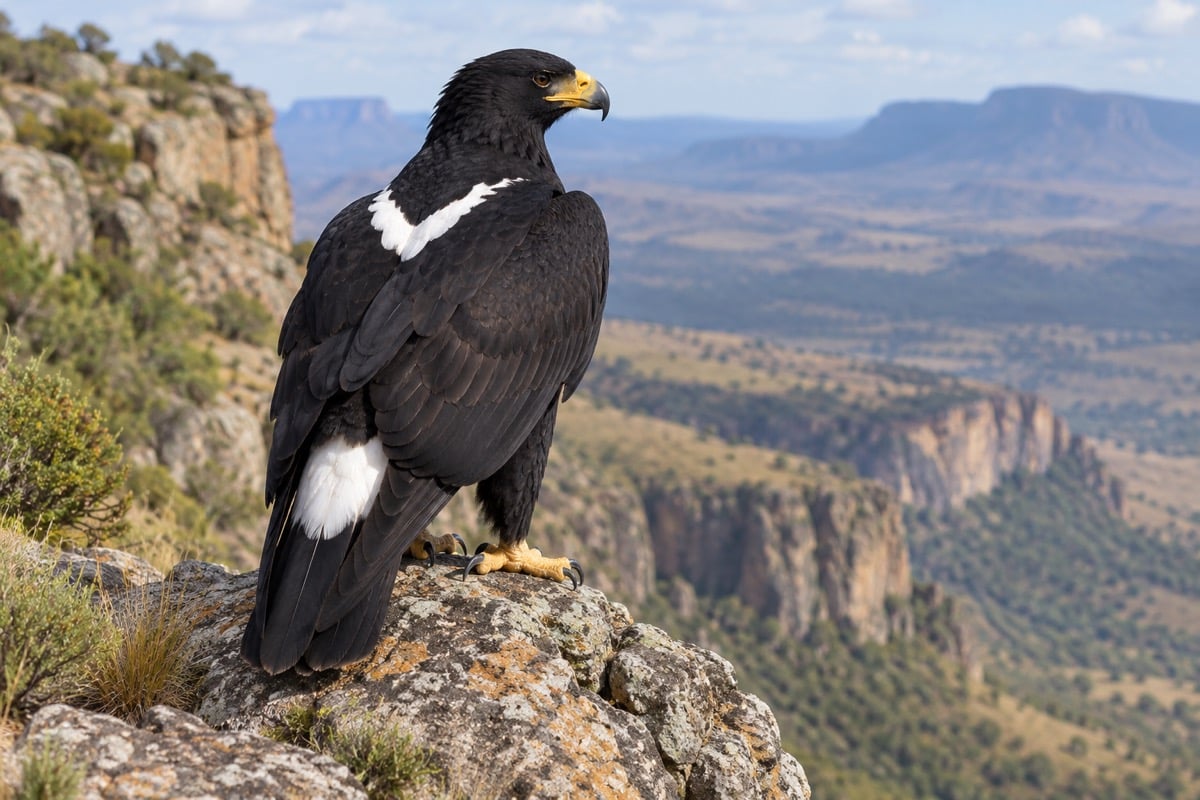
- Scientific Name: Aquila verreauxii
- Habitat: Rocky hills, cliffs and mountainous country
- Size: About 80–90 cm (31–35 in) long
- Diet: Mainly rock hyraxes, with other mammals, birds and reptiles
Verreaux’s eagle is mostly black, but a white patch forms a clear V across its upper back. Rocky slopes provide both hunting ground and nesting sites. Rock hyraxes are particularly important prey, and an eagle may use rising air along cliffs to search for them with little flapping. Pairs can often be seen soaring together above rugged country. A nest is a substantial platform of sticks, usually placed on an inaccessible ledge.
25. Verreaux’s Eagle-Owl
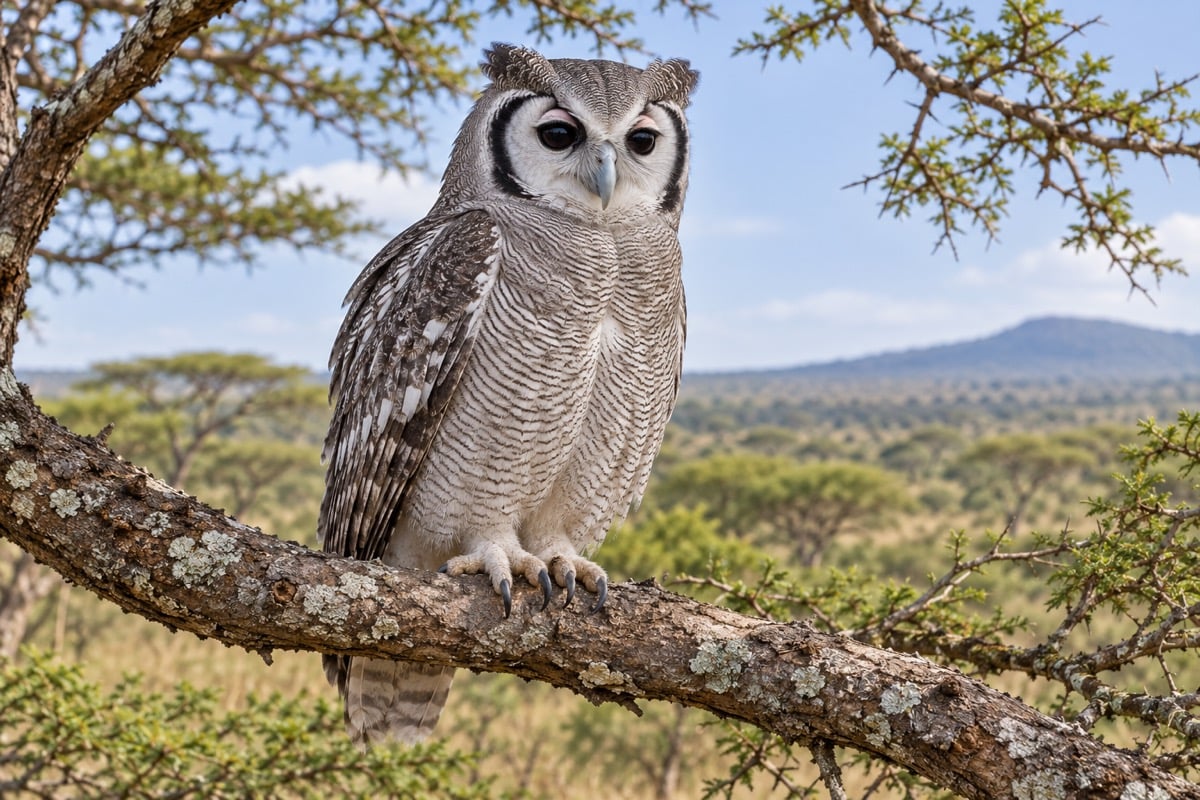
- Scientific Name: Ketupa lactea
- Habitat: Savanna and woodland with large trees
- Size: About 60–65 cm (24–26 in) long
- Diet: Mammals, birds, reptiles and other animals
Pink eyelids are one of the most unusual features of Verreaux’s eagle-owl. This large owl also has short ear tufts and a dark border around its pale face. During the day it rests in the shade of a tree, becoming more active as light fades. Its prey includes animals as different as rodents, birds and reptiles. Like many owls, the female is larger than the male, though the two have similar gray-brown plumage.
26. Verreaux’s Sifaka
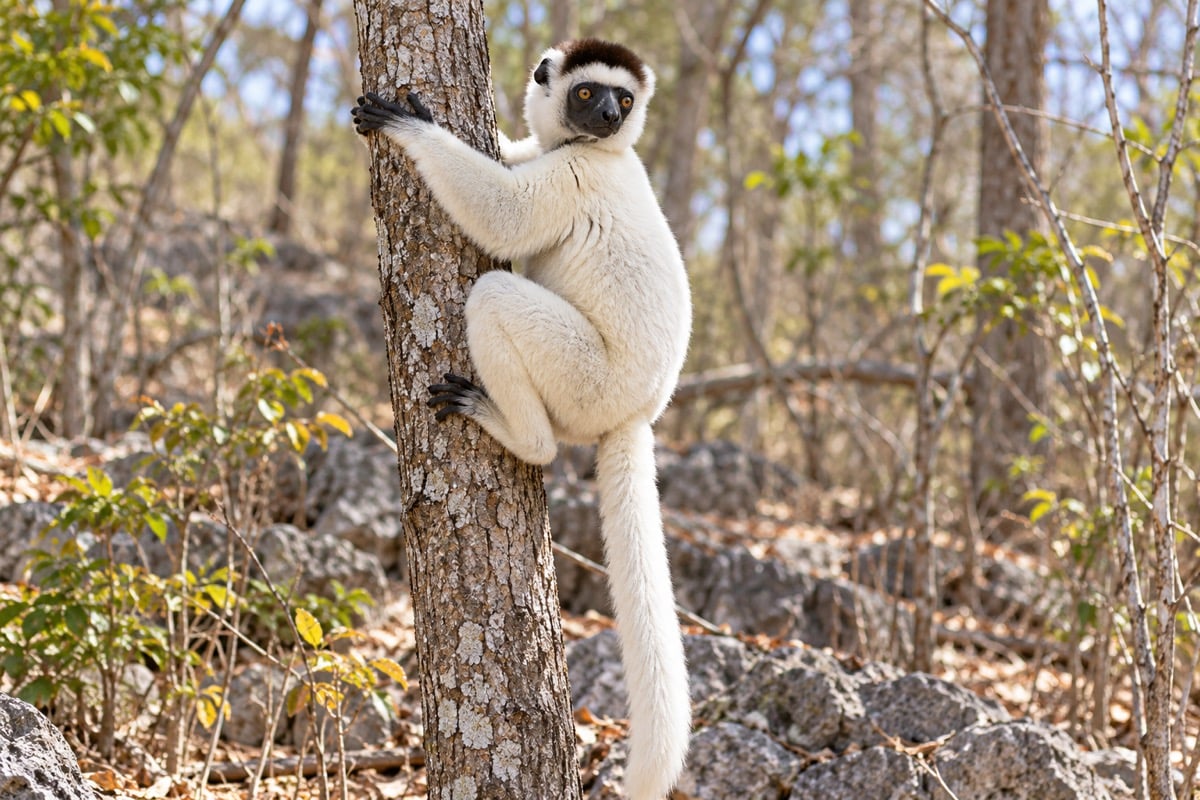
- Scientific Name: Propithecus verreauxi
- Habitat: Dry forest, woodland and spiny forest
- Size: Body about 45–55 cm (18–22 in), excluding the tail
- Diet: Leaves, fruit, flowers and bark
Verreaux’s sifaka is a lemur with a mostly white coat, a dark face and a brownish crown. Long hind legs help it spring from one tree trunk to another while keeping its body upright. On the ground, those same proportions produce the sideways hops for which sifakas are famous. Groups feed and rest in the trees during daylight. Their diet includes leaves and other plant foods, changing with what the forest offers through the year.
27. Vervet Monkey
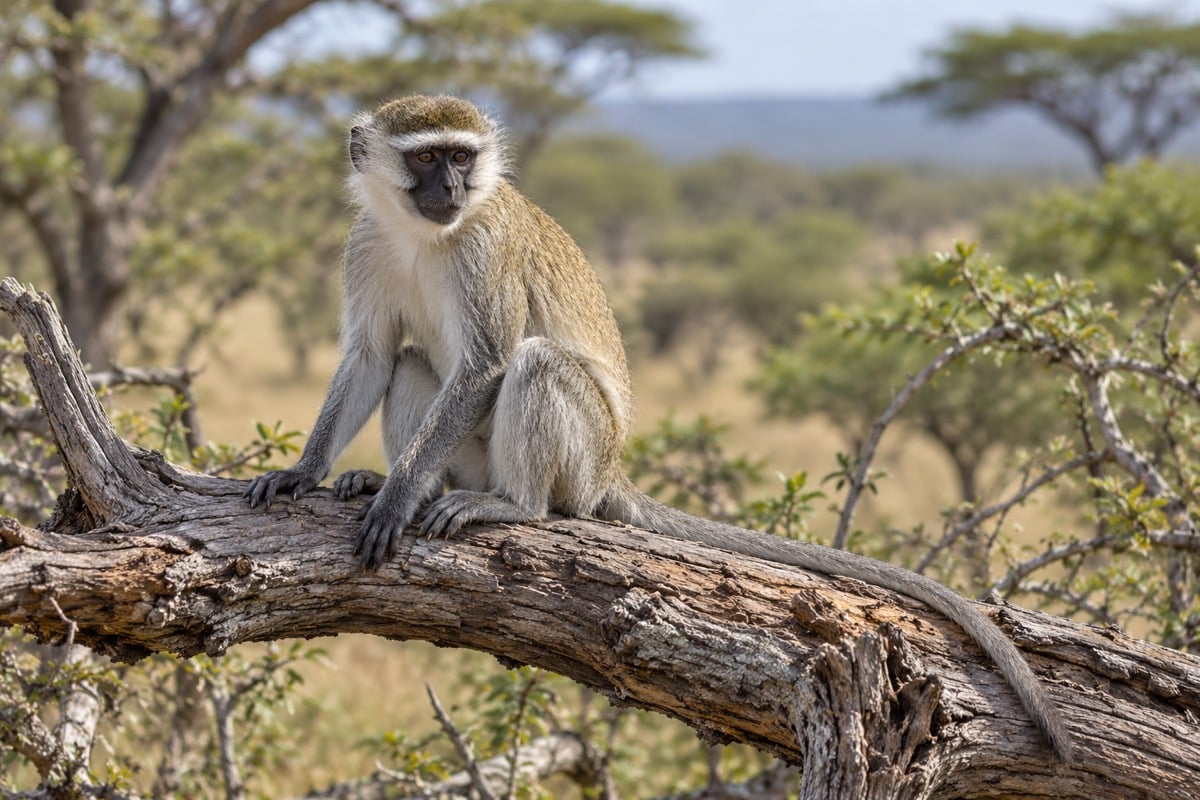
- Scientific Name: Chlorocebus pygerythrus
- Habitat: Open woodland and savanna, usually near water
- Size: Body roughly 34–43 cm (13–17 in), with a long additional tail
- Diet: Fruit, seeds, leaves, insects and occasional small animals
The vervet’s dark face and pale surrounding fur are useful identification clues. It divides its time between trees and the ground, living in social groups that keep busy feeding, grooming and watching for danger. Its alarm calls are especially interesting. Different warnings can alert companions to threats such as eagles, snakes or leopards, prompting different responses. Vervets have a flexible diet, which helps them use varied habitats but can also bring them into conflict with people around crops. Older references sometimes group vervets under Chlorocebus aethiops; this entry uses Chlorocebus pygerythrus.
28. Vesper Sparrow
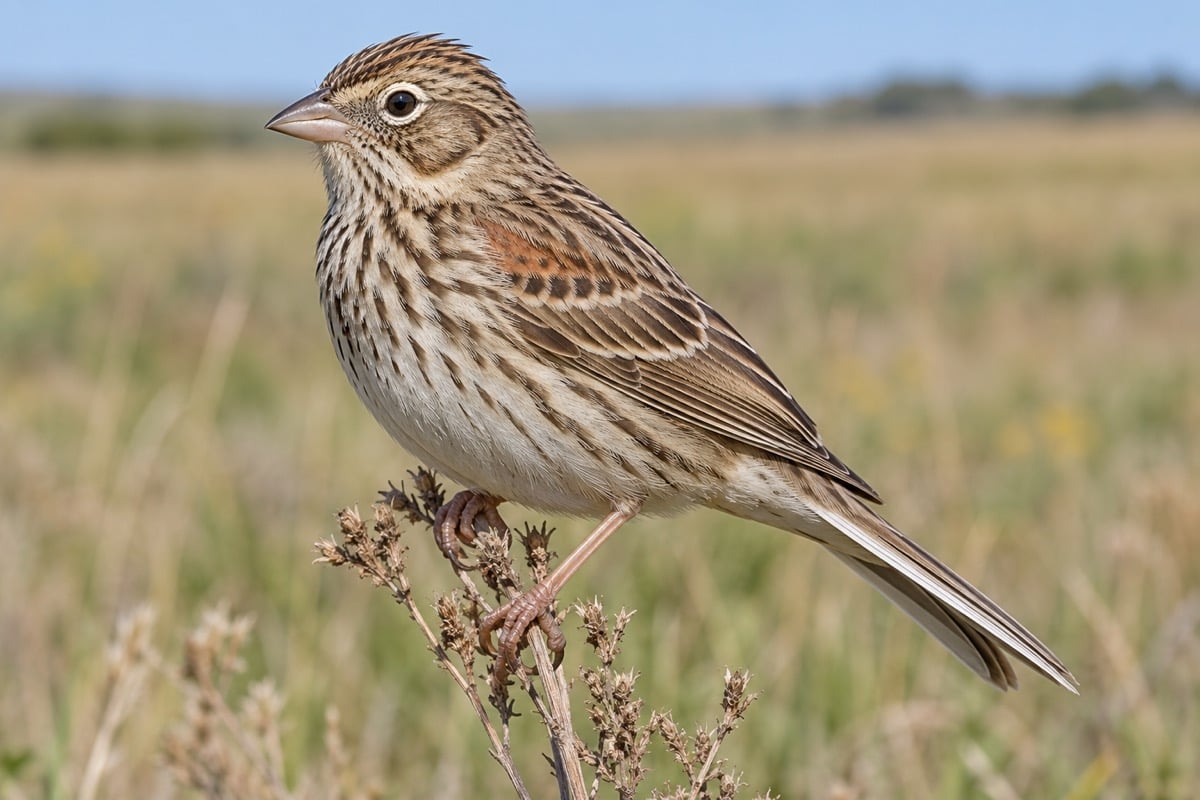
- Scientific Name: Pooecetes gramineus
- Habitat: Open grassland, pastures and sparsely vegetated fields
- Size: About 13–16 cm (5.1–6.3 in) long
- Diet: Seeds and insects
A vesper sparrow can look plain at first, but a fine white eye ring and white outer tail feathers help separate it from other grassland sparrows. A small chestnut patch on the shoulder is often hidden. It feeds mostly on the ground, walking or hopping among short plants. Males sing from raised perches, including fence posts and tall stems. The name vesper refers to evening, when its song may still be heard over the grass.
29. Vicuña
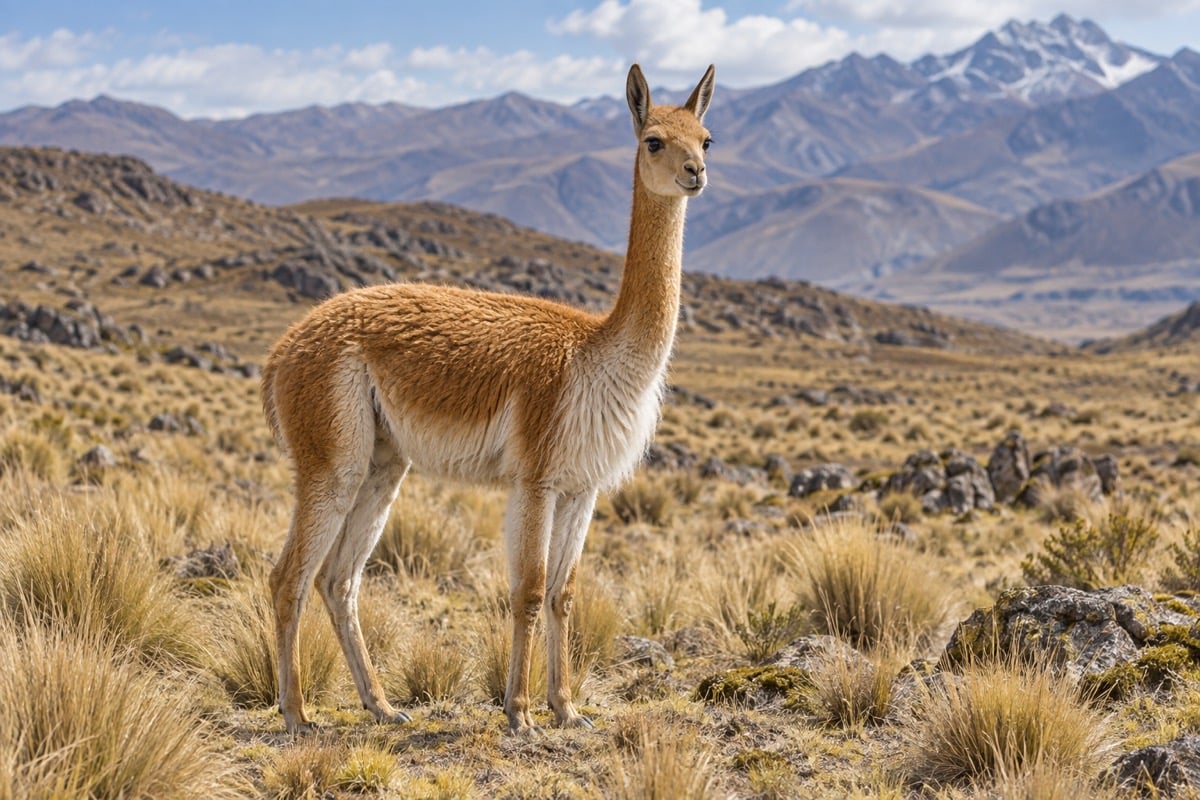
- Scientific Name: Vicugna vicugna
- Habitat: High, dry grasslands and mountain plains
- Size: About 40–60 kg (88–132 lb)
- Diet: Grasses and other mountain plants
A vicuña is a small, slender member of the camel family. Its long neck, cinnamon-colored back and pale underside suit the open landscapes of the Andes, where it grazes on plants growing at high elevations. Its fine coat provides insulation against cold mountain conditions. Unlike the thick, woolly appearance of many domestic alpacas, a vicuña has a comparatively delicate outline. Family groups occupy territories, while young males may gather in bachelor groups. Access to drinking water matters even in this dry environment: the plants it eats do not supply all the water it needs.
30. Violet Turaco
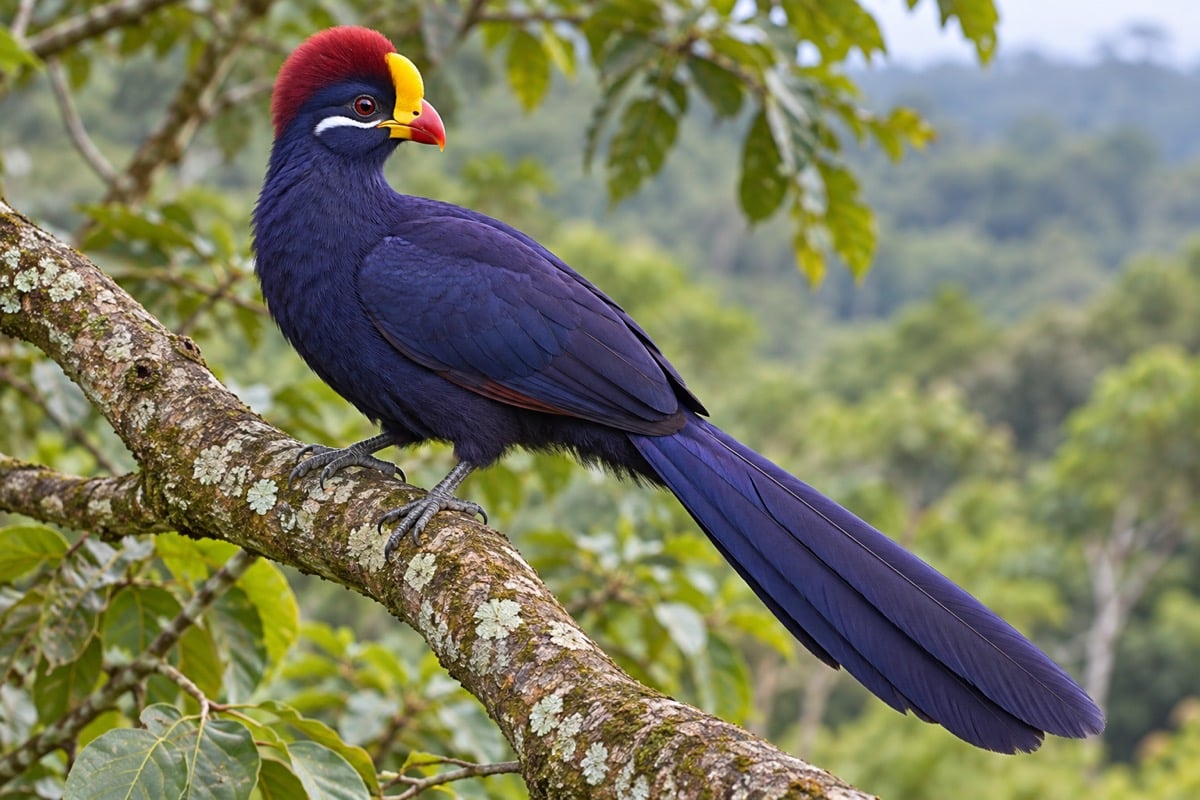
- Scientific Name: Tauraco violaceus
- Habitat: Woodland, forest and wooded savanna
- Size: About 48 cm (19 in) long
- Diet: Mostly fruit, with leaves, seeds and small invertebrates
The violet turaco has a yellow forehead, red crown and glossy purple body. Its brightest surprise appears when it opens its wings: the flight feathers flash vivid red. Turacos move confidently through branches, often hopping or running rather than flying far. Fruit is an important part of the diet, and feeding birds help move seeds around their wooded habitat. Both members of a pair share incubation and the work of caring for the young.
31. Violet-backed Starling
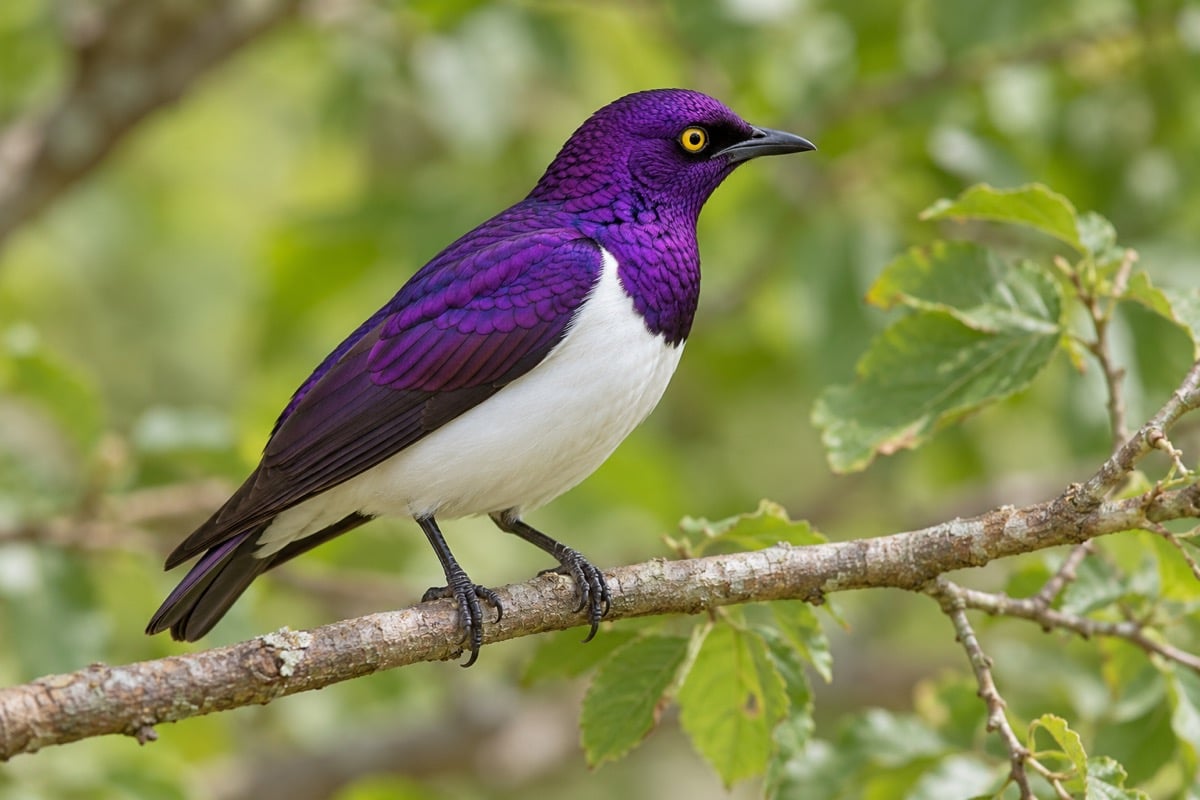
- Scientific Name: Cinnyricinclus leucogaster
- Habitat: Open woodland and forest edges
- Size: About 15–17 cm (6–7 in) long
- Diet: Mostly fruit, supplemented by insects
The male violet-backed starling has a striking contrast between shimmering purple upperparts and a white belly. The female looks very different, with brown plumage and streaked underparts. Seeing the two together makes a good reminder that males and females of the same species need not look alike. These starlings spend much of their time in trees, picking fruit and searching for insects. Pairs use holes in trees as nesting places, and both parents help feed the chicks. Their voices are varied too: they can produce different calls and imitate sounds made by other birds.
32. Violet-crowned Hummingbird
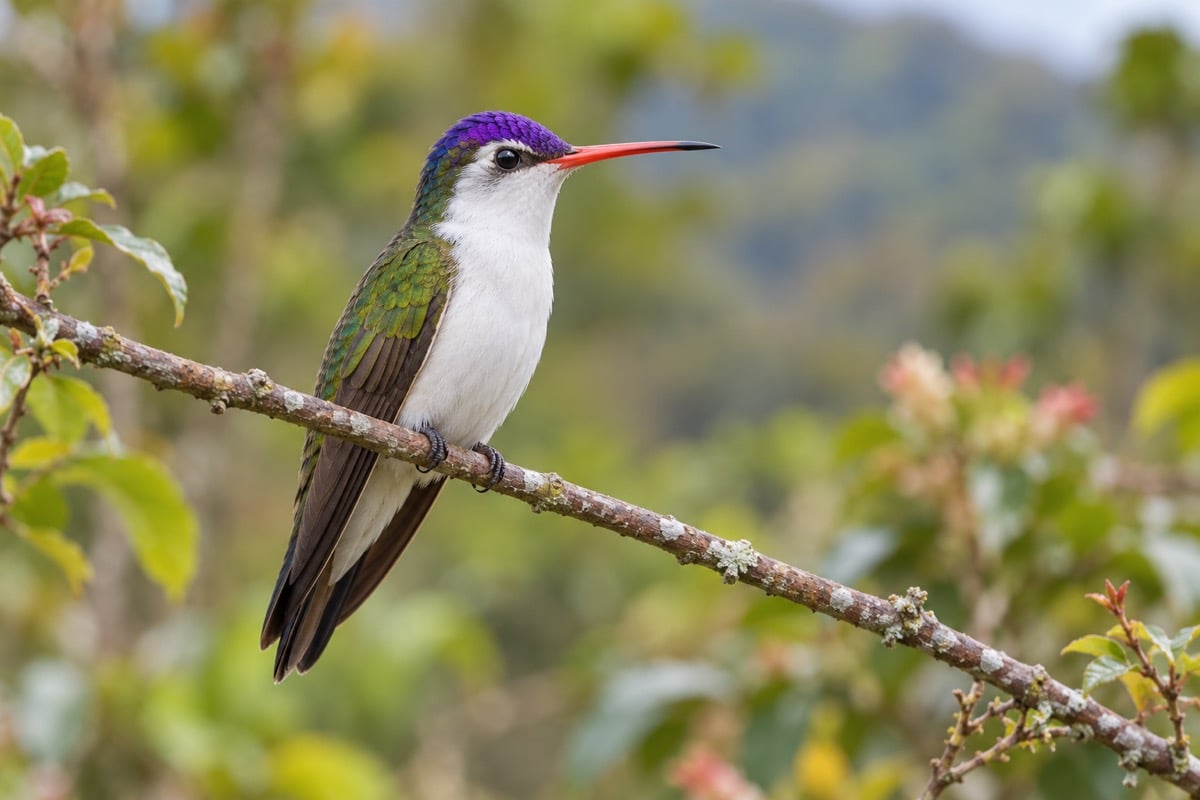
- Scientific Name: Ramosomyia violiceps
- Habitat: Streamside woodland, dry forest and oak woodland
- Size: About 11 cm (4.3 in) long
- Diet: Nectar and small insects
The violet-crowned hummingbird has clean white underparts beneath a purple-blue crown. Its long bill is reddish with a dark tip, and it lacks the bright throat patch worn by many other hummingbirds. Males and females look quite similar. Flowering plants supply nectar, while tiny insects provide additional food. At the northern edge of its range, streamside trees such as sycamores offer valuable shelter in a landscape that can otherwise be very dry.
33. Violet-green Swallow
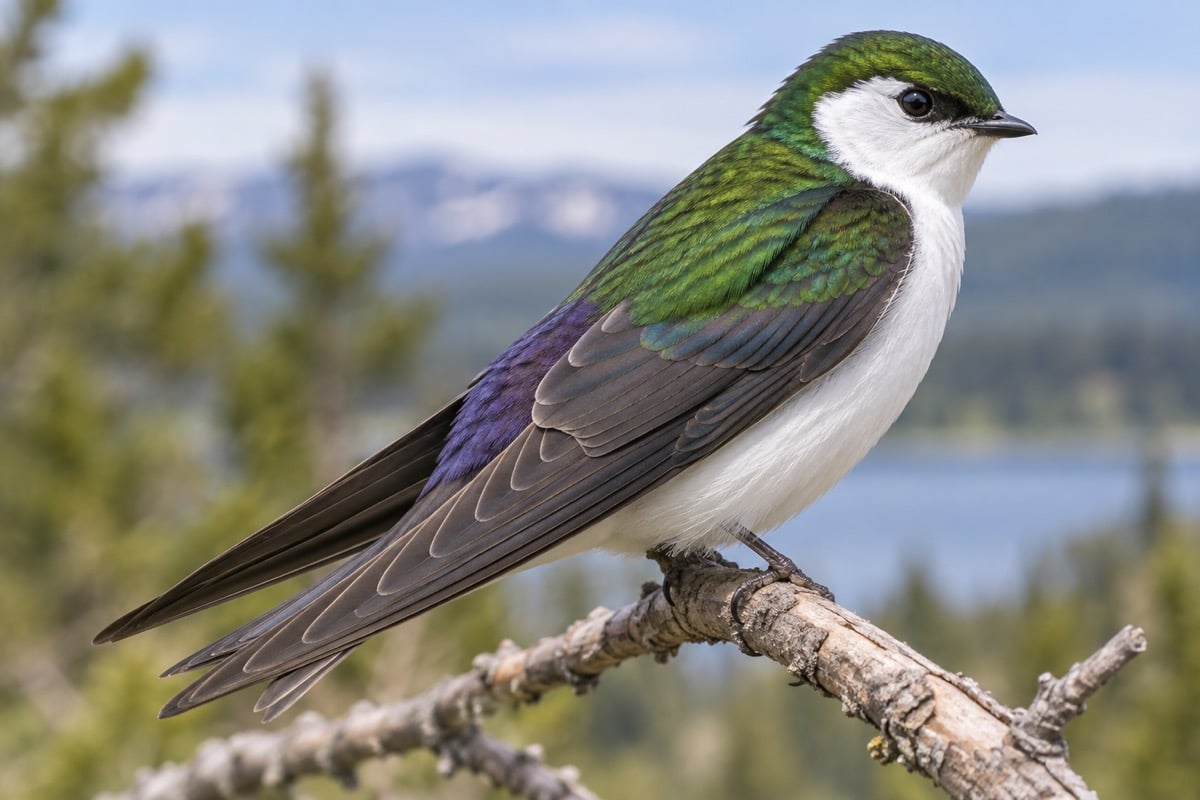
- Scientific Name: Tachycineta thalassina
- Habitat: Woodland, forest openings and areas near water
- Size: About 12 cm (4.7 in) long
- Diet: Flying insects
Sunlight reveals the violet-green swallow’s green back and purple rump, while its belly and much of its face remain white. The white rump markings nearly wrap around the base of the tail. In flight it sweeps through open air for insects, often above water or clearings. Nesting is quite different from that of mud-building swallows: this species uses holes in trees, rock crevices or nest boxes, lining the chosen space with soft material.
34. Viperine Water Snake
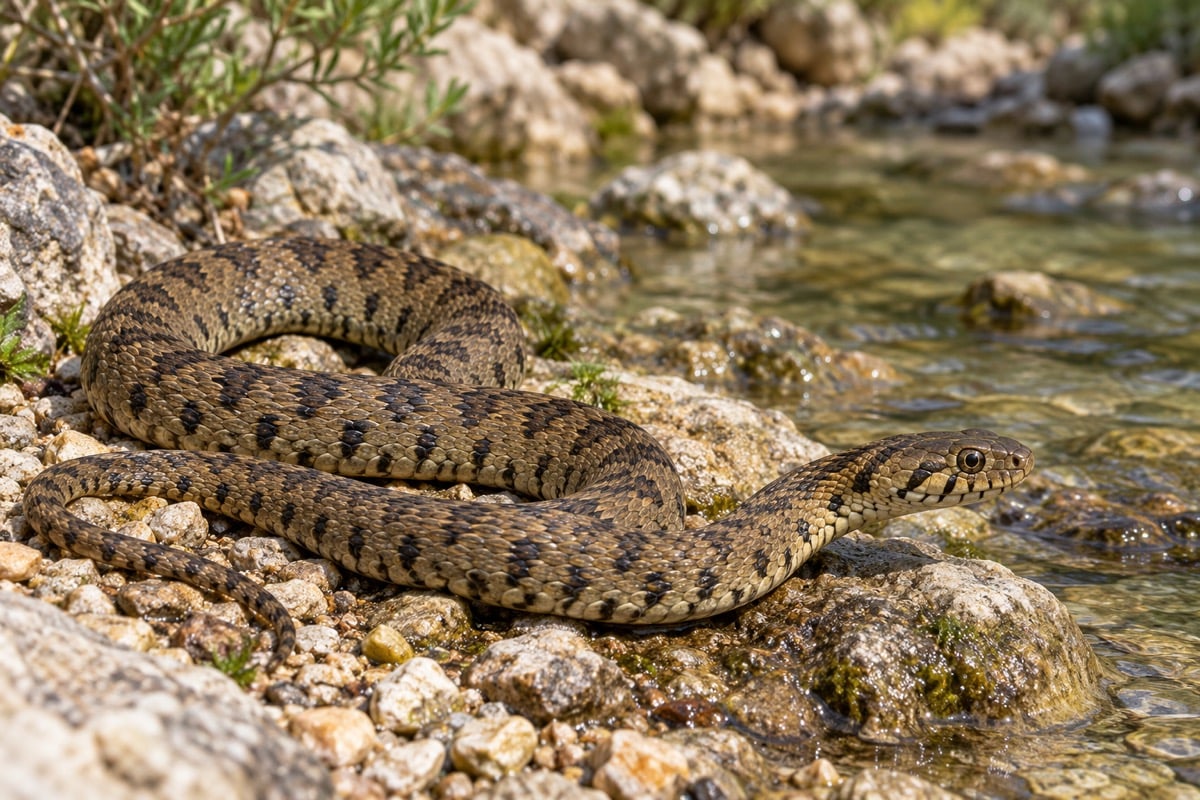
- Scientific Name: Natrix maura
- Habitat: Rivers, ponds, marshes and other freshwater habitats
- Size: Usually about 70–80 cm (28–31 in) long
- Diet: Fish, amphibians and aquatic invertebrates
A zigzag pattern along the back can make a viperine water snake resemble a viper, but it is a nonvenomous snake that spends much of its time around water. It swims well and searches for fish and amphibians among aquatic vegetation. When threatened, it may flatten its head and body to look more imposing. Warm banks and nearby cover are important too, giving it places to bask or hide between hunting trips.
35. Virginia Opossum
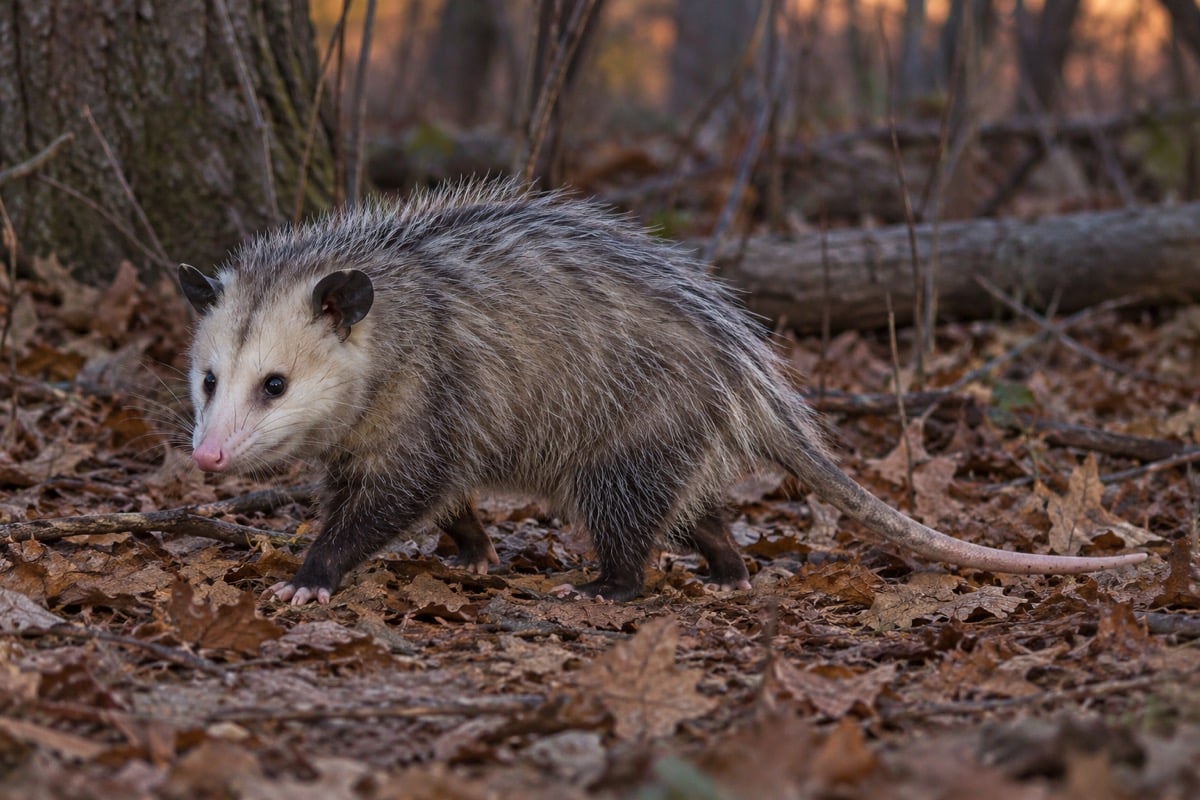
- Scientific Name: Didelphis virginiana
- Habitat: Woodland, wetland edges, farms and suburban areas
- Size: Body about 33–55 cm (13–22 in), excluding the tail
- Diet: Fruit, insects, small animals, carrion and other available foods
The Virginia opossum is a marsupial: its tiny newborns continue developing while attached to a teat in the mother’s pouch. Older young may later be seen riding on her back. A pale pointed face, nearly bare ears and a long, mostly hairless tail distinguish it from many other night visitors. It is a capable climber, helped by grasping hind feet and a prehensile tail. Wooded areas near water suit it well, but it also uses gardens and buildings for food or shelter. Its adaptability does not make it well insulated against cold; exposed ears and tails can suffer frostbite.
36. Virginia Rail
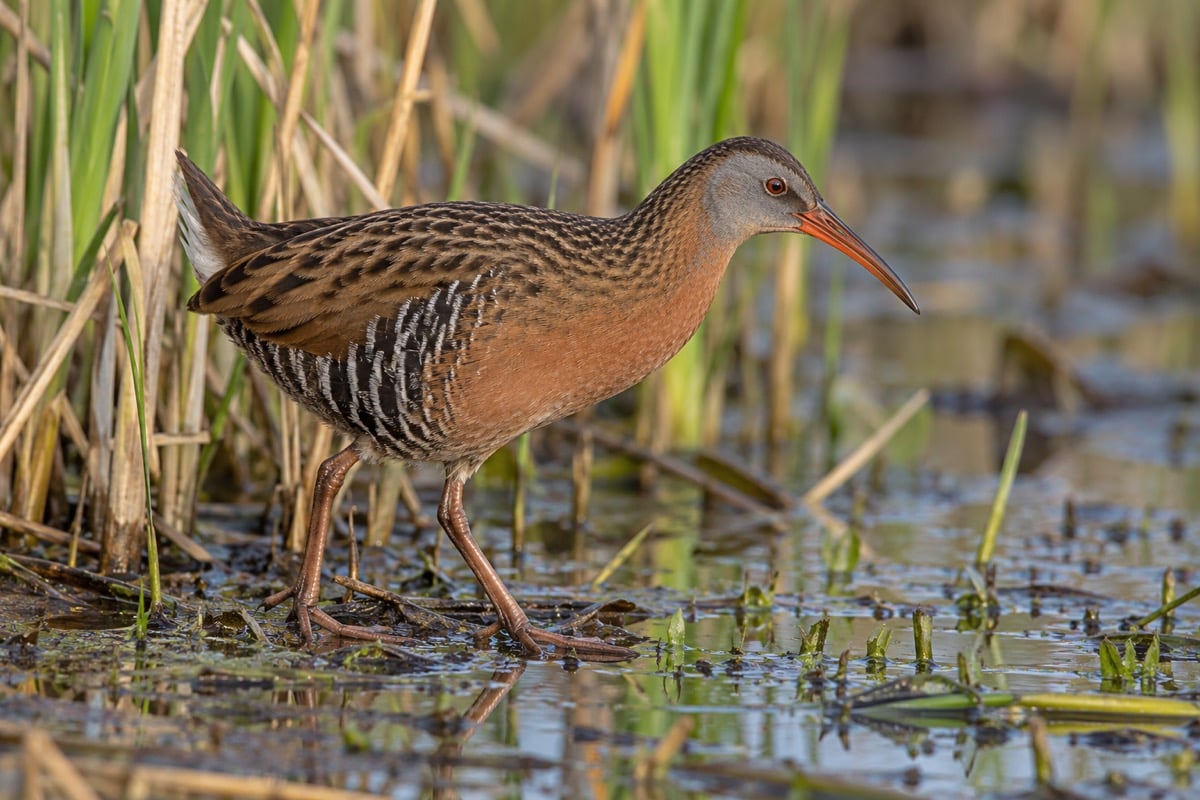
- Scientific Name: Rallus limicola
- Habitat: Freshwater marshes with dense reeds and shallow water
- Size: About 20–27 cm (8–10.6 in) long
- Diet: Insects, worms, snails and other small aquatic animals
The Virginia rail has a long reddish bill, a gray face and rusty underparts. Its narrow body helps it slip between marsh stems, so a bird can be very close without being easy to see. It probes soft mud and shallow water for small animals, often flicking its short tail as it moves. Calls are useful clues to its presence. A dense patch of wetland vegetation offers cover for both feeding and nesting.
37. Visayan Hornbill
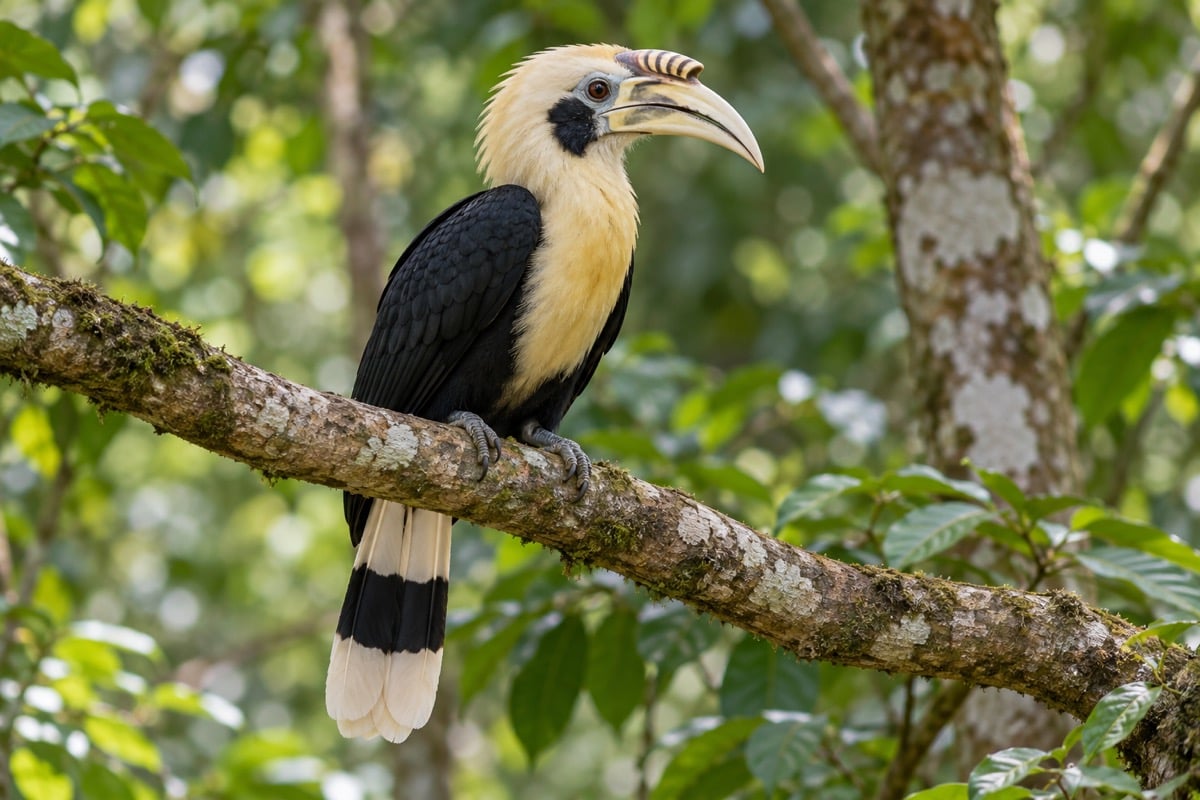
- Scientific Name: Penelopides panini
- Habitat: Tropical forest
- Size: About 45 cm (18 in) long
- Diet: Fruit and small animals, including insects
The Visayan hornbill has a curved bill topped by a small, ridged casque. Males have a pale head and neck with a dark cheek patch, while females are much darker overall. Fruit provides much of their food, but insects and other small animals are eaten too. These hornbills depend on forest trees for feeding and nesting. The loss of mature forest is especially serious for a bird that needs suitable tree cavities to raise its young.
38. Visayan Spotted Deer
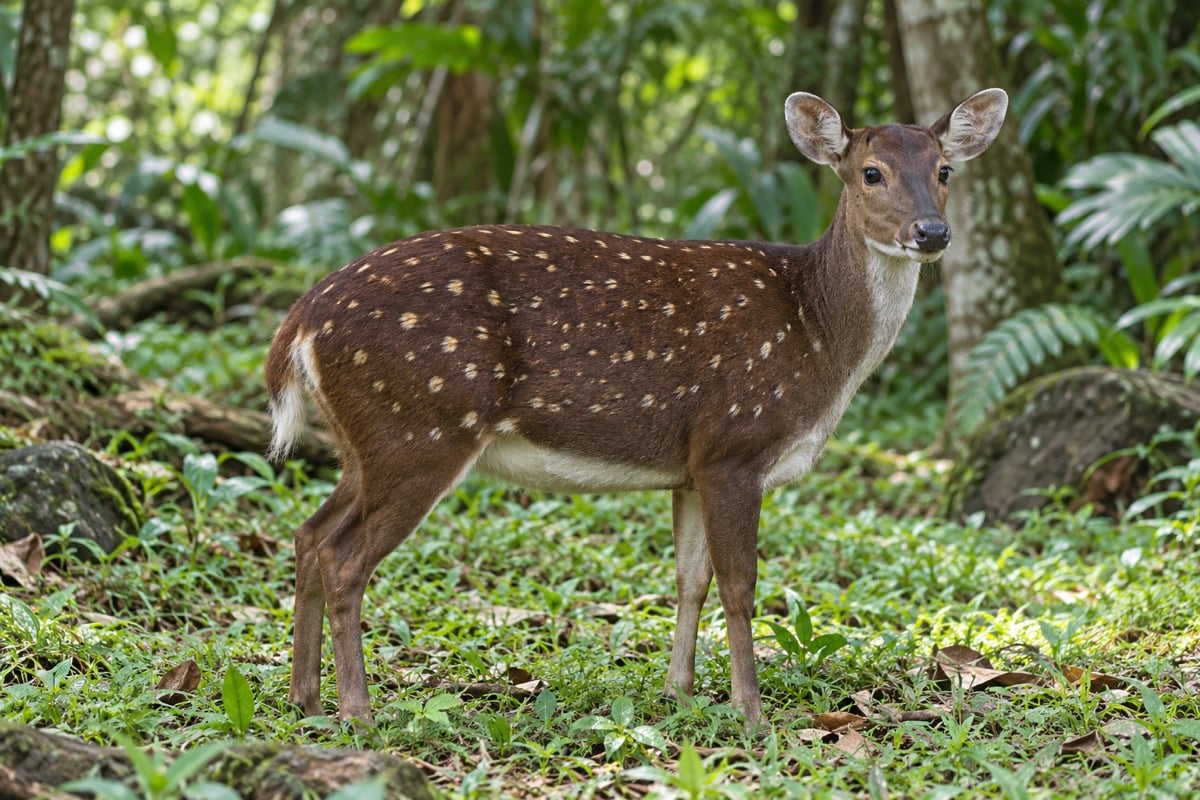
- Scientific Name: Rusa alfredi
- Habitat: Tropical forest and forest clearings
- Size: About 75–80 cm (30–31 in) at the shoulder
- Diet: Leaves, buds, grasses and other plants
The Visayan spotted deer keeps its pale spots into adulthood, scattered across a dark brown coat. A light underside and short legs add to its distinctive appearance. This small forest deer browses on leaves and other fresh growth, including plants around openings in the canopy. Its remaining island habitat is limited, making forest protection especially important. Males grow antlers, while females lack them, but both sexes share the spotted pattern that gives the species its name.
39. Visayan Warty Pig
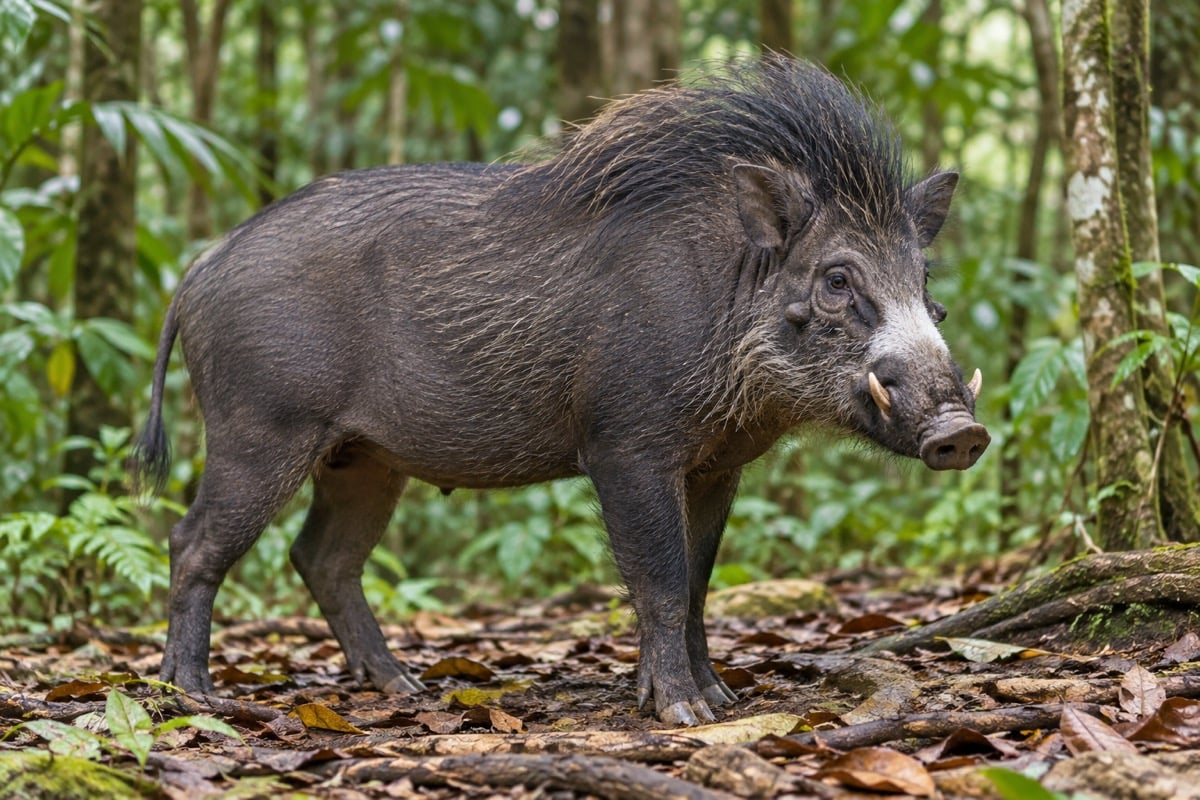
- Scientific Name: Sus cebifrons
- Habitat: Tropical forest
- Size: Body about 1 m (3.3 ft) long
- Diet: Fruit, roots, tubers, fungi and small animals
A male Visayan warty pig grows a remarkable mane during the breeding season, with long bristles that can flop across its face. Fleshy bumps on the cheeks and a pale stripe over the snout are other useful clues. Like other wild pigs, it roots through soil for food and eats both plant and animal material. Young piglets have stripes that fade as they grow. Forest loss and hunting have greatly reduced its island home.
40. Vlamingii Tang
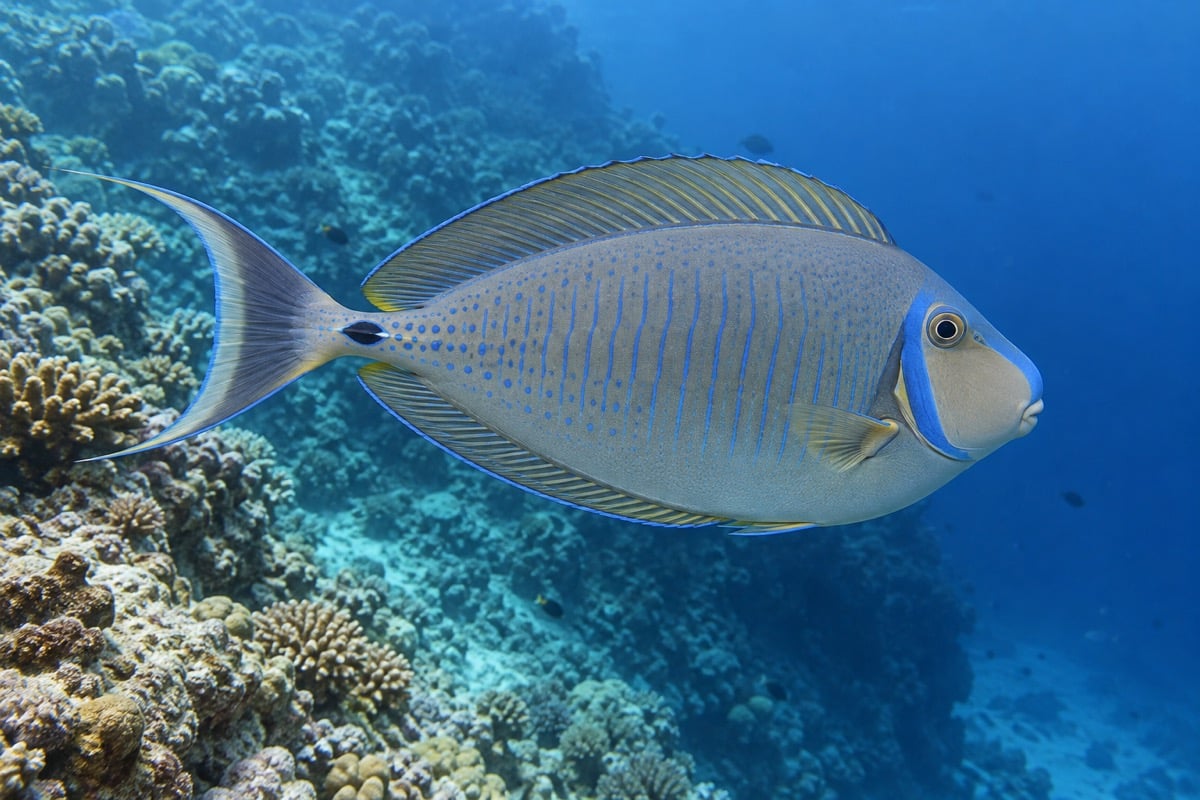
- Scientific Name: Naso vlamingii
- Habitat: Coral reefs, deep lagoons and reef drop-offs
- Size: Up to about 60 cm (24 in) long
- Diet: Zooplankton and other food; omnivorous
Also called the bignose unicornfish, the Vlamingii tang develops a rounded bump on its snout as it matures. Blue lines and spots decorate its body, and adults have tall dorsal and anal fins. It may gather with other individuals in the water above steep reef slopes, where drifting zooplankton provides food. Its blue markings can become more or less conspicuous, so the same fish may look different from one moment to the next. Although the word ‘unicornfish’ suggests a long horn, this species has a rounded projection rather than a spear-like one.
41. Volcano Rabbit
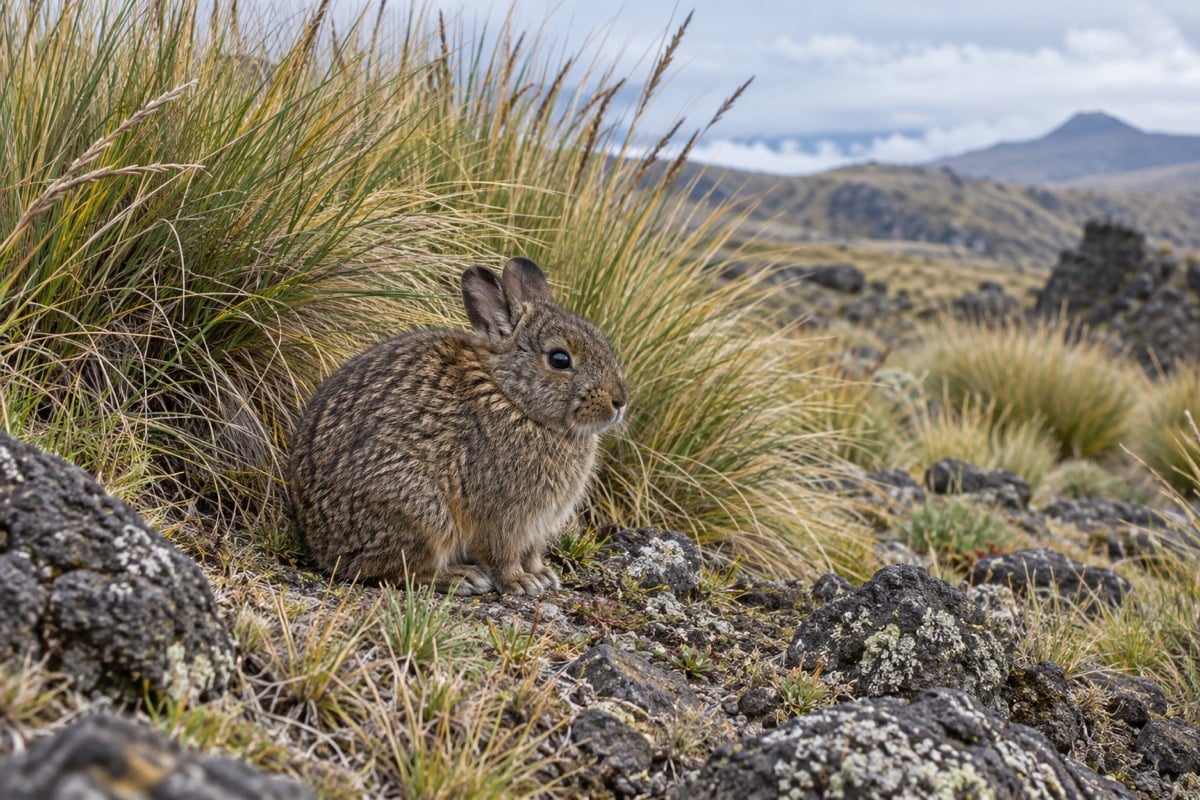
- Scientific Name: Romerolagus diazi
- Habitat: High-altitude bunchgrass among pine and alder woodland
- Size: About 23–32 cm (9–13 in) long
- Diet: Mainly grasses, with other plant material
The volcano rabbit is a compact rabbit with small rounded ears and an almost invisible tail. It lives among the tall bunchgrasses of central Mexico’s volcanic mountains, using the vegetation as both food and cover. Rather than relying on the long-legged speed of a hare, it slips into dense grass and rocky shelter. It can give high-pitched calls when alarmed, a useful detail for an animal that is often easier to hear than see. Its restricted mountain habitat makes the loss and fragmentation of grassland a particular concern.
42. Vulturine Guineafowl
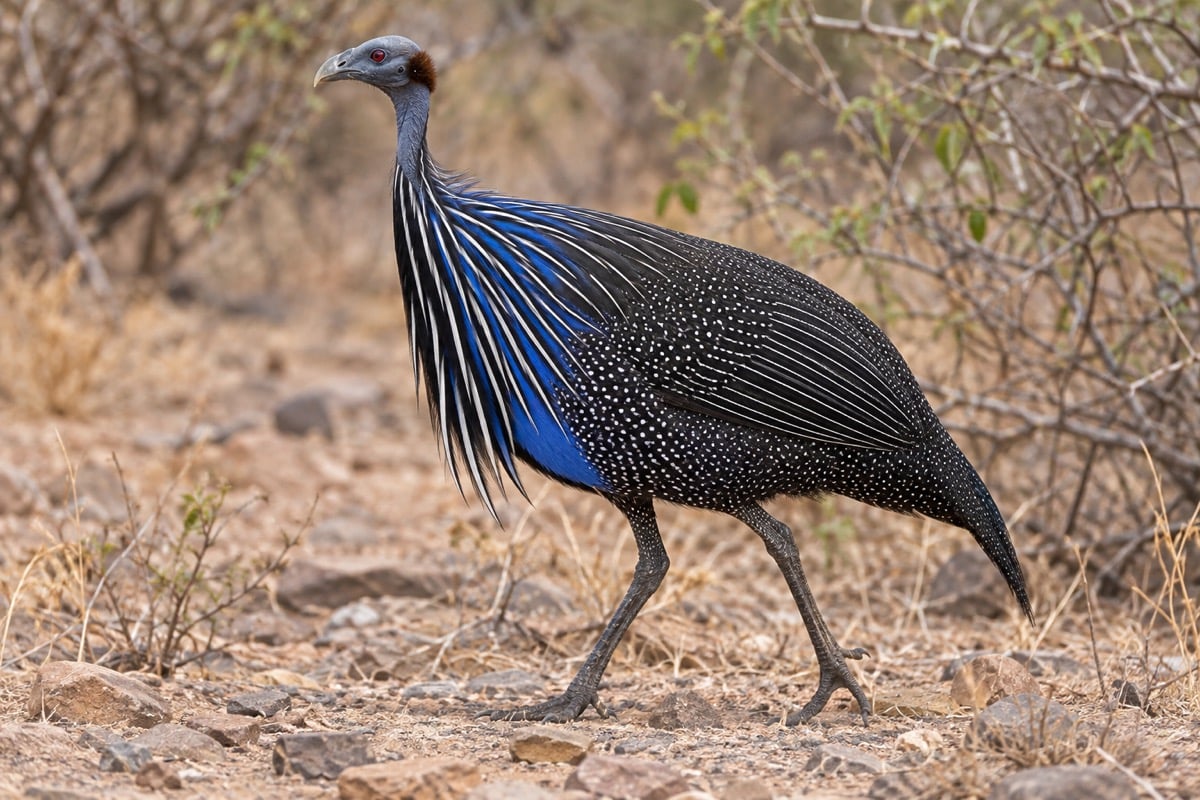
- Scientific Name: Acryllium vulturinum
- Habitat: Dry savanna, scrub and open woodland
- Size: About 1–1.6 kg (2.2–3.5 lb)
- Diet: Seeds, roots, fruit, insects and other small animals
A small bare head on a long neck explains the vulturine guineafowl’s name. Below it sits an elaborate cape of blue, white and black feathers, with white spotting over much of the darker body. This is a ground-foraging bird, often seen moving with a flock as it searches for food. It is a strong runner and usually spends more time on foot than in the air, although it can fly up to trees to roost. Males and females have similar plumage, unlike the sharply different sexes of the violet-backed starling.
More Animals (A-Z)
Vampire finches, velvet worms and violet turacos show how much variety can fit under a single letter. Keep exploring the alphabet below to discover more animals and the places they call home.
A, B, C, D, E, F, G, H, I, J, K, L, M, N, O, P, Q, R, S, T, U, V, W, X, Y, Z


James Miller grew up on the Oregon coast, exploring tide pools and watching seabirds. He has a particular fondness for owls and keeps a notebook of his bird sightings.
Read More »


