Walruses, wolves and wombats are some of the best-known animals that start with W, but they are only the beginning. This letter also brings us tiny butterflies, colorful forest birds, unusual fish and reptiles that spend much of their lives out of sight.
Below, you’ll find 70 animals that start with W. Some are familiar favorites, while others might be completely new to you. Take a look at their pictures and learn a little about where they live, what they eat and how they get through the day.
List of Animals
Here are 70 animals that start with the letter W.
Click an animal name to jump to its full description, image, and more below.
| Animal | Type | Region |
|---|---|---|
| Walking Catfish | Fish | Southeast Asia; introduced elsewhere |
| Wallaby (Red-necked Wallaby) | Mammal | Eastern Australia and Tasmania |
| Wallaroo | Mammal | Australia |
| Walleye | Fish | North America |
| Walrus | Mammal | Arctic seas |
| Wandering Albatross | Bird | Southern Ocean |
| Warthog | Mammal | Sub-Saharan Africa |
| Waterbuck | Mammal | Sub-Saharan Africa |
| Wattled Jacana | Bird | Central and South America |
| Waxwing (Bohemian Waxwing) | Bird | Northern North America, Europe and Asia |
| Weddell Seal | Mammal | Antarctica and nearby islands |
| Wedge-tailed Eagle | Bird | Australia and southern New Guinea |
| Weedy Seadragon | Fish | Southern Australia |
| Weeper Capuchin | Mammal | Northern South America |
| West African Manatee | Mammal | Western Africa, from Senegal to Angola |
| Western Banded Gecko | Reptile | Southwestern United States and northwestern Mexico |
| Western Bluebird | Bird | Western North America |
| Western Diamondback Rattlesnake | Reptile | Southwestern United States and northern Mexico |
| Western Fence Lizard | Reptile | Western United States and northwestern Mexico |
| Western Grebe | Bird | Western North America |
| Western Hognose Snake | Reptile | Central North America |
| Western Kingbird | Bird | Western and central North America; winters farther south |
| Western Lowland Gorilla | Mammal | Central Africa |
| Western Meadowlark | Bird | Western and central North America |
| Western Pygmy Blue | Insect | Southwestern United States through parts of tropical America |
| Western Screech-Owl | Bird | Western North America |
| Western Tanager | Bird | Western North America; winters in Mexico and Central America |
| Western Toad | Amphibian | Western North America |
| Whale Shark | Fish | Tropical and warm seas worldwide |
| Whimbrel | Bird | Northern Eurasia, migrating to warmer coasts |
| Whinchat | Bird | Europe and western Asia; winters in Africa |
| Whiskered Tern | Bird | Parts of Europe, Africa, Asia and Australia |
| White Rhinoceros | Mammal | Africa |
| White Shark | Fish | Temperate and subtropical seas worldwide |
| White Stork | Bird | Europe, parts of western Asia and Africa |
| White-bellied Sea Eagle | Bird | Southern Asia, Southeast Asia and Australasia |
| White-bellied Spider Monkey | Mammal | Northern South America |
| White-cheeked Gibbon | Mammal | Laos and Vietnam |
| White-faced Saki | Mammal | Northeastern South America |
| White-footed Mouse | Mammal | North America |
| White-fronted Bee-eater | Bird | Sub-Saharan Africa |
| White-lipped Peccary | Mammal | Mexico, Central America and South America |
| White-nosed Coati | Mammal | Southwestern United States through Central America |
| White-rumped Vulture | Bird | South Asia |
| White-tailed Deer | Mammal | North, Central and parts of South America |
| White-tailed Eagle | Bird | Europe and Asia |
| White-throated Kingfisher | Bird | Asia, including parts of the Middle East |
| White-throated Sparrow | Bird | North America |
| White-winged Dove | Bird | Warm parts of North and Central America and the Caribbean |
| Whooping Crane | Bird | North America |
| Wild Boar | Mammal | Native to Eurasia and North Africa; introduced widely |
| Wild Turkey | Bird | North America |
| Wild Water Buffalo | Mammal | Scattered parts of South and Southeast Asia |
| Wildebeest (Blue Wildebeest) | Mammal | Eastern and southern Africa |
| Willow Ptarmigan | Bird | Northern North America, Europe and Asia |
| Wilson’s Bird-of-Paradise | Bird | Waigeo and Batanta islands, Indonesia |
| Wilson’s Warbler | Bird | North America; winters mainly in Mexico and Central America |
| Winter Wren | Bird | Eastern North America |
| Wolf (Gray Wolf) | Mammal | Parts of North America, Europe and Asia |
| Wolverine | Mammal | Northern North America, Europe and Asia |
| Wombat (Bare-nosed Wombat) | Mammal | Southeastern Australia, including Tasmania |
| Wood Bison | Mammal | Canada and a reintroduced population in Alaska |
| Wood Duck | Bird | North America |
| Wood Frog | Amphibian | North America |
| Wood Stork | Bird | Warm parts of the Americas |
| Wood Thrush | Bird | Eastern North America; winters in Central America |
| Wood Turtle | Reptile | Northeastern United States and eastern Canada |
| Woolly Monkey | Mammal | Northern South America and the upper Amazon region |
| Worm Snake | Reptile | Eastern United States |
| Wreathed Hornbill | Bird | Northeastern India through Southeast Asia |
1. Walking Catfish
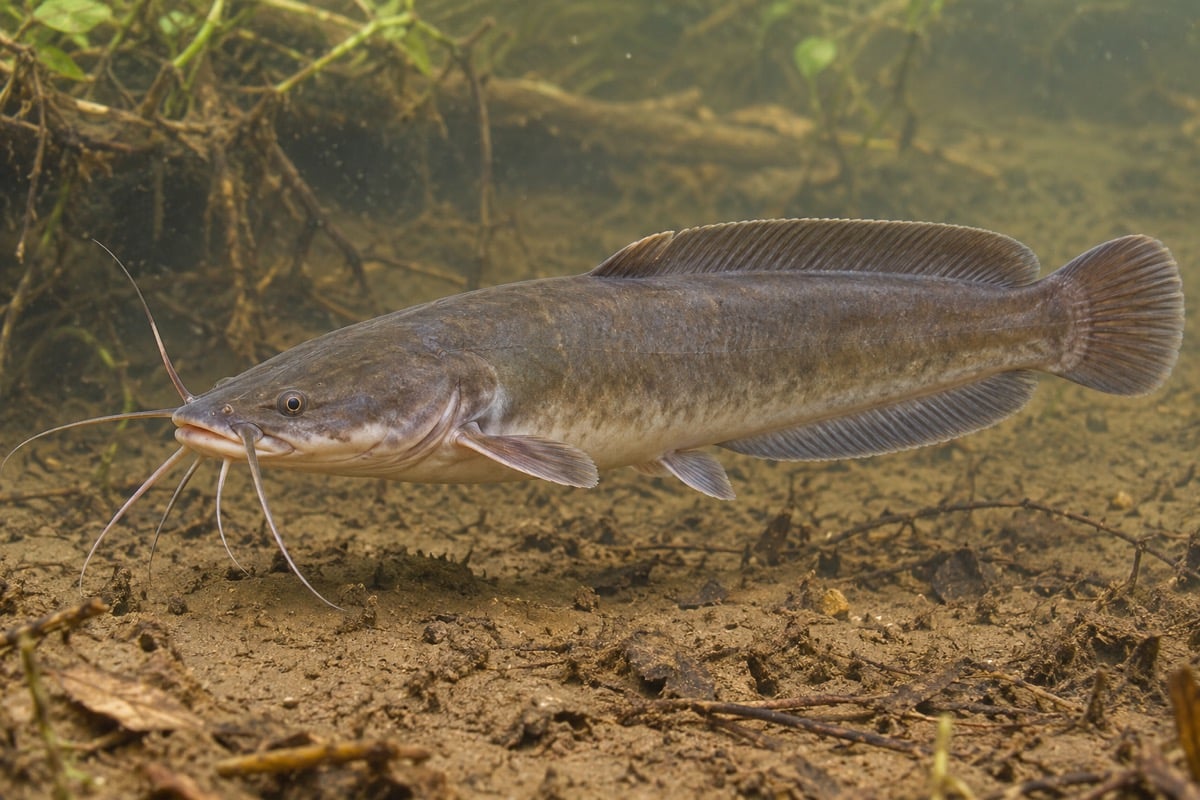
- Scientific Name: Clarias batrachus
- Habitat: Warm ponds, wetlands, rice fields and slow waterways
- Size: Up to about 47 cm (19 in) long
- Diet: Small fish, insects, worms, plant material and organic debris
The walking catfish can leave the water and move across damp ground, using its body and pectoral fins to push forward. An air-breathing organ helps it survive where many other fish would struggle. It still needs moist conditions and usually lives in muddy, shallow water. Whiskerlike barbels help it locate food. Its ability to use low-oxygen pools and eat many different foods makes it an adaptable freshwater hunter.
2. Wallaby (Red-necked Wallaby)
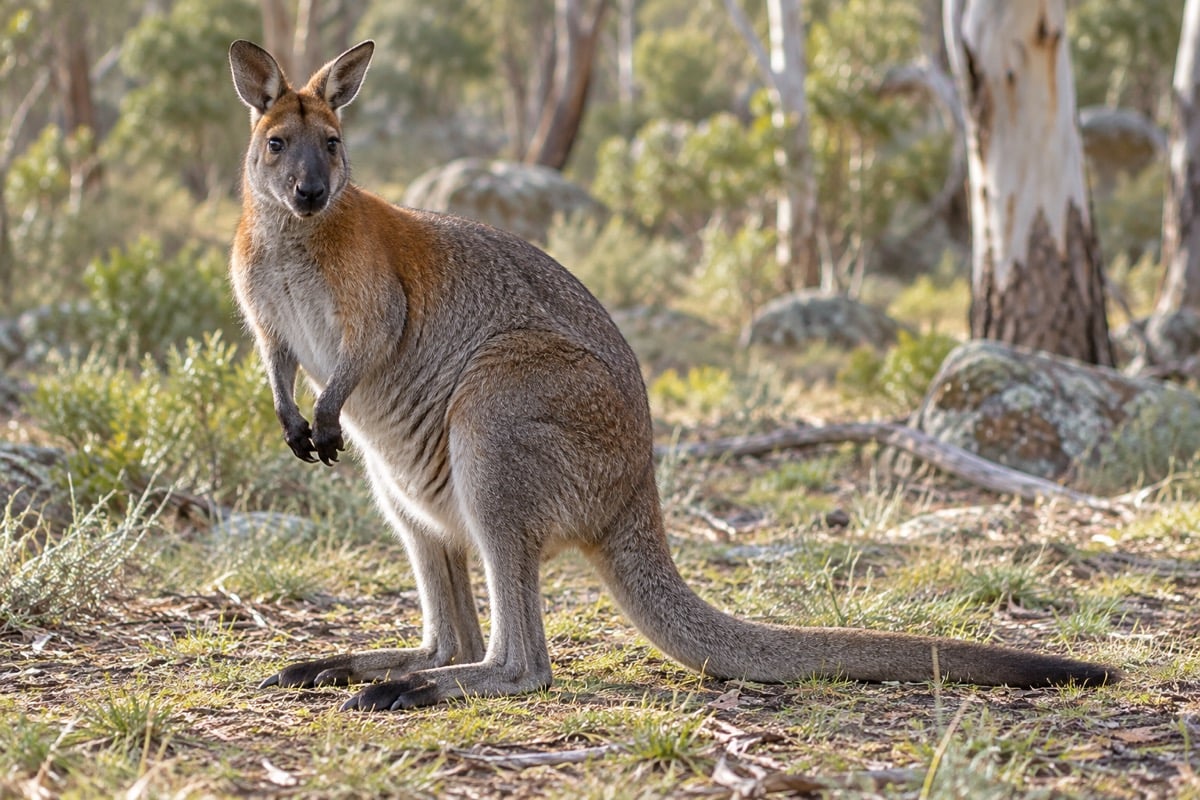
- Scientific Name: Notamacropus rufogriseus
- Habitat: Eucalypt woodland, coastal heath and nearby grassland
- Size: About 14–19 kg (31–42 lb)
- Diet: Grasses, herbs and roots
The red-necked wallaby gets its name from the rusty fur around its shoulders and neck. A long tail helps it balance while hopping and supports its body when it rests. It usually shelters during the hottest part of the day, emerging to graze as temperatures fall. Like other marsupials, a female carries her developing joey in a pouch. Several wallabies may share a feeding area even though they often rest alone.
3. Wallaroo
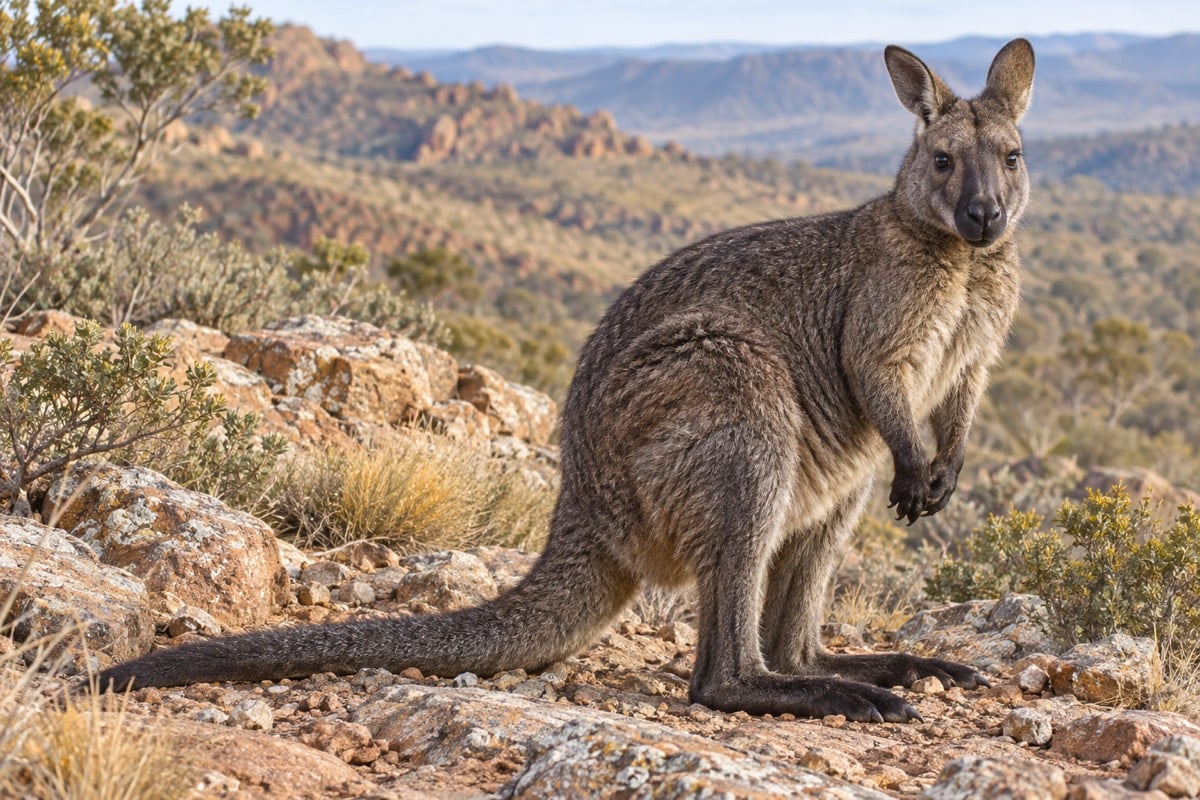
- Scientific Name: Osphranter robustus
- Habitat: Rocky hills, scrub and open woodland
- Size: About 18–42 kg (40–93 lb)
- Diet: Grasses and other plants
The common wallaroo is a stocky member of the kangaroo family with a broad muzzle and powerful hind legs. Rocky country suits it well: rough foot pads help provide grip, while caves and overhangs offer shade. Coat colors range from pale gray to almost black, and males are larger than females. Much of its food comes from grazing. Its ability to conserve water helps it cope with dry Australian landscapes.
4. Walleye
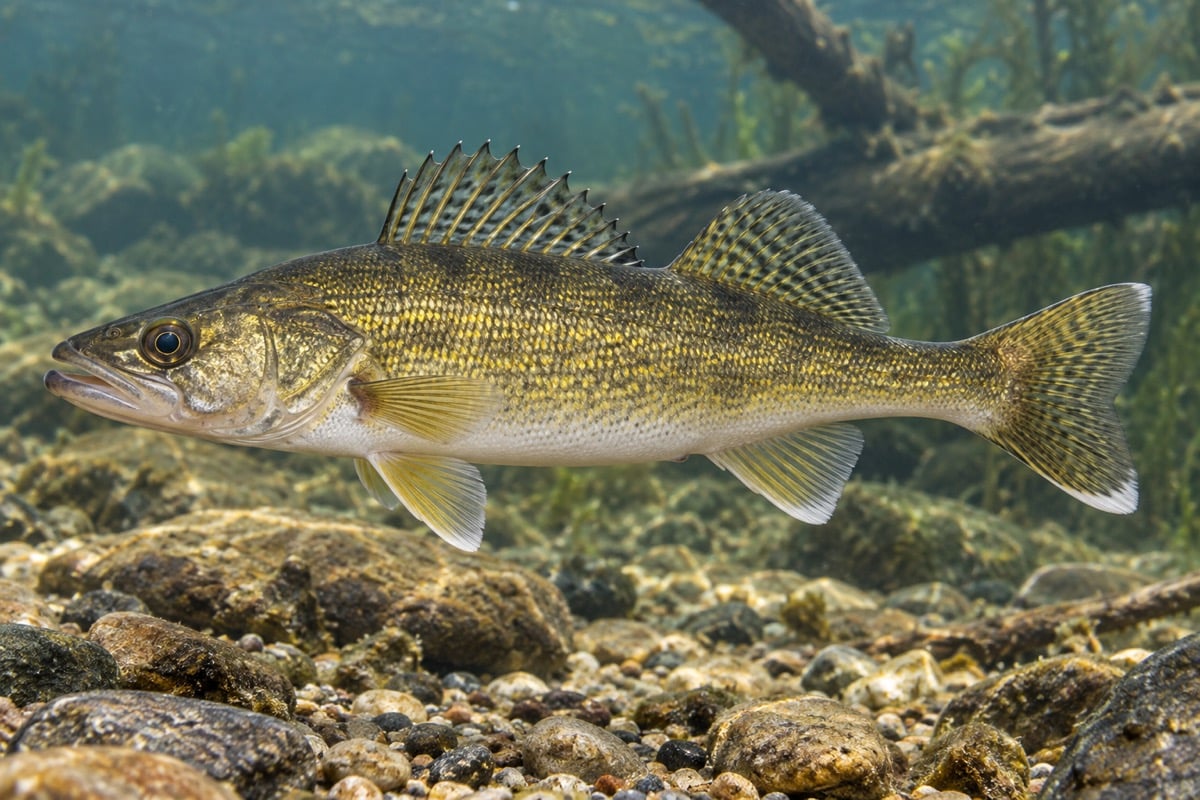
- Scientific Name: Sander vitreus
- Habitat: Freshwater lakes, reservoirs and rivers
- Size: Often about 35–45 cm (14–18 in); larger fish occur
- Diet: Mostly fish, with some aquatic invertebrates
A walleye’s cloudy-looking eyes are well suited to dim water. A reflective layer helps it use available light, making dusk and dawn good times to hunt. Sharp teeth hold slippery fish, while its olive and gold coloring blends into murky surroundings. During brighter hours, it may move deeper or seek cover. Females usually grow larger than males, and the size of adults varies considerably between lakes and rivers.
5. Walrus
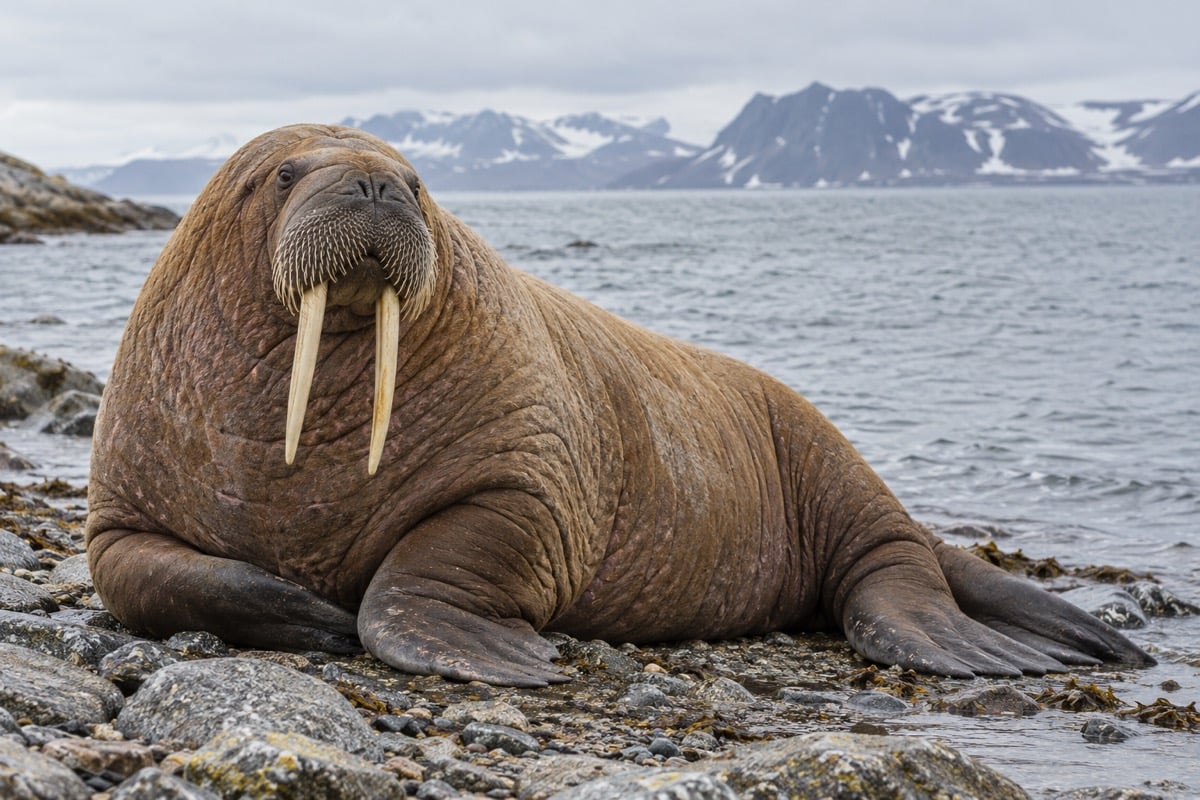
- Scientific Name: Odobenus rosmarus
- Habitat: Shallow coastal seas, sea ice and shorelines
- Size: Pacific males roughly 2.1–3.7 m (7–12 ft) long; females smaller
- Diet: Mainly seafloor invertebrates, especially clams
Both male and female walruses grow tusks. These elongated canine teeth can help them haul their heavy bodies onto ice and are also used in displays and disputes. The dense whiskers around the muzzle have a different job: finding food on the seabed. A walrus can draw the soft parts of a clam from its shell using powerful suction. It spends time feeding underwater before returning to the surface to breathe or gathering with other walruses on ice and land. The Pacific walrus, pictured here, lives mainly around the Bering and Chukchi seas.
6. Wandering Albatross
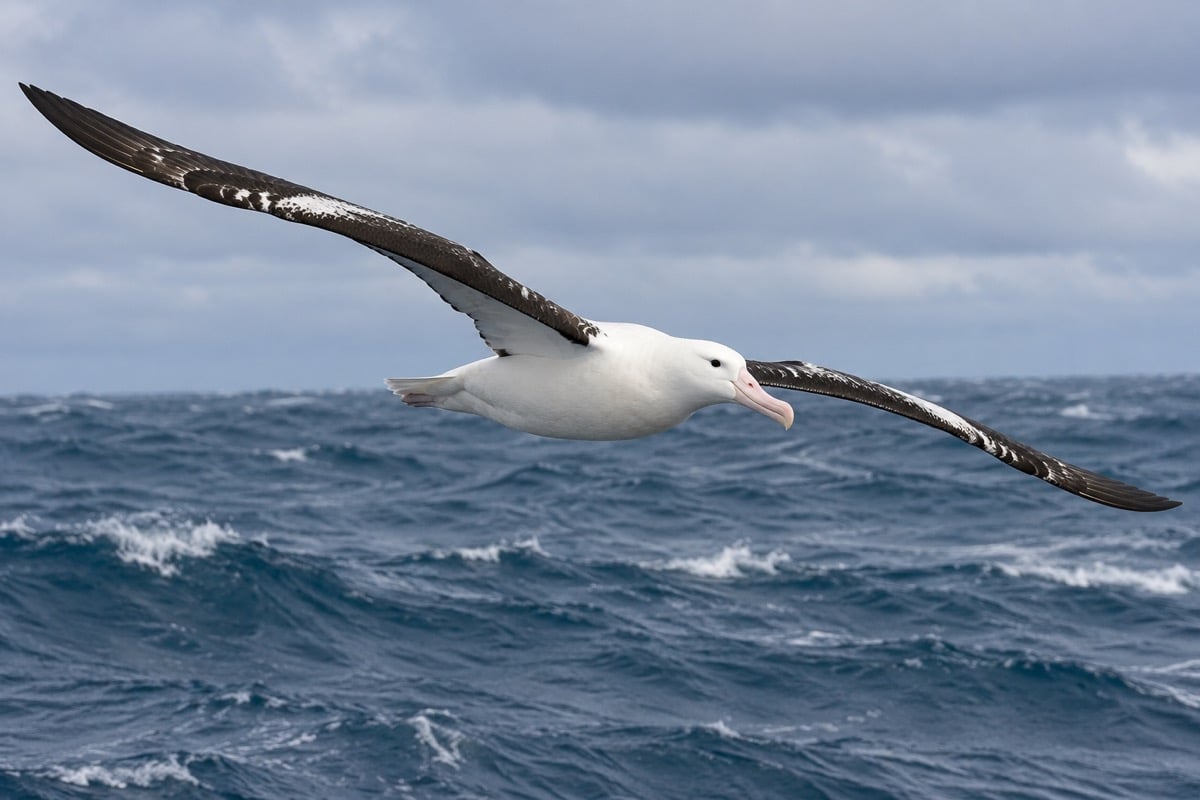
- Scientific Name: Diomedea exulans
- Habitat: Open ocean; breeds on subantarctic islands
- Size: Wingspan about 3 m (10 ft), sometimes larger
- Diet: Squid, fish and other marine animals
The wandering albatross has very long, narrow wings that carry it across enormous stretches of ocean. Winds help it travel efficiently above the waves, while its hooked bill is suited to picking up marine prey. Raising a chick takes so long that a successful pair generally breeds only every other year. Both parents share the work, from incubating their single egg to making feeding trips at sea. Young birds have much darker plumage than older adults, which develop increasingly white heads and bodies.
7. Warthog
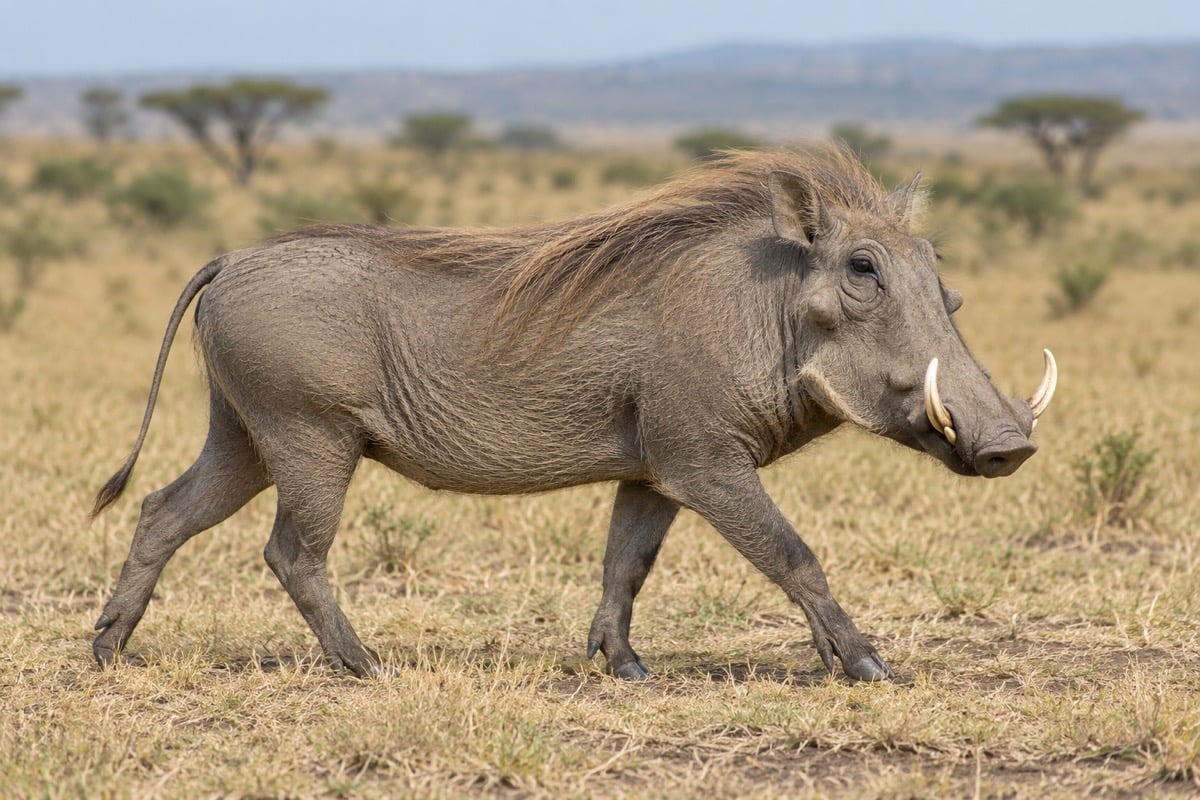
- Scientific Name: Phacochoerus africanus
- Habitat: Savanna, grassland and open woodland
- Size: About 55–85 cm (22–33 in) tall at the shoulder
- Diet: Mostly grasses and roots, with other foods when available
A warthog often bends down onto its front knees to graze. Its broad snout helps it dig for roots, while the coarse mane and prominent tusks give this wild pig a distinctive outline. The facial ‘warts’ are thickened patches of skin. For shelter, a warthog may use a burrow dug by an aardvark. It commonly backs into the entrance, leaving its tusks facing outward. When it runs across open ground, its thin tail often points upward, making a moving family group easier to follow through the grass.
8. Waterbuck
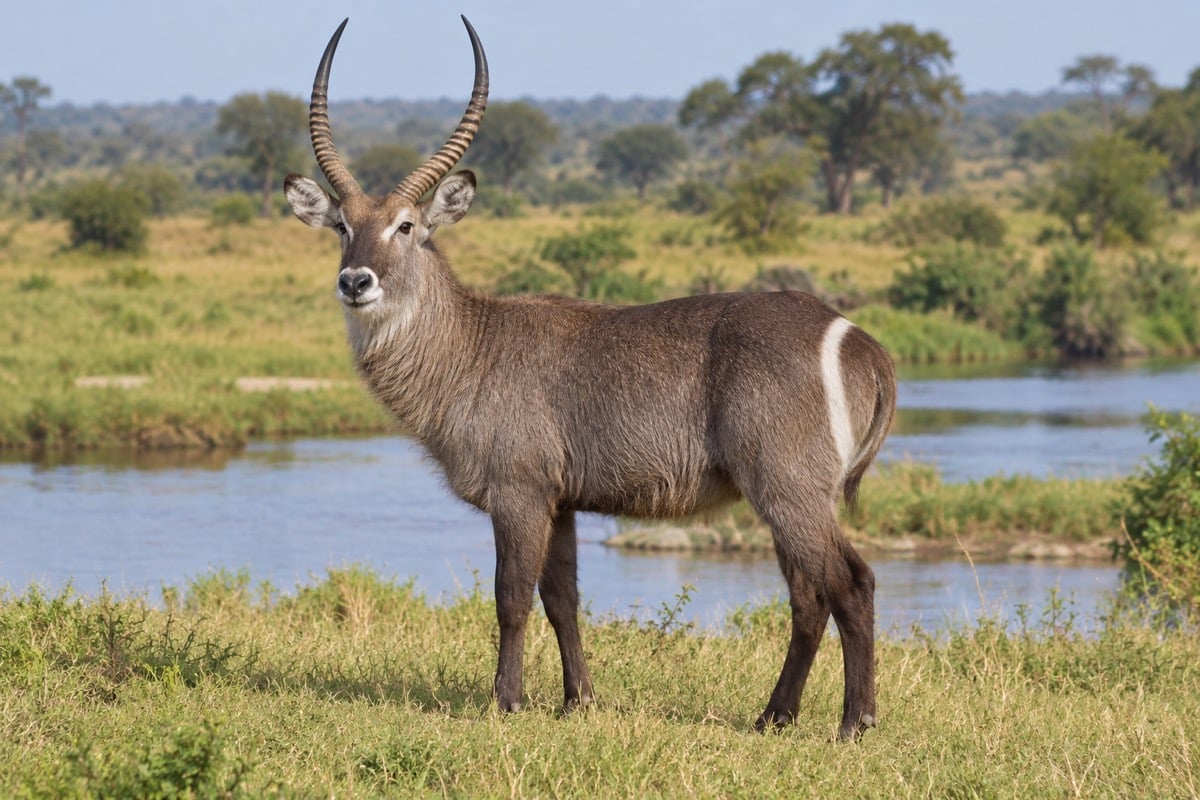
- Scientific Name: Kobus ellipsiprymnus
- Habitat: Grassland and woodland near reliable water
- Size: Shoulder height about 1.2–1.36 m (3.9–4.5 ft)
- Diet: Mostly grasses
The waterbuck is a large antelope with a shaggy coat and a strong association with water. Grassy feeding areas close to rivers, lakes or other drinking places are especially useful habitat. Males carry long, ridged horns that curve backward and then upward; females lack horns. A male may defend a territory, while females and younger animals move in groups. Despite its name, this is a land-grazing antelope, so access to both suitable vegetation and water shapes where it can live.
9. Wattled Jacana
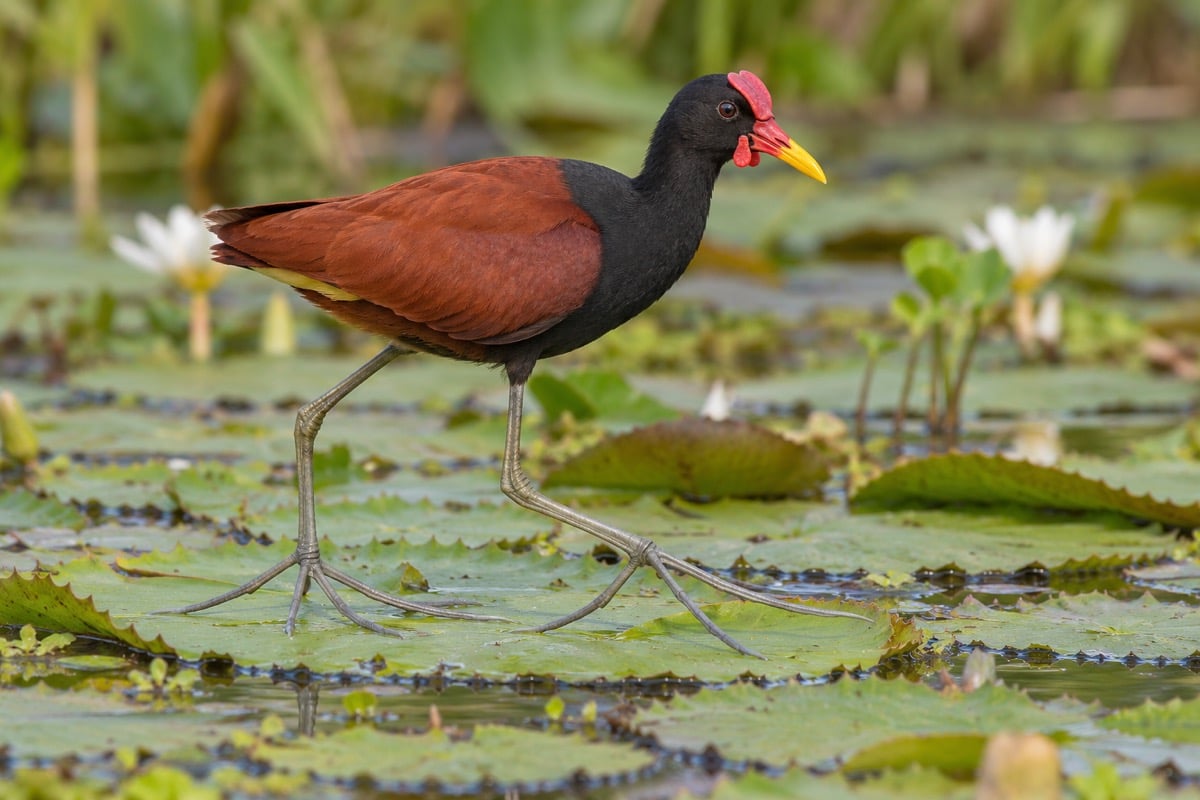
- Scientific Name: Jacana jacana
- Habitat: Shallow wetlands with floating vegetation
- Size: About 21–25 cm (8–10 in) long
- Diet: Insects, snails and other small aquatic animals
The wattled jacana’s extraordinarily long toes spread its weight across lily pads and other floating plants. That makes it look as though it can walk over water. A red shield and small wattles decorate its face above a yellow bill. Males take the main role in incubating eggs and tending chicks, while females are larger. The birds search the vegetation for small animals, turning leaves to find food hidden underneath.
10. Waxwing (Bohemian Waxwing)
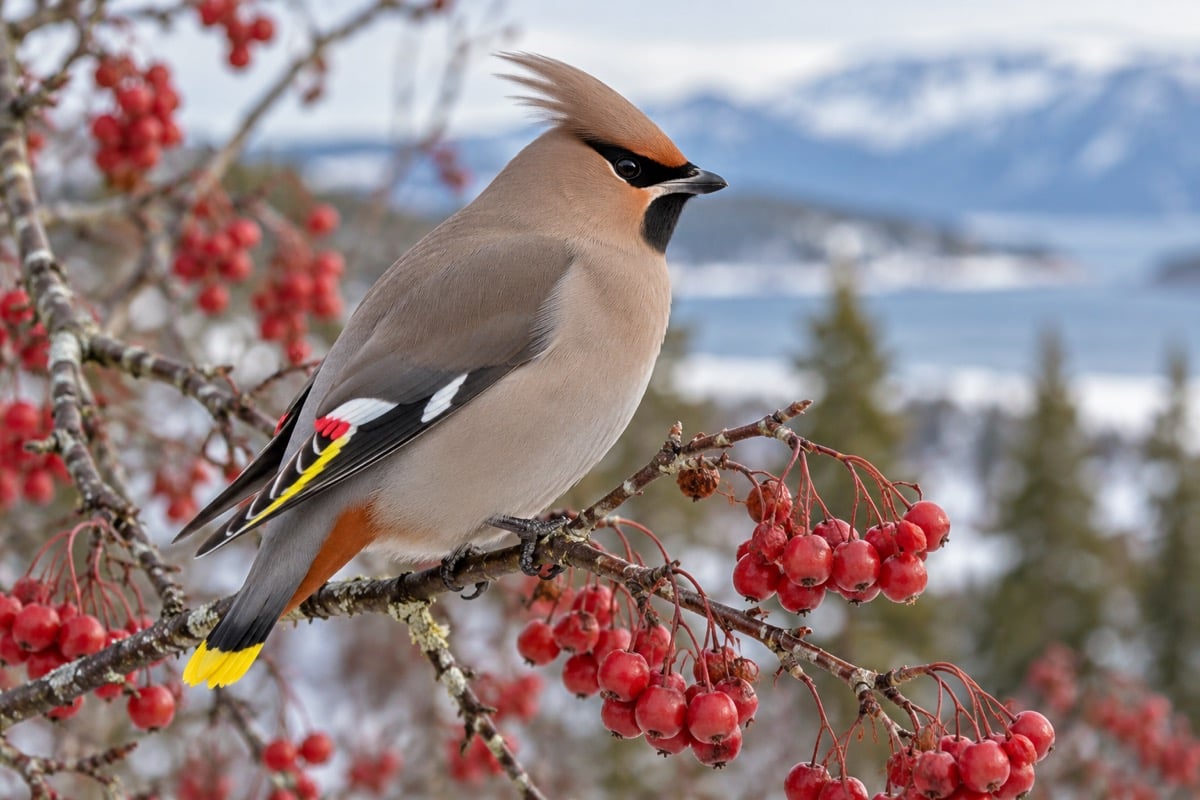
- Scientific Name: Bombycilla garrulus
- Habitat: Open northern forest; fruiting trees and shrubs in winter
- Size: About 16–19 cm (6.3–7.5 in) long
- Diet: Fruit and insects
The Bohemian waxwing has silky-looking plumage, a swept-back crest and small red tips on some wing feathers that resemble drops of sealing wax. In winter, flocks roam widely in search of berries, sometimes turning up in gardens and towns. A loaded fruit tree can attract many birds at once. Rusty feathers beneath the tail help distinguish it from the smaller cedar waxwing. Insects become more important during the warmer months.
11. Weddell Seal
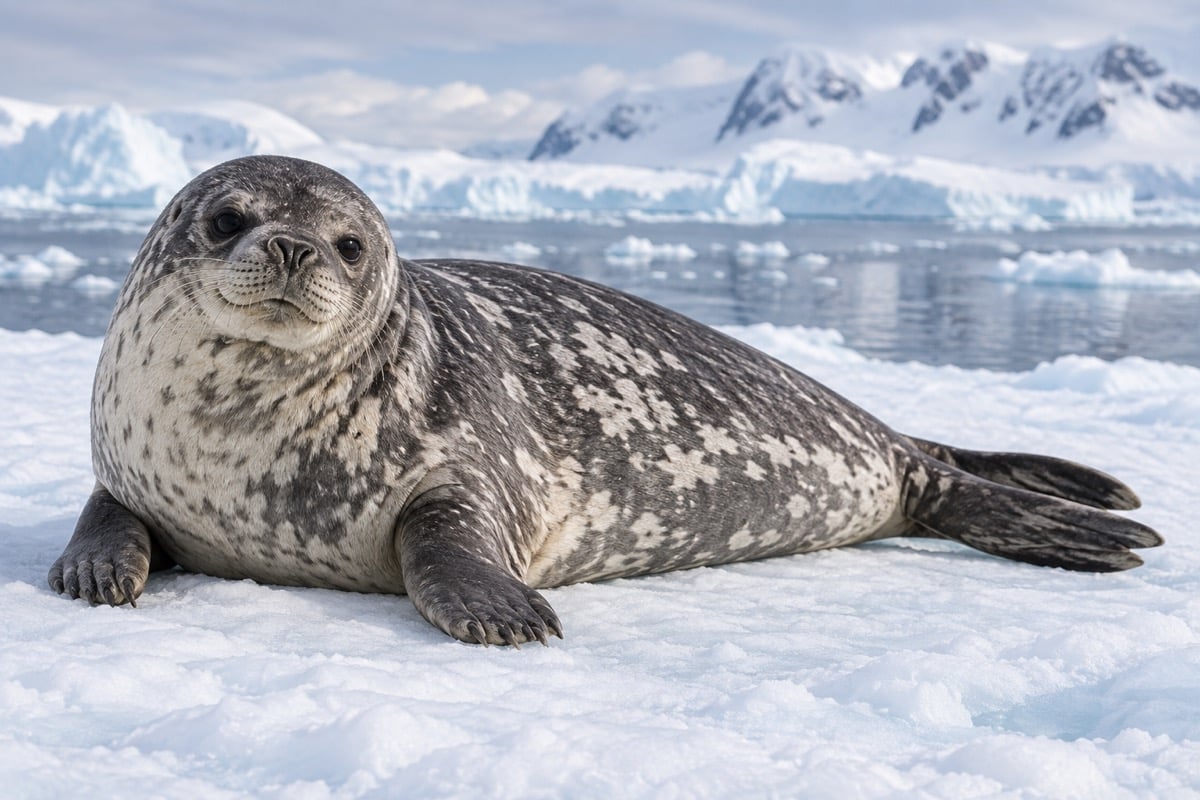
- Scientific Name: Leptonychotes weddellii
- Habitat: Coastal sea ice and the ocean beneath it
- Size: About 2.5–3.5 m (8–11.5 ft) long
- Diet: Fish, squid and crustaceans
A Weddell seal may look relaxed on the ice, but it is an accomplished underwater hunter. It can make deep dives beneath the Antarctic surface while searching for fish and squid. Access to air is essential, so it uses cracks and maintains breathing holes in thinner ice with its teeth. Dark and pale patches cover its gray coat. Females are generally larger than males and give birth on the sea ice.
12. Wedge-tailed Eagle
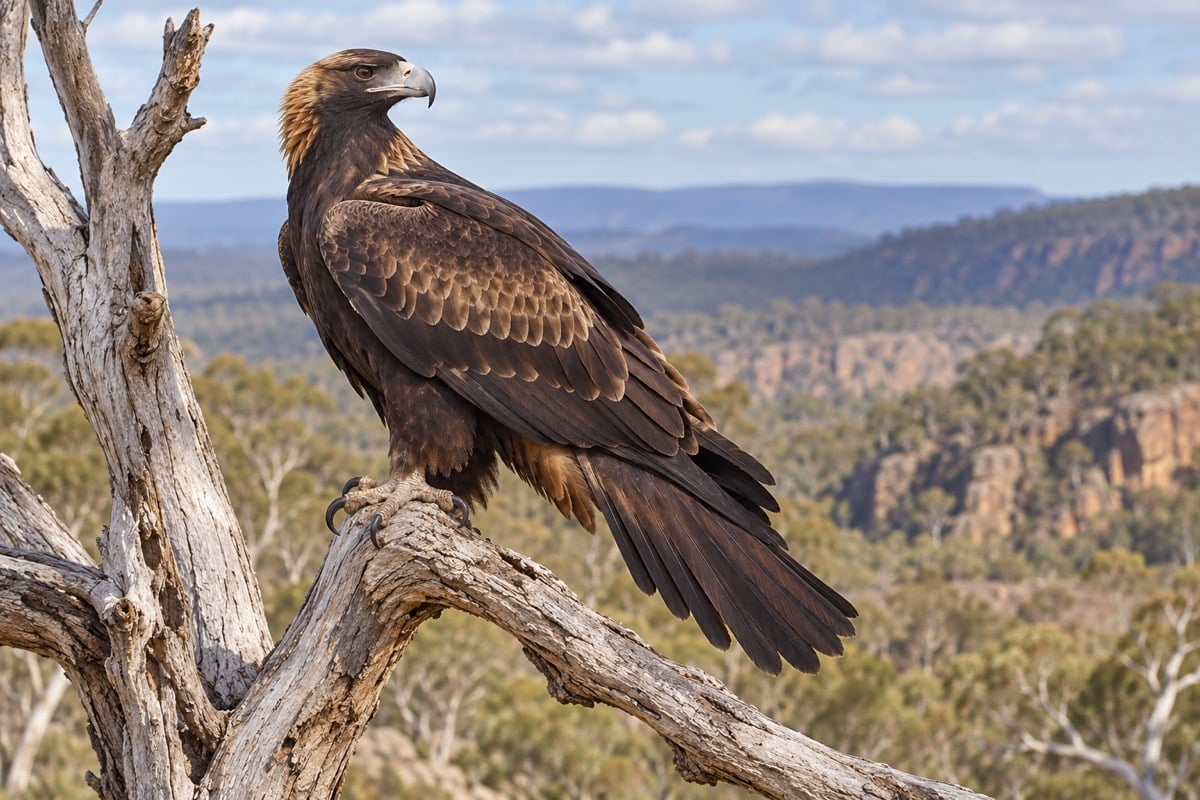
- Scientific Name: Aquila audax
- Habitat: Open country, woodland and forest
- Size: About 87–105 cm (34–41 in) long
- Diet: Carrion, rabbits, other mammals, birds and reptiles
The wedge-tailed eagle has a long, diamond-shaped tail that makes its silhouette distinctive as it circles overhead. Adults become very dark with age, while younger birds show more reddish brown. Broad wings allow it to travel on rising air with few wingbeats. It catches live prey and also feeds on carcasses. Pairs build large stick nests, often in a tall tree with a clear view of the surrounding country.
13. Weedy Seadragon
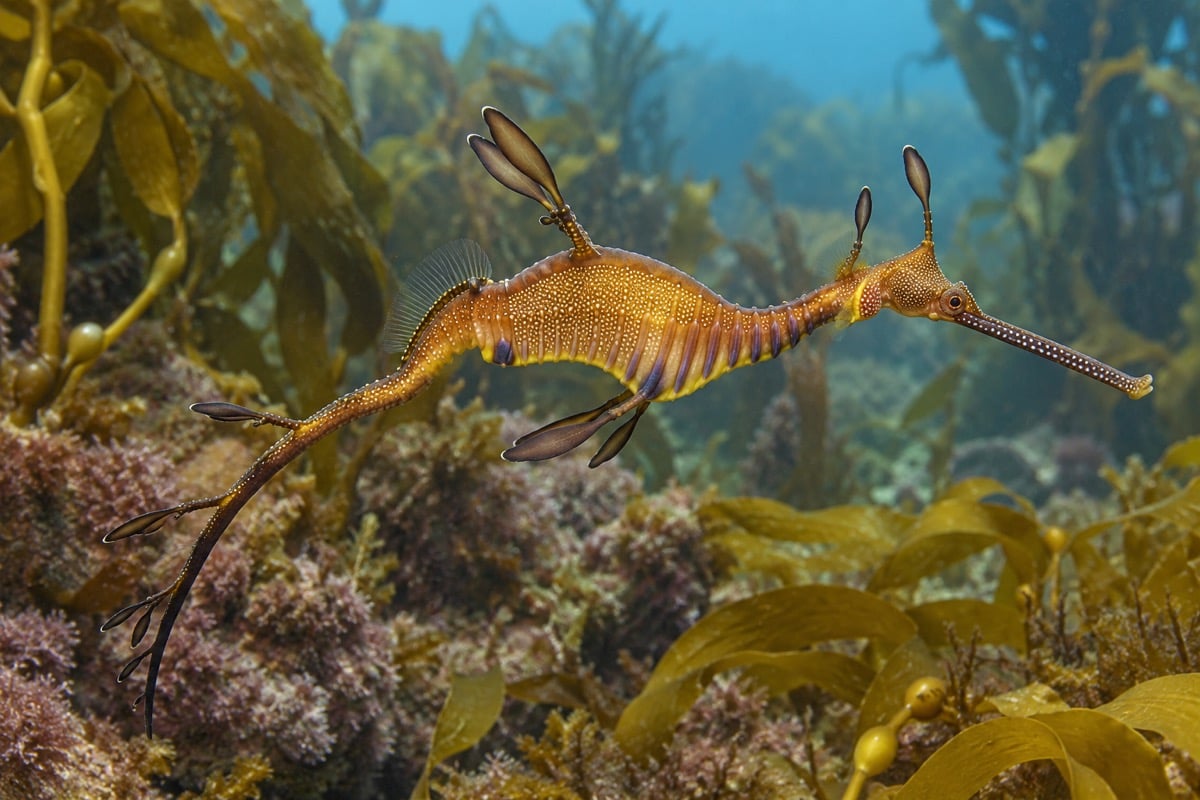
- Scientific Name: Phyllopteryx taeniolatus
- Habitat: Kelp-covered rocky reefs and sheltered coastal waters
- Size: Often 30 cm (12 in); up to about 45 cm (18 in)
- Diet: Small crustaceans, especially mysid shrimp
The weedy seadragon looks like a drifting piece of seaweed, with small leaflike growths breaking up the outline of its long body. A narrow snout draws in tiny crustaceans. It is related to seahorses, but a male carries eggs attached beneath his tail instead of inside a pouch. This fish is a slow swimmer, relying heavily on camouflage. Kelp and other coastal vegetation provide the background that helps it disappear.
14. Weeper Capuchin
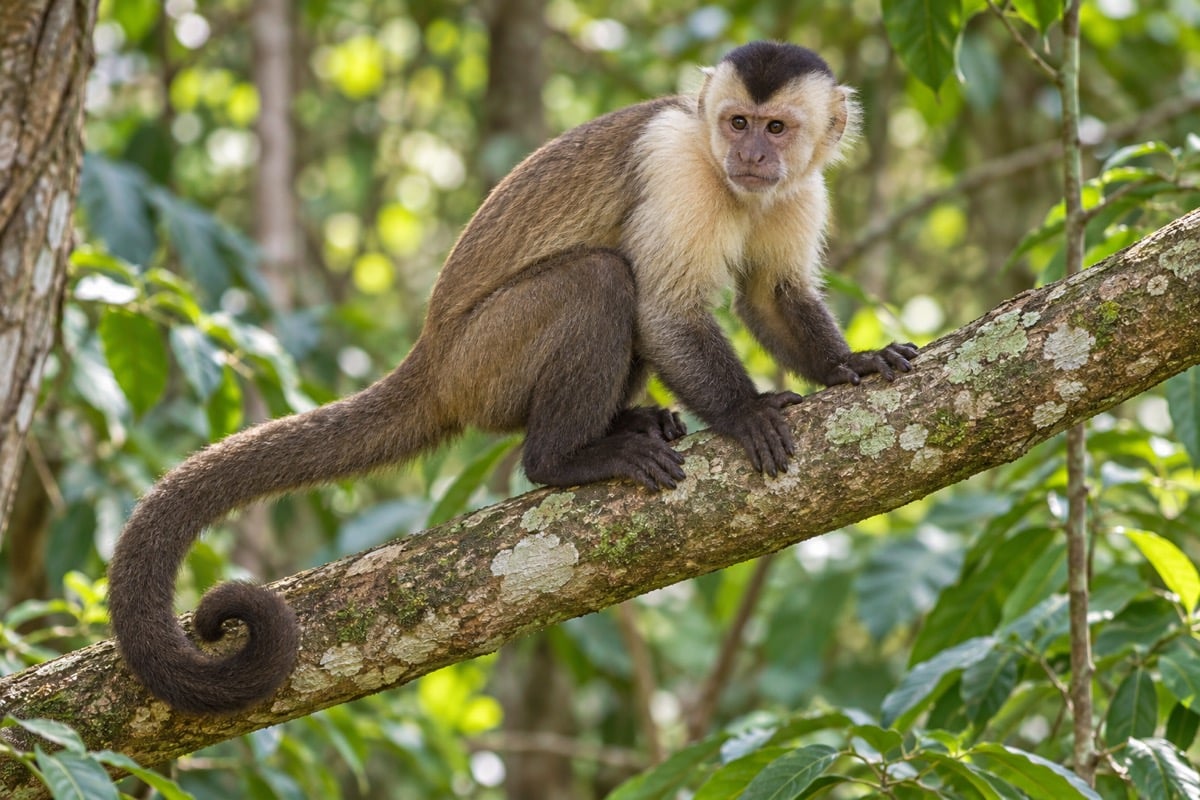
- Scientific Name: Cebus olivaceus
- Habitat: Tropical forest and seasonally dry woodland
- Size: About 2.5–3.6 kg (5.5–8 lb)
- Diet: Fruit, seeds, nuts, insects and small animals
A dark wedge of fur across the forehead gives the weeper capuchin another name: the wedge-capped capuchin. These monkeys search branches and leaf litter for a wide range of foods, using their hands to investigate possible meals. Their long tails can curl around supports as they move through trees. They live in social groups, where grooming and close contact are part of daily life. Fruit eating also helps them carry seeds through the forest.
15. West African Manatee
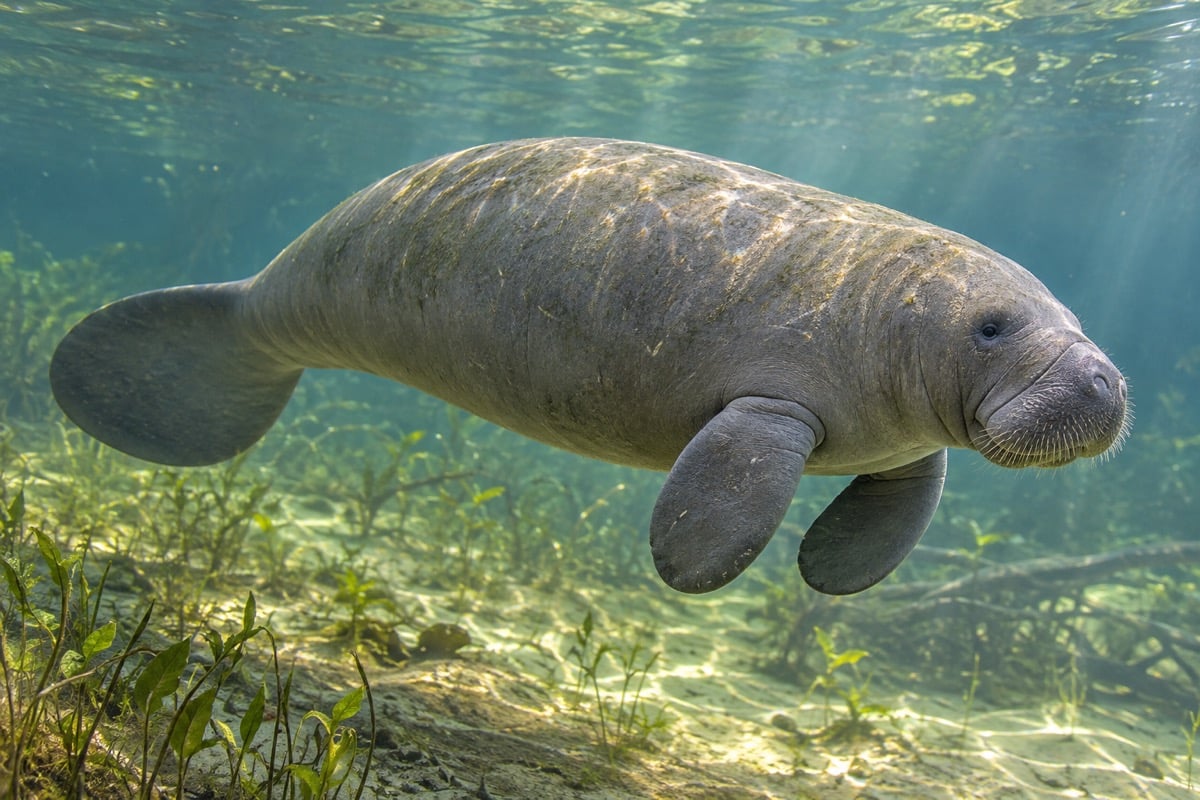
- Scientific Name: Trichechus senegalensis
- Habitat: Rivers, estuaries, lagoons and sheltered coastal waters
- Size: Up to about 4.5 m (15 ft) long
- Diet: Mostly aquatic plants and waterside vegetation
The West African manatee has a broad, rounded tail and two flippers that help it steer through shallow water. Its flexible lips gather plants from below the surface and from overhanging riverbanks. Although it lives in water, it must rise to breathe air. Calves remain close to their mothers while learning to find food and navigate waterways. This species uses both rivers and coastal habitats across a long stretch of western Africa.
16. Western Banded Gecko
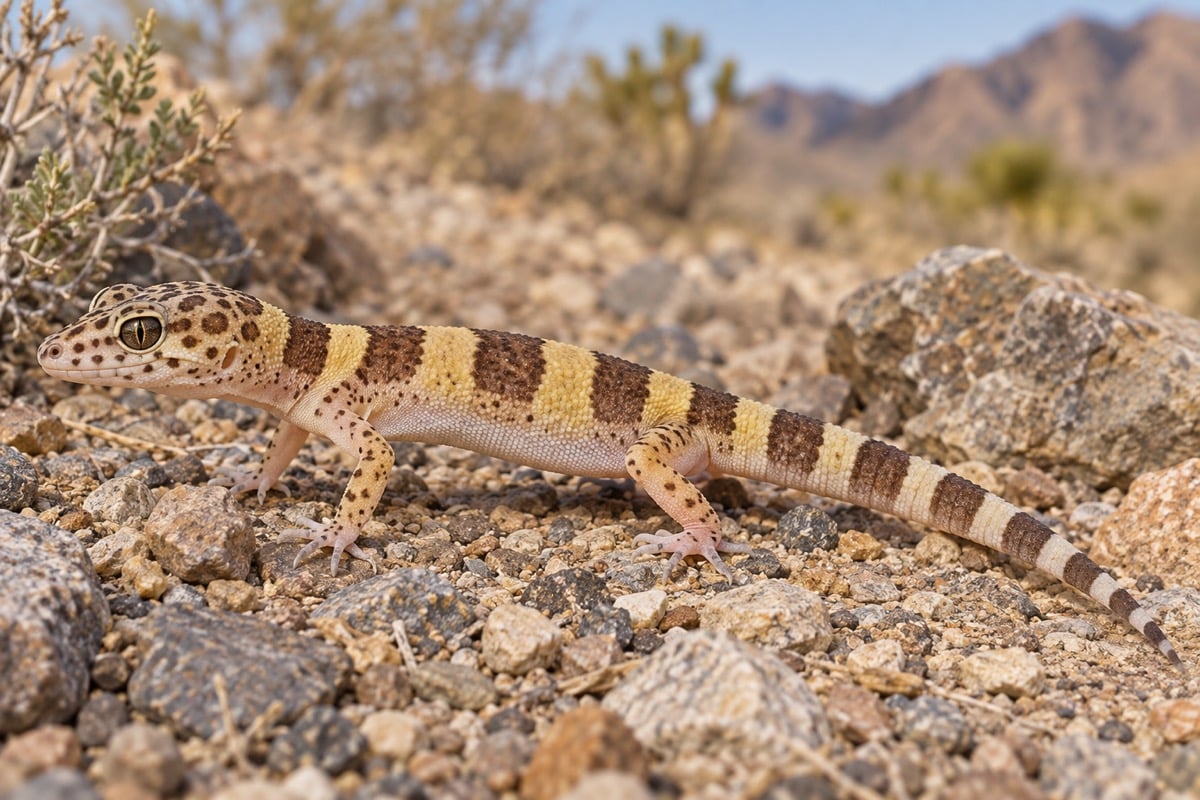
- Scientific Name: Coleonyx variegatus
- Habitat: Deserts, rocky slopes and dry grassland
- Size: Body up to about 7.5 cm (3 in), excluding the tail
- Diet: Insects, spiders and other small invertebrates
The western banded gecko has soft-looking skin, dark crossbands and a thick tail. Unlike many familiar wall-climbing geckos, it has movable eyelids and slender toes without broad adhesive pads. It usually hunts at night and hides beneath rocks or other shelter by day. The tail stores reserves and can also break away during an attack. Regrowing it takes energy, making that escape strategy useful but costly for a small desert animal.
17. Western Bluebird
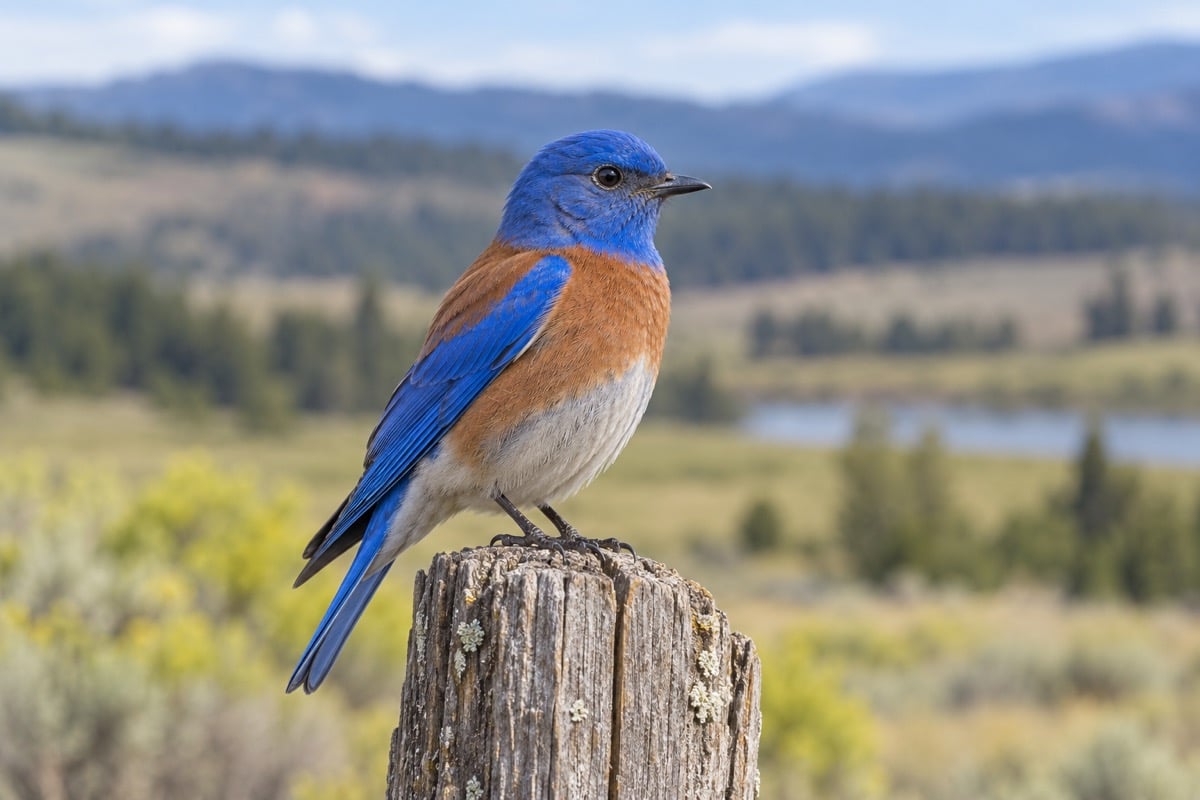
- Scientific Name: Sialia mexicana
- Habitat: Open woodland, farmland and gardens
- Size: About 16–19 cm (6.3–7.5 in) long
- Diet: Insects, berries and other fruit
A male western bluebird has a blue head and throat above a rusty-orange chest. It often waits on a low perch, then drops to the ground after an insect. Trees provide both hunting posts and cavities for nesting, though the birds also use suitable nest boxes. Outside the breeding season, small flocks may gather around berry bushes. Females are less brightly colored, with gray-brown plumage and blue showing on the wings and tail.
18. Western Diamondback Rattlesnake
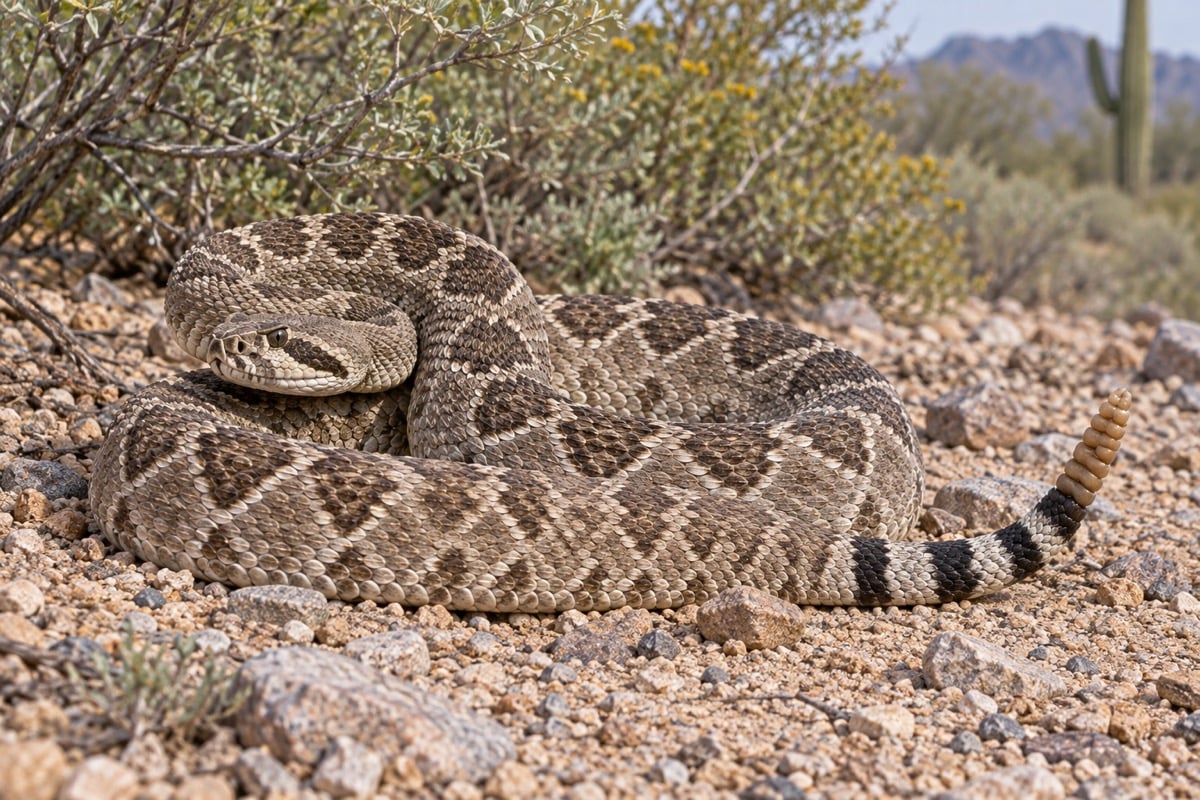
- Scientific Name: Crotalus atrox
- Habitat: Desert, grassland, scrub and rocky country
- Size: Usually 0.9–1.5 m (3–5 ft) long; large individuals exceed this
- Diet: Small mammals, birds and lizards
Dark diamond-shaped markings run along this rattlesnake’s back, and contrasting bands encircle the tail ahead of the rattle. It is a venomous predator that waits for prey rather than chasing it over long distances. You cannot reliably work out a rattlesnake’s age by counting its rattle segments. A new segment forms when the snake sheds its skin, which can happen more than once a year, and older segments can break off. In the wild, give any rattlesnake plenty of room and allow it a clear escape route.
19. Western Fence Lizard
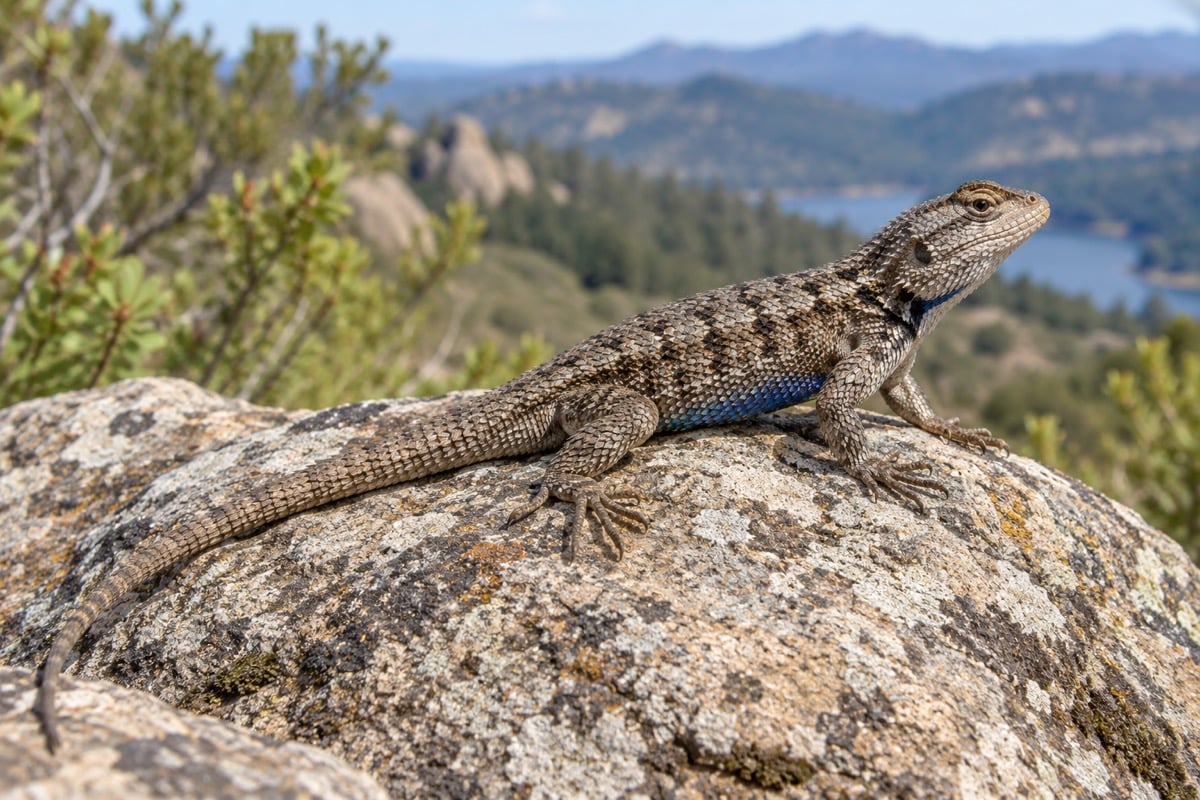
- Scientific Name: Sceloporus occidentalis
- Habitat: Grassland, scrub, woodland and rocky clearings
- Size: Up to about 21 cm (8.4 in), including the tail
- Diet: Insects and spiders
The western fence lizard often rests on a sunny rock, fence or fallen branch. Rough, pointed scales give its back a spiny appearance. Males have bright blue patches on the belly and throat, though these can be hidden while the animal is viewed from above. A quick movement in the vegetation may reveal it hunting insects. It uses several open and wooded habitats but generally avoids both very wet forest and the harshest desert.
20. Western Grebe
- Scientific Name: Aechmophorus occidentalis
- Habitat: Freshwater lakes in summer and coastal waters in winter
- Size: About 55–75 cm (22–30 in) long
- Diet: Mostly fish, with aquatic invertebrates
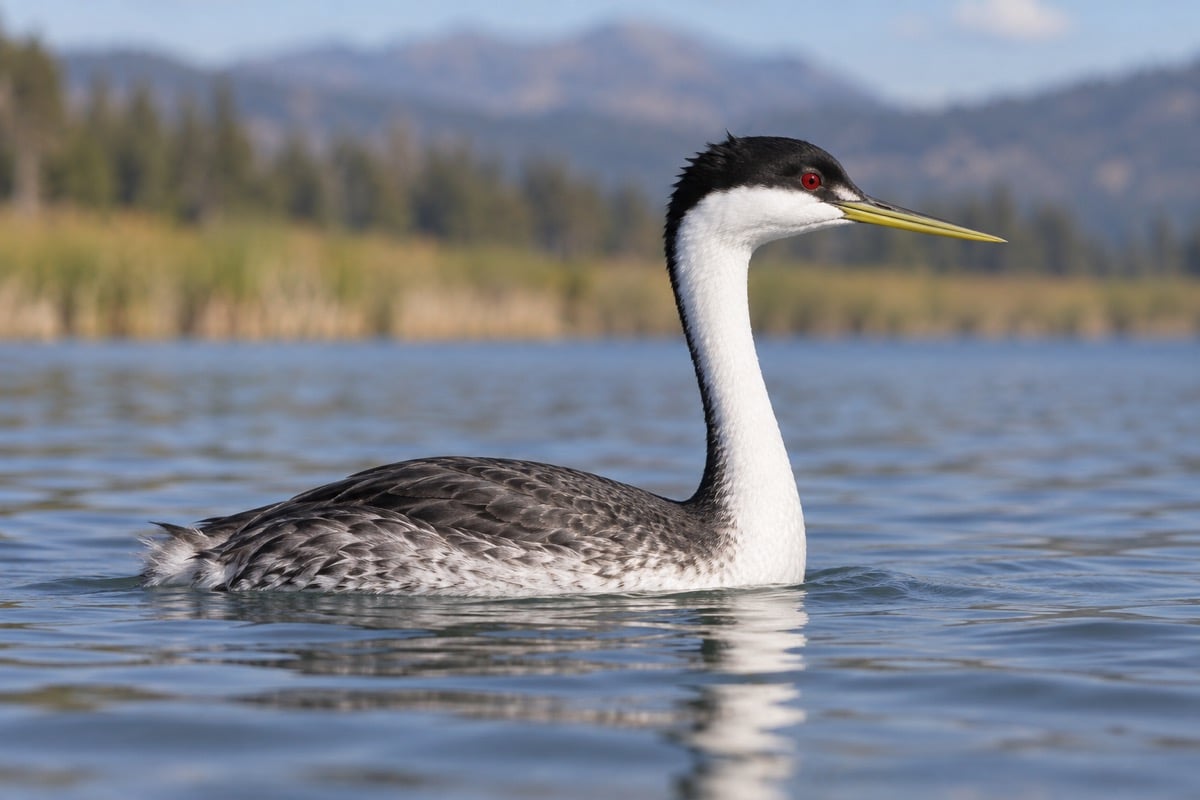
A western grebe rides low on the water, with a long white neck and a black cap that extends below its red eye. Its feet sit far back on its body, helping it dive and chase fish. Pairs perform a striking courtship display in which they race side by side across the surface. After hatching, chicks can ride on a parent’s back, tucked into the feathers while the adults swim.
21. Western Hognose Snake
- Scientific Name: Heterodon nasicus
- Habitat: Prairies, sandy grasslands and open scrub
- Size: Often about 50 cm (20 in) long
- Diet: Mainly toads, with other small vertebrates
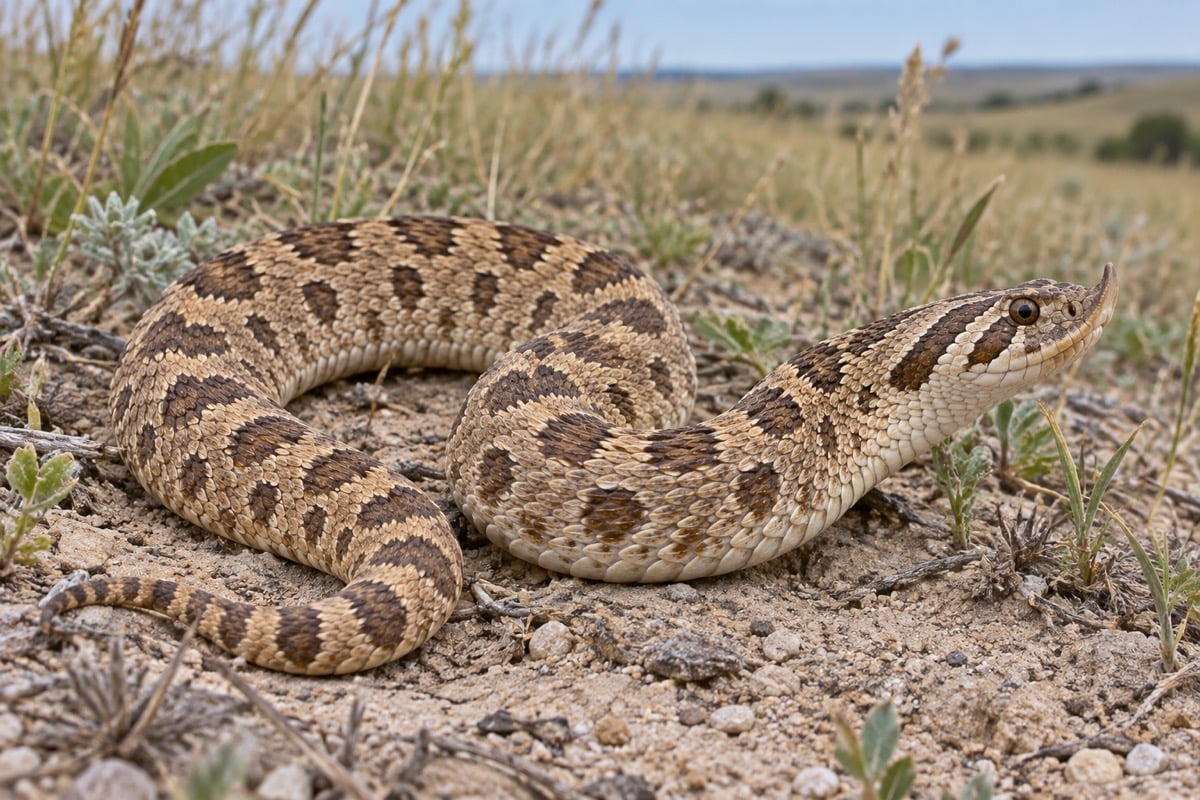
An upturned snout gives the western hognose snake a useful tool for digging through loose soil. Brown blotches help it blend into sandy grassland as it searches for prey. When threatened, it may flatten its neck and hiss, making itself look more intimidating. If that display fails, it can roll over and play dead. Much of its daily life is less dramatic, spent hidden in the ground or moving quietly through vegetation.
22. Western Kingbird
- Scientific Name: Tyrannus verticalis
- Habitat: Open country, farmland and scattered trees
- Size: About 20–24 cm (8–9.4 in) long
- Diet: Flying insects, with some fruit
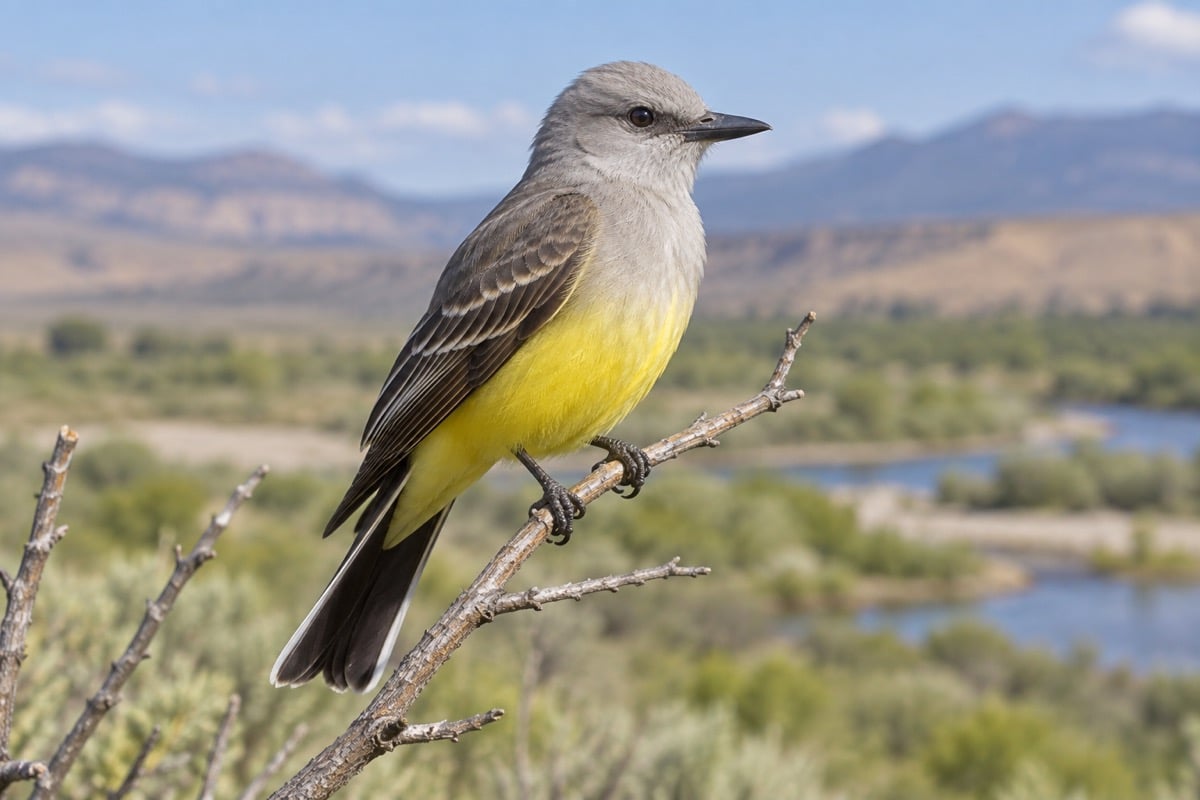
The western kingbird often uses a fence post or wire as a hunting lookout. From there, it flies out to catch an insect before returning to a perch. Its pale gray head and bright yellow belly contrast with a dark tail edged in white. Despite its modest size, it vigorously defends its nesting area and may chase much larger birds. Open landscapes give it the space it needs to spot passing prey.
23. Western Lowland Gorilla
- Scientific Name: Gorilla gorilla gorilla
- Habitat: Lowland tropical forest and swamp forest
- Size: Adult males can reach about 1.8 m (6 ft) when standing upright
- Diet: Mainly fruit, leaves and stems, with some invertebrates
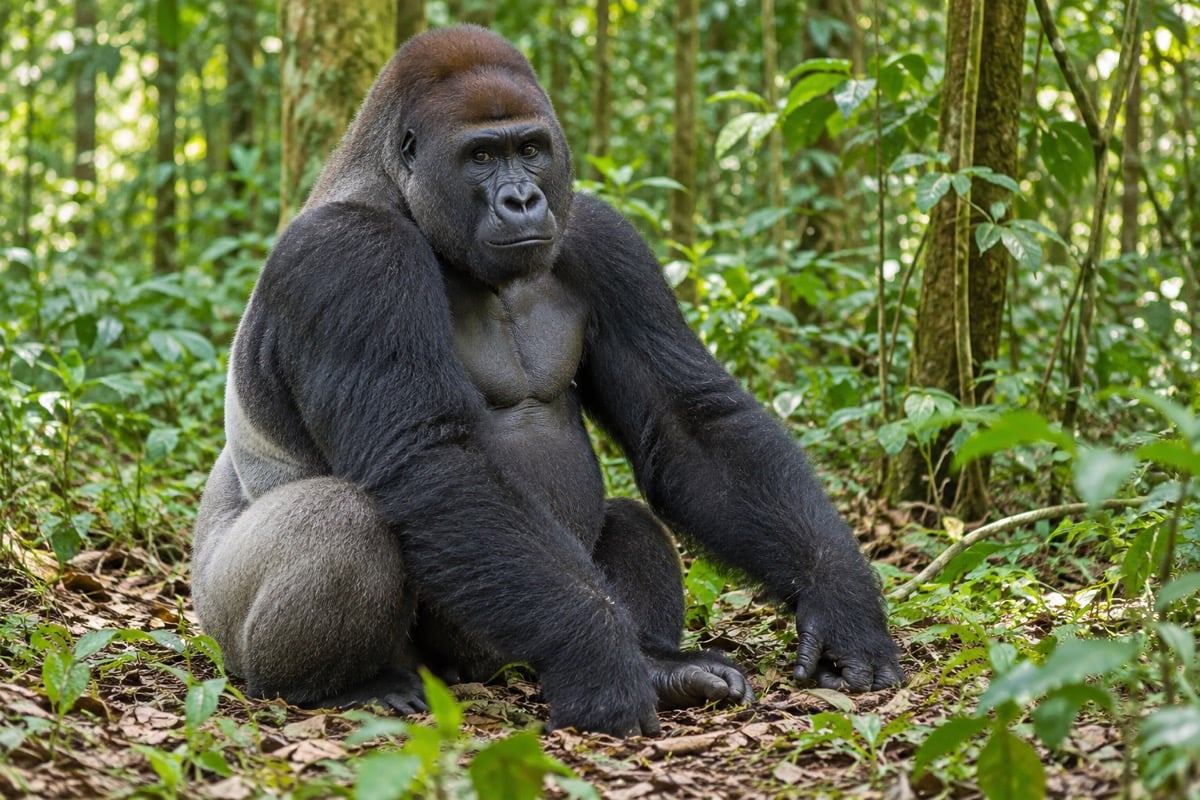
The western lowland gorilla is an ape with powerful arms, a broad chest and mostly dark hair. Mature males develop a pale saddle over the back, giving them the familiar name ‘silverback.’ Their imposing size comes largely from a plant-based diet. Gorillas usually move on all fours, supporting their weight on the knuckles of their hands. They live in social groups, and the shapes of the wrinkles around an individual’s nose can help researchers tell animals apart. Western lowland gorillas are a subspecies of the western gorilla, distinct from mountain gorillas.
24. Western Meadowlark
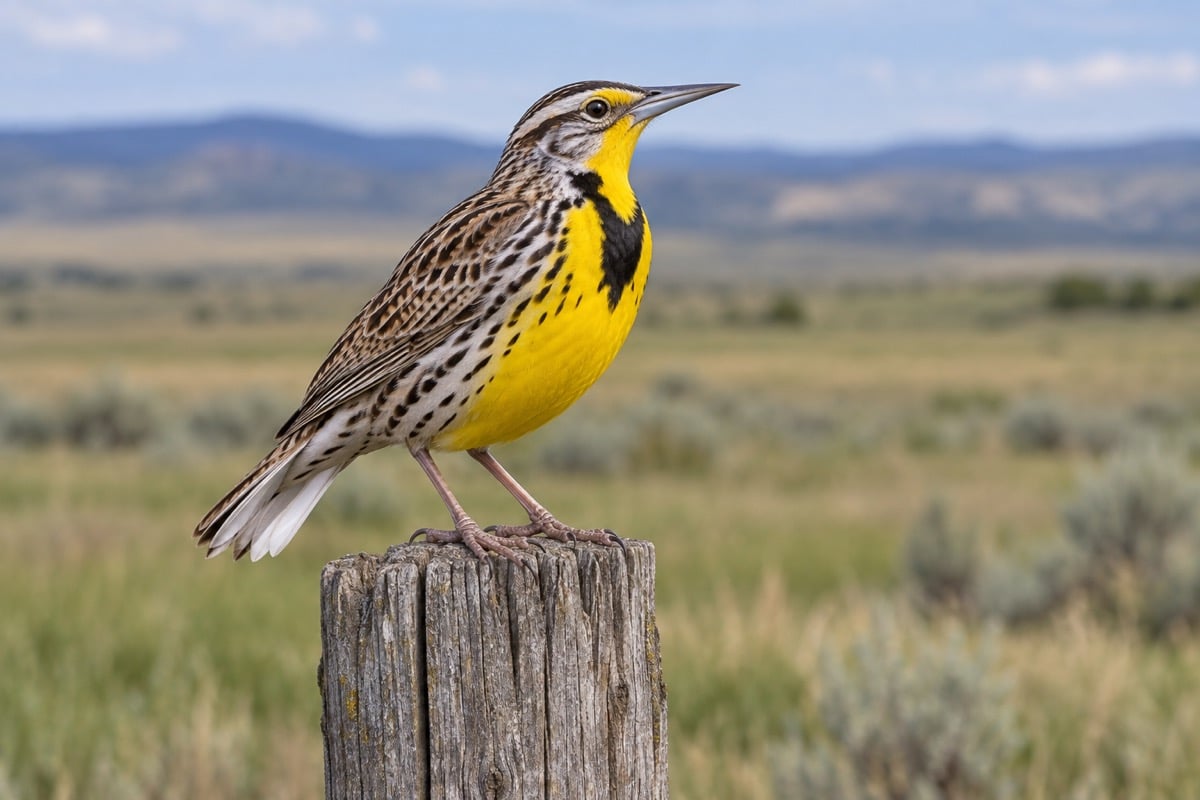
- Scientific Name: Sturnella neglecta
- Habitat: Grasslands, pastures and open fields
- Size: About 16–26 cm (6.3–10.2 in) long
- Diet: Insects and seeds
The western meadowlark’s yellow chest and black V-shaped marking are easy to recognize when it faces you. From behind, its streaked brown plumage blends surprisingly well into dry grass. It spends much of its time walking on the ground, searching for food among the stems. A fence post provides a stage for its rich, fluting song. Its nest is placed low in the grass, where surrounding vegetation helps conceal it.
25. Western Pygmy Blue
- Scientific Name: Brephidium exilis
- Habitat: Desert flats, salt marshes and other open, salty habitats
- Size: Wingspan about 1.2–2 cm (0.5–0.75 in)
- Diet: Adults drink nectar; caterpillars eat saltbush and related plants
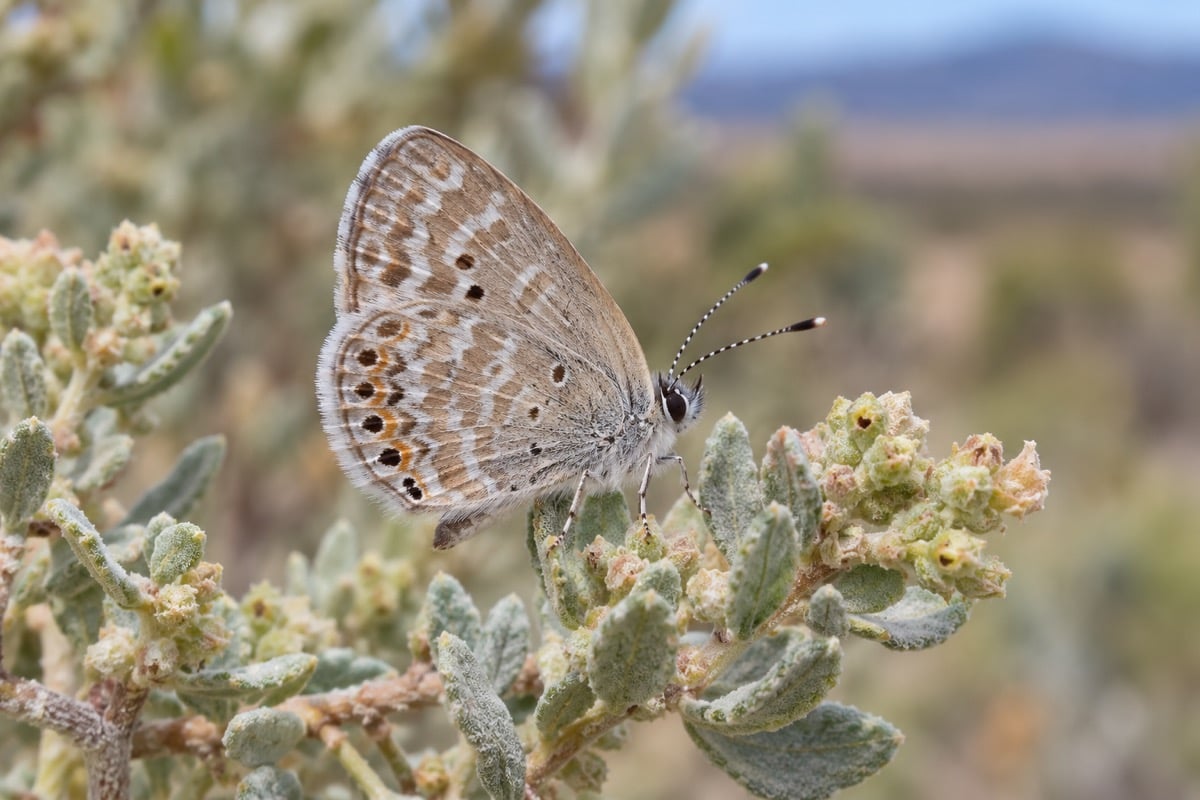
The western pygmy blue is tiny enough to overlook even when it rests in plain sight. Copper-brown wings carry blue near their bases, while the undersides show pale markings and dark spots along the margins. Its caterpillars feed on plants that thrive in salty or dry ground. Adults flutter close to this low vegetation, stopping at flowers for nectar. A close view reveals far more detail than its small size might suggest.
26. Western Screech-Owl
- Scientific Name: Megascops kennicottii
- Habitat: Woodland, forest edges, parks and wooded neighborhoods
- Size: About 19–25 cm (7.5–9.8 in) long
- Diet: Small mammals, birds and invertebrates
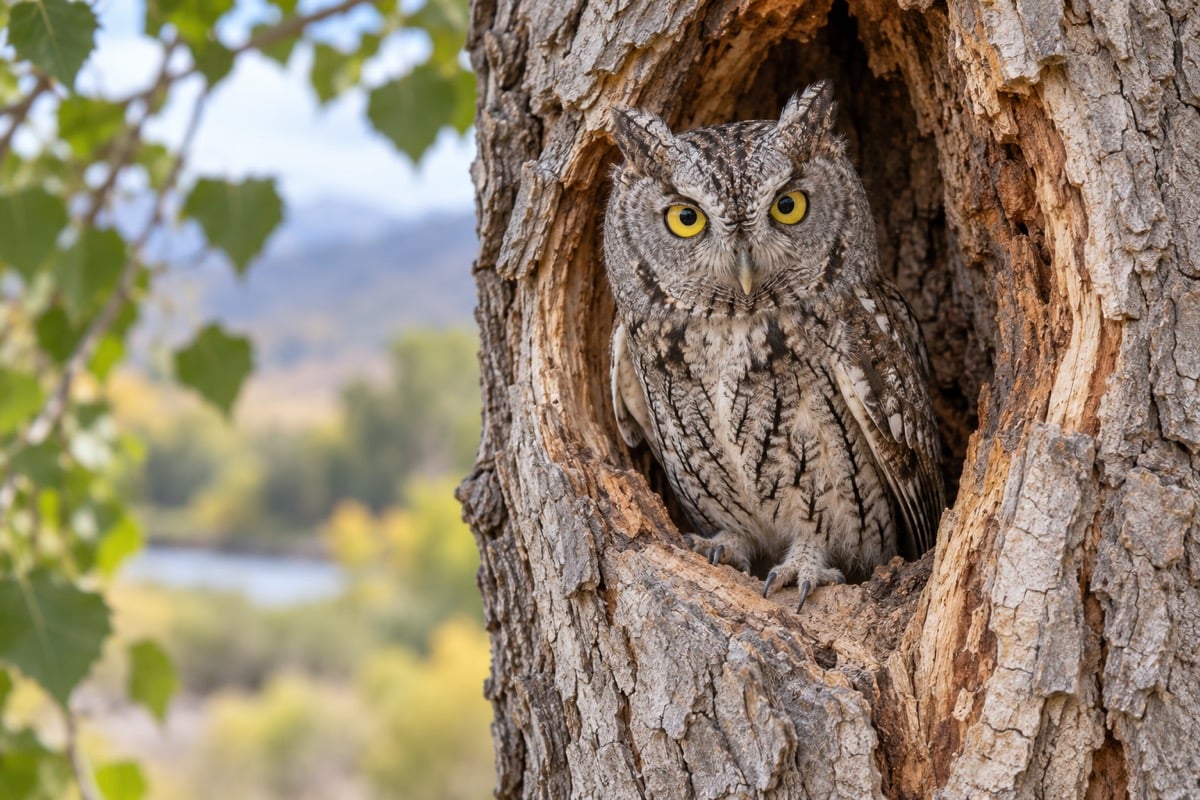
The western screech-owl’s mottled plumage resembles rough bark, helping it disappear against a tree trunk. Short feather tufts sit above its yellow eyes, but they are not ears. It often rests inside a tree cavity during daylight and emerges to hunt after dark. Its small size allows it to use wooded places close to people. Despite its name, a familiar call is a series of hollow notes that accelerates toward the end.
27. Western Tanager
- Scientific Name: Piranga ludoviciana
- Habitat: Coniferous and mixed forest, woodland and gardens
- Size: About 16–19 cm (6.3–7.5 in) long
- Diet: Insects and fruit
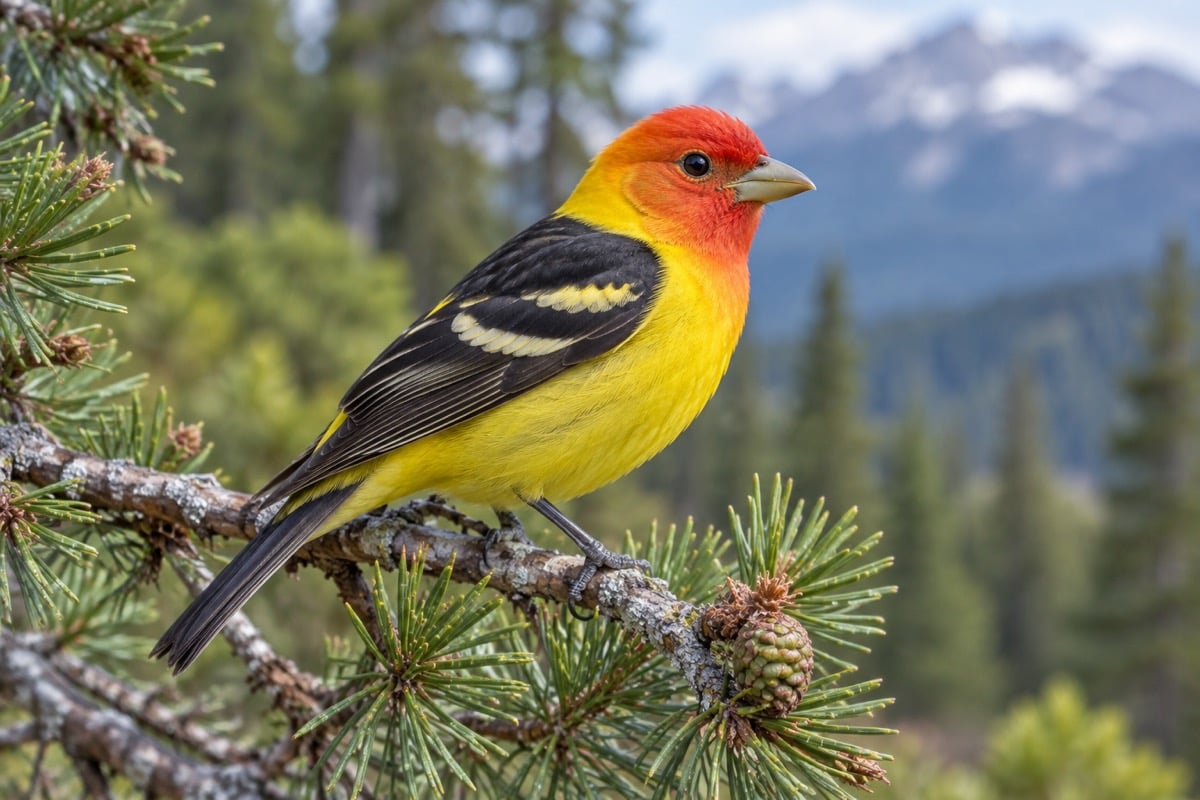
A breeding male western tanager has a red head, yellow body and black wings marked with pale bars. Females wear quieter olive and yellow tones. These birds often search methodically through the foliage, picking insects from leaves or making short flights after them. They may also visit fruiting trees during migration. Although the male’s colors look tropical, the species breeds across a broad part of western North America, including northern forests.
28. Western Toad
- Scientific Name: Anaxyrus boreas
- Habitat: Forests, grasslands and meadows near breeding wetlands
- Size: About 5.6–13 cm (2.2–5.1 in) long
- Diet: Adults eat small invertebrates; tadpoles graze on aquatic material
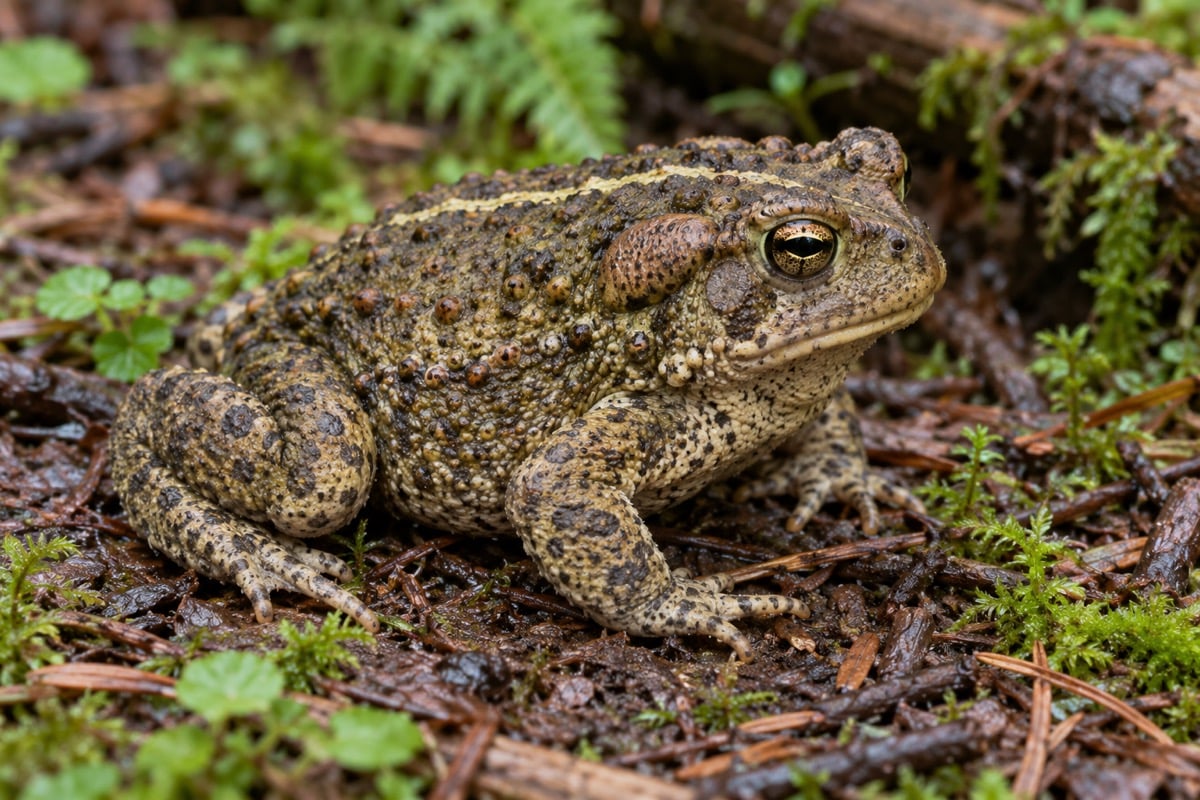
A pale stripe along the middle of the back helps identify many western toads. Their dry-looking, bumpy skin suits a life spent mostly on land, though they return to water to breed. Females lay eggs in long strings in shallow pools and pond margins. Adults search for insects and other small animals on the ground. In colder parts of their range, they spend winter sheltered where freezing conditions are less severe.
29. Whale Shark
- Scientific Name: Rhincodon typus
- Habitat: Open water, coastal bays and areas with abundant plankton
- Size: Often around 5.5–9.8 m (18–32 ft) long; some grow larger
- Diet: Plankton and other small organisms filtered from water
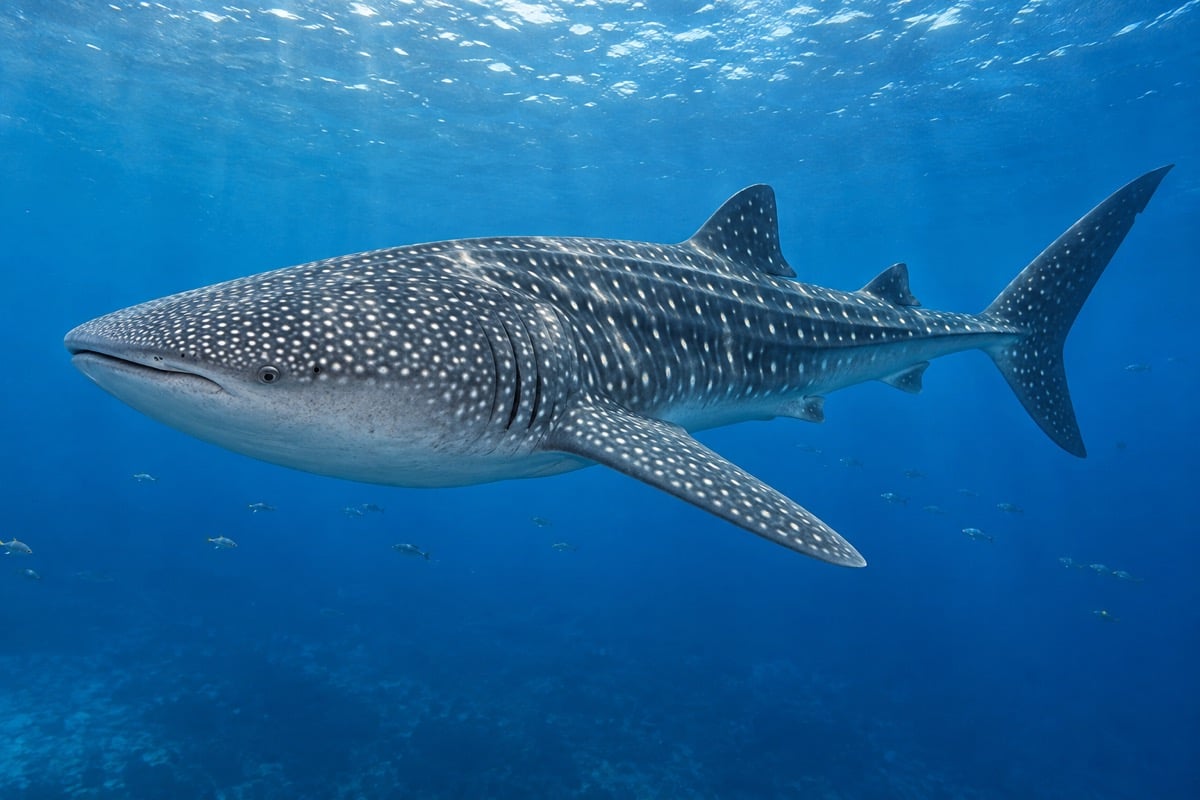
The largest living fish is a shark, even though its name includes ‘whale.’ A whale shark breathes through gills and has a skeleton made of cartilage. Its wide mouth sits at the front of a broad, flattened head. Instead of biting chunks from large prey, it filters small food particles from the water. Seasonal plankton blooms can bring whale sharks close to shore to feed. The pale spots and stripes on the body also have a practical use for scientists: their patterns help identify individual sharks across different sightings.
30. Whimbrel
- Scientific Name: Numenius phaeopus
- Habitat: Tundra during breeding; estuaries, mudflats and beaches during migration
- Size: Average weight about 450 g (16 oz)
- Diet: Crabs, worms, insects and other small animals
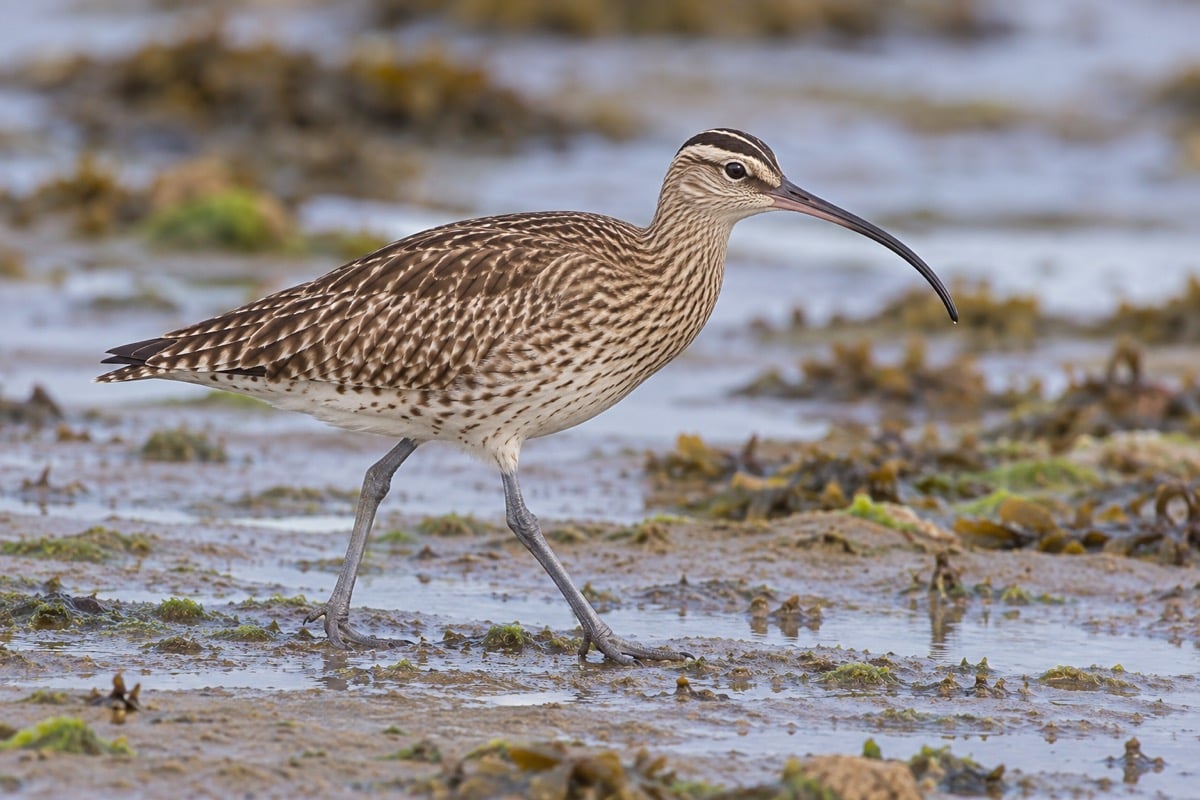
The whimbrel probes mud and sand with a long, downward-curving bill. Pale and dark stripes along its head help distinguish it from some other curlews. It breeds in northern landscapes, then travels to coastal feeding grounds much farther south. On a mudflat, it may follow a crab before using its bill to pull the animal from a hiding place. Flocks often announce their arrival with a clear, repeated whistling call.
31. Whinchat
- Scientific Name: Saxicola rubetra
- Habitat: Meadows, rough grassland and open scrub
- Size: Typically about 16 g (0.6 oz)
- Diet: Insects and other small invertebrates
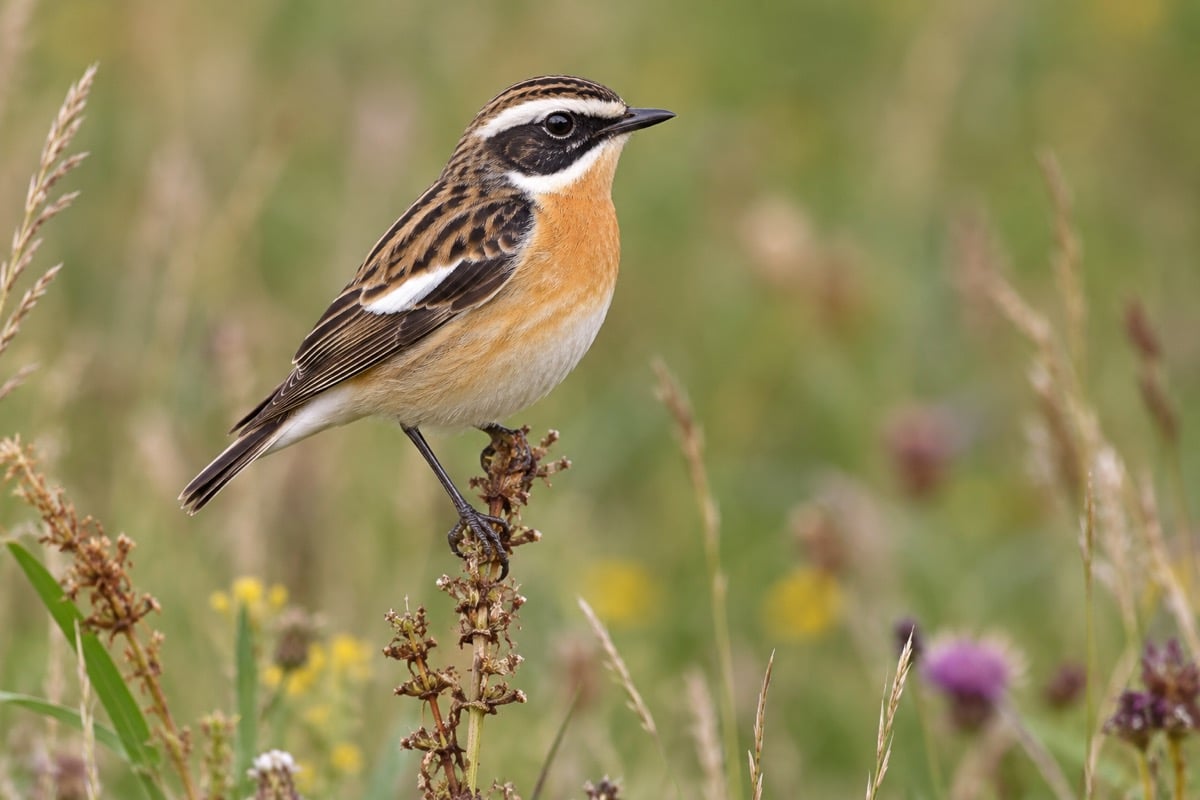
The whinchat likes a good lookout, often balancing on the top of a sturdy grass stem or low shrub. A pale eyebrow stands out above its eye, and breeding males have warm orange on the chest. It drops from its perch to catch prey, then returns to watch again. Tall, varied vegetation provides both feeding places and cover for a nest on the ground. Many whinchats make a long seasonal journey between Europe and Africa.
32. Whiskered Tern
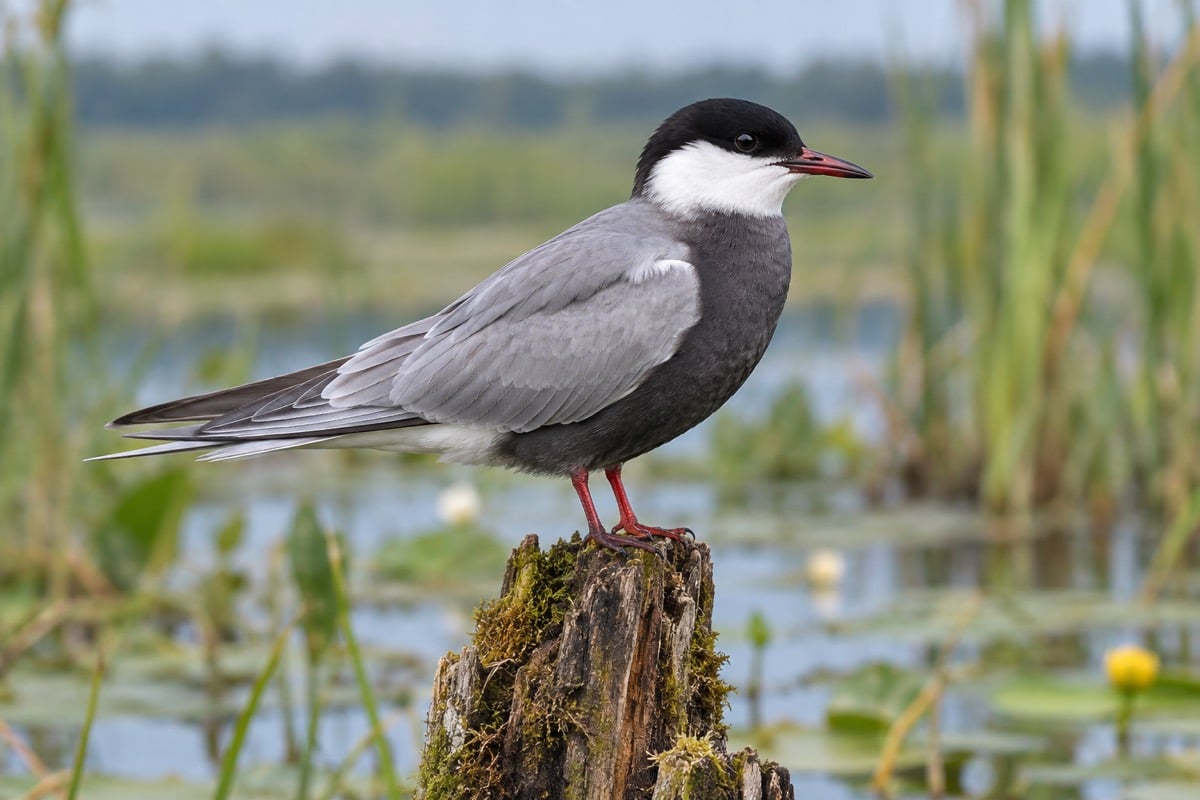
- Scientific Name: Chlidonias hybrida
- Habitat: Shallow freshwater wetlands and lakes
- Size: About 23–25 cm (9–10 in) long
- Diet: Small fish, amphibians, crustaceans and insects
In breeding plumage, the whiskered tern has a dark belly, black cap and white cheeks that give the face its distinctive pattern. It flies lightly over shallow wetlands, taking prey from the surface or making a brief plunge. Unlike terns that nest on open beaches, it often builds a floating platform among aquatic plants. Outside the breeding season, its body becomes much paler. Healthy, vegetated wetlands provide both food and nesting space.
33. White Rhinoceros
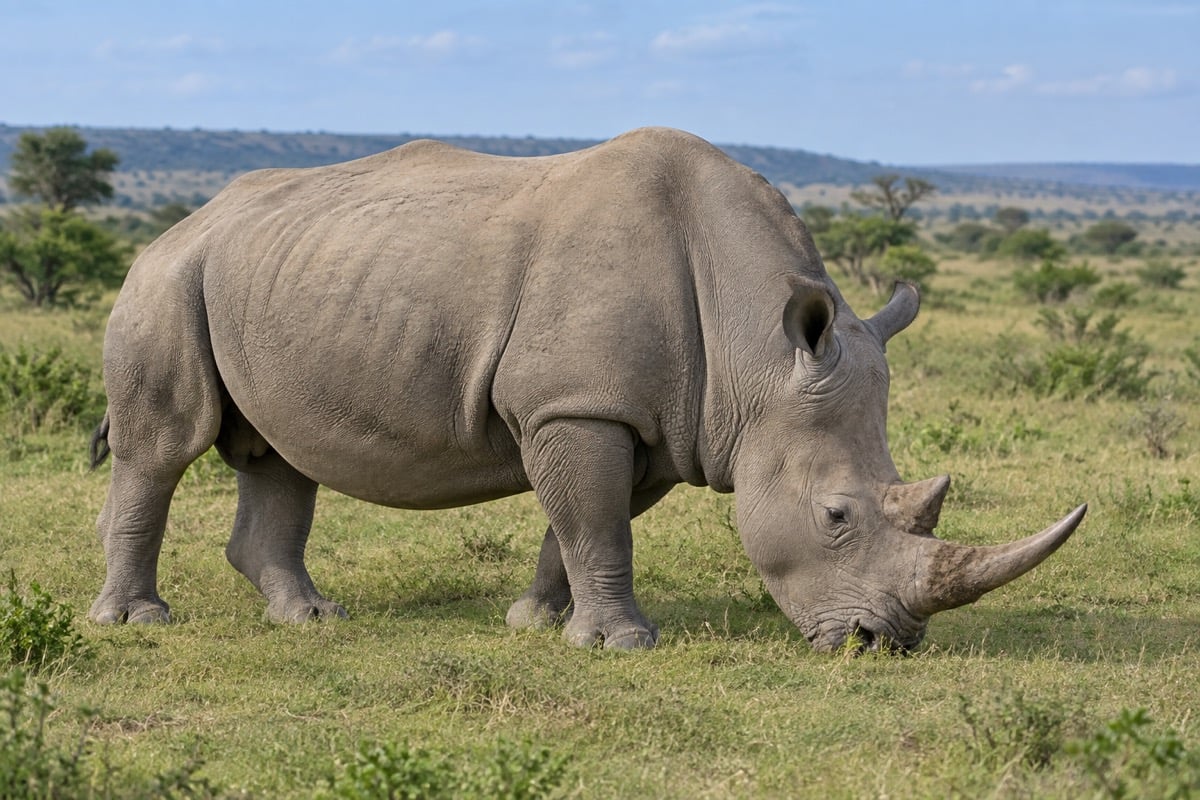
- Scientific Name: Ceratotherium simum
- Habitat: Grassland and savanna with water and wallowing places
- Size: Large adults can reach about 4.9 m (16 ft) in length
- Diet: Grasses
A white rhinoceros is gray, with a broad, square-shaped mouth suited to cropping grass. This lip shape is one of the clearest differences from the pointed upper lip of a black rhinoceros, which helps that species browse leaves and twigs. Its two horns are made from keratin, the same general material found in hair and nails. Mud wallows provide relief from heat and help protect the skin. The animal shown here is a southern white rhinoceros, the much more numerous of the white rhino’s two subspecies.
34. White Shark
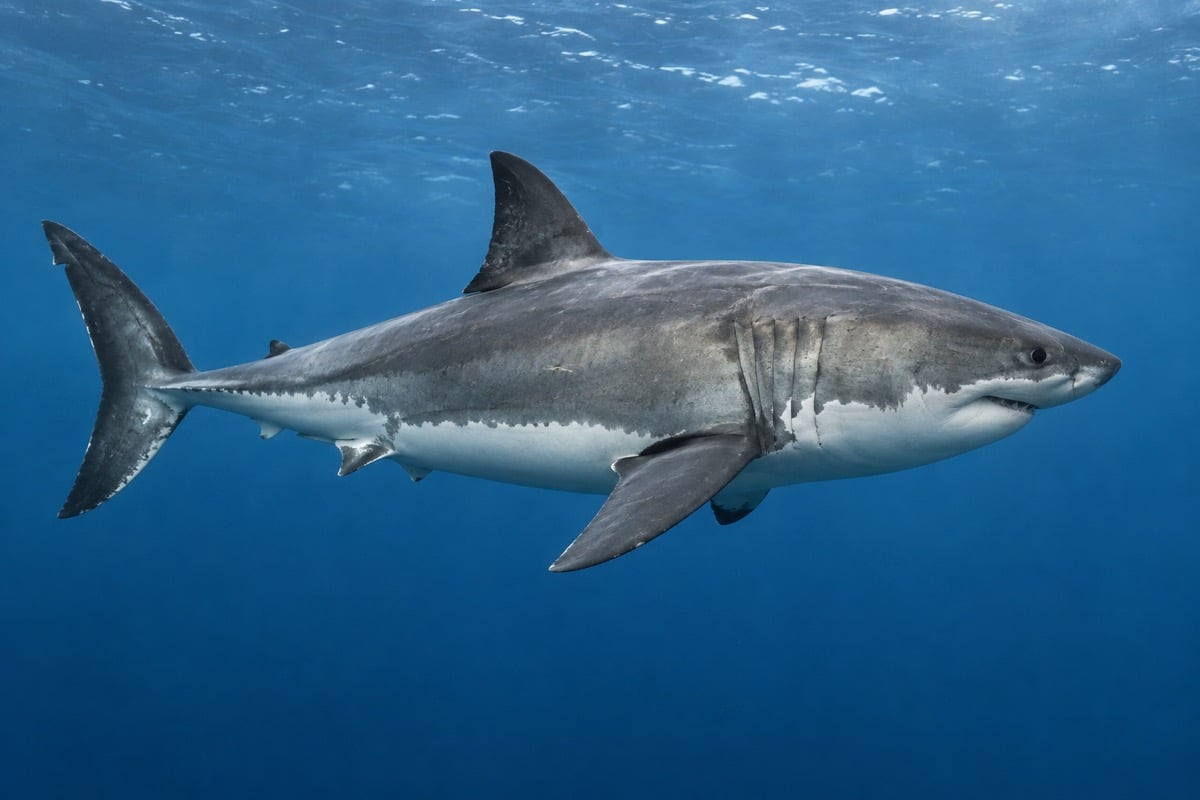
- Scientific Name: Carcharodon carcharias
- Habitat: Coastal and offshore waters
- Size: Large adults can reach about 6.4 m (21 ft)
- Diet: Fish, rays and squid; larger sharks also eat marine mammals
Also called the great white shark, this predator has a gray upper body and a pale underside. Its streamlined shape, strong tail and pointed snout are quite different from the wide-headed, spotted whale shark. Diet changes as a white shark grows: smaller individuals eat more fish, while larger animals can tackle prey such as seals. It can keep parts of its body warmer than the surrounding water, an advantage in cooler seas. White sharks grow slowly, making the survival of mature animals especially important to their populations.
35. White Stork
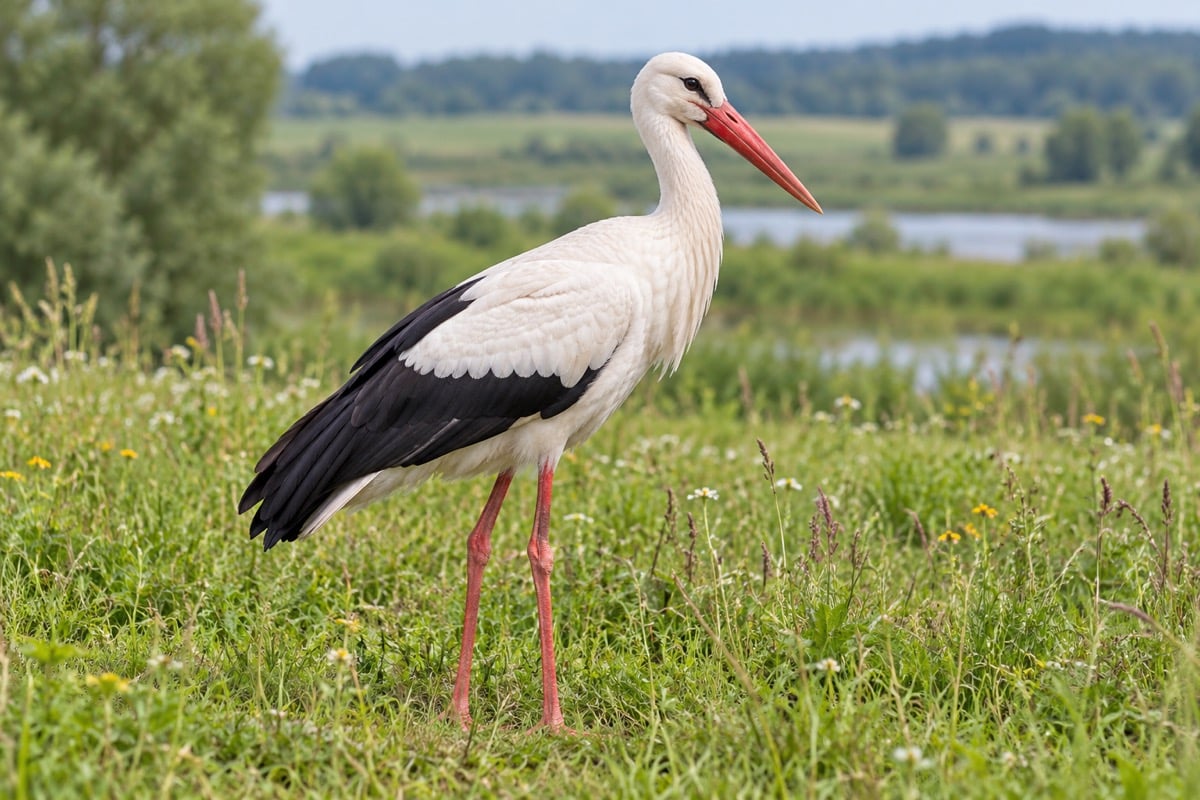
- Scientific Name: Ciconia ciconia
- Habitat: Wetlands, meadows, pastures and agricultural land
- Size: About 100–115 cm (39–45 in) tall
- Diet: Insects, frogs, fish, rodents and other small animals
The white stork’s red legs and bill stand out against white plumage and black flight feathers. It walks slowly through fields or shallow water, picking up prey as it goes. Large nests made of sticks may sit on trees, rooftops or specially built platforms. During migration, these broad-winged birds take advantage of rising warm air to travel efficiently. At the nest, pairs often greet one another with a rapid clattering of their bills.
36. White-bellied Sea Eagle
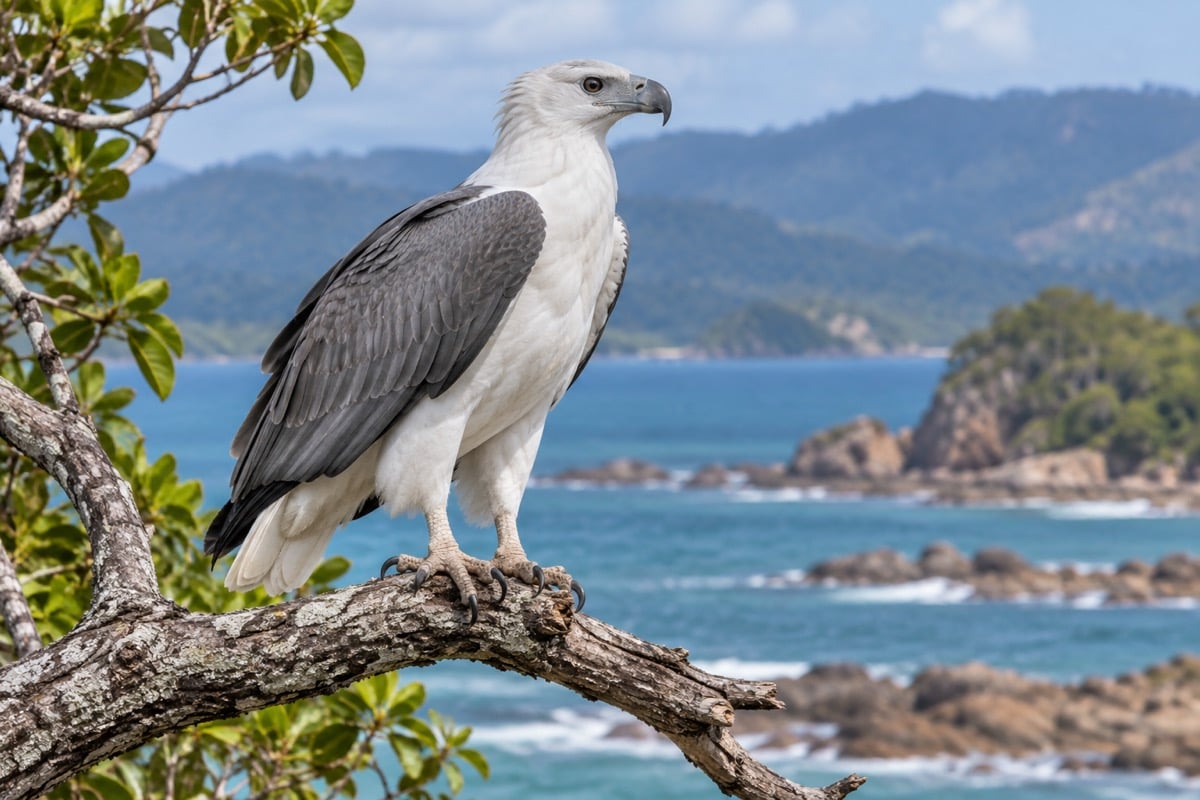
- Scientific Name: Icthyophaga leucogaster
- Habitat: Coasts, large rivers, lakes and wetlands
- Size: About 75–85 cm (30–33 in) long
- Diet: Fish, birds, reptiles, other animals and carrion
An adult white-bellied sea eagle has a clean white head and underside, with gray wings above. It watches the water from a high perch or circles overhead before moving toward food. Fish are important, but this adaptable raptor also catches other animals and scavenges. Large stick nests are built in prominent trees or other elevated sites. Pairs may use the same nesting area repeatedly, adding material as the nest is reused.
37. White-bellied Spider Monkey
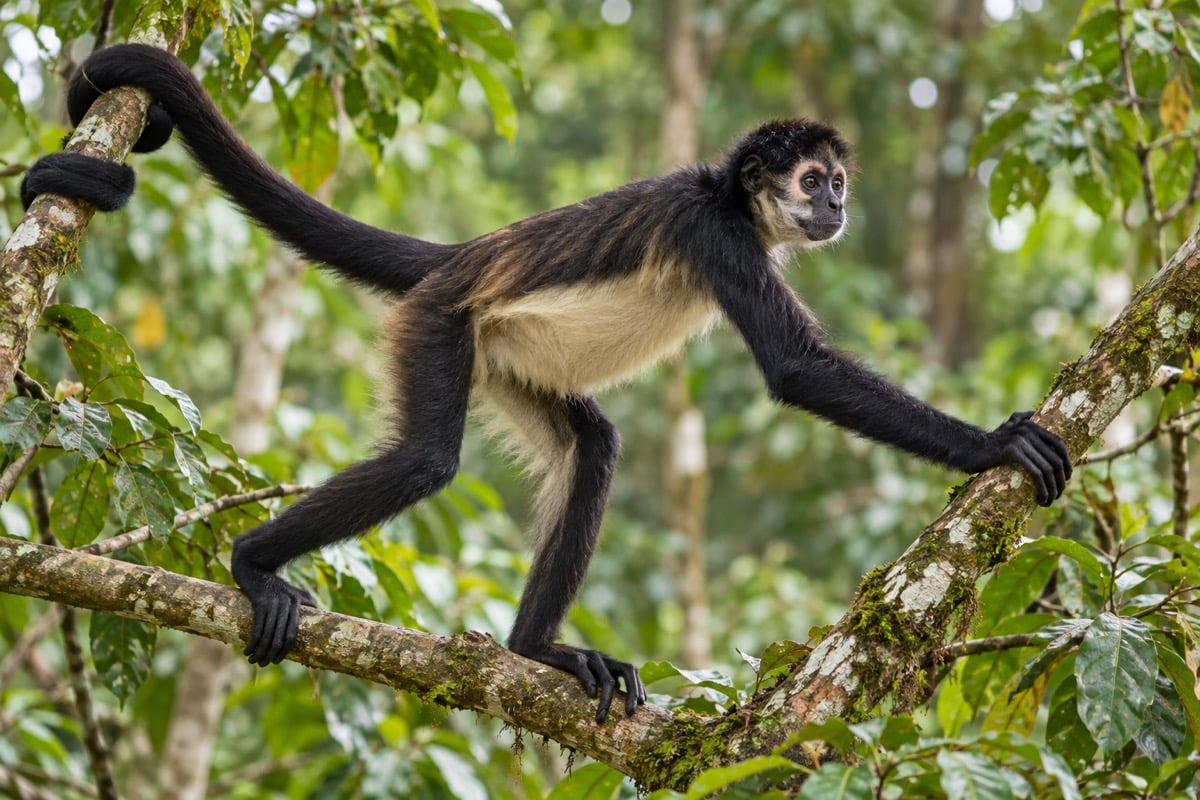
- Scientific Name: Ateles belzebuth
- Habitat: Tropical rainforest canopy
- Size: About 5.9–10.4 kg (13–23 lb)
- Diet: Mostly ripe fruit, with leaves, seeds and other plant foods
The white-bellied spider monkey moves through the canopy using long arms and a powerful, grasping tail. Its pale underside contrasts with the darker fur on its back. A tail can hold a branch while the monkey reaches for fruit, giving it remarkable freedom of movement. Members of a larger community often separate into smaller feeding groups. As they travel and eat, they carry seeds between different parts of the forest.
38. White-cheeked Gibbon
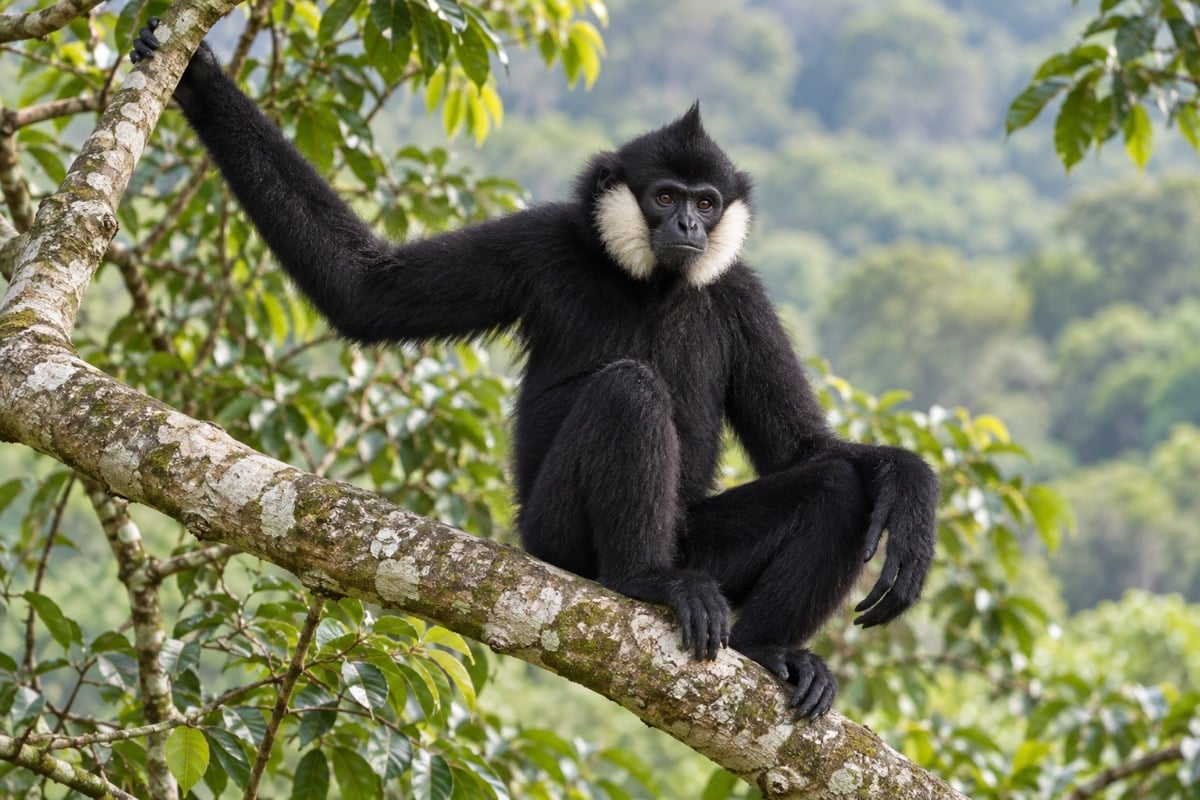
- Scientific Name: Nomascus leucogenys
- Habitat: Tropical forest canopy
- Size: Body about 45–63 cm (18–25 in) long
- Diet: Fruit, leaves, flowers and some insects
The northern white-cheeked gibbon is a small, tailless ape with exceptionally long arms. Adult males are black with pale cheek patches, while adult females are mostly creamy buff. Swinging beneath branches allows these gibbons to cross the canopy quickly. Loud calls help family members communicate and advertise their presence to neighboring groups. They depend on connected forest, where branches provide routes between feeding trees and sheltered places to rest.
39. White-faced Saki
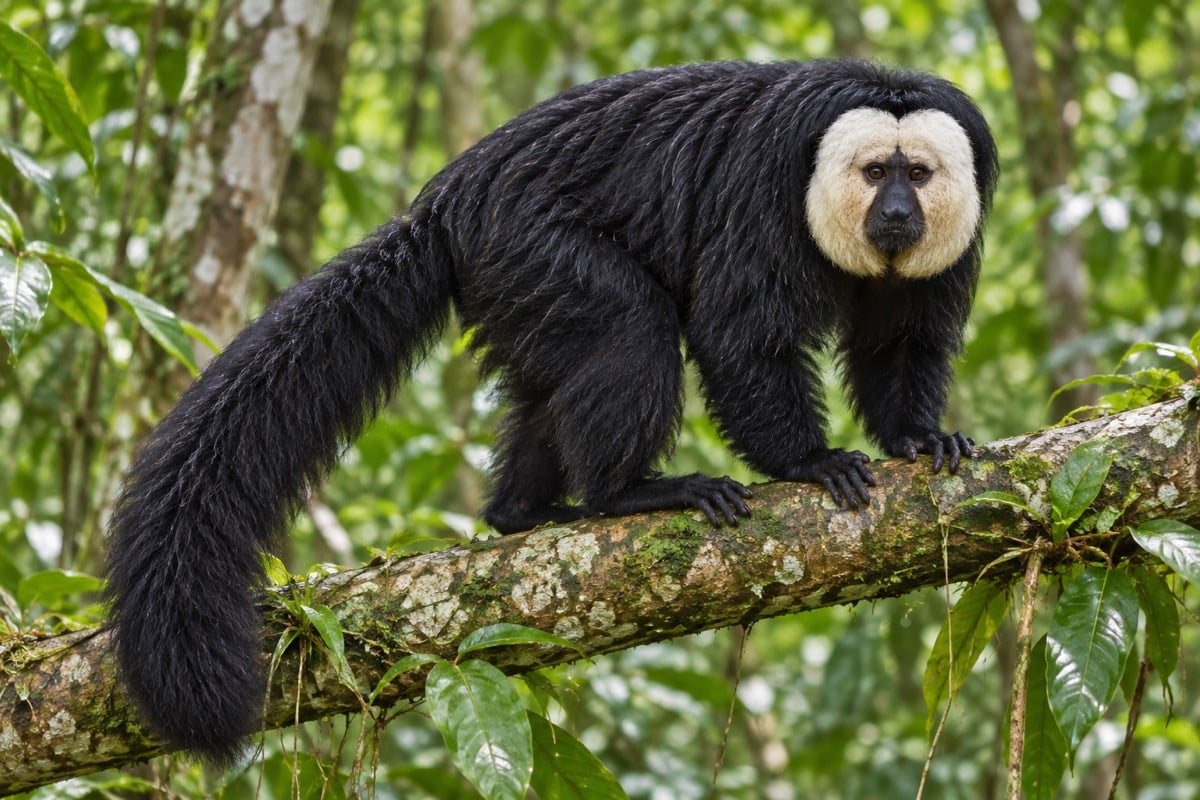
- Scientific Name: Pithecia pithecia
- Habitat: Tropical forests
- Size: Usually about 1.8–2.4 kg (4–5.3 lb)
- Diet: Seeds, fruit and other plant foods, with some insects
A male white-faced saki has a pale face framed by thick black fur, while females are mostly brownish gray. Both have long, bushy tails that help with balance but cannot grip branches. Strong jaws allow them to tackle seeds that many other forest animals would find difficult to open. They move through trees in small groups, using impressive leaps to cross gaps. Their shaggy coats make them appear larger than their relatively light bodies suggest.
40. White-footed Mouse
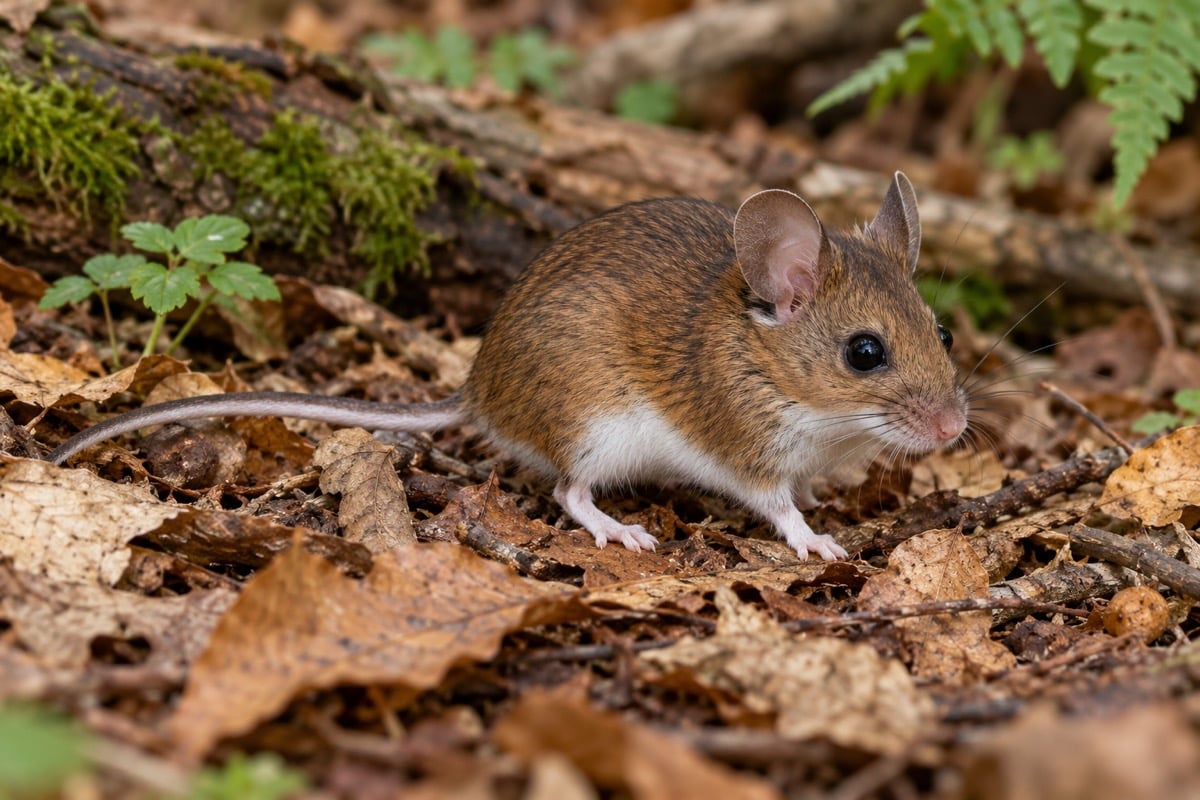
- Scientific Name: Peromyscus leucopus
- Habitat: Woodland, brush, field edges and sheltered human-made spaces
- Size: About 15–20.5 cm (6–8 in), including the tail
- Diet: Seeds, nuts, fruit, insects and fungi
The white-footed mouse has large eyes, rounded ears and pale feet beneath a brownish coat. It is most active after dark, exploring the ground and climbing through vegetation for food. Seeds and nuts may be carried back to a sheltered cache. A nest can be tucked into a hollow log, tree cavity or another protected space. It remains active through winter, relying on shelter and stored food rather than a long seasonal hibernation.
41. White-fronted Bee-eater
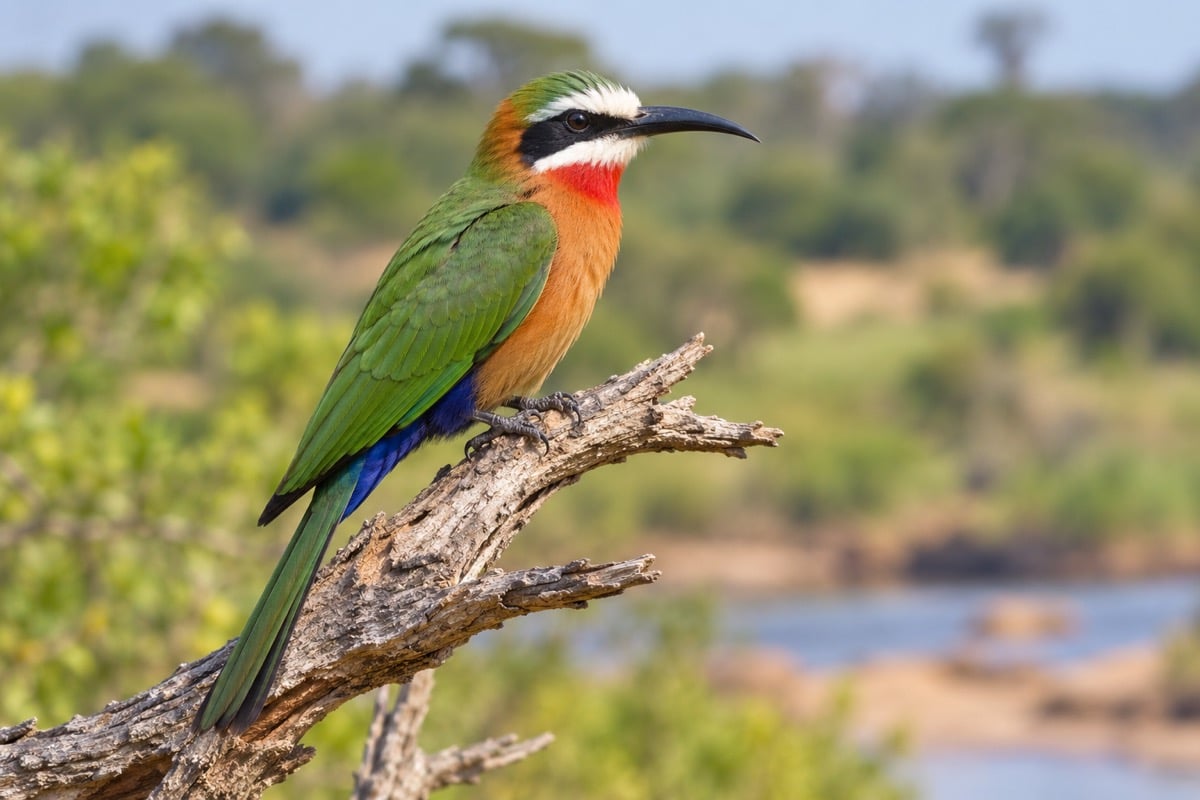
- Scientific Name: Merops bullockoides
- Habitat: Savannas and open woodland near sandy riverbanks
- Size: About 21.5–23.5 cm (8.5–9.3 in) long
- Diet: Flying insects, especially bees and wasps
Green wings, a red throat, white forehead and black eye stripe make the white-fronted bee-eater a colorful sight. It watches from an exposed perch before darting out after a flying insect. Colonies dig nesting tunnels into suitable banks, creating busy neighborhoods above the river. Family life can involve helpers that assist a breeding pair with raising chicks. These social birds use calls and frequent contact to stay connected around their nesting and feeding areas.
42. White-lipped Peccary
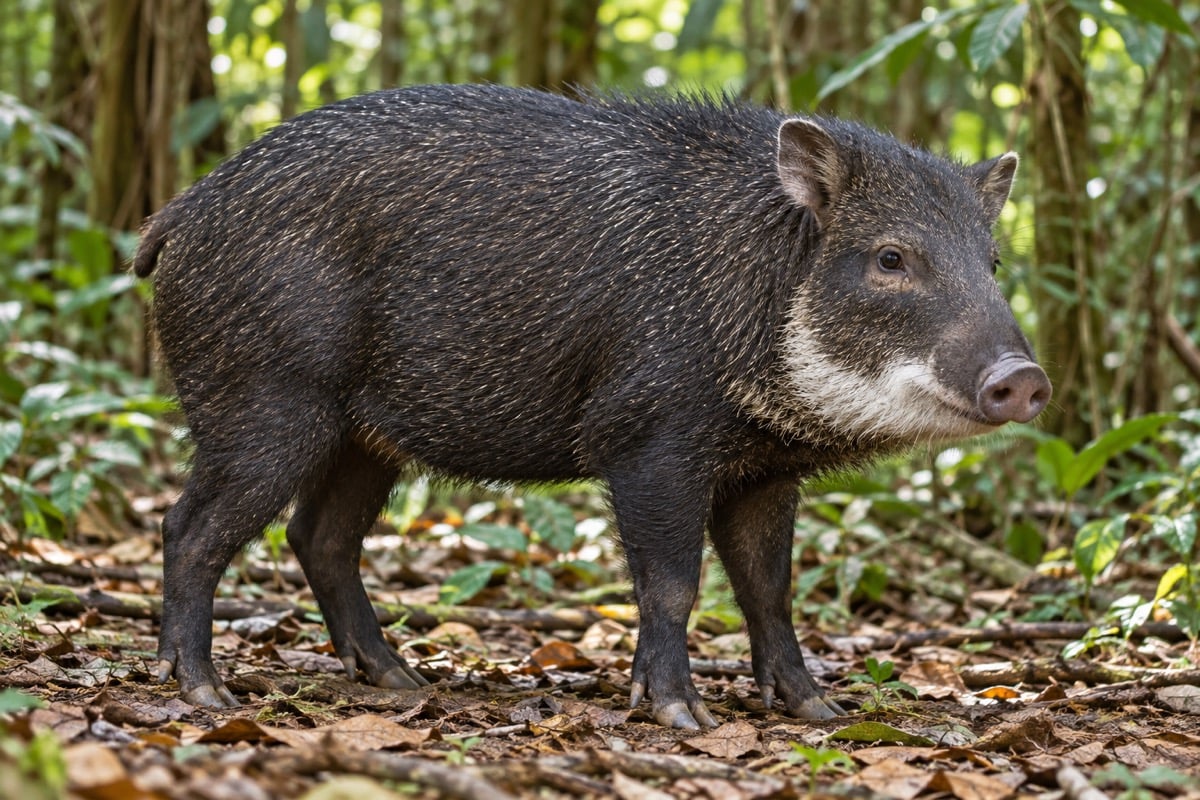
- Scientific Name: Tayassu pecari
- Habitat: Tropical forests and other wooded habitats
- Size: About 25–40 kg (55–88 lb)
- Diet: Fruit, seeds, roots, fungi and small animals
The white-lipped peccary has a piglike body, coarse dark hair and a pale patch around its lower face. Large, noisy herds move through the forest in search of fallen fruit and other food. Their rooting and feeding disturb the soil and help shape the forest floor. Group members maintain close contact as they travel, sometimes clicking their teeth. A herd needs a substantial area to find enough food throughout the year.
43. White-nosed Coati
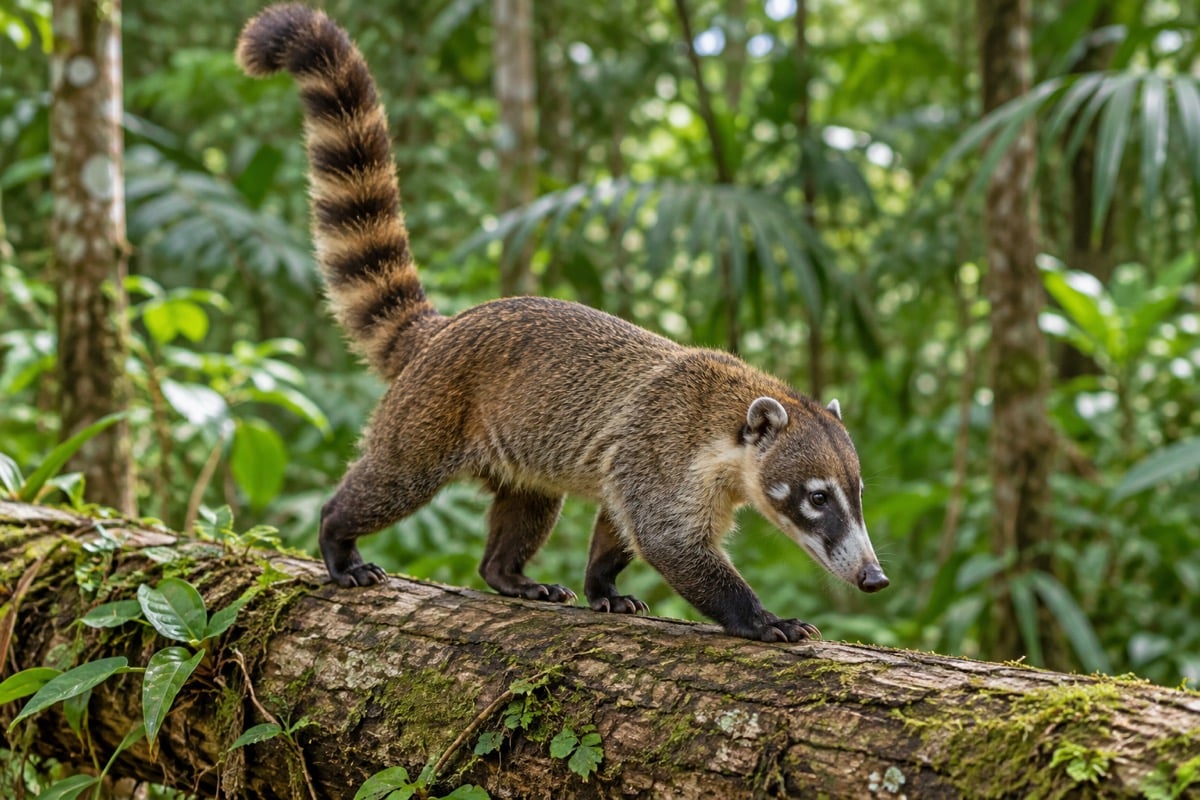
- Scientific Name: Nasua narica
- Habitat: Tropical forest, woodland and scrub
- Size: About 80–130 cm (31–51 in), including the tail
- Diet: Insects, fruit and small vertebrates
A white-nosed coati searches with its long, flexible snout, turning over leaves and investigating cracks for something edible. Its ringed tail is often carried upright while it walks. Females and young animals commonly travel in groups, while adult males spend more time alone. Strong claws help it climb as well as dig, and trees provide resting places above the ground. Its broad diet allows it to make use of many forest foods.
44. White-rumped Vulture
- Scientific Name: Gyps bengalensis
- Habitat: Open country, farmland and wooded areas
- Size: About 75–85 cm (30–33 in) long
- Diet: Carrion
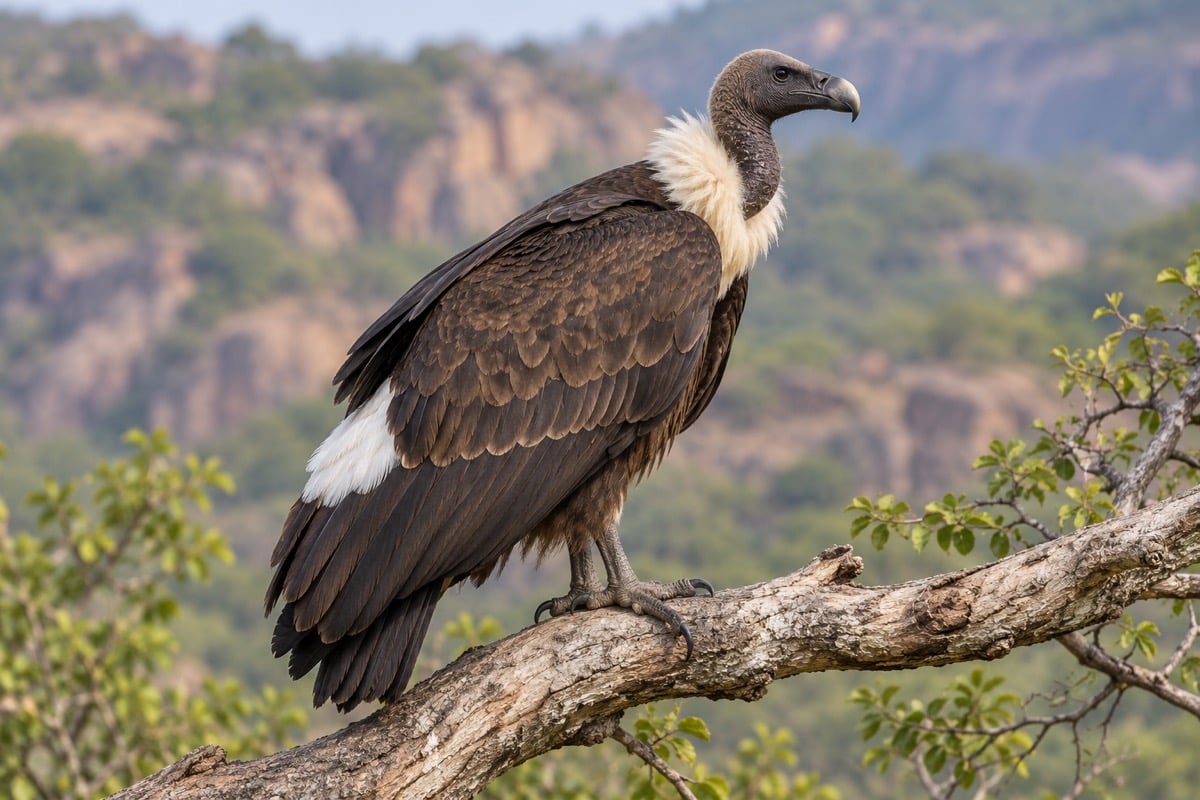
The white-rumped vulture is a dark scavenging bird with a pale neck ruff and a white patch above the tail. Broad wings carry it over the countryside as it searches for carcasses. A mostly bare head and neck are useful when feeding alongside other vultures. It nests in trees, sometimes with several pairs using the same area. By consuming dead animals, vultures help remove remains that would otherwise take much longer to break down.
45. White-tailed Deer
- Scientific Name: Odocoileus virginianus
- Habitat: Woodland edges, thickets, farmland and varied other habitats
- Size: Often about 80–100 cm (31–39 in) at the shoulder; varies by population
- Diet: Leaves, twigs, grasses, fruit, nuts and other plants
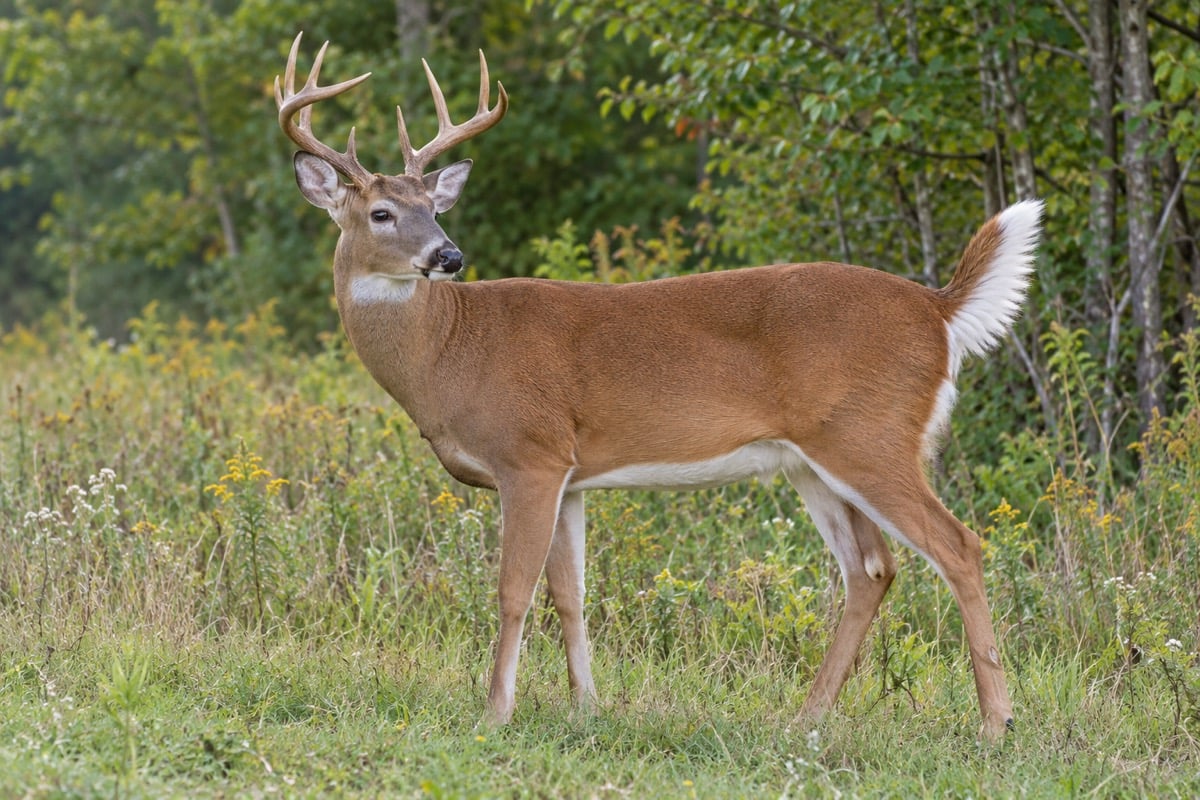
A raised tail exposes the bright white underside that gives this deer its name. The coat is generally more reddish in summer and grayer in winter, helping explain why sightings at different times of year can look surprisingly different. Males usually grow antlers, shed them and grow a new set each year. Young fawns start life with white spots. Dense cover offers hiding places, while nearby open areas provide food, so a mixture of thickets, woodland and field edges can suit white-tailed deer particularly well.
46. White-tailed Eagle
- Scientific Name: Haliaeetus albicilla
- Habitat: Coasts, large lakes, rivers and nearby woodland
- Size: About 70–90 cm (28–35 in) long
- Diet: Fish, waterbirds, mammals and carrion
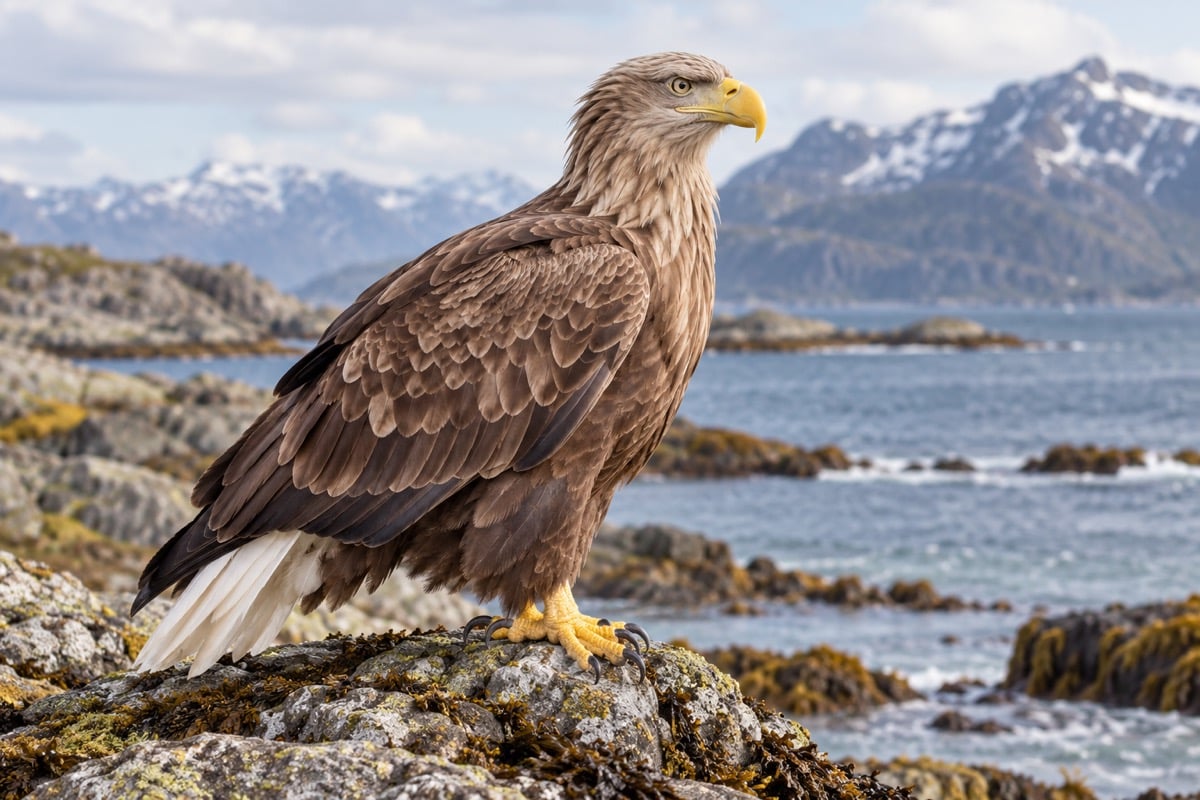
The white-tailed eagle has broad, almost rectangular wings and a short, wedge-shaped tail that becomes white in adulthood. A heavy yellow bill and paler head give older birds a powerful appearance. It catches fish and birds but also scavenges when an easy meal is available. Pairs build substantial stick nests and may reuse them for years. Young birds are darker and lack the crisp white tail that makes adults easier to recognize.
47. White-throated Kingfisher
- Scientific Name: Halcyon smyrnensis
- Habitat: Open woodland, farmland, gardens and wetlands
- Size: About 65.5–81 g (2.3–2.9 oz)
- Diet: Insects, lizards, frogs, fish and other small animals
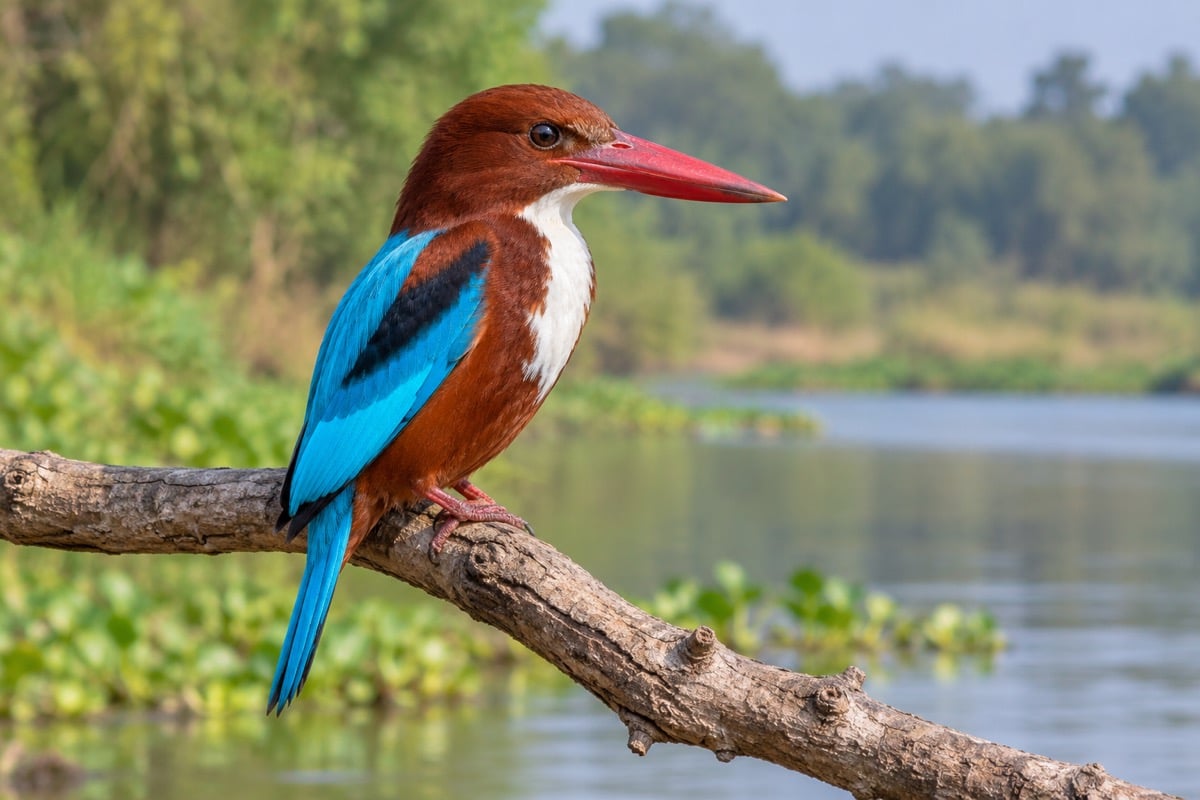
The white-throated kingfisher has a chestnut head, a large red bill and brilliant blue wings and back. Its white throat and chest form a bright patch at the front. Despite the family name, it is often found well away from open water, watching for prey from wires and exposed branches. A quick downward flight brings it to an insect or small vertebrate. It can thrive in a mixture of wooded, cultivated and wet habitats.
48. White-throated Sparrow
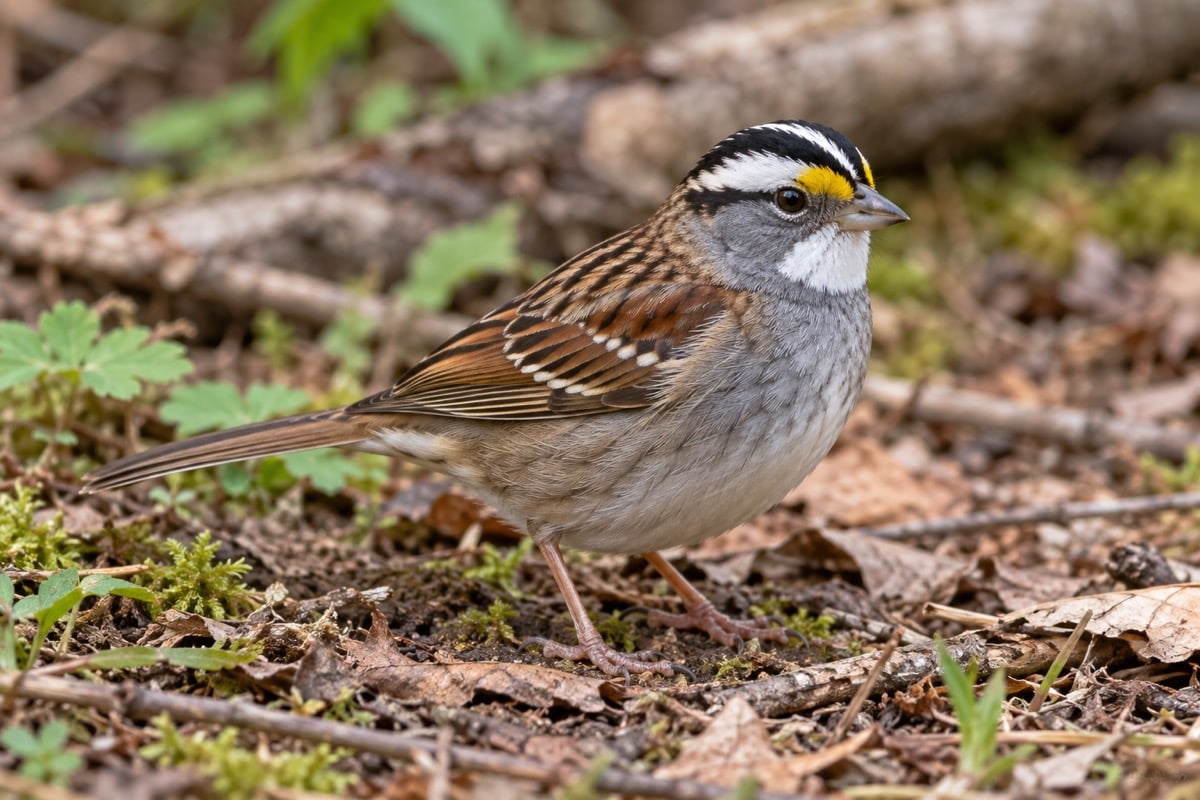
- Scientific Name: Zonotrichia albicollis
- Habitat: Woodland, forest edges, brush and gardens
- Size: About 16–18 cm (6.3–7.1 in) long
- Diet: Seeds, insects, fruit and buds
The white-throated sparrow has a neat white throat patch and small yellow spots between its bill and eyes. Some birds have bold black-and-white head stripes, while others have softer tan stripes. It often feeds beneath bushes, hopping backward to scatter leaves and uncover food. Thick cover nearby provides a quick escape. Its clear, whistled song is a familiar sound in northern breeding areas, while winter flocks may visit gardens farther south.
49. White-winged Dove
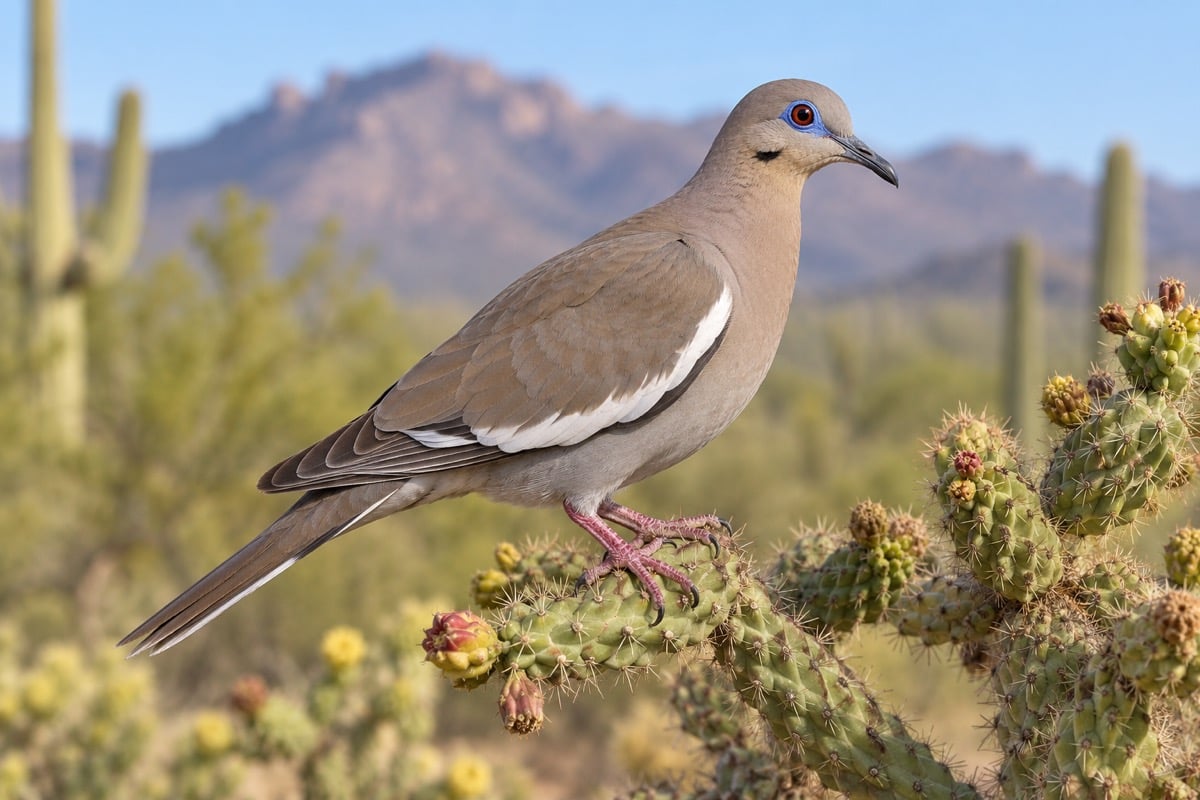
- Scientific Name: Zenaida asiatica
- Habitat: Dry woodland, scrub, desert and towns
- Size: About 125–187 g (4.4–6.6 oz)
- Diet: Seeds, grains and fruit
A narrow white line along the folded wing becomes a broad white patch when this dove takes flight. Blue skin surrounds its eye, adding a bright detail to otherwise subdued brown-gray plumage. White-winged doves feed on seeds and fruit, including cactus fruit in desert regions. They can gather wherever food and water are dependable. Their soft, repeated calls carry from trees and rooftops, making them noticeable even when foliage hides the bird itself.
50. Whooping Crane
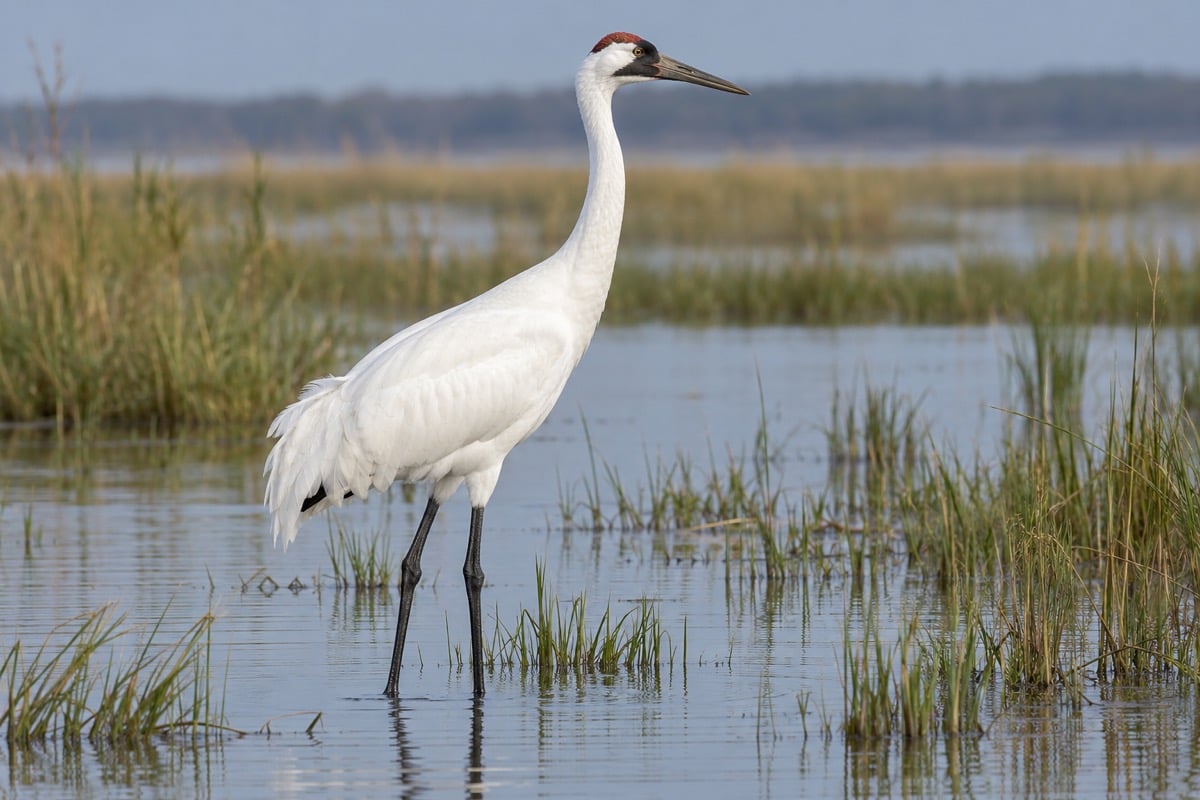
- Scientific Name: Grus americana
- Habitat: Wetlands, marshes and coastal wintering areas
- Size: About 1.5 m (4.9 ft) tall; wingspan around 2.3 m (7.5 ft)
- Diet: A varied mix of animal and plant foods, including coastal crabs and clams
A whooping crane is a tall white bird with long dark legs and a patch of red on its head. Its black wing tips are especially obvious in flight but can be largely hidden when the wings are folded. Wetlands provide essential places to feed, rest and breed. Different parts of the year can bring different feeding opportunities, from inland wetland habitats to coastal shallows. Its long neck and straight bill create a very different silhouette from a white pelican or a swan, two other large pale birds.
51. Wild Boar
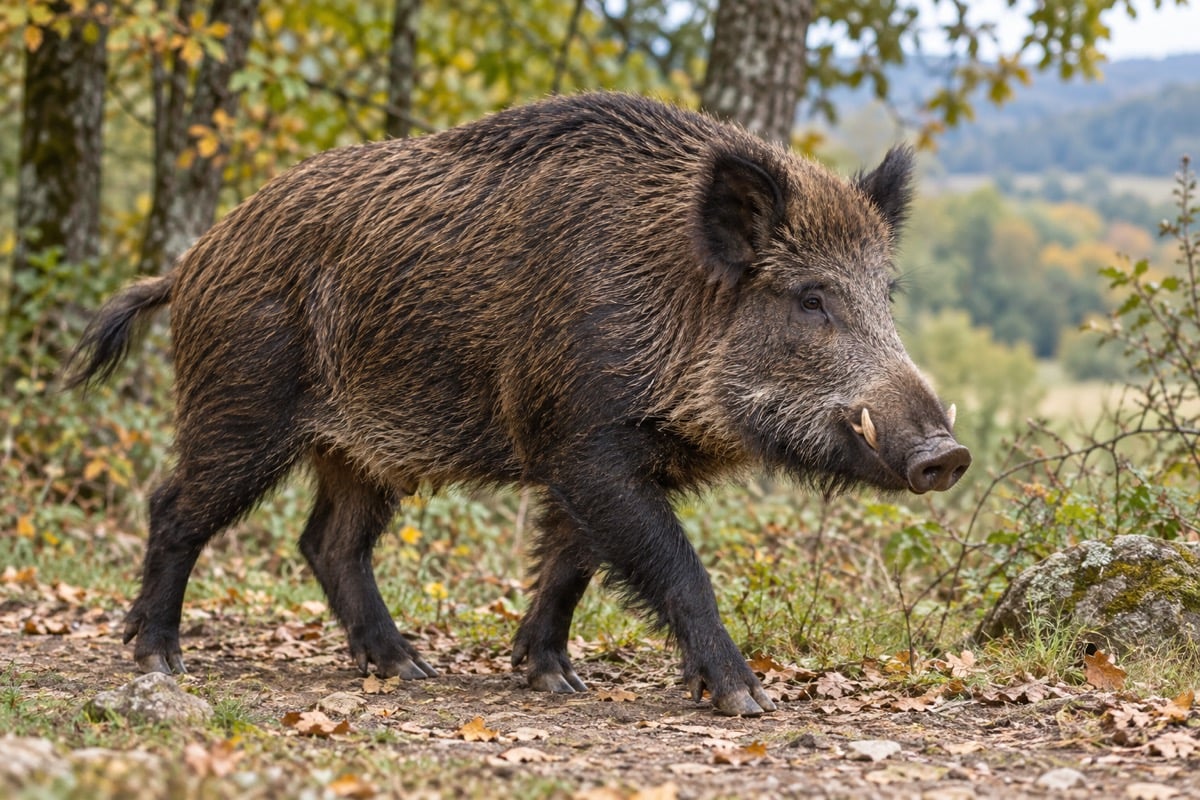
- Scientific Name: Sus scrofa
- Habitat: Forests, grasslands, wetlands and farmland
- Size: Adults vary greatly, commonly exceeding 60 kg (132 lb)
- Diet: Roots, nuts, seeds, fruit and small animals
The wild boar uses a strong snout to turn over soil and expose buried food. Coarse hair, a heavy body and curved tusks give adults a rugged appearance. Females and their young often travel in groups, while older males are more likely to be solitary. Piglets wear pale stripes that help conceal them in patchy vegetation. Mud wallows help the animals cool down, and their flexible diet allows them to use many different landscapes.
52. Wild Turkey
- Scientific Name: Meleagris gallopavo
- Habitat: Woodlands mixed with fields and clearings
- Size: About 2.5–10.8 kg (5.5–24 lb)
- Diet: Nuts, seeds, fruit, insects and other small animals
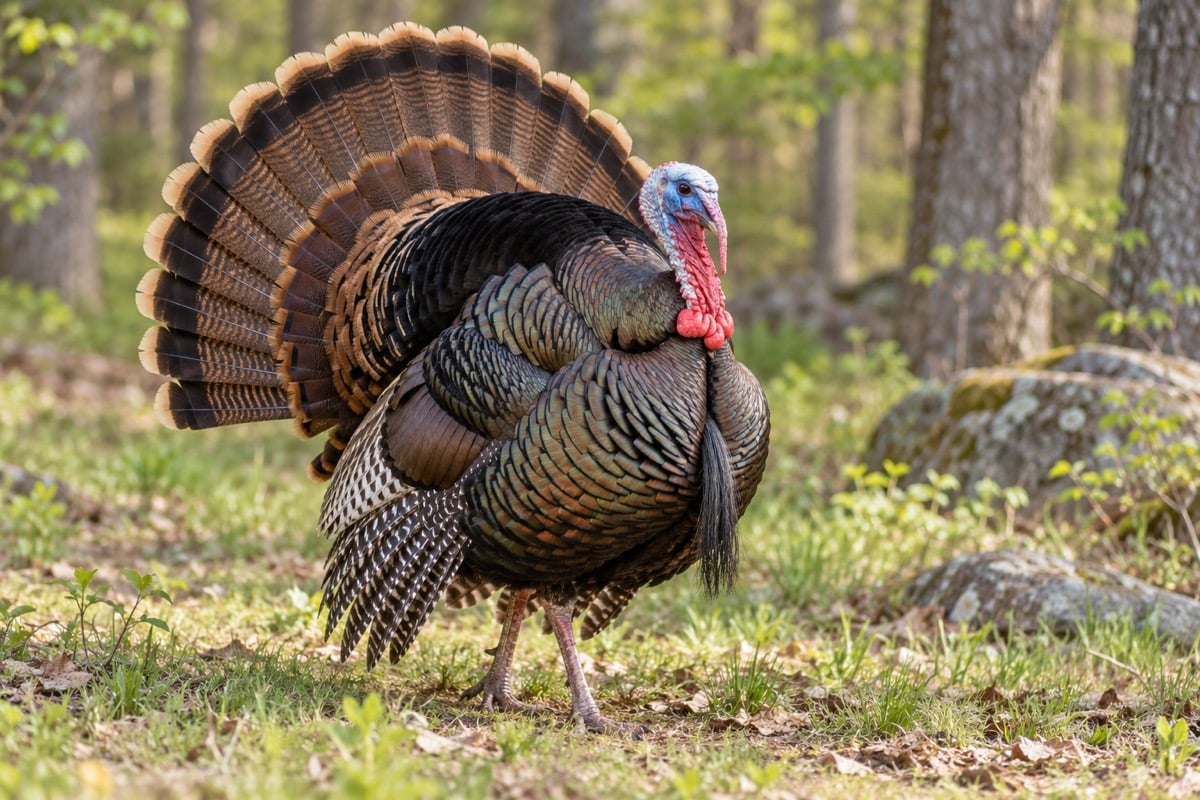
The wild turkey spends much of its day on the ground, scratching through leaves for food. At night, it usually flies into a tree to roost out of reach of many predators. Males spread their tail feathers into a fan and display colorful bare skin around the head and neck. Their familiar gobbling calls help announce their presence. Despite a bulky appearance, wild turkeys can fly strongly over short distances when they need to escape.
53. Wild Water Buffalo
- Scientific Name: Bubalus arnee
- Habitat: Wet grasslands, marshes and nearby forest
- Size: Body about 2.4–3 m (8–10 ft) long
- Diet: Grasses, sedges and aquatic plants
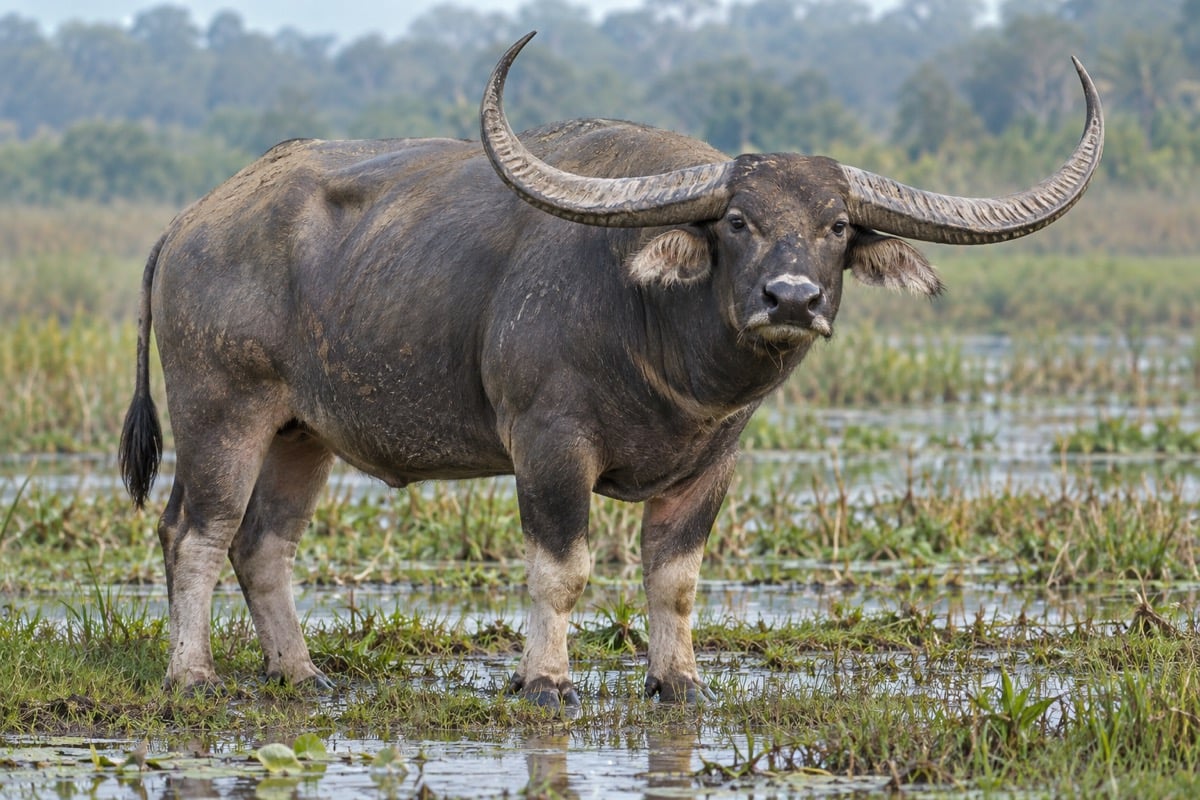
The wild water buffalo is an enormous grazer with widely sweeping horns and a dark, heavy body. Wetlands provide food, water and places to wallow during hot weather. Its broad hooves help it move across soft ground. This is the wild relative of domestic water buffalo, though the remaining wild populations are much more restricted. Protecting their habitat and limiting contact with domestic herds are important because interbreeding can threaten the wild form.
54. Wildebeest (Blue Wildebeest)
- Scientific Name: Connochaetes taurinus
- Habitat: Savannas, grasslands and open woodland
- Size: About 118–270 kg (260–595 lb)
- Diet: Grasses
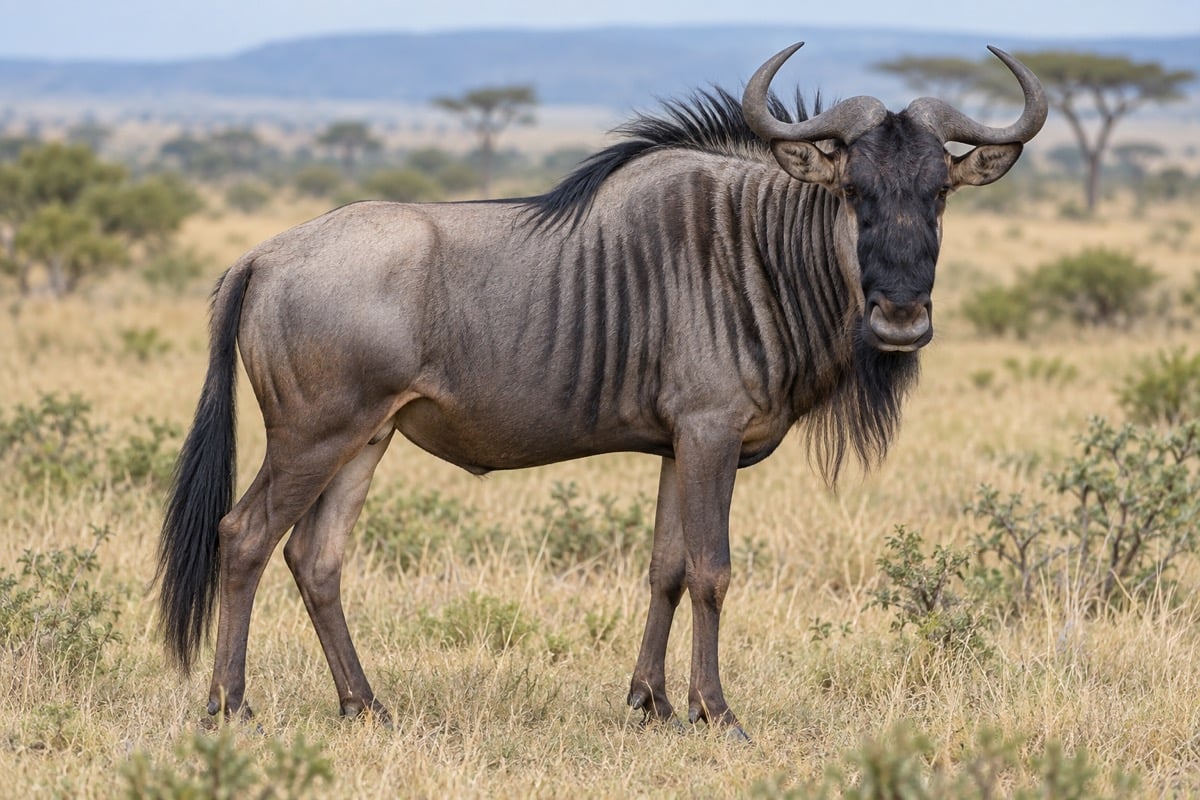
The blue wildebeest has a broad muzzle, dark mane and curved horns, with faint vertical stripes across its shoulders. Herds graze on open grassland, often sharing feeding areas with zebras and other large herbivores. Some populations make spectacular seasonal migrations as rainfall changes the supply of fresh grass and water. Others remain within smaller areas. Calves are able to stand and move soon after birth, an essential ability in a landscape filled with predators.
55. Willow Ptarmigan
- Scientific Name: Lagopus lagopus
- Habitat: Shrubby tundra and other cold, open habitats
- Size: About 35–43.5 cm (14–17 in) long
- Diet: Willow buds, leaves, seeds, berries and some insects
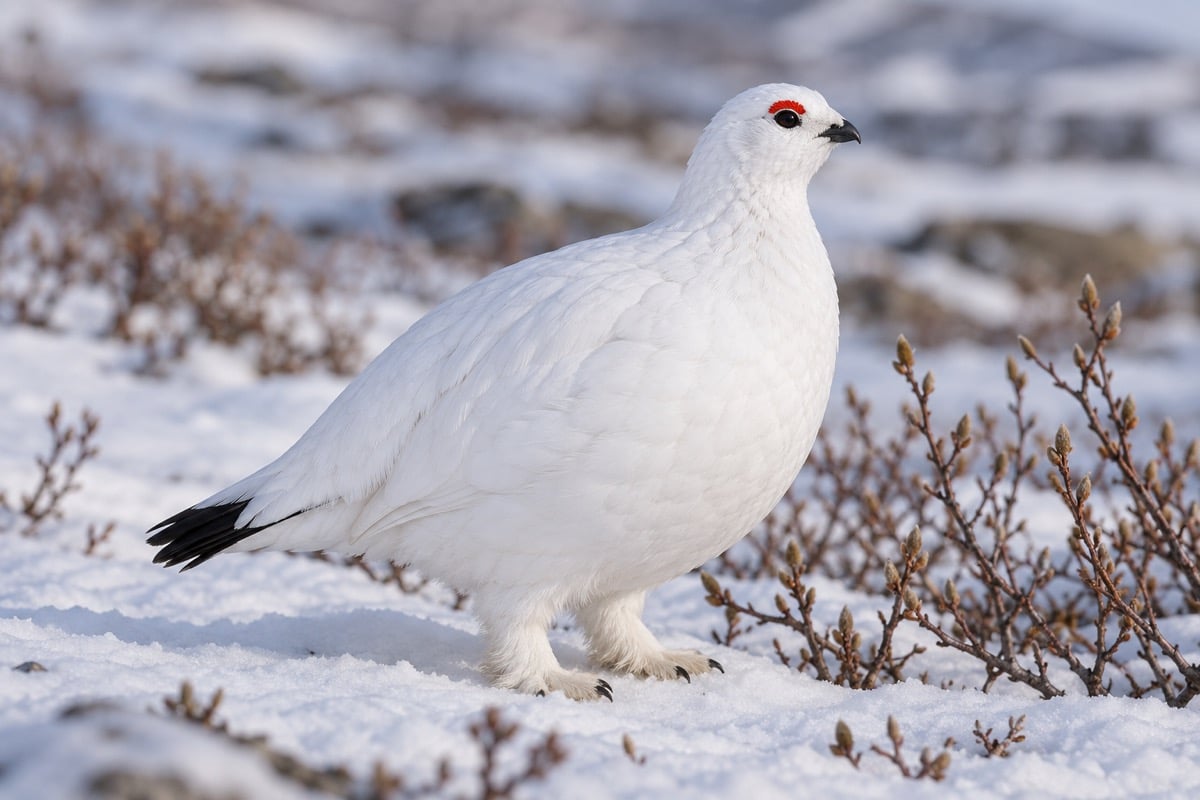
The willow ptarmigan changes its appearance with the seasons. Mottled brown plumage blends into summer vegetation, while mostly white winter feathers help it disappear against snow. Its feet are feathered, providing insulation and helping it travel over snowy ground. Willow buds are especially useful when other food is scarce. Rather than abandoning the far north, this hardy grouse is equipped to remain in cold landscapes where many other birds would struggle.
56. Wilson’s Bird-of-Paradise
- Scientific Name: Diphyllodes respublica
- Habitat: Hill rainforest
- Size: Body about 16 cm (6.3 in); males reach about 21 cm (8.3 in) including tail wires
- Diet: Fruit and small arthropods
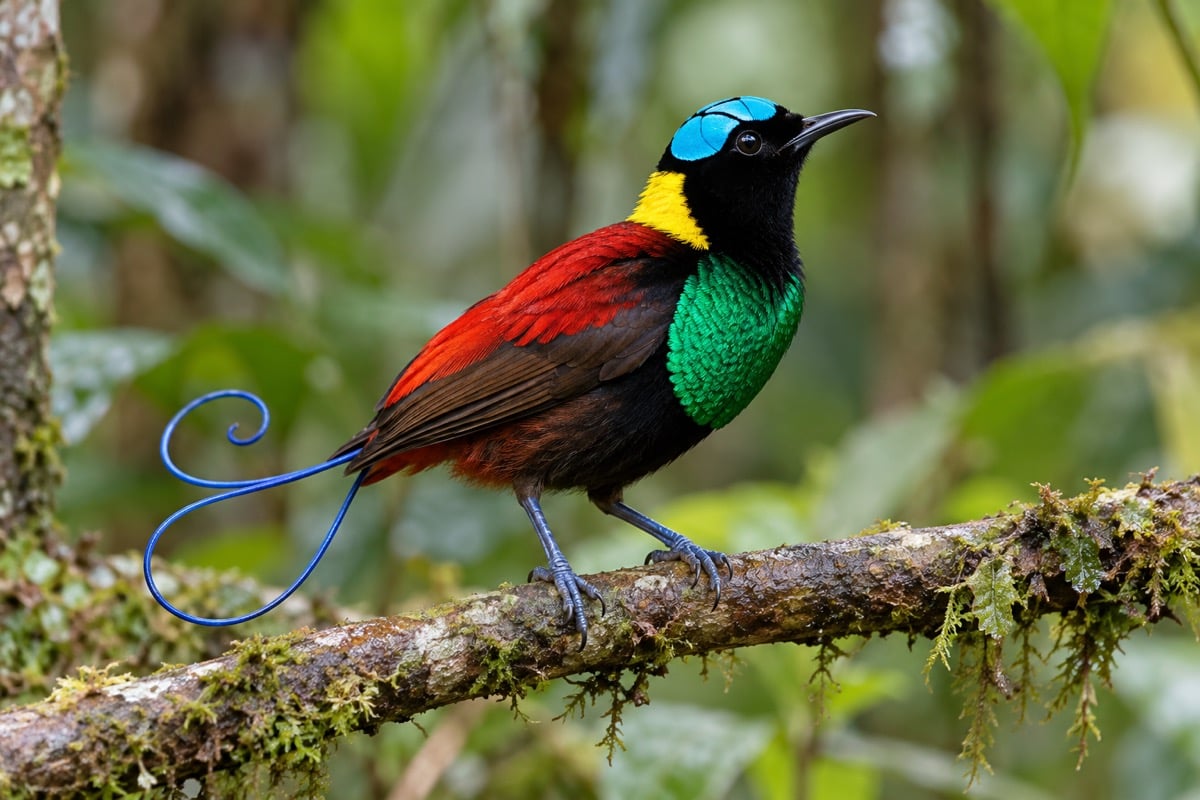
A male Wilson’s bird-of-paradise combines a bare blue crown with a yellow cape, red back and glossy green underparts. Two thin tail feathers curl into distinctive loops. He clears a small display court on the forest floor, removing debris before performing for a visiting female. Different postures show off different parts of his brilliant plumage. Females are much less colorful, with brownish feathers that blend into the shaded forest around them.
57. Wilson’s Warbler
- Scientific Name: Cardellina pusilla
- Habitat: Willow thickets, damp woodland and dense undergrowth
- Size: About 10–12 cm (4–4.7 in) long
- Diet: Insects and other small invertebrates
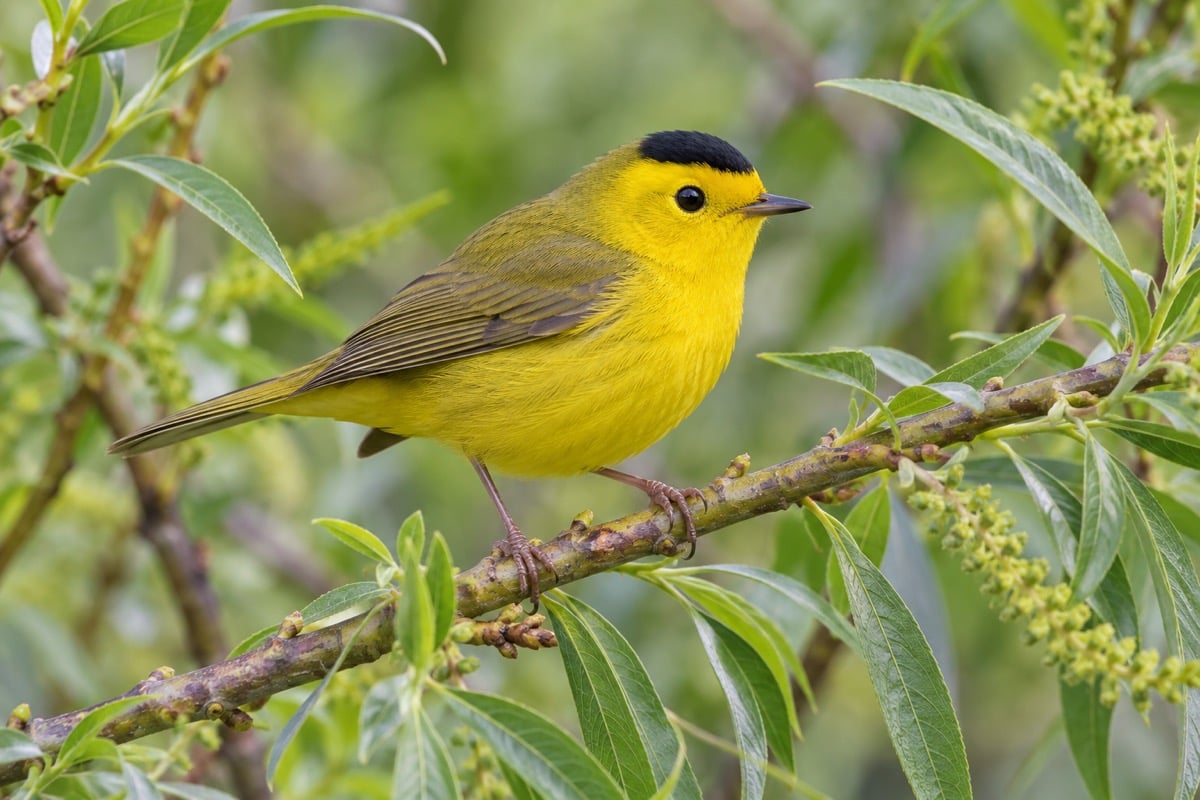
Wilson’s warbler is a small yellow bird that rarely seems to sit still. Males usually wear a neat black cap, while females may have a smaller dark patch or no obvious cap. It searches low branches and leafy shrubs, picking insects from foliage or briefly hovering to reach them. Damp thickets can provide rich feeding grounds. During migration, this active little bird may turn up in parks and gardens far from its breeding territory.
58. Winter Wren
- Scientific Name: Troglodytes hiemalis
- Habitat: Forests with fallen logs, tangled roots and damp understory
- Size: About 8–12 cm (3.1–4.7 in) long
- Diet: Insects, spiders and other small invertebrates
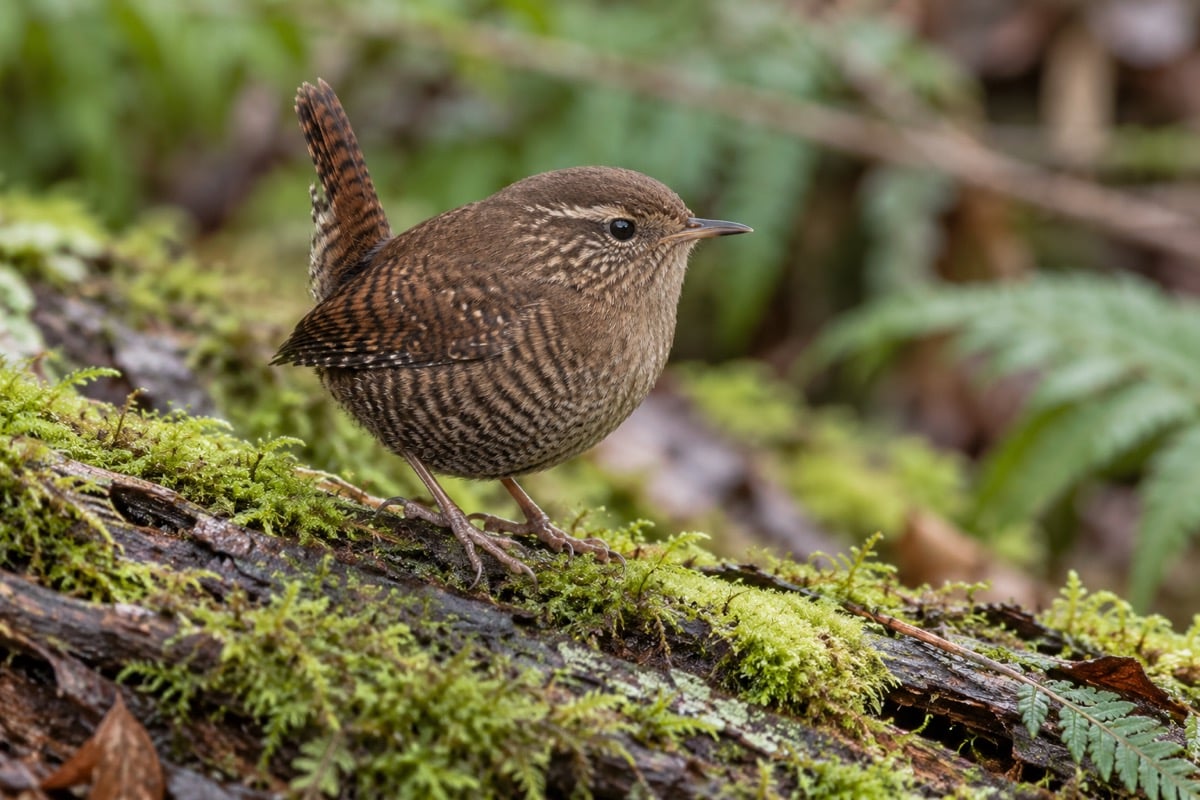
The winter wren is a tiny brown bird with a short tail that it often holds upright. It slips around fallen logs, roots and mossy crevices, sometimes looking more like a mouse than a bird. Fine barring breaks up the plumage on its wings and underside. A long, bubbling song can reveal it before it comes into view. Dense forest-floor cover provides both hunting opportunities and shelter for this energetic little insect eater.
59. Wolf (Gray Wolf)
- Scientific Name: Canis lupus
- Habitat: Forest, tundra, grassland and other large landscapes
- Size: Yellowstone adults stand about 66–91 cm (26–36 in) at the shoulder
- Diet: Mainly mammals, including deer and other hoofed animals
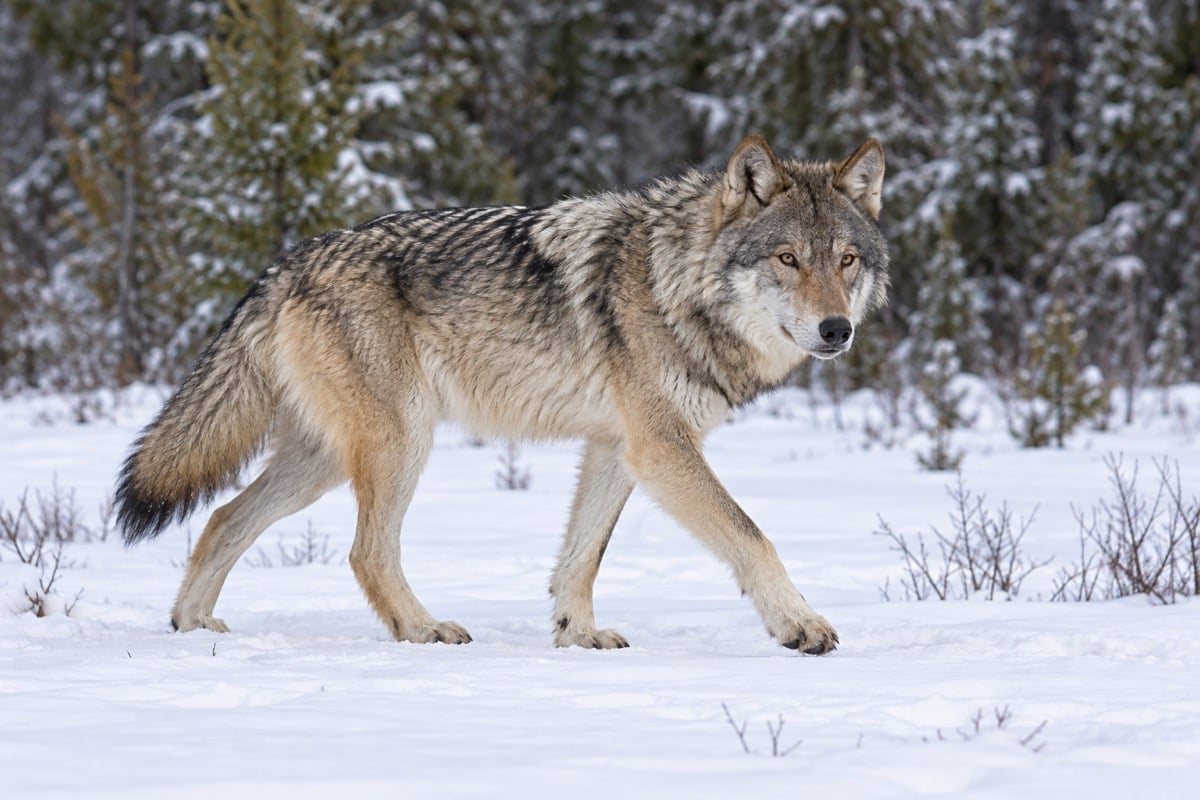
Gray wolves live in packs that are often family groups. Cooperative hunting and care of young help them make use of large territories, though the prey available in one region can be quite different from that in another. In Yellowstone, elk are an important winter food. Elsewhere, deer, moose, beavers and smaller animals may play larger roles. The word ‘gray’ does not describe every individual: wolves can also have very dark or pale coats. A wolf is a member of the dog family; the similarly named wolverine is a mustelid.
60. Wolverine
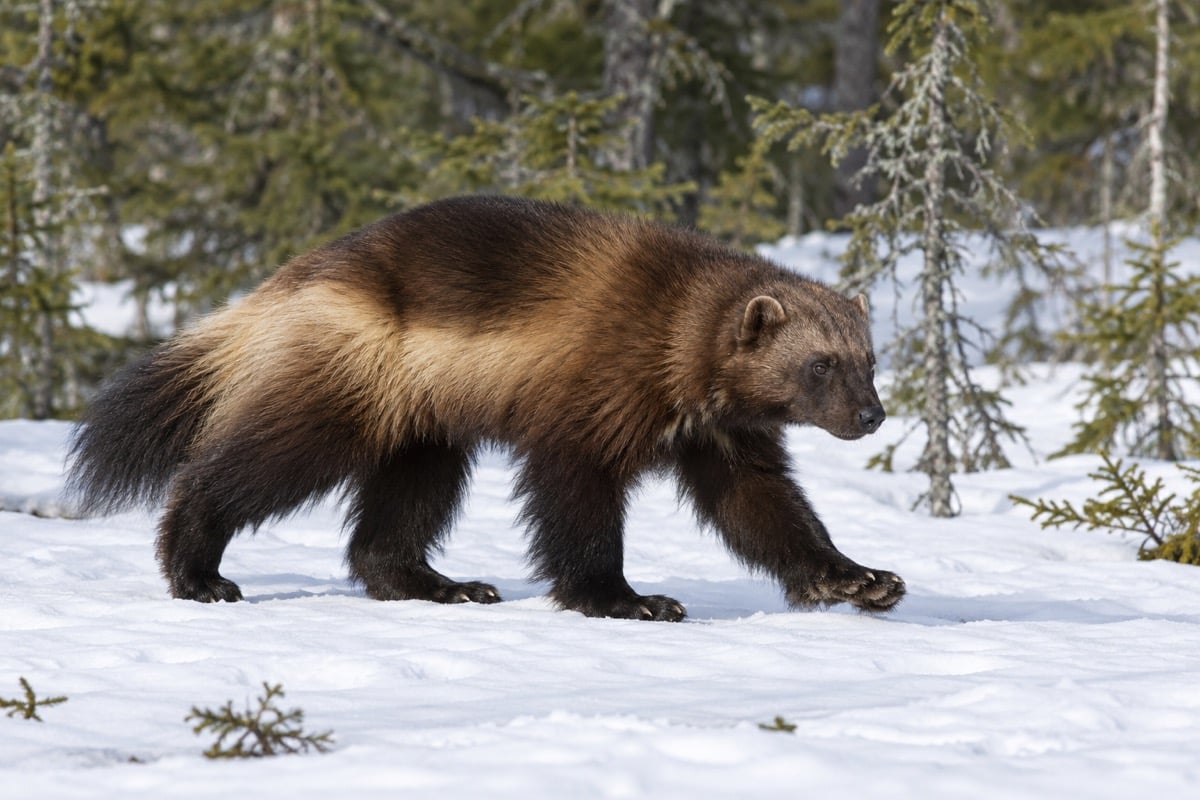
- Scientific Name: Gulo gulo
- Habitat: Boreal forest, tundra and mountain country
- Size: Body about 65–105 cm (26–41 in), excluding the tail
- Diet: Carrion and animals it hunts
The wolverine belongs to the weasel family, despite a stocky shape that can look bear-like. Its broad feet, strong claws and thick coat suit northern landscapes, where it may cover a large area in search of food. Scavenging is an important part of its life. A carcass can provide a valuable meal when fresh prey is difficult to find, and surplus food may be hidden for later. Females use sheltered dens, often in snow, to raise their young. It is a separate animal from a wolf, with different anatomy and habits.
61. Wombat (Bare-nosed Wombat)
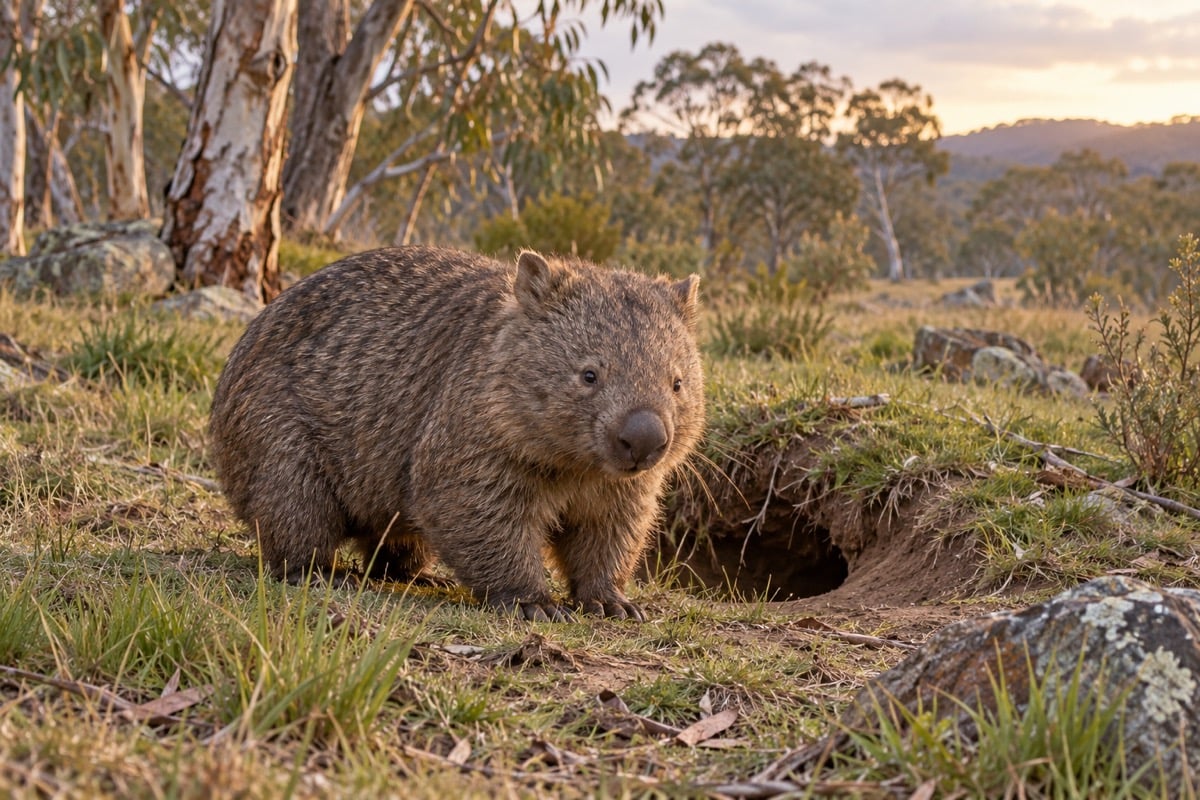
- Scientific Name: Vombatus ursinus
- Habitat: Woodland, grassland, heath and burrow systems
- Size: Mainland adults about 84–115 cm (33–45 in) long
- Diet: Grasses, sedges and rushes
The bare-nosed wombat, also called the common wombat, is a compact marsupial built for digging. Strong legs and broad claws help it excavate burrows where it can shelter during much of the day. It comes out to graze, usually when conditions are cooler. Its incisors keep growing, compensating for wear from tough vegetation. Although the thick body and short legs can look awkward above ground, they are well suited to a life that combines close-to-the-ground feeding with extensive underground shelter.
62. Wood Bison
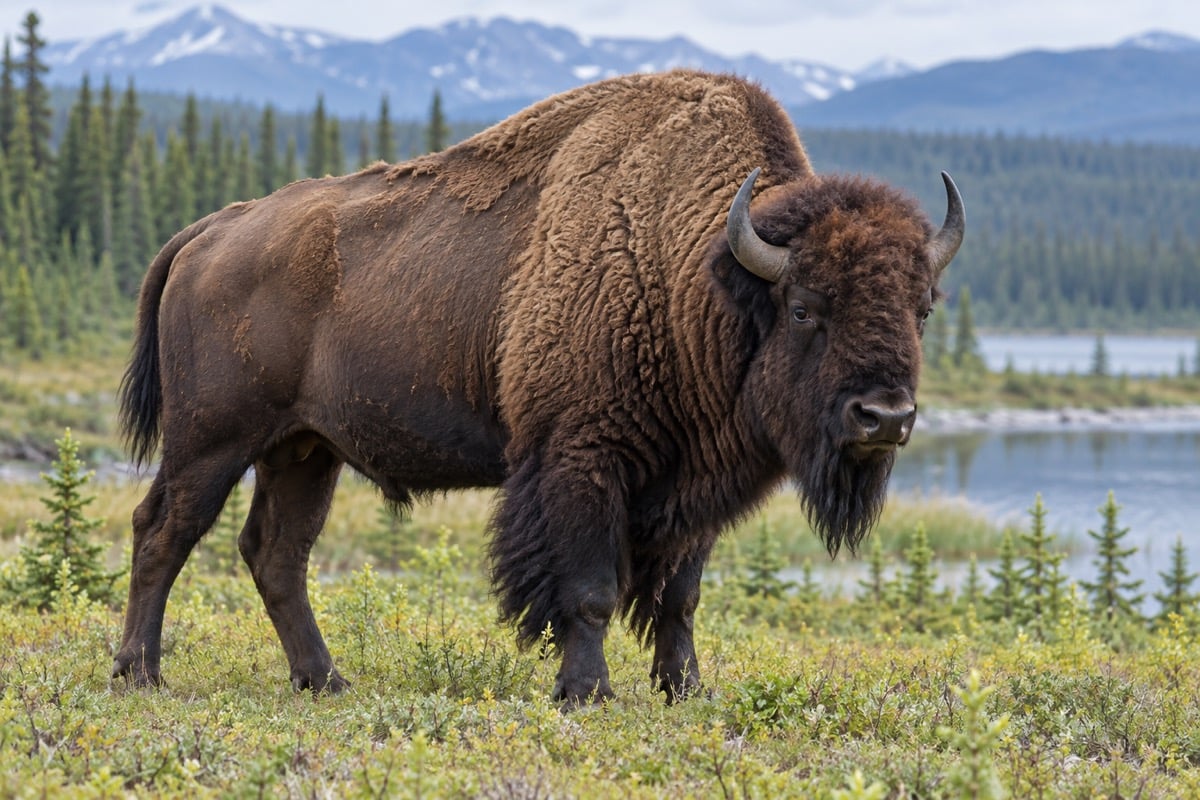
- Scientific Name: Bison bison athabascae
- Habitat: Northern meadows, river valleys and forest clearings
- Size: Males around 900 kg (2,000 lb); females around 540 kg (1,200 lb)
- Diet: Grasses, sedges, herbs and some woody plants
The wood bison is the larger northern subspecies of American bison. A tall shoulder hump supports powerful muscles that help it move its heavy head, including when sweeping snow aside to reach food. It feeds in open meadows within the northern forest landscape. Females and young form herds, while adult bulls often spend time in smaller groups. Its dark, shaggy coat helps it withstand the long, cold winters of its range.
63. Wood Duck
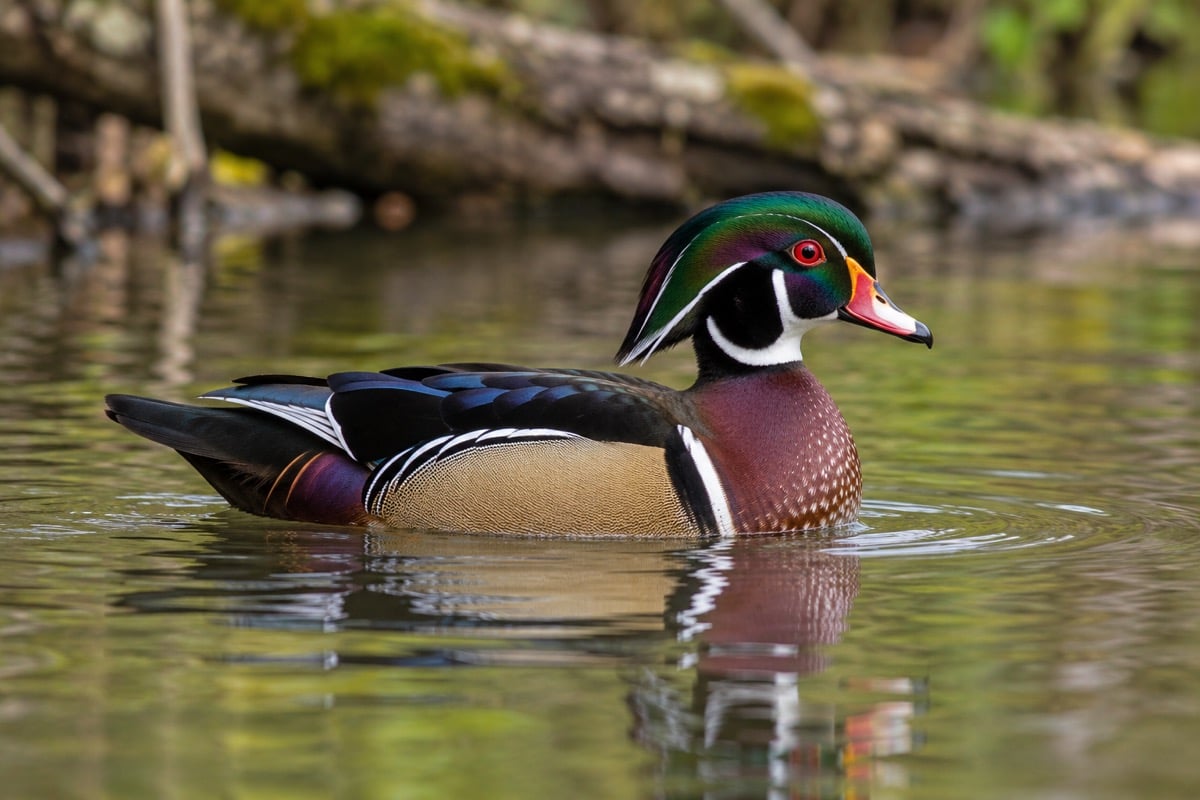
- Scientific Name: Aix sponsa
- Habitat: Wooded wetlands, ponds, swamps and streams
- Size: About 47–54 cm (18.5–21.3 in) long
- Diet: Seeds, acorns, fruit and small invertebrates
A male wood duck wears a striking combination of a green crest, fine white facial stripes and a chestnut breast. Females are more subdued, with gray-brown plumage and a noticeable pale ring around the eye. Wood ducks nest in tree cavities, sometimes high above the ground. Soon after hatching, the ducklings jump from the nest to follow their mother. Their diet includes both plant foods and small animals, while sharp claws help these unusually tree-friendly ducks grip branches and perch above the water.
64. Wood Frog
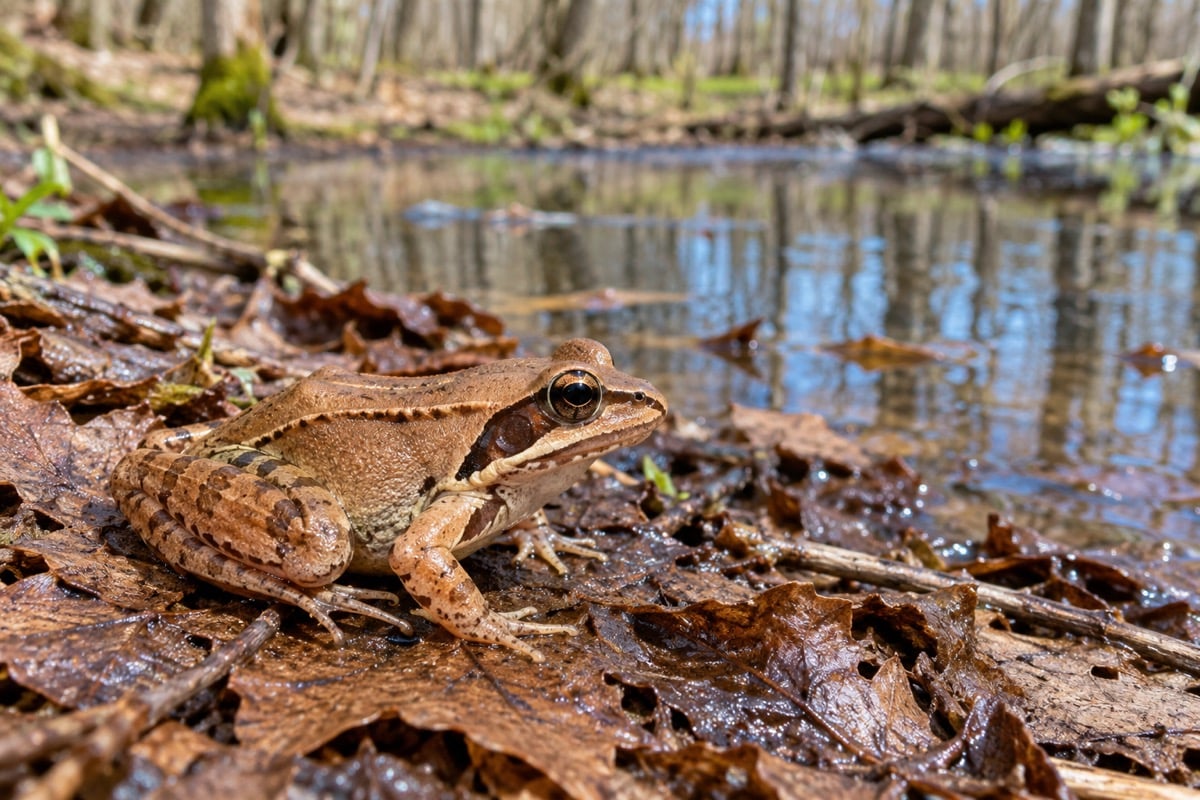
- Scientific Name: Lithobates sylvaticus
- Habitat: Forest floors and temporary breeding pools
- Size: About 3.5–7.6 cm (1.4–3 in) long
- Diet: Small invertebrates as an adult
A dark mask behind the eye helps identify a wood frog. It spends much of its time on land, returning to pools to breed, often very early in spring. The calls of a breeding group can sound surprisingly like quacking ducks. Its winter survival is extraordinary: it can tolerate ice forming in parts of its body. Protective substances, including glucose, help keep vital cells from damage while breathing and the heartbeat stop temporarily. This adaptation lets wood frogs survive winters in places where most other frogs could not remain so close to the surface.
65. Wood Stork
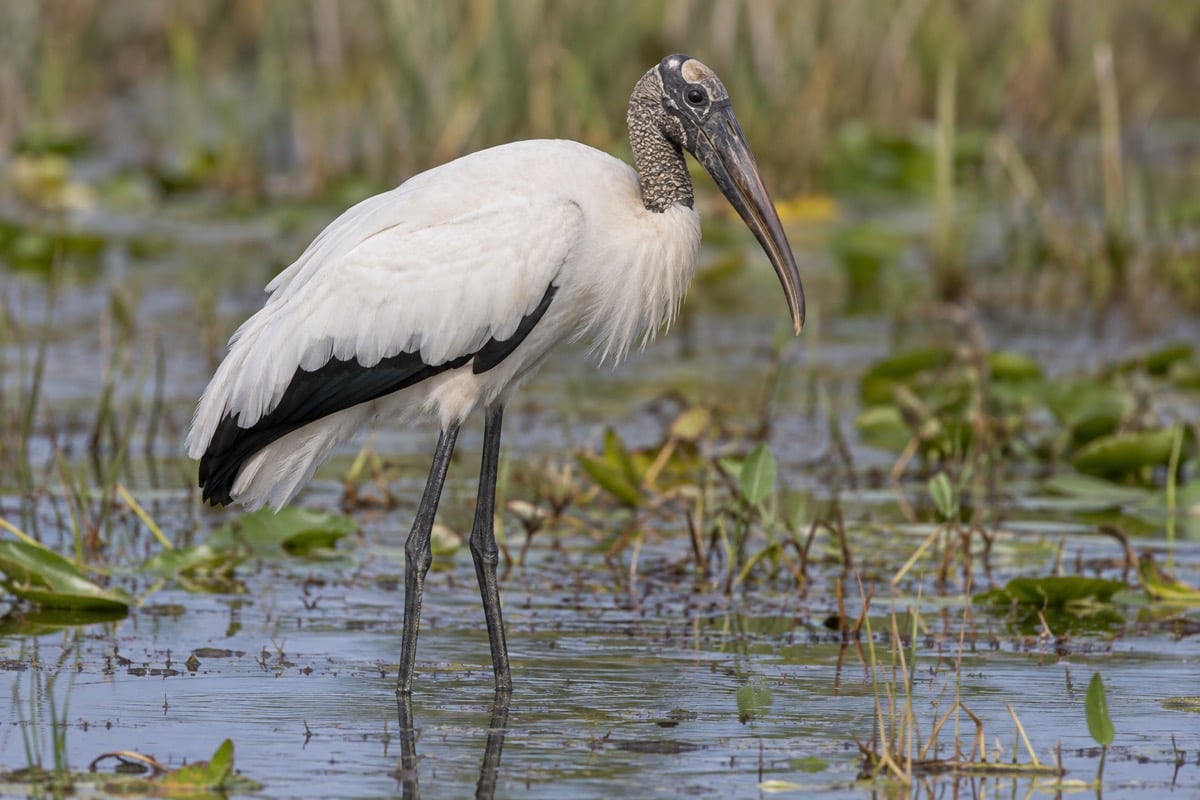
- Scientific Name: Mycteria americana
- Habitat: Marshes, swamps, shallow ponds and other wetlands
- Size: About 85–115 cm (33–45 in) long
- Diet: Fish and other small aquatic animals
The wood stork has a bare, dark head and a thick, slightly curved bill. It often feeds by touch, moving an open bill through shallow water and snapping it shut when prey makes contact. White body feathers contrast with black wings in flight. Nesting colonies gather in wetland trees, where surrounding water can offer some protection. Changes in water depth strongly influence where these birds can find concentrated, accessible food.
66. Wood Thrush
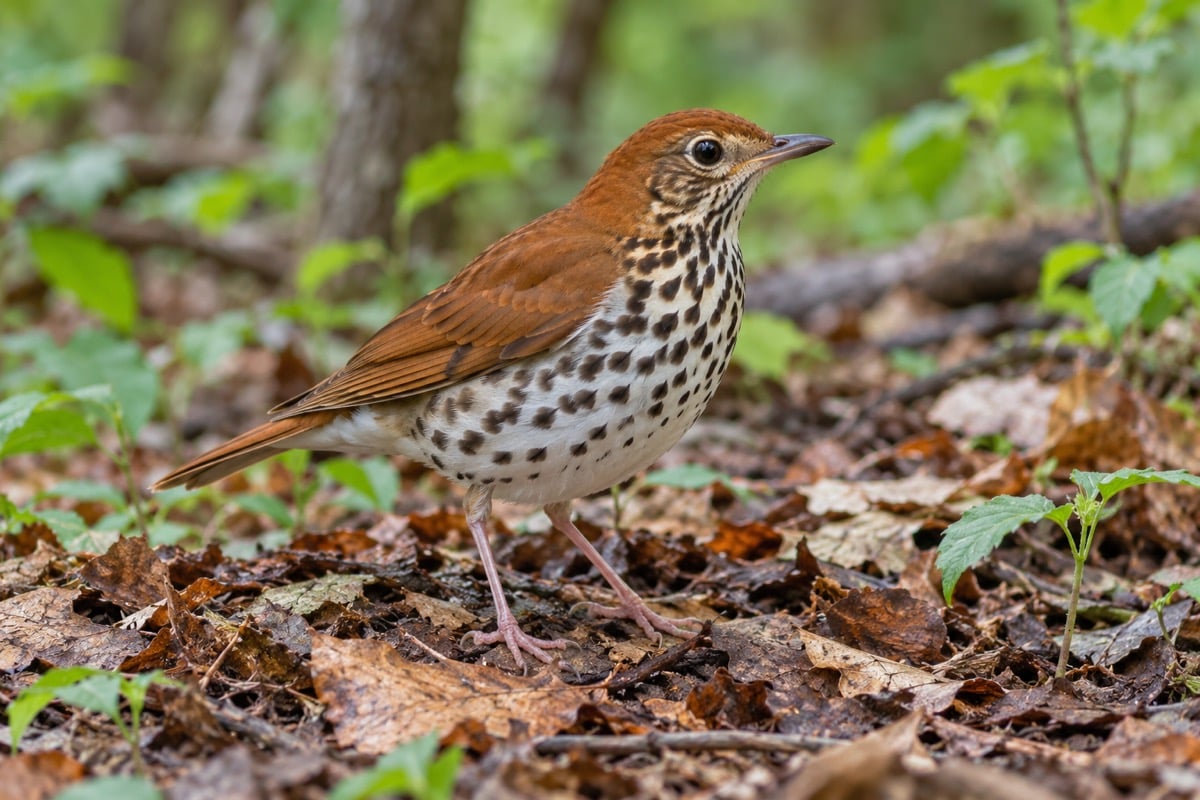
- Scientific Name: Hylocichla mustelina
- Habitat: Deciduous and mixed forest with a leafy understory
- Size: About 19–21 cm (7.5–8.3 in) long
- Diet: Insects, other invertebrates and fruit
The wood thrush has a warm reddish-brown head and back above a white breast covered in bold dark spots. It walks and hops through leaf litter, pausing to look for small animals on the forest floor. Its rich, flute-like song carries through leafy woodland, often at quieter times of day. Fruit becomes an important food as the seasons change. A sheltered forest understory provides both feeding places and cover for nesting.
67. Wood Turtle
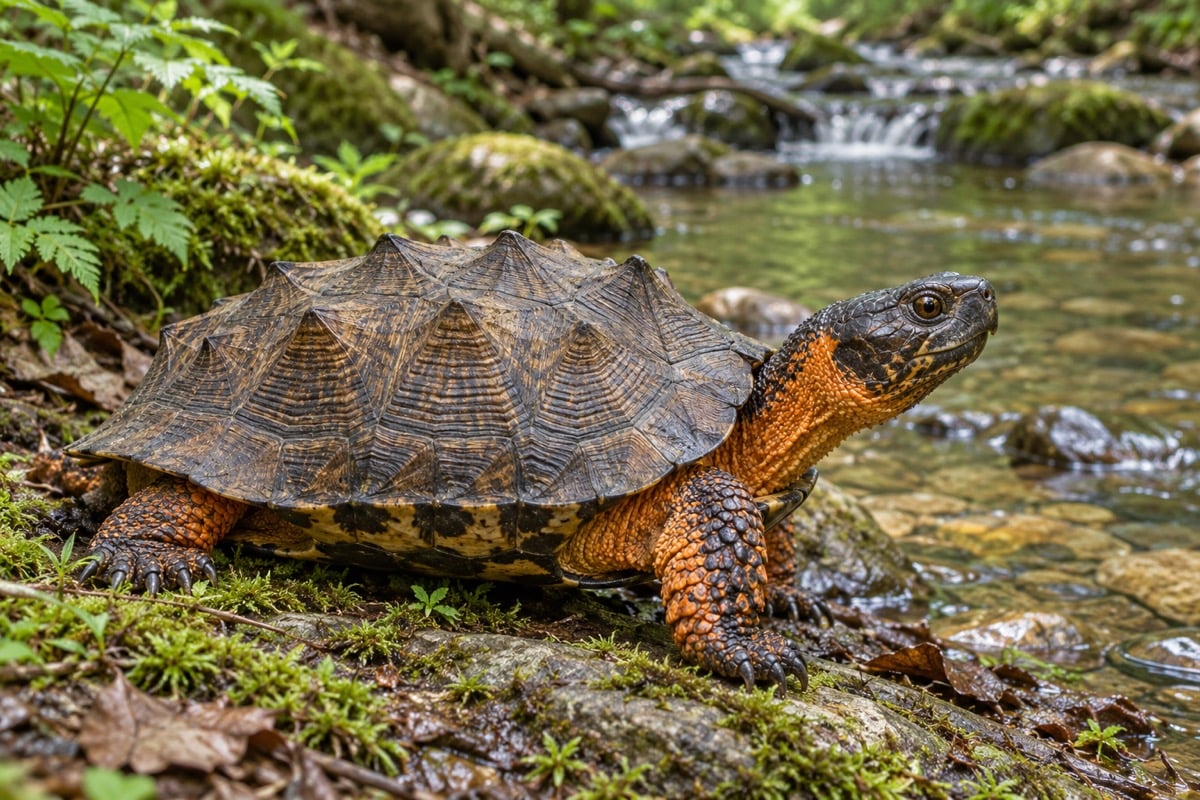
- Scientific Name: Glyptemys insculpta
- Habitat: Streams, woodland, wet meadows and river floodplains
- Size: Shell about 16–25 cm (6.3–9.8 in) long
- Diet: Plants, fruit, fungi, worms, snails and insects
The wood turtle’s shell has raised, sculpted plates that resemble small carved pyramids. Orange or reddish skin can show around its legs and neck. It divides its time between streams and nearby land, searching for a wide assortment of food. Unlike a turtle that stays permanently in a pond, it may travel through woodland and meadows during warmer months. Clean waterways and connected land habitats are both important parts of its home.
68. Woolly Monkey
- Scientific Name: Lagothrix lagotricha
- Habitat: Tropical rainforest
- Size: Body about 56–69 cm (22–27 in), excluding the tail
- Diet: Mostly fruit, with seeds, leaves and insects
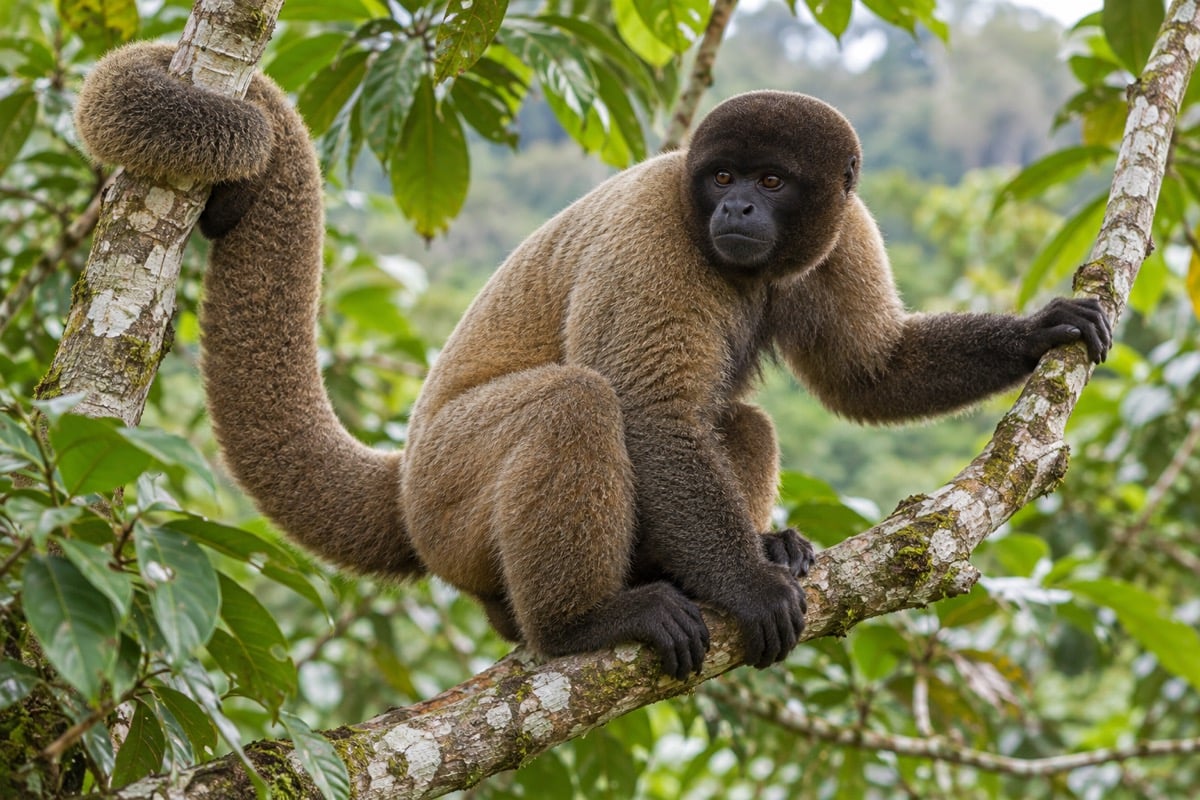
The common woolly monkey has a dense coat, rounded head and strong, grasping tail. It moves through the rainforest canopy in social groups, searching for ripe fruit among the branches. The tail can support its body while its hands are free to reach for food. Seeds swallowed with fruit are carried away from the parent tree and later deposited elsewhere. This makes the monkey an important participant in the forest’s continuing cycle of growth.
69. Worm Snake
- Scientific Name: Carphophis amoenus
- Habitat: Moist woodland, leaf litter and soil beneath logs
- Size: Usually about 18–28 cm (7–11 in) long
- Diet: Mostly earthworms
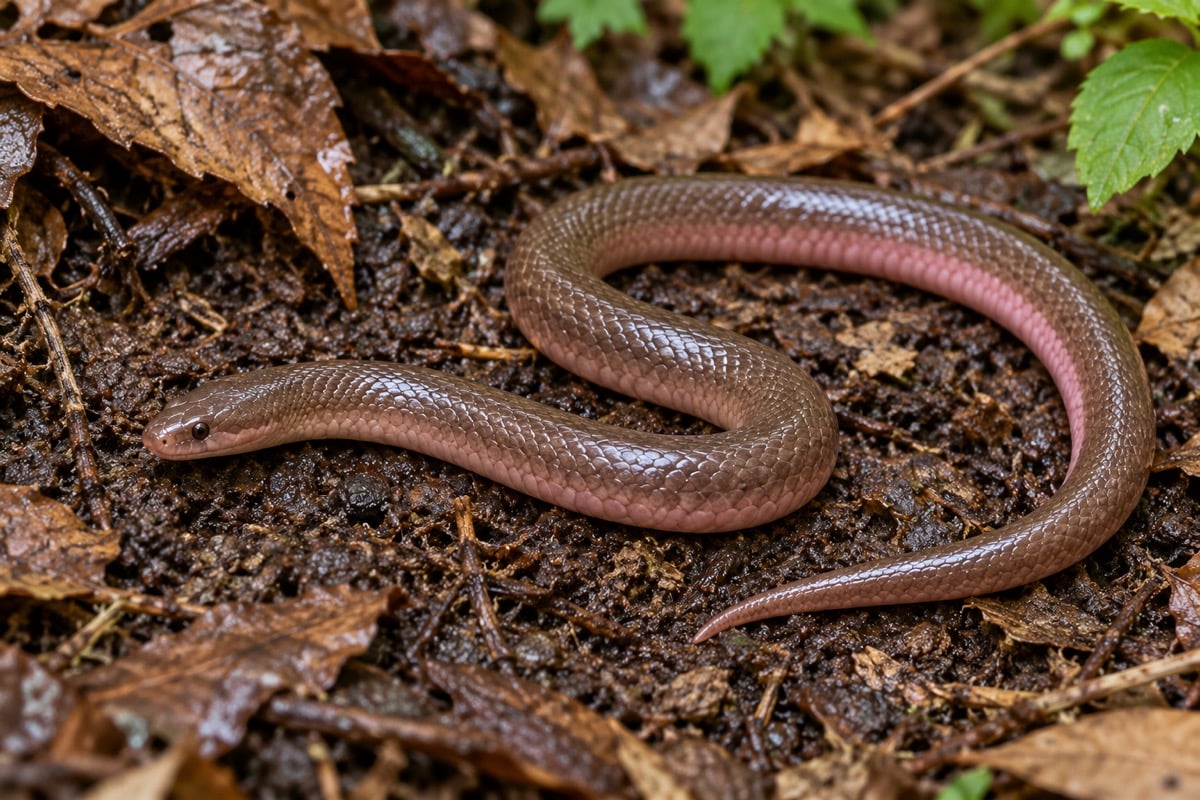
The eastern worm snake has a smooth brown back and a pink underside, giving it a simple, almost wormlike appearance. Tiny eyes and a narrow head suit a life spent beneath leaves and loose soil. Its pointed tail can help it brace itself while moving through tight spaces. It is most likely to be found under a damp log or other cover. Earthworms provide much of its food in these cool, sheltered places.
70. Wreathed Hornbill
- Scientific Name: Rhyticeros undulatus
- Habitat: Tropical evergreen forests
- Size: About 75–100 cm (30–39 in) long
- Diet: Fruit, insects and small vertebrates
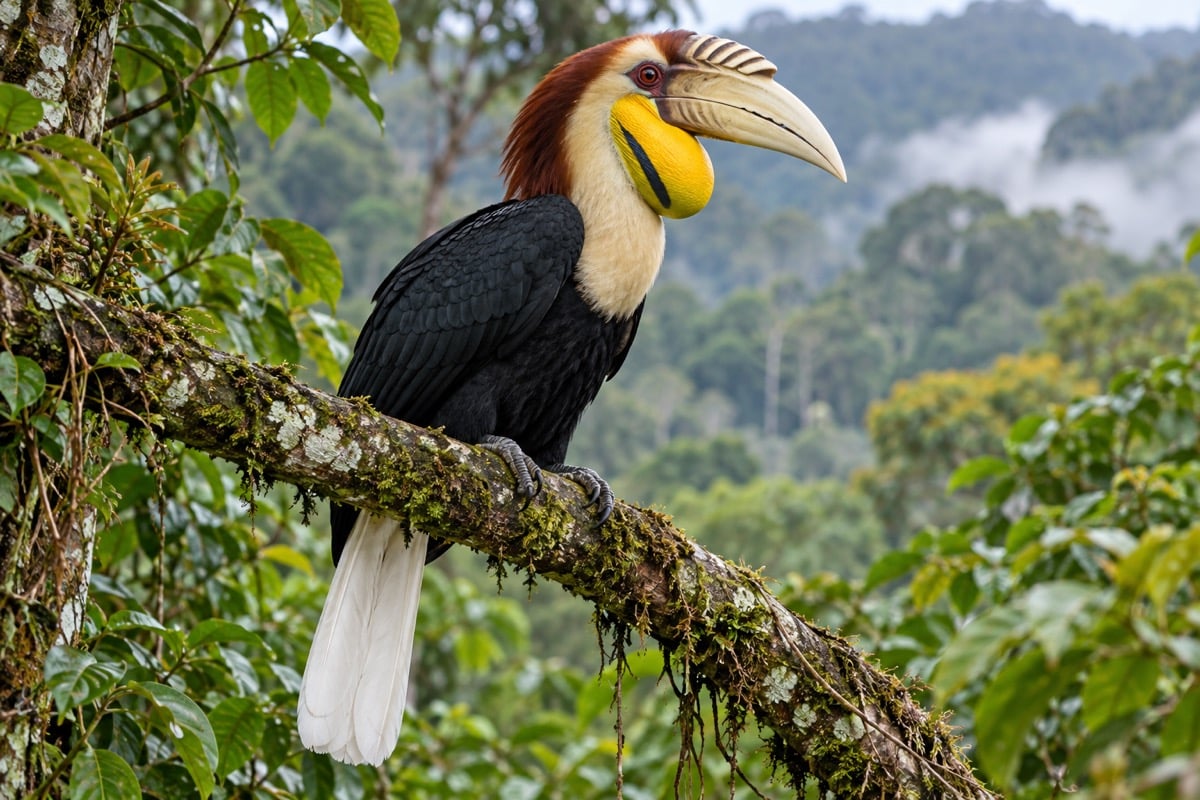
The wreathed hornbill has a large curved bill topped by ridged growths that become more pronounced with age. Males have a pale neck and yellow throat pouch, while females have a black head and blue pouch. Fruit is a major part of their diet. During nesting, a female seals herself inside a tree cavity, leaving a narrow opening. The male passes food through this gap while she attends the developing family.
More Animals (A-Z)
Which of these animals caught your attention? There are plenty more to discover in the other letter lists below.
A, B, C, D, E, F, G, H, I, J, K, L, M, N, O, P, Q, R, S, T, U, V, W, X, Y, Z


James Miller grew up on the Oregon coast, exploring tide pools and watching seabirds. He has a particular fondness for owls and keeps a notebook of his bird sightings.
Read More »