


Animals that start with X include tiny fish, colorful hummingbirds, forest birds, and even a dog breed with deep roots in Mexico. Look beyond the most familiar names and this unusual letter has plenty of animals to discover.
English animal names beginning with X are uncommon, so this list includes scientific names alongside common names. Where an animal is listed by its scientific name, its familiar name appears in parentheses to help you recognize it.
List of Animals
Here are 41 animals that start with the letter X.
Click an animal name to jump to its full description, image, and more below.
1. X-ray Tetra
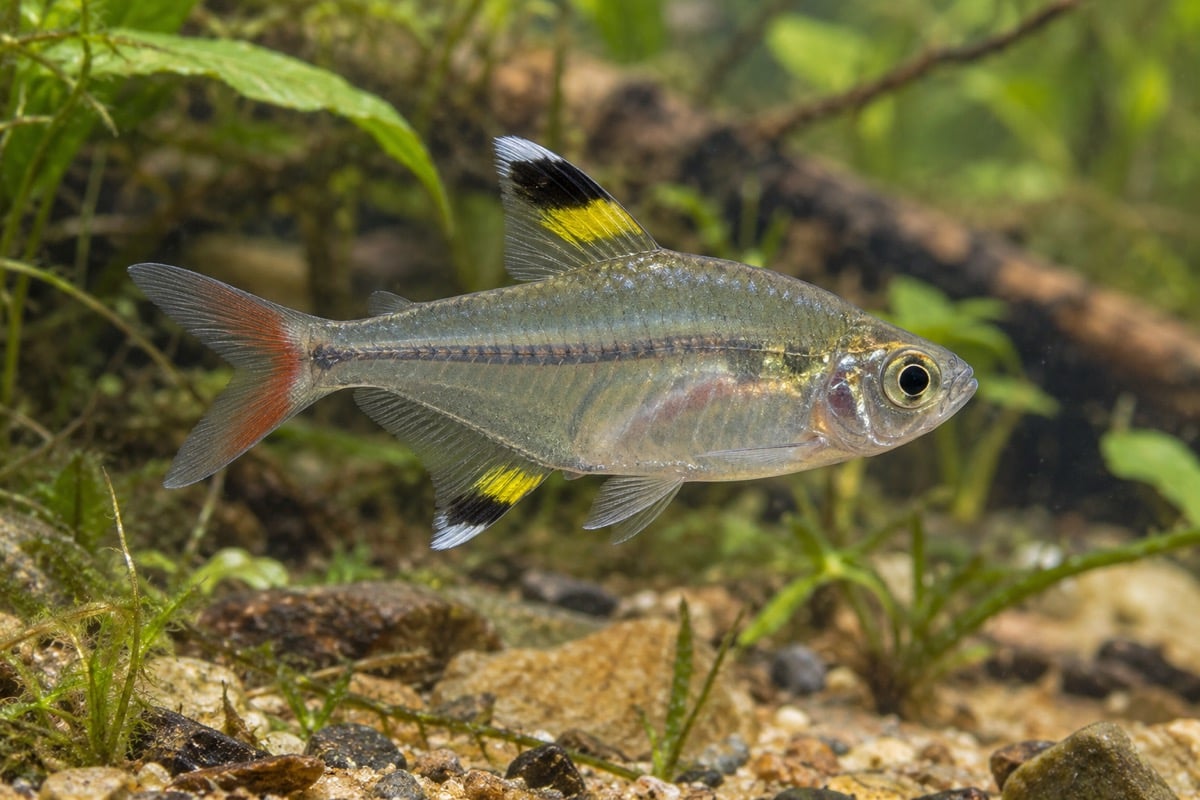
- Scientific Name: Pristella maxillaris
- Habitat: Calm freshwater and densely vegetated swamps
- Size: Up to about 4.5 cm (1.8 in) long
- Diet: Worms, small crustaceans and insects
The X-ray tetra gets its name from its translucent appearance. Light passing through the small body can make some internal structures visible. Black, yellow and white markings on the fins add contrast to its otherwise delicate coloring. This is a social freshwater fish from the Amazon, Orinoco and coastal river systems of the Guianas. It feeds on tiny animals among sheltered aquatic habitats. Its transparent appearance is a natural feature; it does not produce X-rays or see through solid objects.
2. Xanthichthys auromarginatus (Blue-throat Triggerfish)
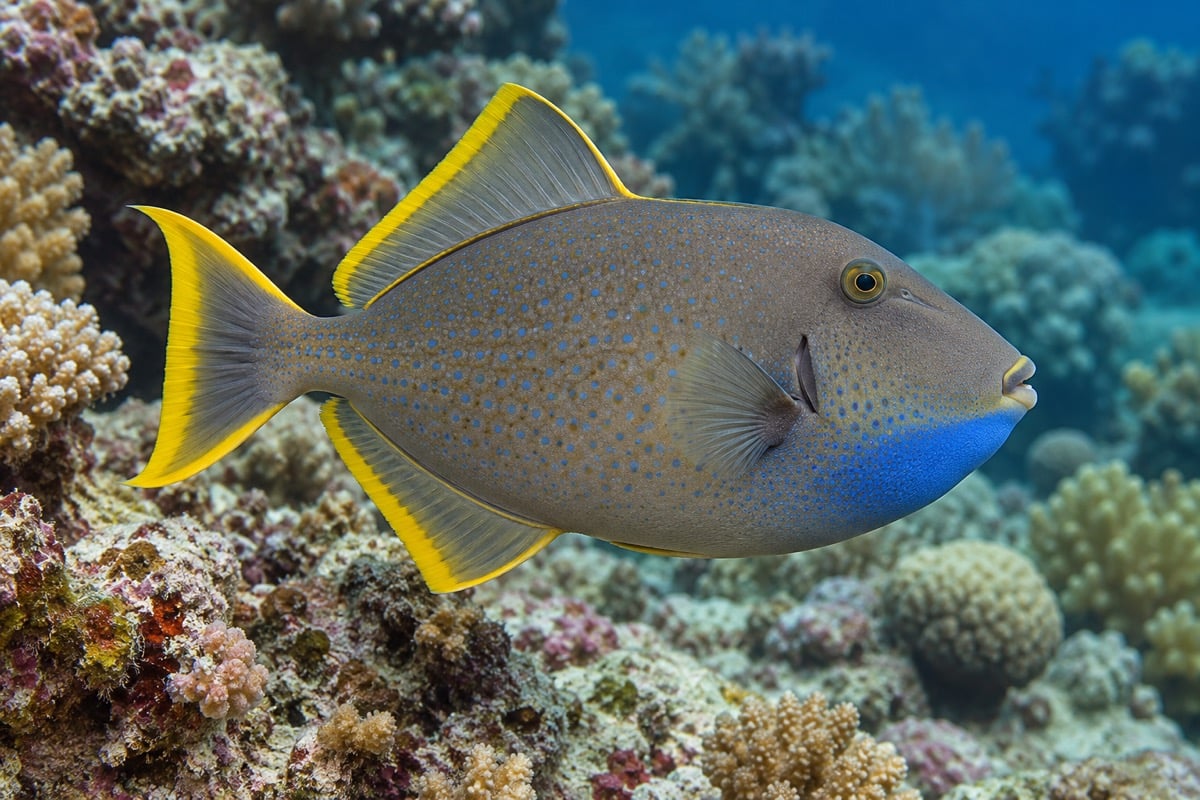
- Scientific Name: Xanthichthys auromarginatus
- Habitat: Outer reef slopes and current-swept drop-offs
- Size: Up to 30 cm long
- Diet: Zooplankton, especially small crustaceans
Male blue-throat triggerfish have a bright blue patch beneath the mouth and yellow borders around several fins. Females are less colorful, making the sexes surprisingly different at first glance. These fish often gather in loose groups above a reef, where currents deliver tiny drifting animals. Their small mouths suit picking plankton from the water. A strong spine on the back is part of the locking mechanism that gives triggerfish their name.
3. Xanthichthys caeruleolineatus (Outrigger Triggerfish)
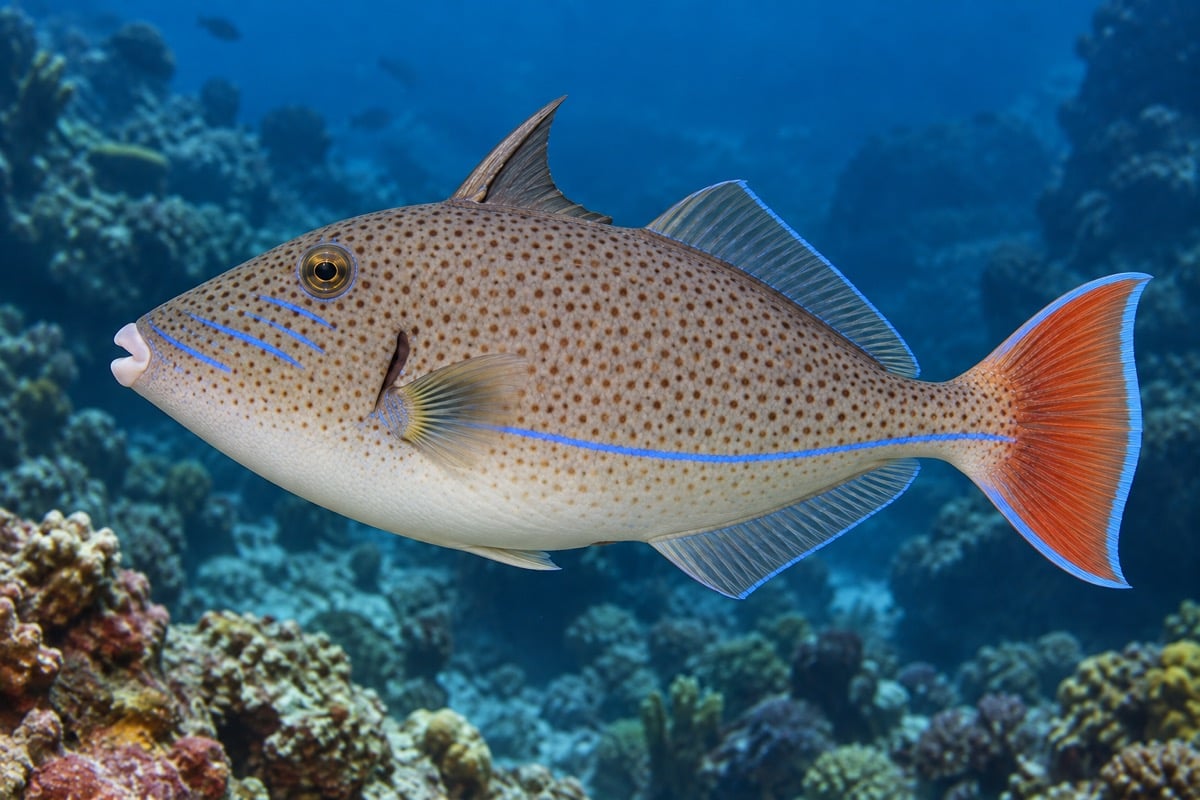
- Scientific Name: Xanthichthys caeruleolineatus
- Habitat: Deep outer reef slopes and nearby open water
- Size: Up to 35 cm long
- Diet: Zooplankton
The outrigger triggerfish has a pale, spotted body marked by a slender blue line along its side. It is associated with deeper reef slopes, so casual snorkelers are less likely to encounter it than many colorful shallow-water fish. Rather than spending every moment picking at the seabed, it feeds on small animals drifting in the water. Its flattened body and moving dorsal and anal fins help it hold position above the reef.
4. Xanthichthys mento (Crosshatch Triggerfish)
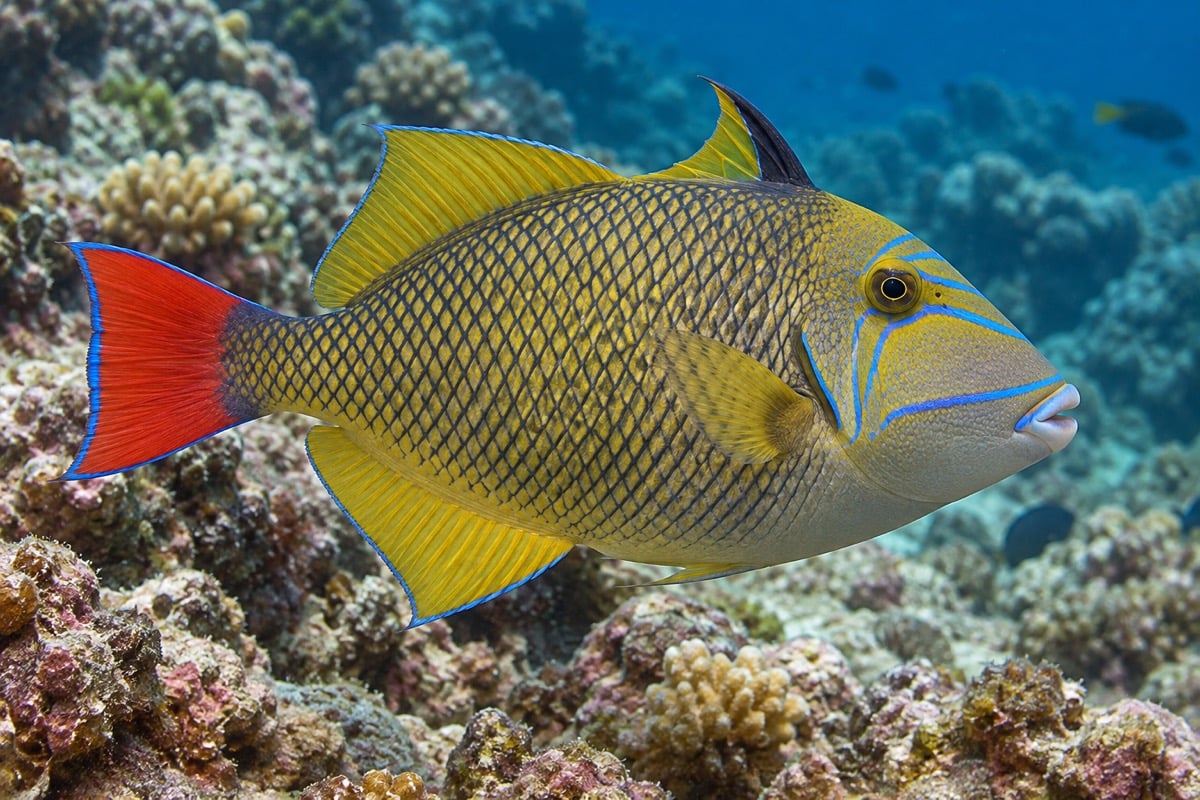
- Scientific Name: Xanthichthys mento
- Habitat: Rocky and coral reef slopes
- Size: Up to 30 cm long
- Diet: Zooplankton, including tiny crustaceans
A dark lattice across the scales gives the crosshatch triggerfish its common name. Adult males can have a striking reddish tail, while females have different tail coloring. It lives around scattered Pacific islands and other reef habitats, feeding above the bottom where small drifting prey are available. The markings may look elaborate up close, but the overall pattern breaks into fine detail when the fish moves farther away through the water.
5. Xanthichthys ringens (Sargassum Triggerfish)
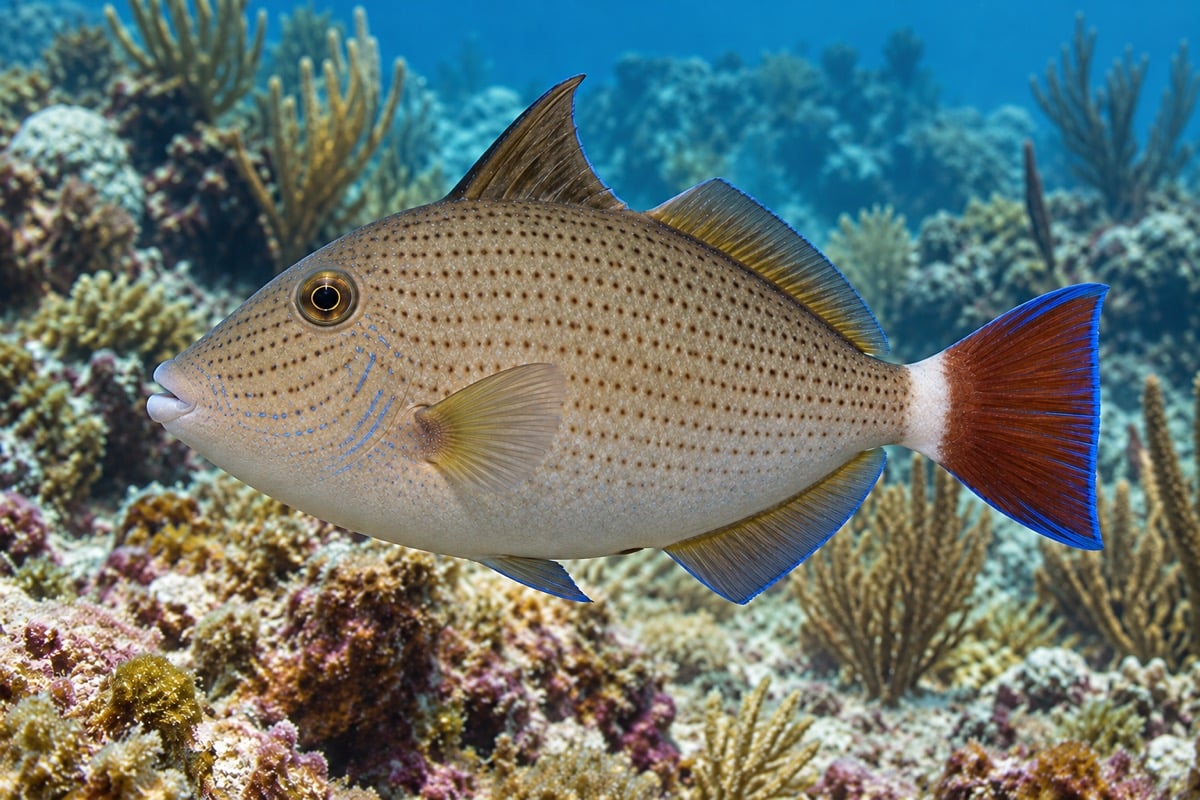
- Scientific Name: Xanthichthys ringens
- Habitat: Outer reef slopes; juveniles also shelter among floating seaweed
- Size: Up to 25 cm long
- Diet: Plankton and bottom-dwelling invertebrates
Young sargassum triggerfish can live among floating Sargassum seaweed, which helps explain their name. Adults are more often associated with deeper reef slopes. Rows of small spots cover their pale bodies, and the tail carries orange-red coloring. Their diet is flexible: studies have found populations feeding mainly on plankton and others taking more prey from the seabed. They may occur alone or in small groups, moving steadily above the reef.
6. Xanthogramma pedissequum (A Hoverfly)
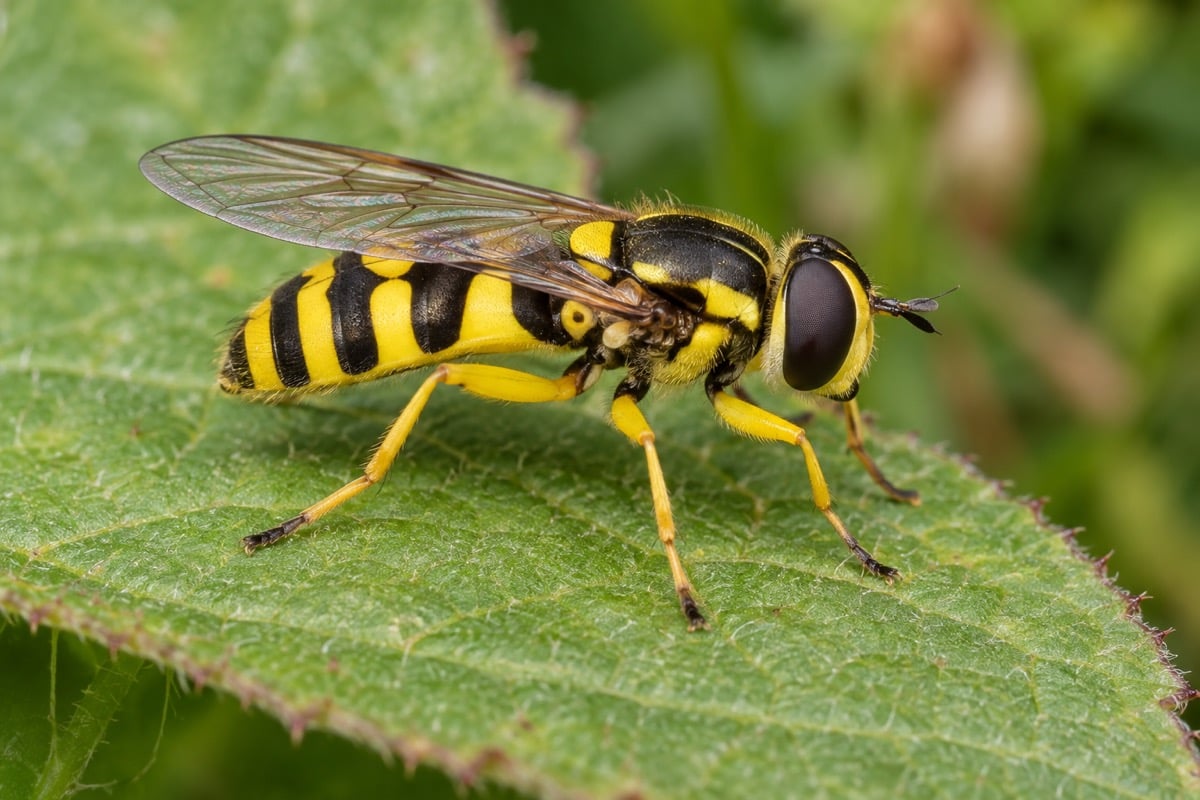
- Scientific Name: Xanthogramma pedissequum; also listed as Philhelius pedissequus
- Habitat: Grassland, woodland openings, and sunny paths
- Size: About 10–13 mm long
- Diet: Adults visit flowers; larvae eat aphids
This black-and-yellow hoverfly can look like a small wasp, but it has just one pair of wings and no sting. It often flies low over paths and short grass, sometimes hovering almost in place. Its young have a very different way of life, feeding on aphids associated with ant nests underground. Closely related hoverflies look extremely similar, so the exact arrangement of yellow markings and dark patches on the wings matters for identification.
7. Xantusia henshawi (Granite Night Lizard)
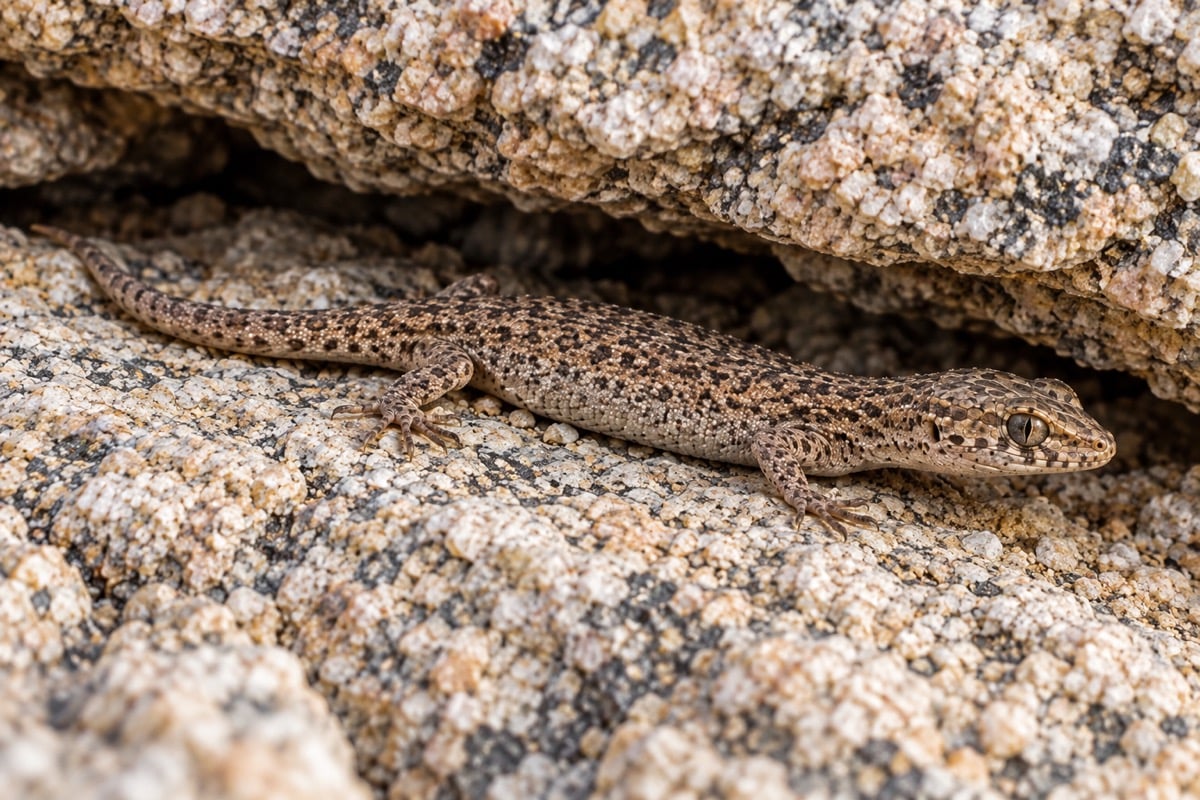
- Scientific Name: Xantusia henshawi
- Habitat: Crevices in granite outcrops
- Size: About 6 cm body length, plus tail
- Diet: Insects, spiders, and other small invertebrates
The granite night lizard has a flattened body that fits into narrow gaps between rocks. Its mottled brown pattern helps it disappear against a granite surface, especially in shade. Much of its life is spent close to these sheltered crevices, where small invertebrates provide food. Despite the name, night lizards are not simply miniature geckos. They belong to their own family, and females give birth to live young instead of laying eggs.
8. Xantusia riversiana (Island Night Lizard)
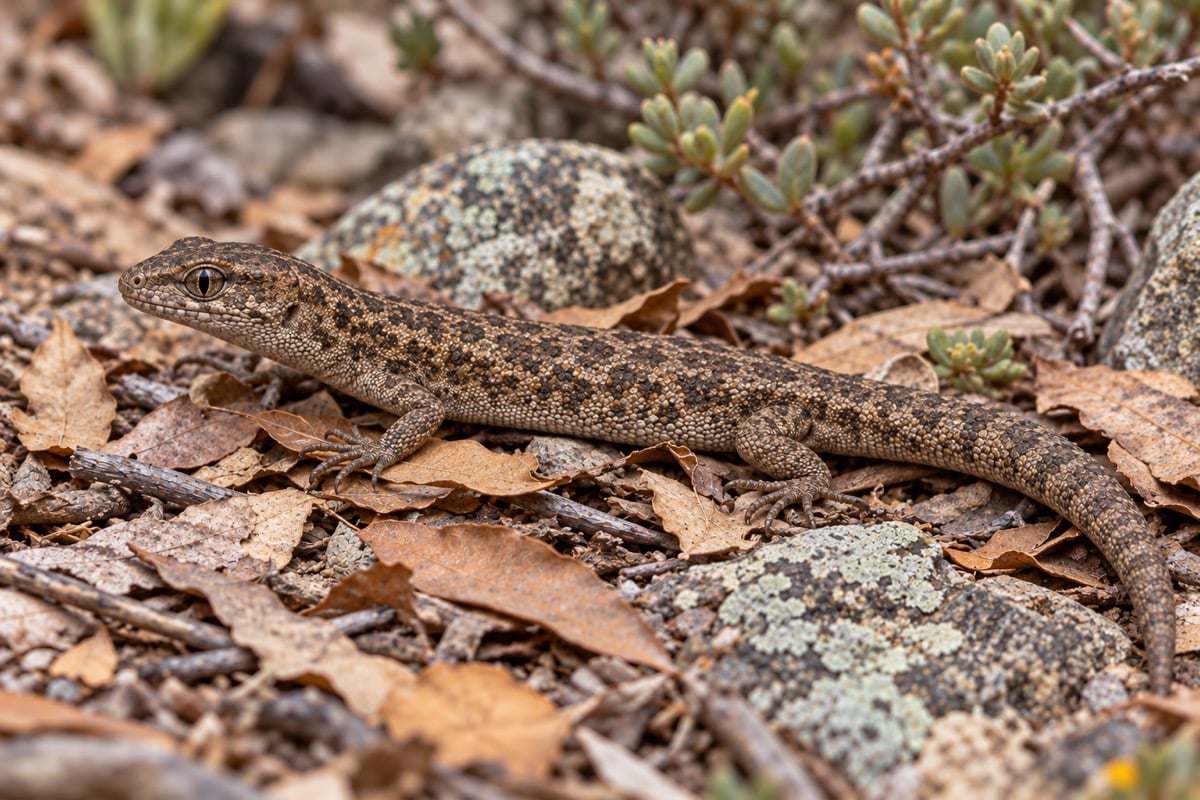
- Scientific Name: Xantusia riversiana
- Habitat: Dense coastal scrub, cactus patches, rocks, and ground cover
- Size: About 13–20 cm including tail
- Diet: Insects, spiders, and substantial amounts of plant material
Island night lizards live naturally on San Clemente, San Nicolas, and Santa Barbara islands. They spend much of their time concealed beneath vegetation or other cover and can remain within a remarkably small area. Their name is misleading because they can be active during the day. Compared with many other lizards, they eat a large amount of plant material. These quiet island residents also grow slowly and can live for more than a decade.
9. Xantusia vigilis (Desert Night Lizard)
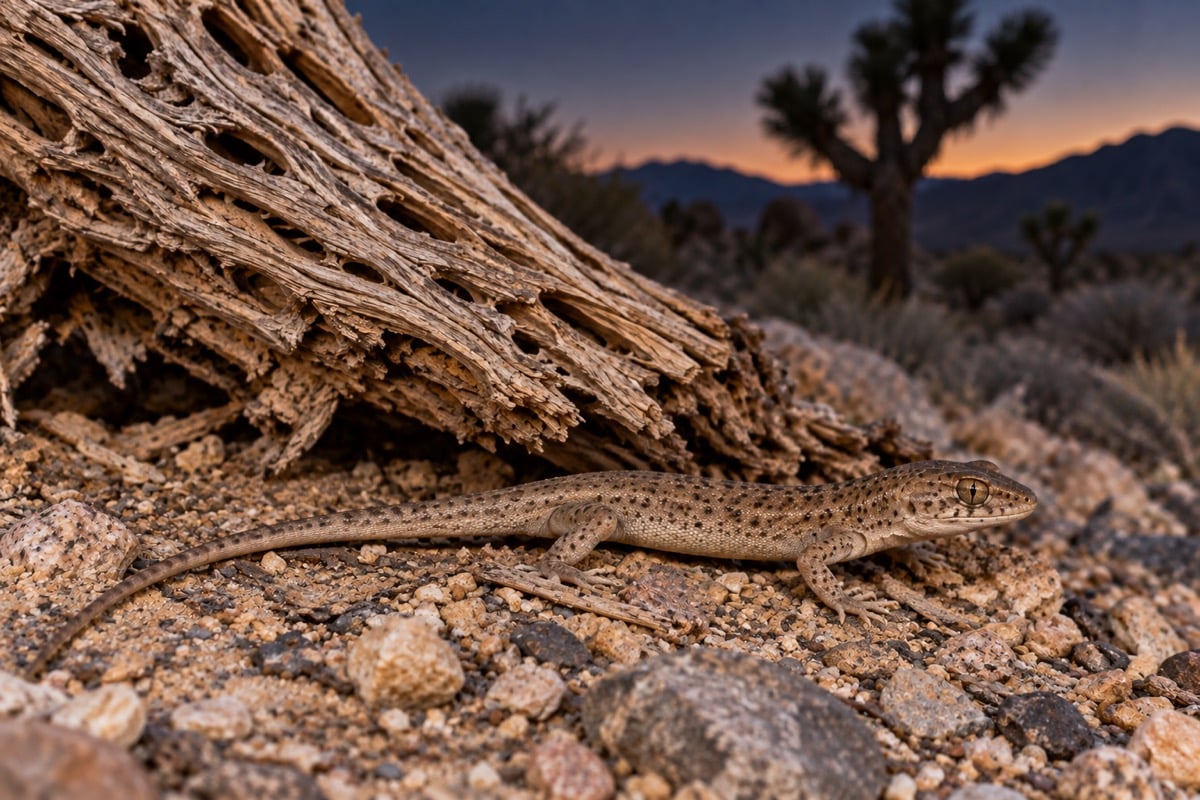
- Scientific Name: Xantusia vigilis
- Habitat: Desert scrub, especially beneath fallen yucca and Joshua tree material
- Size: About 8–14 cm including tail
- Diet: Small insects, spiders, and other invertebrates
Desert night lizards are tiny enough to live beneath fallen branches and the decaying remains of yuccas. This cover shields them from harsh desert conditions and holds many of the small animals they eat. Their brown bodies, fine spots, and slender tails make them easy to overlook. They do not need to bask out in the open like some larger desert lizards. Females produce live young, which may remain near their birthplace for some time.
10. Xantus’s Hummingbird
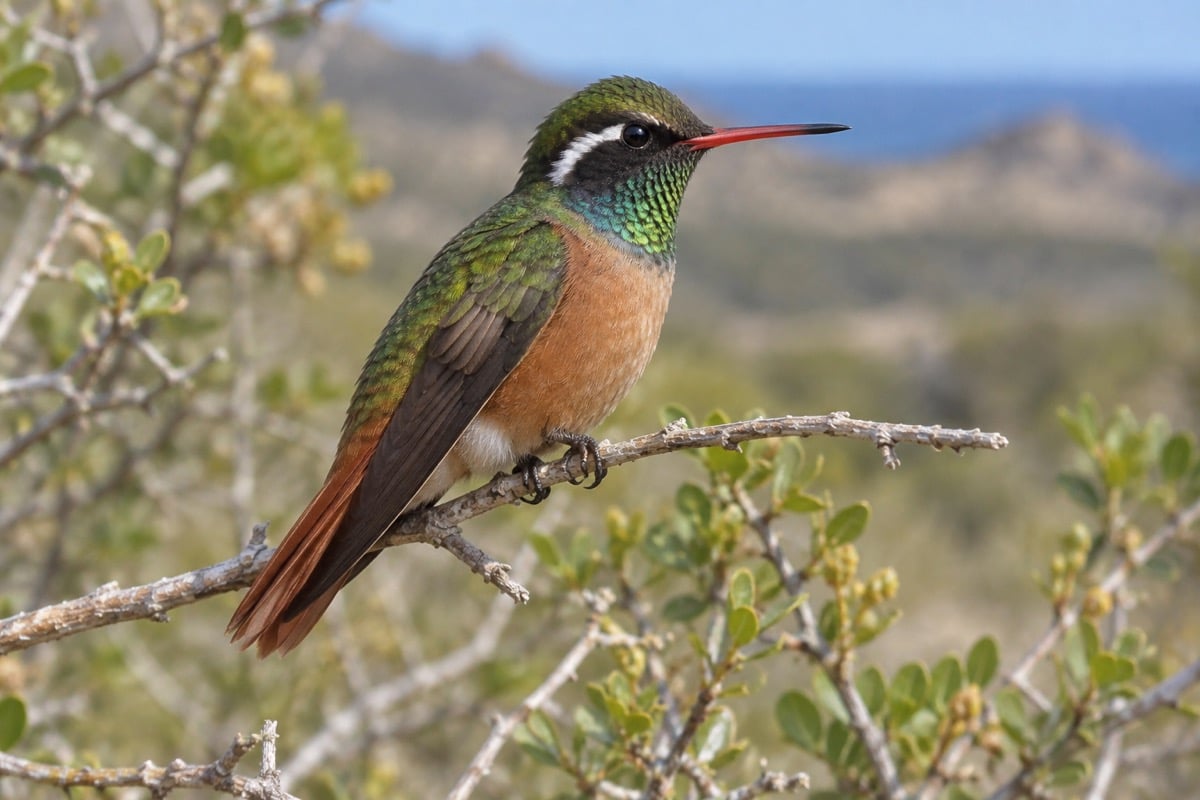
- Scientific Name: Basilinna xantusii
- Habitat: Scrub, woodland, oases and gardens
- Size: About 8–9 cm (3.1–3.5 in) long
- Diet: Flower nectar and small insects
A bold pale stripe behind the eye helps identify Xantus’s hummingbird. The male also has a reddish bill with a dark tip, green upperparts and cinnamon underparts. Its natural home is the southern part of Mexico’s Baja California Peninsula. Flowers are important feeding places, but nectar is only part of a hummingbird’s diet; small insects provide additional nutrients. This species offers a useful reminder that an animal’s name can start with X even when the letter comes from a person’s surname. Older references place it in the genus Hylocharis.
11. Xema sabini (Sabine’s Gull)
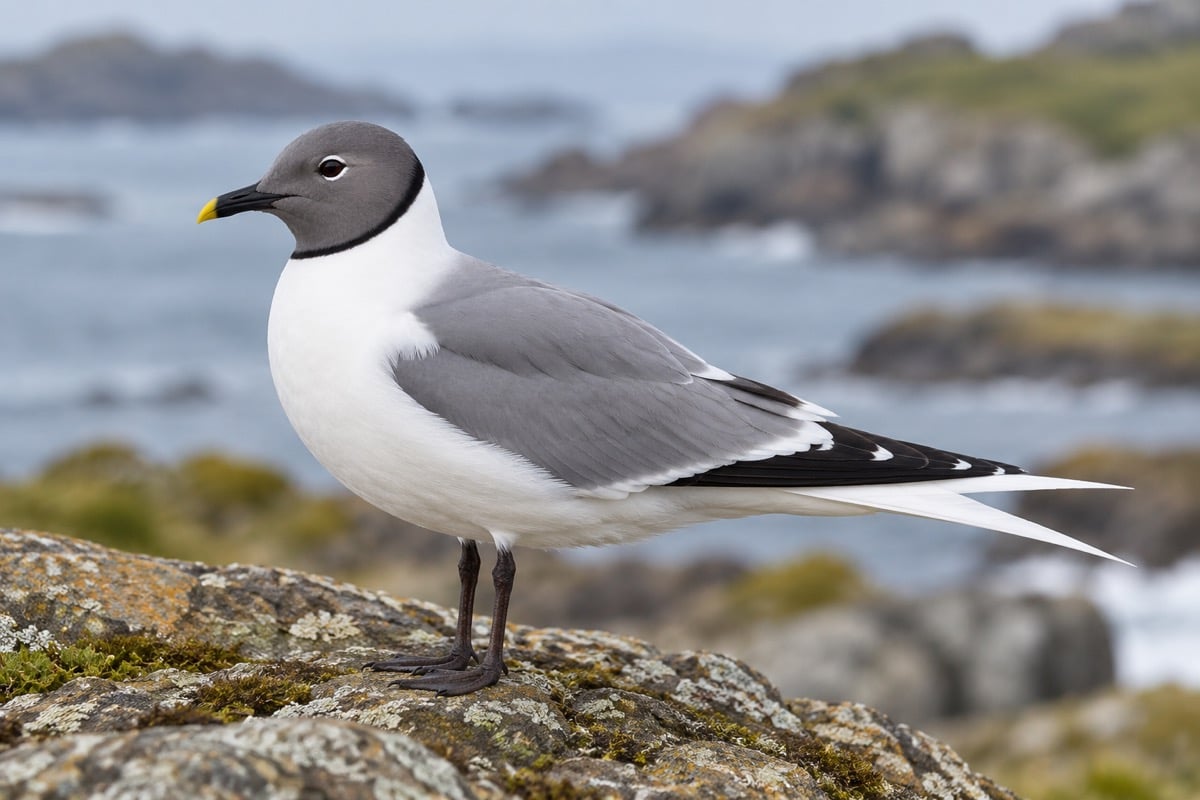
- Scientific Name: Xema sabini
- Habitat: Tundra wetlands, coasts, and open ocean
- Size: About 27–33 cm long
- Diet: Insects, crustaceans, and small fish
Sabine’s gull has a dark hood during the breeding season and a black bill with a yellow tip. In flight, its wings display bold areas of white, gray, and black, making the bird especially distinctive. It nests in Arctic tundra but spends much of the rest of its life at sea. Its feeding style changes with the setting, from catching insects around freshwater pools to picking small marine animals from the ocean surface.
12. Xenentodon cancila (Freshwater Garfish)
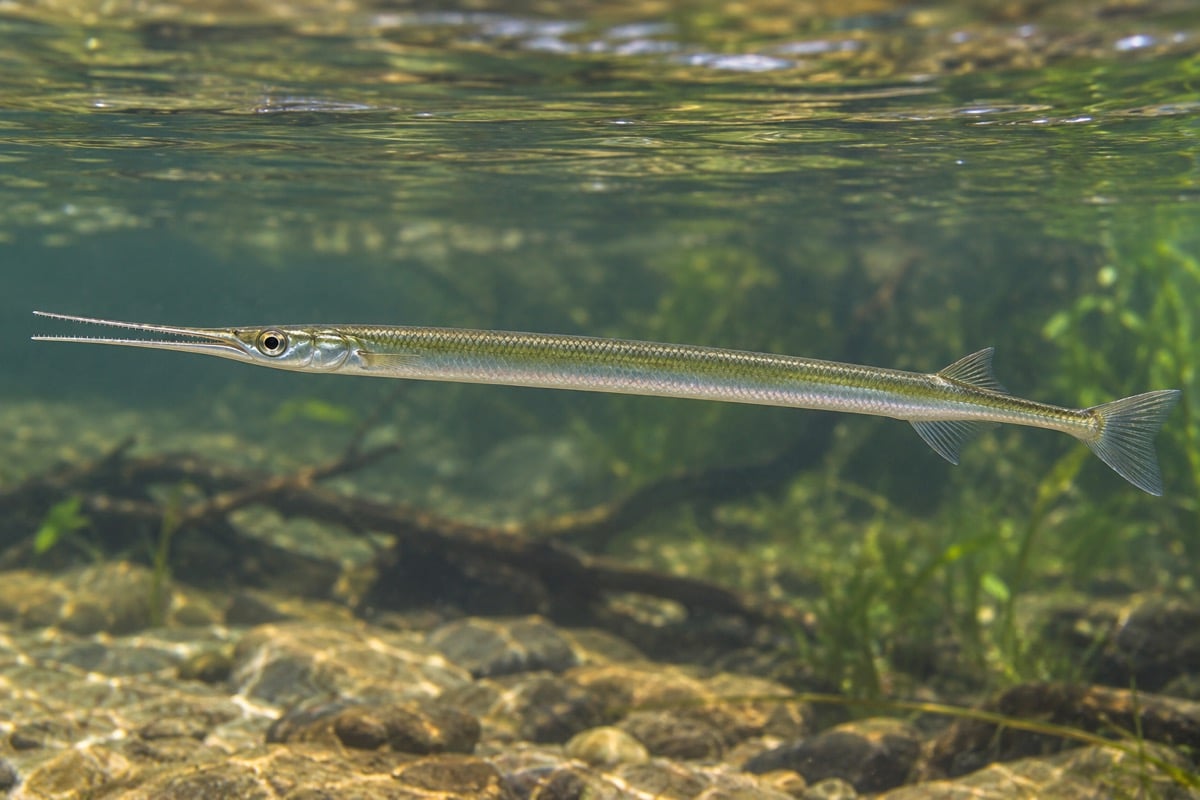
- Scientific Name: Xenentodon cancila
- Habitat: Rivers, pools, canals, and other fresh or slightly brackish waters
- Size: Commonly 30 cm; up to 40 cm long
- Diet: Crustaceans, insects, and small fish
The freshwater garfish has an extremely narrow body and long jaws lined with small teeth. Despite its common name, it is a needlefish rather than one of the heavily armored gars of the Americas. It often holds a position in the water before making a sudden burst toward prey. Its dorsal and anal fins sit near the tail, reinforcing its streamlined shape. Eggs have fine attachments that help secure them to objects underwater.
13. Xenesthis immanis (Colombian Lesserblack Tarantula)
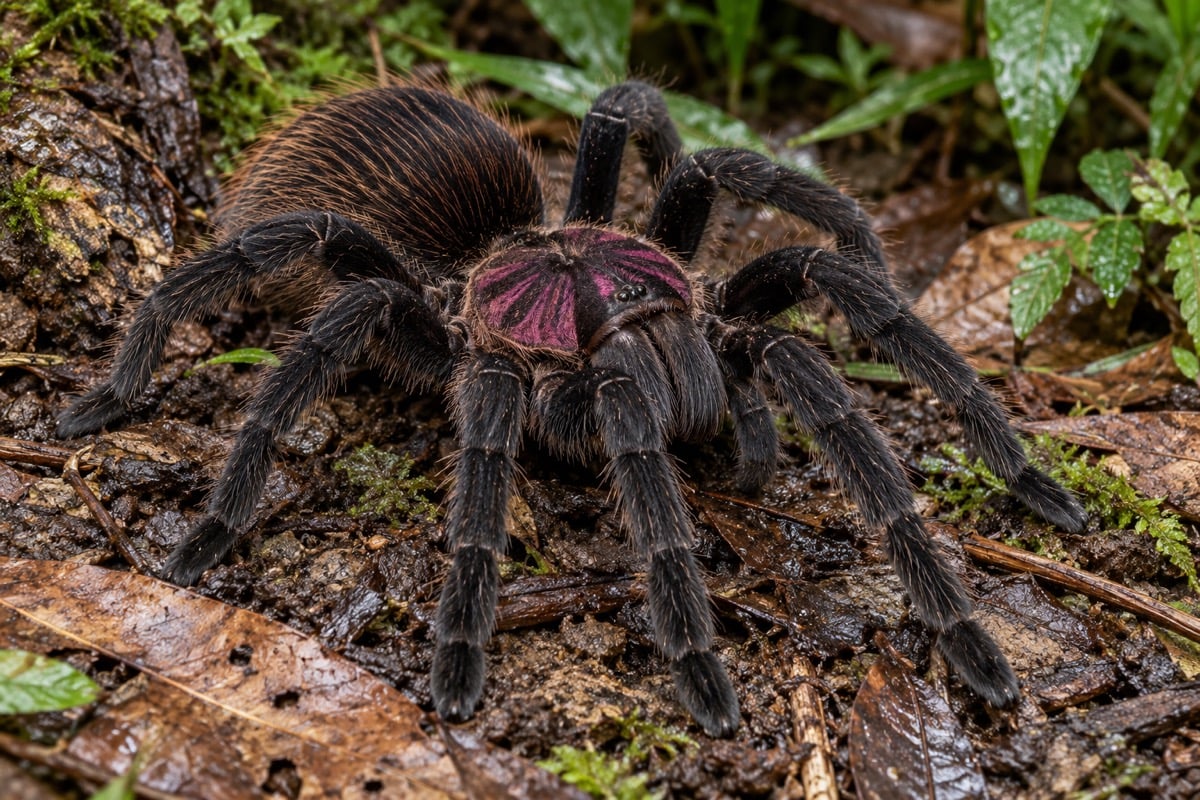
- Scientific Name: Xenesthis immanis
- Habitat: Tropical forest floor and sheltered ground retreats
- Size: About 6.5–9 cm body length, excluding legs
- Diet: Insects and other small animals
This large tarantula has a dark, hairy body with pinkish or purple markings around the front of the body and upper legs. It is a ground-dwelling spider, using sheltered places instead of suspending a large prey-catching web between branches. Like other tarantulas, it detects movement through sensitive hairs and can wait for prey to come within reach. Its scientific name is more distinctive than its common name, which makes the animal sound rather plain.
14. Xenodermus javanicus (Dragon Snake)
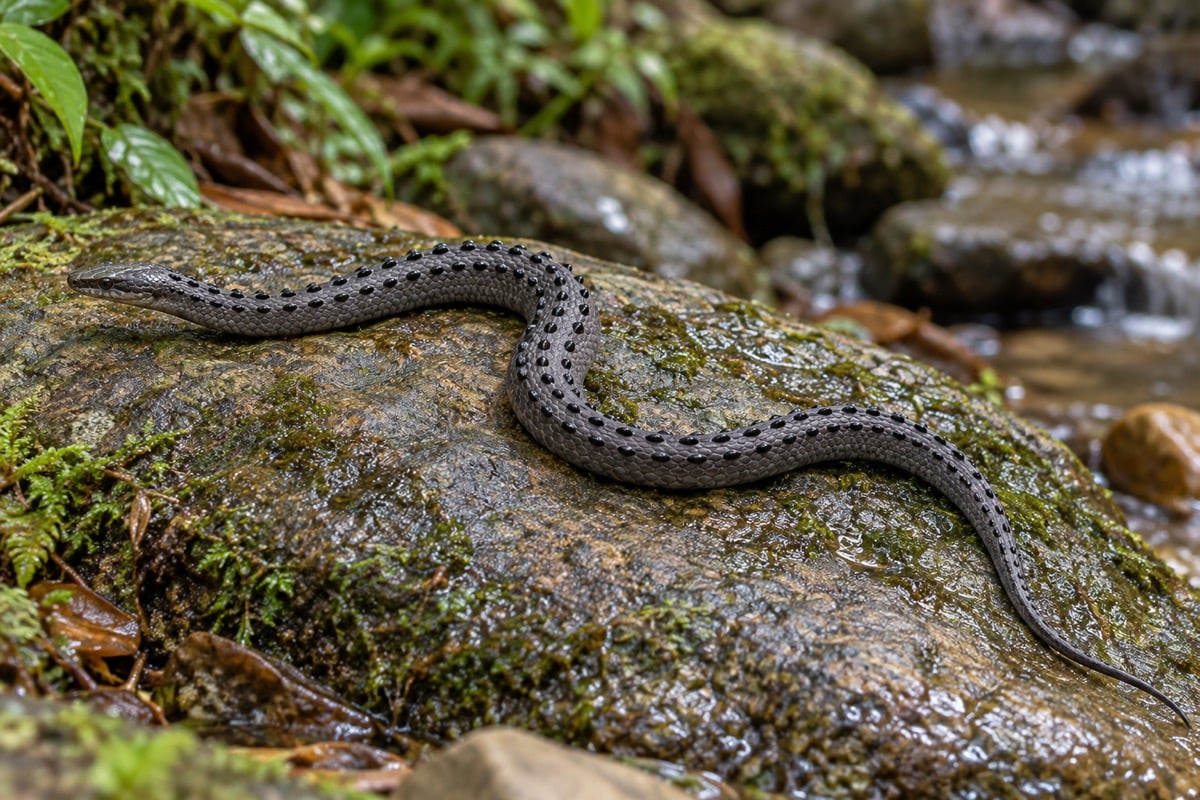
- Scientific Name: Xenodermus javanicus
- Habitat: Damp forest, stream edges, marshes, and rice fields
- Size: Up to about 60 cm long
- Diet: Frogs, tadpoles, and small fish
The dragon snake gets its name from the raised rows of scales along its back. Against its dark body, these rough scales give it an unusual, almost armored appearance. It favors damp places and is mainly active at night, when it searches for small prey near water. Despite the dramatic name, it is a slender, nonvenomous snake. When disturbed, it can stiffen its body, an unusual defensive response that adds to its strange appearance.
15. Xenomystus nigri (African Knifefish)
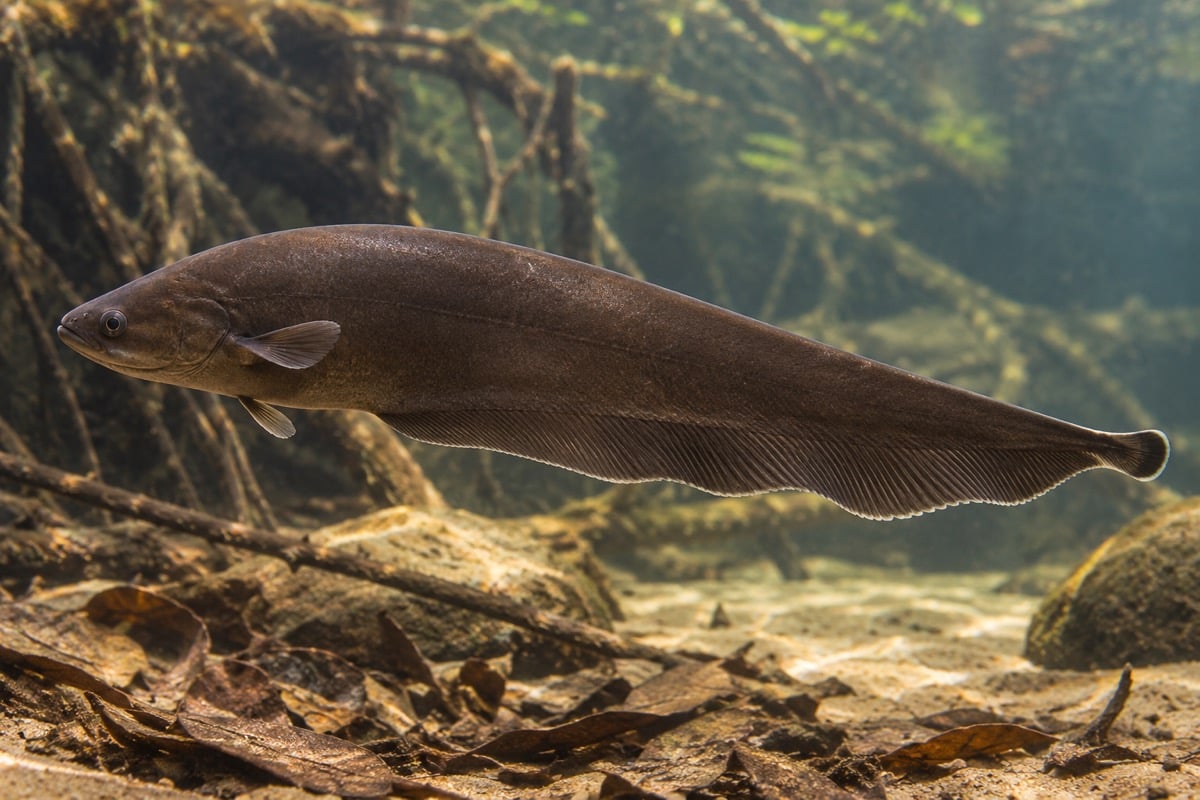
- Scientific Name: Xenomystus nigri
- Habitat: Quiet freshwater with aquatic vegetation
- Size: Up to about 30 cm, excluding the tail fin
- Diet: Worms, crustaceans, insects, and snails
The African knifefish has a long anal fin running beneath its body, while a dorsal fin is absent. Rippling this lower fin allows it to move smoothly through quiet water. It feeds mainly at dusk and at night, searching for small animals among plants and near the bottom. This fish also rises to the surface to gulp air. Despite its rather understated brown coloring, its unusual shape makes it easy to recognize.
16. Xenopeltis hainanensis (Hainan Sunbeam Snake)
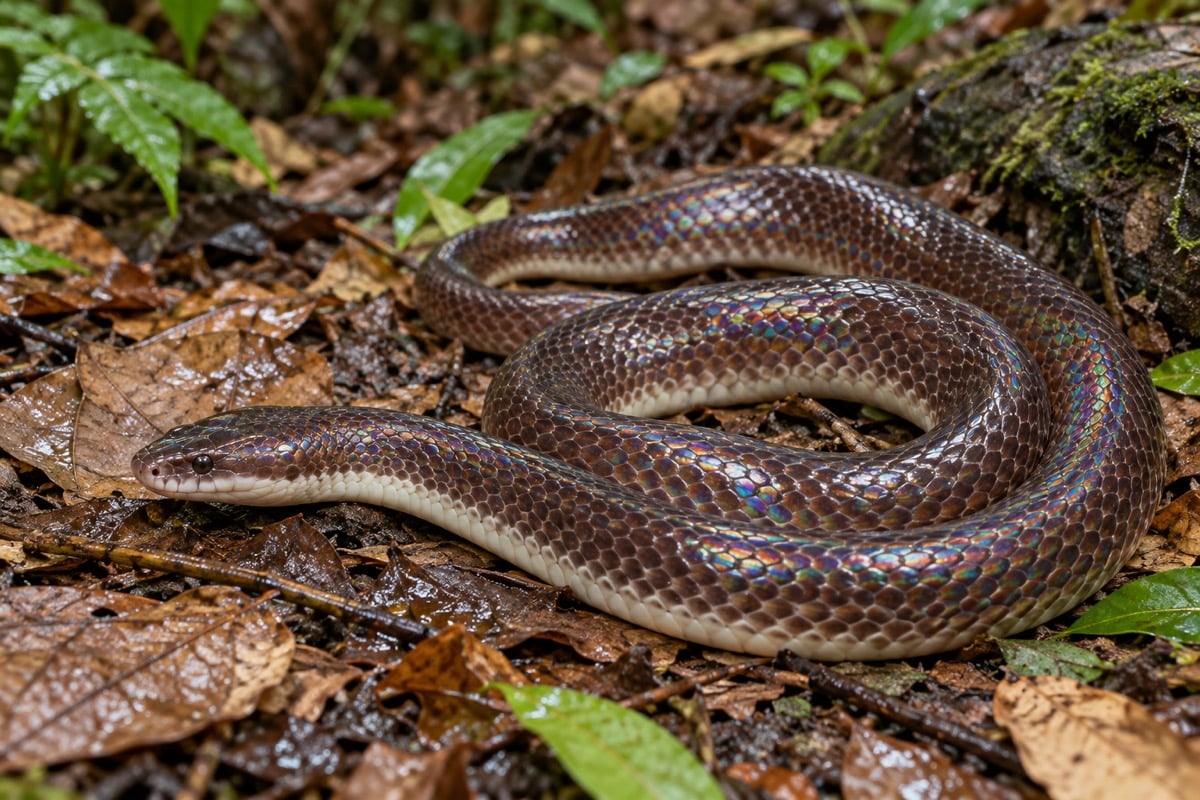
- Scientific Name: Xenopeltis hainanensis
- Habitat: Moist forest slopes and loose soil
- Size: About 50–100 cm long
- Diet: Reported prey include earthworms and frogs
The Hainan sunbeam snake has smooth scales that can reflect rainbow colors when light strikes them. In ordinary shade, it looks much more simply brown or dark gray. A low, wedge-shaped head helps it move through soil and leaf litter, where it spends much of its time hidden. It is closely related to the common sunbeam snake but has differences in its scales and body proportions. Both have the same remarkable polished appearance.
17. Xenopeltis unicolor (Common Sunbeam Snake)
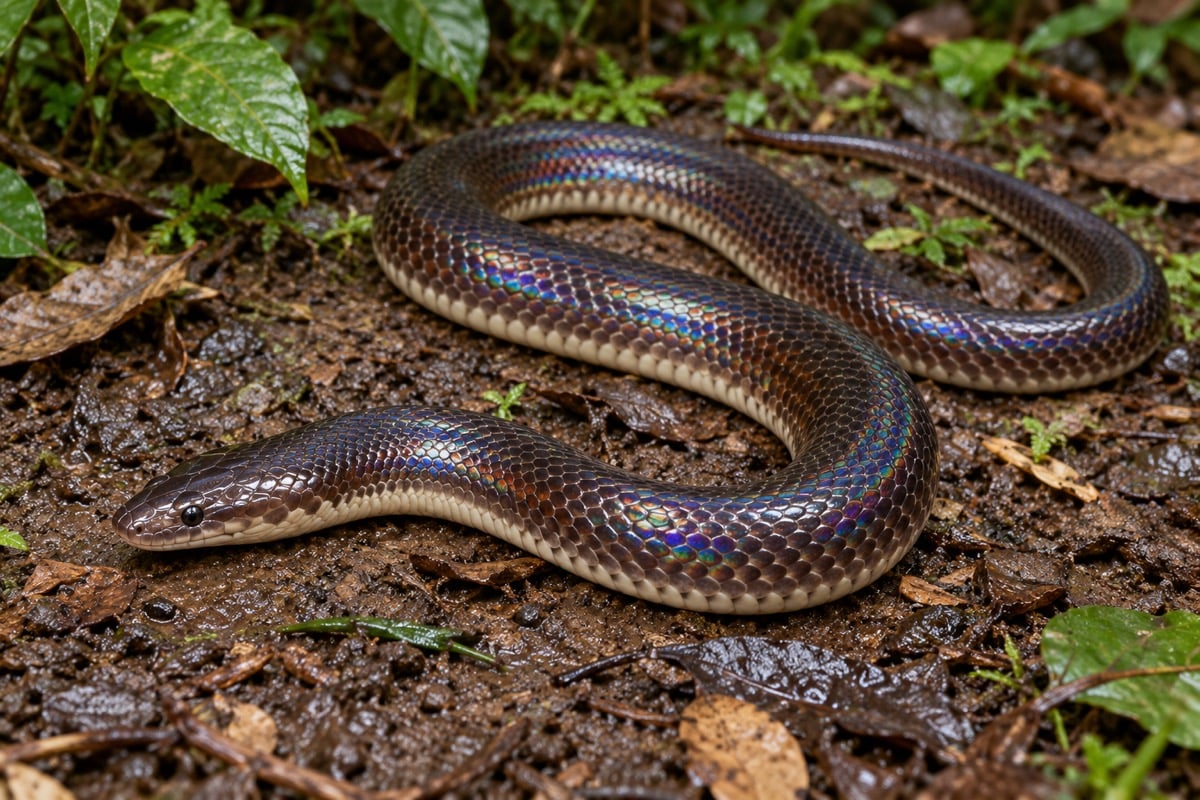
- Scientific Name: Xenopeltis unicolor
- Habitat: Forests, gardens, rice fields, and other damp ground
- Size: Up to about 1.2 m long
- Diet: Frogs, lizards, snakes, and small mammals
A common sunbeam snake can look plain until a beam of light reveals the colors shimmering across its scales. This effect comes from the way light interacts with the scale surface. The snake spends much of its time under cover or underground and usually emerges at night. Its narrow head is well suited to pushing through soft material. It is nonvenomous and uses constriction to subdue prey before swallowing it.
18. Xenophora (Carrier Snails)
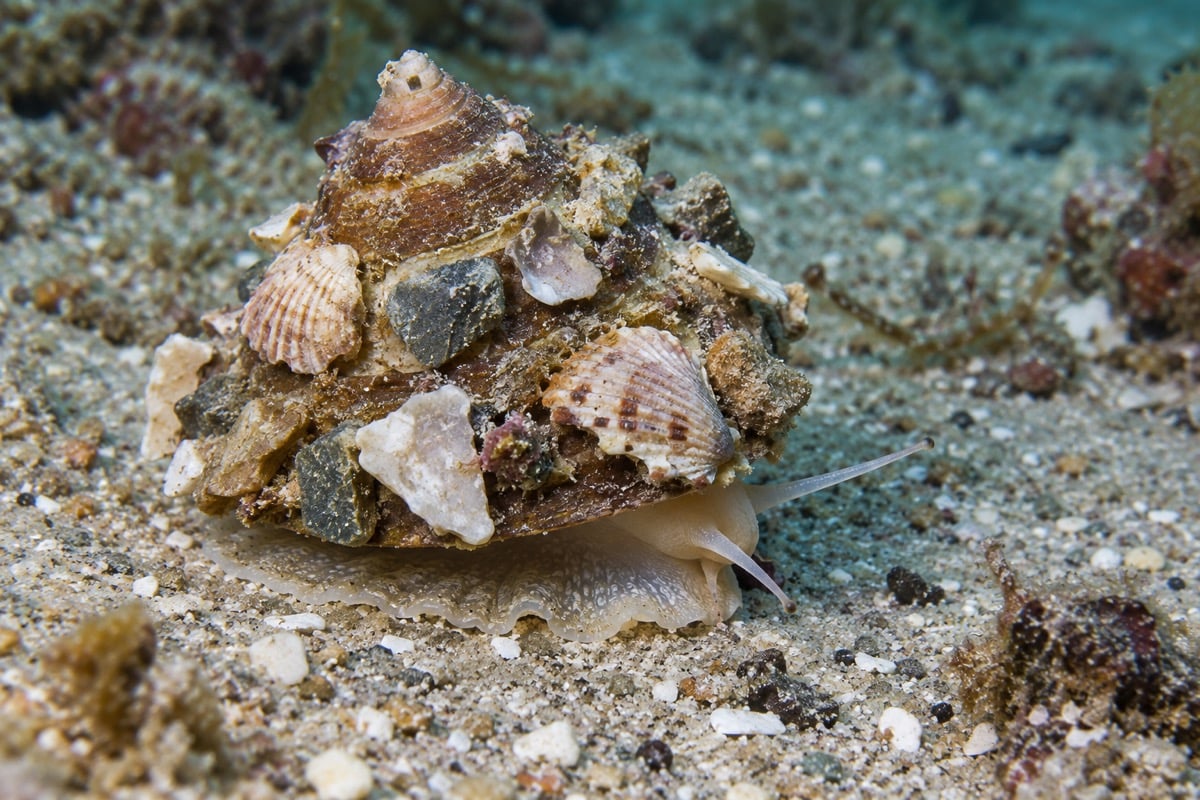
- Scientific Name: Xenophora (genus)
- Habitat: Seafloors, including sand and muddy sediment
- Size: Shells commonly about 2–5 cm (0.8–2 in) across; varies by species
- Diet: Algae, organic detritus and other material collected from the seabed
A carrier snail’s shell can look as though it has picked up a collection of seaside souvenirs. As it grows, the snail attaches objects such as shell fragments and small stones to its own shell. Xenophora is the scientific name of a genus of these marine snails. The added material changes the shell’s outline and can help disguise it against the seabed. Different species live in different regions; New Zealand’s Xenophora neozelanica is one well-documented example. These are snails carrying their own shells, rather than hermit crabs borrowing empty ones.
19. Xenops genibarbis (Amazonian Plain Xenops)
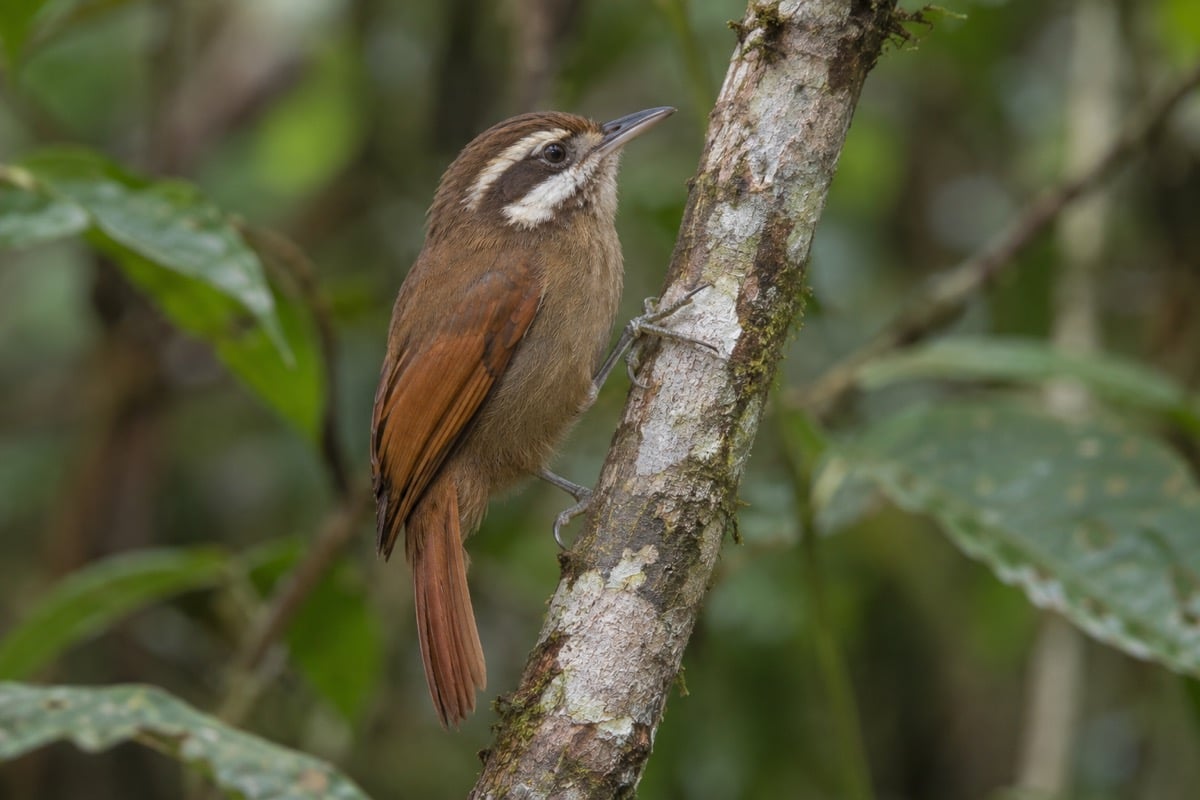
- Scientific Name: Xenops genibarbis
- Habitat: Tropical forest, including branches and vines in the understory
- Size: About 11 cm long
- Diet: Insects and other small arthropods
The Amazonian plain xenops is a small brown forest bird with a short, slightly upturned bill and a pale cheek stripe. It explores branches and vines for insects, sometimes joining mixed flocks moving through the trees. Its bill helps it investigate bark and wood for hidden food. Older references grouped this bird with other plain xenops, but it is now recognized separately from the northern and Atlantic species. Its scientific name helps distinguish these similar birds.
20. Xenops rutilans (Streaked Xenops)
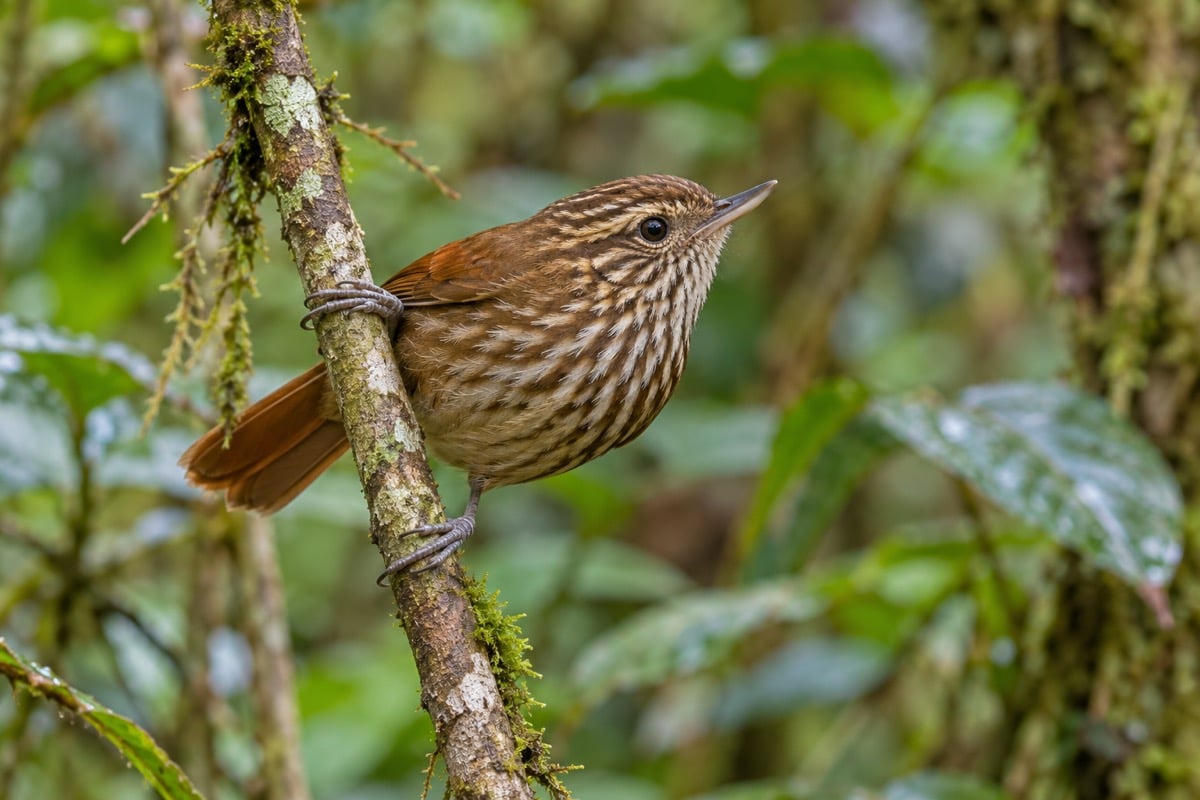
- Scientific Name: Xenops rutilans
- Habitat: Forest, woodland edges, and wooded foothills
- Size: About 12 cm long
- Diet: Insects and other small arthropods
The streaked xenops is a small brown bird with pale streaks over its head and underside. Its slightly upturned bill is a useful tool for investigating bark and small dead branches. It moves around branches at awkward angles, sometimes joining mixed flocks of other forest birds. Although its climbing behavior may recall a woodpecker, it belongs to the ovenbird family. Rusty tones in its wings and tail stand out when it moves between perches.
21. Xenops tenuirostris (Slender-billed Xenops)
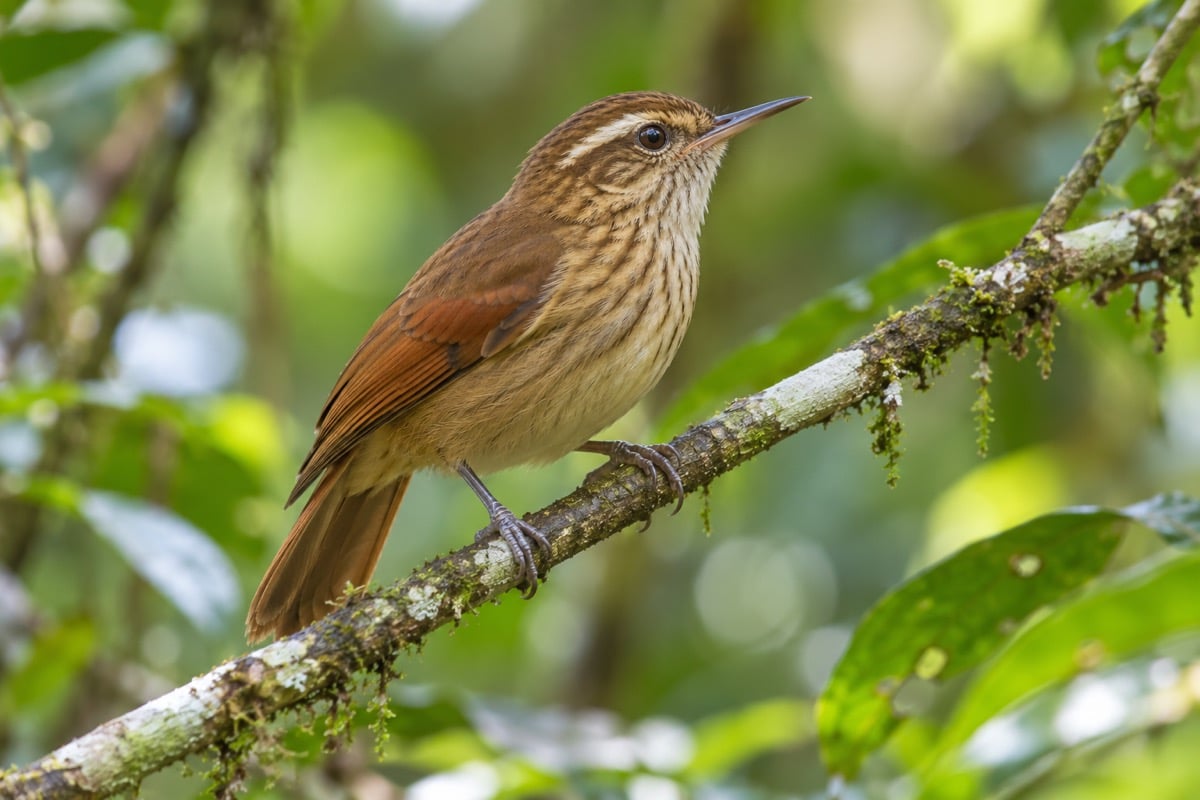
- Scientific Name: Xenops tenuirostris
- Habitat: Humid lowland forest and flooded evergreen forest
- Size: About 10–12 cm long
- Diet: Insects, spiders, and other arthropods
The slender-billed xenops is another tiny forest climber, with a narrow bill and brown plumage. It often feeds higher in the trees than a casual observer can easily see, working along branches in the subcanopy and canopy. Mixed flocks provide opportunities to spot it alongside other insect-eating birds. Much about its breeding remains poorly documented. Even in a familiar group of animals such as birds, there are species whose everyday lives still hold unanswered questions.
22. Xenopus laevis (African Clawed Frog)
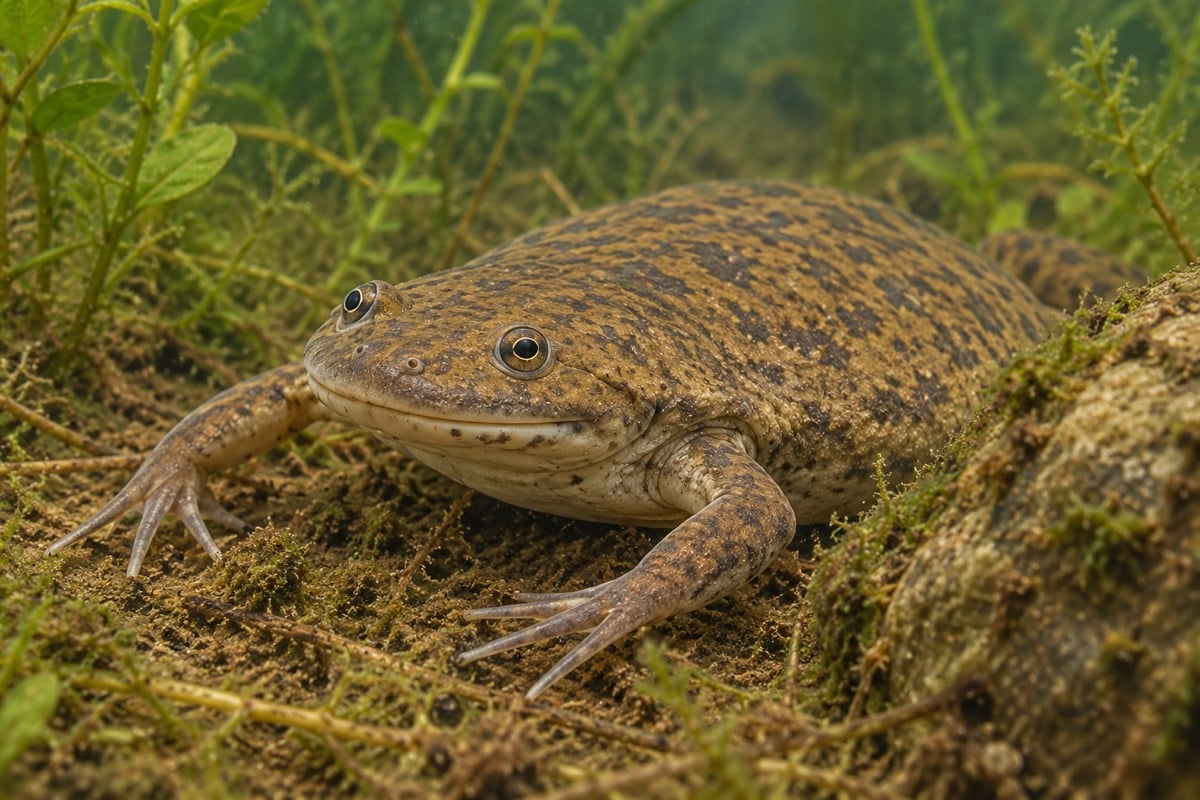
- Scientific Name: Xenopus laevis
- Habitat: Freshwater ponds and streams
- Size: Males about 5–6 cm; females about 10–12 cm body length
- Diet: Small aquatic animals and scavenged animal matter
The African clawed frog has a flattened body, upward-facing eyes, and broad webbed hind feet suited to life underwater. Three inner toes on each back foot carry small dark claws. Its front fingers are unwebbed and help it handle food. Sensitive fingers and a system that detects water movement help it locate prey when visibility is poor. It spends most of its time submerged but must return to the surface to breathe air.
23. Xenopus tropicalis (Tropical Clawed Frog)
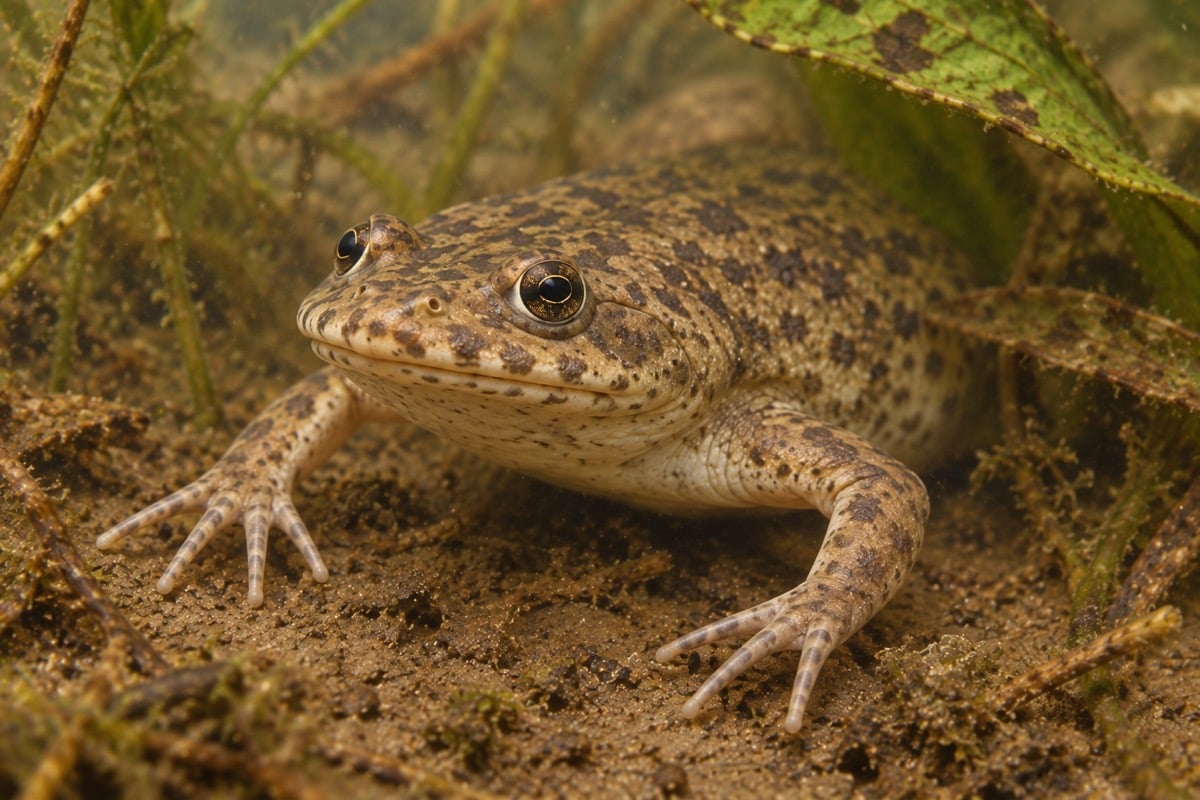
- Scientific Name: Xenopus tropicalis
- Habitat: Ponds, marshes, streams, and other freshwater habitats
- Size: About 3–6 cm body length; females are larger
- Diet: Small aquatic invertebrates and other animal food
The tropical clawed frog spends its adult life in water, using broad webbed hind feet to swim. Its smaller front feet help it handle food, and three toes on each back foot bear tiny claws. This species is smaller than the African clawed frog featured elsewhere in this list. It is also widely studied by scientists investigating how animals develop. In the wild, its mottled coloring helps it blend into muddy or plant-filled water.
24. Xenotoca eiseni (Redtail Splitfin)
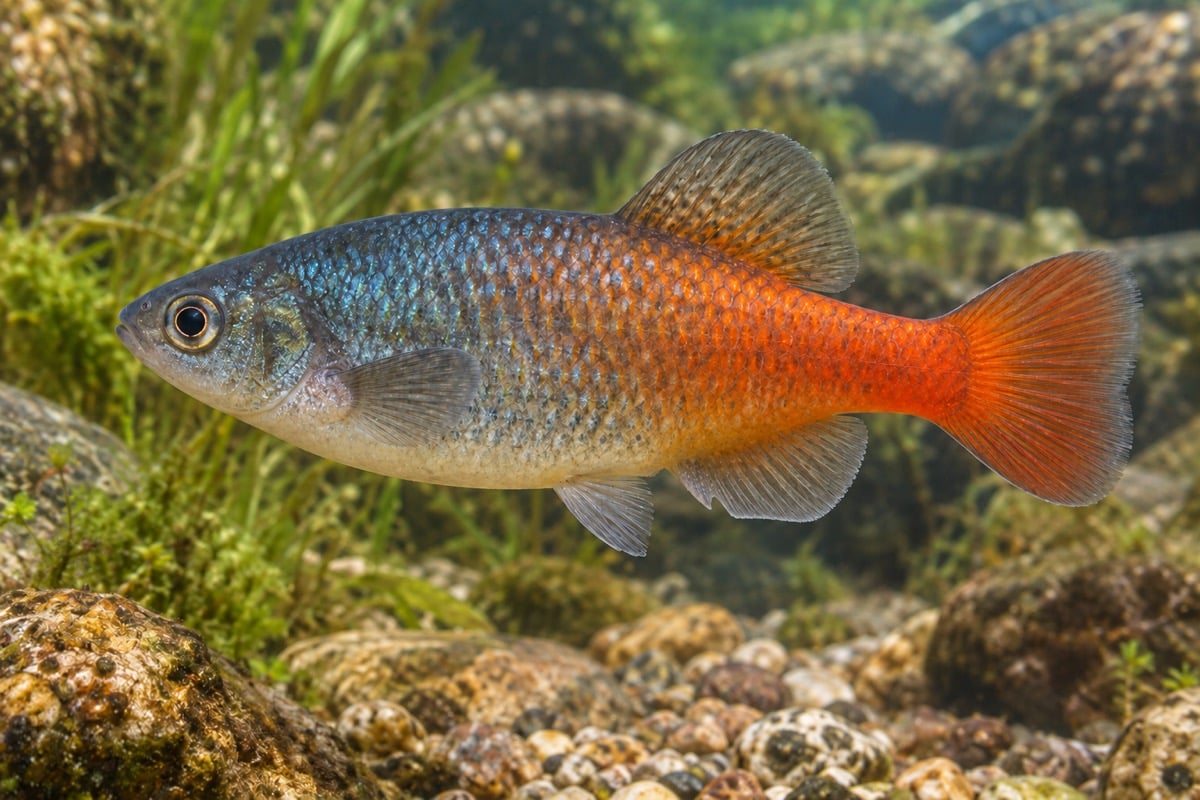
- Scientific Name: Xenotoca eiseni
- Habitat: Springs, creeks, pools, and rivers
- Size: Up to 7.5 cm body length, excluding the tail fin
- Diet: Algae, plant material, and small invertebrates
Male redtail splitfins have orange-red coloring around the rear of the body and tail. Females are generally plainer, but both sexes share the compact shape of this Mexican livebearing fish. Females give birth to swimming young rather than laying eggs on plants or stones. The species eats both plant and animal material, including algae and insect larvae. Different redtail splitfin species can look similar, so knowing a population’s original location helps researchers and breeders distinguish them.
25. Xenus cinereus (Terek Sandpiper)
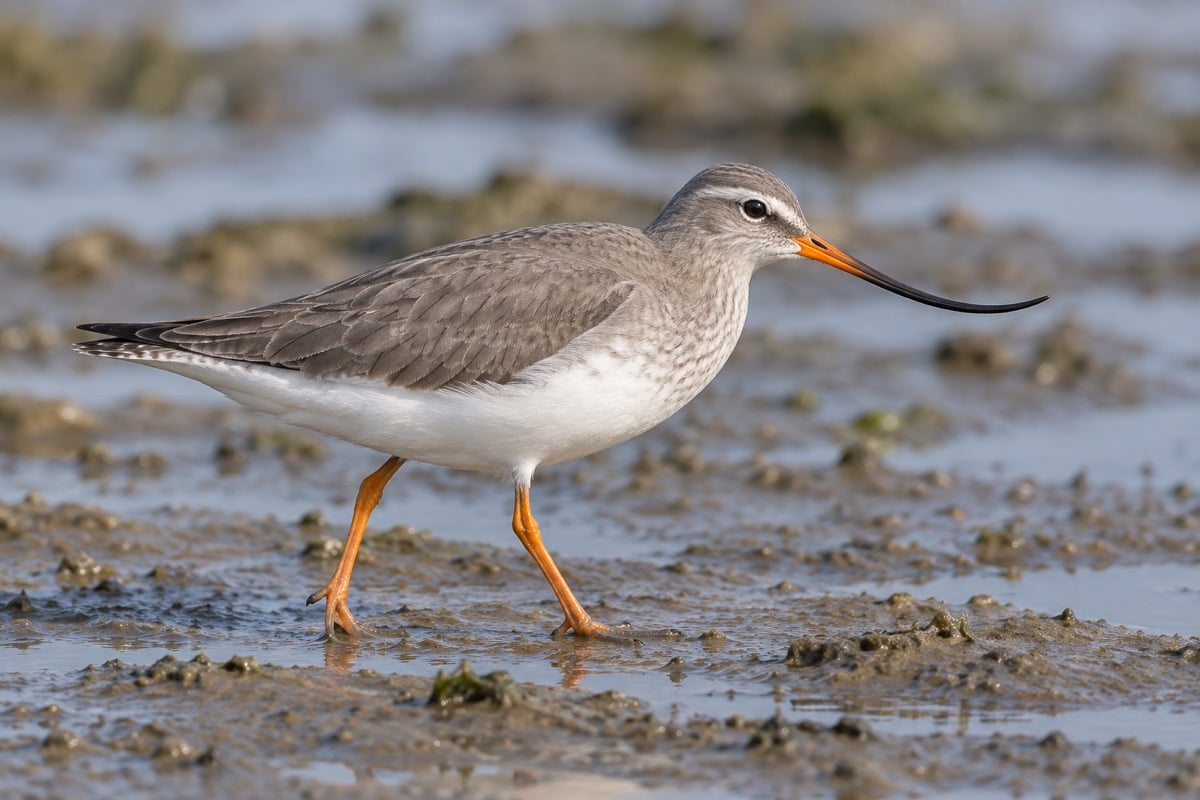
- Scientific Name: Xenus cinereus
- Habitat: River margins, tidal mudflats, estuaries, and mangrove edges
- Size: 22–24 cm long
- Diet: Small crustaceans, insects, worms, and other invertebrates
The Terek sandpiper is a small shorebird with orange legs and a long, slightly upturned bill. It moves briskly across wet mud, pausing to pick up prey or investigate the surface. After breeding in northern Eurasia, it travels south to coastal feeding areas, sometimes covering very long distances. Its bill gives it a distinctive profile among small waders. Quiet estuaries and muddy shorelines provide the food it needs between these demanding journeys.
26. Xerus (Striped Ground Squirrel)
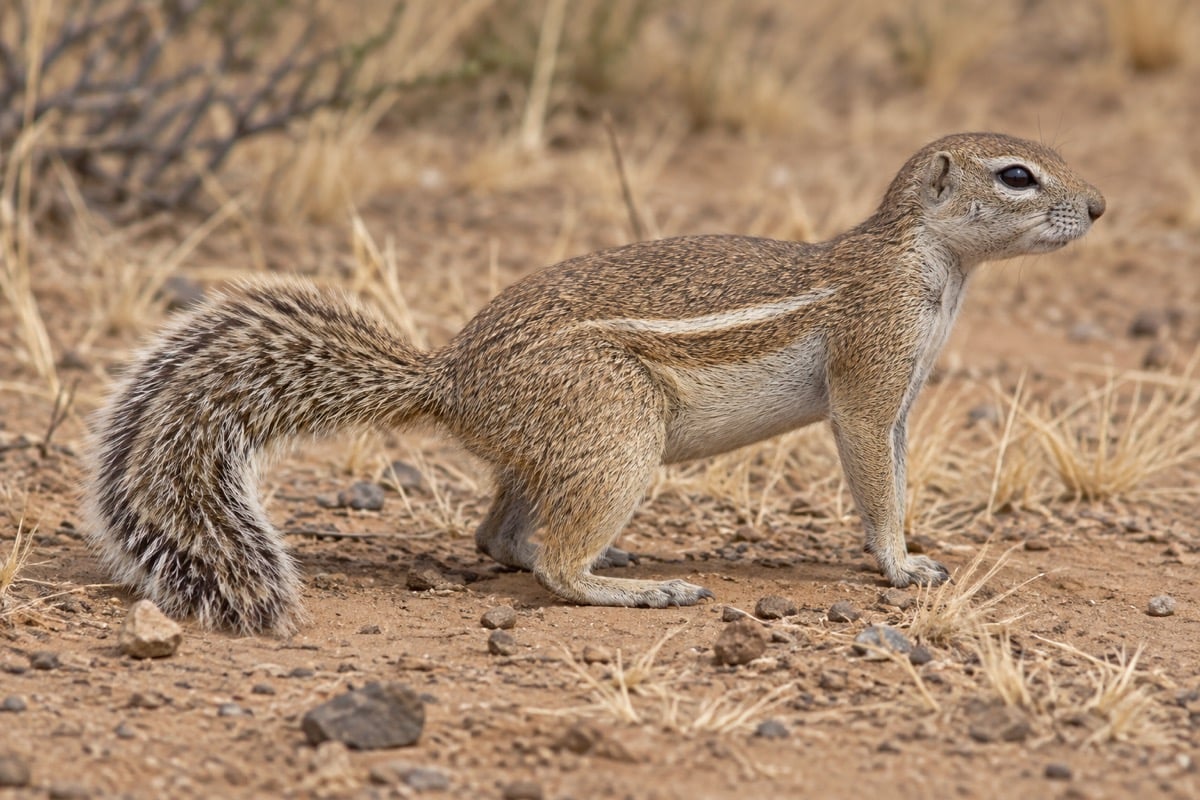
- Scientific Name: Euxerus erythropus (formerly Xerus erythropus)
- Habitat: Open woodland, grassland and other relatively dry habitats
- Size: About 300–945 g (11–33 oz)
- Diet: Seeds, roots, fruit, insects and other available foods
The striped ground squirrel was formerly classified as Xerus erythropus, which is why the name Xerus still appears in many references. It is now placed in the genus Euxerus. A narrow pale stripe along each side distinguishes this animal from many other squirrels. It is active by day and shelters in burrows, feeding on both plants and small animals. Its bushy tail and rounded ears give it a familiar squirrel outline as it moves across the ground.
27. Xiphias gladius (Swordfish)
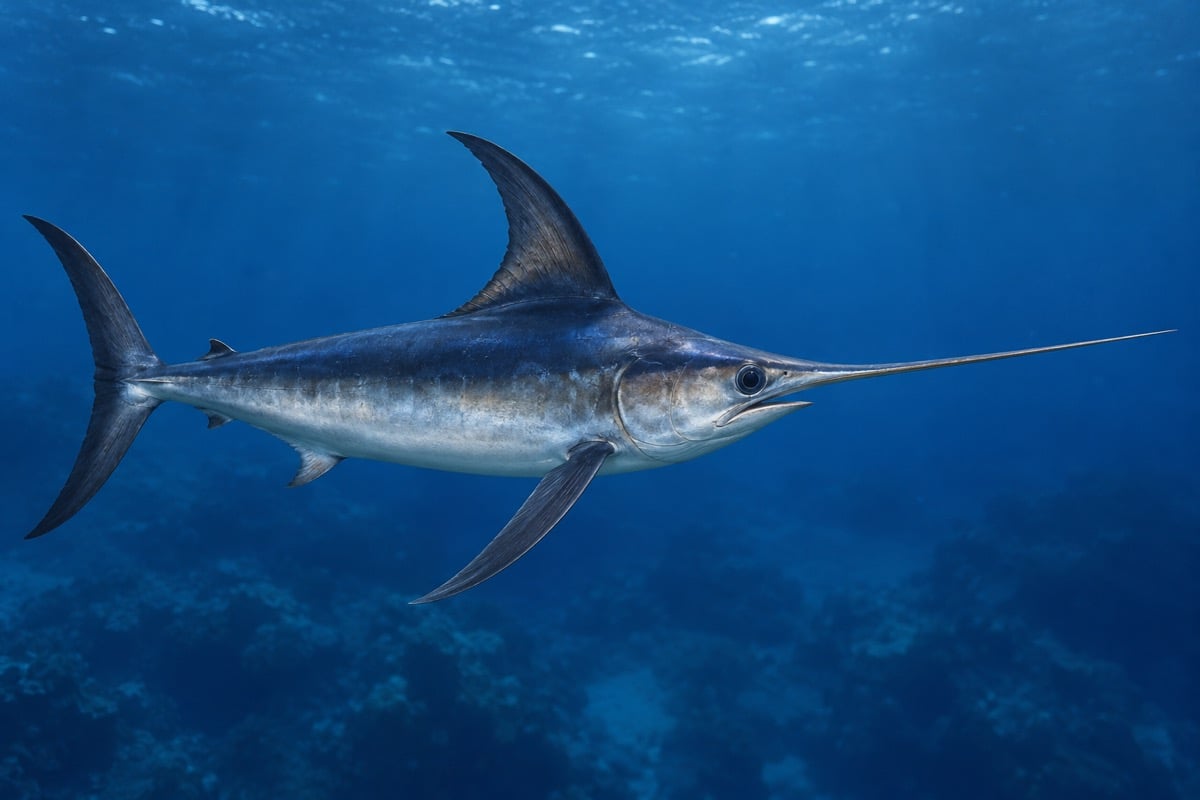
- Scientific Name: Xiphias gladius
- Habitat: Open ocean, from surface waters to deeper feeding areas
- Size: Large adults can weigh more than 500 kg
- Diet: Fish and squid
A swordfish carries a long, flattened bill that gives the species its familiar name. It can slash this bill through groups of prey, injuring fish before eating them. Its muscular body and crescent-shaped tail are built for powerful swimming in open water. Swordfish also have specialized tissue near their eyes that produces heat, helping them function during dives into colder water. They range widely across the oceans, following suitable temperatures and food.
28. Xiphophorus hellerii (Green Swordtail)
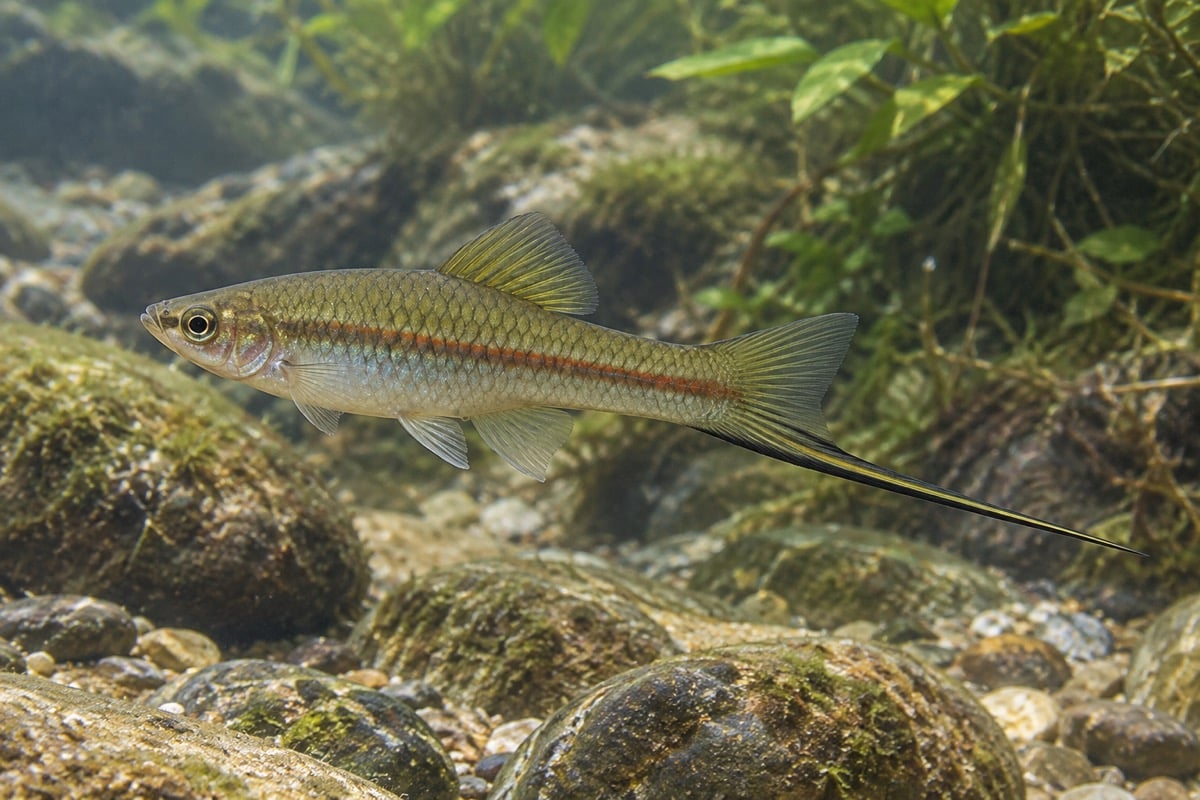
- Scientific Name: Xiphophorus hellerii
- Habitat: Streams, rivers and other freshwater habitats with vegetation
- Size: Green swordtail: up to about 14 cm (5.5 in) in males and 16 cm (6.3 in) in females
- Diet: Small invertebrates and plant matter
A male green swordtail has a long extension from the lower edge of its tail fin. This distinctive feature gives the fish its common name and is absent from females. Wild green swordtails usually have subtler colors than selectively bred aquarium varieties, with a reddish stripe along the side. Their native range runs from Mexico into Central America. They live in freshwater habitats and produce live young, which can swim freely as soon as they are born.
29. Xiphophorus maculatus (Southern Platyfish)
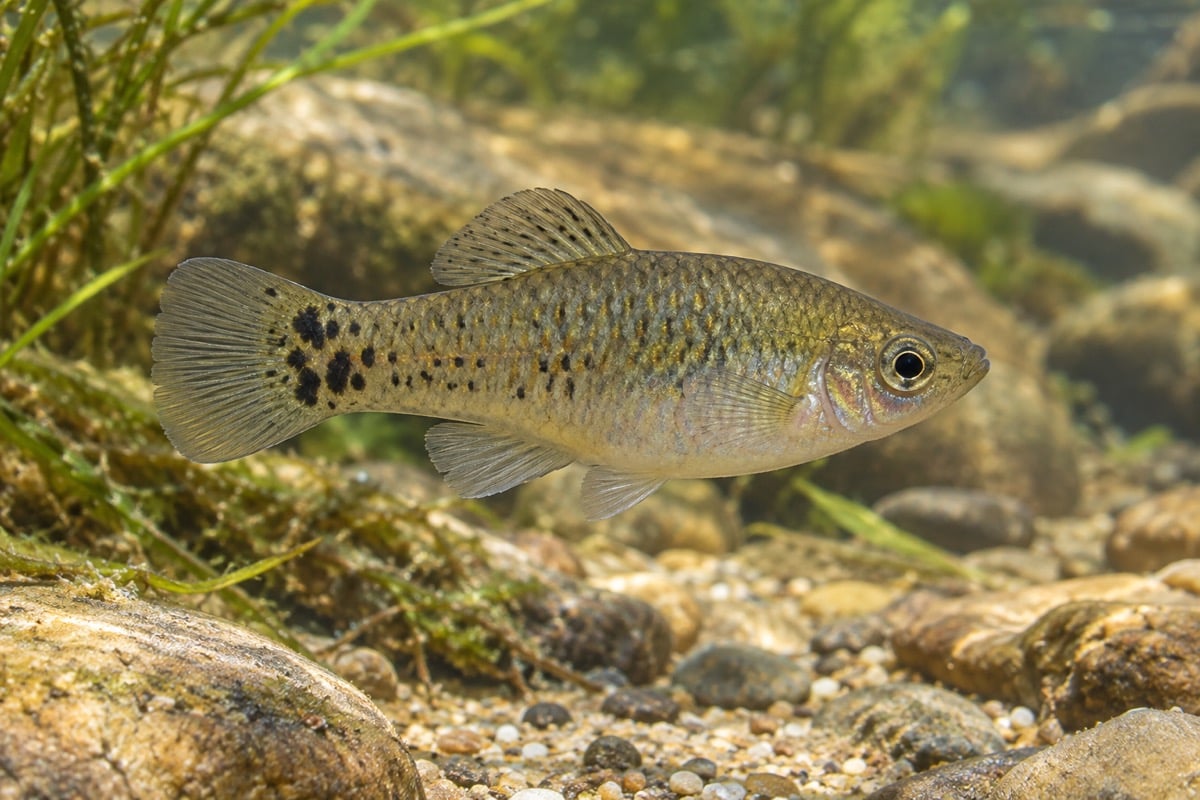
- Scientific Name: Xiphophorus maculatus
- Habitat: Warm, slow-moving creeks, canals, ditches, and swamps
- Size: Males to about 4 cm; females to about 6 cm
- Diet: Small invertebrates and plant material
The southern platyfish is a small, deep-bodied livebearer with a rounded tail. Unlike male swordtails, it does not grow a long extension from the lower edge of that tail. Wild fish are generally less brightly colored than many aquarium varieties, which have been selectively bred for generations. Females give birth to swimming young. In its native waters, the species often stays near vegetation, where small animals and plant material provide food.
30. Xiphophorus montezumae (Montezuma Swordtail)
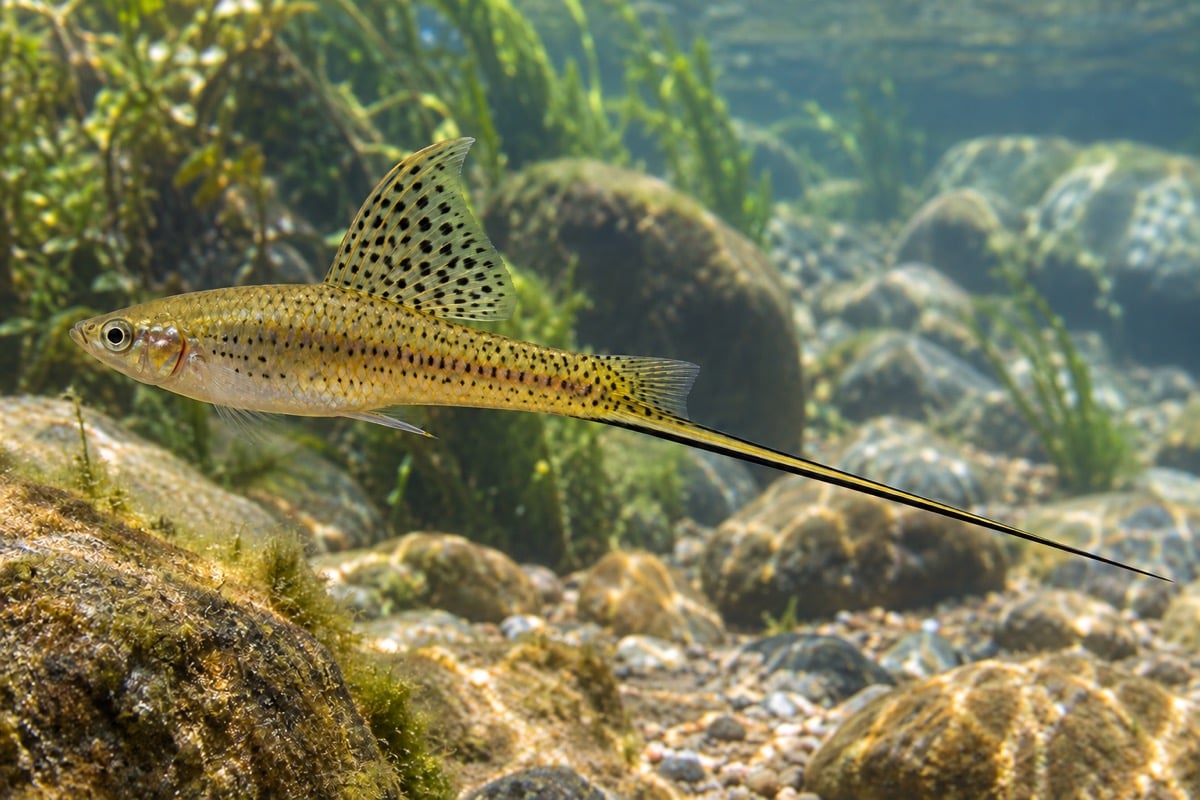
- Scientific Name: Xiphophorus montezumae
- Habitat: Clear streams, rivers, and spring-fed freshwater
- Size: About 5.5–6.5 cm long, with a conspicuous tail extension in males
- Diet: Algae, plant material, and small invertebrates
Male Montezuma swordtails have an exceptionally long lower tail extension and a tall dorsal fin marked with dark spots. The sword makes an already slender fish look much longer as it swims between plants. Females have a simpler tail and give birth to live young. This species comes from freshwater habitats in northeastern Mexico. Local populations can differ in appearance, including their markings, so every Montezuma swordtail does not look exactly the same.
31. Xiphophorus pygmaeus (Pygmy Swordtail)
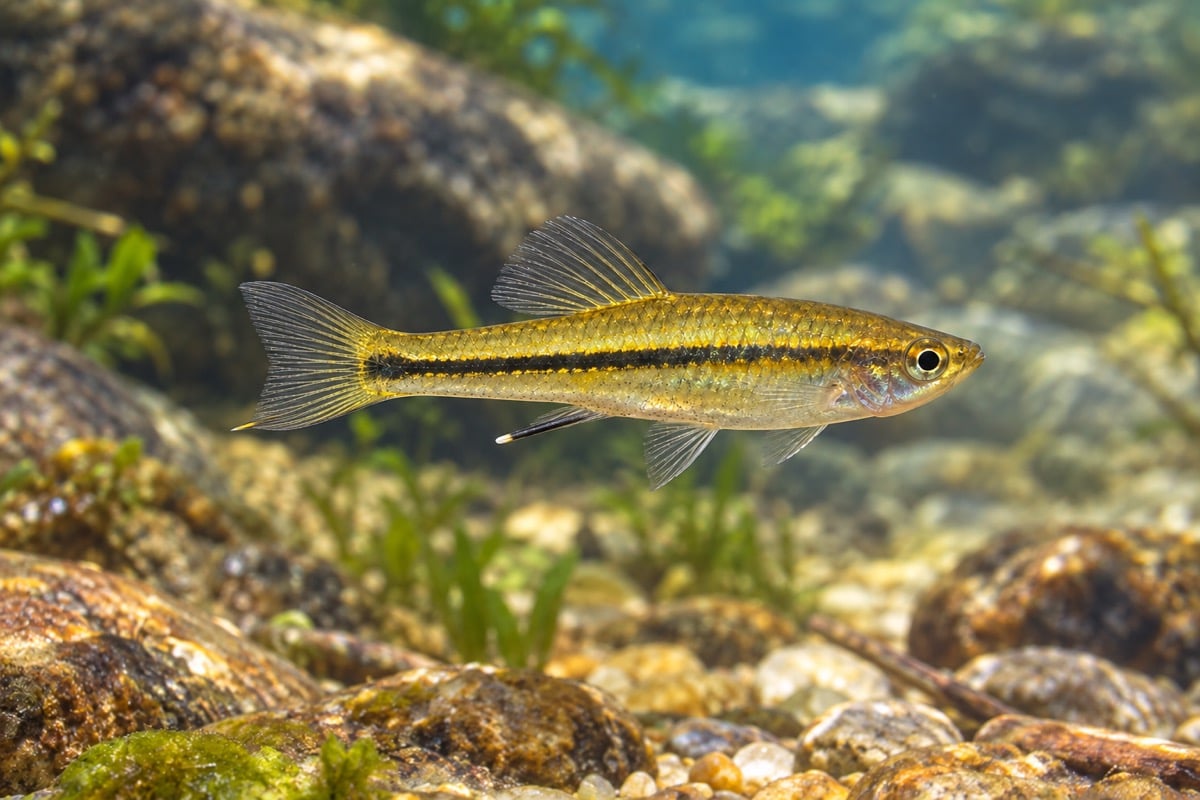
- Scientific Name: Xiphophorus pygmaeus
- Habitat: Clear streams with shaded banks, roots, and aquatic plants
- Size: Males about 2.5–3 cm; females about 3.5–4 cm
- Diet: Algae, organic detritus, and small aquatic food
The pygmy swordtail is much smaller than many of its relatives. Males have only a tiny or rudimentary sword, so the name may seem surprising when you first see one. A dark stripe runs along the side, and males can differ in color. These fish use sheltered stream edges where roots and vegetation offer cover. They graze on algae and other material, and females produce live young like other members of the genus.
32. Xiphophorus variatus (Variable Platyfish)
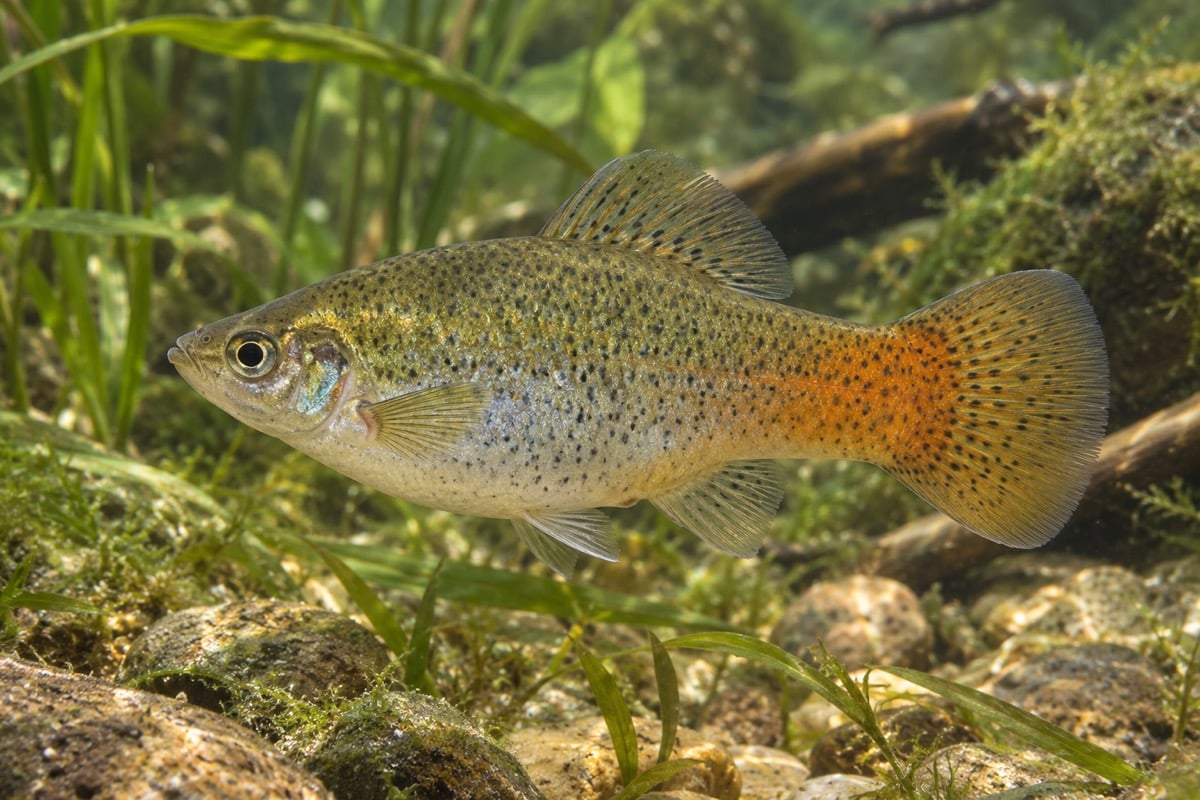
- Scientific Name: Xiphophorus variatus
- Habitat: Warm springs, vegetated canals, and slow-moving freshwater
- Size: Up to about 7 cm long
- Diet: Worms, crustaceans, insects, and plant material
The variable platyfish lives up to its name with differences in color and markings among individuals. It has a compact body and a rounded tail, without the long sword seen in some related species. Native populations occur along part of eastern Mexico, although aquarium fish have been introduced elsewhere. Its flexible diet includes both plants and small animals. Females give birth to live young, which begin swimming and searching for food soon after birth.
33. Xoloitzcuintli
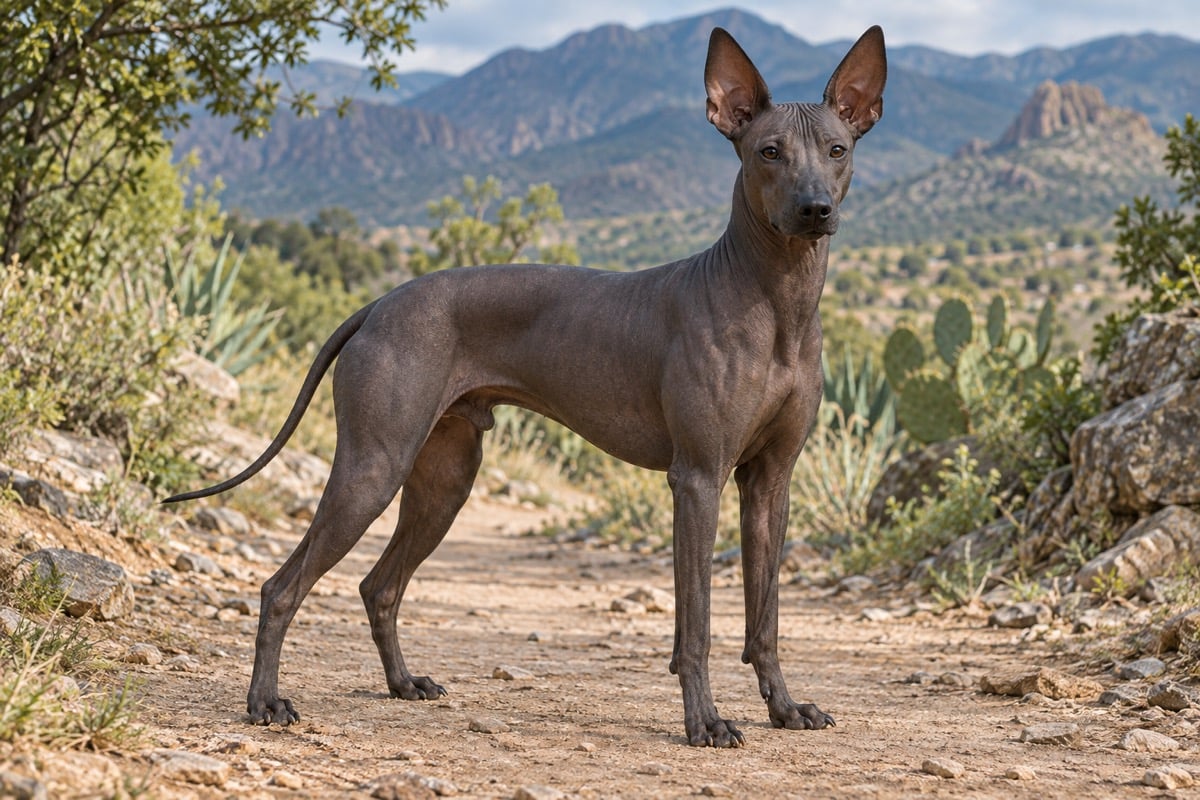
- Scientific Name: Canis lupus familiaris
- Habitat: Human homes and communities
- Size: About 25–58 cm at the shoulder, depending on size variety
- Diet: Balanced domestic dog food containing animal and plant ingredients
The Xoloitzcuintli, often shortened to Xolo, is a Mexican dog breed with a history stretching back centuries. It is best known for its hairless appearance, although coated Xolos also exist. The breed comes in toy, miniature, and standard sizes, all with an alert expression and upright ears. In Aztec belief, these dogs had a connection with the journey to the afterlife. Today, they are companion dogs and a recognizable part of Mexico’s cultural heritage.
34. Xylocopa appendiculata (Yellow-thoraxed Carpenter Bee)
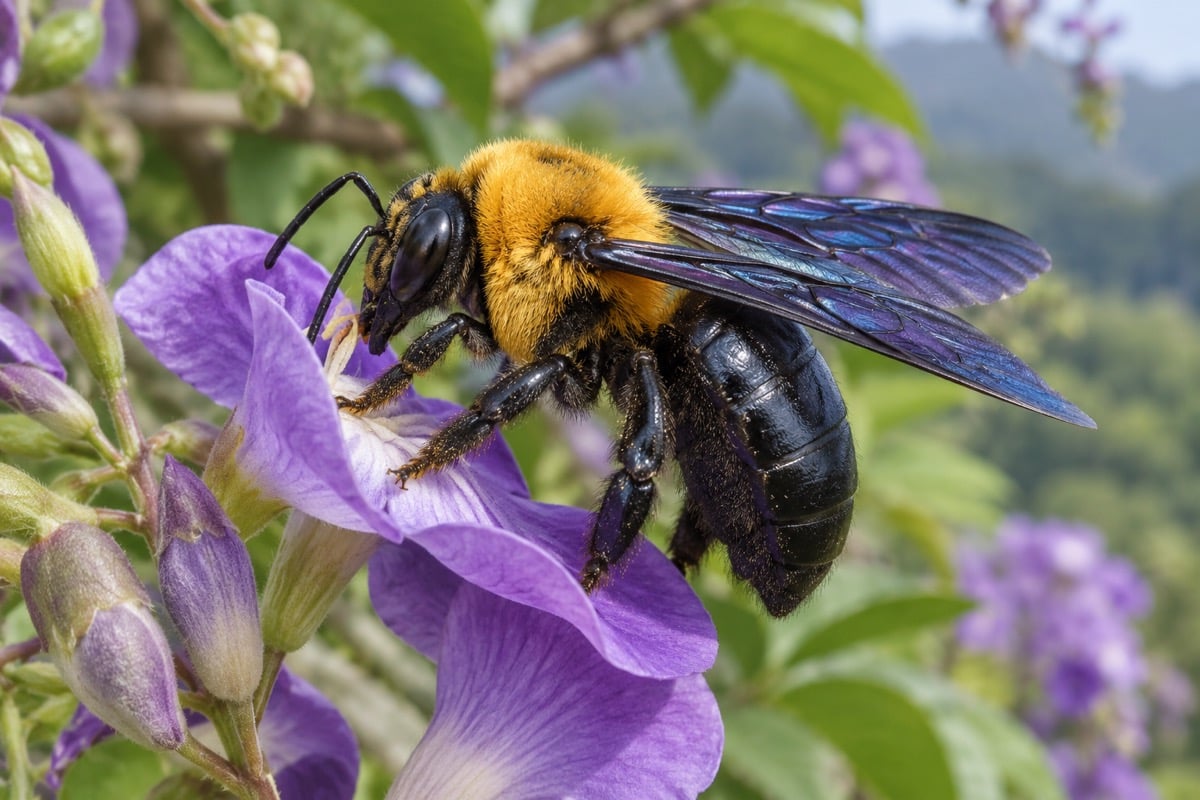
- Scientific Name: Xylocopa appendiculata
- Habitat: Woodland edges, fields, and gardens with nesting wood
- Size: About 20–22 mm long
- Diet: Nectar and pollen
This carpenter bee has a conspicuous coat of yellow hair over much of its thorax, contrasting with a dark abdomen. Its strong jaws help it excavate nesting tunnels in dead wood, including suitable branches. Inside, the female prepares separate cells with food for developing young. Adults visit flowers for nectar and pollen, carrying pollen between plants as they feed. Dark wings with a violet sheen add another distinctive feature to this large East Asian bee.
35. Xylocopa latipes (Broad-handed Carpenter Bee)
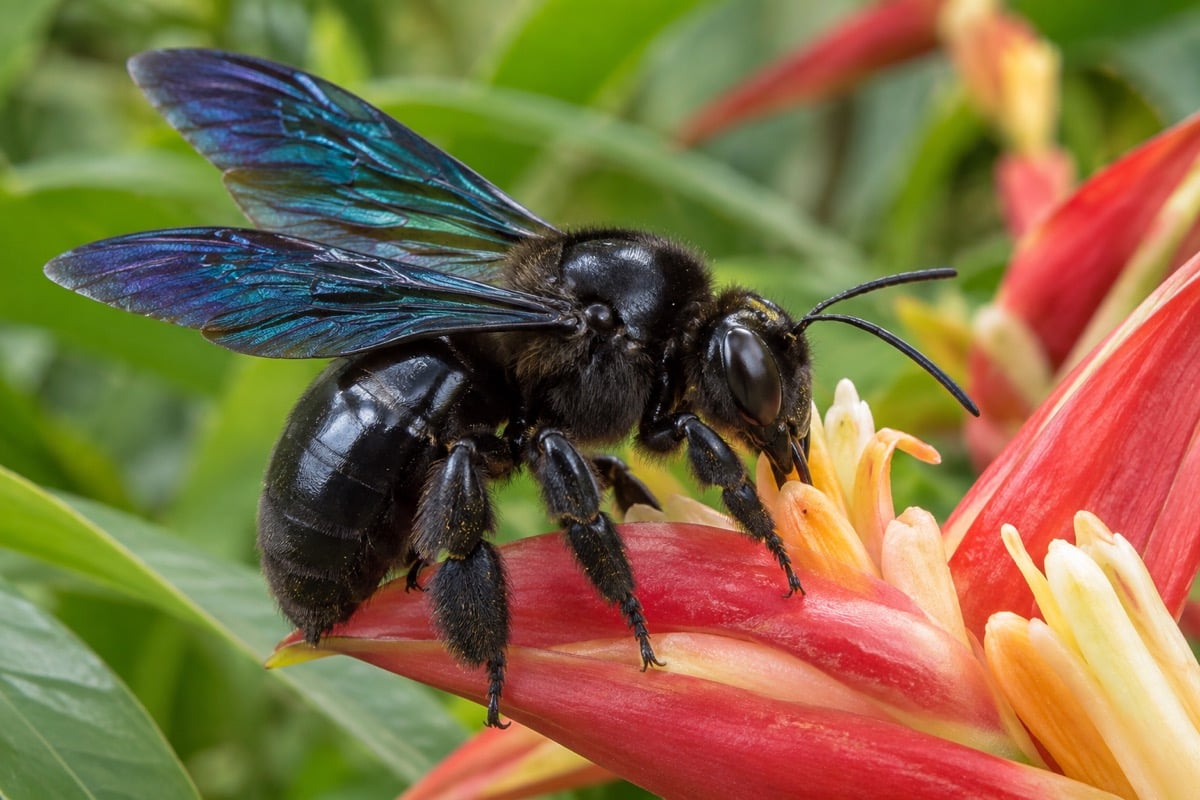
- Scientific Name: Xylocopa latipes
- Habitat: Forests, parks, gardens, and other flower-rich areas
- Size: About 28–32 mm long
- Diet: Nectar and pollen
The broad-handed carpenter bee is a large, glossy black insect with wings that can shine blue or violet. Its size and loud flight can draw attention even in a busy garden. Like other carpenter bees, it uses wood for nesting, excavating tunnels rather than building a wax honeycomb. It visits many flowers for food and can be an effective pollinator. In Singapore, flowering plants in parks and gardens provide places to watch this impressive bee.
36. Xylocopa sonorina (Valley Carpenter Bee)
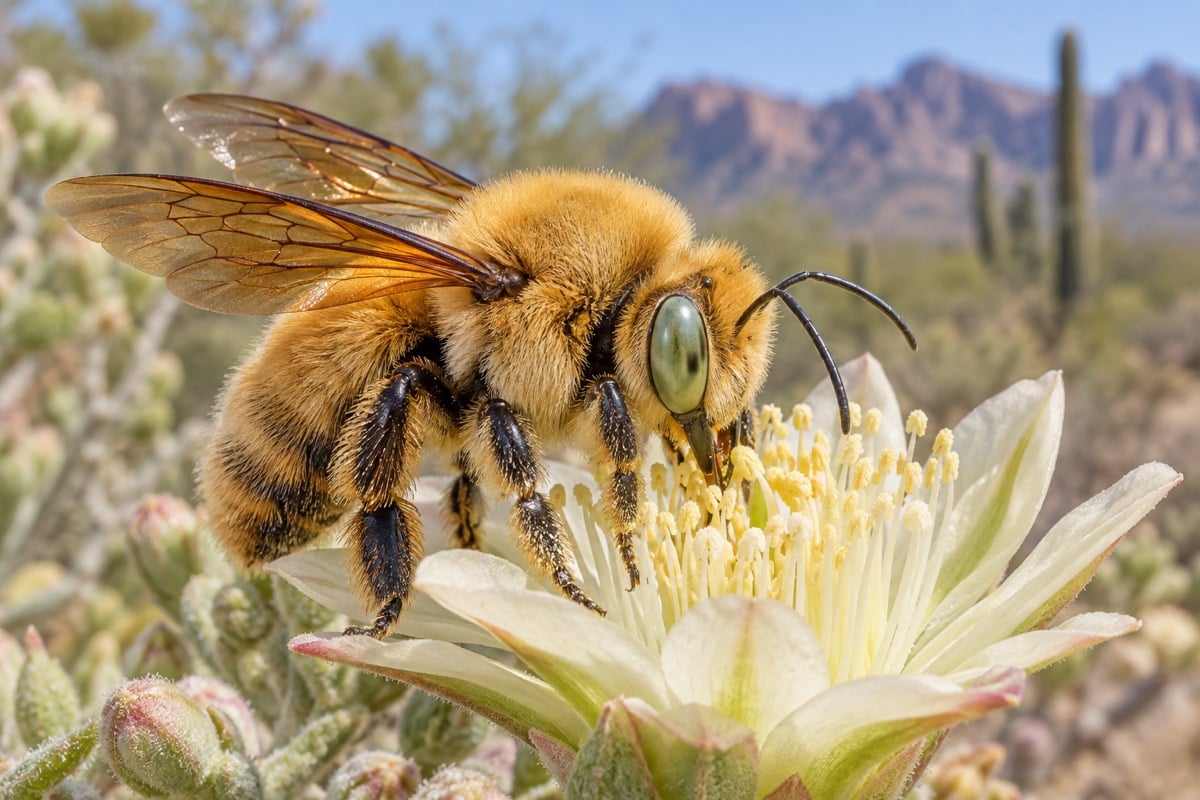
- Scientific Name: Xylocopa sonorina
- Habitat: Open woodland, gardens, and other areas with flowers and nesting wood
- Size: About 2–2.5 cm long
- Diet: Nectar and pollen
Male valley carpenter bees look strikingly different from females. Males have golden-brown hair and greenish eyes, while females are mostly black with dark, reflective wings. The fuzzy males are sometimes called teddy bear bees. Adults visit flowers, but they can also reach nectar by making a hole near the base of a blossom. Females nest in wood and provide pollen and nectar for their young. Males lack a sting, as male bees generally do.
37. Xylocopa valga (Violet Carpenter Bee)
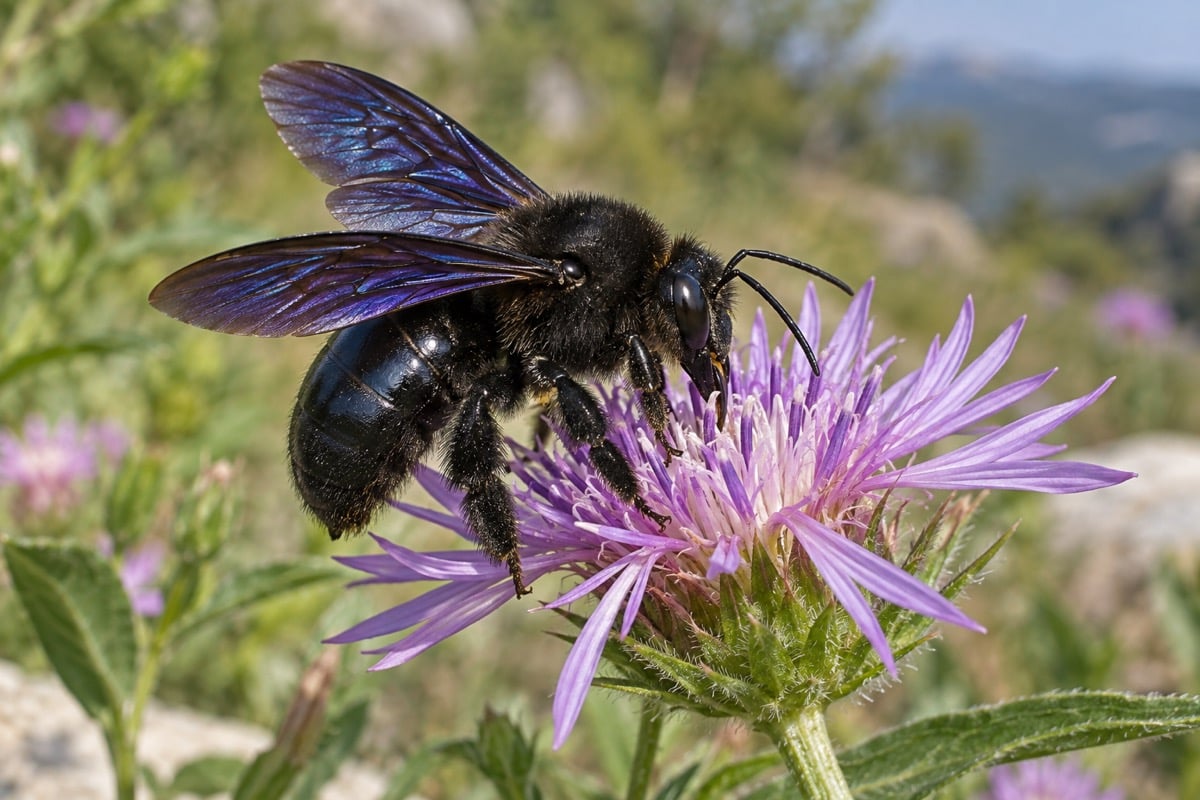
- Scientific Name: Xylocopa valga
- Habitat: Warm woodland, orchards, and other habitats with dead wood
- Size: About 18–25 mm long
- Diet: Nectar and pollen
This dark carpenter bee has wings that reflect violet tones in the light. It excavates nesting spaces in dead wood, where a female creates a series of cells for her offspring. Each cell receives a supply of pollen and nectar before it is sealed. Researchers studying the species in a Chinese oasis found nests in dead poplar wood. The bee is a useful reminder that fallen branches and old trunks can shelter far more than beetles.
38. Xylocopa violacea (Violet Carpenter Bee)
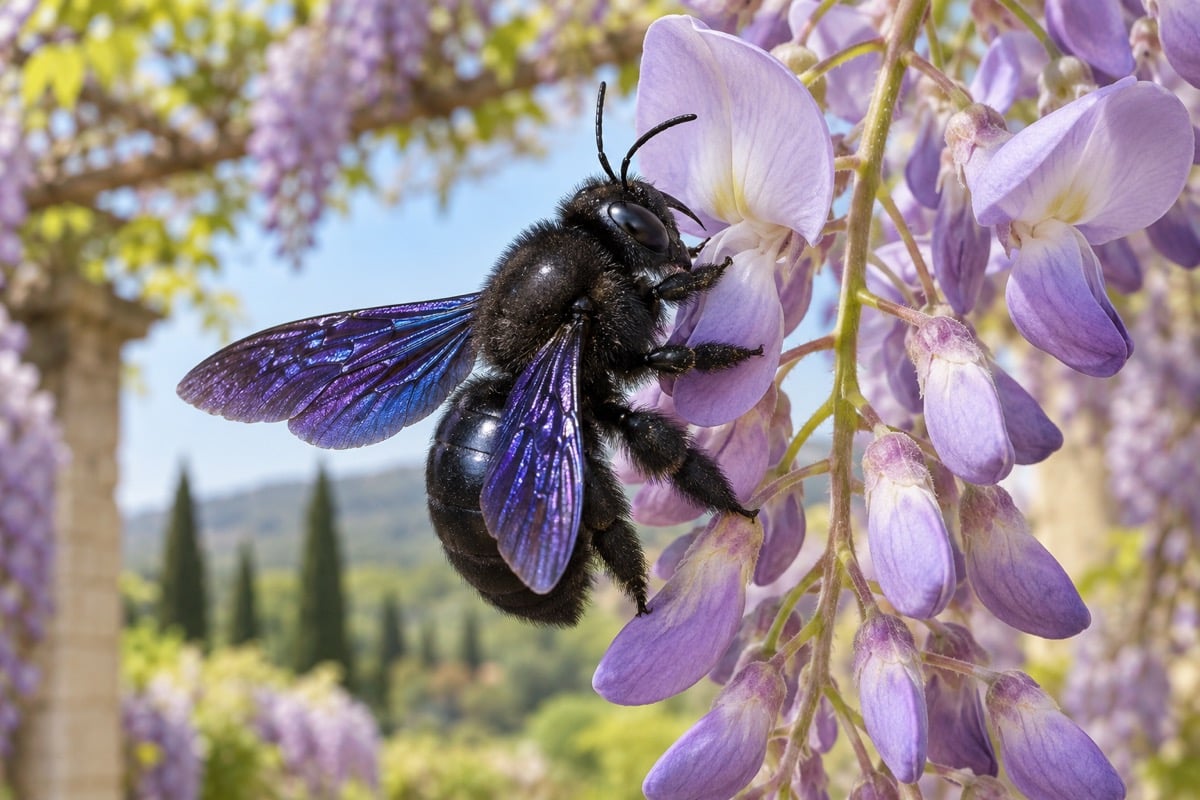
- Scientific Name: Xylocopa violacea
- Habitat: Sunny gardens, orchards, woodland edges, and warm open habitats
- Size: Up to about 28 mm long
- Diet: Nectar and pollen
The violet carpenter bee is among Europe’s most noticeable bees, with a large black body and blue-violet reflections on its wings. It visits a range of flowers and nests in suitable dead wood. A female uses her jaws to excavate a tunnel, then prepares brood cells inside it. The species favors warm places and has expanded farther north in parts of Europe. Despite the similar common names, it is a separate species from Xylocopa valga.
39. Xylocopa virginica (Eastern Carpenter Bee)
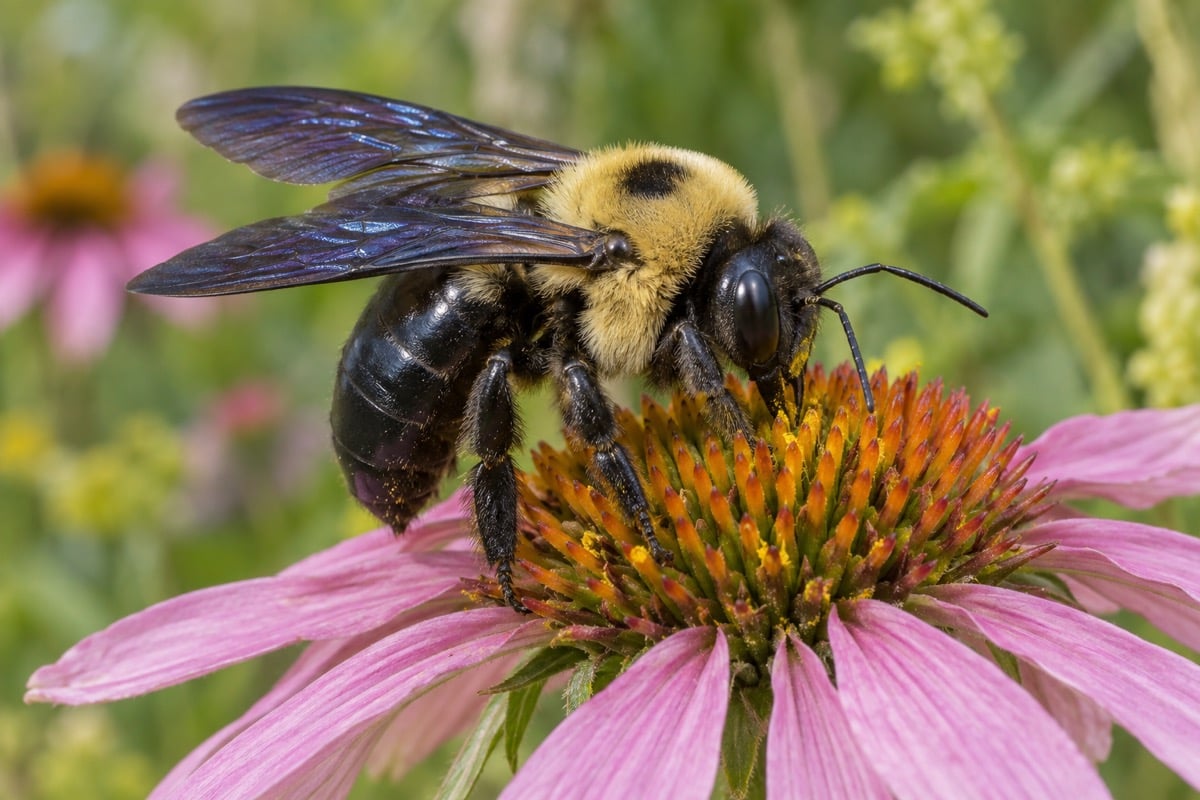
- Scientific Name: Xylocopa virginica
- Habitat: Woodland edges, gardens, and areas with exposed wood
- Size: About 19–23 mm long
- Diet: Nectar and pollen
The eastern carpenter bee is often confused with a bumblebee, but its upper abdomen is mostly shiny and bare. Yellow hair covers much of the thorax, giving the rest of the insect a fuzzier appearance. Females tunnel into wood and divide their nests into cells stocked with food. Males commonly patrol near nesting places and have a pale patch on the face. Although a hovering male can seem intimidating, it has no sting.
40. Xylophanes tersa (Tersa Sphinx Moth)
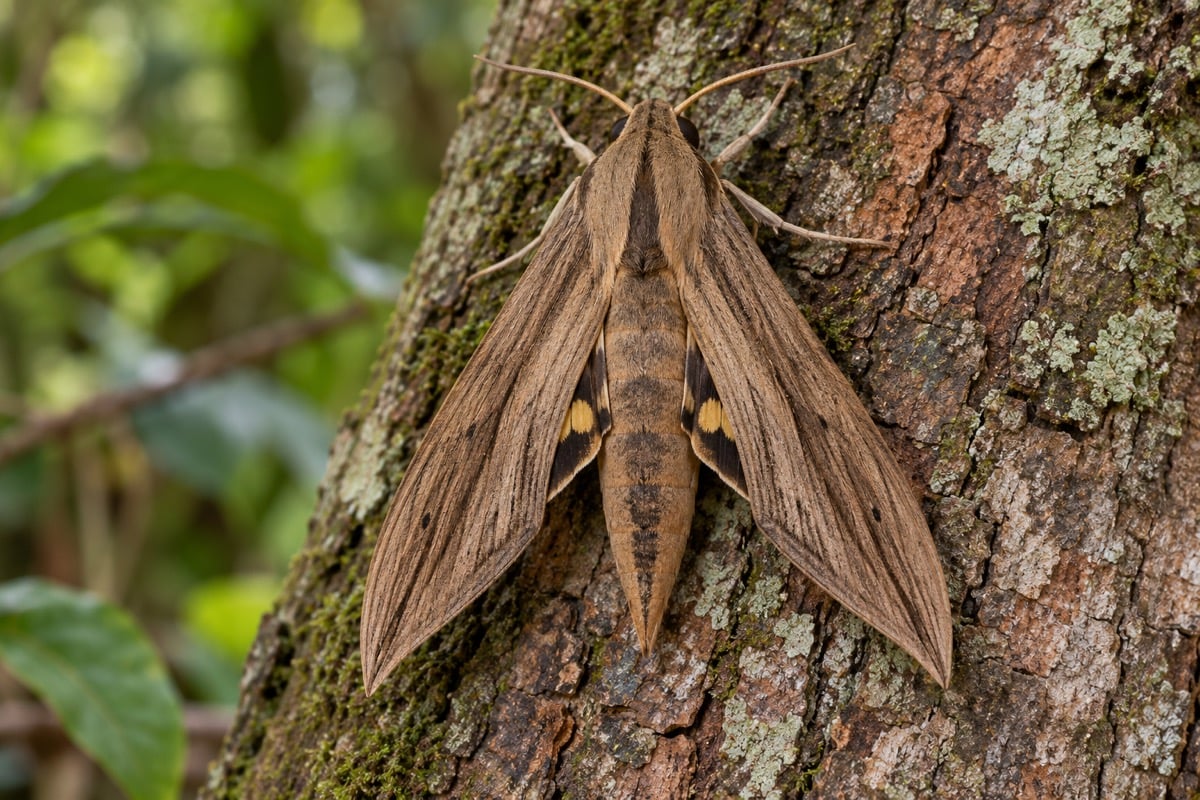
- Scientific Name: Xylophanes tersa
- Habitat: Gardens, woodland edges, and other areas with host plants
- Size: About 6–8 cm wingspan
- Diet: Adults drink nectar; caterpillars eat host-plant leaves
The tersa sphinx has long, narrow forewings marked with fine lines that resemble streaks in wood. Its streamlined shape is well suited to fast flight around flowers at dusk. The caterpillar looks very different, with large eyespots near the front of its body. When disturbed, it can draw in its head, making those markings more prominent. Gardeners may find the larvae on pentas and other host plants before they transform into these sleek moths.
41. Xylotrupes gideon (Rhinoceros Beetle)
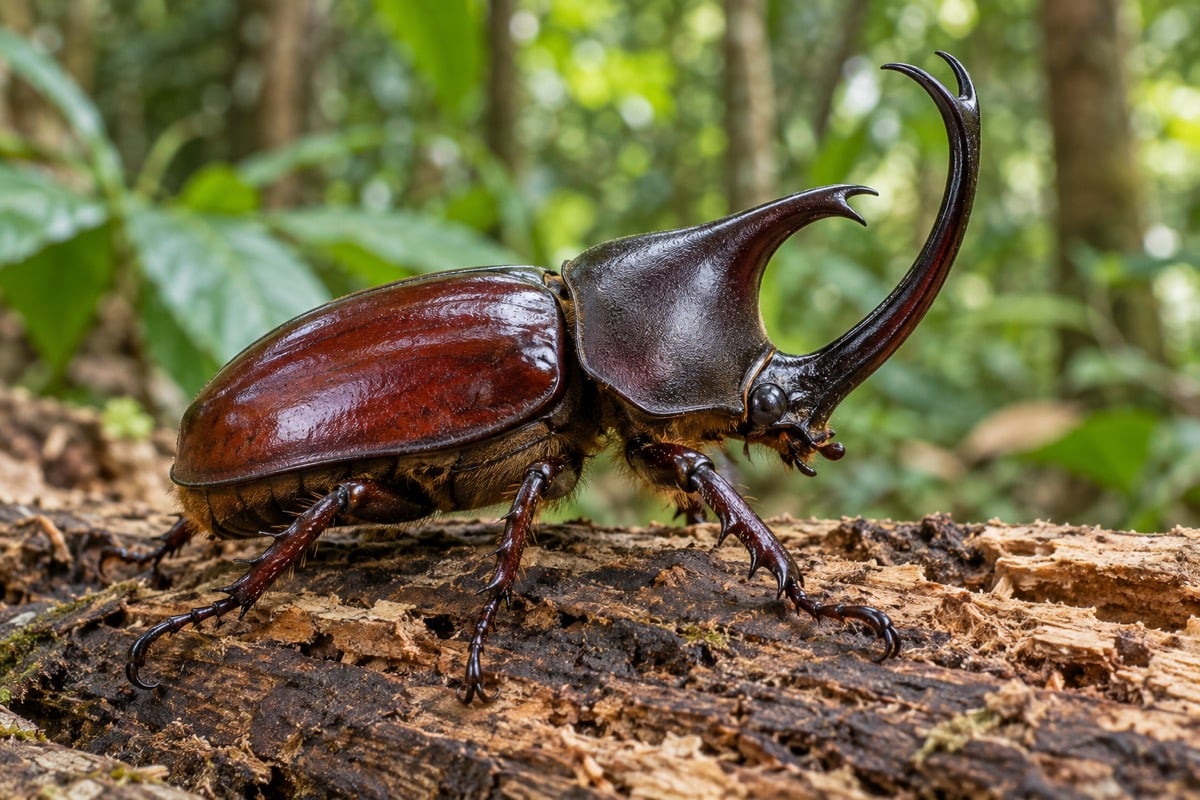
- Scientific Name: Xylotrupes gideon
- Habitat: Tropical forest and other habitats with decaying plant material
- Size: Usually several centimeters long; size varies between sexes and individuals
- Diet: Adults eat soft plant material; larvae consume decaying organic matter
Male Xylotrupes gideon have a horn on the head and another projecting from the thorax. Together, these structures help them grapple with rival males. Females have a simpler outline without the same dramatic horns. The beetles have glossy dark bodies, while their pale larvae develop in decaying organic material. Horn length varies considerably among males, so a large male can look very different from a smaller one belonging to the same species.
More Animals (A-Z)
Want to discover more animals? Choose another letter below to keep exploring the animal kingdom.
A, B, C, D, E, F, G, H, I, J, K, L, M, N, O, P, Q, R, S, T, U, V, W, X, Y, Z


James Miller grew up on the Oregon coast, exploring tide pools and watching seabirds. He has a particular fondness for owls and keeps a notebook of his bird sightings.
Read More »


