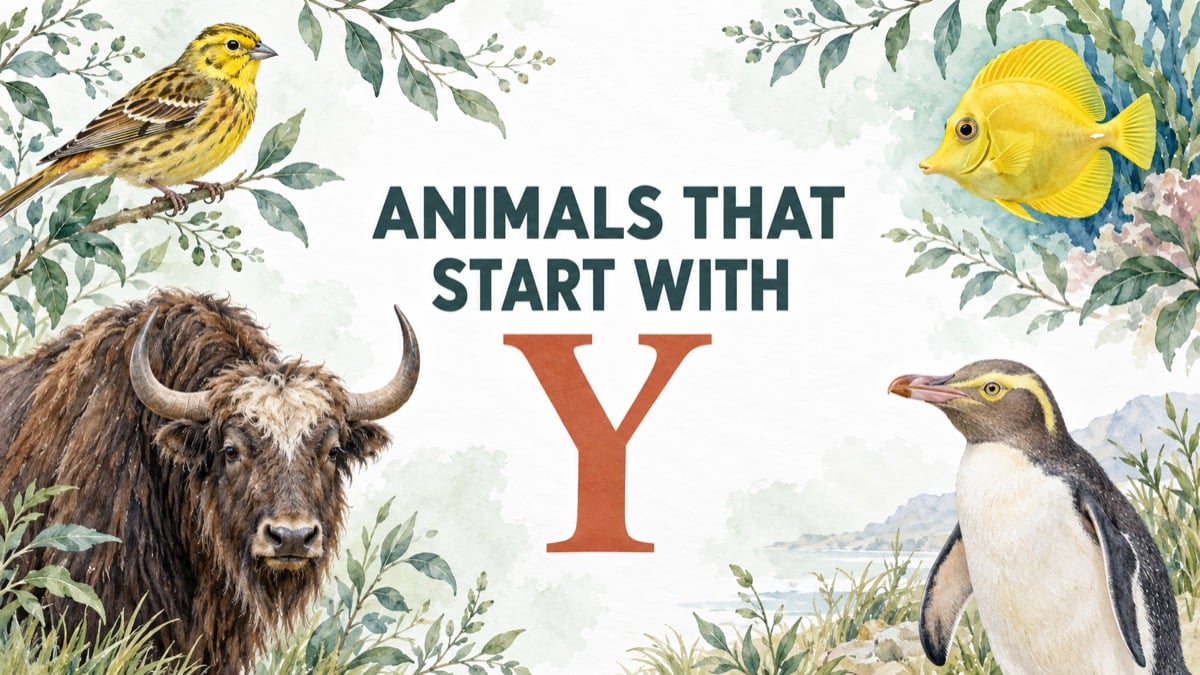
Yaks may be the first animals that come to mind when you think of the letter Y, but there is much more to discover. This list includes bright tropical fish, forest mammals, birds from remote islands and small creatures you might easily walk past.
Here are 45 animals that start with Y, each with a picture and a few facts about its life. Many get their names from a yellow marking, but their colors are only the beginning of what makes them interesting.
List of Animals
Here are 45 animals that start with the letter Y.
Click an animal name to jump to its full description, image, and more below.
| Animal | Type | Region |
|---|---|---|
| Yak | Mammal | Tibetan Plateau and surrounding highlands |
| Yellow Anaconda | Reptile | South America, especially the Paraguay River basin |
| Yellow Mongoose | Mammal | Southern Africa |
| Yellow Perch | Fish | North America |
| Yellow Sac Spider | Arachnid | The Americas; also recorded in parts of Africa |
| Yellow Tang | Fish | Pacific Ocean, especially around Hawaii |
| Yellow Warbler (Northern Yellow Warbler) | Bird | North America; winters in Central and South America |
| Yellow-backed Duiker | Mammal | Western and central Africa |
| Yellow-bellied Marmot | Mammal | Western North America |
| Yellow-bellied Sapsucker | Bird | North America; winters south into Central America and the Caribbean |
| Yellow-bellied Sea Snake | Reptile | Tropical Indian and Pacific oceans |
| Yellow-bellied Slider | Reptile | Southeastern United States; introduced elsewhere |
| Yellow-bellied Weasel | Mammal | Himalayas, southern China and parts of Southeast Asia |
| Yellow-billed Cuckoo | Bird | North and South America |
| Yellow-billed Duck | Bird | Eastern and southern Africa |
| Yellow-billed Hornbill | Bird | Southern Africa |
| Yellow-billed Loon | Bird | Arctic North America and Eurasia |
| Yellow-billed Magpie | Bird | California, United States |
| Yellow-billed Stork | Bird | Sub-Saharan Africa and Madagascar |
| Yellow-breasted Chat | Bird | North America; winters mainly in Mexico and Central America |
| Yellow-eyed Penguin | Bird | New Zealand and its southern islands |
| Yellow-footed Rock-wallaby | Mammal | Australia |
| Yellow-footed Tortoise | Reptile | Tropical South America |
| Yellow-headed Amazon | Bird | Mexico and northern Central America |
| Yellow-headed Blackbird | Bird | Western and central North America |
| Yellow-naped Amazon | Bird | Southern Mexico through parts of Central America |
| Yellow-necked Mouse | Mammal | Europe and parts of western Asia |
| Yellow-nosed Albatross | Bird | South Atlantic Ocean |
| Yellow-pine Chipmunk | Mammal | Western North America |
| Yellow-rumped Warbler | Bird | North and Central America |
| Yellow-shouldered Blackbird | Bird | Puerto Rico and nearby islands |
| Yellow-spotted Lizard | Reptile | Southern Mexico through Central America |
| Yellow-throated Marten | Mammal | Southern and eastern Asia |
| Yellow-throated Toucan | Bird | Central America and northwestern South America |
| Yellow-throated Warbler | Bird | Southeastern North America, the Caribbean and Central America |
| Yellow-winged Bat | Mammal | Sub-Saharan Africa |
| Yellowfin Tuna | Fish | Tropical and subtropical oceans |
| Yellowhammer | Bird | Europe and parts of Asia; introduced in New Zealand |
| Yellowtail Amberjack | Fish | Temperate and subtropical Southern Hemisphere seas |
| Yellowtail Damselfish | Fish | Western Pacific Ocean |
| Yeti Crab | Crustacean | Southeastern Pacific Ocean |
| Yucatán Jay | Bird | Yucatán Peninsula, northern Guatemala and Belize |
| Yucatán Squirrel | Mammal | Yucatán Peninsula and nearby parts of Mexico, Guatemala and Belize |
| Yuma Myotis | Mammal | Western North America |
| Yungas Pygmy-Owl | Bird | Peru, Bolivia and northwestern Argentina |
1. Yak
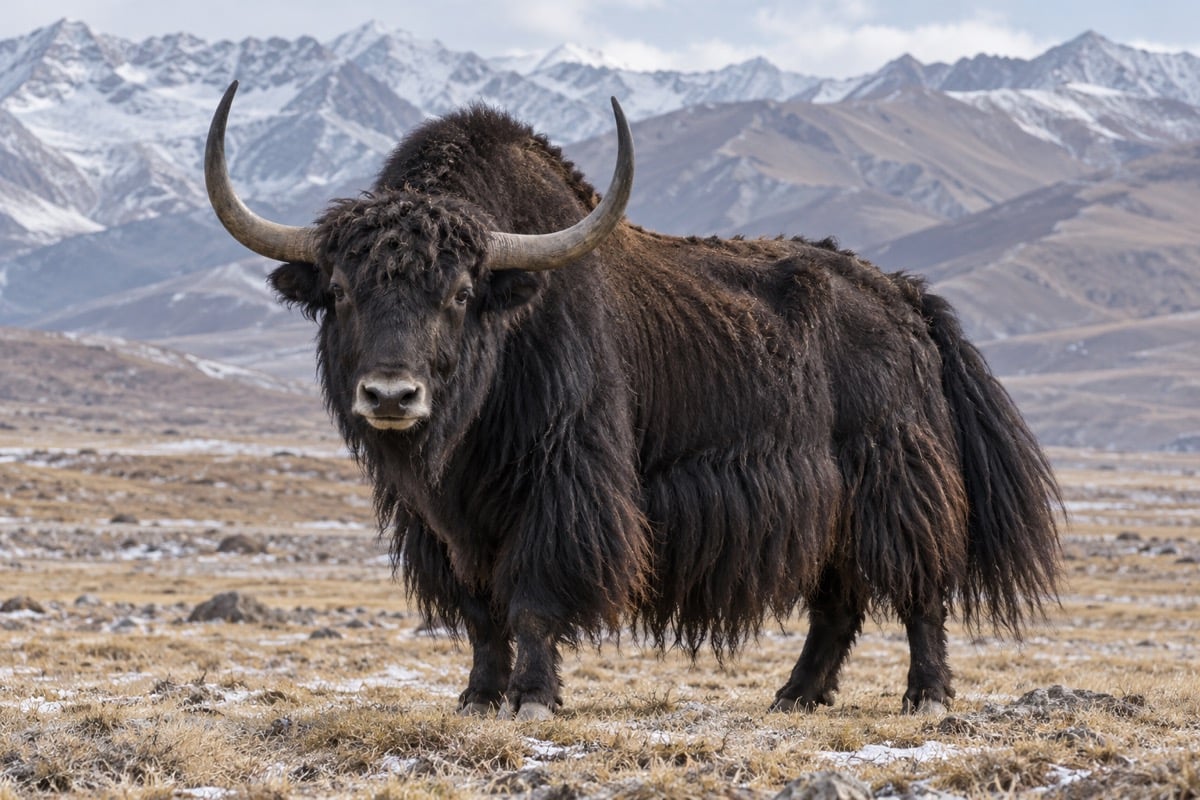
- Scientific Name: Bos mutus (wild yak)
- Habitat: Cold, high-altitude grassland and alpine country
- Size: Wild adults roughly 3–3.8 m (10–12.5 ft) long
- Diet: Grasses, sedges and other mountain vegetation
A wild yak has a deep body, a pronounced shoulder hump and a long coat that hangs below its belly. Thick hair helps insulate it in cold, windy landscapes where trees are scarce and the air is thin. Wild yaks and domestic yaks are usually given different scientific names: Bos mutus and Bos grunniens. Domestic animals may have varied coat colors and are widely used by people in highland regions. The wild yak shown here has the dark, shaggy appearance associated with its mountain habitat.
2. Yellow Anaconda
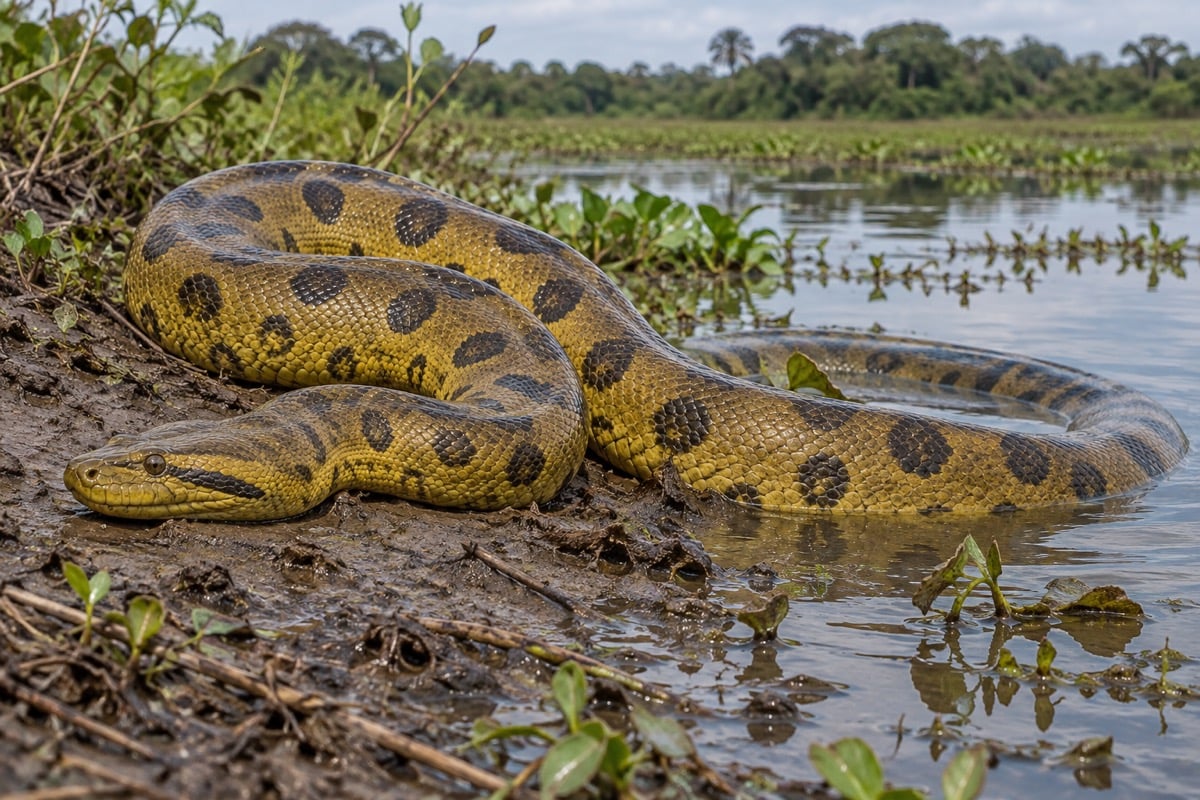
- Scientific Name: Eunectes notaeus
- Habitat: Marshes, swamps and slow-moving water
- Size: Often about 3–4 m (10–13 ft) long; females generally larger
- Diet: Birds, mammals, fish and other available vertebrates
The yellow anaconda is a heavy-bodied snake with dark blotches over a yellowish or olive background. Much of its life is spent in or beside water, where vegetation and muddy banks offer cover. It catches prey by ambush and uses constriction to subdue it. Unlike venomous snakes that inject venom through specialized teeth, anacondas rely on their muscular bodies. Although smaller than the largest green anacondas, a yellow anaconda is still a substantial predator within South American wetlands.
3. Yellow Mongoose
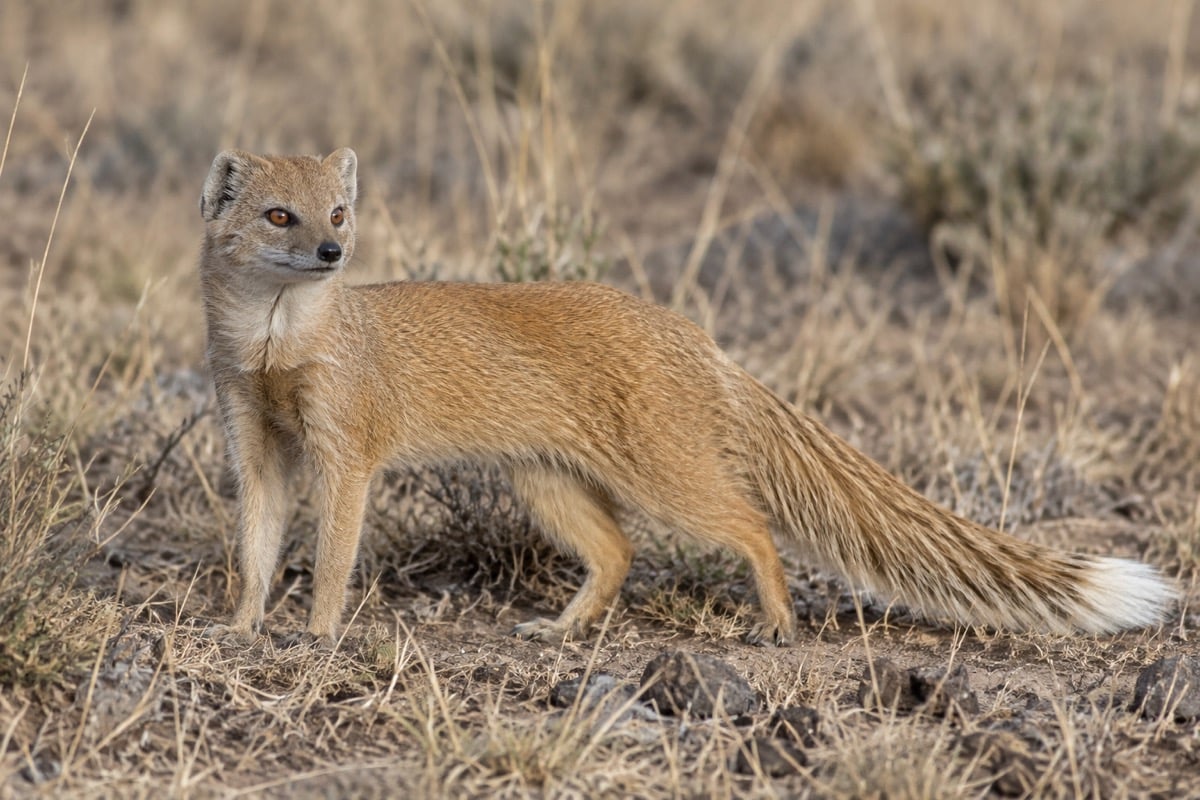
- Scientific Name: Cynictis penicillata
- Habitat: Open grassland, scrub and semi-arid country
- Size: Around 600 g (1.3 lb) on average
- Diet: Mostly insects, with some small vertebrates and eggs
The yellow mongoose has a pointed muzzle, rounded ears and a bushy tail. Southern animals often have a rich tawny coat and a white tail tip, while individuals farther north may look grayer and lack that white tip. It searches for food mainly during the day and uses underground shelter. Insects make up much of its diet, so a small mongoose can spend considerable time investigating the ground for tiny prey. Its fox-like appearance is misleading: mongooses belong to their own family, separate from foxes and other canids.
4. Yellow Perch
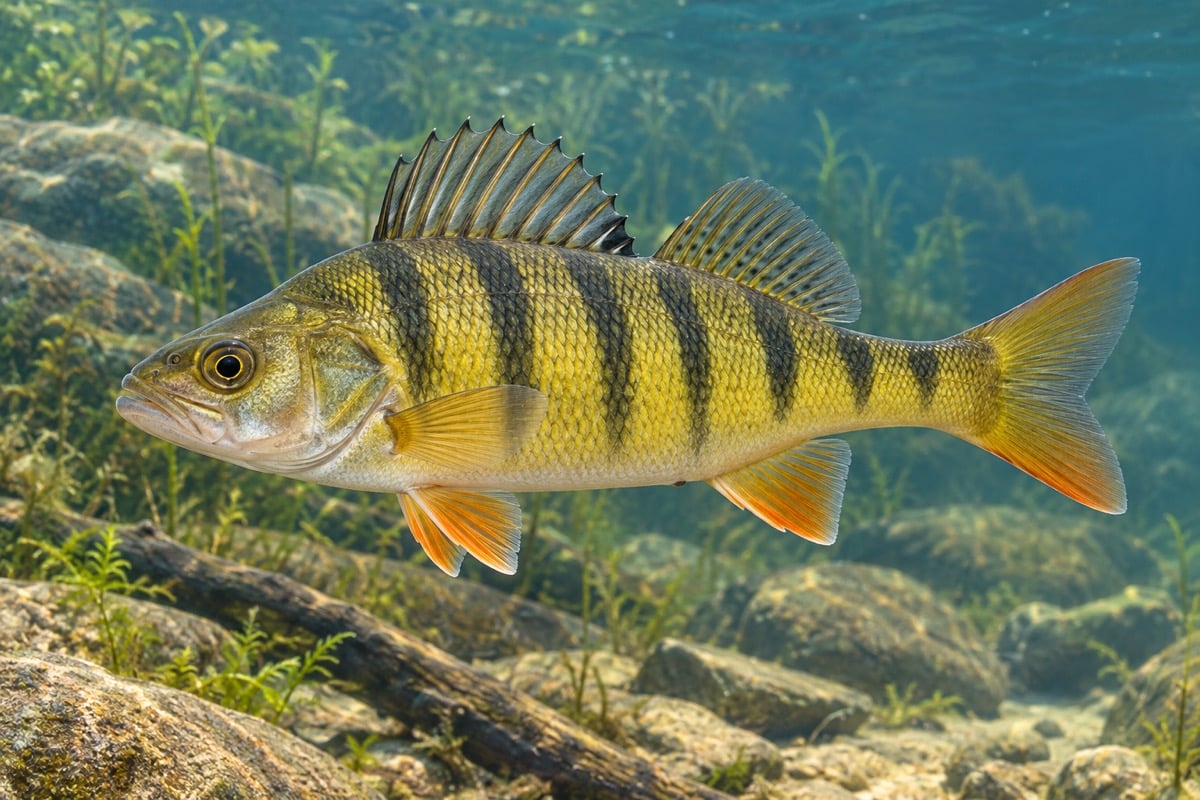
- Scientific Name: Perca flavescens
- Habitat: Freshwater lakes, ponds and slow rivers
- Size: Commonly about 10–25.5 cm (4–10 in) long
- Diet: Aquatic invertebrates and small fish
The yellow perch has a golden body crossed by dark vertical bars. A spiny first dorsal fin rises behind its head, followed by a softer second fin. Young perch begin by eating tiny drifting animals, then take larger prey as they grow. They often gather in schools, particularly where vegetation provides cover and food. Females lay their eggs in long, jellylike ribbons that can drape over underwater plants and branches.
5. Yellow Sac Spider
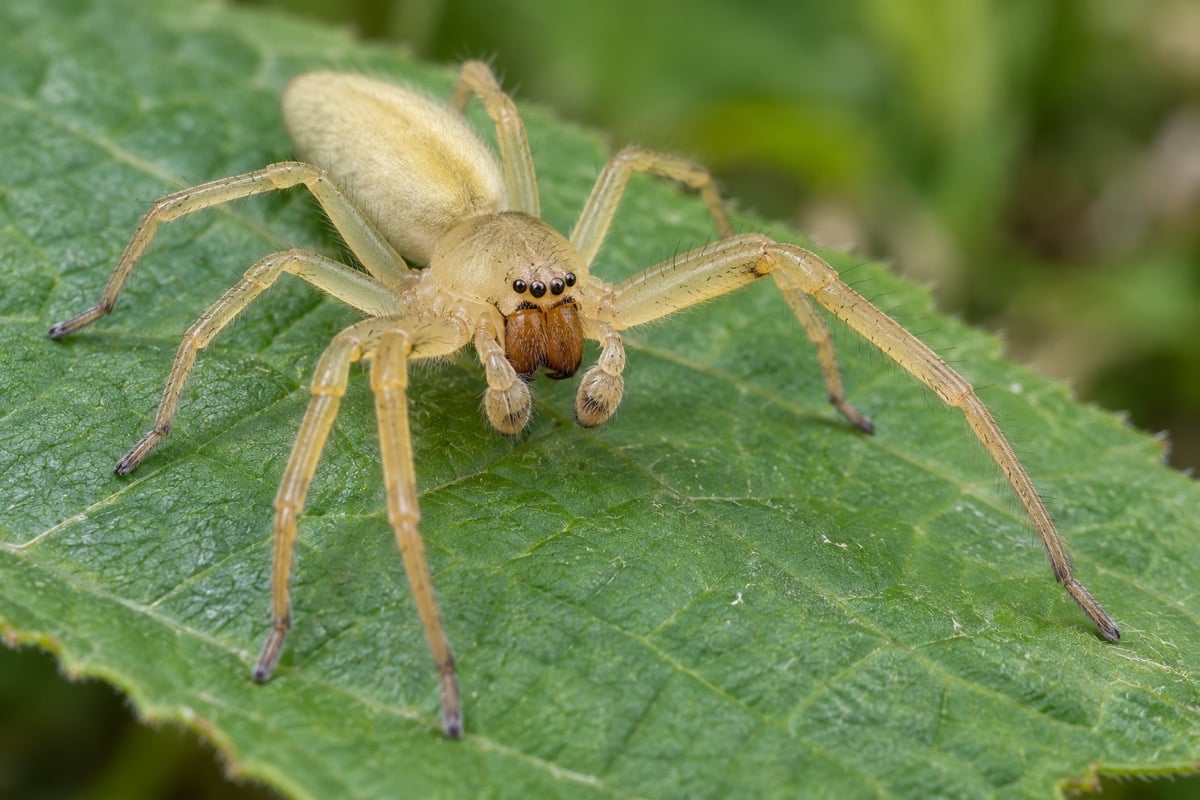
- Scientific Name: Cheiracanthium inclusum
- Habitat: Vegetation, gardens, fields and sheltered spaces
- Size: Body about 4–10 mm (0.16–0.4 in) long
- Diet: Small arthropods and their eggs, with some nectar
The yellow sac spider is a pale, active hunter with long front legs. Instead of waiting in a large catching web, it searches for prey on plants and other surfaces. Silk is still important: it builds a small retreat where it can shelter during the day. Females also protect their eggs in silk. Its cream or yellowish coloring can vary, and its small size makes it easy to overlook among leaves and stems.
6. Yellow Tang
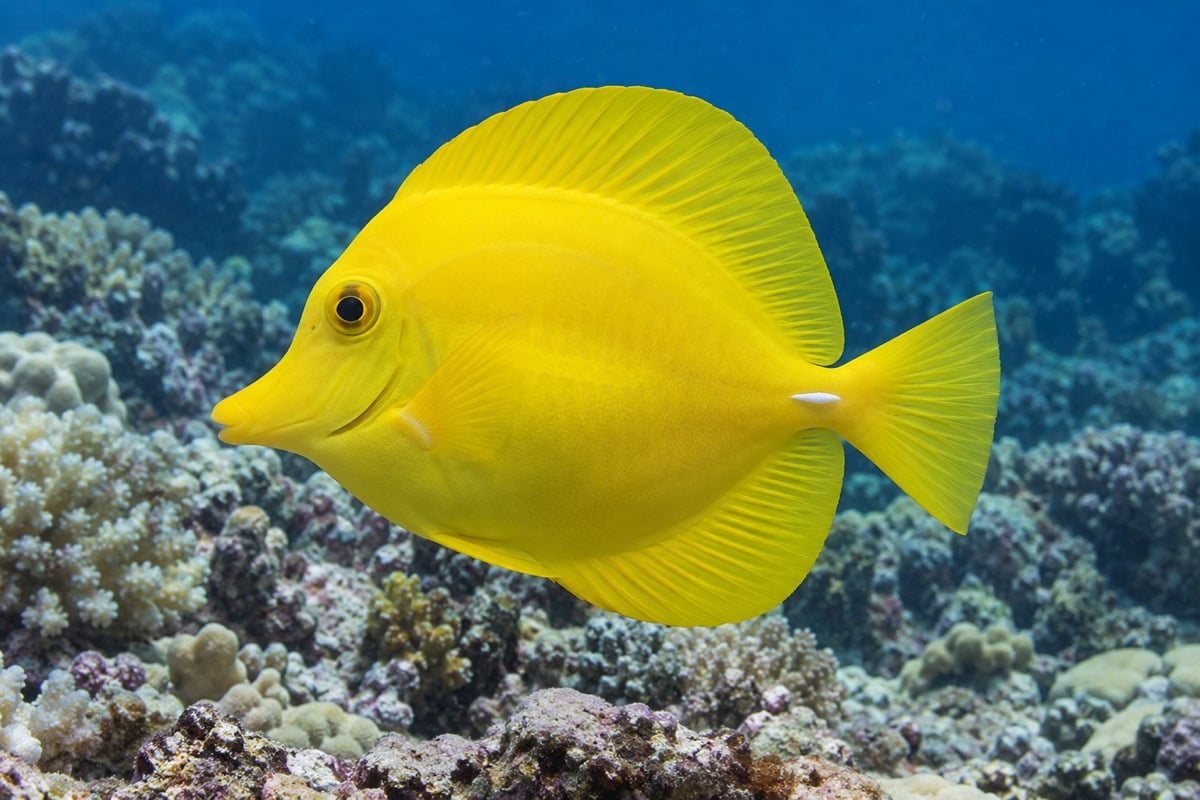
- Scientific Name: Zebrasoma flavescens
- Habitat: Coral reefs
- Size: About 15–20 cm (6–8 in) long
- Diet: Mostly algae
The yellow tang has a flattened, oval body and a small projecting snout. Its bright yellow color makes it easy to pick out against a reef, where it spends much of its time grazing algae. Near the base of the tail is a sharp white spine, a defensive feature shared with other surgeonfishes. Its color becomes duller at night. By cropping algae, yellow tangs take part in the constant grazing that helps shape reef communities.
7. Yellow Warbler (Northern Yellow Warbler)
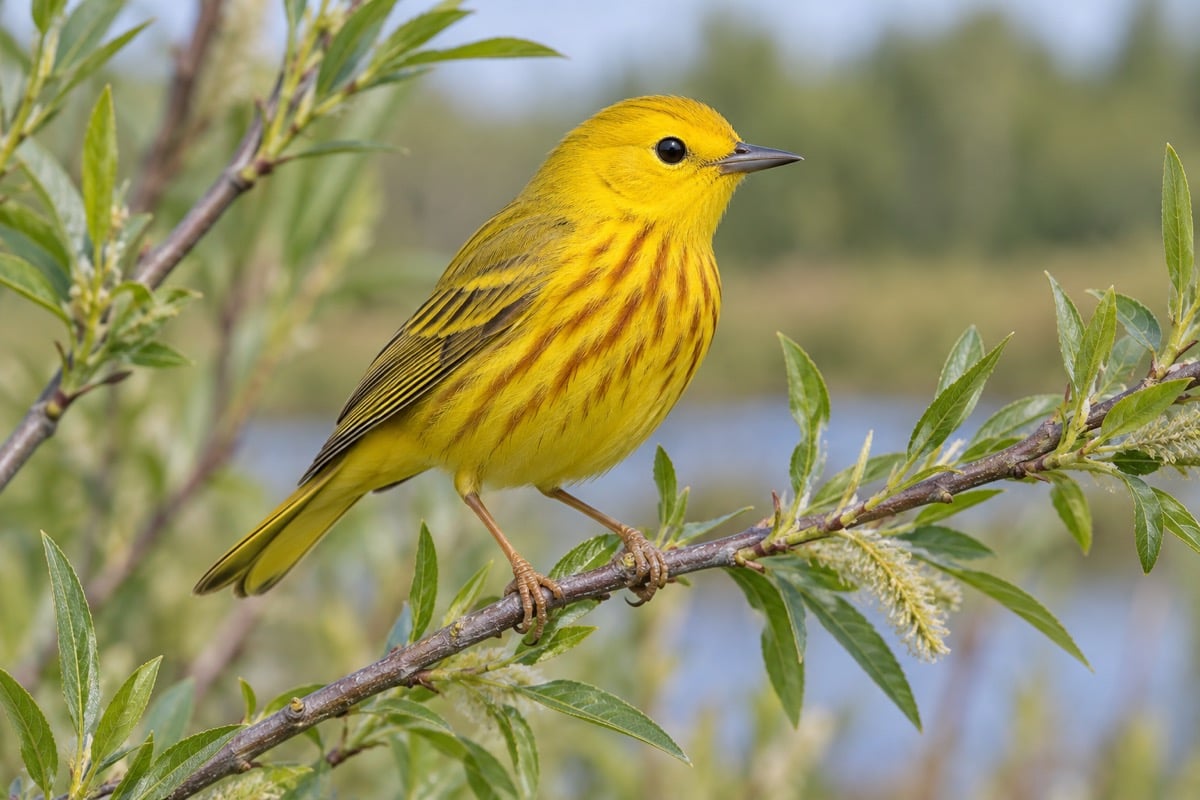
- Scientific Name: Setophaga aestiva
- Habitat: Willow thickets, wet woodland and shrubby edges
- Size: About 12–13 cm (4.7–5.1 in) long
- Diet: Mostly insects
The northern yellow warbler is a small songbird with a clear yellow face and dark, beadlike eyes. Breeding males have fine chestnut streaks across the chest, while females are usually less strongly marked. It searches leaves and twigs for insects, often in damp thickets near water. Its sweet, whistled song is a familiar summer sound across much of North America. The simple yellow face helps separate it from warblers with more complicated head patterns.
8. Yellow-backed Duiker
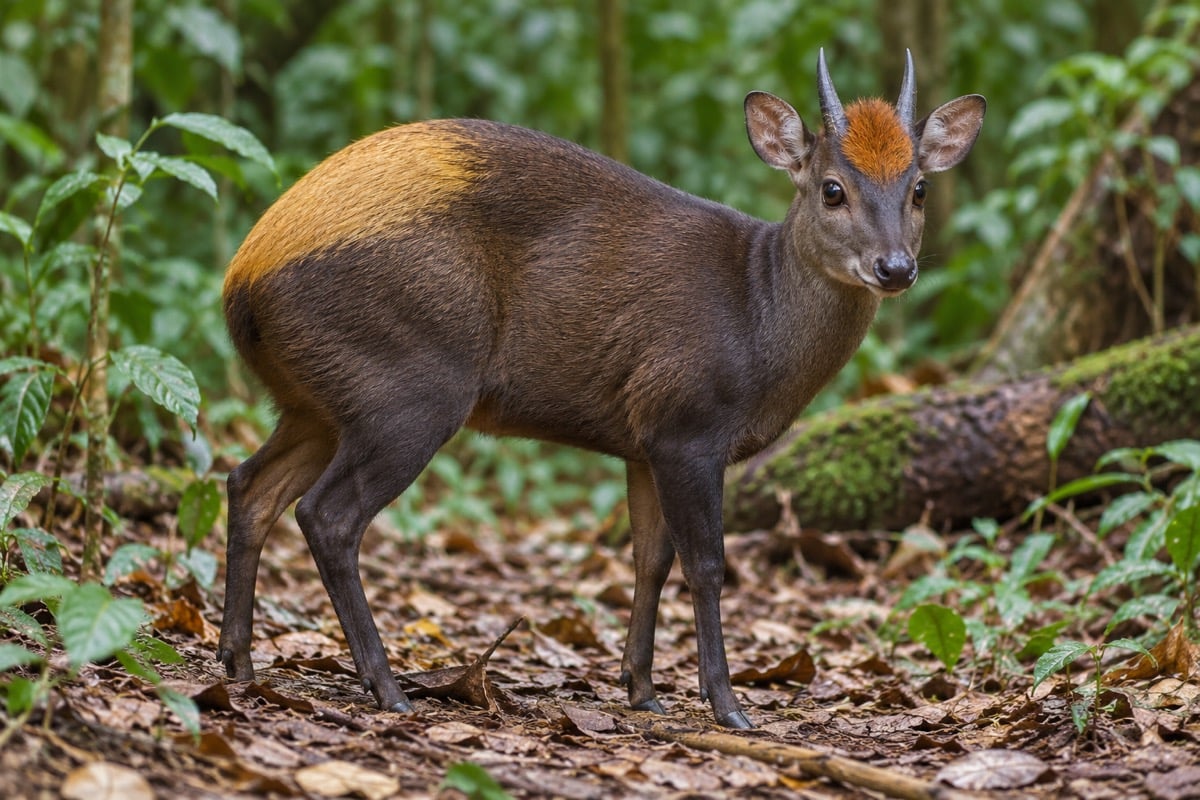
- Scientific Name: Cephalophus silvicultor
- Habitat: Dense tropical forest
- Size: Body about 115–145 cm (45–57 in) long
- Diet: Mostly fallen fruit, with leaves, seeds and occasional animal food
The yellow-backed duiker is a forest antelope with a heavy, rounded body and a bright patch of yellow hair on its back. That patch stands out against an otherwise dark coat. It searches the forest floor for fallen fruit and other food, using a flexible muzzle to investigate. Its sturdy build helps it move through thick vegetation. Both males and females have short horns, which can be partly hidden by a tuft of forehead hair.
9. Yellow-bellied Marmot
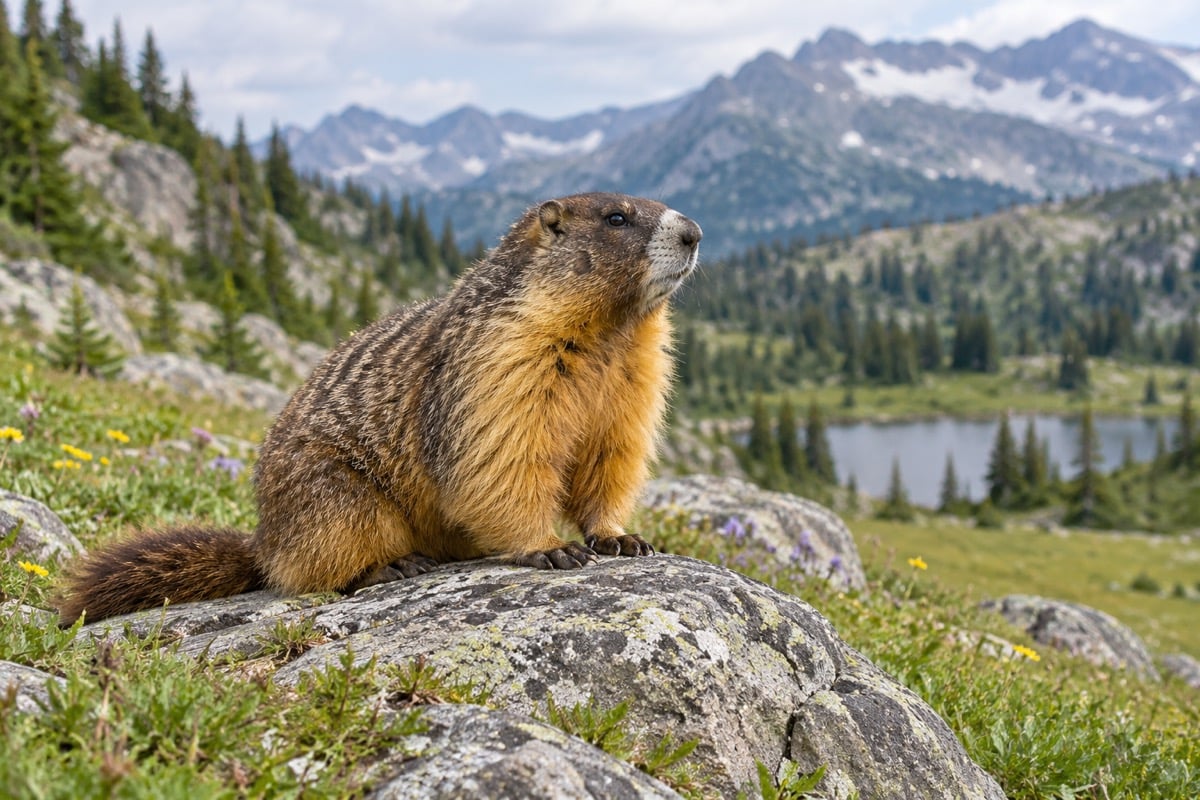
- Scientific Name: Marmota flaviventris
- Habitat: Open meadows, rocky slopes and nearby burrows
- Size: About 47–70 cm (18.5–28 in) including the tail
- Diet: Grasses, flowering plants, seeds and other vegetation
A yellow-bellied marmot is a large ground squirrel with a sturdy body and a warm yellowish or russet underside. Rocks make useful lookout points close to the meadows where it feeds. Its active season is shaped by the coming winter. Marmots build up fat reserves and spend a long period hibernating in sheltered burrows. When danger appears above ground, alarm calls can warn nearby animals. Groups may share a network of burrows, although some individuals live in smaller or more isolated groups.
10. Yellow-bellied Sapsucker
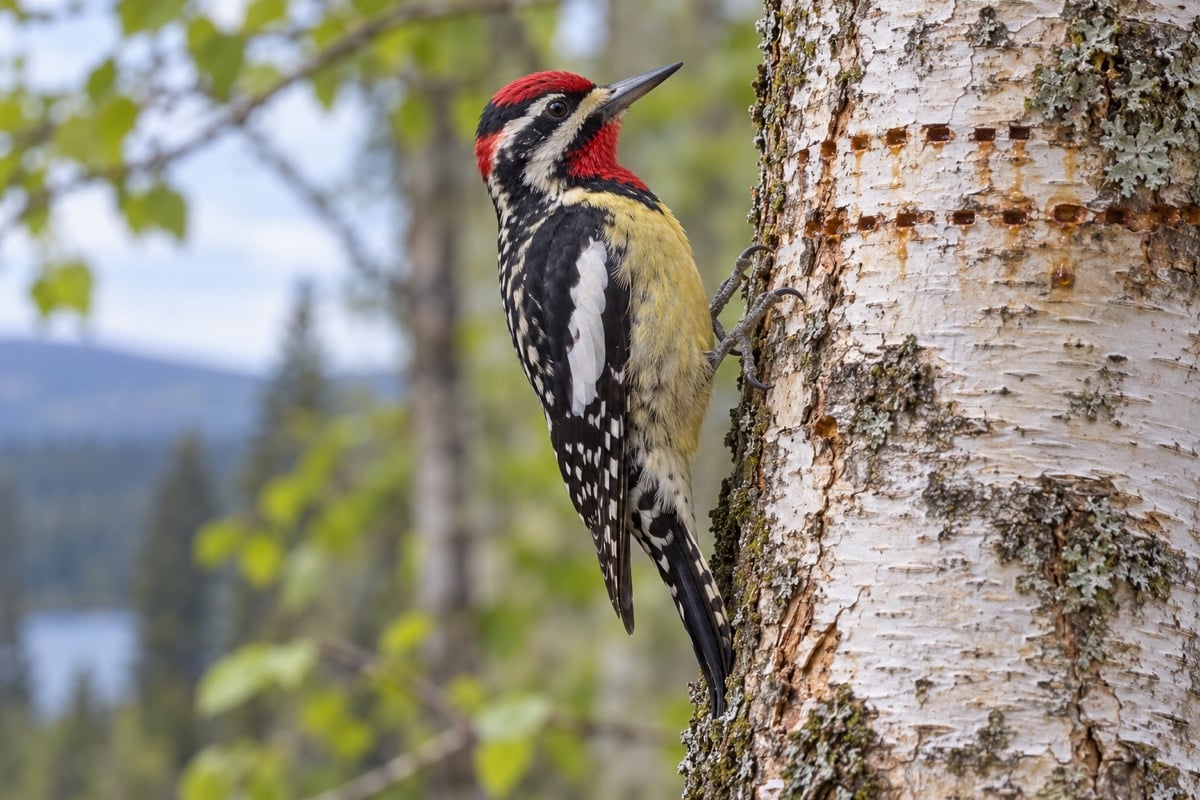
- Scientific Name: Sphyrapicus varius
- Habitat: Deciduous and mixed forest
- Size: About 20–23 cm (8–9 in) long
- Diet: Tree sap, insects and fruit
Rows of small holes in a tree trunk may be the work of a yellow-bellied sapsucker. This woodpecker drills sap wells and returns to drink the liquid that collects there. Insects attracted to the sap provide another meal. Males have red on both the forehead and throat, while females have a pale throat. A strong white wing stripe helps identify either sex. Other birds and small animals sometimes benefit from the wells it makes.
11. Yellow-bellied Sea Snake
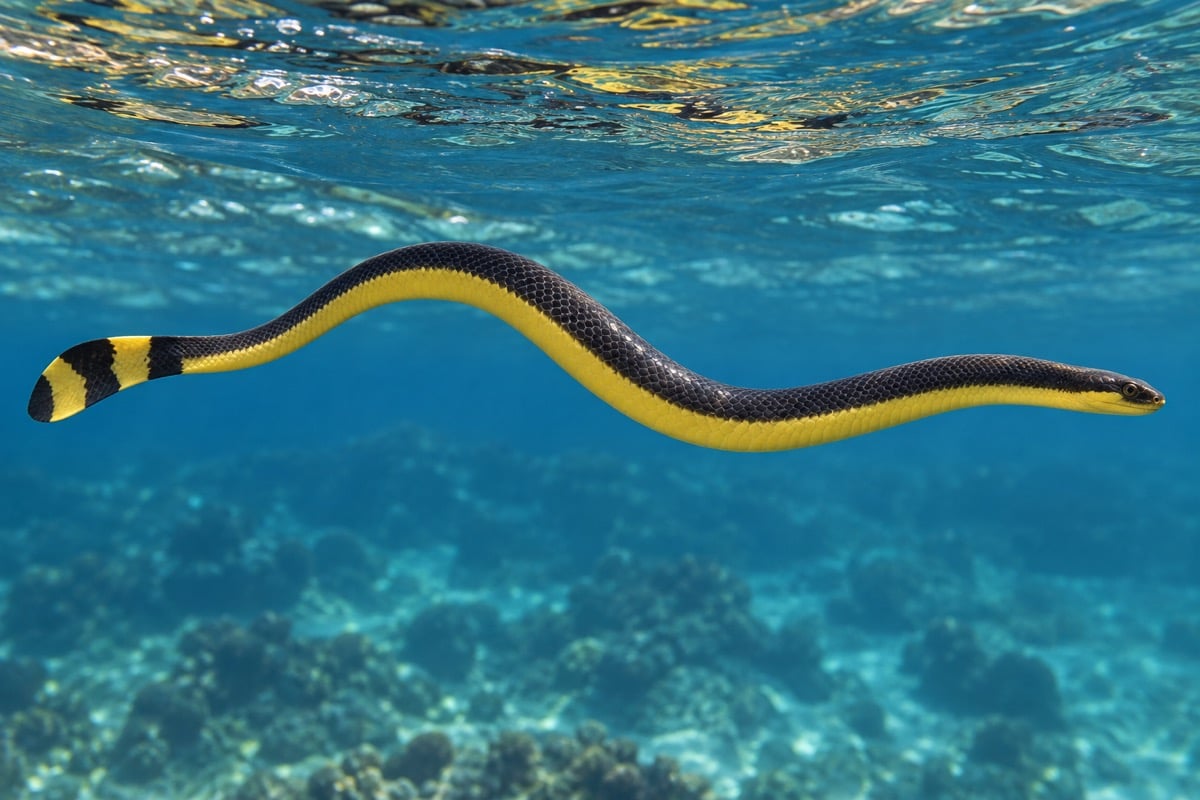
- Scientific Name: Hydrophis platurus
- Habitat: Open ocean and warm coastal waters
- Size: Females up to about 1.1 m (3.6 ft); males usually smaller
- Diet: Small fish
The yellow-bellied sea snake has a dark back, a yellow underside and a flattened tail that works as a paddle. It spends its life at sea, often floating near the surface where small fish gather. Unlike snakes that must return to land to lay eggs, it gives birth to live young in the water. Its striking pattern can make it recognizable at a glance. Ocean currents can carry these snakes far from shore.
12. Yellow-bellied Slider
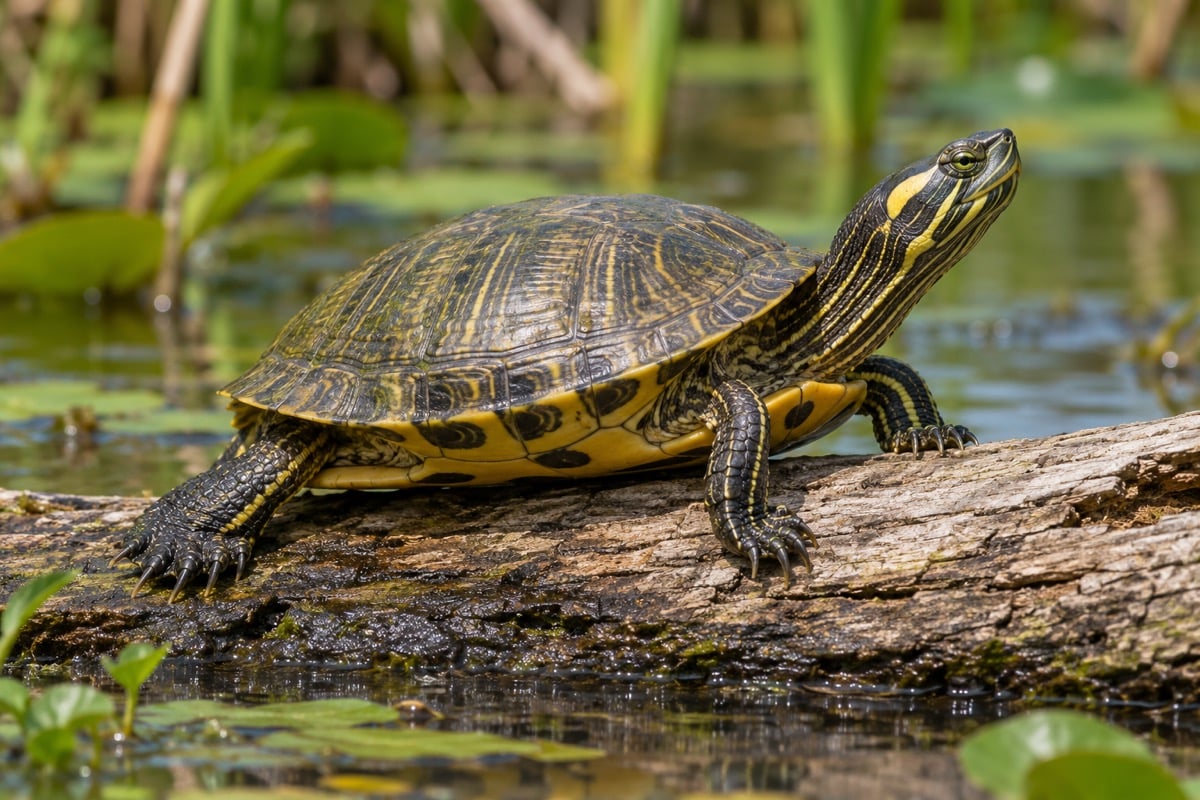
- Scientific Name: Trachemys scripta scripta
- Habitat: Ponds, lakes, wetlands and slow rivers
- Size: Shell about 13–33 cm (5–13 in), with females larger
- Diet: Aquatic plants, insects, snails and other small animals
A broad yellow patch behind the eye helps distinguish the yellow-bellied slider from its red-eared relative. It often climbs onto a sunny log to warm up, sometimes sharing the perch with several other turtles. At the first sign of trouble, it can slide back into the water. Young sliders eat plenty of animal food, while plants become more important as they grow. Females leave the water to bury their eggs on land.
13. Yellow-bellied Weasel
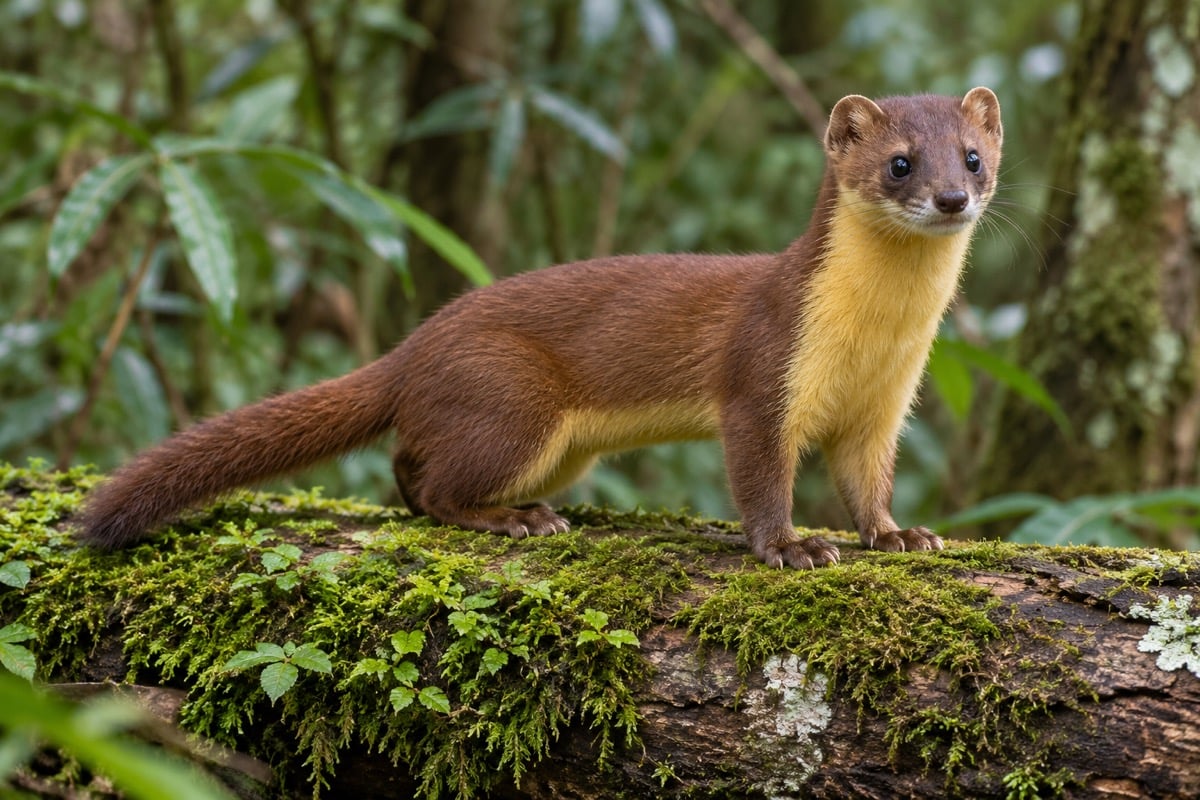
- Scientific Name: Mustela kathiah
- Habitat: Forests and wooded mountain habitats
- Size: Body about 25–27 cm (10–11 in), excluding the tail
- Diet: Rodents, birds and other small animals
The yellow-bellied weasel has a dark brown back and a much lighter, yellowish underside. Its long, narrow body and short legs allow it to investigate tight spaces while hunting. A pointed face and alert eyes give it the familiar weasel appearance, though its colors are distinctive. It lives in wooded parts of Asia, including mountain regions. Small mammals are important prey, and its body shape helps it follow them through cover.
14. Yellow-billed Cuckoo
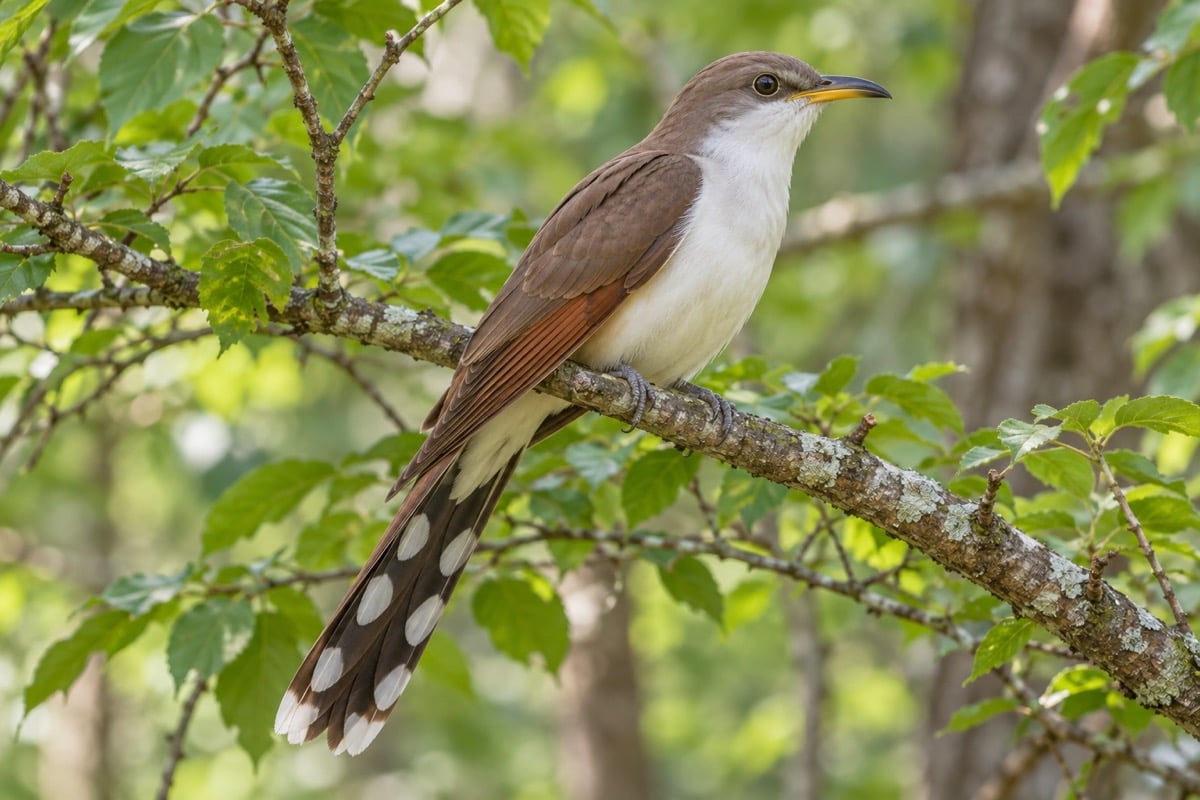
- Scientific Name: Coccyzus americanus
- Habitat: Woodland, dense thickets and riverside forest
- Size: About 30 cm (12 in) long
- Diet: Large insects, especially caterpillars, with fruit and other small prey
The yellow-billed cuckoo often stays hidden among leaves, where its brown back and white underside are surprisingly unobtrusive. Its long tail shows bold white spots underneath, and the lower half of its curved bill is yellow. Caterpillars make up an important part of its diet, including hairy kinds that many birds avoid. It moves deliberately through the branches in search of prey. Its knocking calls can reveal a bird that is otherwise difficult to spot.
15. Yellow-billed Duck
- Scientific Name: Anas undulata
- Habitat: Freshwater lakes, ponds and marshes
- Size: About 51–58 cm (20–23 in) long
- Diet: Mostly plant material, with small aquatic animals
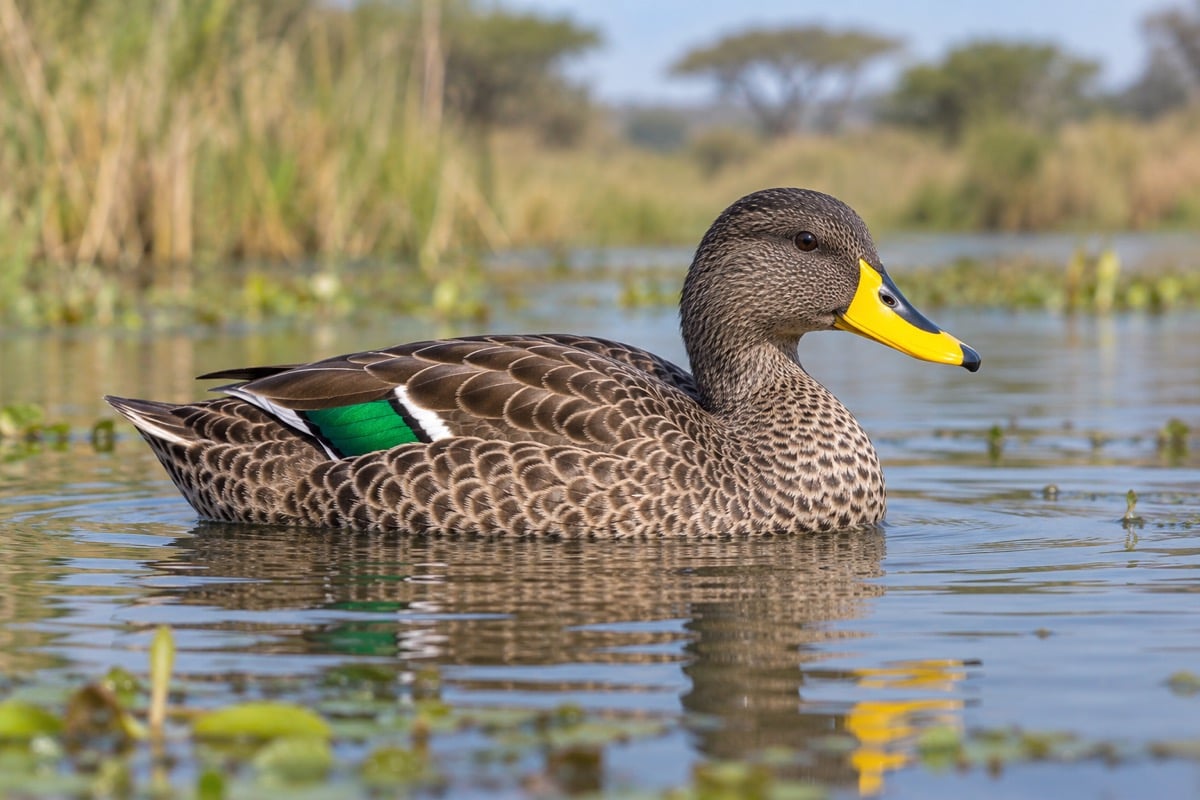
The yellow-billed duck wears mottled gray-brown plumage, but its bright bill makes a strong impression. A dark marking runs along the middle of the yellow bill. Males and females look similar, unlike many duck species with sharply different plumage. It feeds by dabbling in shallow water, often becoming especially active toward evening. Outside the breeding season, birds may gather in flocks and move between wetlands as the availability of water changes.
16. Yellow-billed Hornbill
- Scientific Name: Tockus leucomelas
- Habitat: Savannas, open woodland and dry thorn scrub
- Size: About 40 cm (16 in) long
- Diet: Insects, other small animals, fruit and seeds
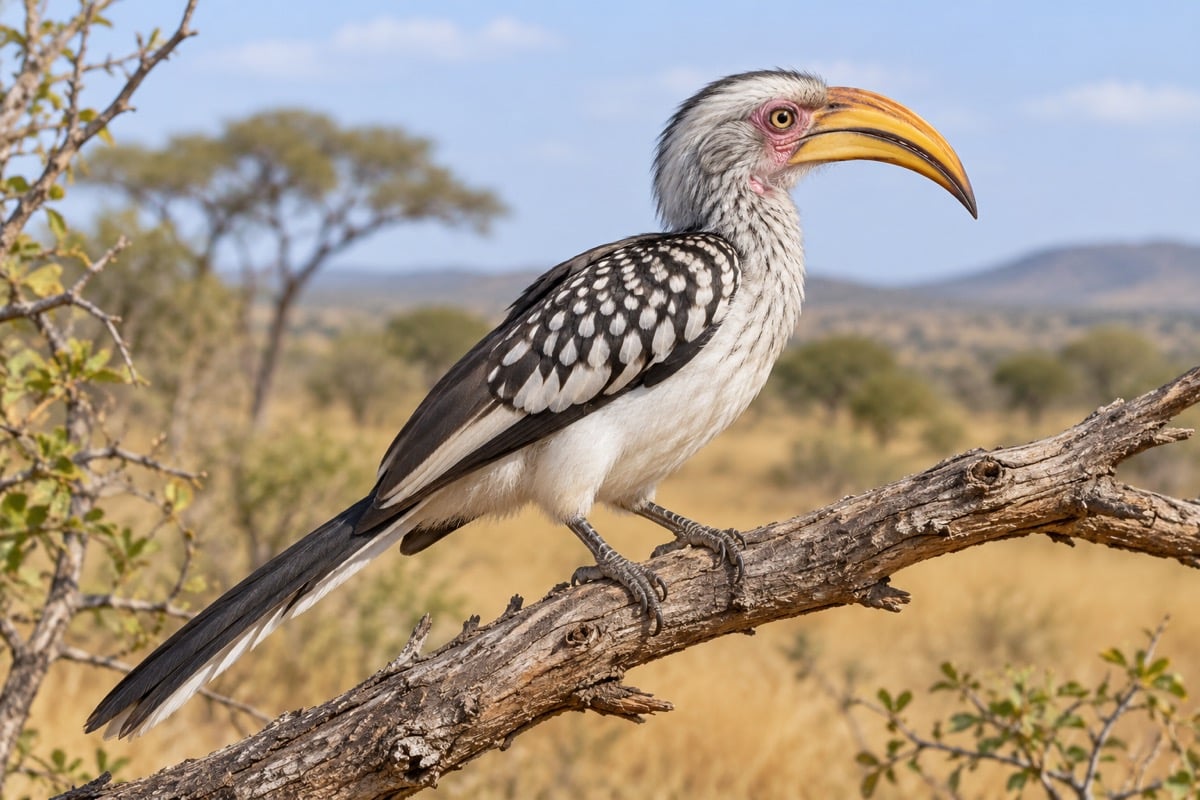
The southern yellow-billed hornbill has a large curved bill, a gray head and black wings dotted with white. It spends much of its feeding time on the ground, picking up insects and other small prey. Its bill may look cumbersome, but it is an effective tool for grabbing food. Pairs or small family groups move through dry woodland and savanna. The bright yellow bill is especially useful for recognizing it within its southern African range.
17. Yellow-billed Loon
- Scientific Name: Gavia adamsii
- Habitat: Tundra lakes during breeding; coastal seas in winter
- Size: About 77–92 cm (30–36 in) long
- Diet: Mostly fish
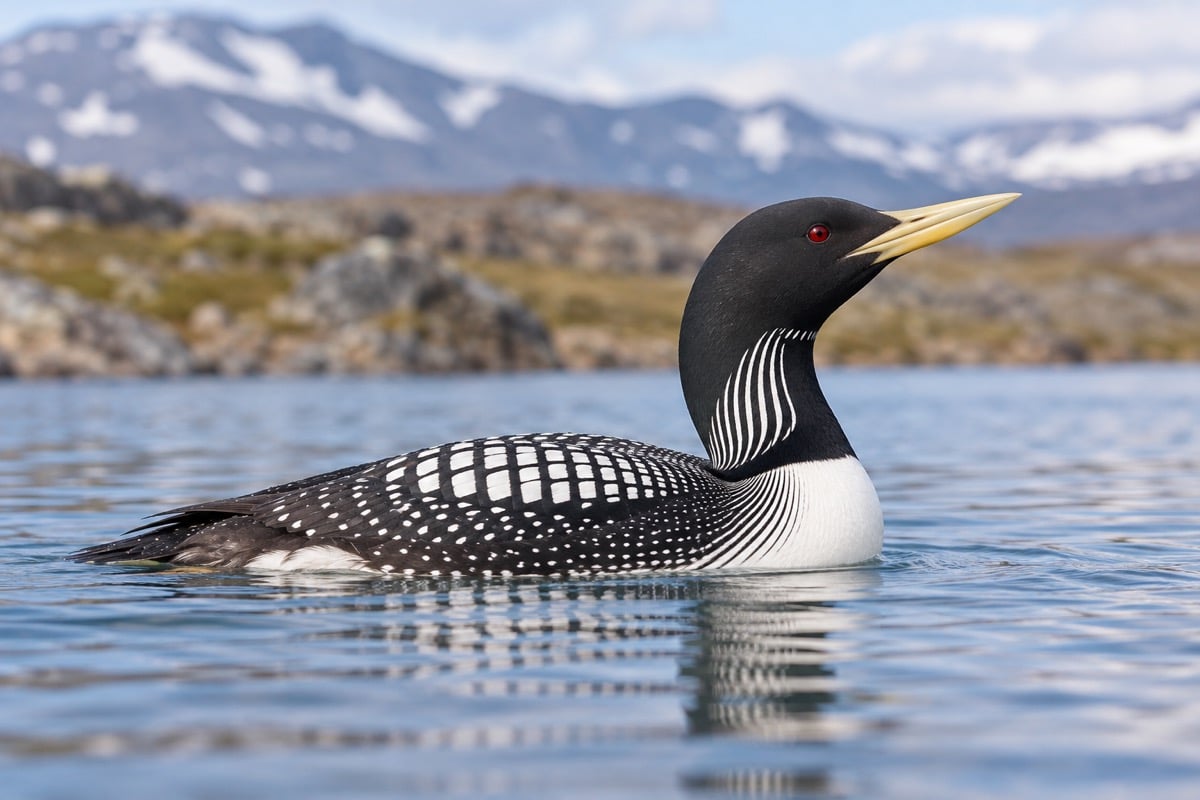
The yellow-billed loon is a large diving bird with a heavy, pale bill that often points slightly upward. Breeding adults have a black head and a striking black-and-white patterned back. Powerful feet propel it underwater as it pursues fish. It nests beside remote northern lakes, placing its eggs close to the water. When winter approaches, it moves to the sea, exchanging its bold breeding plumage for a softer gray-and-white appearance.
18. Yellow-billed Magpie
- Scientific Name: Pica nuttalli
- Habitat: Oak woodland, pastures and open valleys
- Size: About 43–54 cm (17–21 in) long, including the tail
- Diet: Insects, seeds, carrion and small animals
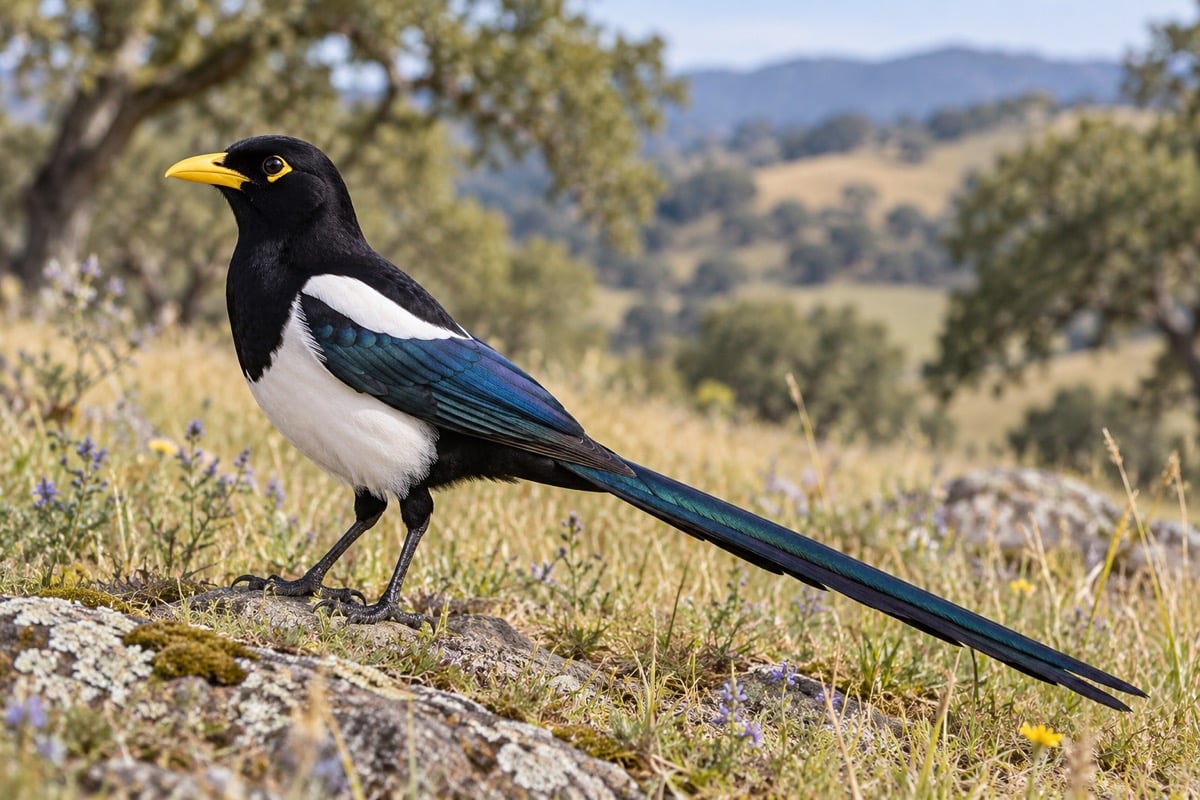
The yellow-billed magpie is a California bird with a long tail and bold black-and-white plumage. Blue and green reflections appear on its dark wings when the light catches them. A yellow bill and small yellow patch beside the eye distinguish it from other magpies. It often walks across open ground searching for food, keeping close to trees that offer shelter. Social groups can be conspicuous, especially when several birds call or fly together.
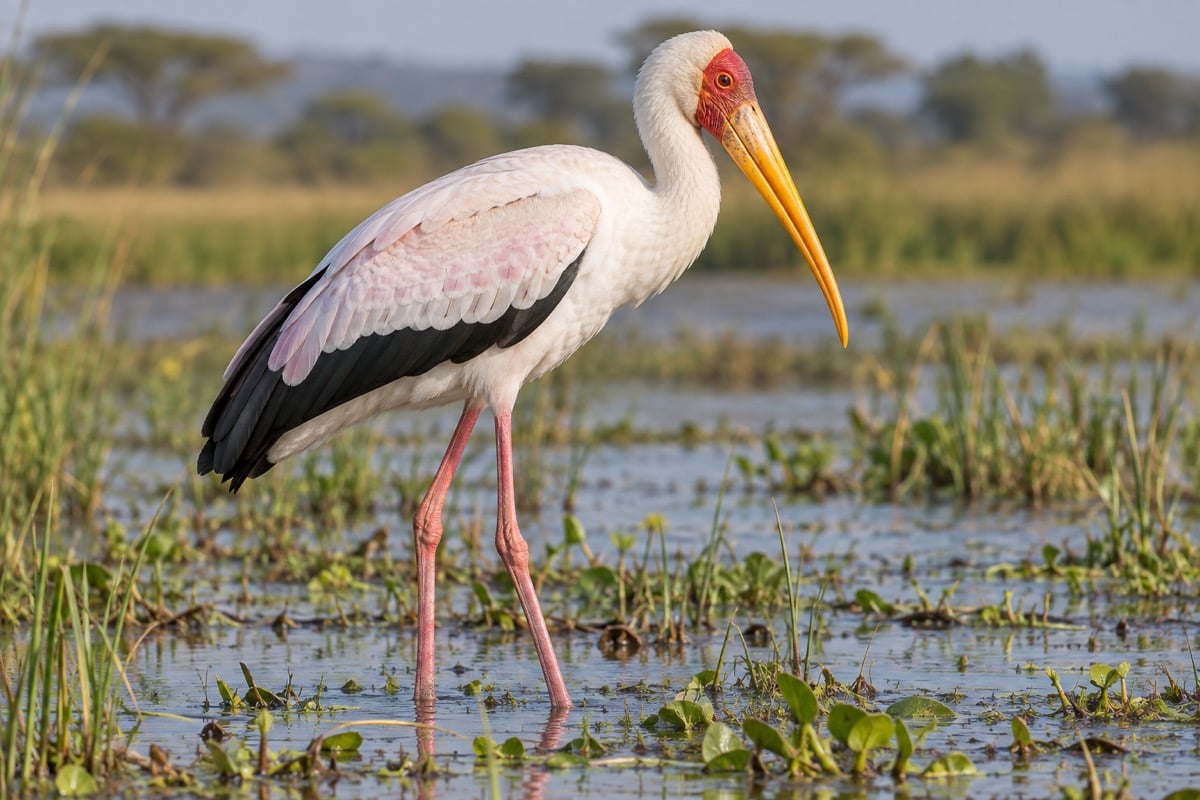
19. Yellow-billed Stork
- Scientific Name: Mycteria ibis
- Habitat: Shallow wetlands, marshes, lakes and river margins
- Size: Around 1 m (3.3 ft) long
- Diet: Fish, crustaceans, frogs and aquatic insects
The yellow-billed stork wades slowly through shallow water with its long bill partly open. When prey touches the bill, it snaps shut, allowing the bird to feed even when the water is cloudy. Adults have white plumage, black flight feathers and a red face. A pinkish wash can appear during the breeding season. Like other storks, it flies with its neck extended, making a very different silhouette from a heron in flight.
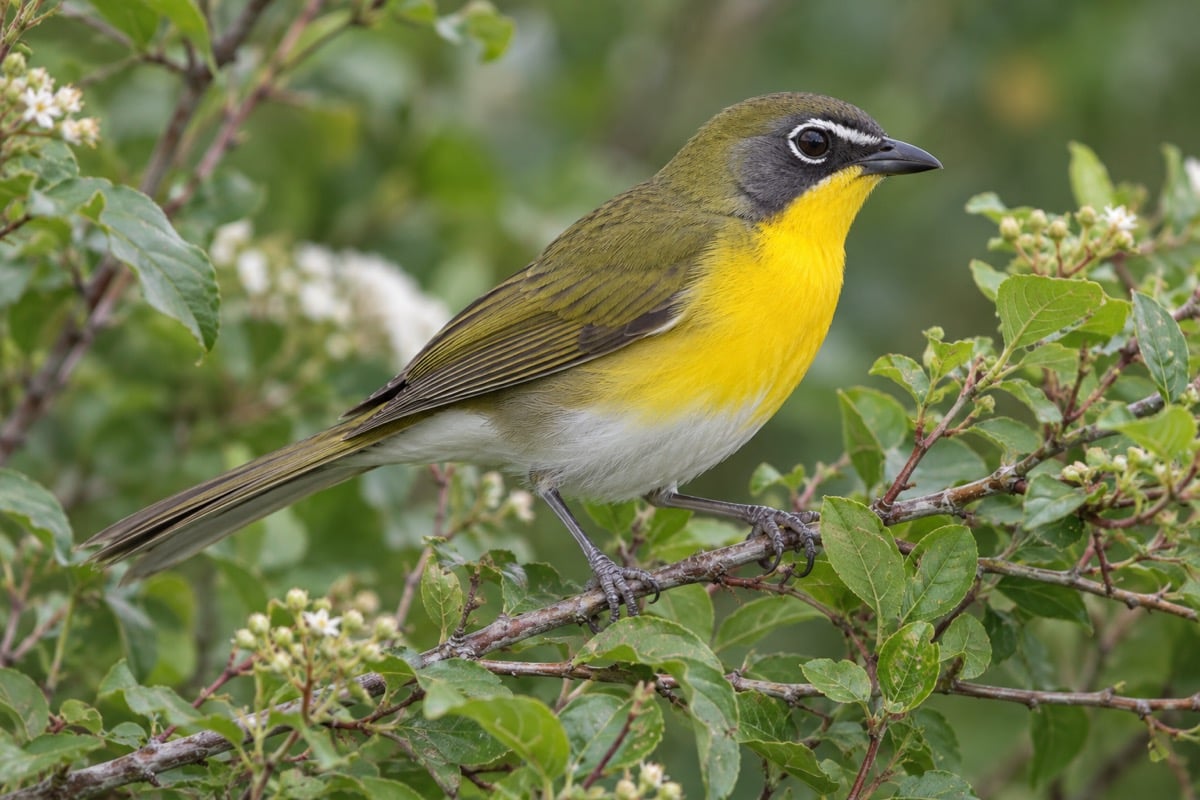
20. Yellow-breasted Chat
- Scientific Name: Icteria virens
- Habitat: Dense thickets, brushy fields and woodland edges
- Size: About 18 cm (7 in) long
- Diet: Insects and fruit
The yellow-breasted chat has a bright yellow chest, olive back and bold white markings around the eyes. Its thick bill and relatively large size set it apart from many small yellow songbirds. It usually stays inside tangled vegetation, where it can be difficult to see. A surprising mixture of whistles, rattles and other calls may be the first clue that one is nearby. Shrubby, overgrown spaces provide the cover it prefers.
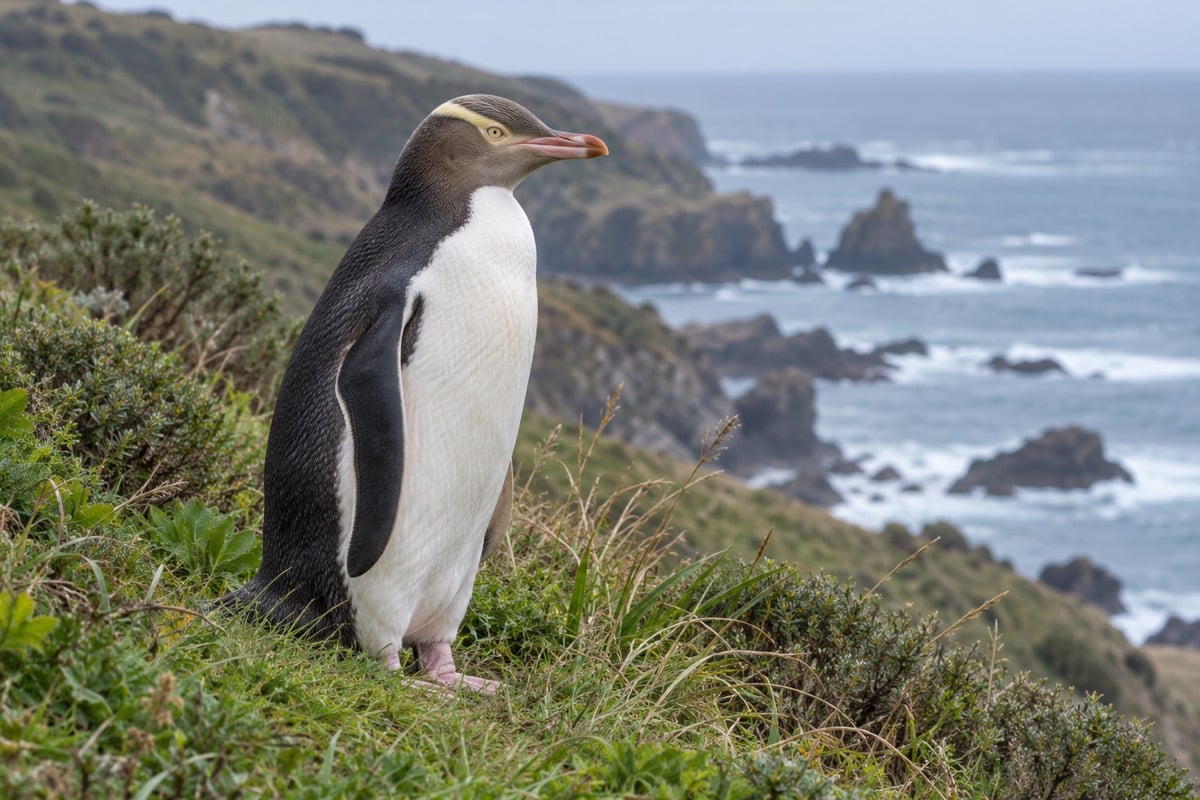
21. Yellow-eyed Penguin
- Scientific Name: Megadyptes antipodes
- Habitat: Coastal nesting vegetation and nearby marine feeding grounds
- Size: About 65 cm (26 in) tall
- Diet: Fish and squid
The yellow-eyed penguin, also known as hoiho, has pale yellow eyes and a yellow band running around the back of its head. It nests in coastal vegetation rather than on Antarctic sea ice. At sea, it often searches for food near the seabed. On land, sheltered nesting places and an undisturbed route to the water are important. Introduced predators, disease and changes in the marine environment all create challenges for this distinctive New Zealand bird.
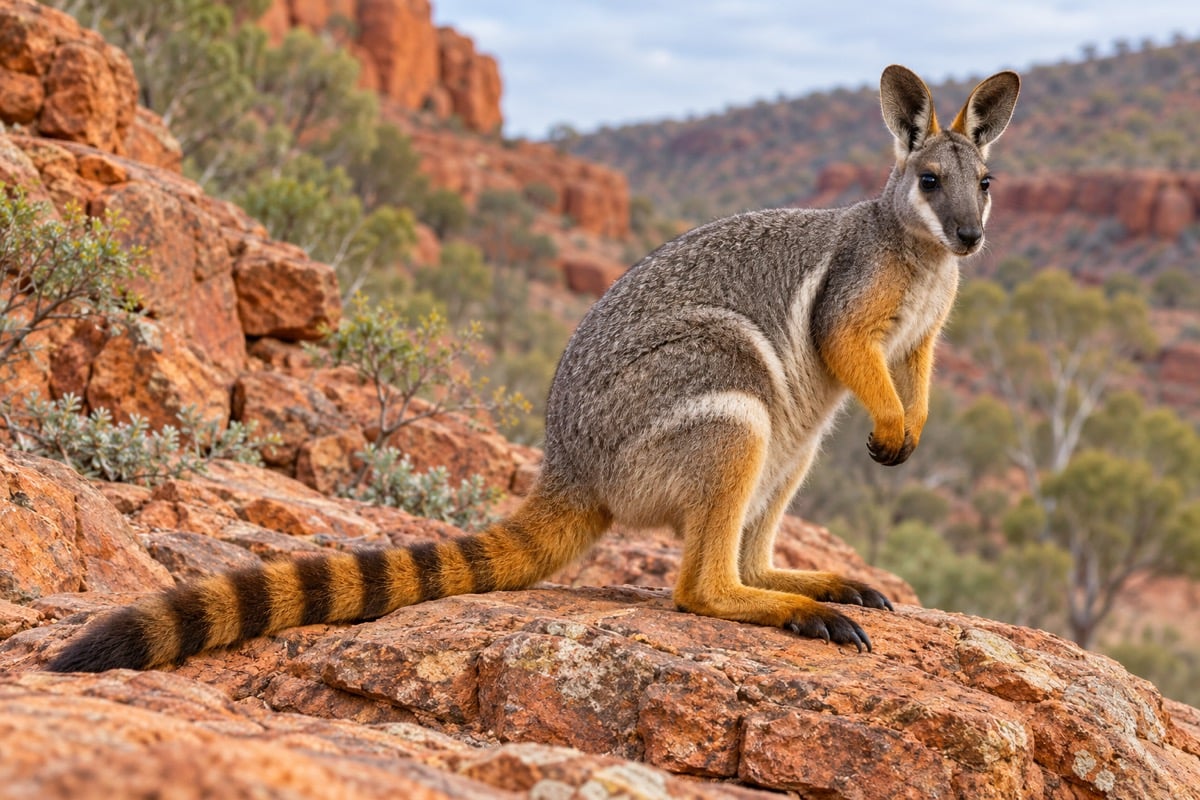
22. Yellow-footed Rock-wallaby
- Scientific Name: Petrogale xanthopus
- Habitat: Rocky outcrops, cliffs and dry scrub
- Size: Body about 48–65 cm (19–26 in), excluding the tail
- Diet: Grasses and leaves
The yellow-footed rock-wallaby is one of the most colorful wallabies, with golden limbs, pale side stripes and a boldly banded tail. Thick foot pads help it grip uneven rock as it moves between ledges. Crevices offer shade and shelter in its dry home. Grasses are important when conditions are favorable, while fallen leaves become more useful during drought. Its long tail provides balance during the careful leaps that rocky terrain demands.
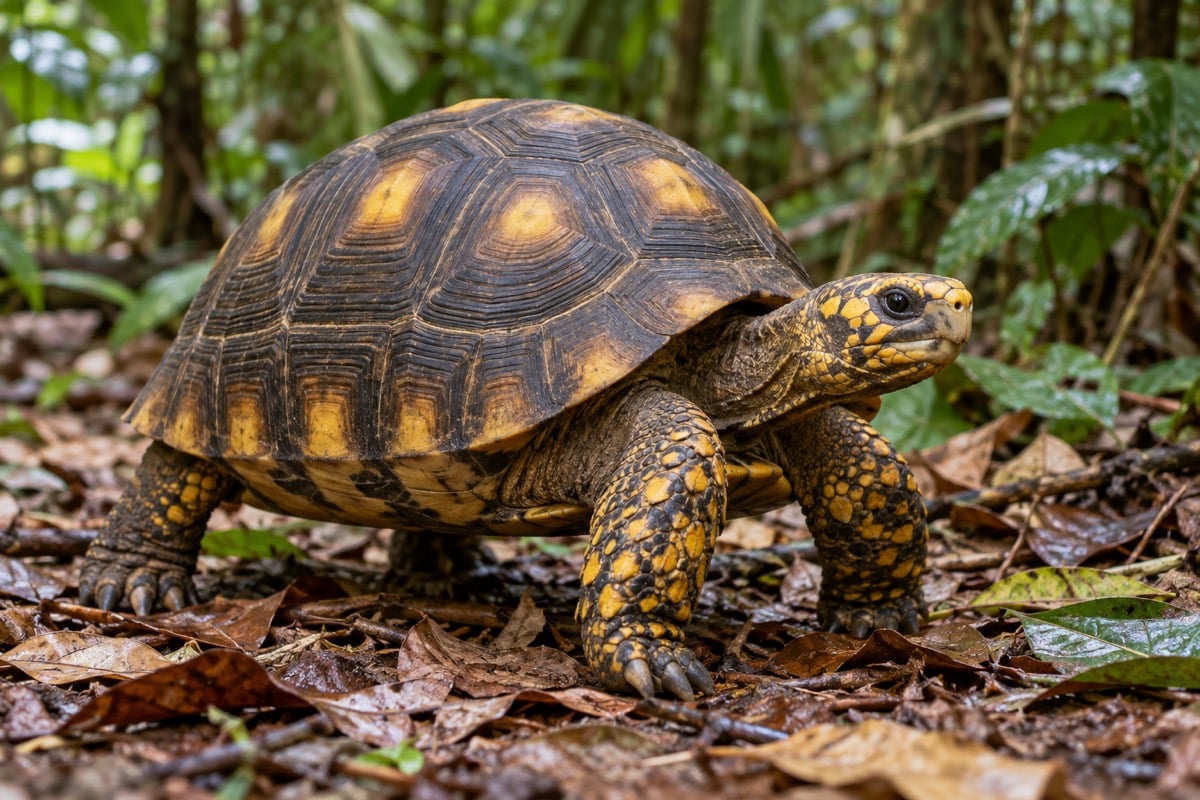
23. Yellow-footed Tortoise
- Scientific Name: Chelonoidis denticulatus
- Habitat: Rainforest and other humid forest
- Size: Often around 40 cm (16 in) in shell length; much larger individuals occur
- Diet: Fruit, flowers, seeds, invertebrates and carrion
The yellow-footed tortoise has a dark, domed shell and yellow scales on its head and legs. It walks through humid forest, where fallen fruit provides an important food source. Its sturdy, columnlike legs support a body built for life on land. Although it eats many plant foods, it also takes animal matter when available. By moving seeds away from the trees where fruit falls, it helps spread plants through the forest.
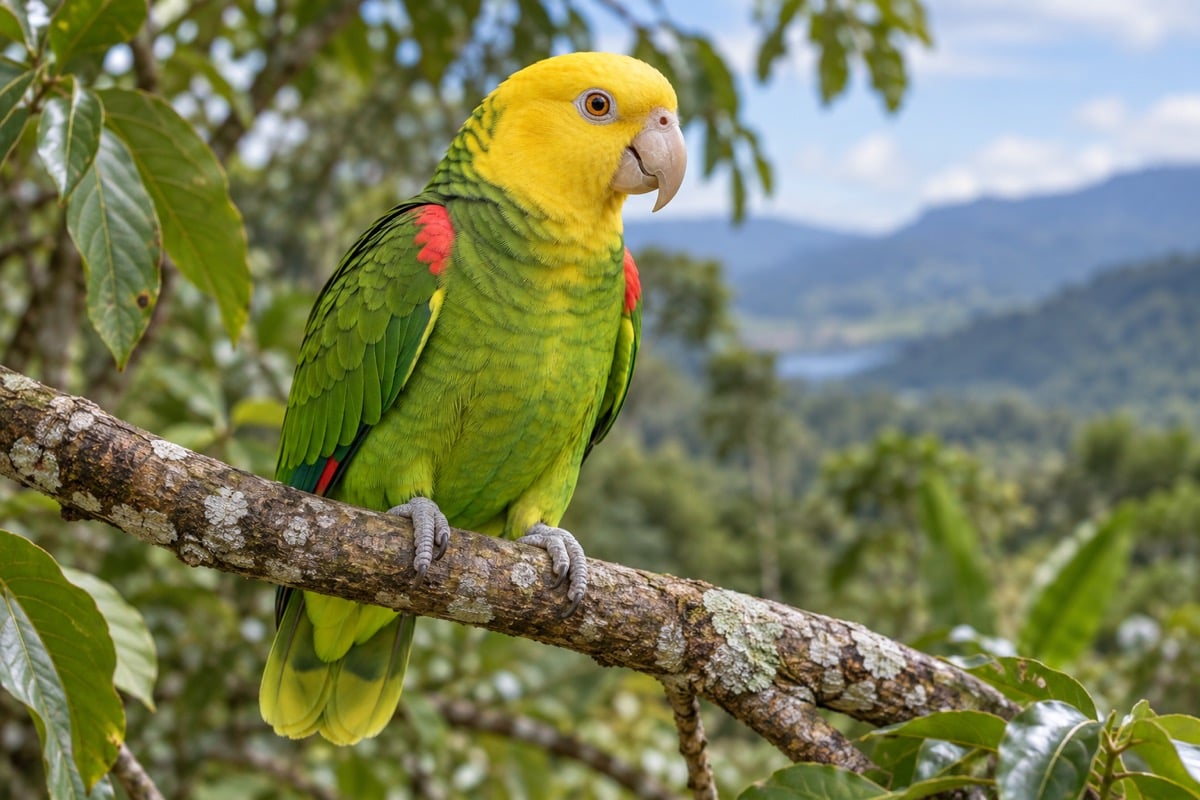
24. Yellow-headed Amazon
- Scientific Name: Amazona oratrix
- Habitat: Tropical woodland, forest edges and savannas with trees
- Size: About 38 cm (15 in) long
- Diet: Fruit, seeds, nuts and other plant foods
The yellow-headed Amazon is a stocky green parrot whose yellow head becomes more extensive as it matures. Its powerful hooked bill is useful for opening seeds and handling tough food. Like other parrots, it can hold a morsel in one foot while eating. Wild birds depend on trees for food, shelter and nesting cavities. Their bright appearance and ability to imitate sounds have made them targets for trapping, adding pressure to populations already affected by habitat loss.
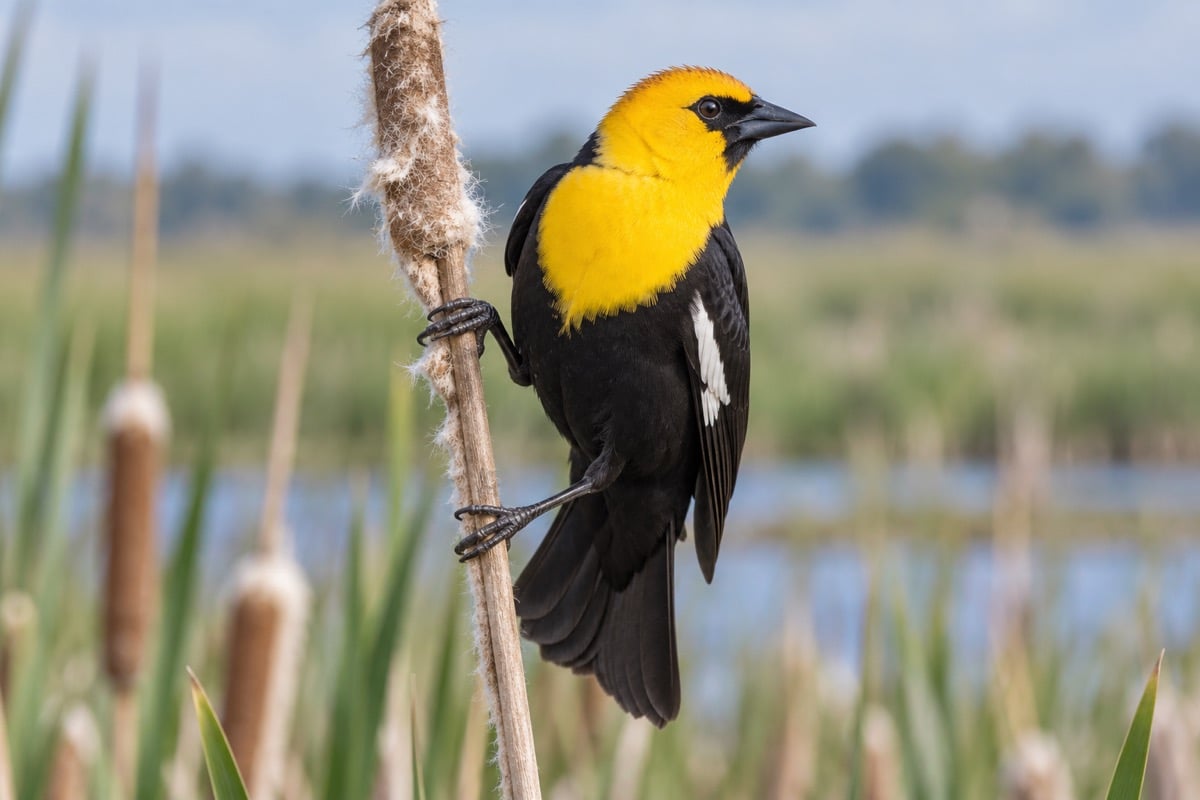
25. Yellow-headed Blackbird
- Scientific Name: Xanthocephalus xanthocephalus
- Habitat: Freshwater marshes; fields and pastures outside breeding season
- Size: About 23–24 cm (9–9.5 in) long
- Diet: Insects, seeds and grains
A male yellow-headed blackbird has a golden head and chest above a black body. White wing patches flash when it flies. Females are browner, with more subdued yellow on the front. During the breeding season, these birds gather in marshes with tall reeds and cattails. Nests are woven among the stems above water. Later in the year, flocks move into open fields, where seeds and grain become an increasingly important part of their diet.
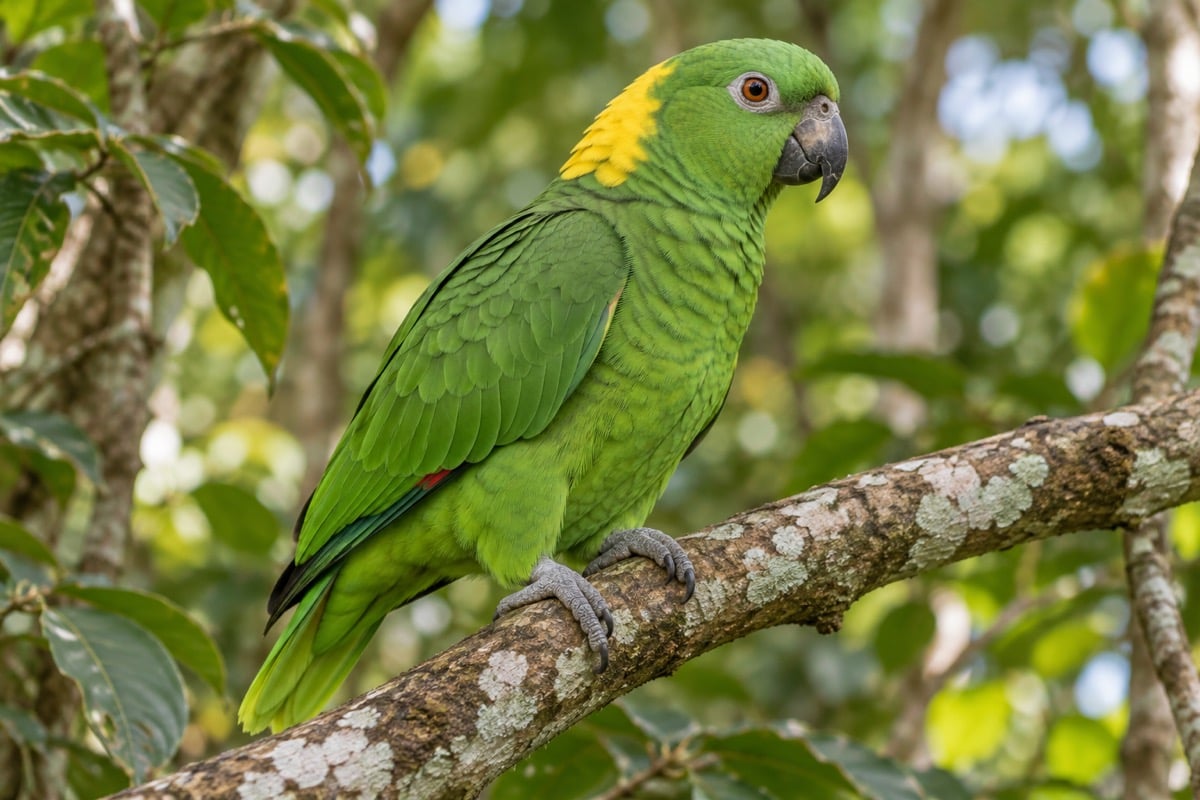
26. Yellow-naped Amazon
- Scientific Name: Amazona auropalliata
- Habitat: Dry tropical forest, woodland and mangroves
- Size: About 35 cm (14 in) long
- Diet: Seeds, nuts, berries and other fruit
The yellow-naped Amazon is mostly green, with a patch of yellow at the back of the neck. That placement helps distinguish it from other yellow-marked Amazon parrots. It searches trees for fruit and seeds, using a strong bill to handle its food. Pairs nest in existing tree cavities, so old trees are particularly valuable. Birds also gather at communal roosts, where calls and movement can make the group noticeable well before every parrot is visible.
27. Yellow-necked Mouse
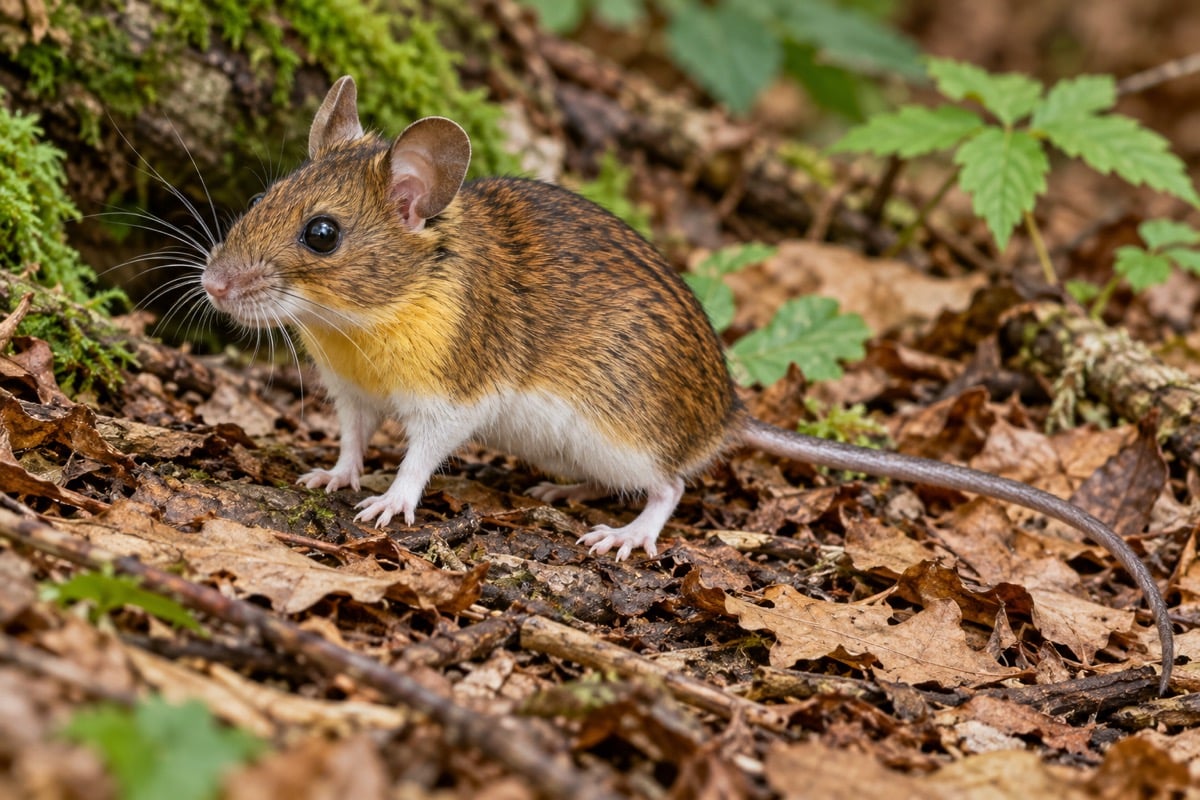
- Scientific Name: Apodemus flavicollis
- Habitat: Mature woodland, hedgerows and wooded gardens
- Size: Body about 9.5–12 cm (3.7–4.7 in), excluding the tail
- Diet: Seeds, nuts, fruit and invertebrates
A yellow-brown band across the chest gives the yellow-necked mouse its name. It otherwise resembles a wood mouse, with a brown back, white underside, large eyes and rounded ears. This agile climber searches both the ground and trees for food. Seeds and nuts can be carried into sheltered storage places. A clear view of the chest band is especially useful for identification because the two mouse species can look very similar from above.
28. Yellow-nosed Albatross
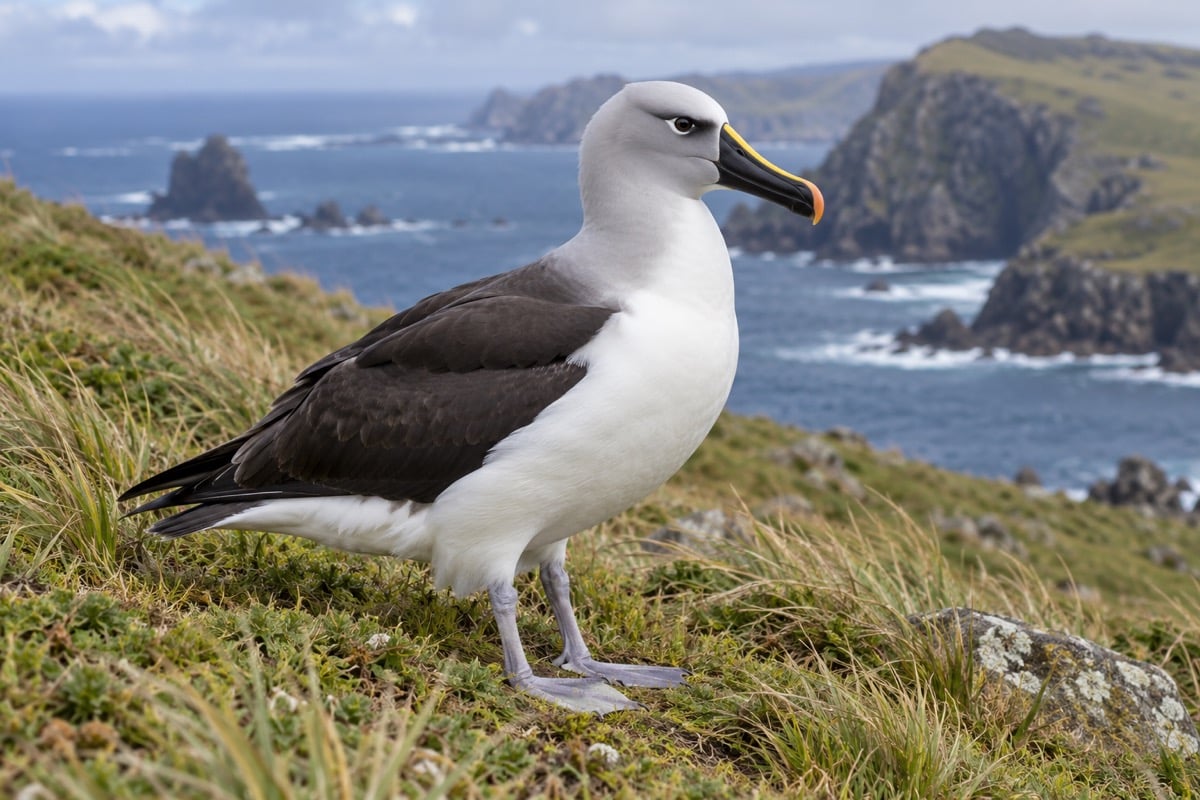
- Scientific Name: Thalassarche chlororhynchos
- Habitat: Open ocean; breeds on remote islands
- Size: About 81 cm (32 in) long
- Diet: Fish and squid, with scavenged food
The Atlantic yellow-nosed albatross has a slender black bill with a bright yellow ridge along the top. Long, narrow wings allow it to travel over the ocean while using the wind efficiently. It returns to remote islands to breed, building a nest among vegetation or on rocky ground. Fish and squid provide much of its natural food. The contrast between its pale head, white body and dark wings is especially clear when it glides past.
29. Yellow-pine Chipmunk
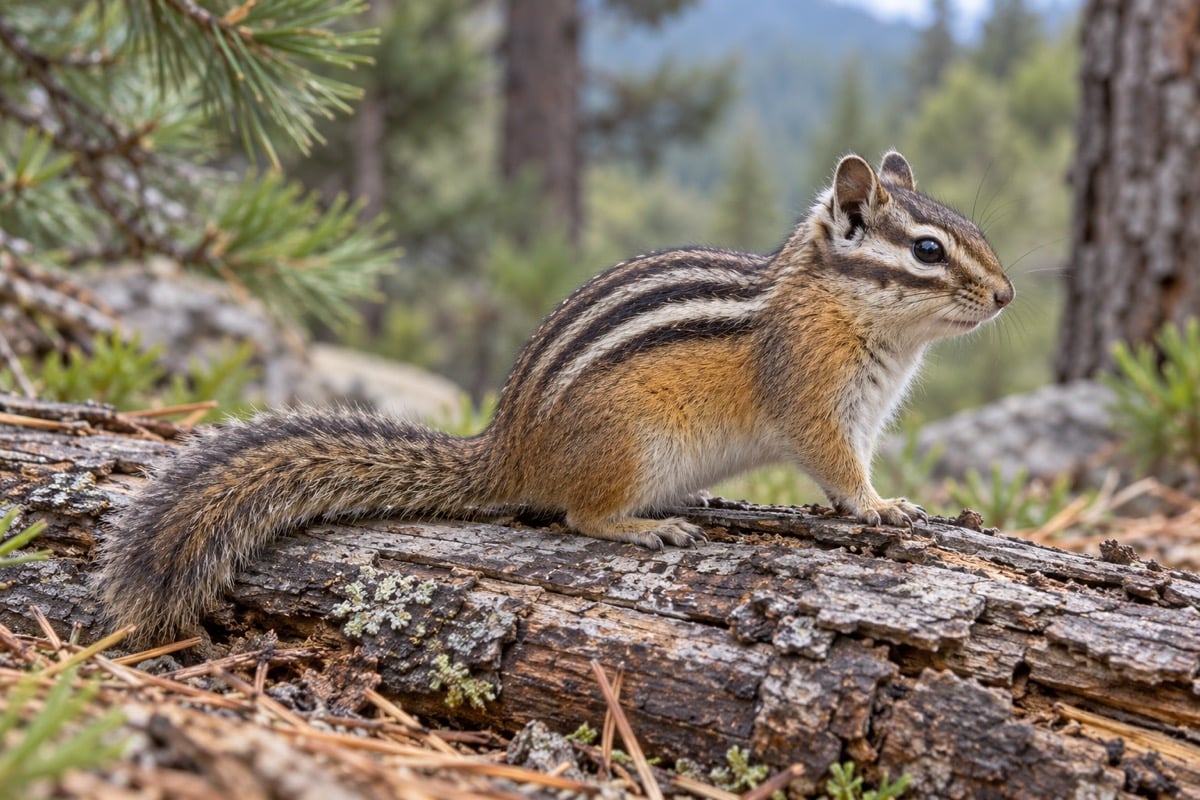
- Scientific Name: Neotamias amoenus
- Habitat: Brushy conifer forest, rocky clearings and meadows
- Size: About 18–24.5 cm (7–9.6 in), including the tail
- Diet: Seeds, fruit, fungi, plant material and small animals
The yellow-pine chipmunk is a small striped rodent with warm-colored sides and a long, furry tail. It searches the forest floor for seeds and other food, using cheek pouches to carry useful finds. Logs and rocks offer convenient places to pause and watch the surroundings. Its varied diet changes with what is available through the seasons. Although it is associated with pine country, it also uses brushy openings and other nearby habitats.
30. Yellow-rumped Warbler
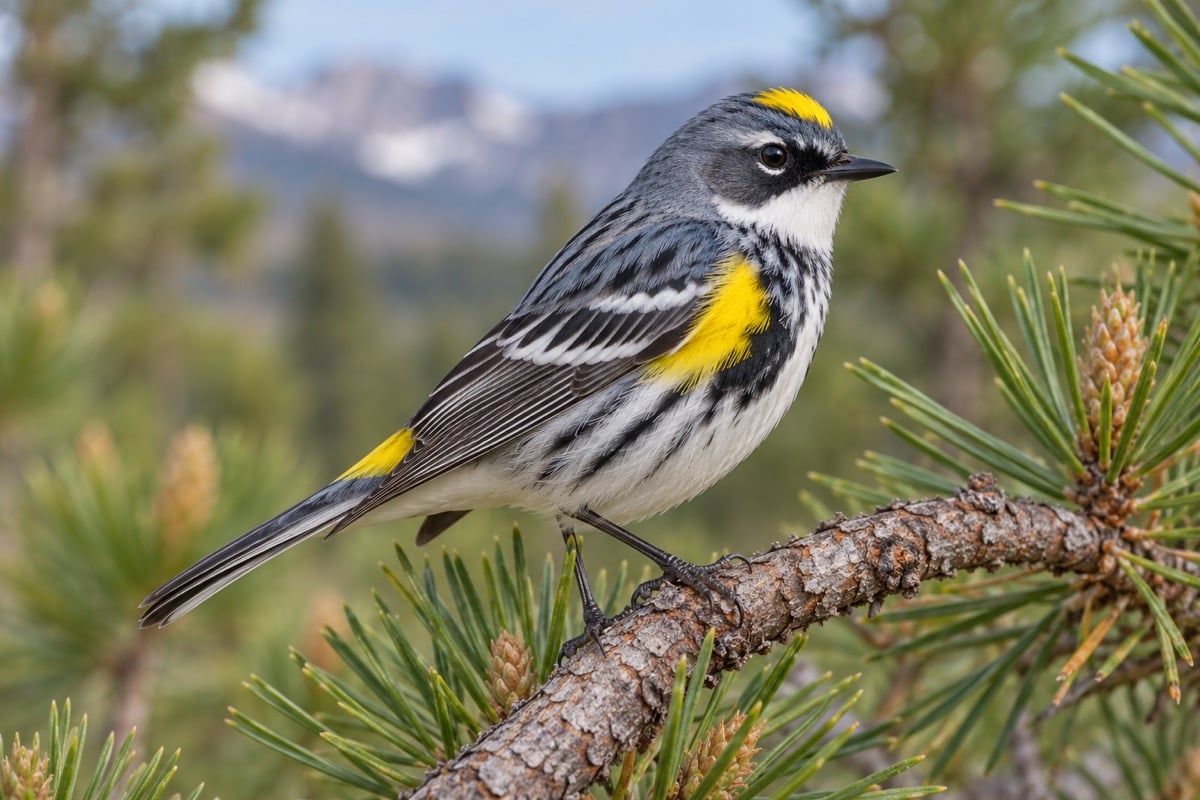
- Scientific Name: Setophaga coronata
- Habitat: Forest, woodland, scrub and gardens
- Size: About 12–14 cm (4.7–5.5 in) long
- Diet: Insects, berries and other small fruit
The yellow-rumped warbler reveals a bright patch above its tail when it turns or flies. Breeding birds can also show yellow on the crown and sides against gray, black and white plumage. It is an adaptable feeder, catching insects in several ways and switching readily to berries. Large numbers pass through many areas during migration. Winter birds are less boldly marked, but the yellow rump remains a useful clue to their identity.
31. Yellow-shouldered Blackbird
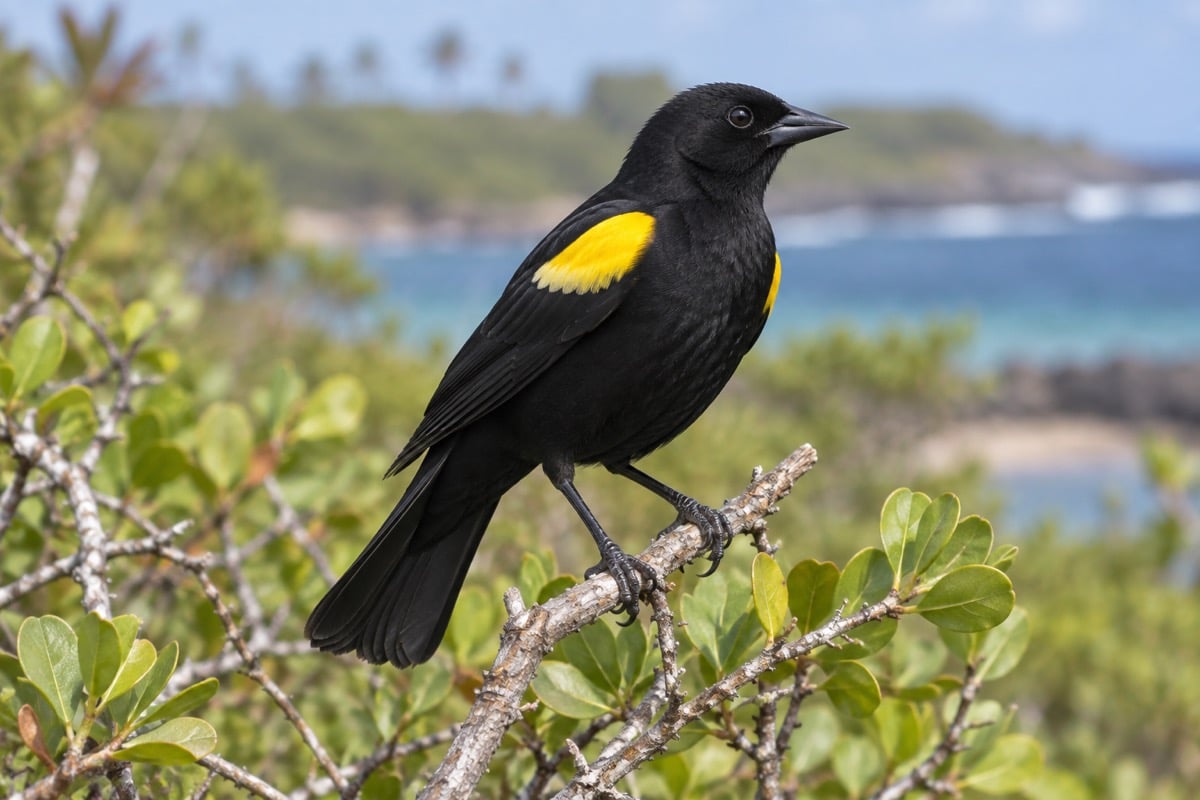
- Scientific Name: Agelaius xanthomus
- Habitat: Coastal woodland, mangroves, scrub and open country
- Size: About 20–23 cm (8–9 in) long
- Diet: Mostly insects, with fruit, seeds and other foods
The yellow-shouldered blackbird has glossy dark plumage interrupted by bright yellow patches on the wings. Both sexes share this pattern, though males are larger. Much of its feeding involves searching vegetation for insects, which are especially important for growing chicks. It is found only in Puerto Rico and nearby islands, giving it a much smaller range than many other blackbirds. A bird can partly hide its yellow patches when the wings are folded.
32. Yellow-spotted Lizard
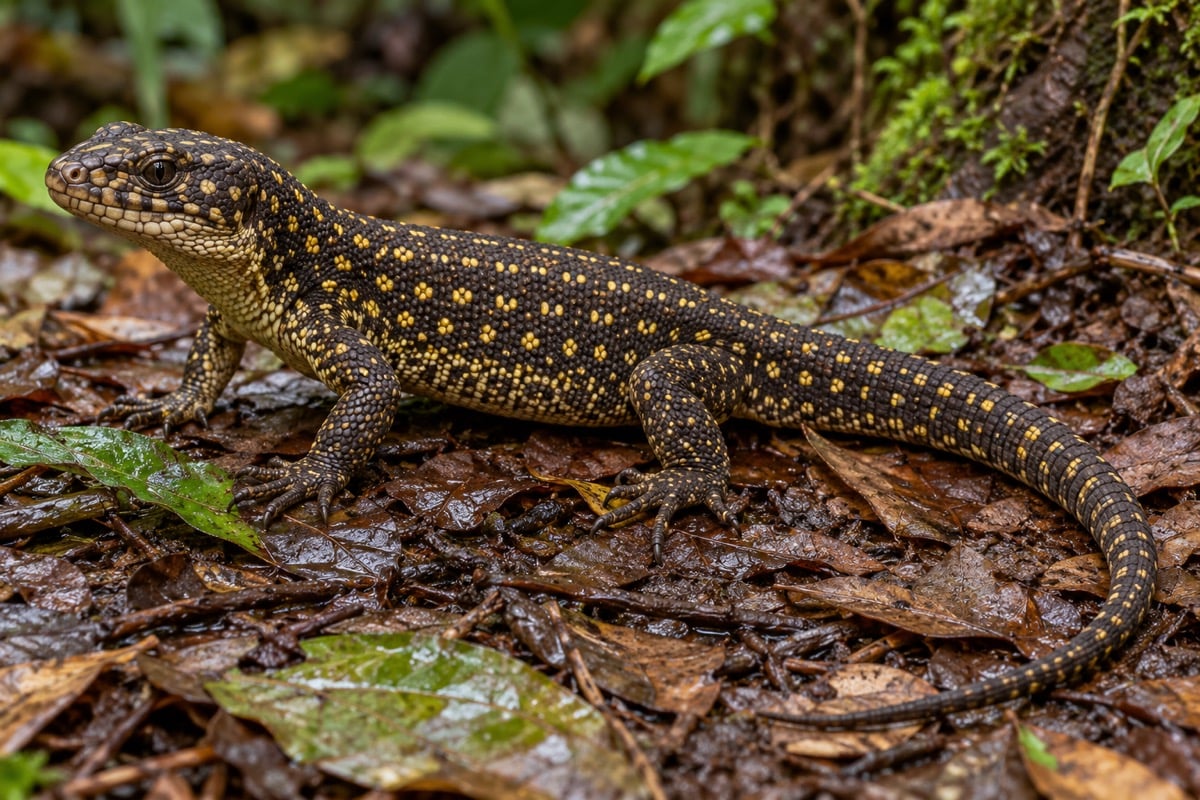
- Scientific Name: Lepidophyma flavimaculatum
- Habitat: Humid forest floor, logs and rocky hiding places
- Size: Body up to about 12.7 cm (5 in), excluding the tail
- Diet: Insects, spiders and other small invertebrates
The yellow-spotted night lizard is a secretive forest reptile with pale yellow spots scattered across a dark body. It spends much of its time close to cover, such as fallen wood or crevices. Small invertebrates provide its meals, including crickets, ants and termites. A long tail and sturdy limbs help it move through cluttered ground habitat. Despite the name, finding one depends as much on its hidden lifestyle as on the time of day.
33. Yellow-throated Marten
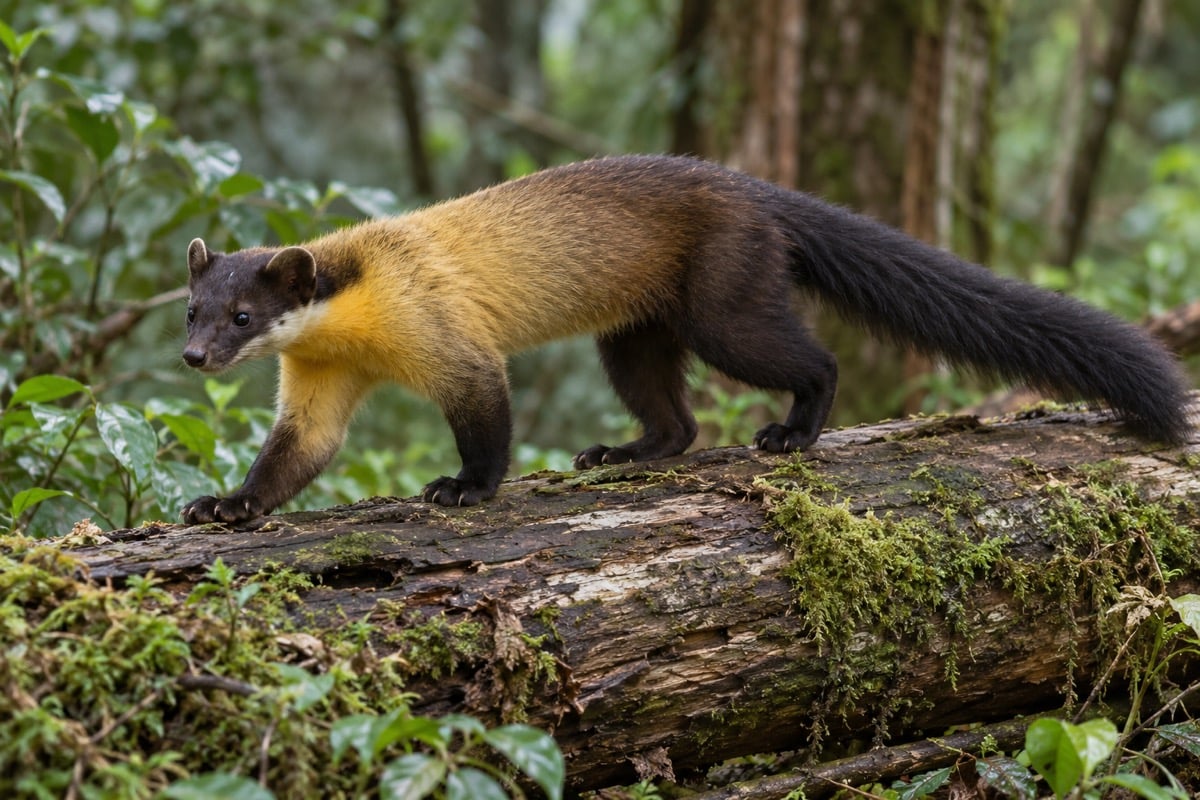
- Scientific Name: Martes flavigula
- Habitat: Tropical, temperate and mountain forests
- Size: Body about 50–72 cm (20–28 in), plus a long tail
- Diet: Small animals, insects, fruit and nuts
A golden throat and chest stand out against the darker head and tail of this marten. Its long, flexible body suits travel through woodland, where it can move on the ground and climb trees. Yellow-throated martens are often active by day and may travel in pairs or small groups. Their diet changes with local opportunities: fruit can be important alongside animal prey. That combination of climbing ability, mobility and varied food helps them occupy a broad range of Asian forests.
34. Yellow-throated Toucan
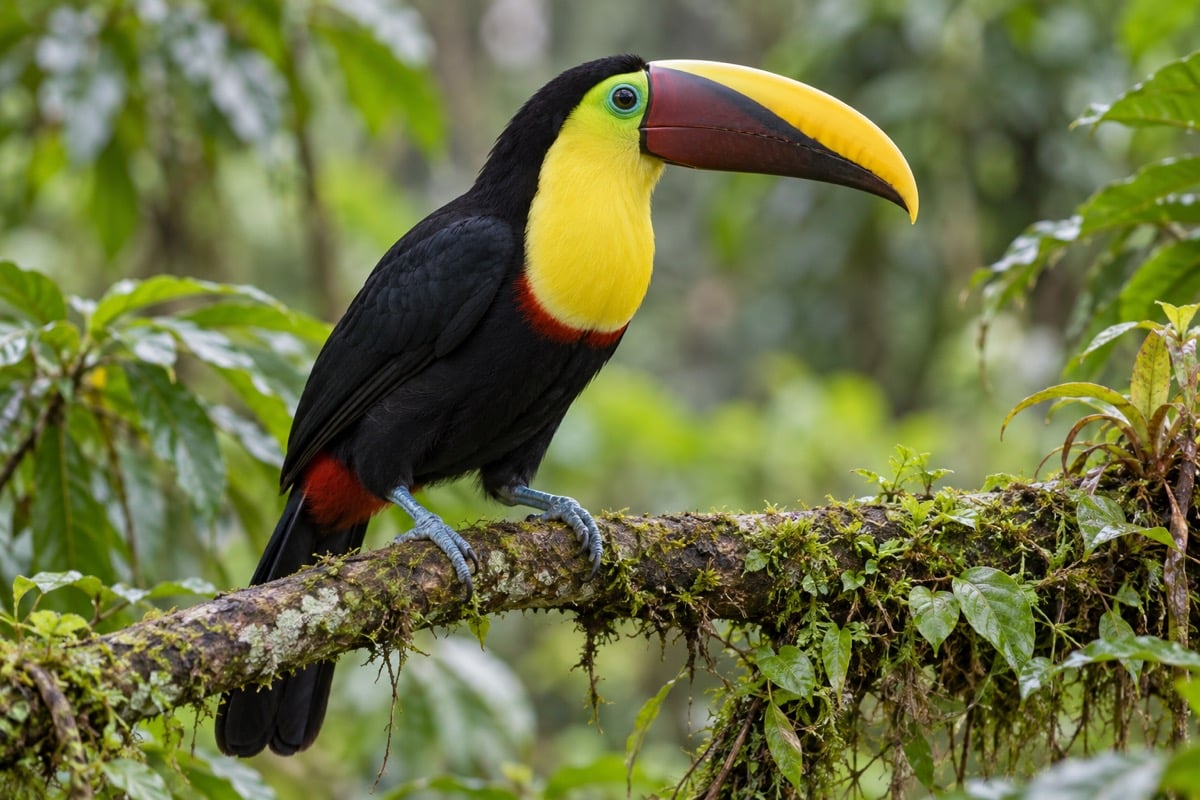
- Scientific Name: Ramphastos ambiguus
- Habitat: Tropical forests and wooded edges
- Size: About 600–750 g (1.3–1.7 lb)
- Diet: Mostly fruit, with insects and small vertebrates
The yellow-throated toucan has a black body, bright yellow throat and an enormous two-colored bill. It spends much of its time in trees, where fruit provides its main food. The bill helps it reach and handle items among the branches, though it also takes animal prey when available. It nests in existing tree cavities rather than excavating a hole itself. Calls can carry through the forest even when the bird is hidden high in the canopy.
35. Yellow-throated Warbler
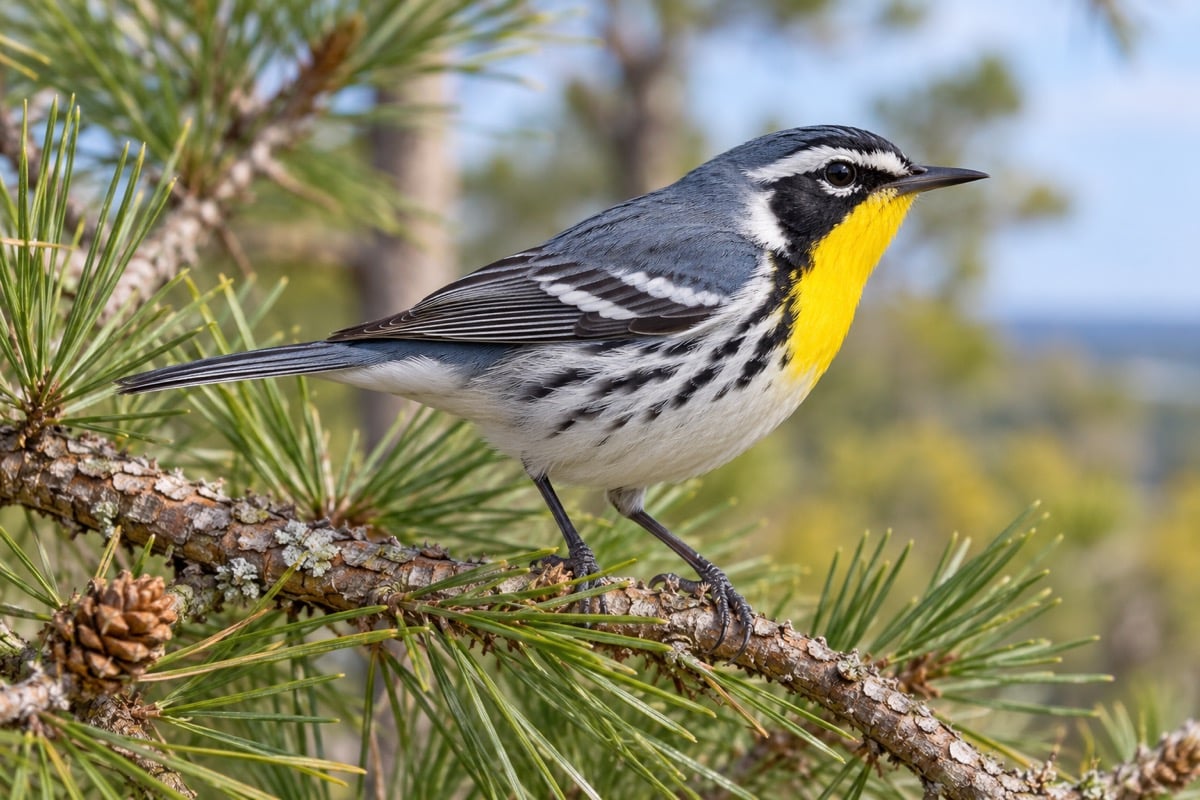
- Scientific Name: Setophaga dominica
- Habitat: Pine forest, riverside woodland and other tall trees
- Size: About 13–14 cm (5.1–5.5 in) long
- Diet: Insects and other small invertebrates
The yellow-throated warbler has a bright throat, gray back and bold black-and-white face. It often works along branches high in the canopy, using a slender bill to probe crevices and clusters of needles. That feeding style can make it seem more like a tiny tree-climber than a typical leaf-picking warbler. Looking up into tall pines is often necessary to see one well. Its white belly is marked by dark streaks along the sides.
36. Yellow-winged Bat
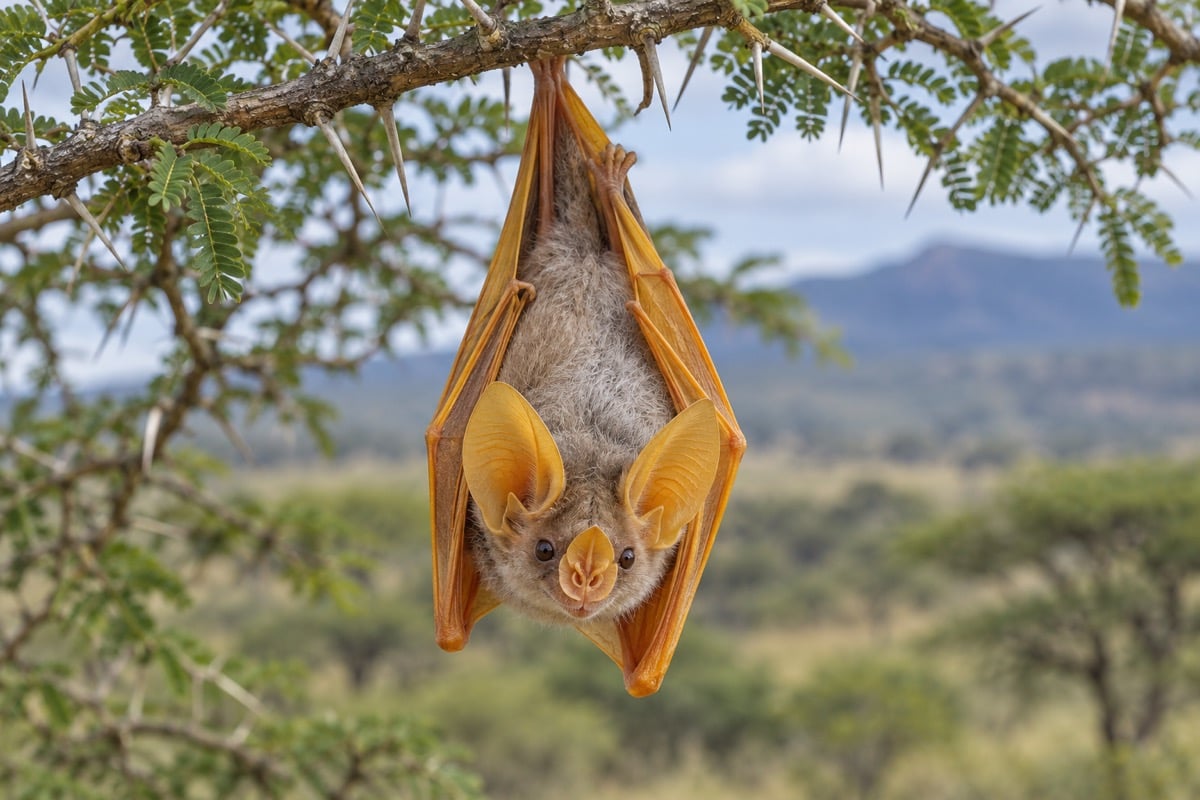
- Scientific Name: Lavia frons
- Habitat: Savannas and open woodland, often with acacia trees
- Size: Body about 5.8–8 cm (2.3–3.1 in); wingspan around 36 cm (14 in)
- Diet: Insects
The yellow-winged bat has a gray body, large ears and orange-yellow wing membranes. Its appearance is quite different from the plain brown bats many people know. It often watches for insects from a perch, flying out to intercept prey before returning to eat. Pairs use trees for roosting and maintain feeding areas nearby. Despite belonging to the false vampire bat family, this species feeds on insects rather than blood.
37. Yellowfin Tuna
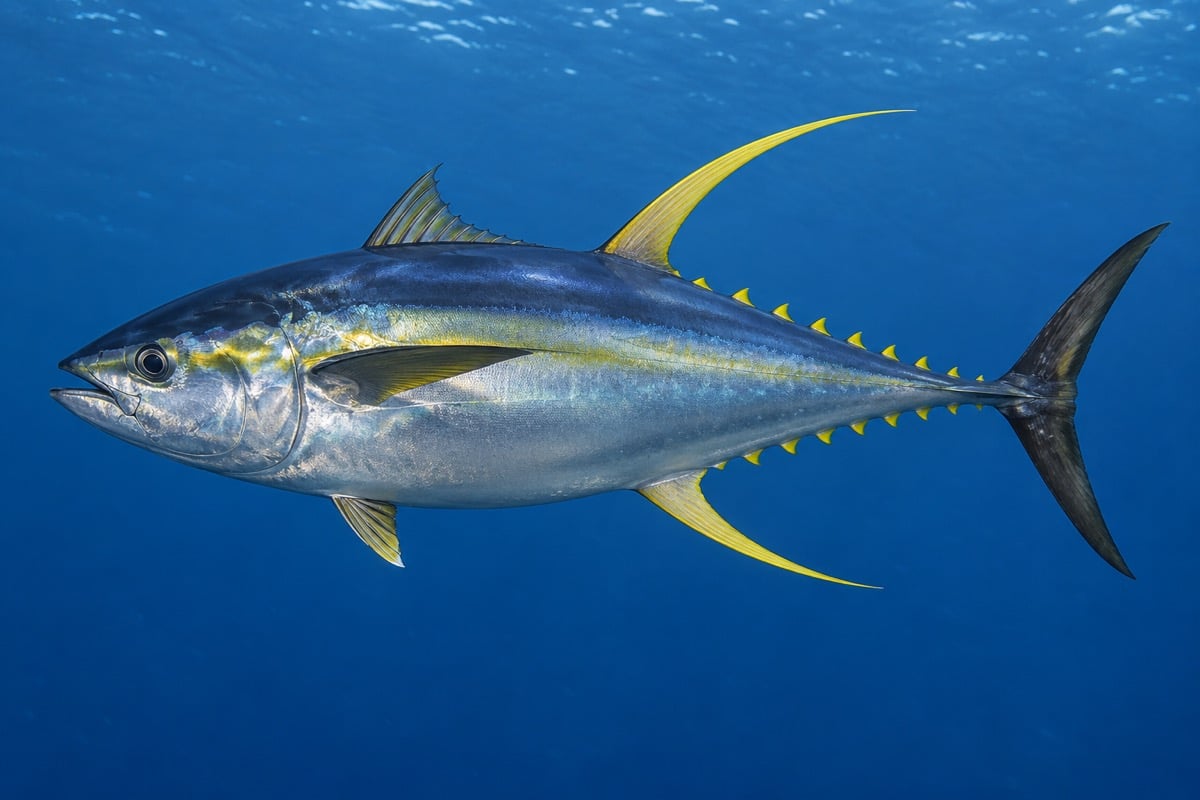
- Scientific Name: Thunnus albacares
- Habitat: Open ocean and offshore waters
- Size: Can reach about 1.8 m (6 ft) long
- Diet: Fish, squid and crustaceans
Long yellow dorsal and anal fins are especially noticeable on large yellowfin tuna. Smaller yellow finlets line the narrow part of the body before the tail, while the streamlined outline suits a life of active swimming. Yellowfin tuna move through warm seas and often gather in schools, sometimes with other tuna species. They are predators of smaller marine animals, following feeding opportunities across large areas. The yellow fins help distinguish them from other tuna, though careful identification involves more than color alone.
38. Yellowhammer
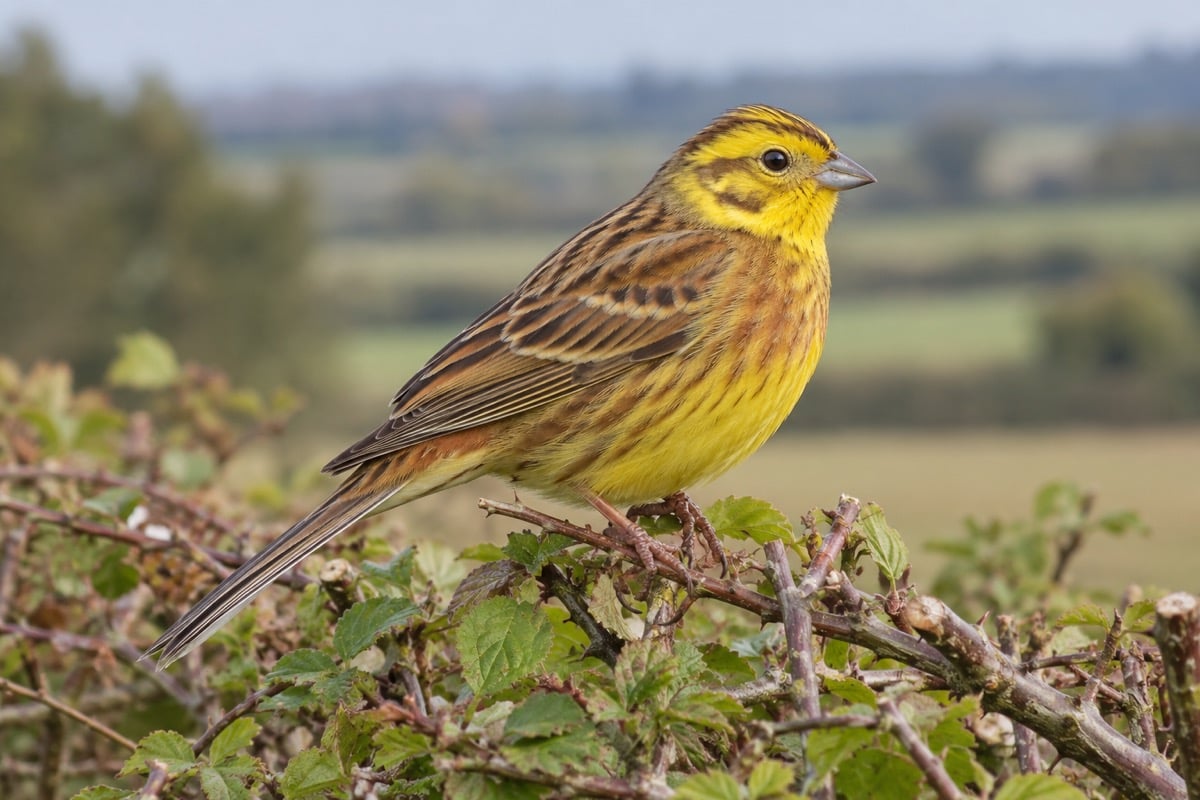
- Scientific Name: Emberiza citrinella
- Habitat: Farmland, hedgerows, scrub and open country
- Size: About 16 cm (6.3 in) long
- Diet: Mainly seeds; insects are important during breeding
A male yellowhammer can brighten an otherwise brown hedgerow with its yellow head and underside. The streaked back and rusty tones on the chest make it more patterned than an all-yellow bird such as a domestic canary. Seeds provide much of its food through the year, while chicks depend heavily on insects. Thick vegetation near the ground gives nesting cover, and seed-rich field margins provide feeding places. It is a bunting, despite the word ‘hammer’ in its common name.
39. Yellowtail Amberjack
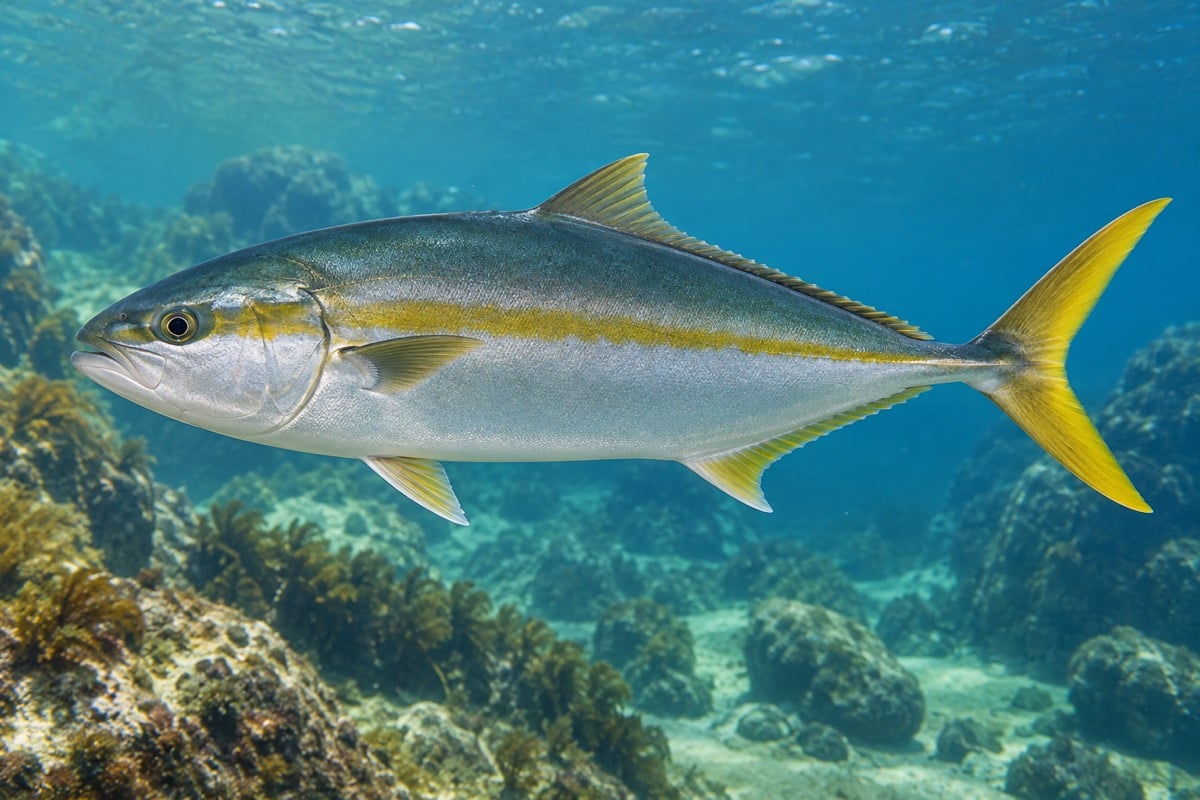
- Scientific Name: Seriola lalandi
- Habitat: Coastal reefs, offshore islands and open water
- Size: Can reach about 2.5 m (8 ft) long
- Diet: Fish, squid and crustaceans
The yellowtail amberjack, also called the yellowtail kingfish, has a streamlined silver body and a powerful yellow tail. A yellowish stripe runs along its side. It is an active swimmer that may travel in schools around reefs and offshore islands. Young fish can associate with floating weed or debris, where their early striped coloring offers camouflage. As they grow, they develop the cleaner adult pattern and become formidable hunters of smaller marine animals.
40. Yellowtail Damselfish
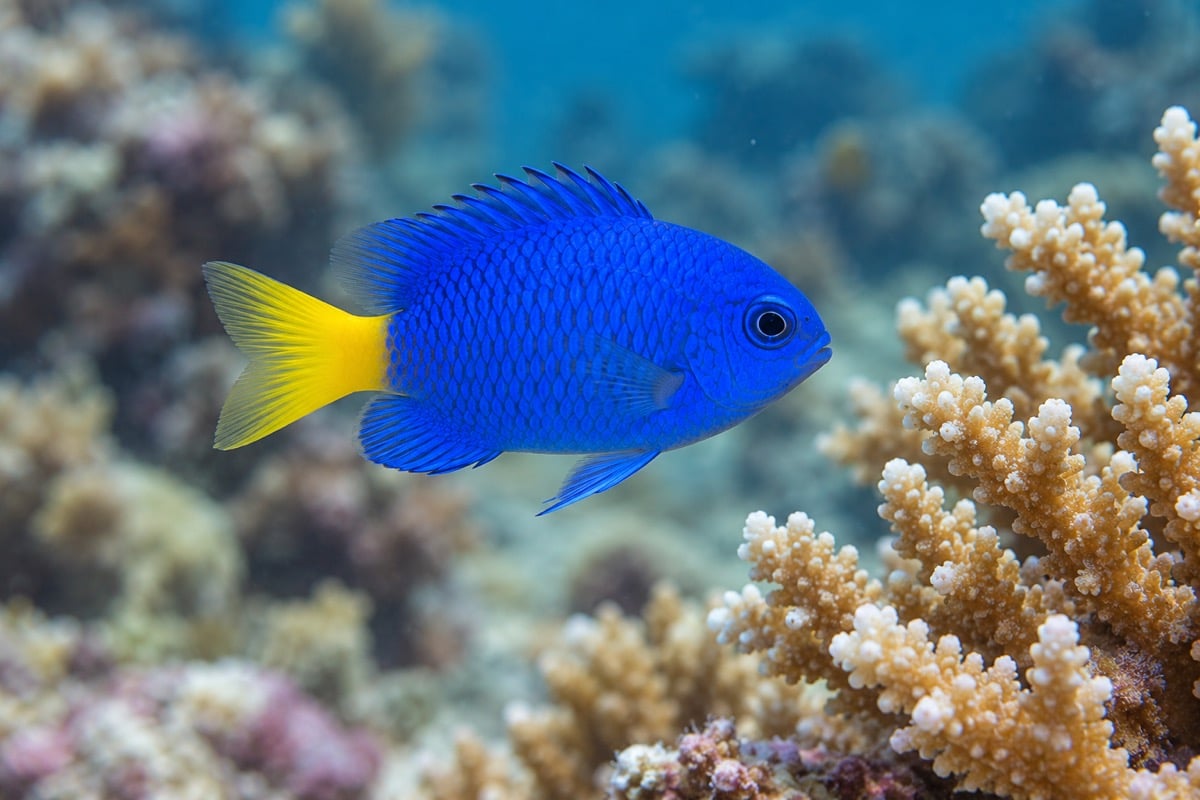
- Scientific Name: Chrysiptera parasema
- Habitat: Sheltered lagoons and coral reefs
- Size: Up to about 7 cm (2.8 in) long
- Diet: Plankton, algae and small crustaceans
The yellowtail damselfish is a small reef fish with a vivid blue body and a sharply contrasting yellow tail. It stays close to coral and other shelter, where it can retreat quickly if threatened. Its diet includes tiny drifting animals as well as food gathered near the reef. Males guard eggs laid at a nesting site. The simple two-color pattern makes this fish easy to notice even among the many other bright animals on a tropical reef.
41. Yeti Crab
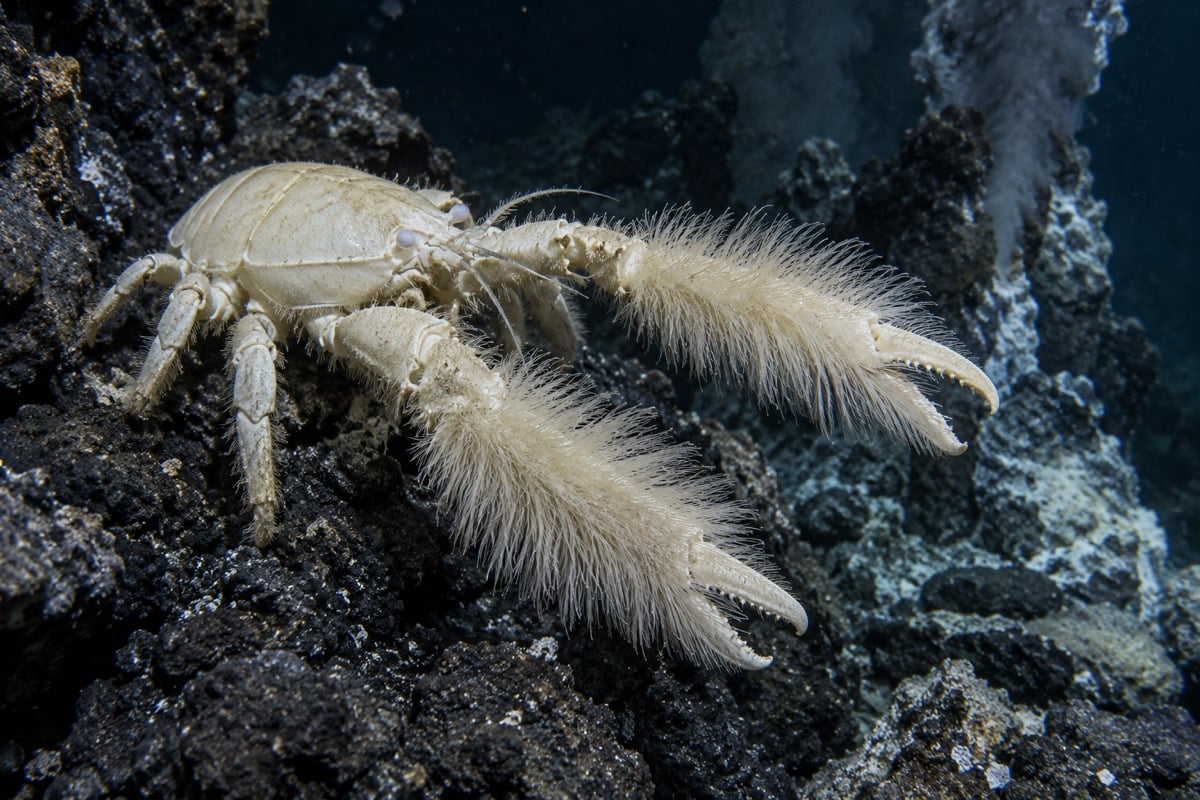
- Scientific Name: Kiwa hirsuta
- Habitat: Deep-sea hydrothermal vent areas
- Size: The animal reported at discovery was about 15 cm (6 in) long
- Diet: Not fully resolved for this species; bacteria on its bristles may contribute
The original yeti crab was discovered during a 2005 expedition to deep-sea vents in the Pacific. Its pale body and shaggy-looking arms inspired the name, but the ‘hair’ consists of bristles called setae. Those bristles host dense colonies of bacteria. Researchers proposed that the bacteria might help feed the animal, though it is important to distinguish that suggestion from feeding behavior demonstrated in other yeti crab species. Kiwa hirsuta has reduced eyes and belongs to a group of crustaceans related to squat lobsters.
42. Yucatán Jay
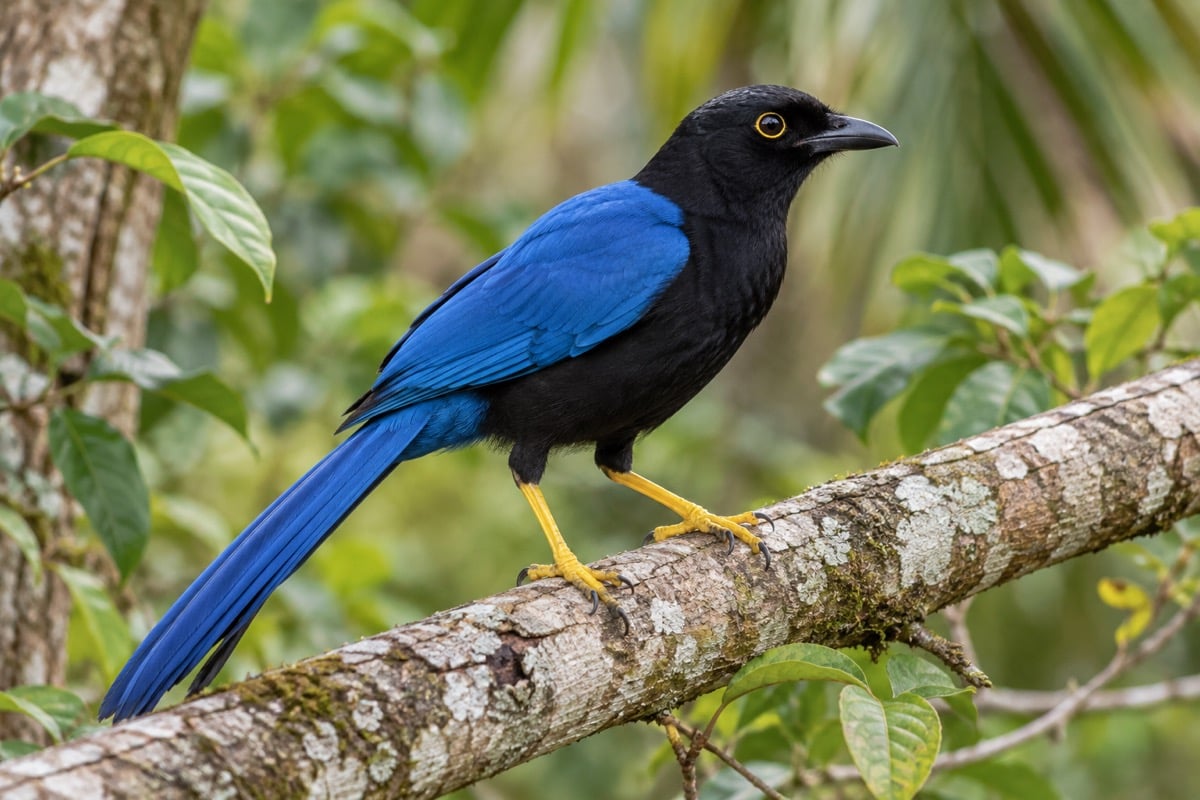
- Scientific Name: Cyanocorax yucatanicus
- Habitat: Tropical woodland and forest edges
- Size: About 31–33 cm (12–13 in) long
- Diet: Insects, fruit, seeds and other small foods
The Yucatán jay combines a black head and chest with rich blue wings and tail. Adults have dark bills, while younger birds can show yellow bills and strikingly different head markings as they mature. Family groups travel noisily through woodland, searching for food together. Some group members help the breeding pair care for young. Its social habits and bold colors make it one of the more noticeable birds of the Yucatán region.
43. Yucatán Squirrel
- Scientific Name: Sciurus yucatanensis
- Habitat: Tropical woodland and forest
- Size: About 340–475 g (12–17 oz)
- Diet: Fruit, nuts, seeds, flowers, buds and shoots
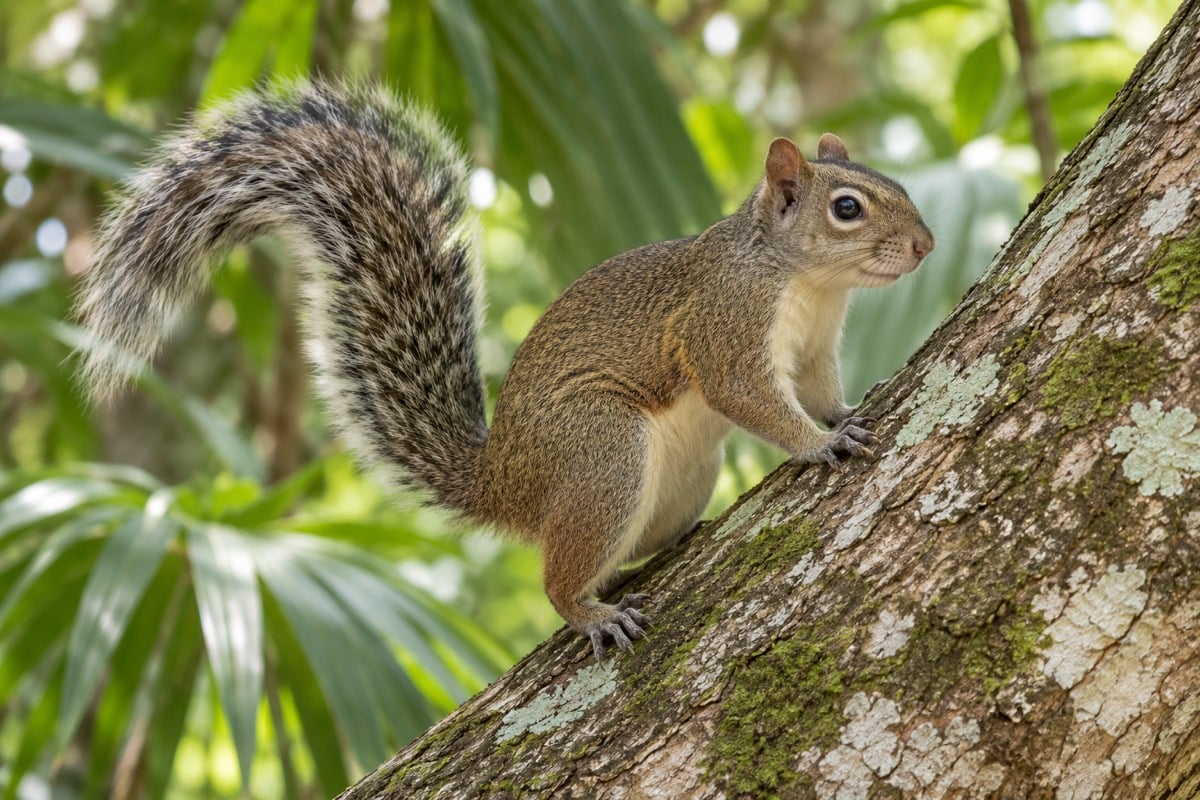
The Yucatán squirrel is a tree-dwelling rodent with a gray-brown coat and a bushy tail. It moves among branches to find plant foods, using its paws and sharp incisors to handle a meal. A nest made of leaves and twigs provides shelter above the ground. Its range centers on the Yucatán Peninsula and neighboring areas. Like many squirrels, it depends on a variety of foods rather than a single type of nut or seed.
44. Yuma Myotis
- Scientific Name: Myotis yumanensis
- Habitat: Habitats near rivers, lakes and streams
- Size: About 6.5–8.9 cm (2.5–3.5 in), including the tail
- Diet: Small flying insects
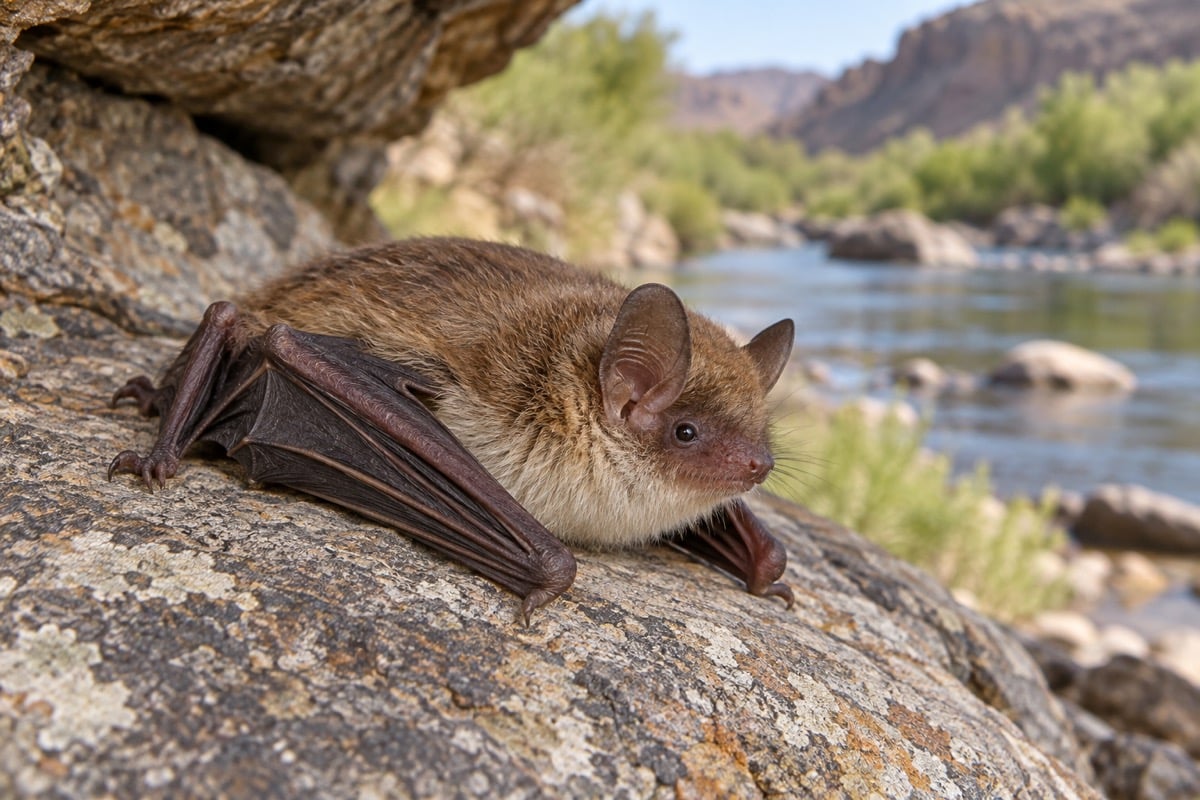
The Yuma myotis is a small brown bat closely associated with water. It hunts insects over ponds and streams, using echolocation to track prey in the dark. Roosts may be found in caves, hollow trees, bridges or buildings. Its wings are thin membranes stretched across elongated fingers, allowing precise flight close to the surface. Even in dry country, a dependable water source can create a productive feeding area for these bats.
45. Yungas Pygmy-Owl
- Scientific Name: Glaucidium bolivianum
- Habitat: Andean mountain forest and cloud forest
- Size: About 16 cm (6.3 in) long
- Diet: Small animals; its diet is not well documented
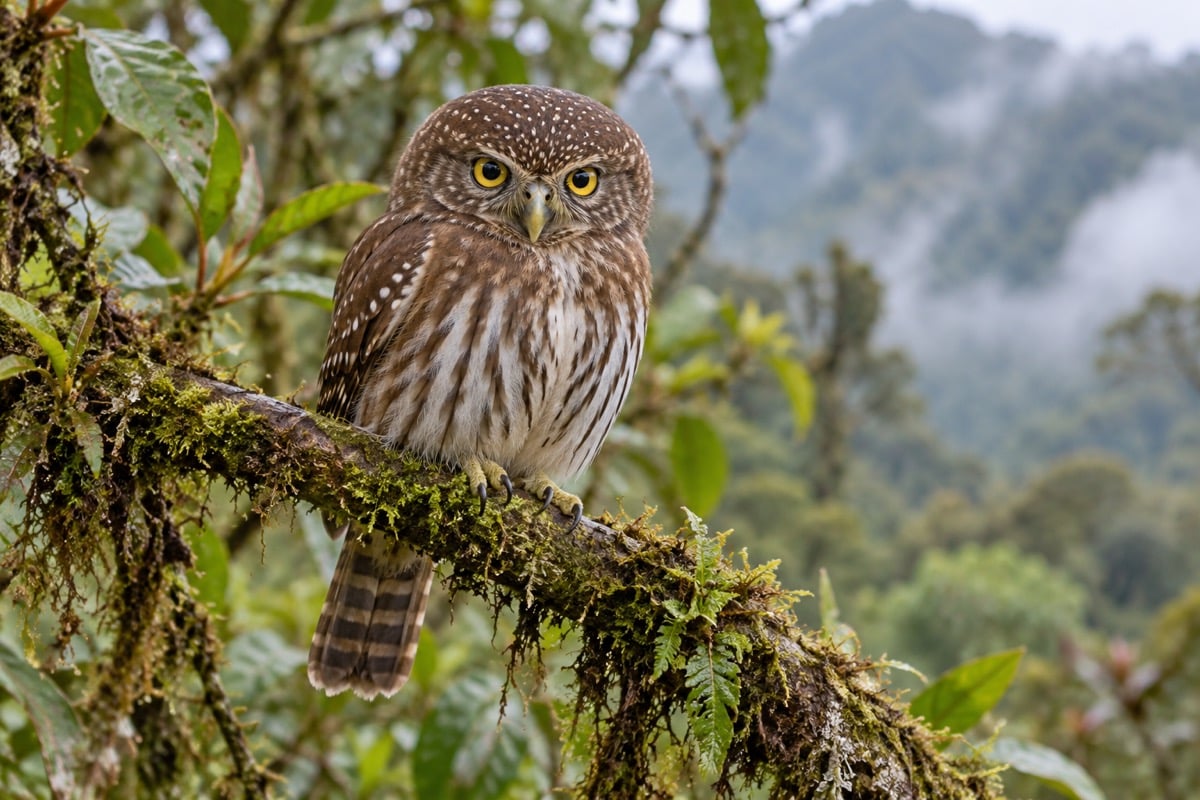
The Yungas pygmy-owl is a tiny owl from the forested eastern slopes of the Andes. It has yellow eyes, pale spots on the head and back, and a streaked underside. Dark markings on the back of its head resemble a second pair of eyes. Individuals may be brown, reddish or grayish. Dense, mossy mountain forest provides its home, and much about its feeding and breeding remains less well known than in familiar lowland owls.
More Animals (A-Z)
Enjoyed meeting these animals? Keep exploring with another letter from the animal alphabet below.
A, B, C, D, E, F, G, H, I, J, K, L, M, N, O, P, Q, R, S, T, U, V, W, X, Y, Z


James Miller grew up on the Oregon coast, exploring tide pools and watching seabirds. He has a particular fondness for owls and keeps a notebook of his bird sightings.
Read More »