

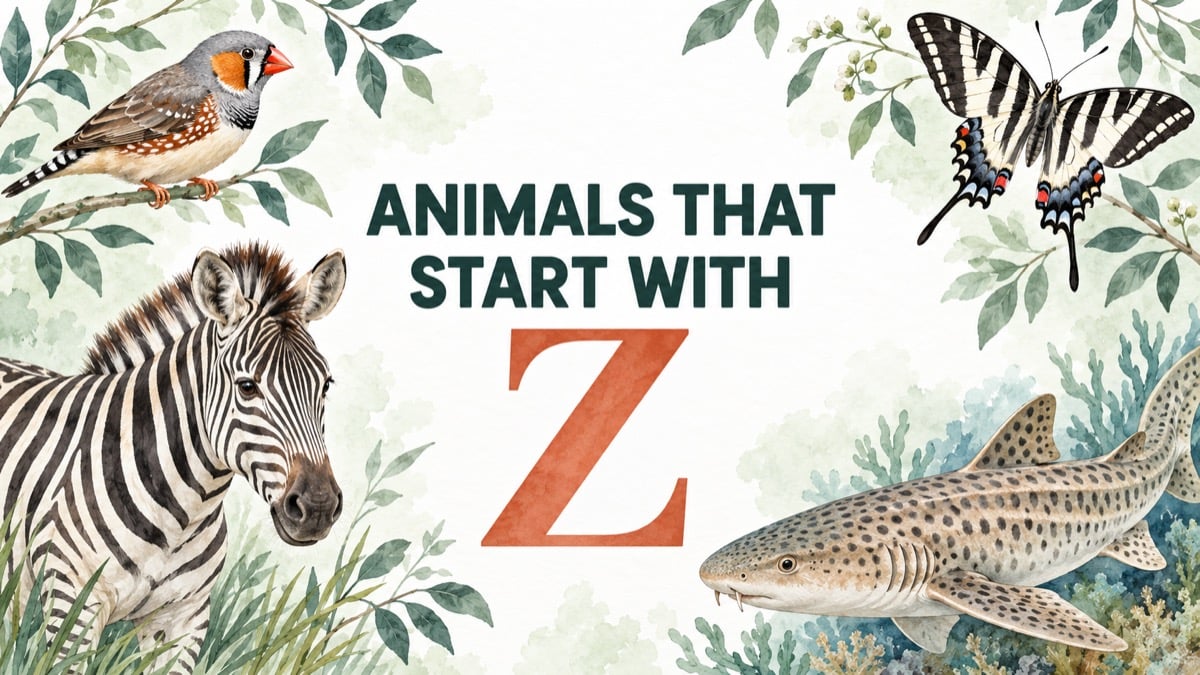
Zebras may be the first animals that come to mind when you think of the letter Z, but there are plenty of others to discover. This list includes tiny jumping spiders, brightly patterned reef fish, secretive marsh birds, and mammals that spend most of their lives underground.
Below, you’ll find animals with common names beginning with Z, along with a few listed by their scientific names. Each entry includes a picture and facts about where the animal lives, what it eats, and what makes it interesting.
List of Animals
Here are 41 animals that start with the letter Z.
Click an animal name to jump to its full description, image, and more below.
| Animal | Type | Region |
|---|---|---|
| Zander | Fish | Europe and western Asia; introduced elsewhere |
| Zanzibar Day Gecko | Reptile | Madagascar, Comoros, and coastal East Africa |
| Zanzibar Red Colobus | Mammal | Zanzibar, Tanzania |
| Zapata Rail | Bird | Cuba |
| Zapata Wren | Bird | Cuba |
| Zebra (Plains Zebra) | Mammal | Eastern and southern Africa |
| Zebra Angelfish | Fish | Indian Ocean, including the Red Sea |
| Zebra Dove | Bird | Southeast Asia; introduced elsewhere |
| Zebra Duiker | Mammal | West Africa |
| Zebra Finch | Bird | Australia |
| Zebra Loach | Fish | Western Ghats, India |
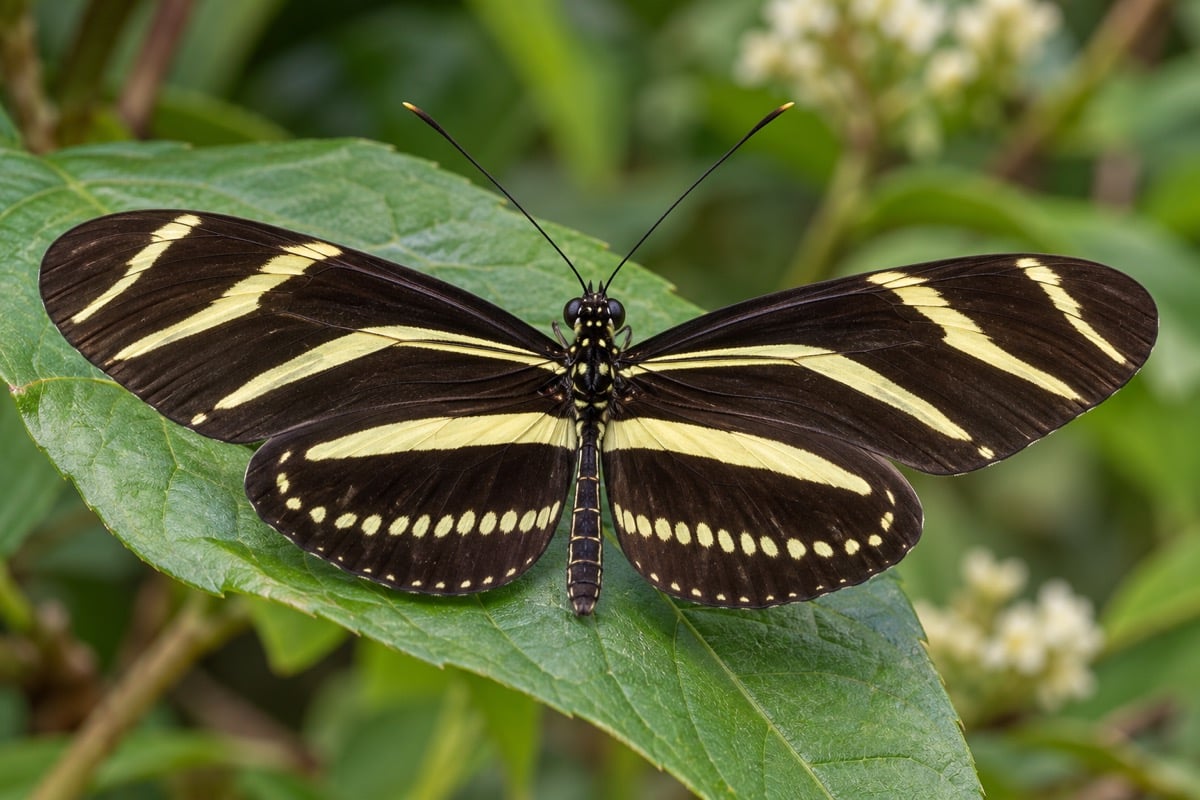
| Zebra Longwing | Insect | Southern United States, Central America, and South America |
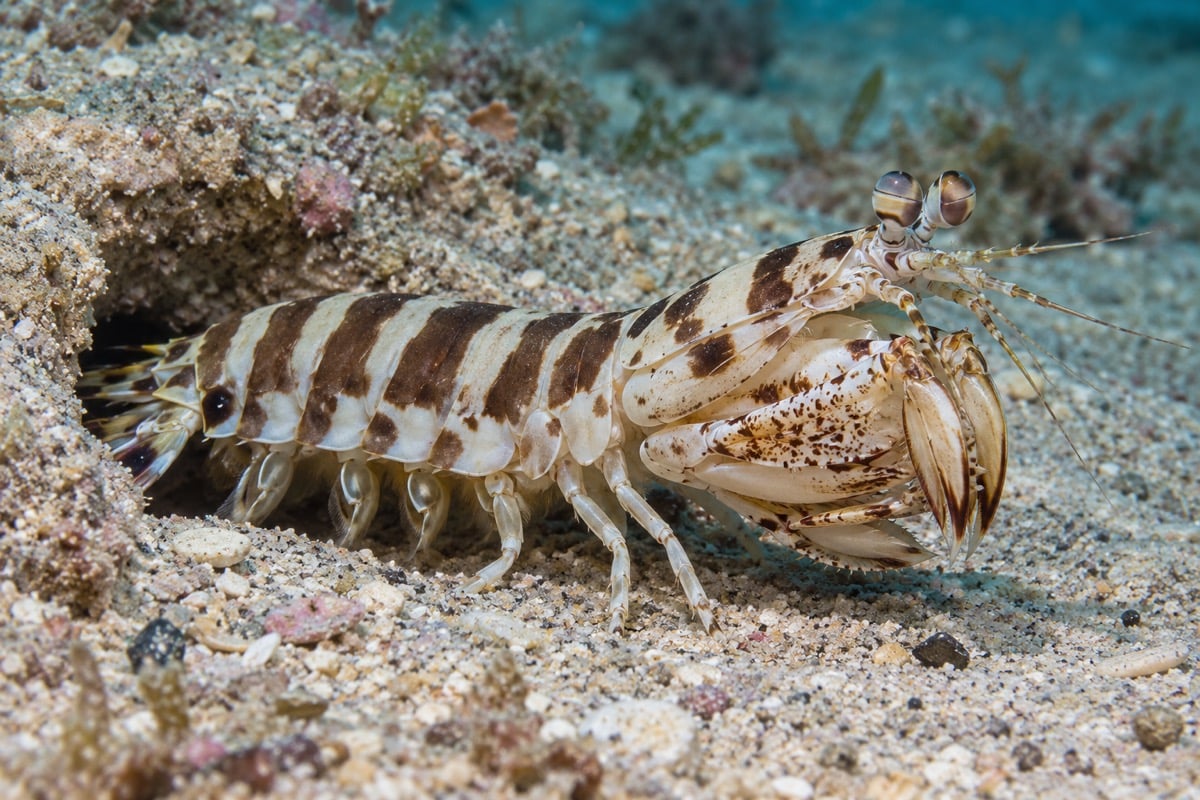
| Zebra Mantis Shrimp | Crustacean | Indo-Pacific |
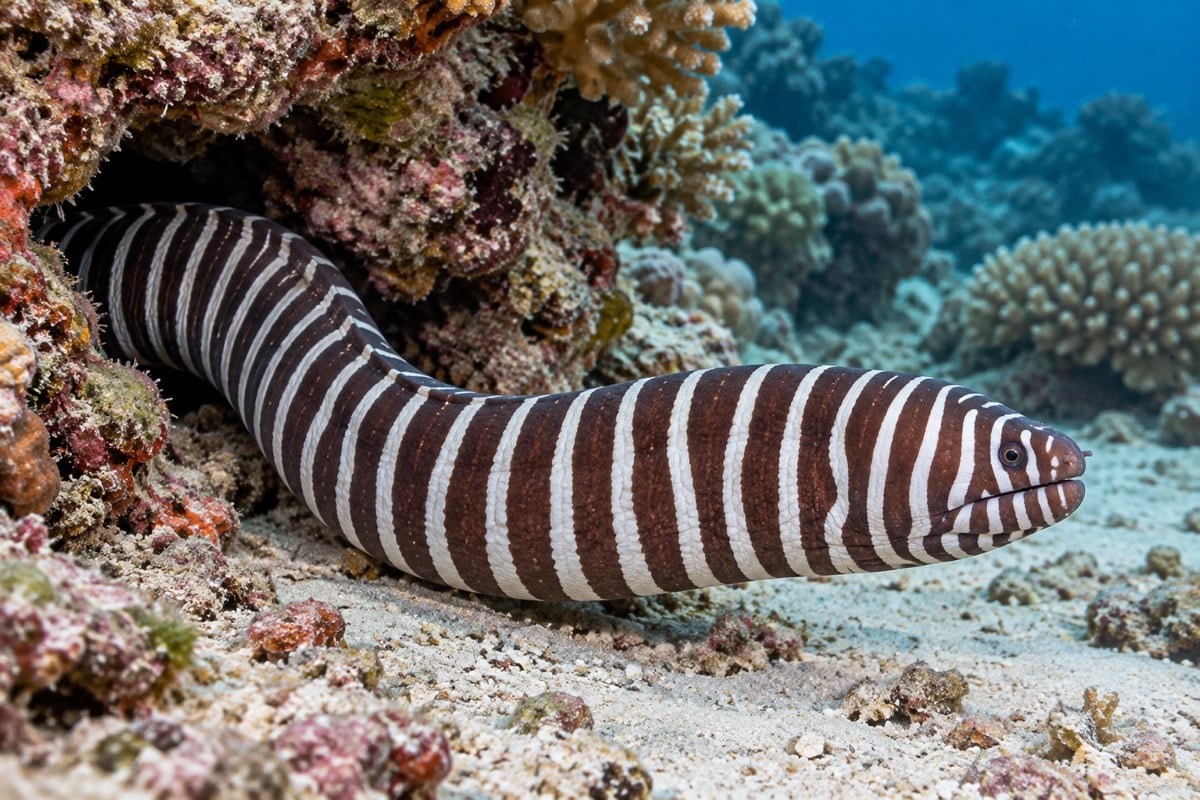
| Zebra Moray | Fish | Tropical Indo-Pacific |
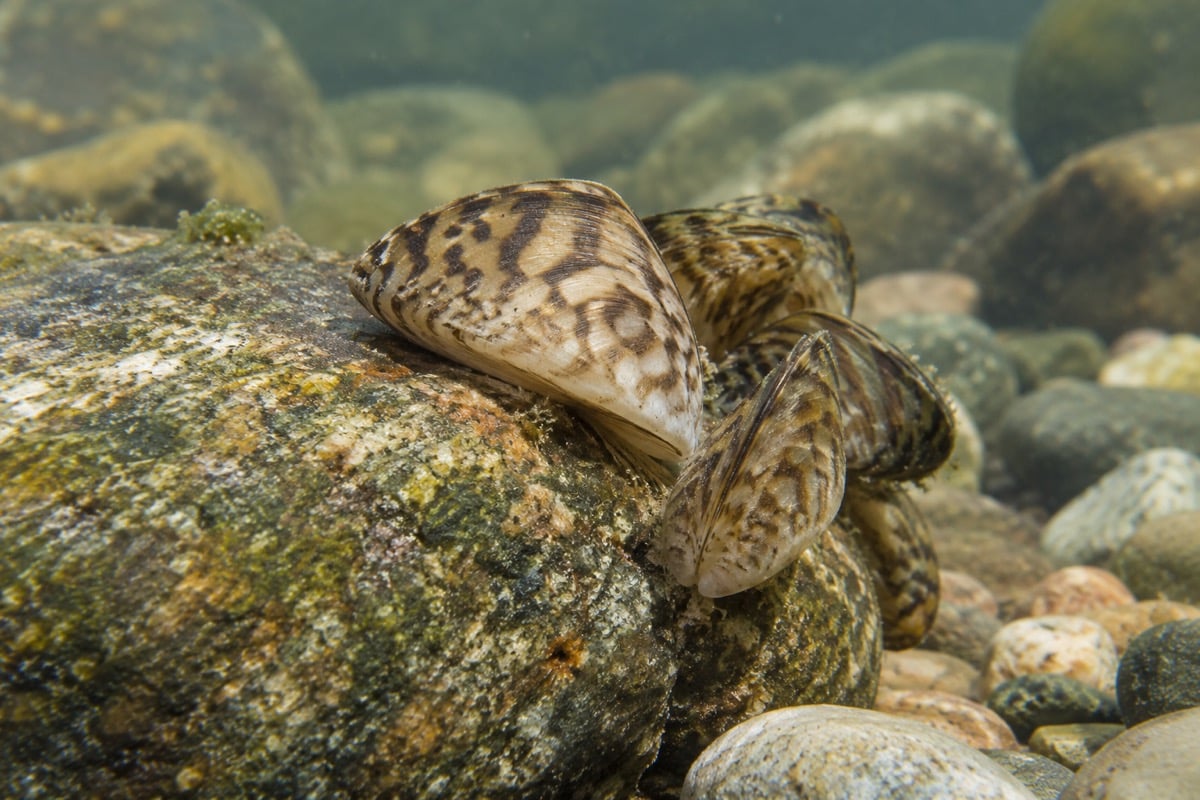
| Zebra Mussel | Mollusk | Native to eastern Europe and Russia; invasive in many other regions |
| Zebra Nerite | Mollusk | Eastern and southern Africa |
| Zebra Pleco | Fish | Xingu River, Brazil |
| Zebra Seahorse | Fish | Northern Australia and New Guinea |
| Zebra Shark | Fish | Tropical Indian and western Pacific oceans |
| Zebra Shovelnose Catfish | Fish | Amazon and Orinoco basins, South America |
| Zebra Sole | Fish | Western Pacific |
| Zebra Spider | Arachnid | Europe, Asia, and North America |
| Zebra Swallowtail | Insect | Eastern United States |
| Zebra Turkeyfish | Fish | Indo-Pacific |
| Zebra Waxbill | Bird | Sub-Saharan Africa |
| Zebra-tailed Lizard | Reptile | Southwestern United States and northwestern Mexico |
| Zebrafish | Fish | South Asia |
| Zebrasoma desjardinii (Indian Sailfin Tang) | Fish | Indian Ocean and Red Sea |
| Zebrasoma scopas (Scopas Tang) | Fish | Indo-Pacific |
| Zebrasoma velifer (Sailfin Tang) | Fish | Indo-Pacific |
| Zebu | Mammal | Originally South Asia; domesticated worldwide |
| Zenaida Dove | Bird | Caribbean and parts of the Yucatán Peninsula |
| Zenaida macroura (Mourning Dove) | Bird | North and Central America and the Caribbean |
| Zigzag Eel | Fish | South and Southeast Asia |
| Zigzag Heron | Bird | Northern and central South America |
| Zigzag Salamander | Amphibian | Eastern United States |
| Zitting Cisticola | Bird | Europe, Africa, Asia, and northern Australia |
| Zokor | Mammal | Southern Siberia and Kazakhstan |
| Zone-tailed Hawk | Bird | Southwestern United States to South America |
| Zorilla | Mammal | Sub-Saharan Africa |
| Zoropsis spinimana | Arachnid | Mediterranean region; spreading in Europe and introduced elsewhere |
1. Zander
- Scientific Name: Sander lucioperca
- Habitat: Large rivers, lakes and some brackish coastal waters
- Size: Commonly around 50 cm (20 in) long; large fish grow considerably longer
- Diet: Mainly other fish
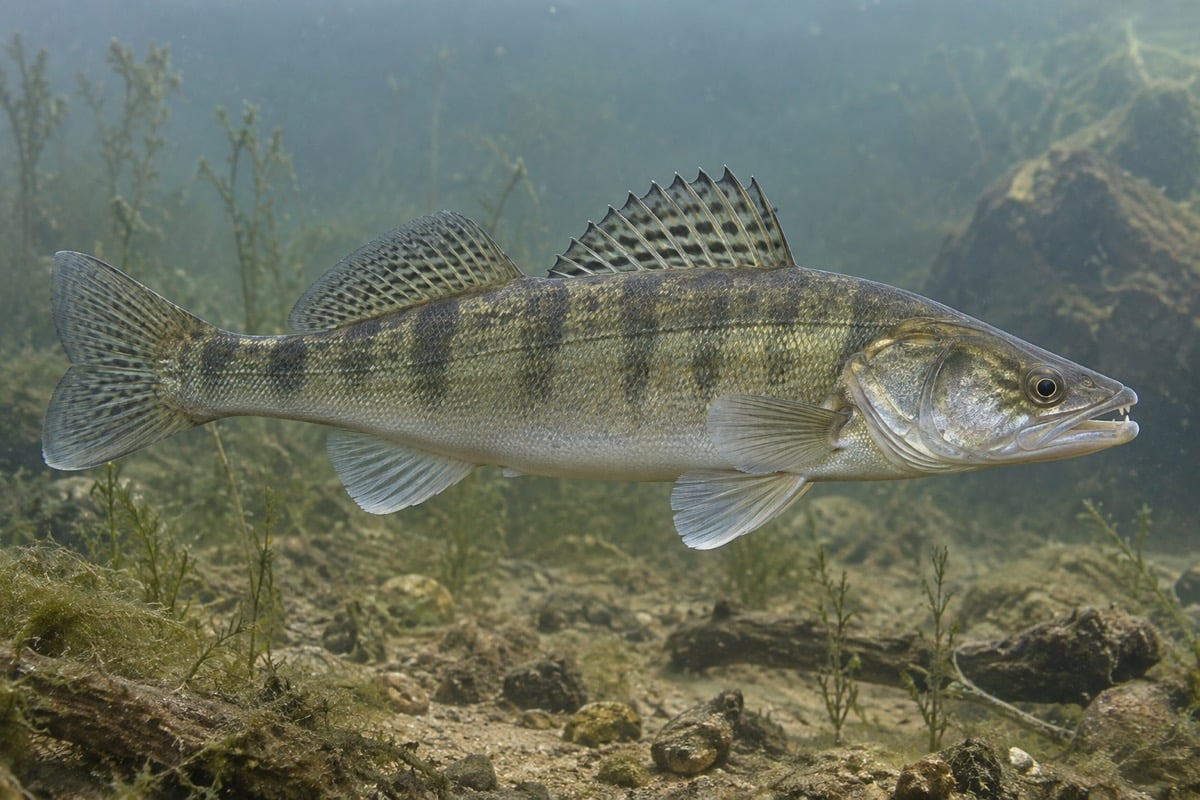
The zander is an elongated predatory fish with two dorsal fins and prominent canine teeth near the front of its jaws. Its olive-gray body and darker bars fit the subdued colors of many lakes and rivers. Also called pike-perch, it belongs to the perch family rather than being a hybrid of pike and perch. During breeding, a male prepares a shallow nesting area. After the eggs are laid, he guards them and fans water over them with his fins.
2. Zanzibar Day Gecko
- Scientific Name: Phelsuma dubia
- Habitat: Trees, palms, gardens, and buildings in warm coastal areas
- Size: Up to about 15 cm, including tail
- Diet: Insects, other small invertebrates, and nectar
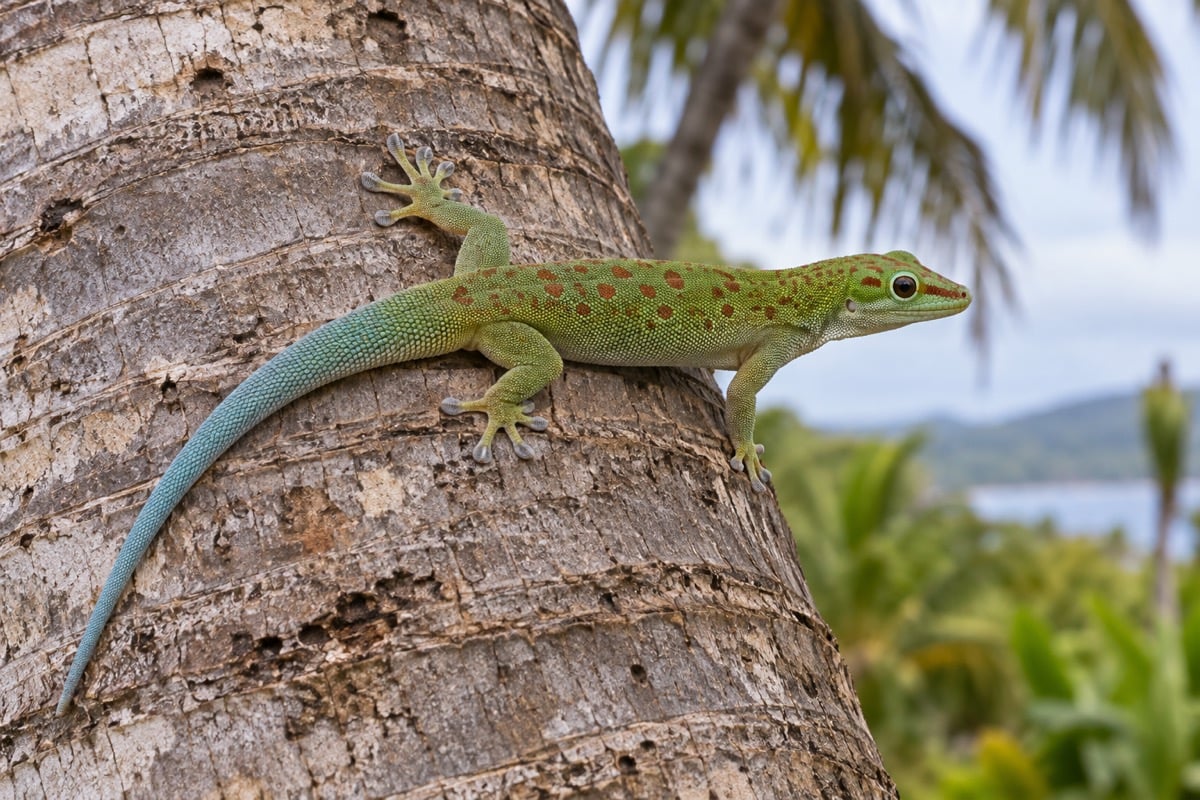
The Zanzibar day gecko is also called the dull day gecko, although its greenish body and bluish tail can be quite attractive. It is active in daylight, searching trunks and leaves for small prey. Broad toe pads allow it to climb smooth surfaces, including walls around homes. Despite its name, this gecko occurs well beyond Zanzibar. Its colors vary, and the reddish markings on the back are not equally obvious on every individual.
3. Zanzibar Red Colobus
- Scientific Name: Piliocolobus kirkii
- Habitat: Coastal forest, scrub forest, and mangroves
- Size: 45–70 cm body length, plus tail
- Diet: Mostly young leaves, with unripe fruit, seeds, and flowers
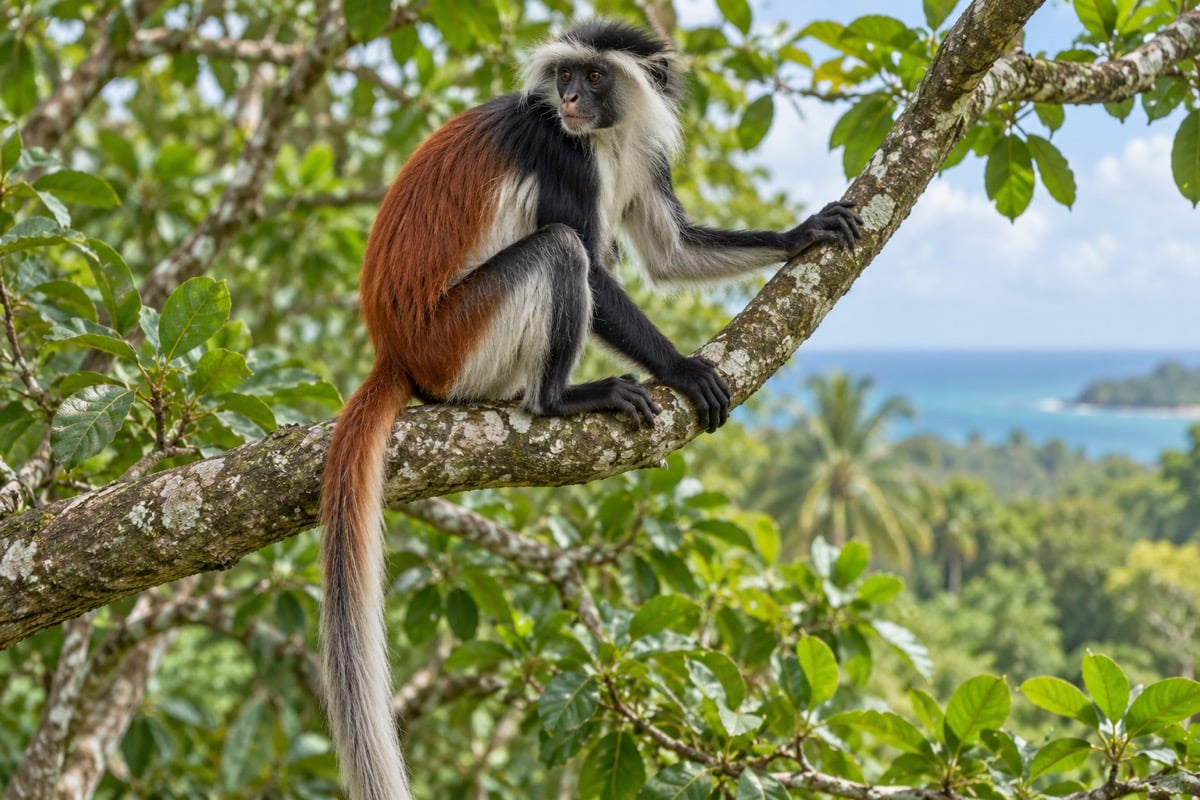
Zanzibar red colobuses have a striking mix of reddish, black, and pale fur, with long white hairs framing their faces. These monkeys live in groups and spend much of their time feeding in trees. Their thumbs are greatly reduced, while their long fingers help them grip branches. Although associated with forest, they also use some farmland with trees. Their small island range makes the survival of these wooded places especially important.
4. Zapata Rail
- Scientific Name: Mustelirallus cerverai
- Habitat: Dense sawgrass marshes of the Zapata Peninsula
- Size: About 29 cm long
- Diet: Poorly documented
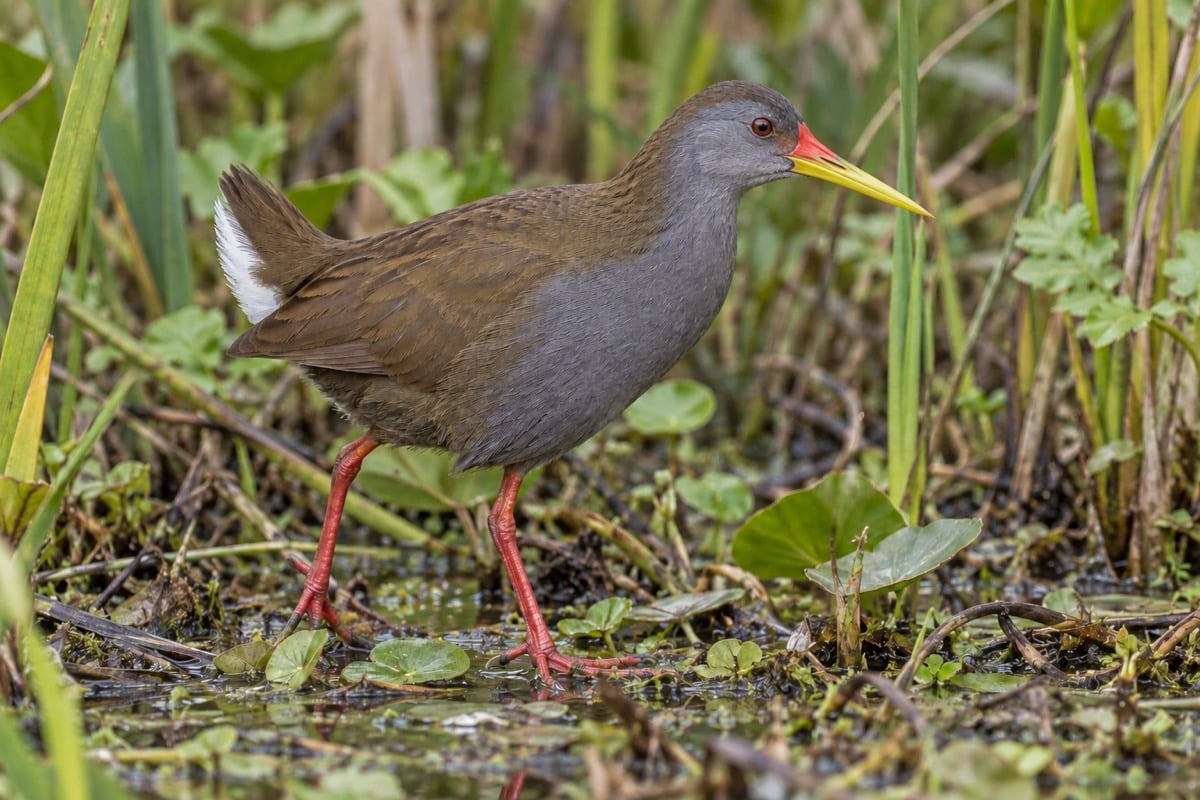
The Zapata rail is a secretive wetland bird with brown upperparts, a slate-gray underside, and red legs. Its yellow bill has red at the base. Short, rounded wings make it poorly suited to flight, while thick marsh vegetation provides cover. This is one of the least understood birds on the list: even its feeding and breeding habits remain poorly documented. It is known from a very restricted area of southern Cuba.
5. Zapata Wren
- Scientific Name: Ferminia cerverai
- Habitat: Freshwater marshes and lowland savanna with sawgrass
- Size: About 16 cm long
- Diet: Insects, spiders, small snails, small lizards, and berries
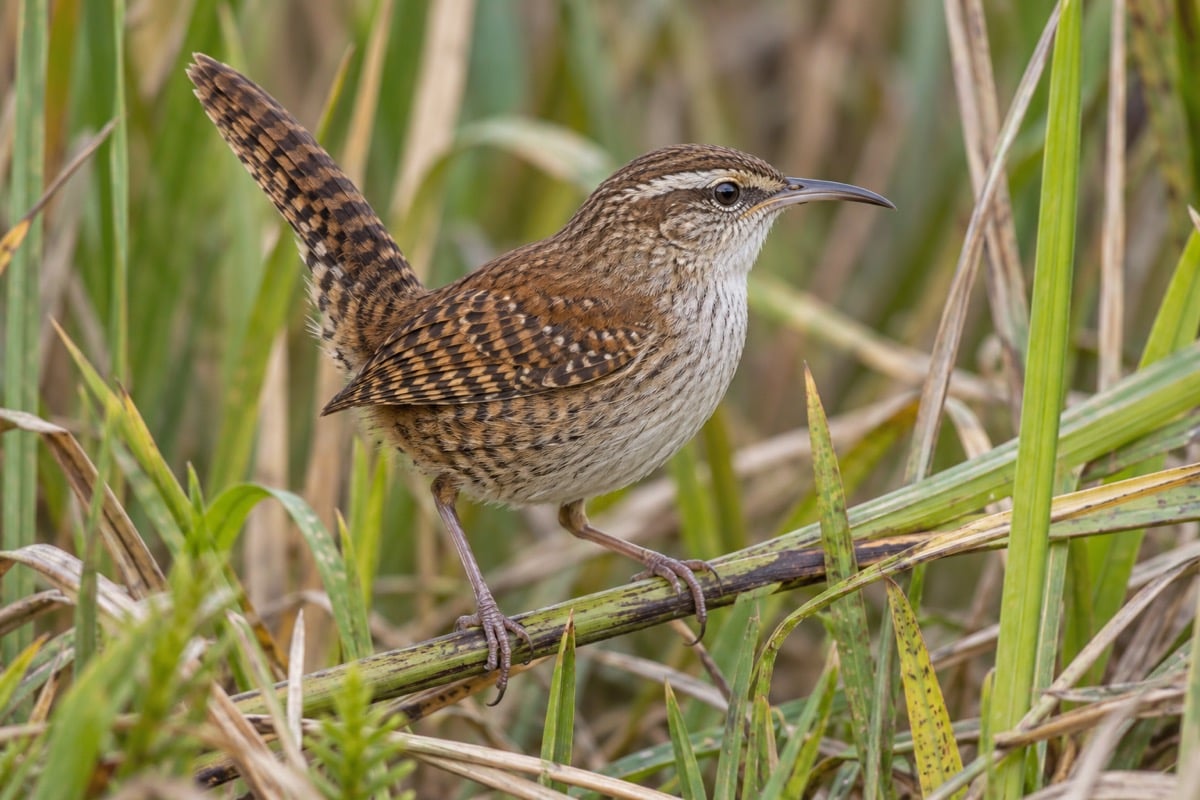
The Zapata wren is a brown, heavily barred bird with a long tail and a loud, musical song. It lives only on Cuba’s Zapata Peninsula, moving through dense marsh growth that can make it difficult to spot. Sawgrass tussocks provide places to nest as well as cover for foraging. Its small range overlaps that of the Zapata rail, but this bird belongs to the wren family and is a much more accomplished singer.
6. Zebra (Plains Zebra)
- Scientific Name: Equus quagga
- Habitat: Grassland, savanna and open woodland
- Size: Around 1.3 m (4.3 ft) tall at the shoulder
- Diet: Mostly grasses
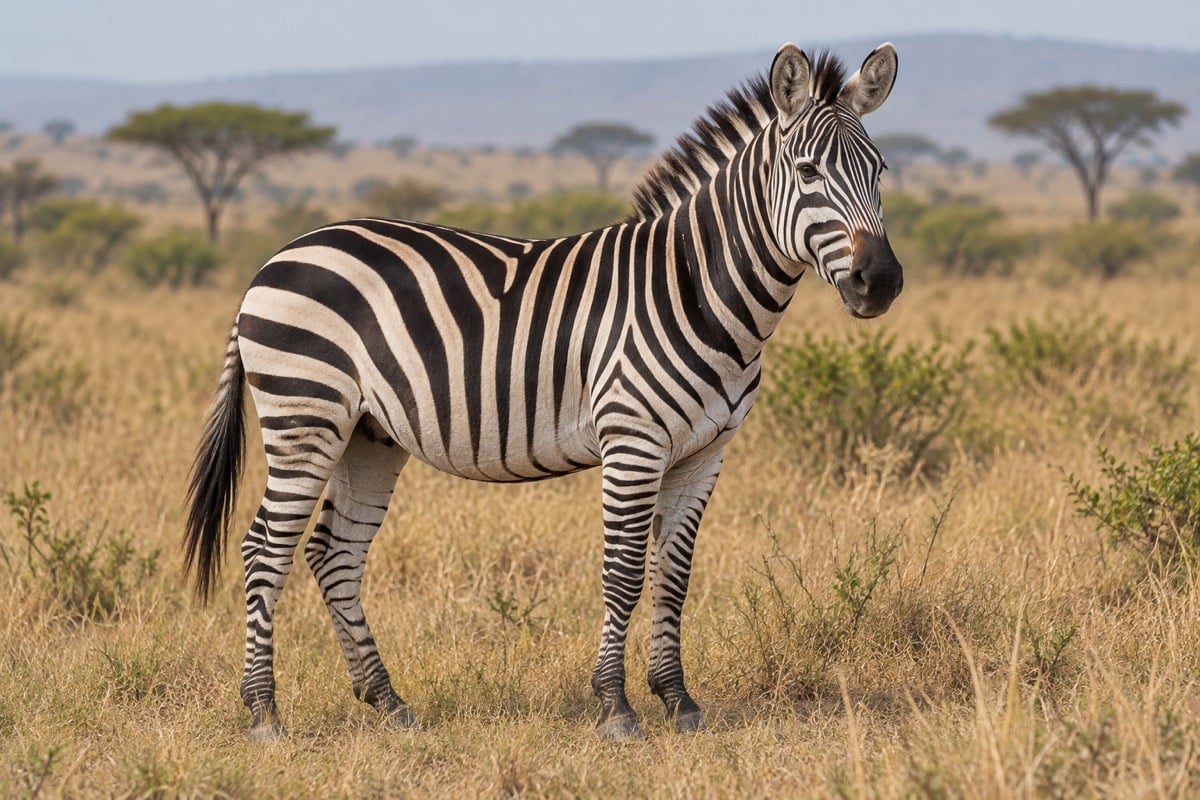
There are three living zebra species: plains, mountain and Grevy’s zebras. The plains zebra shown here has the familiar broad stripes and upright mane associated with African savannas. Each animal’s stripe pattern can help researchers recognize it. Plains zebras live in family groups that can gather into much larger herds. Much of the day is spent grazing, and movements between feeding areas depend on grass and water. Their young can stand and move soon after birth, an important ability for keeping up with a traveling group.
7. Zebra Angelfish
- Scientific Name: Genicanthus caudovittatus
- Habitat: Coral reef slopes and nearby open water
- Size: Up to 20 cm long
- Diet: Plankton
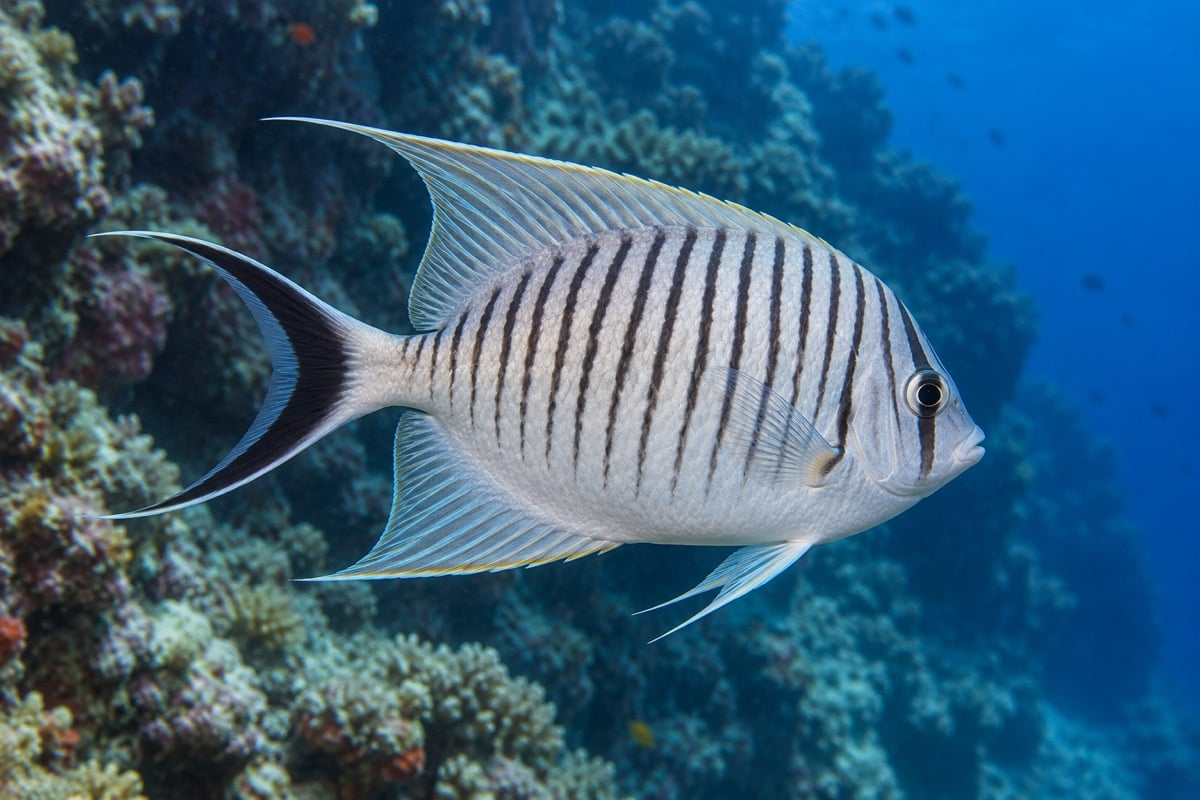
Male zebra angelfish have dark vertical stripes that explain their name, while females have a much plainer body and dark markings on the tail. Both have long extensions on the tail fin. They often feed above the reef, picking tiny drifting organisms from the water. A male may be accompanied by several females. Their preference for food suspended in open water gives them a different feeding style from many angelfish that browse directly on reefs.
8. Zebra Dove
- Scientific Name: Geopelia striata
- Habitat: Open scrub, gardens, farmland, and towns
- Size: 20–23 cm long
- Diet: Mostly seeds, with some small invertebrates
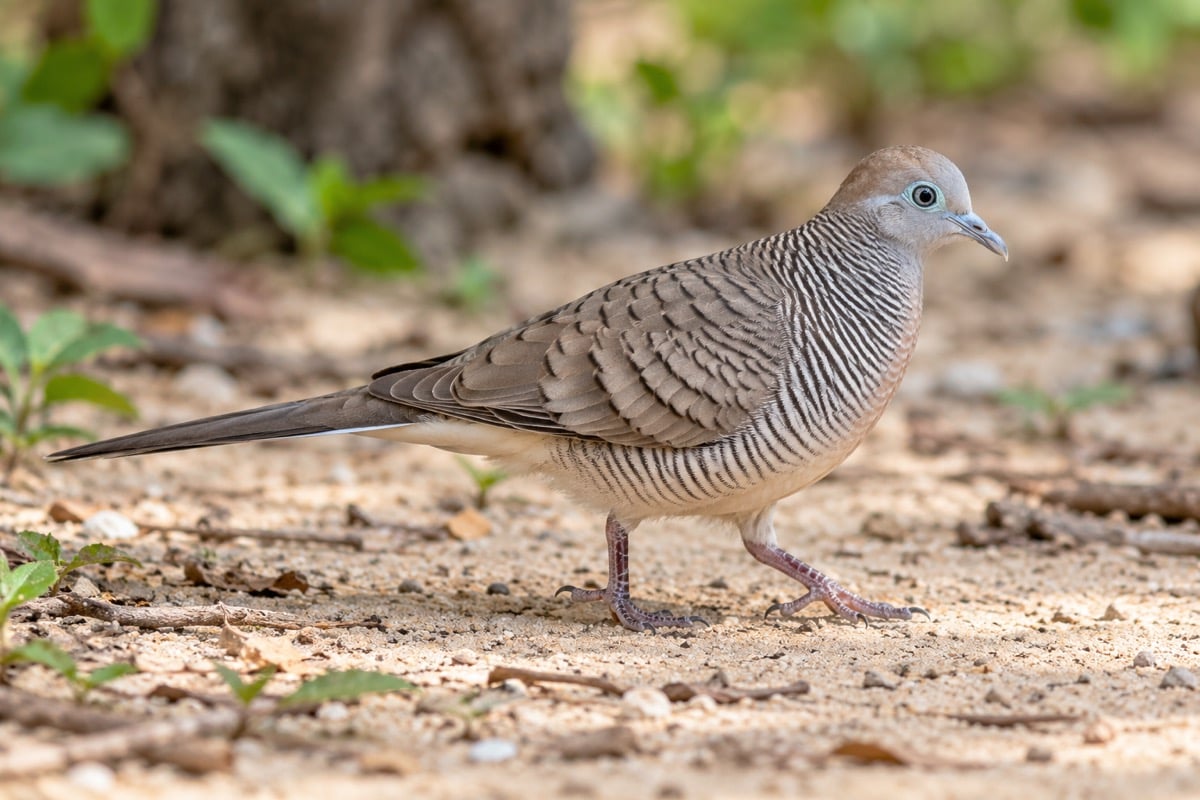
Zebra doves are small, slender doves with long tails and fine dark bars across the neck and sides. They spend plenty of time on the ground, picking up seeds in open patches between plants. Their soft, repeated cooing is familiar in many gardens. People have introduced them to islands far beyond their native Southeast Asian range. A pale blue ring around the eye adds a little color to an otherwise understated bird.
9. Zebra Duiker
- Scientific Name: Cephalophula zebra; formerly Cephalophus zebra
- Habitat: Dense tropical forest
- Size: About 40–50 cm (16–20 in) tall; roughly 15–20 kg (33–44 lb)
- Diet: Fruit, leaves and shoots
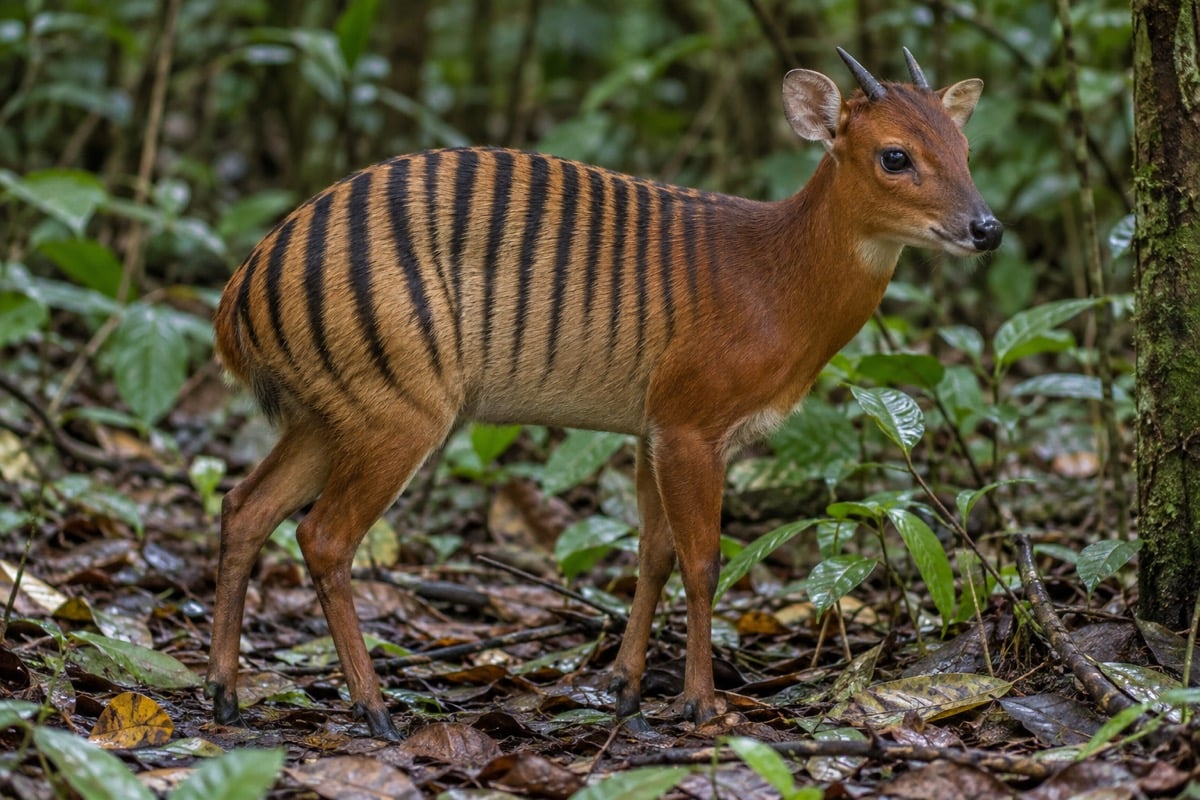
The zebra duiker is a small forest antelope with dark bands across its back and sides. Short legs and a compact body let it move through dense vegetation, a very different setting from the open grasslands of a plains zebra. Fallen fruit is a useful food source. Monkeys and birds feeding above can accidentally drop items that a duiker later finds on the forest floor. Both sexes have small horns. Older wildlife references use Cephalophus zebra, while the Mammal Diversity Database places it in Cephalophula.
10. Zebra Finch
- Scientific Name: Taeniopygia castanotis (Australian zebra finch)
- Habitat: Dry grassland and open woodland near water
- Size: A small finch, under 15 cm (6 in) long
- Diet: Mainly grass seeds, with some insects
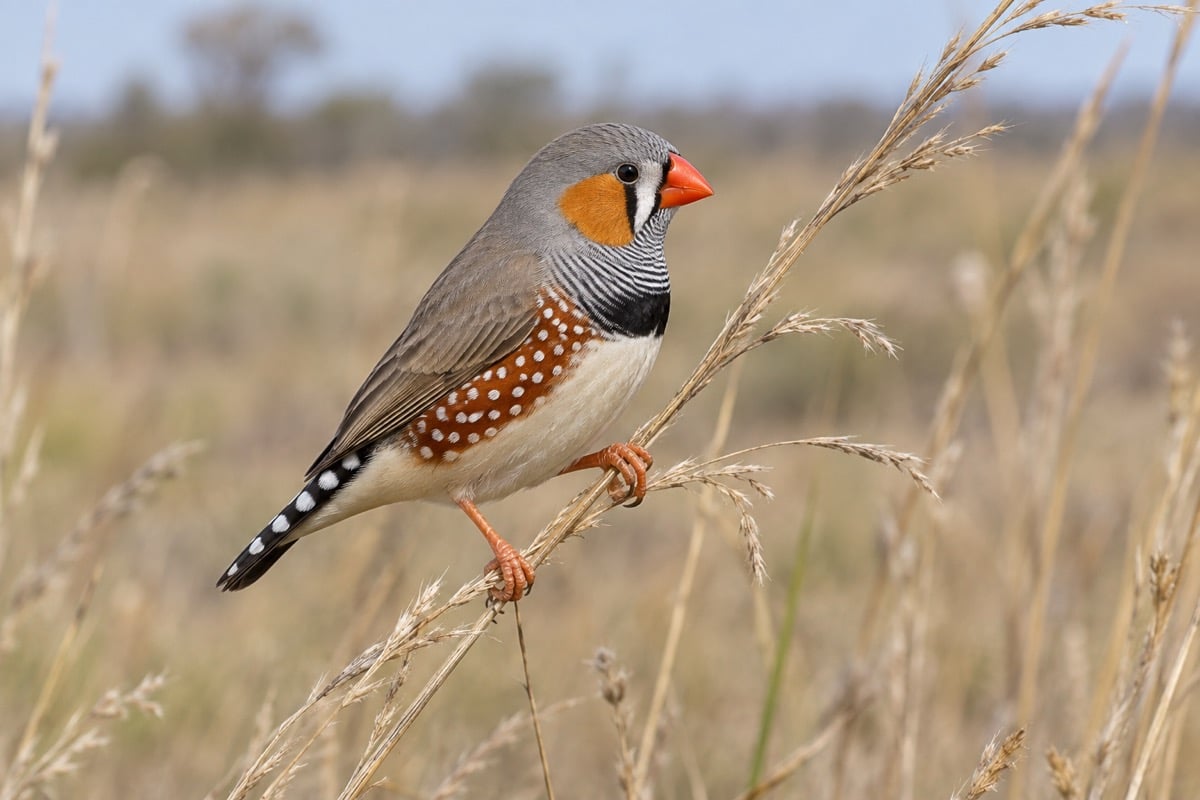
A male Australian zebra finch has orange cheek patches, a red-orange bill and fine black-and-white markings across its throat. Females lack the male’s bright cheek patches and some of his other bold markings. These sociable birds feed in flocks and gather around water sources. Grass seeds provide most of their food, while insects can be important when raising young. Both parents care for eggs and chicks. Some older sources group the Australian bird with the Sunda zebra finch under Taeniopygia guttata; this entry follows BirdLife Australia’s name.
11. Zebra Loach
- Scientific Name: Botia striata
- Habitat: Freshwater streams and rivers with sandy or gravelly bottoms
- Size: About 8 cm body length, excluding tail fin
- Diet: Small invertebrates and some plant material
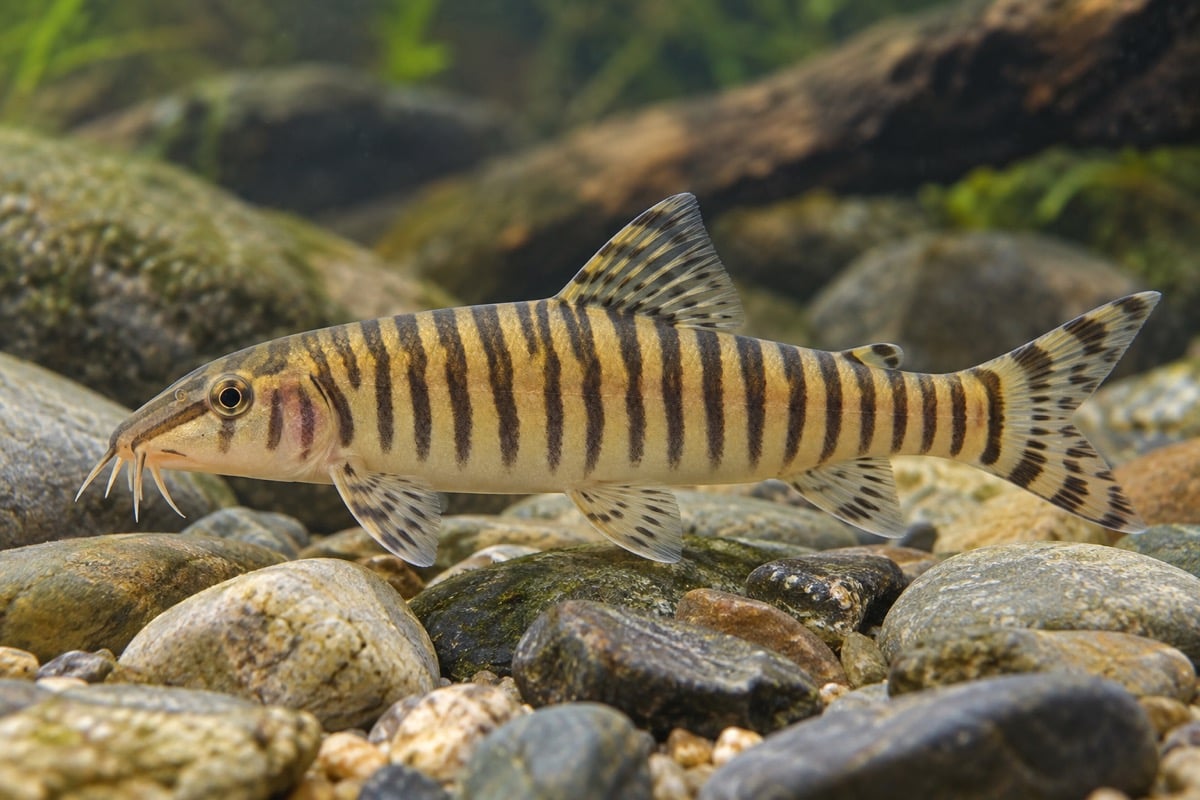
Zebra loaches have numerous dark bands across a pale body, with similar markings on their fins. Their mouth points downward, and small barbels help them investigate the riverbed for food. They are freshwater fish from a limited part of India, where stream conditions matter to their survival. In an aquarium they are often seen exploring together, but their wild habitat is flowing water with shelter among stones and other objects on the bottom.
12. Zebra Longwing
- Scientific Name: Heliconius charithonia
- Habitat: Forest edges, subtropical woodland, gardens, and thickets
- Size: 7.2–10 cm wingspan
- Diet: Adults eat nectar and pollen; caterpillars eat passionflower leaves
The zebra longwing has narrow black wings crossed by pale yellow stripes. Its slow flight makes the pattern easy to appreciate when it moves between flowers. Unlike many butterflies, it eats pollen as well as nectar, gaining nutrients that help adults live for several months. At night, individuals may gather at a shared roost. The caterpillars depend on passionflower vines, so these plants are an important part of the butterfly’s life cycle.
13. Zebra Mantis Shrimp
- Scientific Name: Lysiosquilla maculata
- Habitat: Sandy seabeds and burrows near reefs
- Size: Up to 40 cm long
- Diet: Fish, shrimp, and other small animals
This large mantis shrimp has alternating pale and dark bands along its body. It belongs to the group known as spearers: the front hunting limbs carry sharp spines that seize softer prey such as fish and shrimp. Much of its time is spent close to a burrow, where it can wait for passing food. Its movable stalked eyes keep watch above the entrance while most of the animal remains sheltered below.
14. Zebra Moray
- Scientific Name: Gymnomuraena zebra
- Habitat: Rocky and coral reefs with crevices and ledges
- Size: Up to 1.5 m long
- Diet: Crustaceans, mollusks, and sea urchins
The zebra moray wears narrow pale bands around a dark brown body. Its rounded snout and blunt, closely packed teeth suit a diet of hard-shelled animals. It searches reef crevices for crabs and other invertebrates, crushing their defenses instead of relying on long needlelike teeth. Like other morays, it has an elongated body that can fit into tight hiding places. Often only its head is visible at the entrance to a rocky shelter.
15. Zebra Mussel
- Scientific Name: Dreissena polymorpha
- Habitat: Freshwater lakes, rivers and reservoirs
- Size: Most adults about 1.3–3.8 cm (0.5–1.5 in) long
- Diet: Plankton and suspended food particles filtered from water
A zebra mussel is a small freshwater bivalve that attaches to hard surfaces. Its shell often carries dark zigzag bands, although some individuals have much less obvious striping. Outside its native range, dense colonies can damage water infrastructure and compete with native aquatic animals. Filtering water is how it feeds, but large introduced populations can remove so much plankton that food webs change. Its small size does not prevent it from having a substantial ecological impact.
16. Zebra Nerite
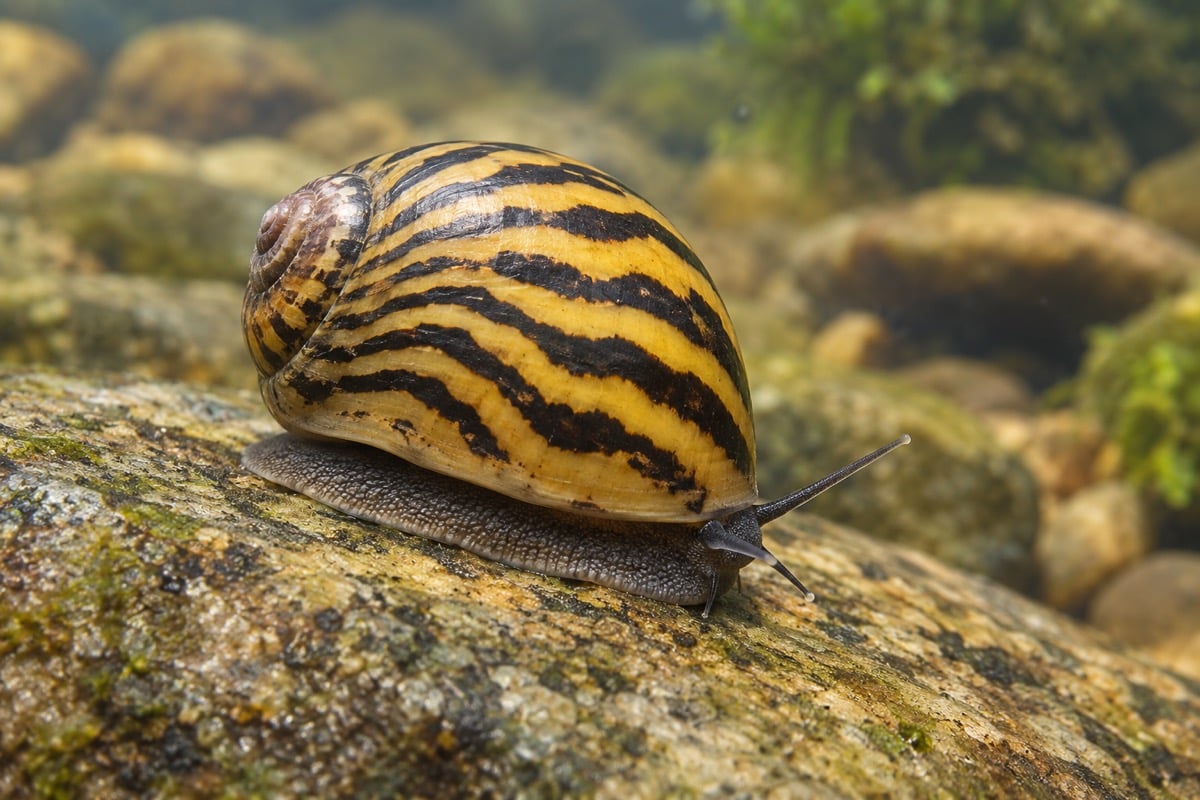
- Scientific Name: Vittina natalensis
- Habitat: Freshwater and brackish coastal waterways
- Size: About 2–3 cm shell length
- Diet: Algae and surface biofilm
The zebra nerite is a small aquatic snail with a rounded shell marked by dark stripes or spots. It moves slowly across hard surfaces, scraping away algae as it goes. A tough plate called an operculum helps close the shell opening when the snail withdraws. This species is often kept in aquariums, but successful reproduction requires salty or brackish conditions. Its shell pattern can vary considerably, even among snails of the same species.
17. Zebra Pleco
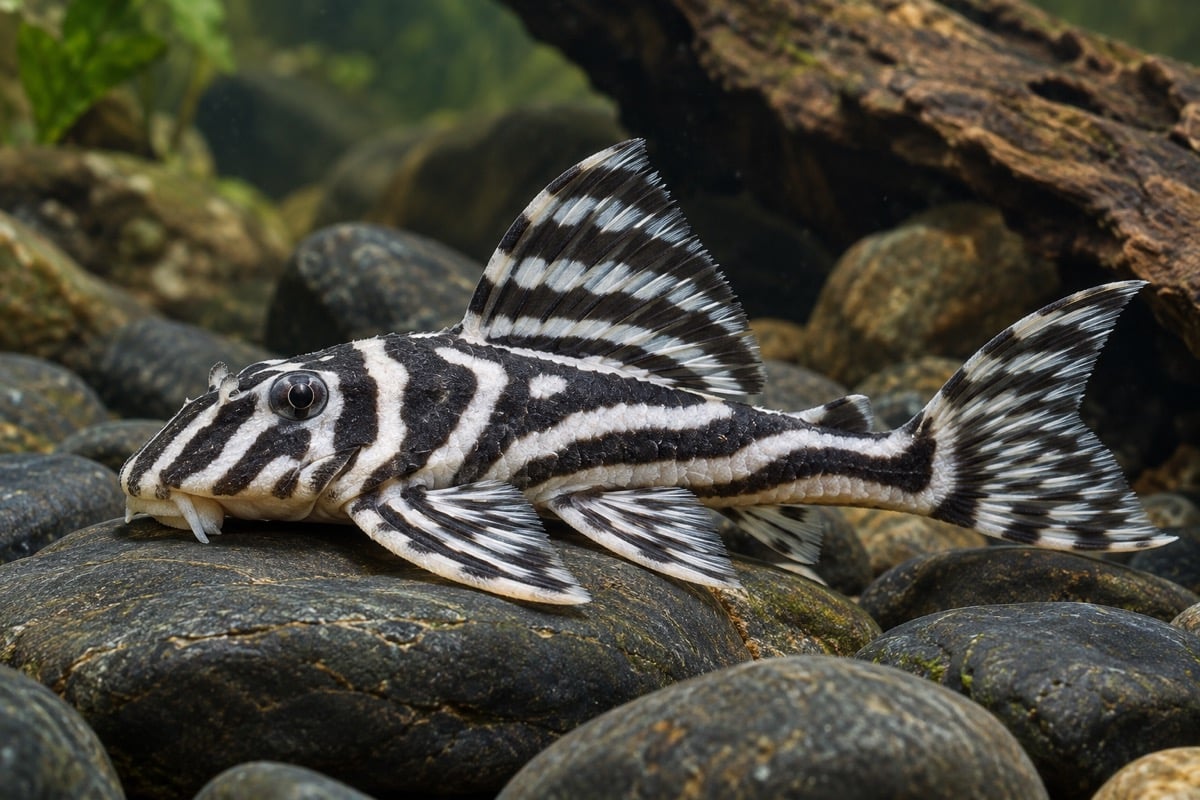
- Scientific Name: Hypancistrus zebra
- Habitat: Rocky stretches and crevices in flowing freshwater
- Size: About 7 cm long
- Diet: Mostly small aquatic invertebrates
The zebra pleco is a small armored catfish with bold black and white stripes. It lives among rocks in Brazil’s Xingu River, where crevices offer shelter from the current and larger fish. Its flattened underside and downward-facing mouth help it stay close to the bottom. During breeding, eggs are laid inside a cavity and the male tends them. Its striking appearance has made it well known to aquarists despite its very limited natural range.
18. Zebra Seahorse
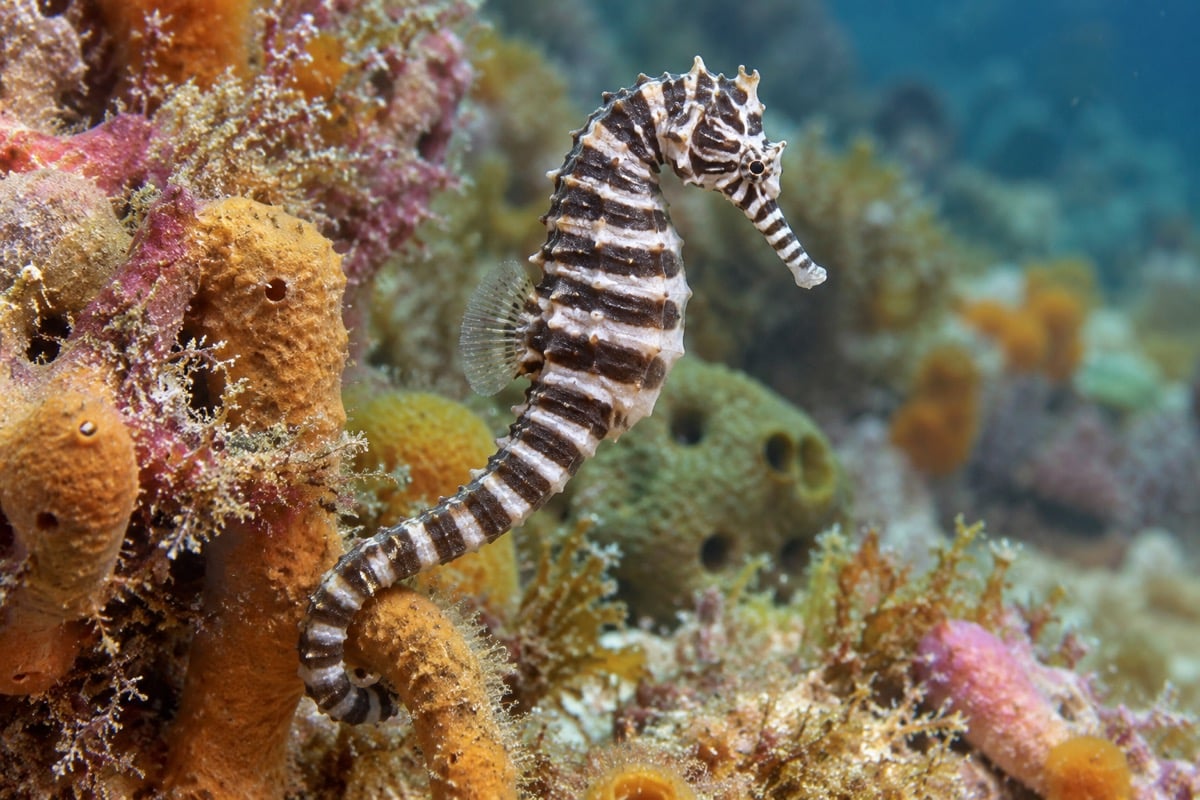
- Scientific Name: Hippocampus zebra
- Habitat: Coastal marine habitats, often near corals
- Size: Up to about 9 cm tall
- Diet: Probably small crustaceans and other tiny drifting animals
The zebra seahorse has alternating dark and pale bands around its upright body. Its curled tail can hold onto underwater growth, while the small mouth sits at the end of a tubular snout. As in other seahorses, the male carries developing young in a brood pouch after receiving eggs from the female. This is a poorly studied species, and some details of its feeding and habitat use are still based on limited observations.
19. Zebra Shark
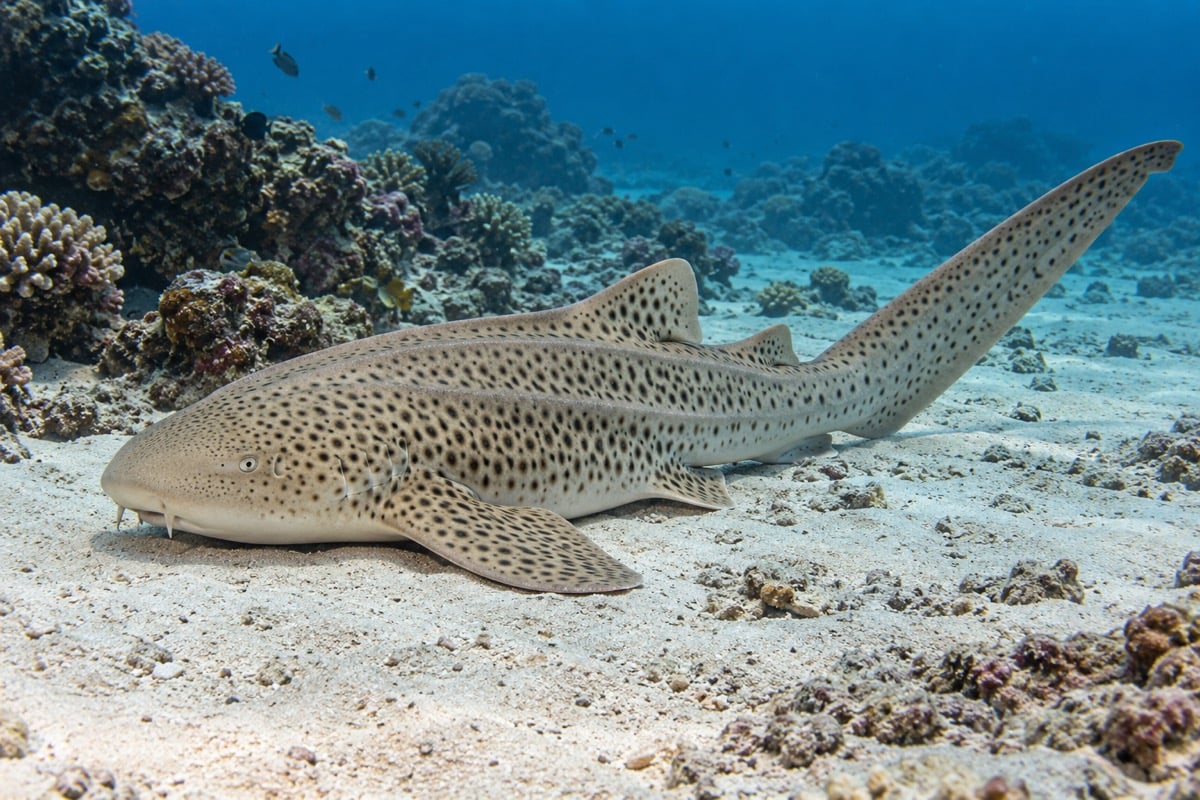
- Scientific Name: Stegostoma tigrinum; formerly Stegostoma fasciatum
- Habitat: Shallow reefs and nearby sandy seabeds
- Size: Large adults reach about 2.5 m (8 ft) long
- Diet: Mollusks, crustaceans and small fish
The zebra shark changes its pattern as it grows. Young animals have pale stripes against a darker body, while adults develop dark spots on a sandy background. An exceptionally long tail is another useful identification feature. It often rests on the seabed during daylight and becomes more active while hunting at night. Short barbels near the snout and a mouth underneath the head suit searching for prey around reef crevices. Many older sources call this species Stegostoma fasciatum; current references commonly use Stegostoma tigrinum.
20. Zebra Shovelnose Catfish
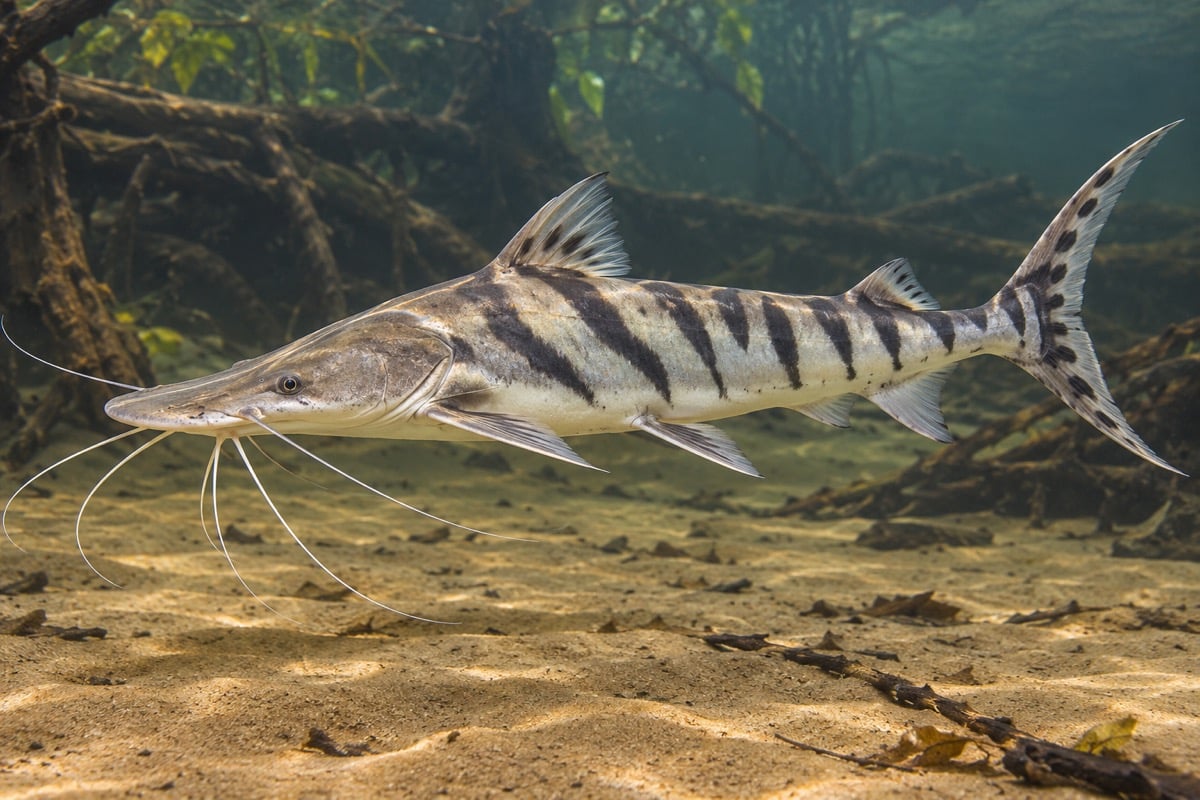
- Scientific Name: Brachyplatystoma juruense
- Habitat: Large tropical rivers
- Size: Up to 60 cm long
- Diet: Fish
The zebra shovelnose catfish has a flattened head, long sensory barbels, and irregular dark bands across a pale body. It inhabits two of South America’s great river systems, the Amazon and Orinoco. Its wide mouth suits a predatory diet, while the barbels help it investigate the surrounding water. Despite sometimes appearing in the aquarium trade, this is a substantial river fish. Its pattern and proportions also change as it grows from a juvenile into an adult.
21. Zebra Sole
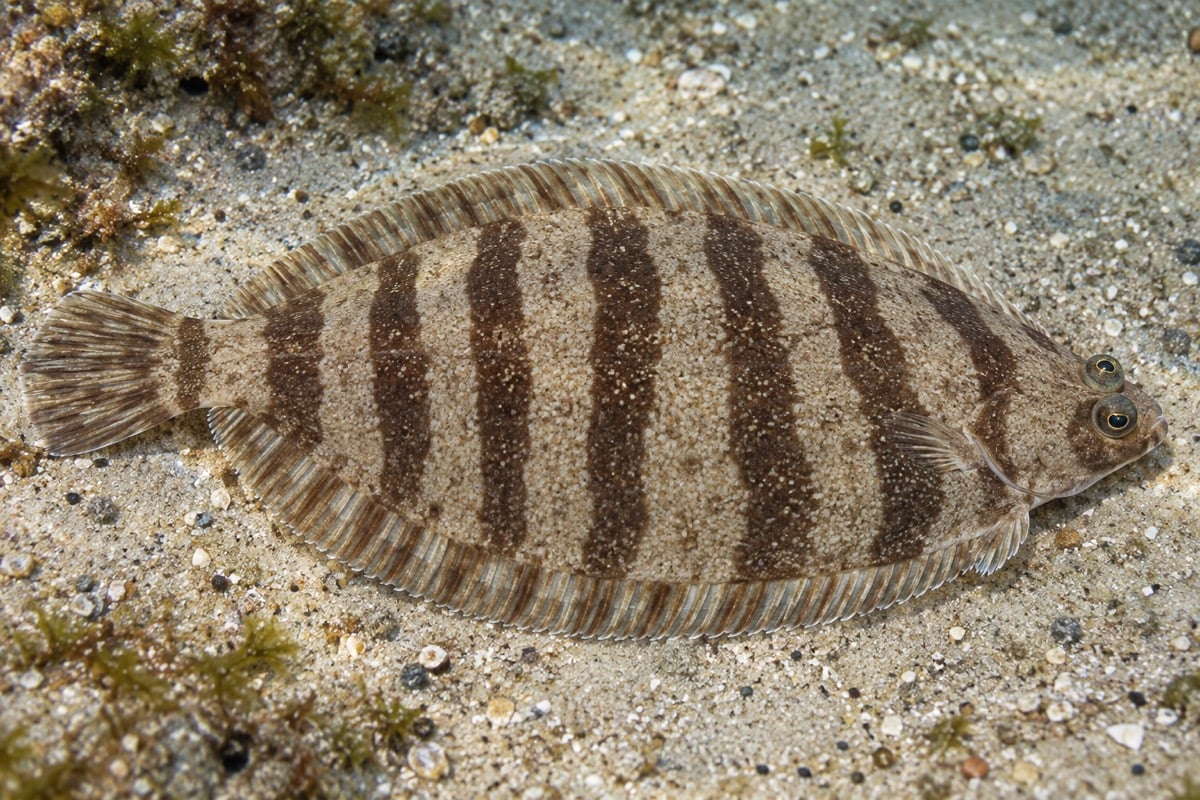
- Scientific Name: Zebrias zebra
- Habitat: Shallow coastal water over sand and mud
- Size: Commonly about 16 cm long; larger individuals occur
- Diet: Bottom-dwelling invertebrates, especially small crustaceans
The zebra sole is a flatfish with a striped upper surface and both eyes on the same side of its head. It spends its life close to the seabed, where its flattened shape helps it rest against sand or mud. Small crustaceans and other bottom-dwelling animals provide food. The surrounding fins ripple as it moves. Despite the zebra name, its bars are usually shades of brown and pale cream rather than stark black and white.
22. Zebra Spider
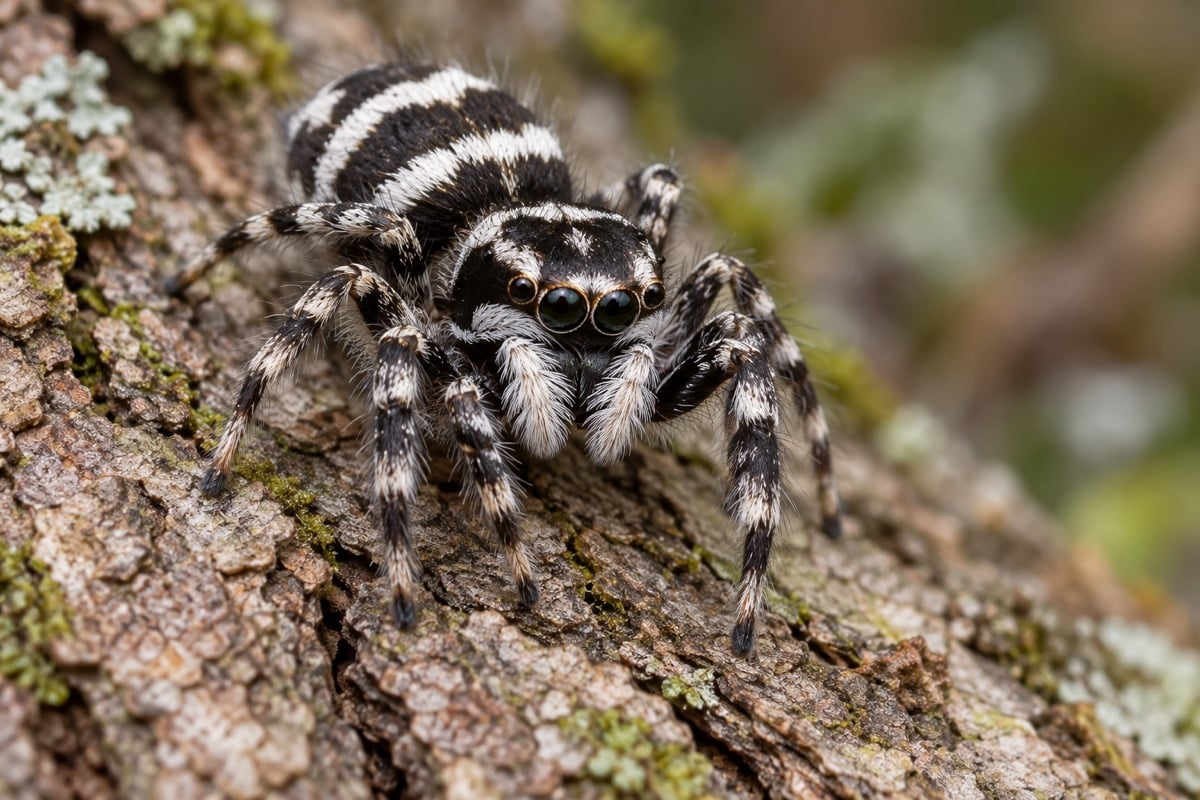
- Scientific Name: Salticus scenicus
- Habitat: Sunny walls, fences, rocks, gardens, and woodland
- Size: 4–7 mm body length
- Diet: Small insects and spiders
The zebra spider is a tiny jumping spider with pale bands across its dark abdomen. Large forward-facing eyes help it judge distance before pouncing on a fly or another small animal. It does not need a prey-catching web, although it uses silk for safety lines and shelter. Sunny walls and fences are good places to see one hunting. It may turn to face a nearby observer, following movement with surprisingly precise attention.
23. Zebra Swallowtail
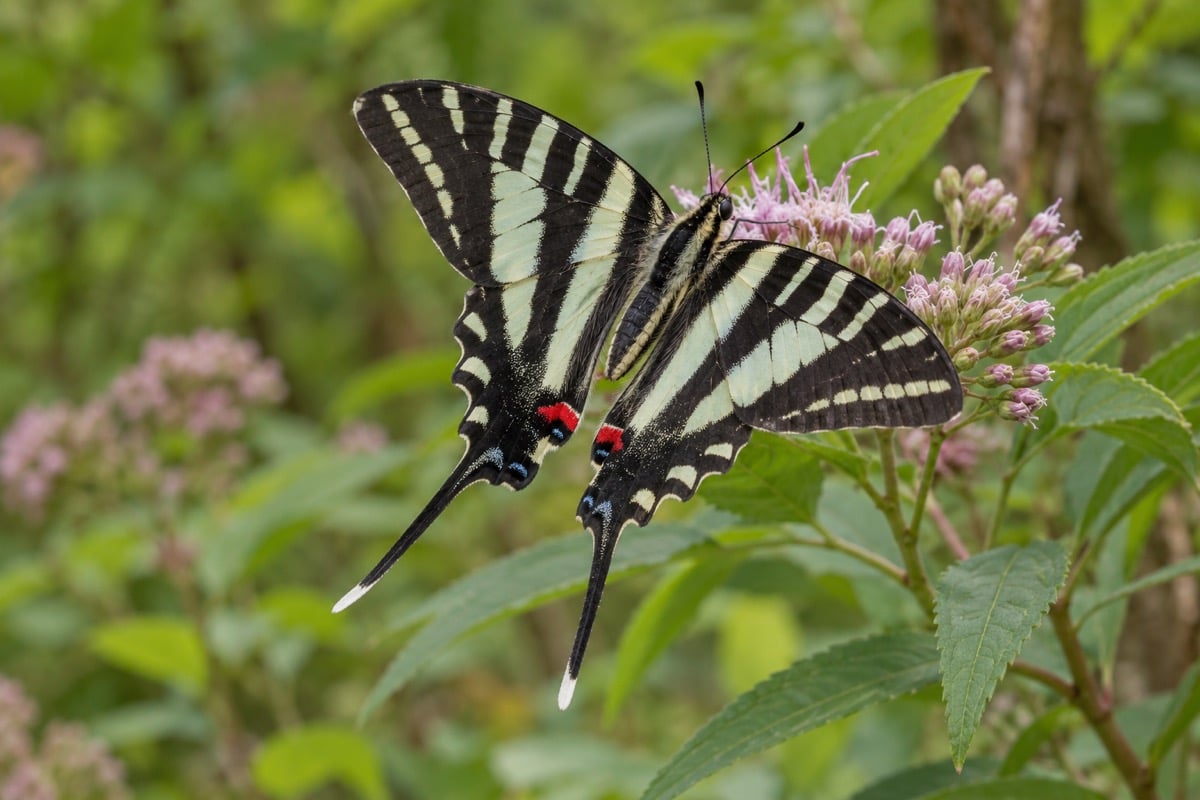
- Scientific Name: Protographium marcellus
- Habitat: Woodland edges and other areas with pawpaw plants
- Size: Wingspan about 6.4–10 cm (2.5–4 in)
- Diet: Adults drink nectar; caterpillars feed on pawpaw leaves
Bold dark stripes cross the pale wings of a zebra swallowtail. Long, narrow extensions on the hindwings give it the swallowtail outline, while small colored markings add detail near the rear of the wings. Its life cycle depends on pawpaw plants, which provide food for the caterpillars. Adults visit flowers for nectar, but a patch of flowers alone does not provide everything the species needs to reproduce. It is different from the zebra longwing, another striped butterfly with a different wing shape and different host plants.
24. Zebra Turkeyfish
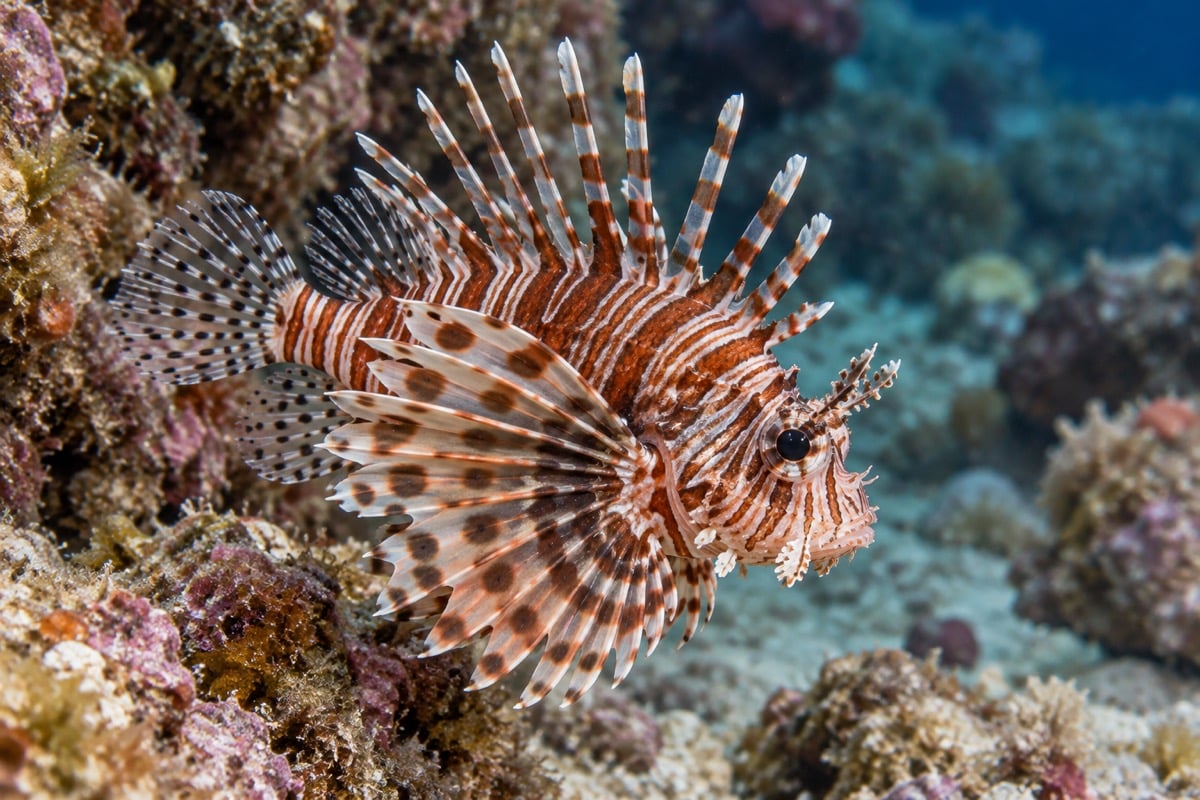
- Scientific Name: Dendrochirus zebra
- Habitat: Coral reefs, rocky shelters, and lagoons
- Size: Up to 25 cm long
- Diet: Small fish and crustaceans
The zebra turkeyfish is a small lionfish with bold bands and broad, fanlike pectoral fins. It often rests near ledges or other reef shelters, blending into a busy background of rock and coral. Small fish and crustaceans become prey when they approach closely enough. The dorsal spines can deliver venom, so its decorative appearance should never be mistaken for an invitation to touch. Its compact body distinguishes it from some of the larger lionfish species.
25. Zebra Waxbill
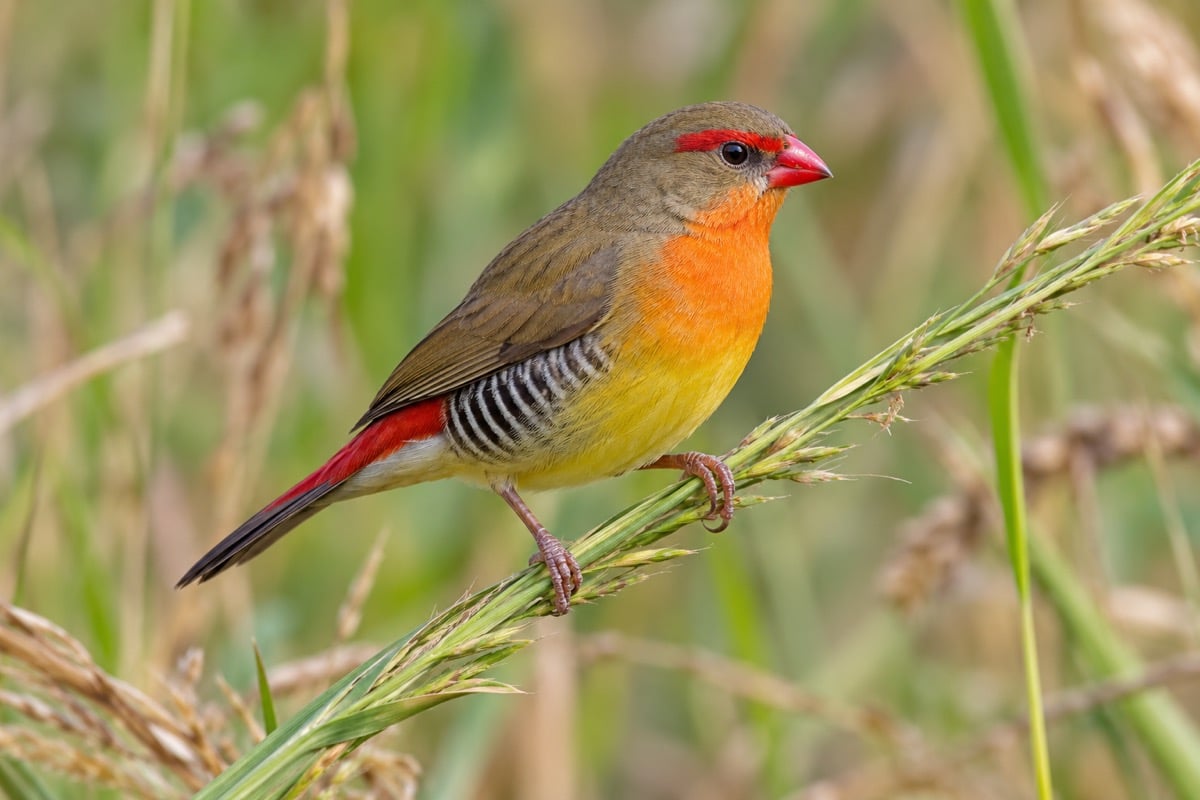
- Scientific Name: Amandava subflava
- Habitat: Grassland, savanna, and damp grassy areas
- Size: About 9 cm long
- Diet: Seeds, insects, and young shoots
The zebra waxbill is also known as the orange-breasted waxbill, a name that highlights its brightest feature. Males have a reddish eyebrow and fine dark bars on their sides; females are less colorful. This tiny finch lives among grasses, where its short bill is useful for handling seeds. Its grassy surroundings also provide nesting material. A red bill and warm yellow-orange underside make it easy to distinguish from the larger zebra finch of Australia.
26. Zebra-tailed Lizard
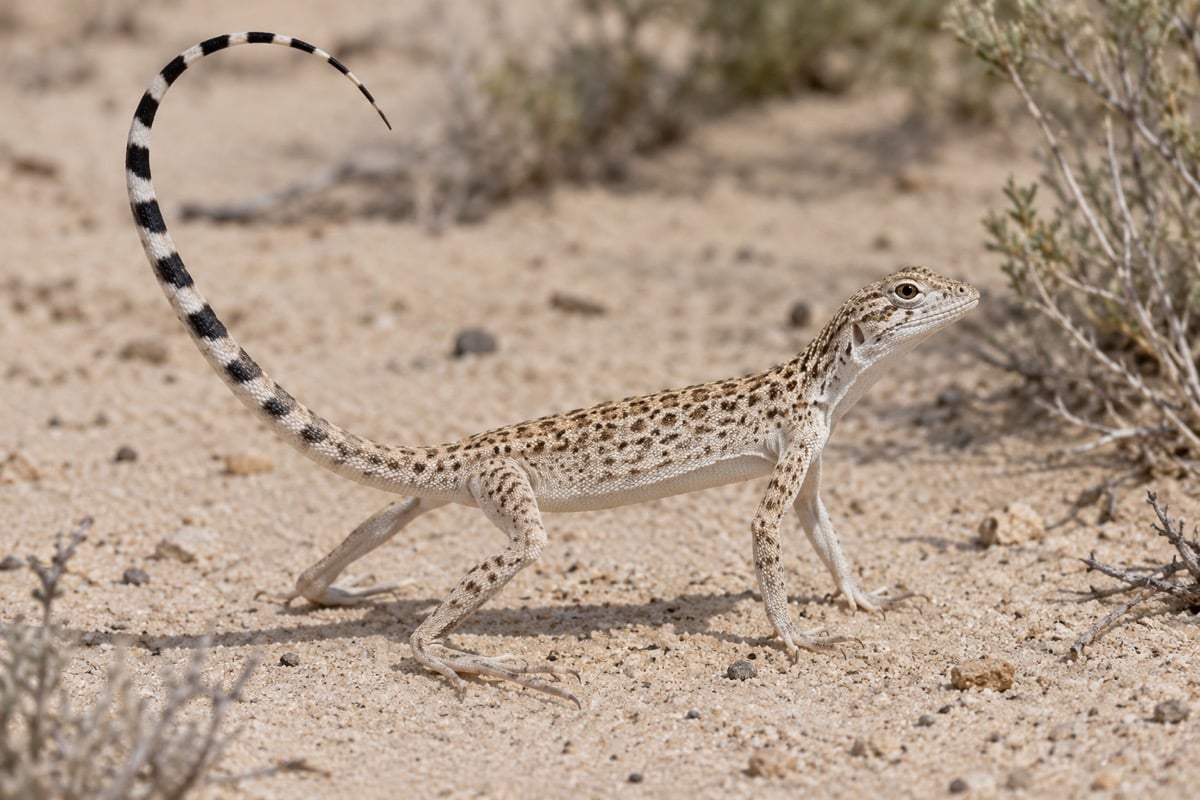
- Scientific Name: Callisaurus draconoides
- Habitat: Open desert washes, sandy ground and sparsely vegetated flats
- Size: Small, slender lizard with a long tail
- Diet: Mostly insects and other small invertebrates
The zebra-tailed lizard’s pale body can blend into desert soil. Its tail provides the contrast: curling it upward exposes striking dark and light bands on the underside. The lizard may wave that raised tail, a display that could help draw a predator’s attention away from its head and body. It favors open ground with room to run, including washes and desert flats with sparse plant cover. Long legs and a slender build suit quick movement across those exposed surfaces.
27. Zebrafish
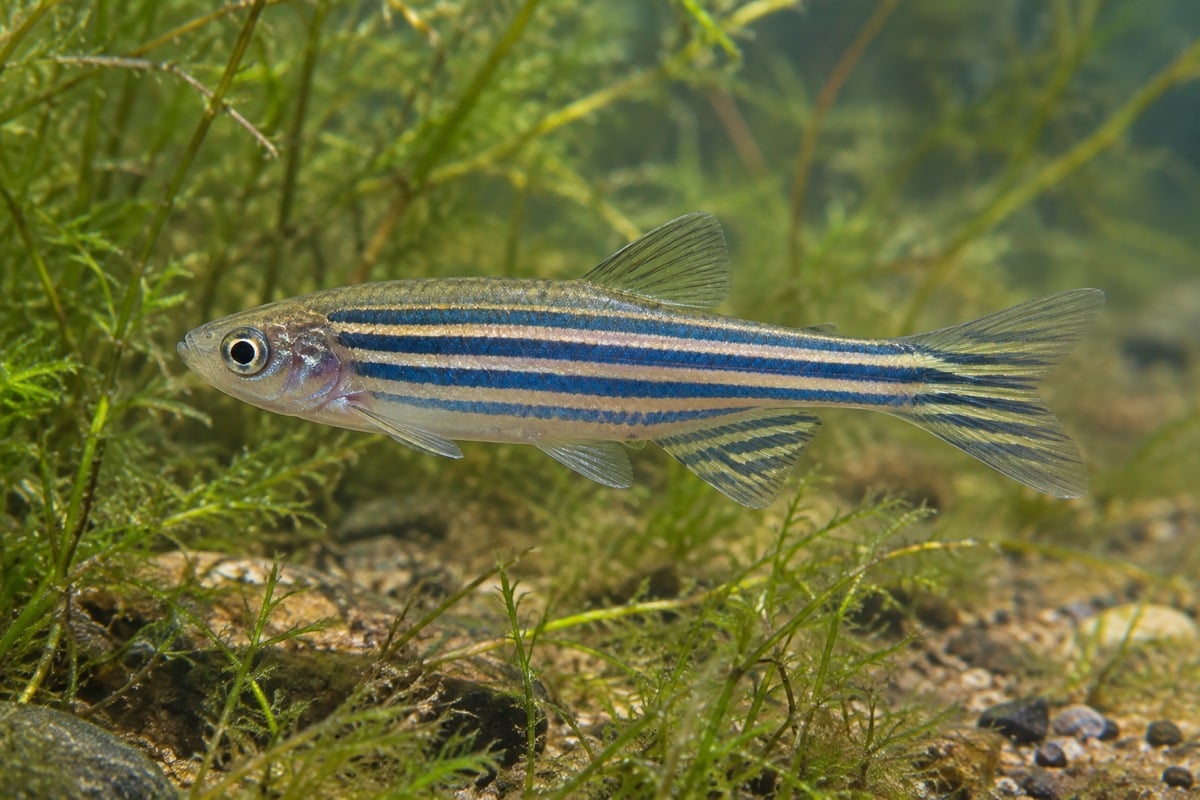
- Scientific Name: Danio rerio
- Habitat: Shallow freshwater streams, pools and floodplain habitats
- Size: Often around 3–5 cm (1.2–2 in) long
- Diet: Small invertebrates, plankton and some plant material
The zebrafish, also called zebra danio, wears narrow horizontal stripes along its small body. Unlike the vertical stripes of its mammal namesake, these dark lines run from near the head toward the tail. It is a social freshwater fish and a widely used research animal. Scientists can study its early development particularly well because the embryos develop outside the mother and are transparent. Those laboratory uses can make it easy to overlook its original setting: shallow waters in South Asian landscapes.
28. Zebrasoma desjardinii (Indian Sailfin Tang)
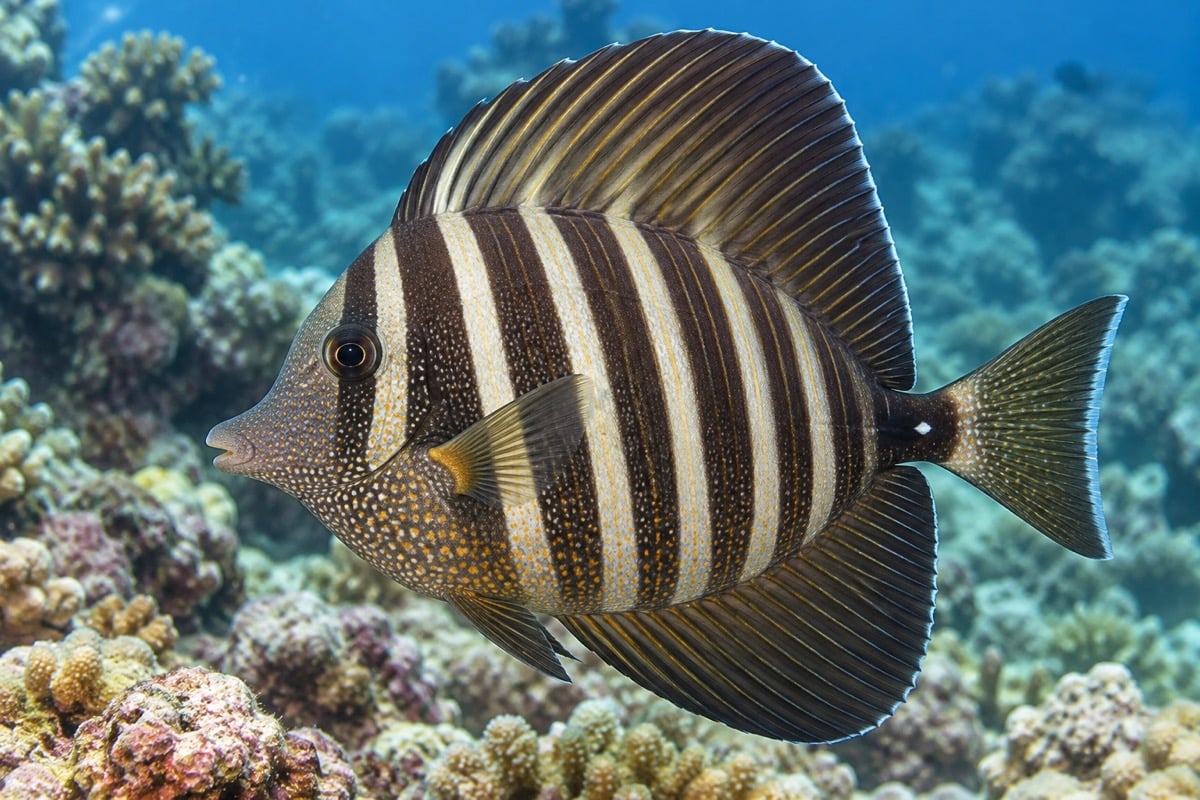
- Scientific Name: Zebrasoma desjardinii
- Habitat: Coral reefs and lagoons
- Size: Up to 40 cm long
- Diet: Mostly algae
The Indian sailfin tang can spread its tall dorsal and anal fins into an impressive rounded outline. Its body carries stripes and spots that become more elaborate as it grows. It grazes on algae around reefs, using a small mouth to pick food from surfaces. Like other surgeonfish, it has a sharp defensive spine near the base of the tail. Its scientific name earns it a place among animals beginning with Z.
29. Zebrasoma scopas (Scopas Tang)
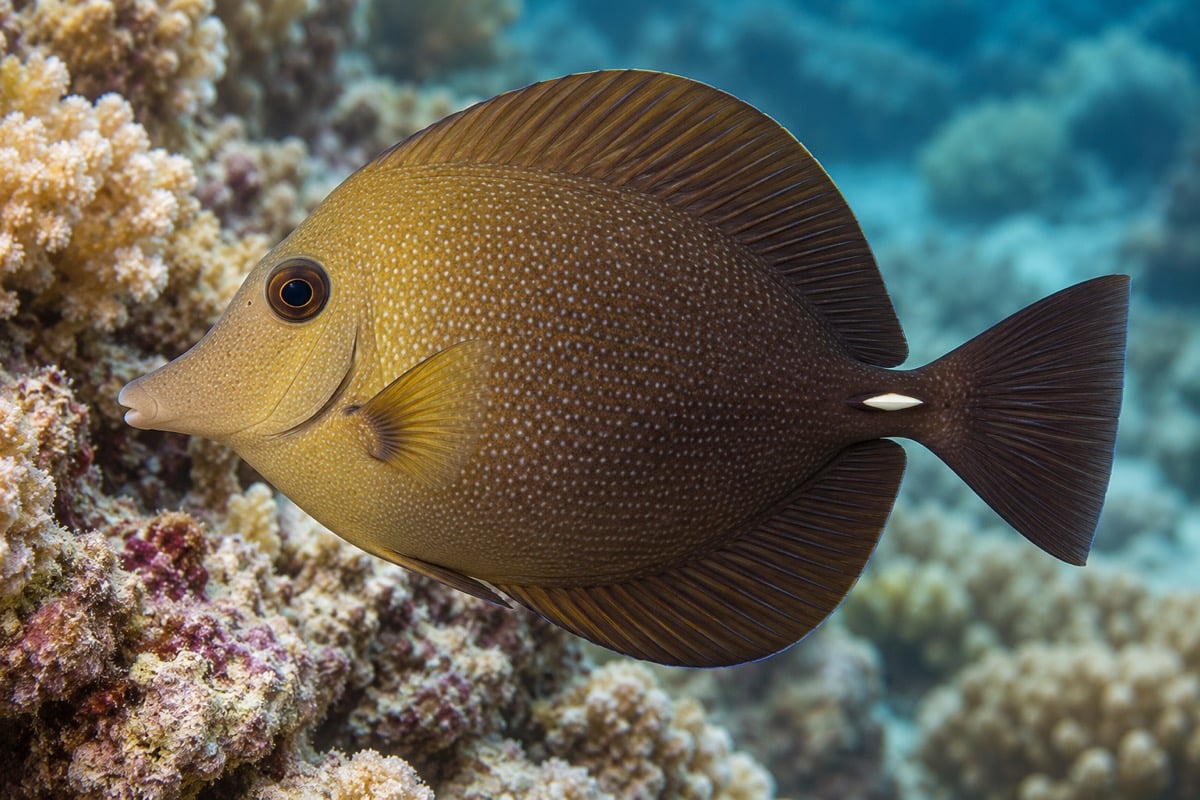
- Scientific Name: Zebrasoma scopas
- Habitat: Coral reefs and lagoons
- Size: Up to 40 cm body length, excluding tail fin
- Diet: Mostly filamentous algae
The scopas tang has a deep body, a narrow snout, and a color pattern that often fades from a paler front to a dark brown rear. Tiny markings become visible at close range. It spends much of the day grazing algae on reef surfaces, sometimes alongside other herbivorous fish. A sharp spine at the tail base provides defense. Although less brightly colored than some relatives, it has the same distinctive tall-finned shape.
30. Zebrasoma velifer (Sailfin Tang)
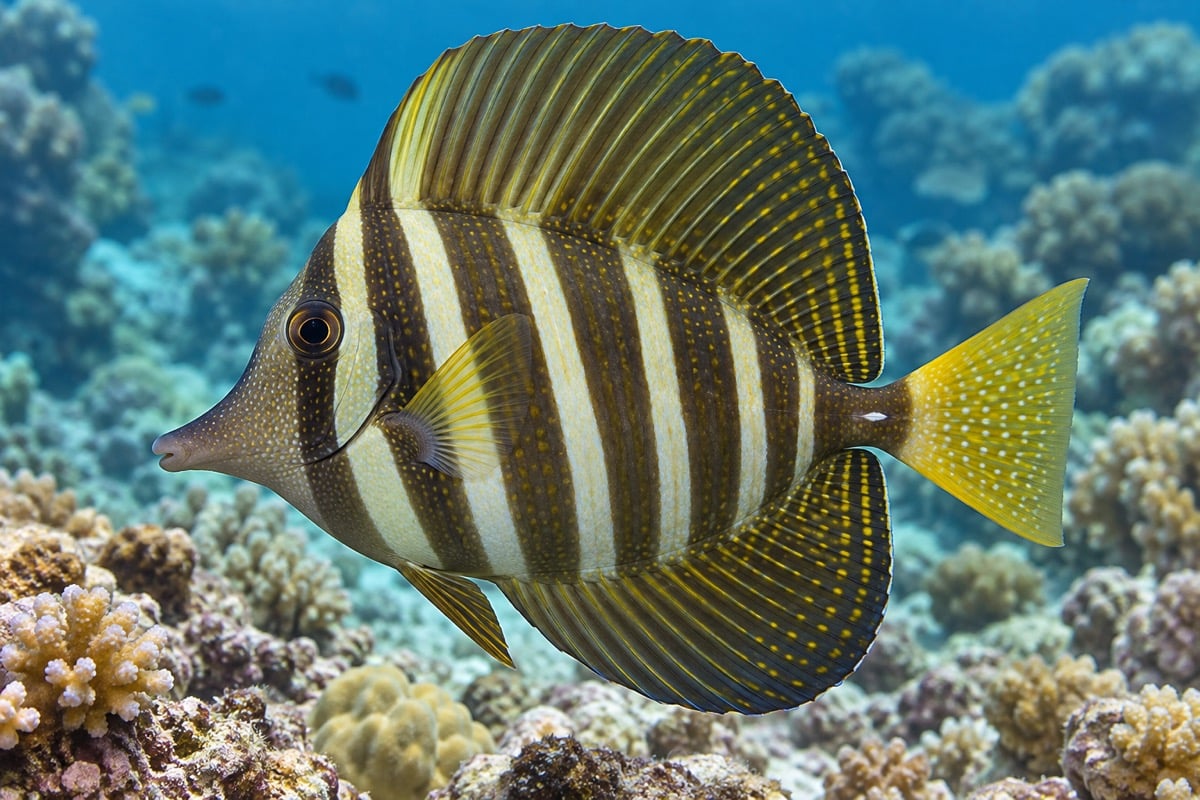
- Scientific Name: Zebrasoma velifer
- Habitat: Coral and rocky reefs
- Size: Up to about 40 cm long
- Diet: Mostly algae, with some zooplankton
The sailfin tang looks much larger when it opens its oversized dorsal and anal fins. Dark vertical bands cross a pale body, and the tail is often yellow. It feeds mainly on algae during daylight and retreats into reef cover at night. Young fish frequently stay in sheltered areas among rocks and coral. This species also appears in older references as Zebrasoma veliferum, so both versions of the scientific name may be encountered.
31. Zebu
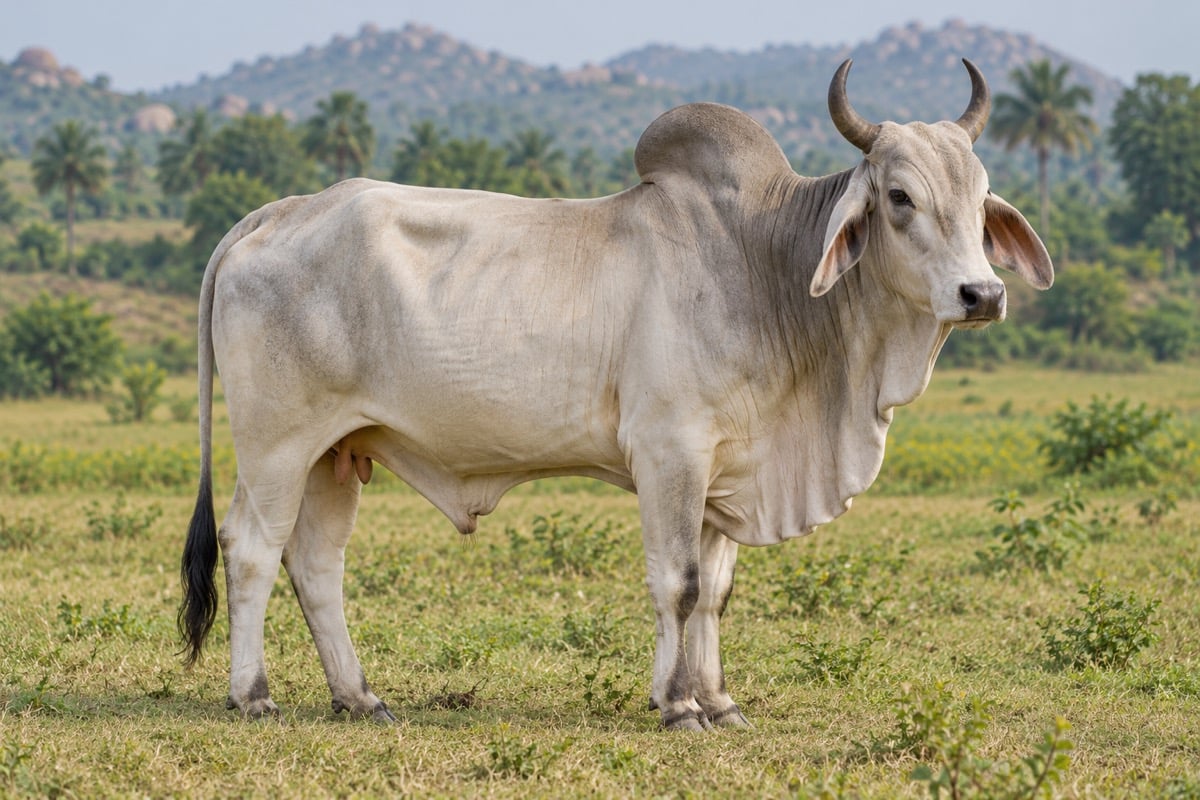
- Scientific Name: Bos taurus indicus
- Habitat: Farms and grazing land, especially in warm climates
- Size: Highly variable by breed; many adults weigh several hundred kilograms
- Diet: Grasses, hay, and other plant material
Zebu are domestic cattle recognized by a shoulder hump, loose skin beneath the neck, and often large ears. Their ancestors were domesticated in South Asia, and many breeds are now raised in warm regions around the world. Some are small, while others are substantial working animals. Like other cattle, they chew cud and digest plant material in a specialized stomach. The familiar hump is especially pronounced in bulls of many zebu breeds.
32. Zenaida Dove
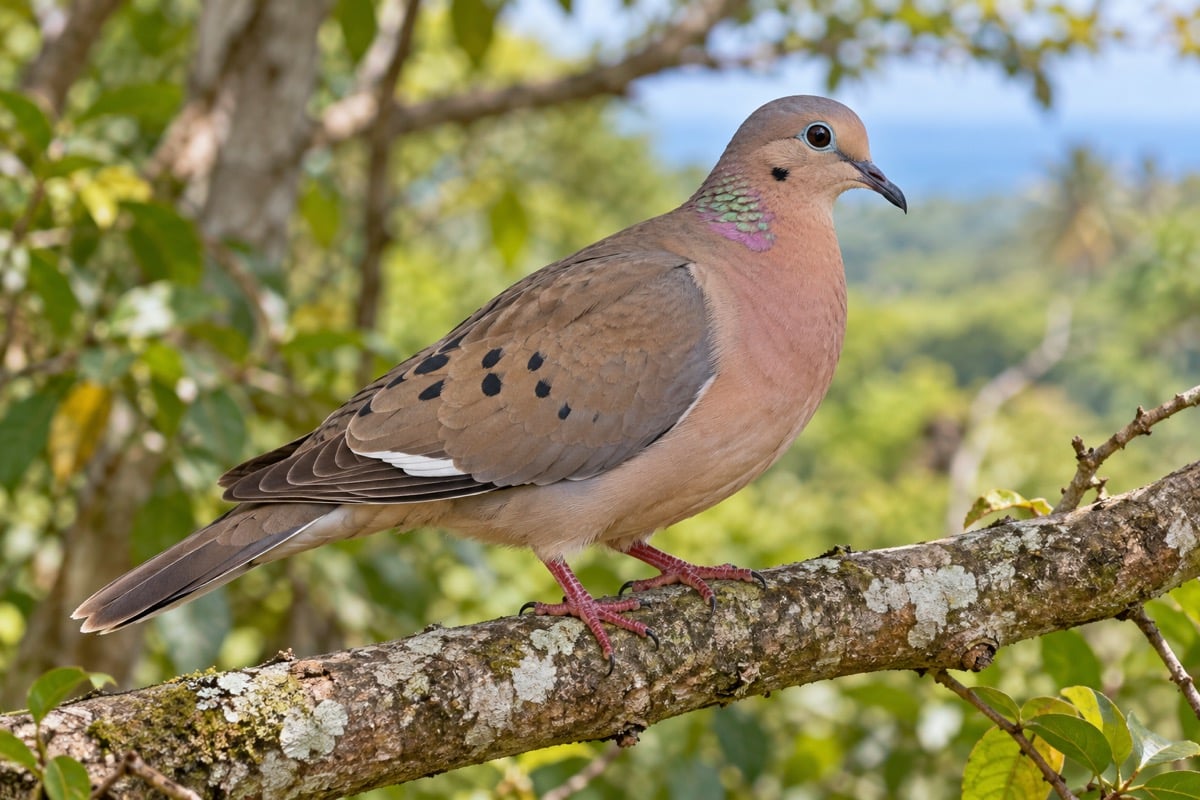
- Scientific Name: Zenaida aurita
- Habitat: Woodland edges, scrub, mangroves, and cultivated land
- Size: About 28–30 cm long
- Diet: Mostly seeds and small fruits, with occasional invertebrates
The Zenaida dove is a warm brown dove with dark wing spots and a rounded tail. It usually gathers food on the ground, taking seeds from a wide variety of plants. Its repeated cooing can sound similar to that of a mourning dove, but the two are separate species. Nesting sites vary from trees to the ground where conditions permit. Both parents share the work of incubating eggs and caring for their chicks.
33. Zenaida macroura (Mourning Dove)
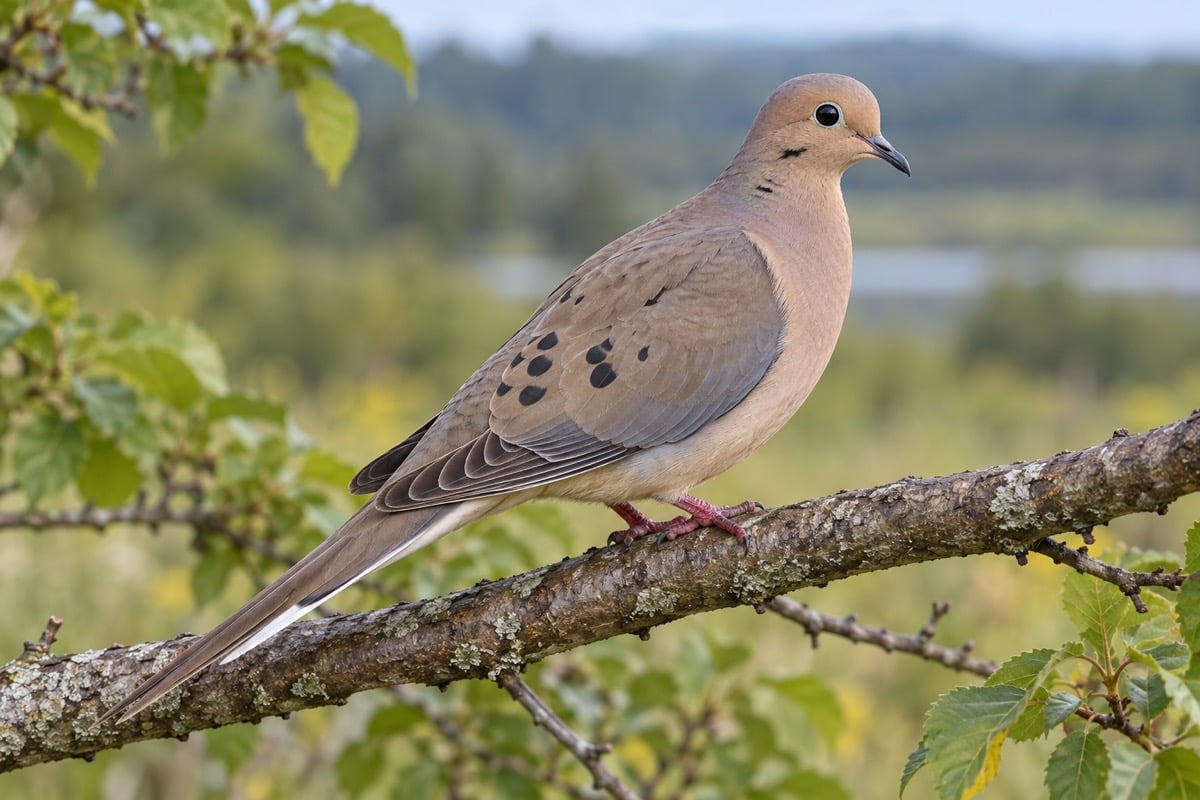
- Scientific Name: Zenaida macroura
- Habitat: Open woodland, farmland, parks, and gardens
- Size: About 30 cm long
- Diet: Mostly seeds
The mourning dove’s scientific name begins with Z, bringing a very familiar bird into this part of the alphabet. Its small head, long pointed tail, and dark wing spots help identify it. The soft cooing call gives the bird its common name, while its wings can whistle during takeoff. It collects seeds on the ground and stores them in its crop before digesting them in a safer resting place nearby.
34. Zigzag Eel
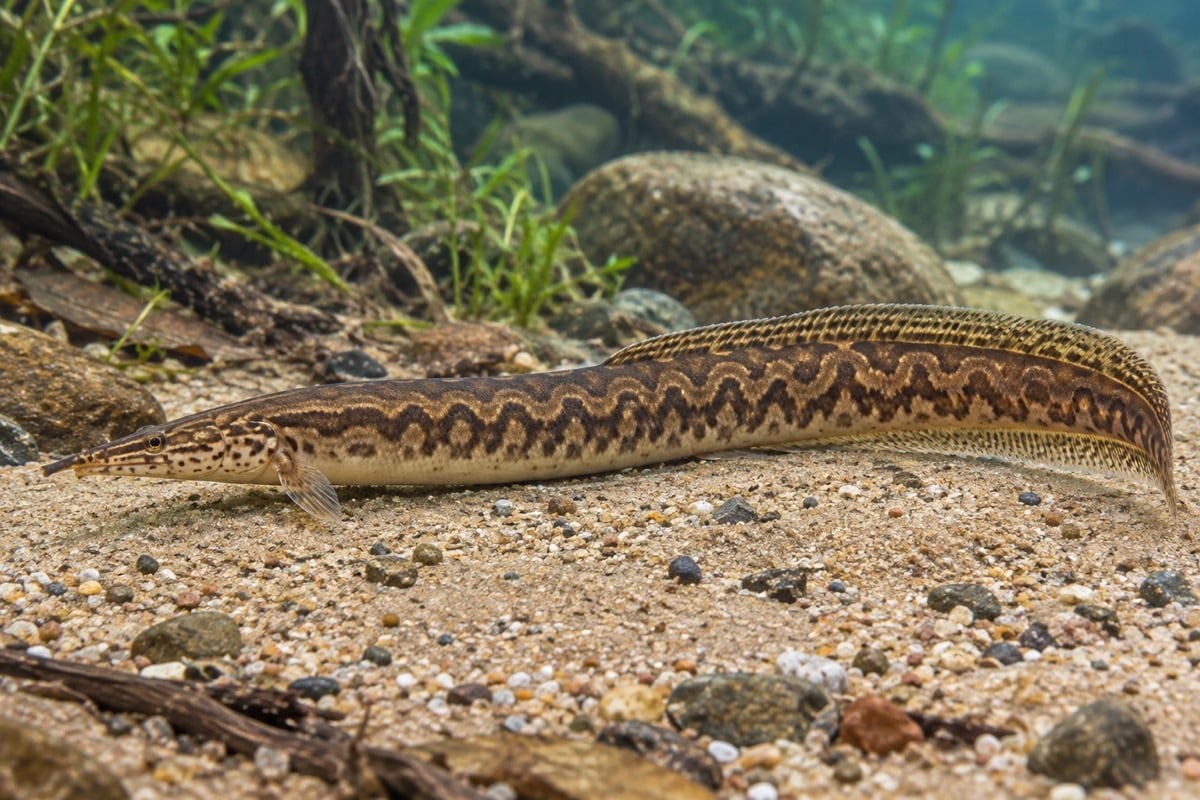
- Scientific Name: Mastacembelus armatus
- Habitat: Rivers, streams, and other freshwater or brackish habitats
- Size: Up to 90 cm long
- Diet: Aquatic invertebrates and small fish
The zigzag eel has a long brown body patterned with dark, winding lines. Despite its name and shape, it belongs to the spiny eel family rather than the true eels. Small isolated spines run along the front part of its back. It stays close to the bottom, where its narrow snout helps it investigate shelter and potential food. A fully grown individual can become a large fish, far beyond the size of most aquarium juveniles.
35. Zigzag Heron
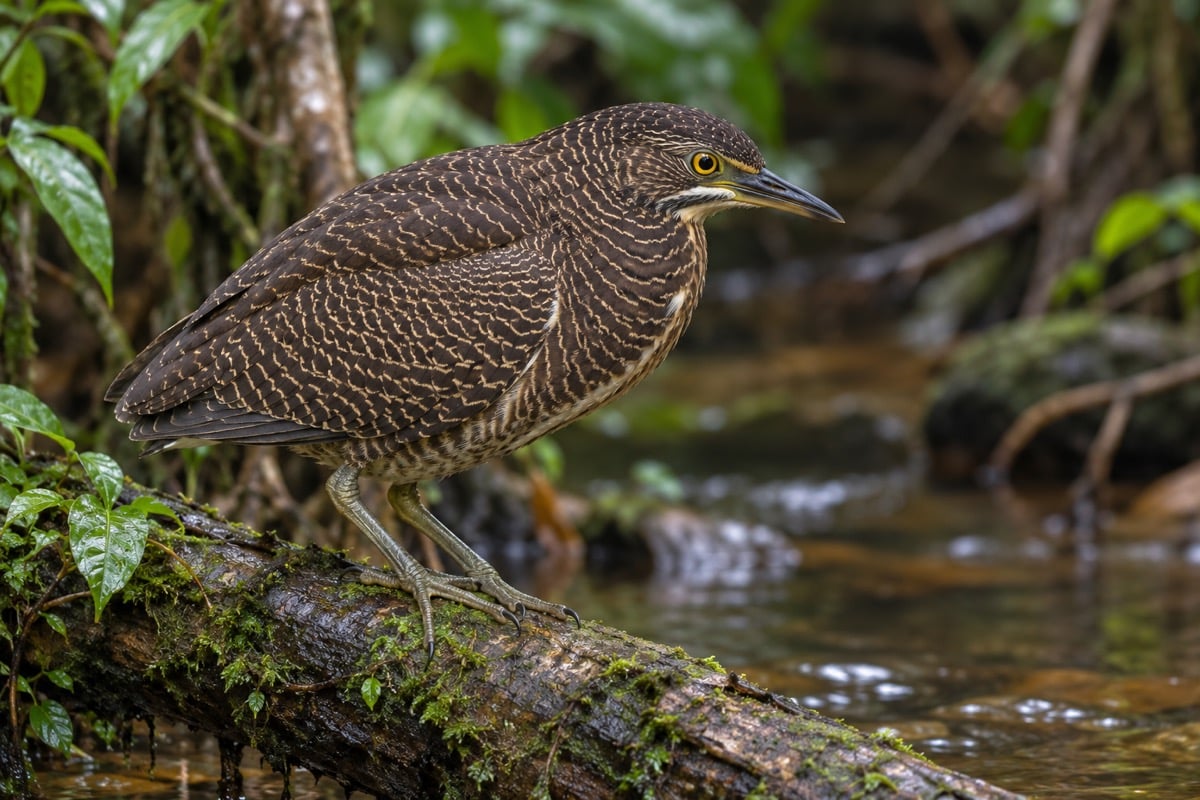
- Scientific Name: Zebrilus undulatus
- Habitat: Forested swamps and densely vegetated riverbanks
- Size: 28–30 cm long
- Diet: Fish and other small aquatic animals
The zigzag heron is a small, secretive heron with fine wavy markings across its dark plumage. It lives around shaded water inside tropical forest, often perching on roots or low branches. From there, it can lunge toward a fish while keeping hold of its perch. Its compact posture and dark colors make it easy to overlook. Much of its natural history remains less well known than that of larger herons found in open wetlands.
36. Zigzag Salamander
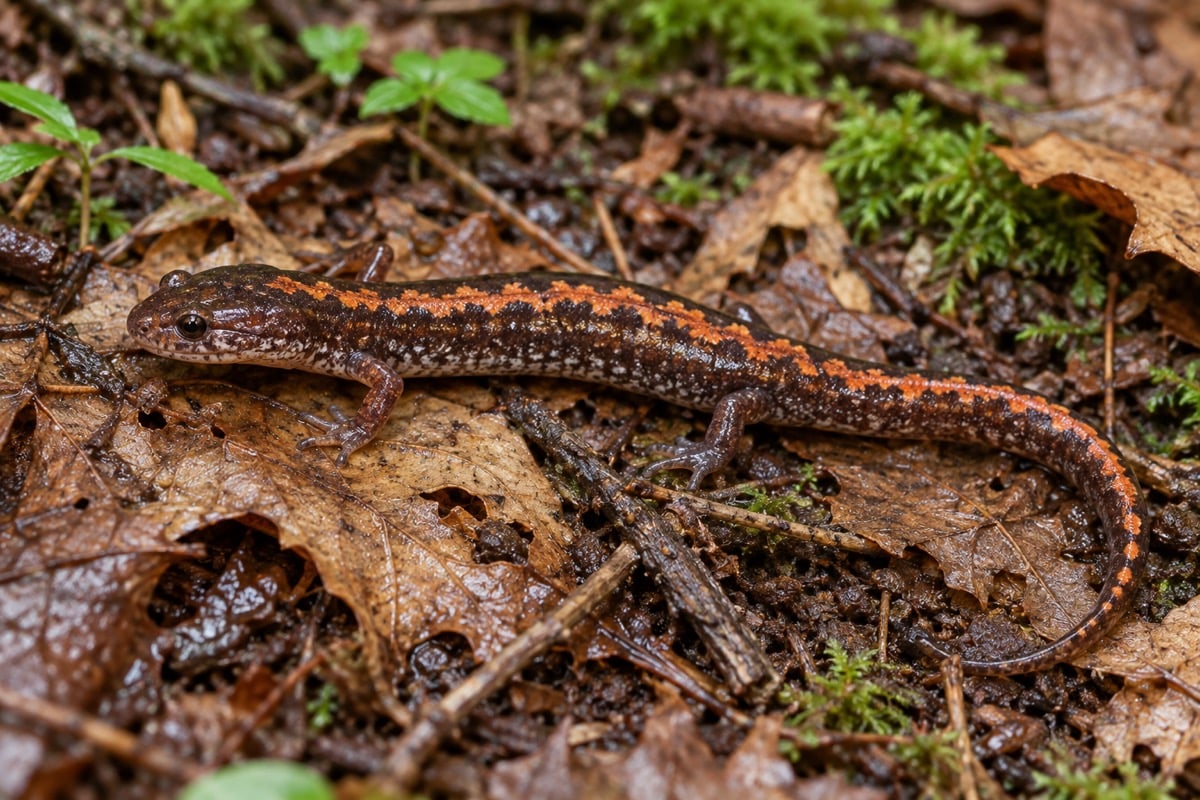
- Scientific Name: Plethodon dorsalis
- Habitat: Moist rocky woodland, leaf litter, and cave entrances
- Size: About 6–9 cm long
- Diet: Small invertebrates, especially spiders and beetles
The northern zigzag salamander often has an orange or reddish line winding down its back. Some individuals lack the bright pattern and are much plainer. It stays in damp places beneath cover, retreating farther underground during warm, dry conditions. Females lay eggs in protected cavities and remain with them while they develop. This species is distinct from several closely related salamanders that also have zigzag names, making the scientific name useful for identification.
37. Zitting Cisticola
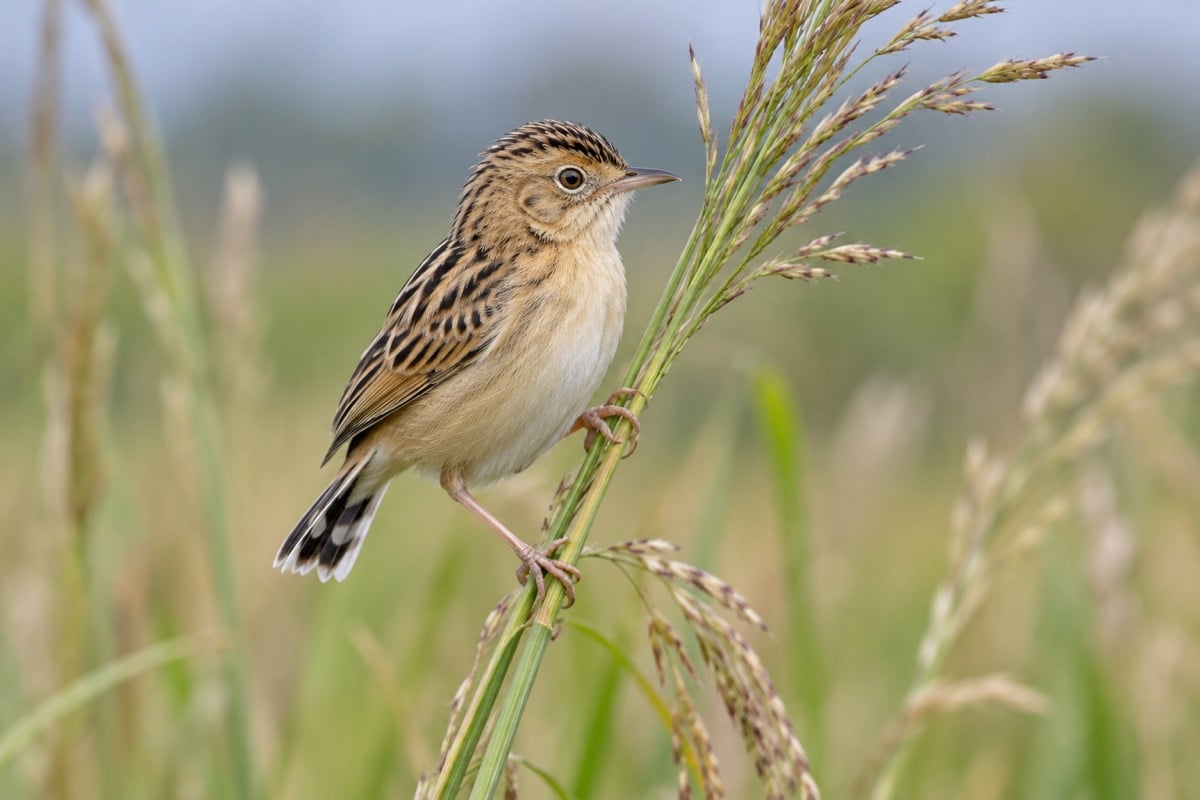
- Scientific Name: Cisticola juncidis
- Habitat: Grasslands, marsh edges, and farmland
- Size: 10–12 cm long
- Diet: Mostly insects and other small invertebrates
The zitting cisticola is a tiny brown bird with a streaked back and a short, rounded tail. Its name comes from the repeated sharp notes made during display flights over grassy ground. Between flights, it can disappear almost completely among stems. The bird searches this vegetation for small prey and uses grasses when building its nest. It has a wide distribution, although the details of its plumage and calls vary between regions.
38. Zokor
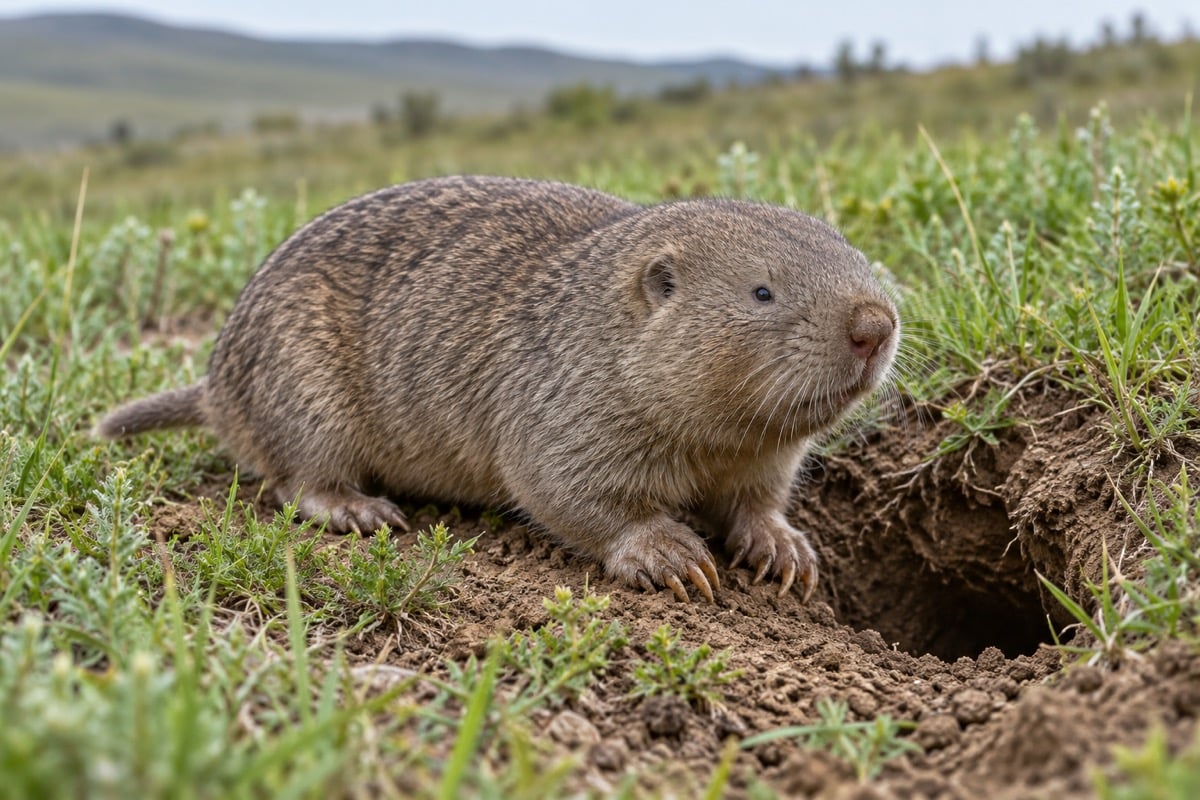
- Scientific Name: Myospalax myospalax
- Habitat: Meadows, forest steppe, and farmland with diggable soil
- Size: About 20–27 cm body length, plus a short tail
- Diet: Roots, bulbs, stems, leaves, and shoots
The Siberian zokor is a burrowing rodent with strong front claws and a compact body. It spends most of its life underground in tunnels that connect feeding areas, nests, and storage chambers. Roots and other plant parts provide food, with supplies stored for winter. Although sometimes compared with a mole, it belongs to a different group of mammals. Soft meadow soils suit its digging, while stony ground makes a much less suitable home.
39. Zone-tailed Hawk
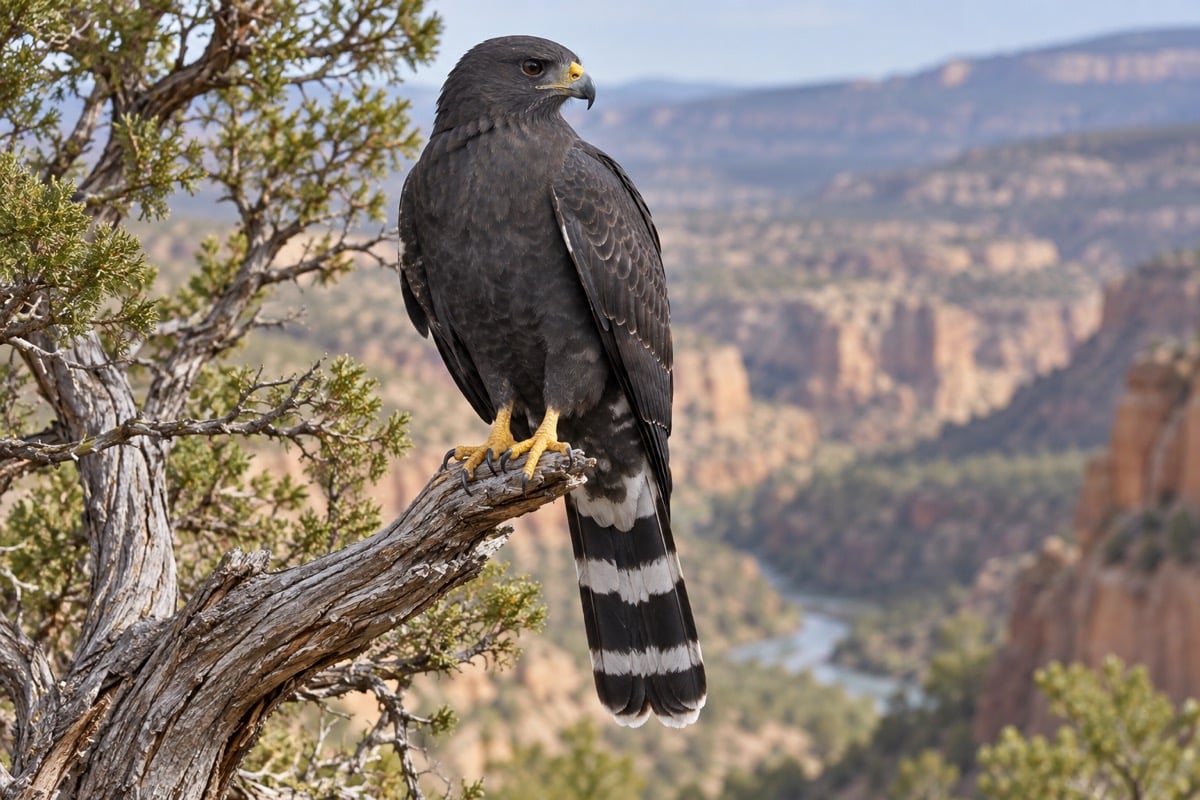
- Scientific Name: Buteo albonotatus
- Habitat: Woodland, canyons, scrub, and river valleys
- Size: 45–56 cm long
- Diet: Birds, small mammals, reptiles, and other small animals
The zone-tailed hawk is mostly dark, with contrasting pale bands on its tail. When soaring, it holds its wings in a shallow V and rocks from side to side, creating a silhouette much like a turkey vulture. It may hunt by cruising low over uneven ground before dropping suddenly onto prey. Lizards, small mammals, and birds are all on the menu. Tall trees near rivers or in wooded country provide nesting sites.
40. Zorilla
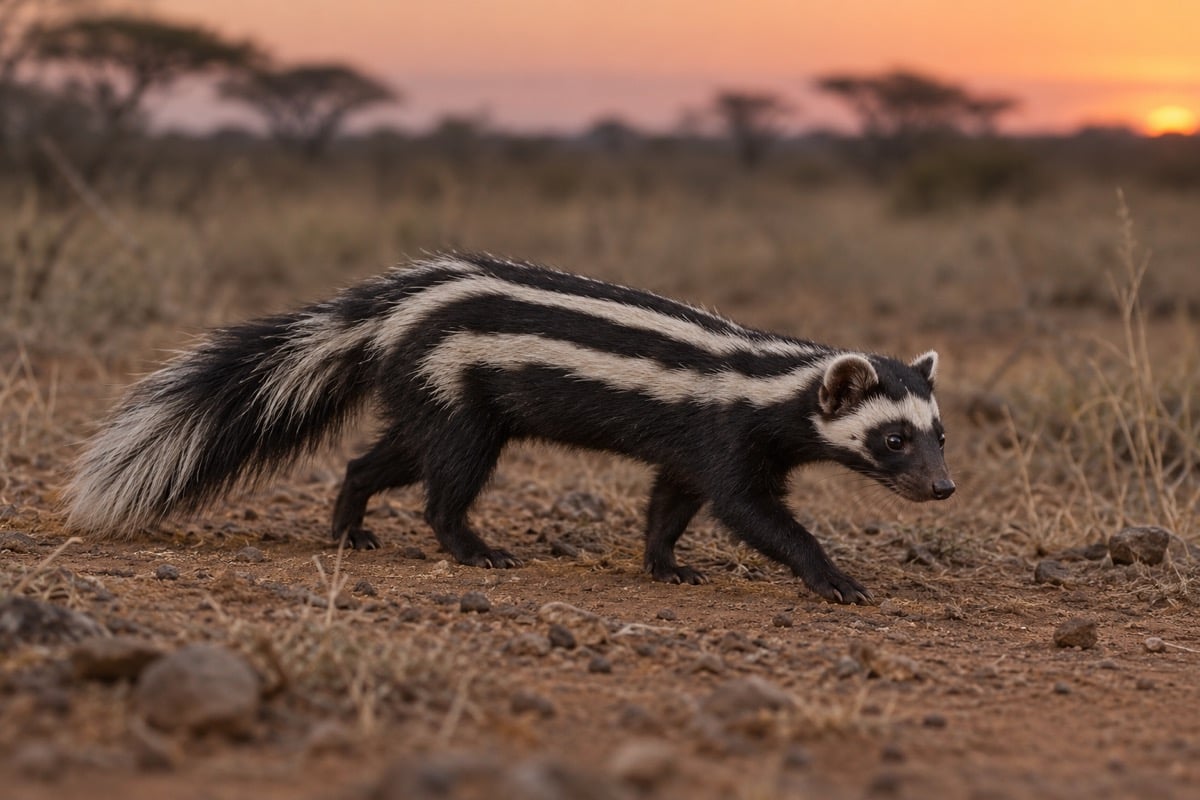
- Scientific Name: Ictonyx striatus
- Habitat: Savanna, semi-arid country and a variety of other habitats
- Size: Body about 28–30 cm (11–12 in), plus a 20–30 cm (8–12 in) tail
- Diet: Small mammals, insects, reptiles, birds and eggs
The zorilla, also called the striped polecat, has bold white stripes over a dark coat. White facial patches and a bushy tail strengthen its resemblance to a skunk, but it belongs to the weasel family. It is mainly active at night, searching for small prey on or near the ground. Strong front claws help it dig, including when investigating places where food may be hidden. Short grass can make insects and rodents more accessible, which helps explain why zorillas use a range of open habitats.
41. Zoropsis spinimana
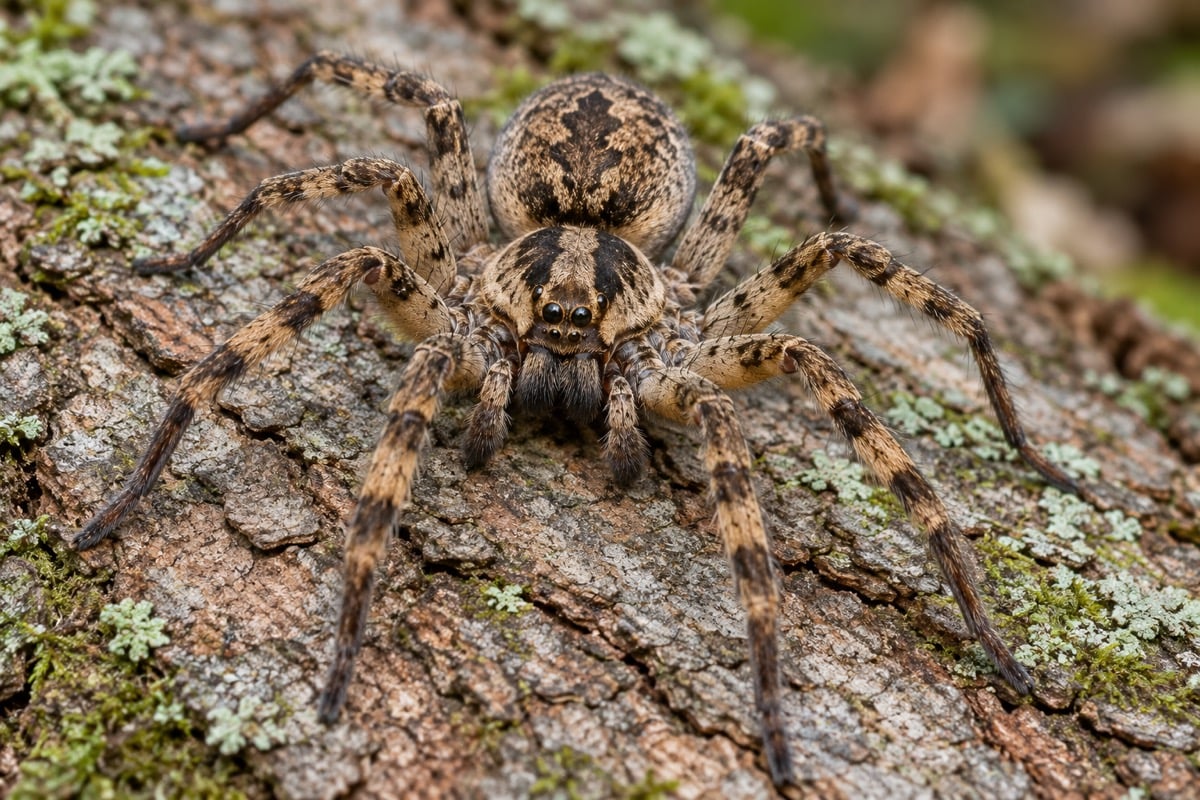
- Scientific Name: Zoropsis spinimana
- Habitat: Bark, rocks, woodland edges, and buildings
- Size: About 13–16 mm body length in many adults
- Diet: Insects and other small arthropods
Zoropsis spinimana is a large-looking brown spider with mottled legs and a dark pattern on the front part of its body. It hunts by moving around and catching prey, rather than waiting in a capture web. Originally associated with the Mediterranean region, it is now also found farther north and in some introduced populations overseas. It sometimes enters buildings, where its long legs and markings can lead people to mistake it for a wolf spider.
More Animals (A-Z)
Which of these Z animals was new to you? Keep exploring the alphabet below to discover more animals from around the world.
A, B, C, D, E, F, G, H, I, J, K, L, M, N, O, P, Q, R, S, T, U, V, W, X, Y, Z


James Miller grew up on the Oregon coast, exploring tide pools and watching seabirds. He has a particular fondness for owls and keeps a notebook of his bird sightings.
Read More »


