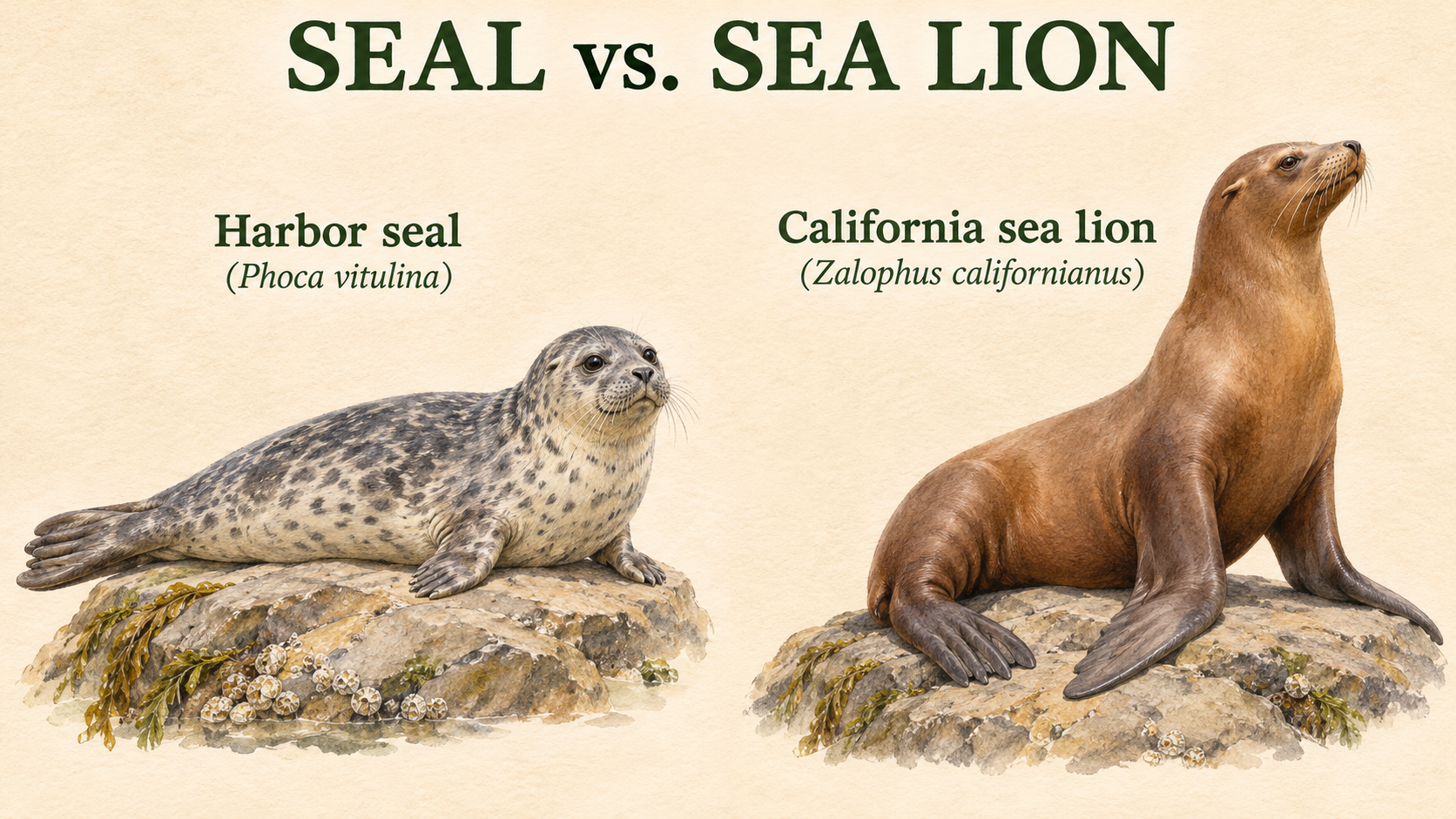
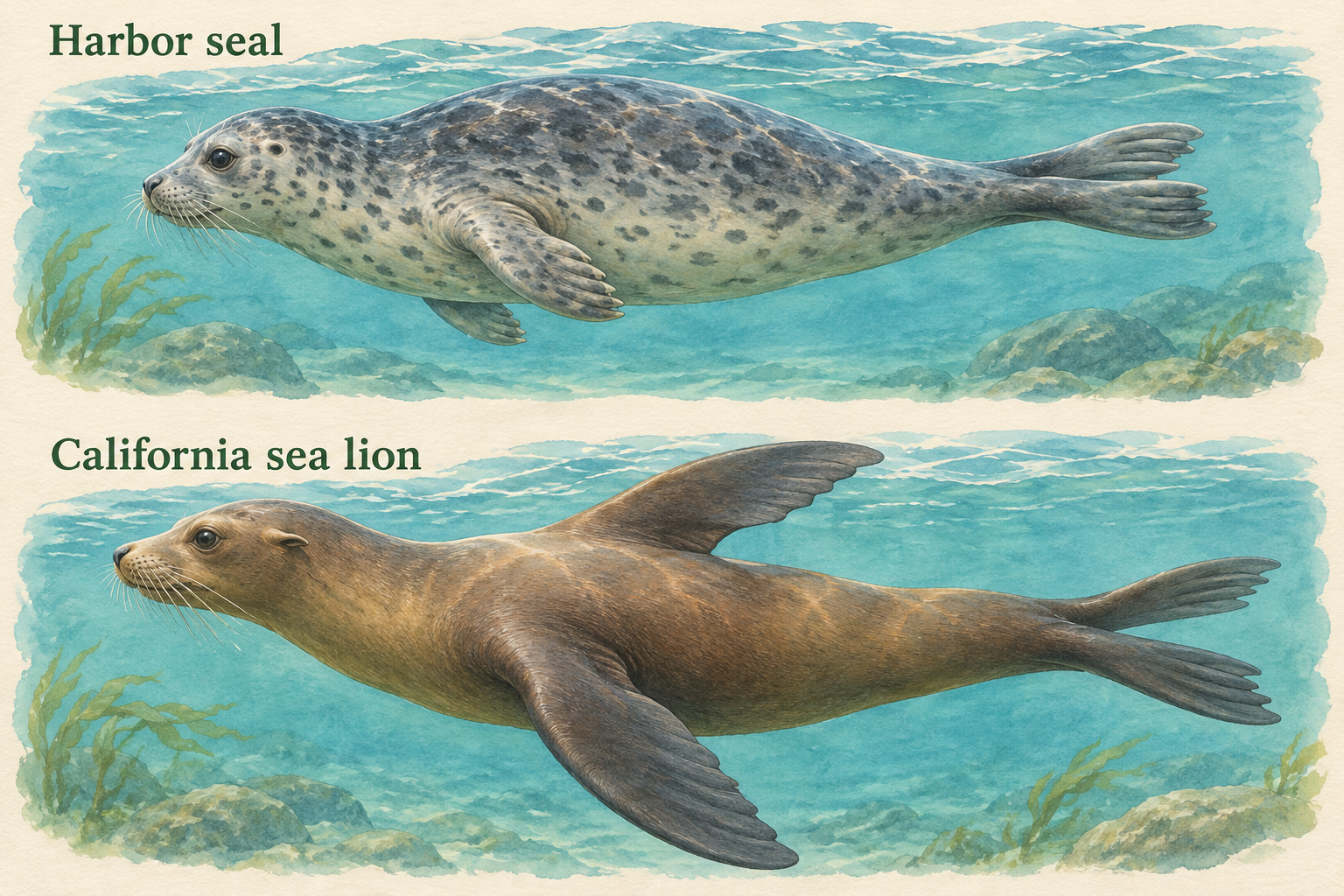
The quickest way to tell a true seal from a sea lion is to look for small external ear flaps and notice how it moves on land. Sea lions have visible ear flaps, long front flippers, and rear flippers that can turn underneath their bodies. True seals have ear openings without projecting flaps, shorter front flippers, and rear flippers that stay directed backward.
Those features are more useful than simply asking whether an animal is large, brown, or noisy. The harbor seal and California sea lion make a helpful starting pair for a US coastal observer, but there are other species and a few misleading common names to understand.
Seal and Sea Lion Differences at a Glance
| Feature | True seals | Sea lions |
|---|---|---|
| Outer ears | Ear openings without visible flaps | Small external ear flaps |
| Front flippers | Shorter, with visible claws | Longer, broad flippers |
| Rear flippers on land | Remain directed backward | Can rotate beneath the body |
| Movement on land | Undulating, sliding, or wriggling | Support themselves on all four flippers |
| Swimming power | Mainly rear flippers and lower body | Mainly front flippers |
| Calls | Grunts, growls, hisses, and other sounds | Often conspicuous barking |
| Body size | Varies widely among species and sexes | Also varies; size alone is unreliable |
1. Start with Ears and Front Flippers
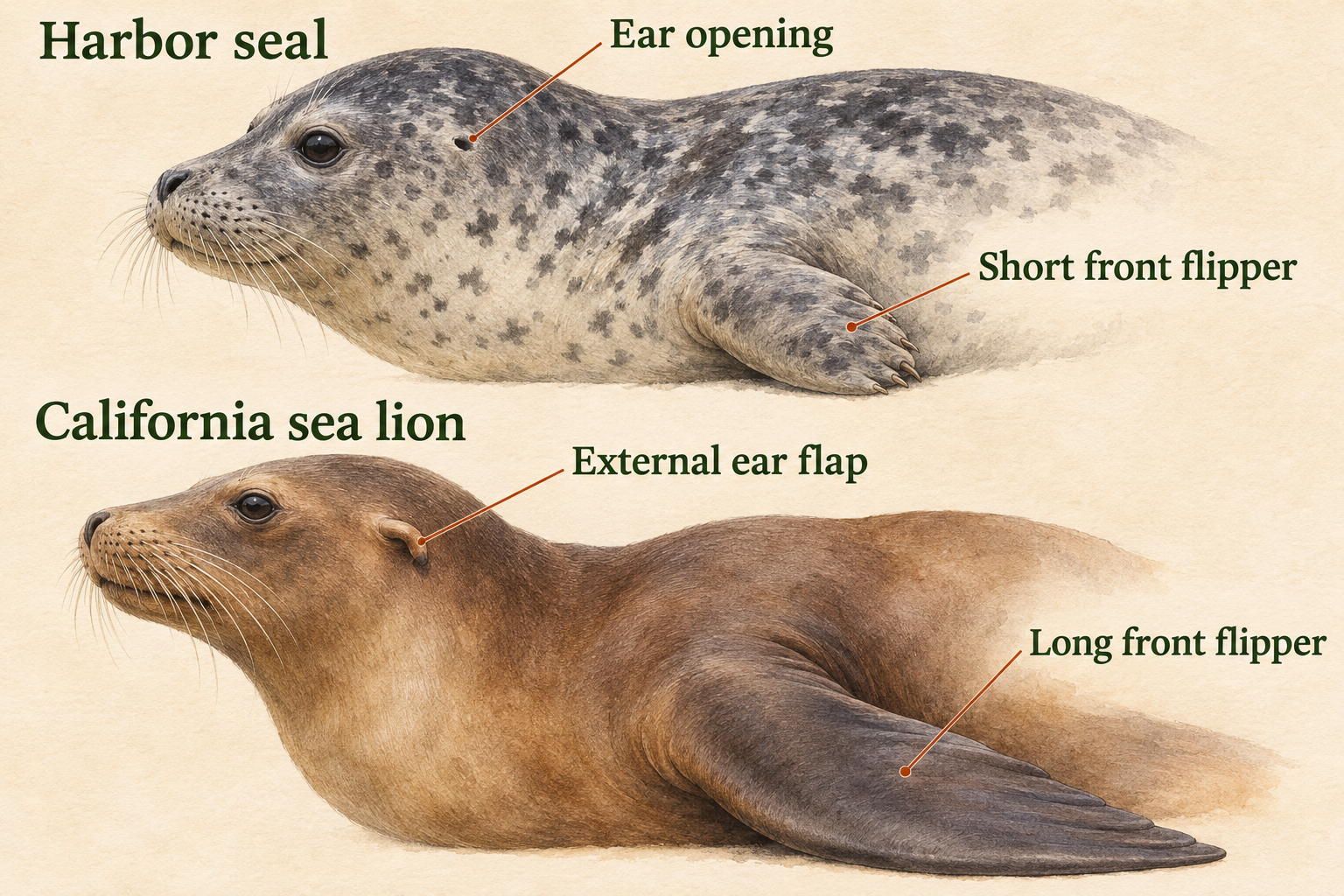
A sea lion’s ear flap is a small projection behind the eye, rather than a large mammal ear. A true seal still has ears and can hear; the opening simply lacks that external flap. This distinction is especially useful in a sharp side view, where the head is above water and the relevant part of the skin is visible.
The front flippers reinforce the clue. Harbor seals have relatively short foreflippers near the sides of their bodies. A California sea lion’s much longer front flippers help support its raised chest on a beach or rock. A distant swimming head may not show either feature clearly, so an uncertain view is a good reason to wait for another angle.
2. Watch How They Move on Land
A true seal’s rear flippers do not rotate underneath its pelvis in the way a sea lion’s do. On shore, a harbor seal moves by shifting and undulating its body, sometimes looking rather like a caterpillar. Its belly remains close to the surface. This is normal seal movement, even when it looks awkward to a person used to seeing four-legged land mammals.
A sea lion can bring its hind flippers underneath its body and use all four flippers for support. That makes it more mobile on beaches and rocky ledges. Watch the whole movement rather than a single resting pose: a sea lion lying flat may hide the very features that are obvious when it raises its chest or moves.
3. Their Swimming Strokes Are Different Too
Both groups are capable swimmers, but they produce much of their thrust in different places. True seals use their rear flippers and movements of the lower body to drive themselves through the water. Their front flippers help with steering. Sea lions use powerful strokes of their large front flippers, while the rear flippers help control direction.
This difference explains why flipper shape is such a useful part of the comparison. The limbs are doing different jobs, rather than simply being scaled-up or scaled-down versions of one another. In a brief surface sighting, though, the underwater stroke may remain hidden. Ears, posture, and flippers seen together usually give a clearer impression than a splash.
4. Listen to Calls and Look at the Group
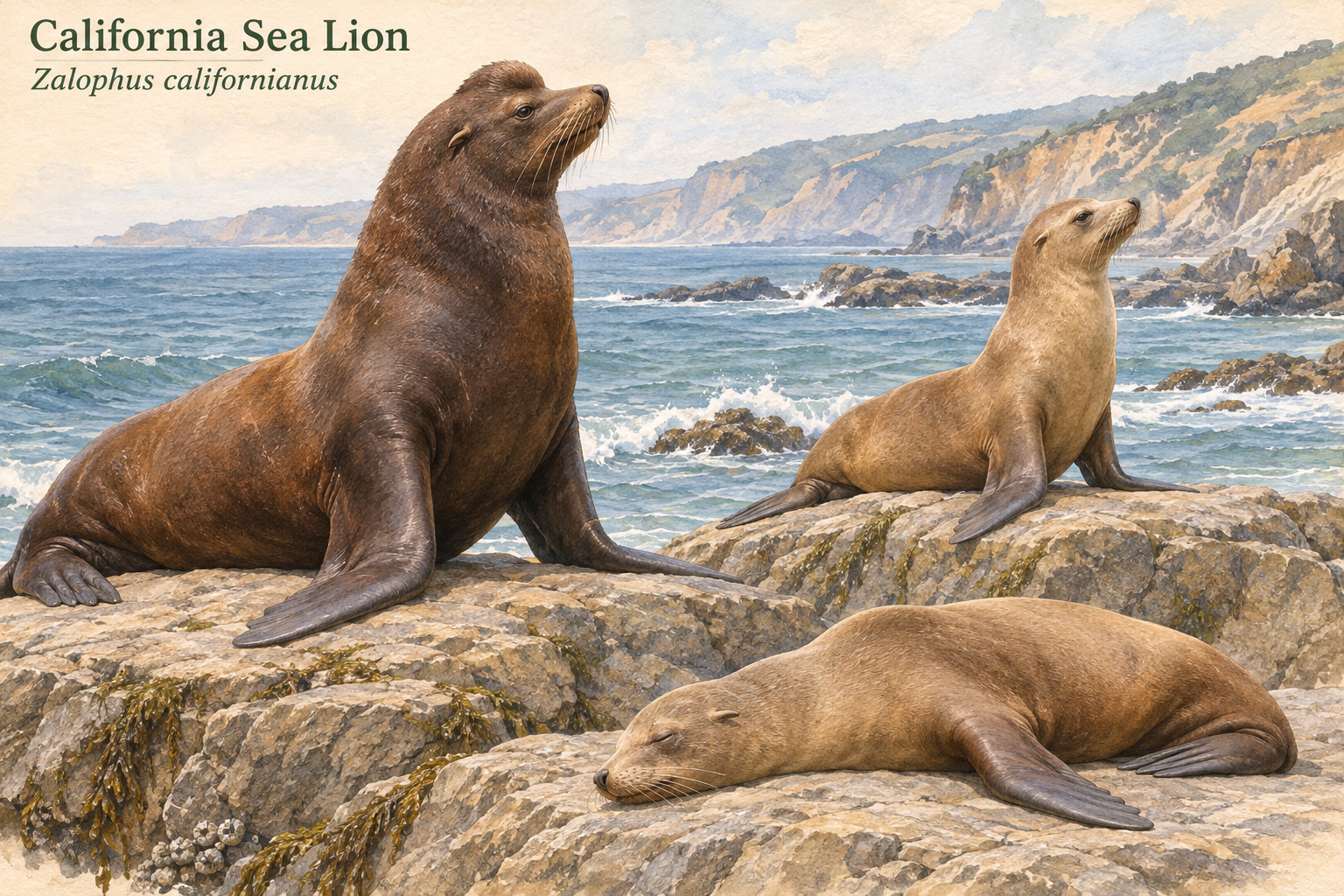
California sea lions are famous for their barking calls, and a crowded haul-out can be very noisy. They gather on beaches, offshore rocks, and sometimes docks or jetties. Sound can draw your attention to a group before individual ears or flippers are easy to see.
True seals also communicate. Depending on the species and situation, their sounds include grunts, growls, hisses, and moans. They can gather on land to rest, breed, nurse, or reduce the effort of watching for predators. A quiet animal is not automatically a seal, and a group on shore is not automatically a group of sea lions.
5. Size and Color Need a Species Name
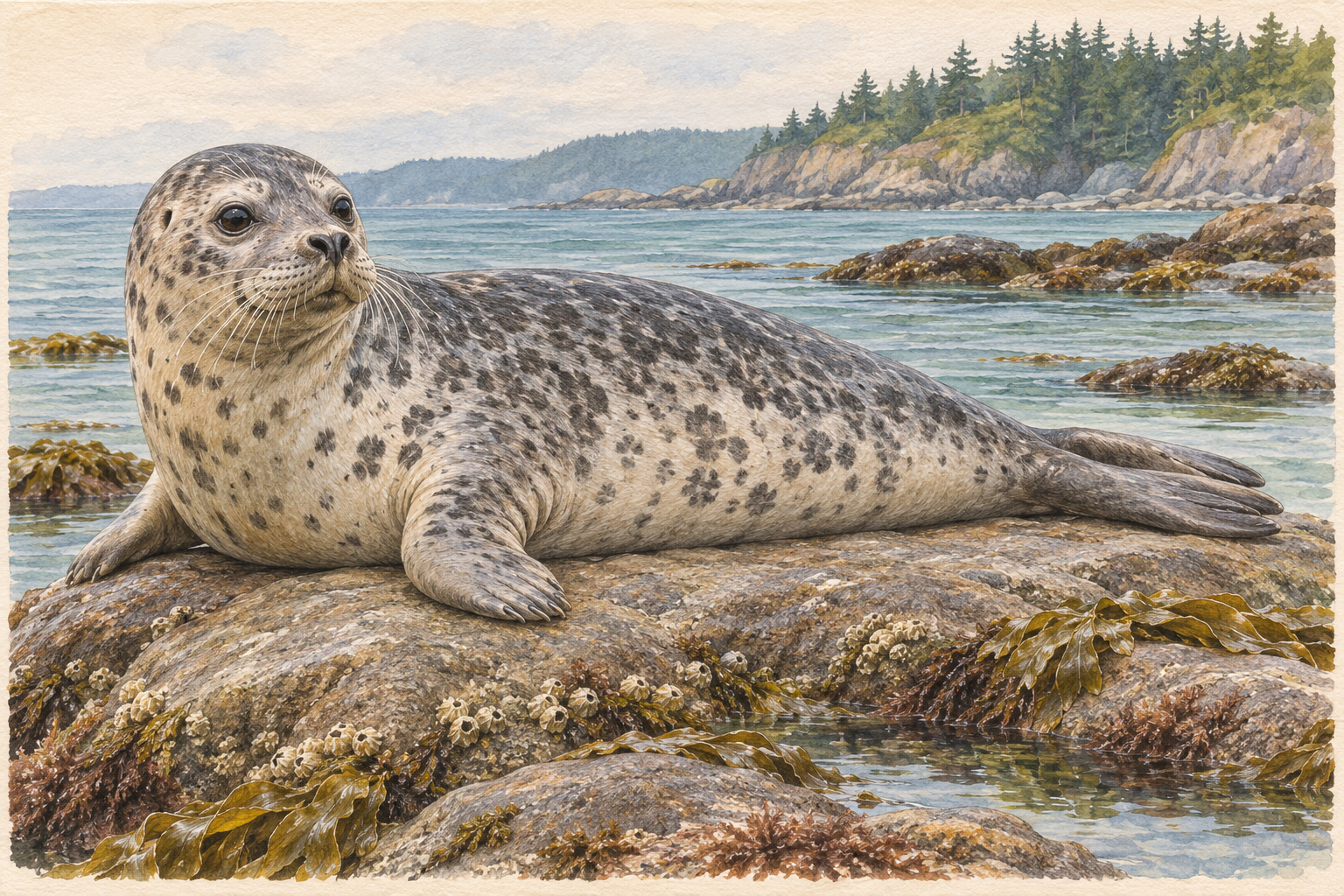
The familiar spotted harbor seal and brown California sea lion can look quite different. Harbor seals may have a light coat with dark spots or a darker background with lighter rings. California sea lion females and juveniles are often tan, while adult males are generally darker and more heavily built. Age and sex therefore matter even before different species enter the comparison.
There is no reliable rule that a sea lion must be larger than a seal. Northern elephant seal males can exceed 13 feet in length and approach 4,400 pounds, making them much larger than many sea lions. Their huge size and enlarged male nose belong to that particular species; they do not redefine the ear and flipper differences between the groups.
A Closer Look at the Harbor Seal
Harbor seals live along both the Atlantic and Pacific coasts of North America, as well as northern coasts elsewhere. They use rocks, reefs, beaches, and other haul-out sites between trips into the water. Resting ashore is part of their normal routine: it allows activities such as nursing and molting, as well as rest.
Why a Fur Seal Is a Special Naming Trap
The word “seal” in an animal’s common name does not always mean a true seal. Fur seals belong with sea lions in the eared-seal family, Otariidae. True seals belong to Phocidae. A fur seal can therefore have external ear flaps even though its name contains the word seal.
Guadalupe fur seals provide a real example from the eastern Pacific. They have elongated snouts and broad foreflippers, and use rocky coastal breeding habitat in Mexico and southern California. This is why identifying the family and species is more dependable than treating the common name as an anatomical description.
Making a Useful Coastal Observation
Begin with what you can see without changing the animal’s behavior: an external ear flap, a long foreflipper, or the position of the rear flippers during movement. Binoculars or a distant photograph can preserve those details. Keep your distance and allow animals to rest and move between land and water.
For more coastal wildlife and animal names, explore our guides to animals that start with S and animals that start with H. The combination of ears, flippers, and movement gives you a useful foundation for recognizing the pinniped in front of you.


James Miller grew up on the Oregon coast, exploring tide pools and watching seabirds. He has a particular fondness for owls and keeps a notebook of his bird sightings.
Read More »