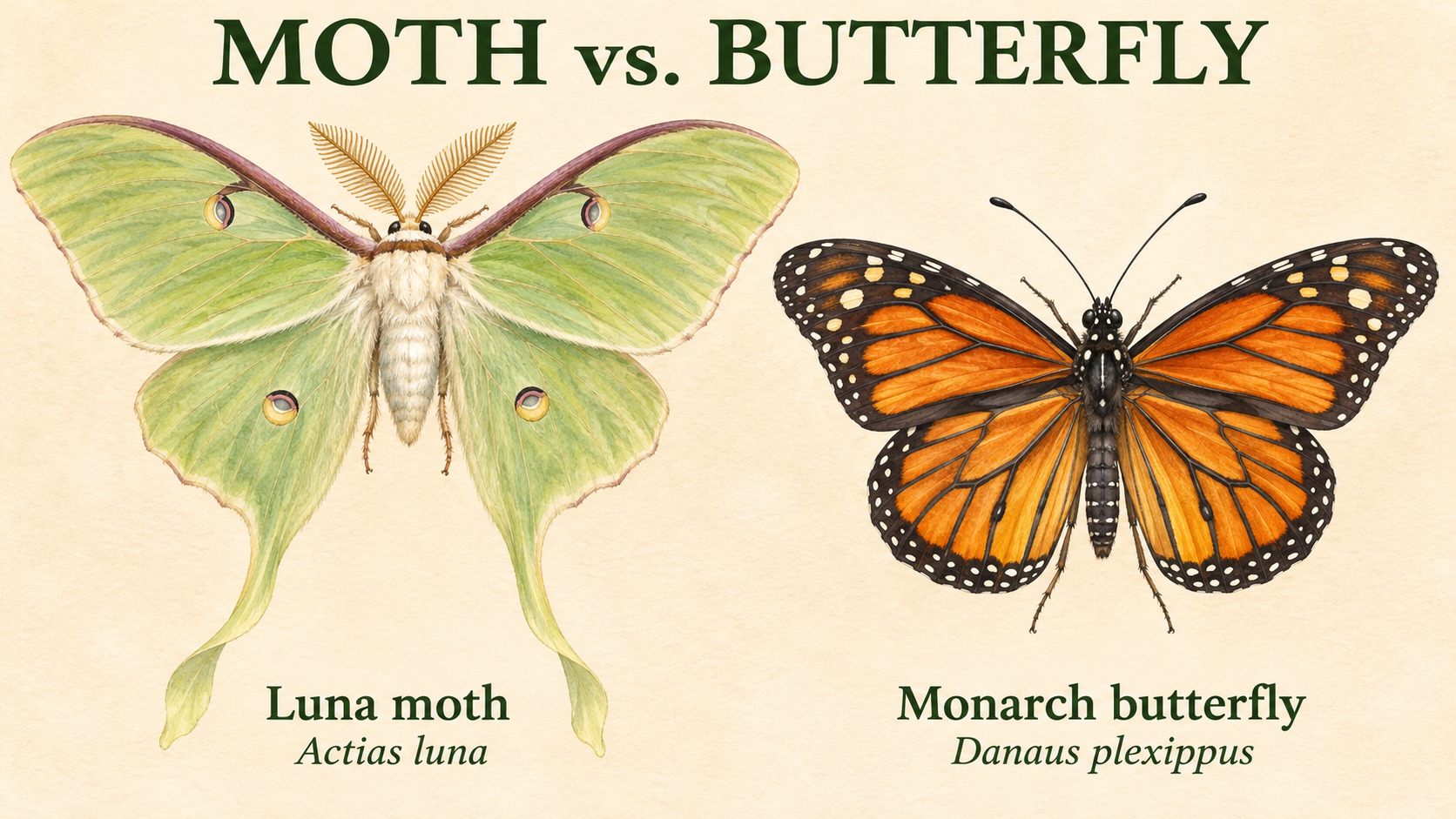
Antennae are often the best first clue when telling a moth from a butterfly. Most familiar butterflies have a thickened club at the end of each antenna. Many moths have threadlike or feathery antennae instead. Combine that observation with wing shape, resting posture, and the species found in your area, because every simple rule has exceptions.
Both are insects in the order Lepidoptera, a name associated with their scaled wings. Their life cycles include an egg, a caterpillar, a pupa, and an adult. The moth-versus-butterfly comparison is therefore a comparison within one related group, rather than between insects with fundamentally different beginnings.
Moth and Butterfly Clues at a Glance
| Clue | Many butterflies | Many moths |
|---|---|---|
| Antennae | Thickened club at the tip | Threadlike, comb-like, or feathery |
| Activity | Often active by day | Many active after dark; many others by day |
| Resting wings | Often held upright together | Often spread or held over the body |
| Color | May be bright or muted | May also be bright or muted |
| Pupal covering | Often an exposed chrysalis | Some have a silk cocoon; others do not |
| Life cycle | Egg, caterpillar, pupa, adult | Egg, caterpillar, pupa, adult |
1. Start with Antennae
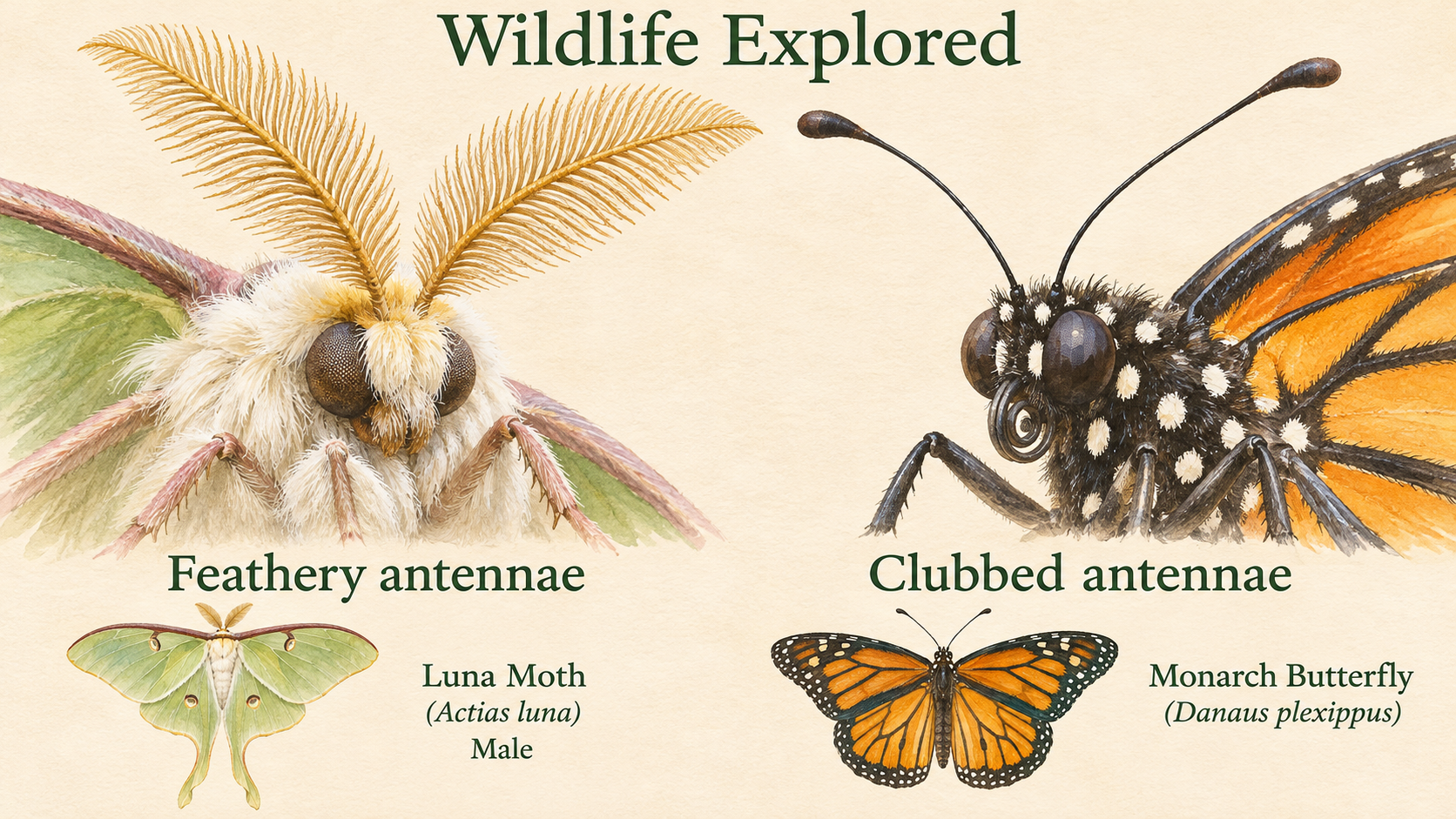
The difference can be striking in a close view. A male luna moth has broad, comb-like antennae, while a monarch has thin antennae ending in obvious clubs. Luna moth females also have comb-like antennae, although the male’s are larger. A general impression of “fluffy moth” becomes more useful when you can see an actual structural feature.
Even this clue needs qualification. Skippers, which belong with butterflies, commonly have a hook at the end of the antennal club. Some moth groups also have clubbed antennae. A local identification guide can narrow the possibilities when the antennae do not match the familiar examples. A blur in a photograph is not enough to decide their shape.
2. Daytime Does Not Automatically Mean Butterfly
Many moths are active at night, and many butterflies fly by day. The hummingbird clearwing is an easy exception to notice in a garden: this moth flies during daylight and hovers at flowers to drink nectar. Its transparent wing areas and busy hovering flight can draw attention before an observer recognizes it as a moth.
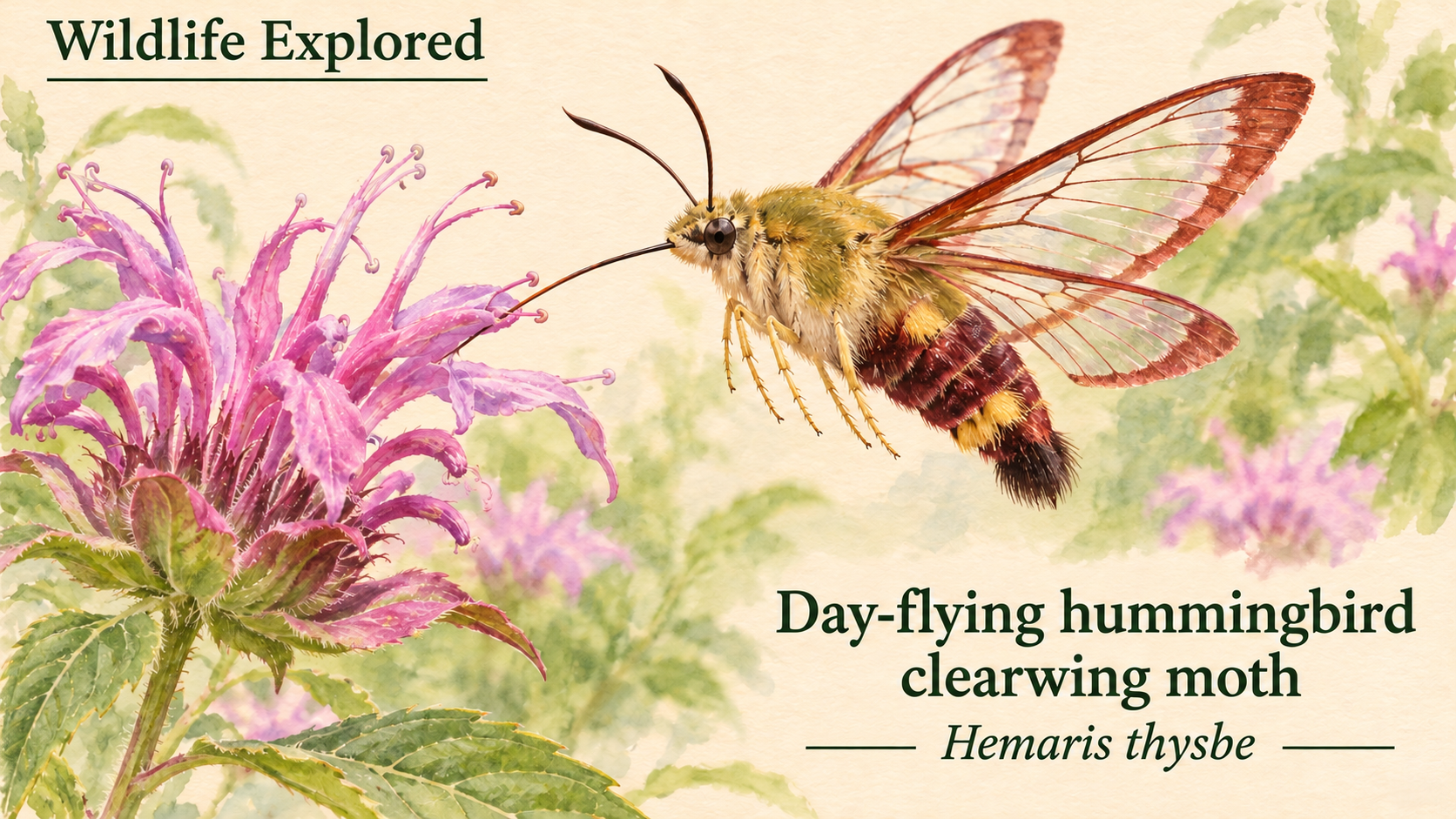
Color is just as unreliable. Plenty of moths have vivid patterns, while some butterflies are mostly brown. The pale green luna moth is a useful reminder that moths do not have to be drab. The illustrated monarch’s orange and black wings are a species feature, rather than a requirement for being a butterfly.
3. Resting Posture Is Supporting Evidence
Many butterflies hold their wings upright together when resting, and many moths rest with the wings spread or folded over the body. Yet some butterflies and skippers rest with open wings, and some moths hold their wings upright. A single pose can therefore suggest a direction without settling the identification.
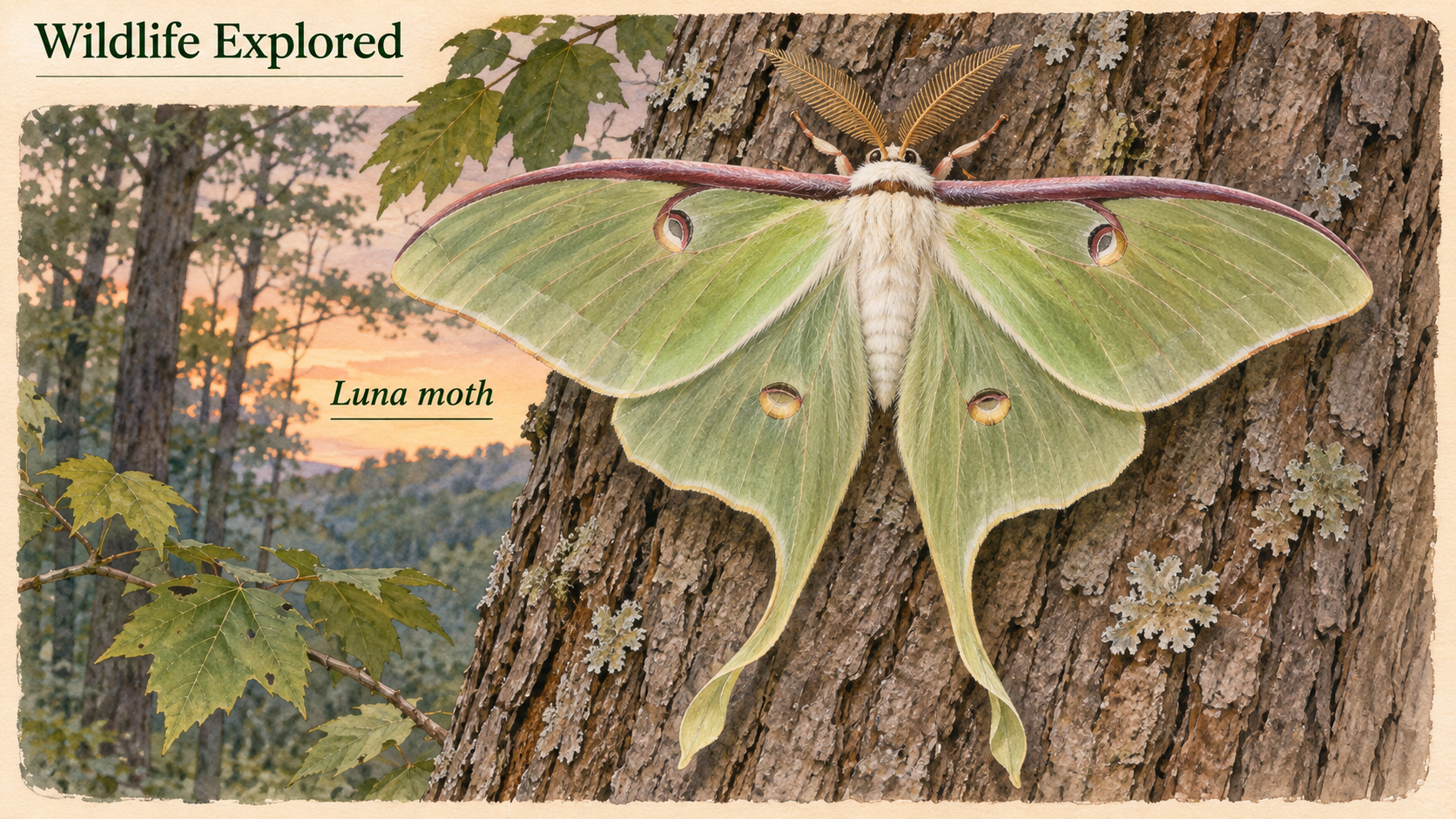
A luna moth’s shape supplies better species clues: pale green wings, a white body, ringed wing spots, and two sweeping hindwing tails. It is a woodland moth found across much of eastern North America. The adult does not feed, while its caterpillar eats leaves. A moth seen resting on a trunk is therefore not necessarily waiting for a chance to visit a flower.
4. Chrysalis, Pupa, and Cocoon Mean Different Things
A pupa is the stage between the caterpillar and the adult. Chrysalis is the familiar term for a butterfly pupa. A cocoon is a separate silk covering made around a pupa, rather than another name for the animal inside. Many moth caterpillars make cocoons, but some moths pupate without one. There are also butterflies and skippers that use silken shelters.
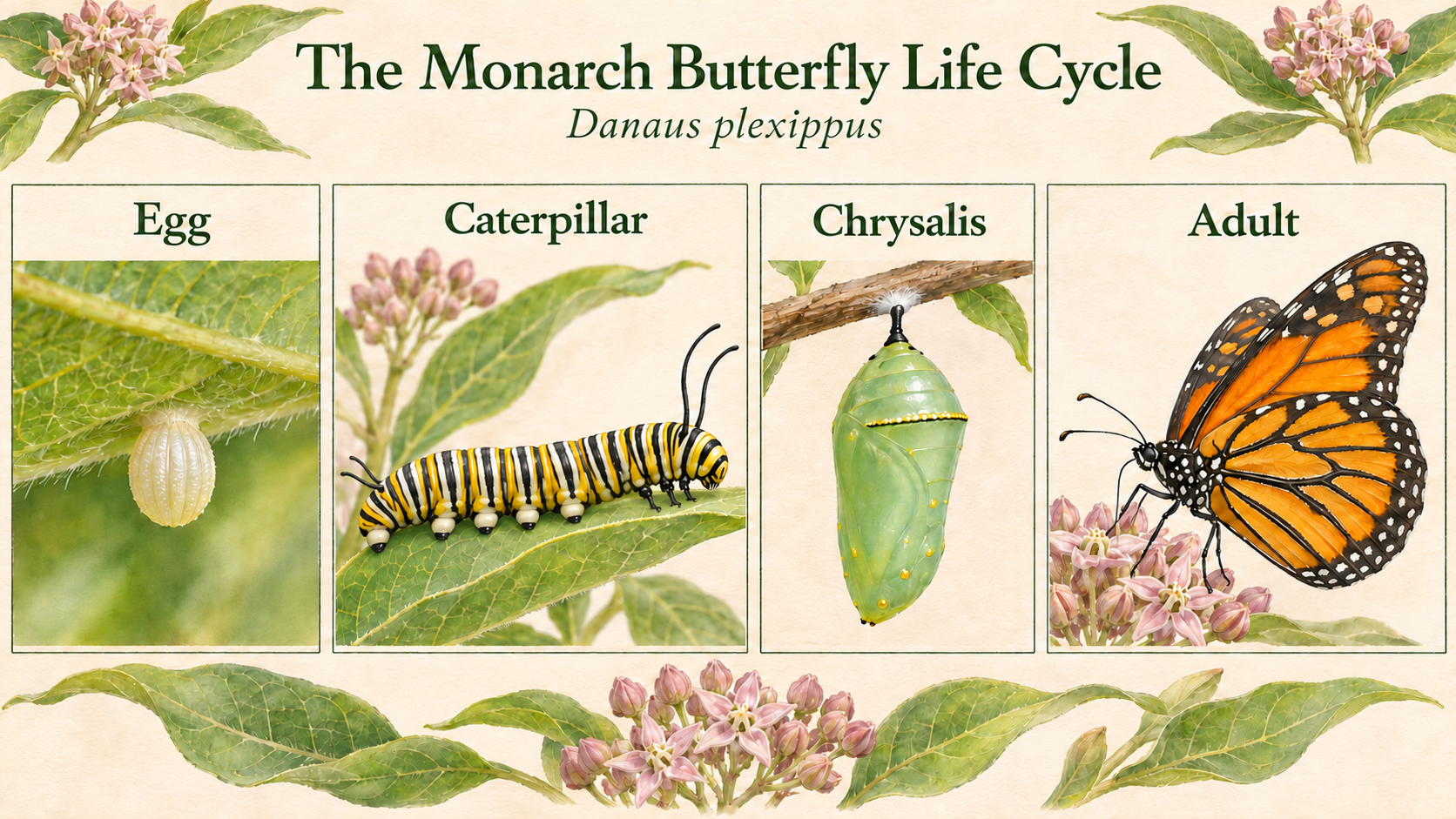
Monarchs lay eggs on milkweed, which provides food for their caterpillars. The growing caterpillar eventually forms a green chrysalis marked with gold. The adult emerges with the orange and black wings familiar to many North American observers, and feeds on flower nectar. Its needs have changed along with its body.
Luna moths follow the same broad sequence, but their caterpillars form silk cocoons associated with leaf litter. Their adult stage looks very different from the caterpillar and has a different role in the life cycle. These examples show why finding a caterpillar or pupa calls for identification of that stage, rather than applying adult antenna rules.
What to Notice in a Photograph
Try to capture the antennae, the complete outline of both pairs of wings, the body pattern, and the resting position. Note whether the insect was feeding, flying, or simply sitting in daylight. Compare several features with known species instead of relying on brightness or the hour alone. The combination often turns an uncertain moth-or-butterfly guess into a useful identification.
Find more insect names in our guides to animals that start with M and animals that start with B.


James Miller grew up on the Oregon coast, exploring tide pools and watching seabirds. He has a particular fondness for owls and keeps a notebook of his bird sightings.
Read More »