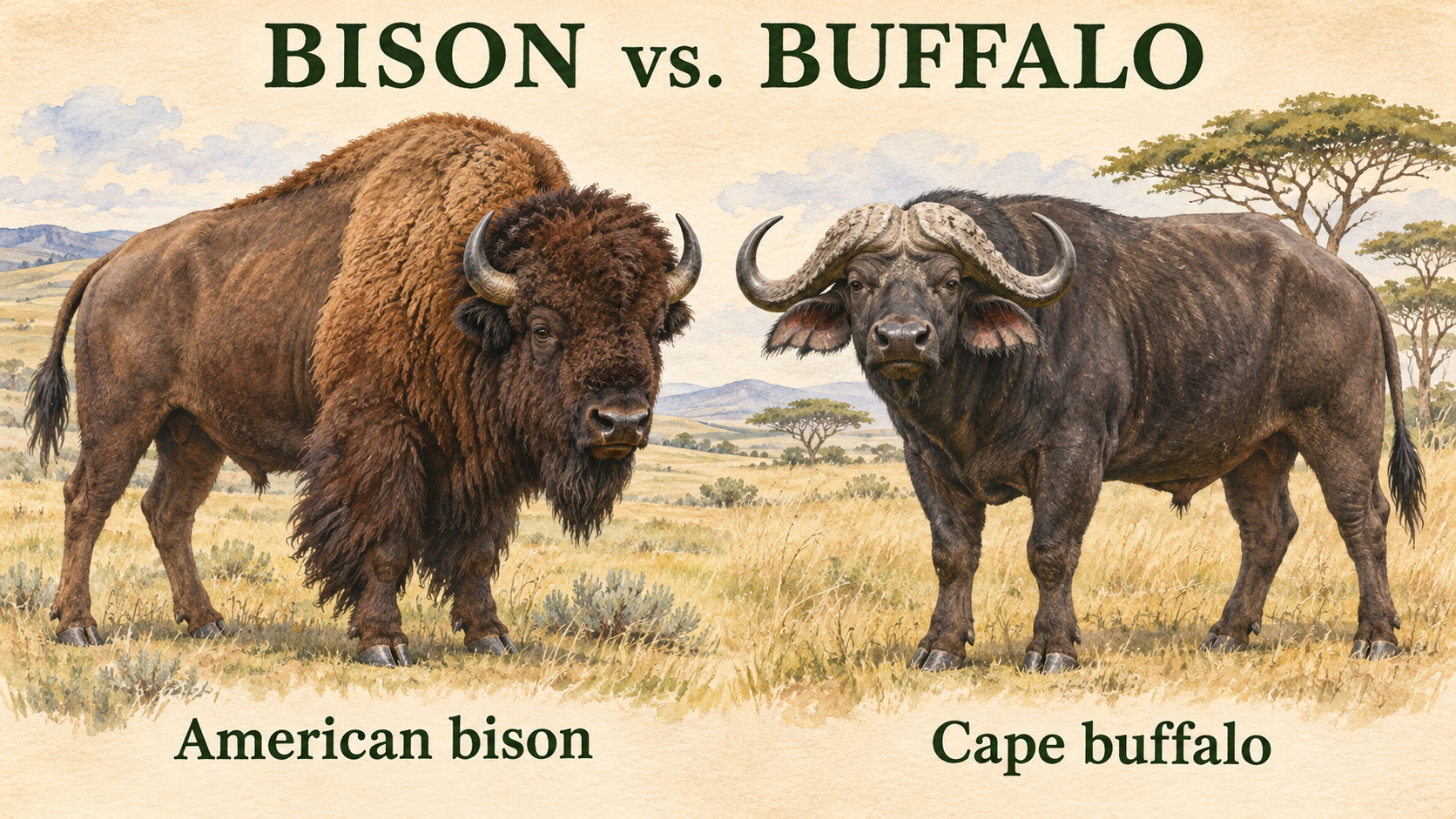
A large shoulder hump, shaggy forequarters, and a beard point toward a bison. A Cape buffalo has a less top-heavy outline and broad horns that curve outward, down, and up. A water buffalo is another animal again, often recognized by its long, sweeping horns and close association with wet or muddy places.
The names need context. In North America, buffalo is an established common name for the American bison, including in cultural usage. In a species comparison, buffalo commonly refers instead to African buffalo or Asian water buffalo. Understanding that distinction is more helpful than assuming everyone using the word buffalo is talking about the same animal.
Bison and Two Familiar Buffalo Types
| Feature | American bison | Cape and water buffalo |
|---|---|---|
| Body outline | Prominent shoulder hump and smaller-looking hindquarters | Lack the same conspicuous bison hump |
| Coat | Shaggy head and forequarters, often with a beard | Generally shorter-haired in the familiar adult examples |
| Horns | Relatively short, curving outward and upward | Cape buffalo: broad curves and a heavy male boss; water buffalo: long sweeping horns |
| Background | Native to North America | African buffalo are African; water buffalo have Asian origins and widespread domestic populations |
| Names | Bison bison; also commonly called buffalo | African buffalo: Syncerus caffer; domestic water buffalo: Bubalus bubalis |
| Variation | Age, sex, season, and bison type affect appearance | Age, sex, population, and domestic breed affect appearance |
1. A Bison’s Shape Is More Than Its Horns
An American bison’s highest point sits over its shoulders. Its large head, heavy front end, and slimmer hindquarters create a distinctive outline. Thick hair covers the head, neck, and front parts of the body, while the rear usually has much shorter hair. Both males and females carry horns.
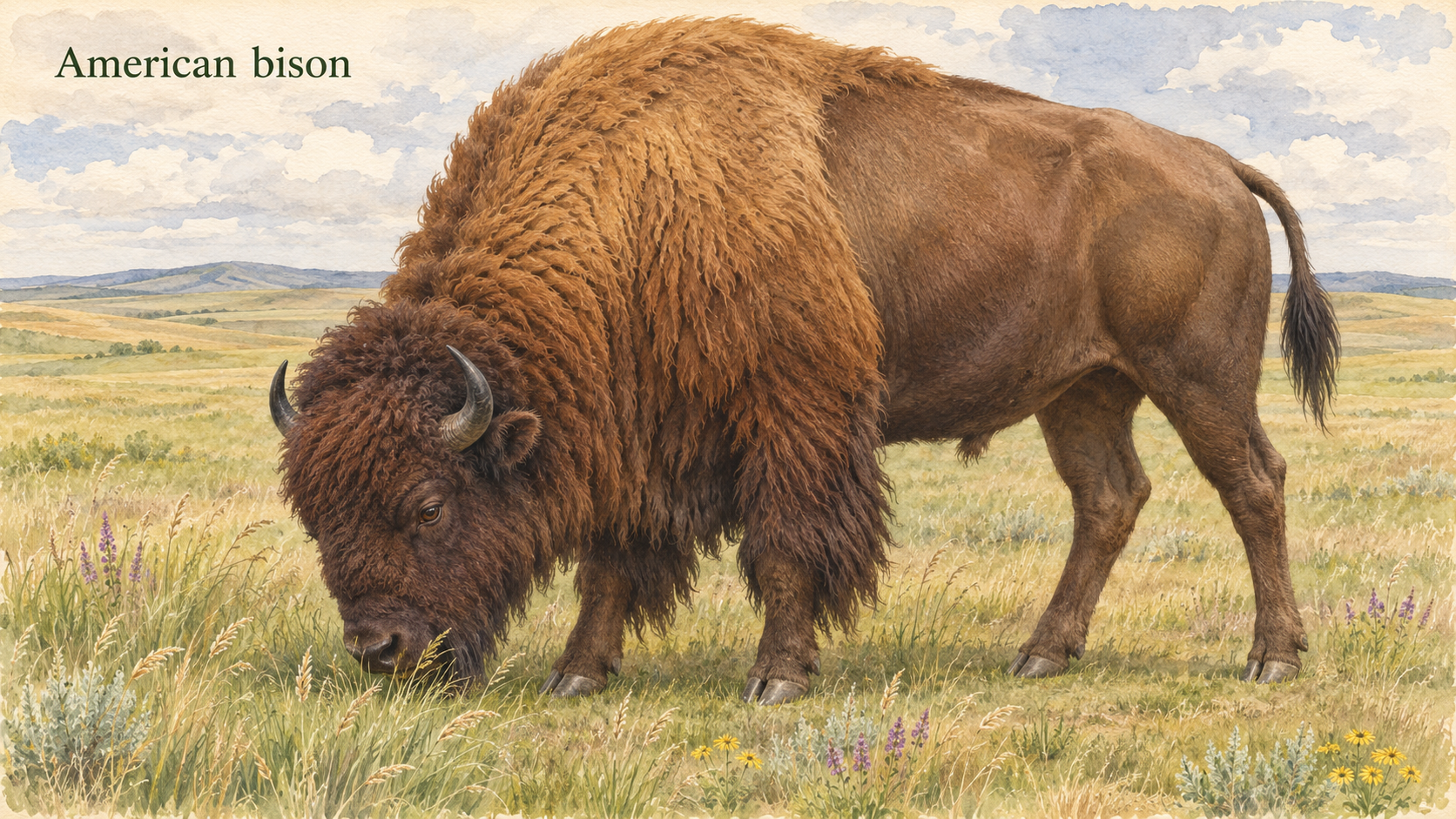
The coat changes with the season. Spring shedding can leave loose patches and an uneven outline rather than a neat, uniformly shaggy animal. Bison graze on plant foods, and their powerful head and neck help them sweep snow away from winter forage. Appearance and behavior make more sense when the season is part of the observation.
2. Horn Shape Helps Separate the Animals
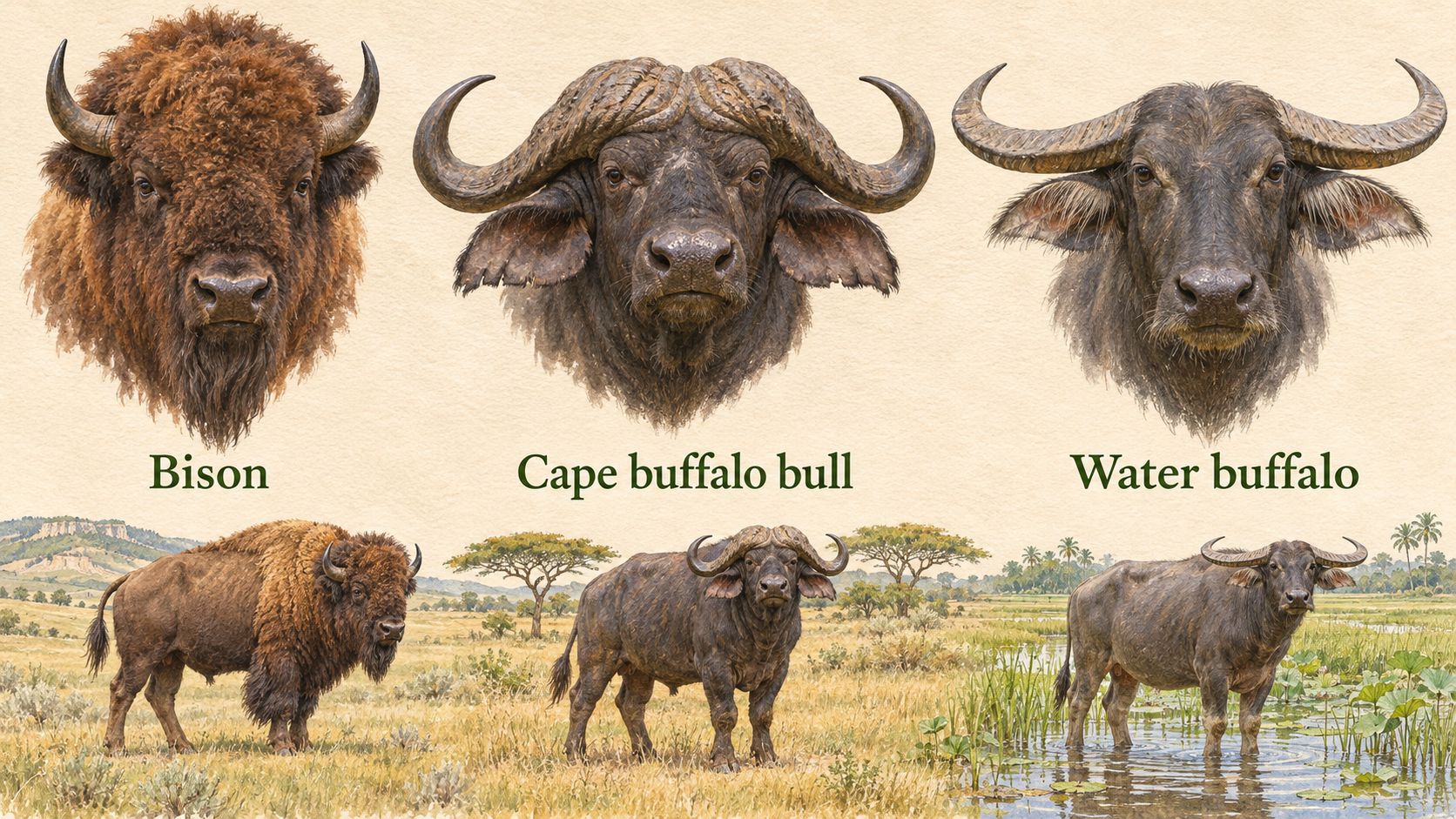
Bison horns grow from the sides of the large head and curve outward and upward. A mature Cape buffalo bull has a very different forehead: the thickened horn bases form a heavy shield-like boss. The horns spread sideways before sweeping down and then up at their tips. Young males have not yet developed the same fully joined boss.
Water buffalo horns can form a wide crescent or sweep backward, with shape varying among domestic types. They do not have the familiar Cape bull’s broad helmet-like boss. Because calves, females, and different domestic breeds need their own comparisons, the illustrated adult heads should not be treated as an exact template for every buffalo.
3. Cape Buffalo Are African Buffalo
Cape buffalo are the familiar large, dark savanna form of African buffalo. Adults are usually dark gray or black, while calves may be reddish brown. African buffalo also include smaller forest forms with different coloring and horn shapes. A photograph of a red forest buffalo therefore does not contradict the appearance of the dark Cape buffalo shown here.
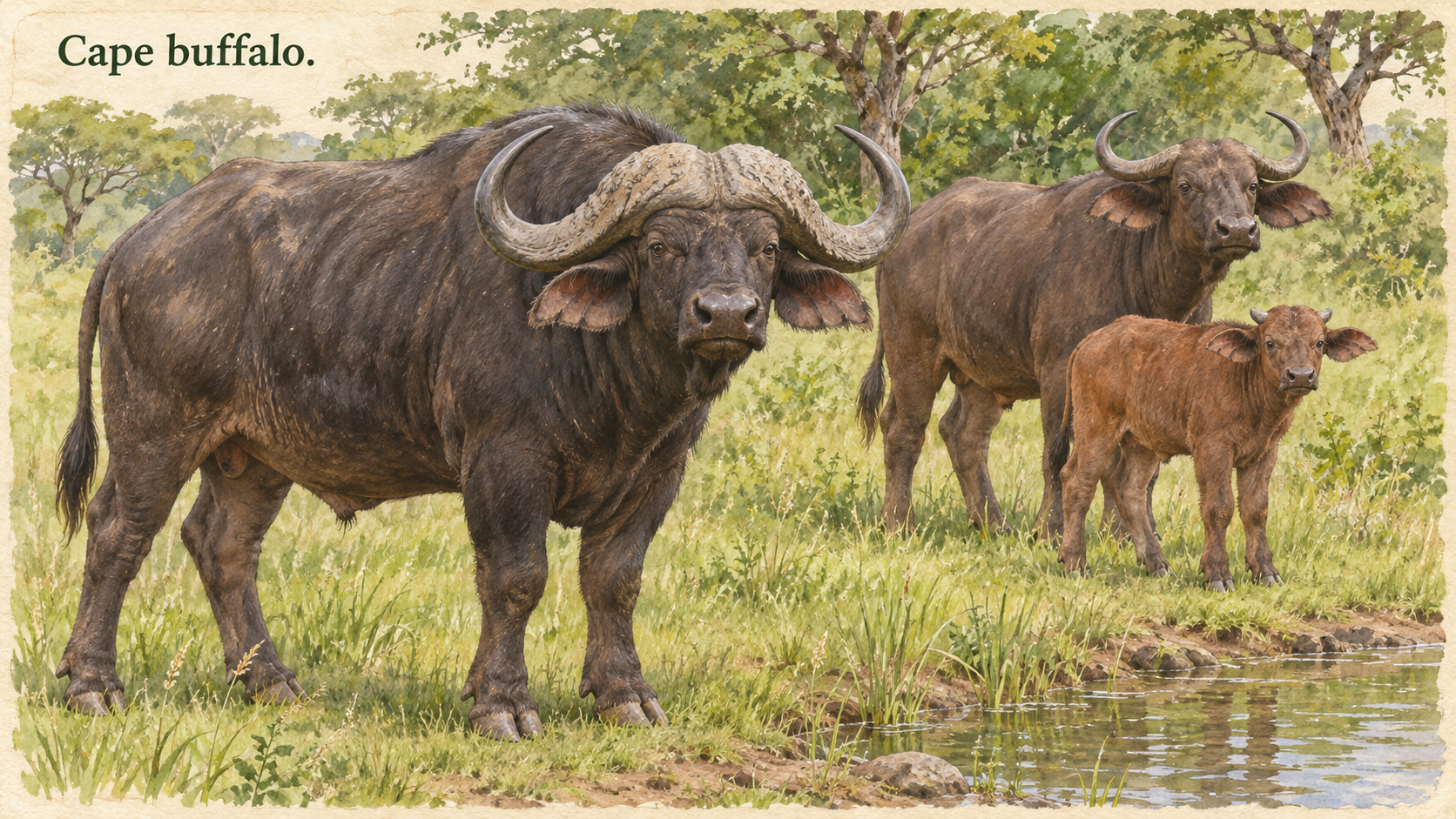
African buffalo occur across habitats ranging from forest to open plains, depending on the population. They are grazing herbivores, and herds provide the setting for much of their daily activity. The broader species is more varied than the single dark, wide-horned adult often used as its symbol.
4. Water Buffalo Have a Different History
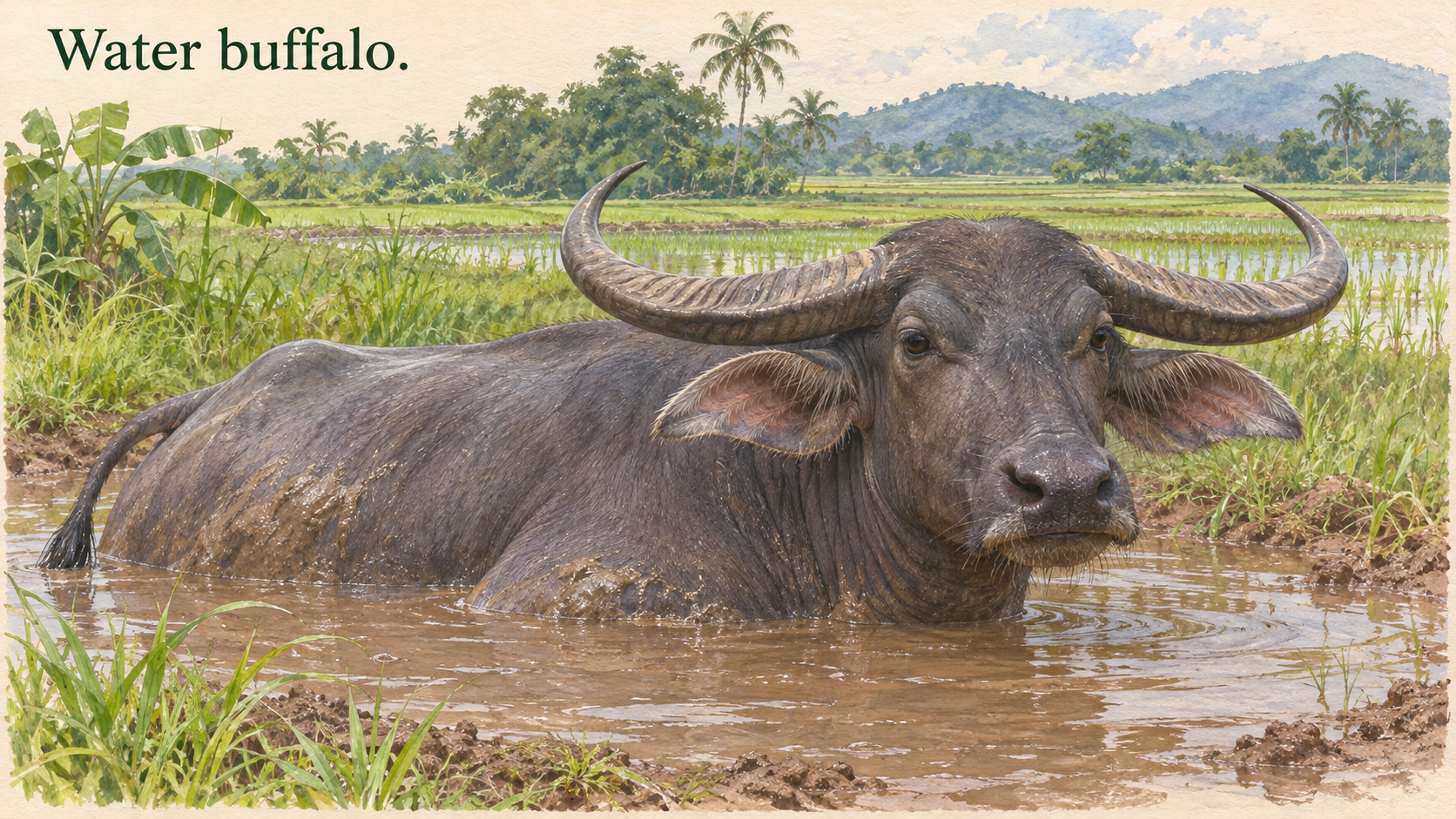
Domestic water buffalo, Bubalus bubalis, have a long association with Asian agriculture and now occur in many parts of the world. Their wild ancestor is the wild water buffalo, Bubalus arnee. Keeping those names distinct avoids treating every buffalo in a farm field as an example of a wild population.
Water buffalo often use water or mud to cool themselves. A wetland scene is therefore a natural setting for a study of this animal, but habitat alone cannot establish its identity. Horn shape, hair, head, and body proportions remain useful when the animal leaves the wallow.
5. A Name and a Place Work Best Together
Bison also occur in Europe, so bison should not be understood as a word meaning exclusively American. The American species is the focus of this comparison because it is the animal widely called buffalo in the United States. The National Park Service recognizes buffalo in cultural contexts while using bison for scientific descriptions.
When identifying an unfamiliar animal, begin with the hump and distribution of shaggy hair, then inspect the horns. Add its species name and background when available. That approach separates the animals while still recognizing why the word buffalo can have more than one valid meaning in everyday use.
Explore more large mammal names in our guide to animals that start with B.


James Miller grew up on the Oregon coast, exploring tide pools and watching seabirds. He has a particular fondness for owls and keeps a notebook of his bird sightings.
Read More »