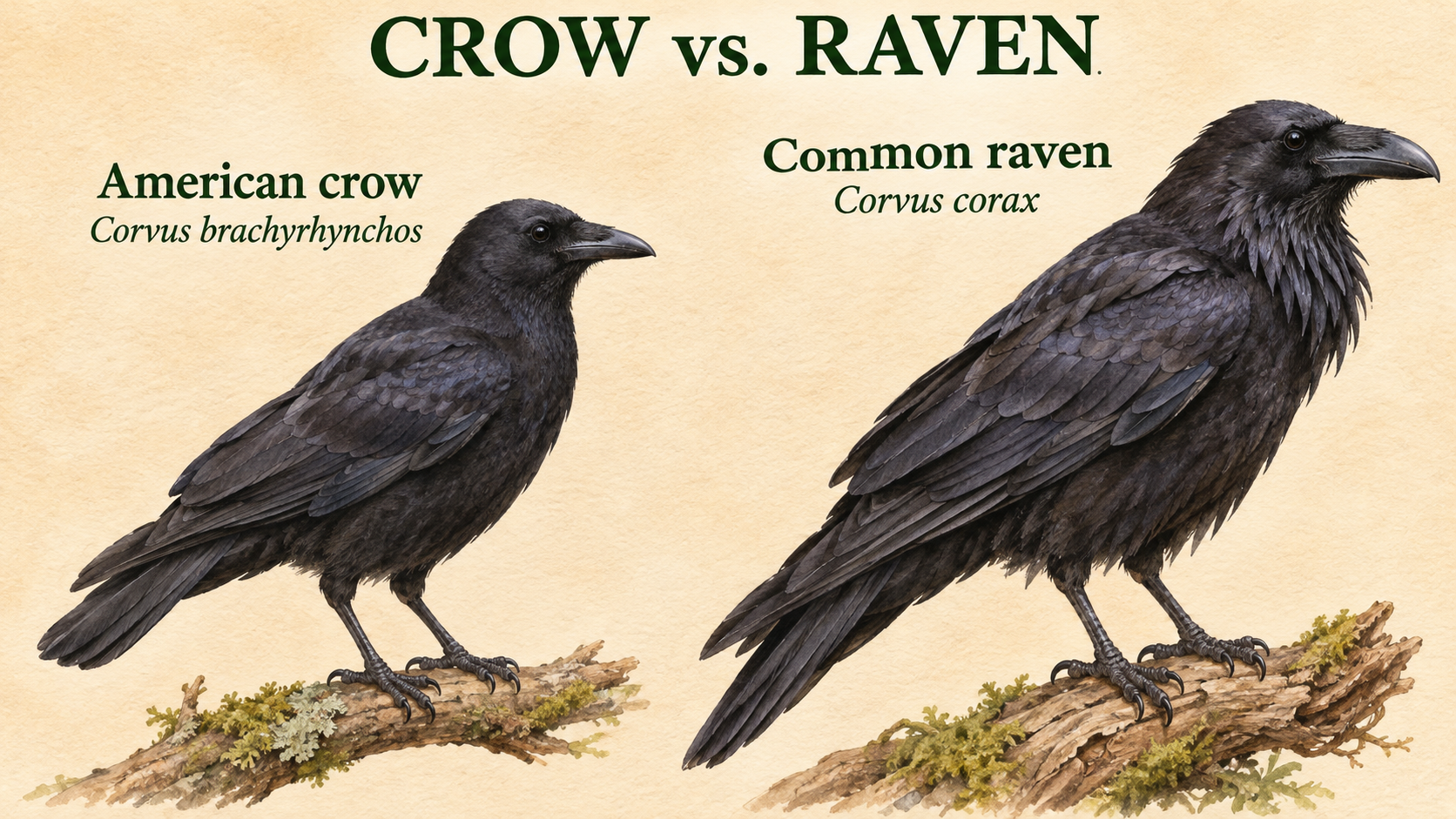
A familiar harsh caw often points toward an American Crow, while a deep, throaty croak suggests a Common Raven. In a clear view, the raven’s heavy bill, shaggy throat, and wedge-shaped tail provide more clues. Size helps when the birds are close together, but it is much harder to judge a lone black bird against the sky.
These two species are related members of the corvid family. They share black adult plumage and can overlap in habitat, so color alone tells you little. This guide focuses on the American Crow, Corvus brachyrhynchos, and Common Raven, Corvus corax, rather than assuming that every bird called a crow or raven follows the same comparison.
American Crow and Common Raven at a Glance
| Feature | American Crow | Common Raven |
|---|---|---|
| Familiar call | Harsh caw | Deep, throaty croak |
| Bill | Moderate and relatively straight | Larger, heavier, and more arched |
| Throat | Relatively sleek | Longer, shaggy throat feathers |
| Tail in flight | Shorter, rounded or square-looking | Longer and tapered into a wedge or diamond |
| Wing outline | Broader and shorter-looking | Longer and narrower-looking |
| Typical flight impression | Often steady flapping | Often mixes flapping with glides or soaring |
| Size | Usually smaller than a Common Raven | Usually larger than an American Crow |
1. Listen Before Trying to Measure the Bird
An American Crow’s repeated caw is a familiar sound over fields, woodlands, and towns. A Common Raven’s common croaking call is lower and more resonant. Listening can help even when a distant bird is little more than a silhouette. A recording may capture a useful clue that a hurried photograph misses.
Both species have varied vocal repertoires, so one call spelling cannot describe every sound they make. Repeated listening to identified recordings builds a better comparison than remembering only “caw versus croak.” If the bird makes an unfamiliar noise, combine the sound with its bill, throat, and flight shape.
2. Compare the Bill and Throat Together
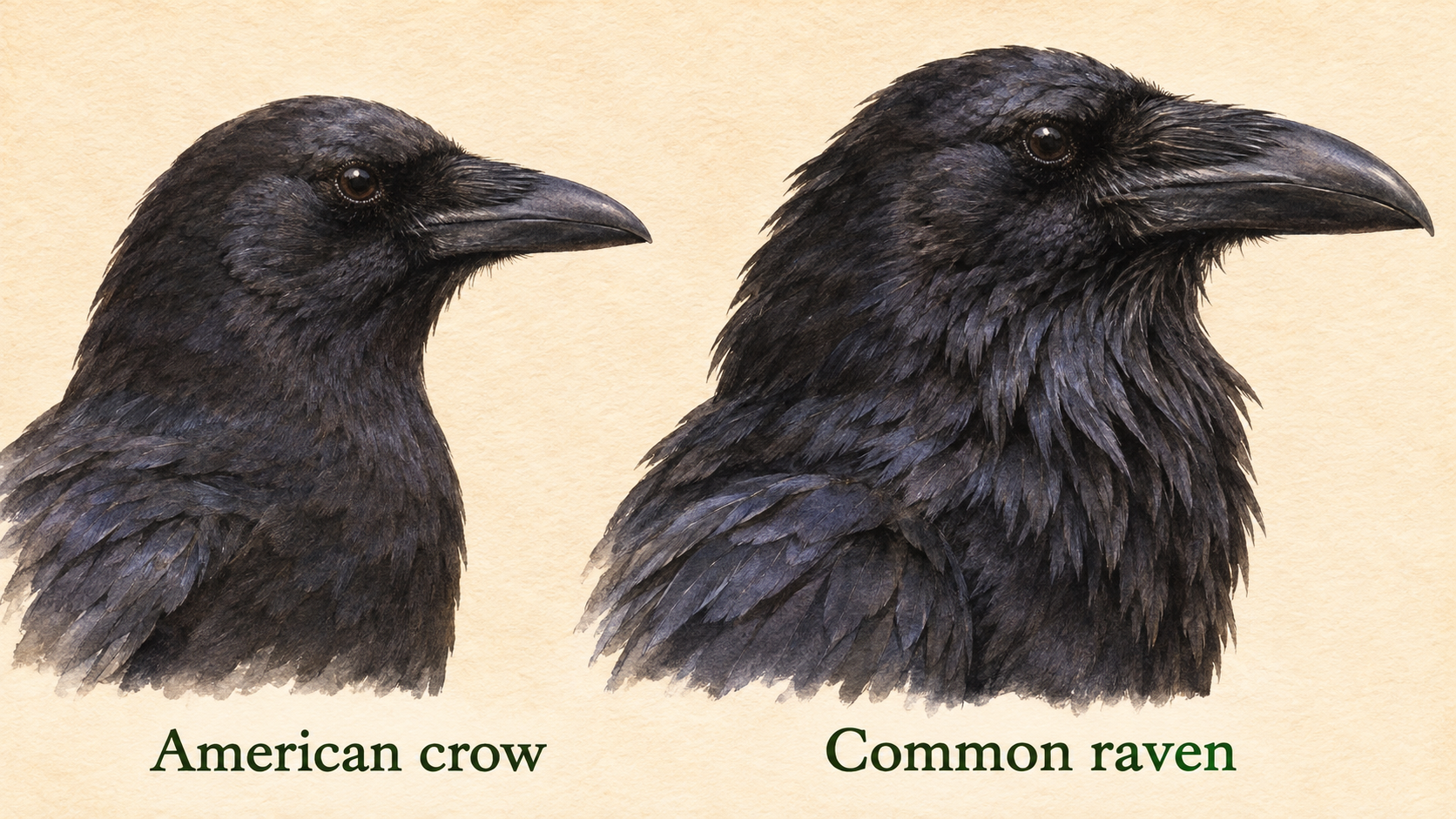
A Common Raven has a hefty bill and thick-necked appearance. Its elongated throat feathers, often called hackles, can be conspicuous when raised. An American Crow usually has a smoother throat and a more moderate bill. Look at the head in proportion to the body rather than expecting one exact bill length from every viewing angle.
A sharp profile view is especially useful because a bird facing directly toward the camera can hide bill length and curvature. Light also changes the look of black feathers. A blue sheen on either bird does not make it a different blue species; the structural features remain the better comparison.
3. The Tail Is Often Clearest in Flight
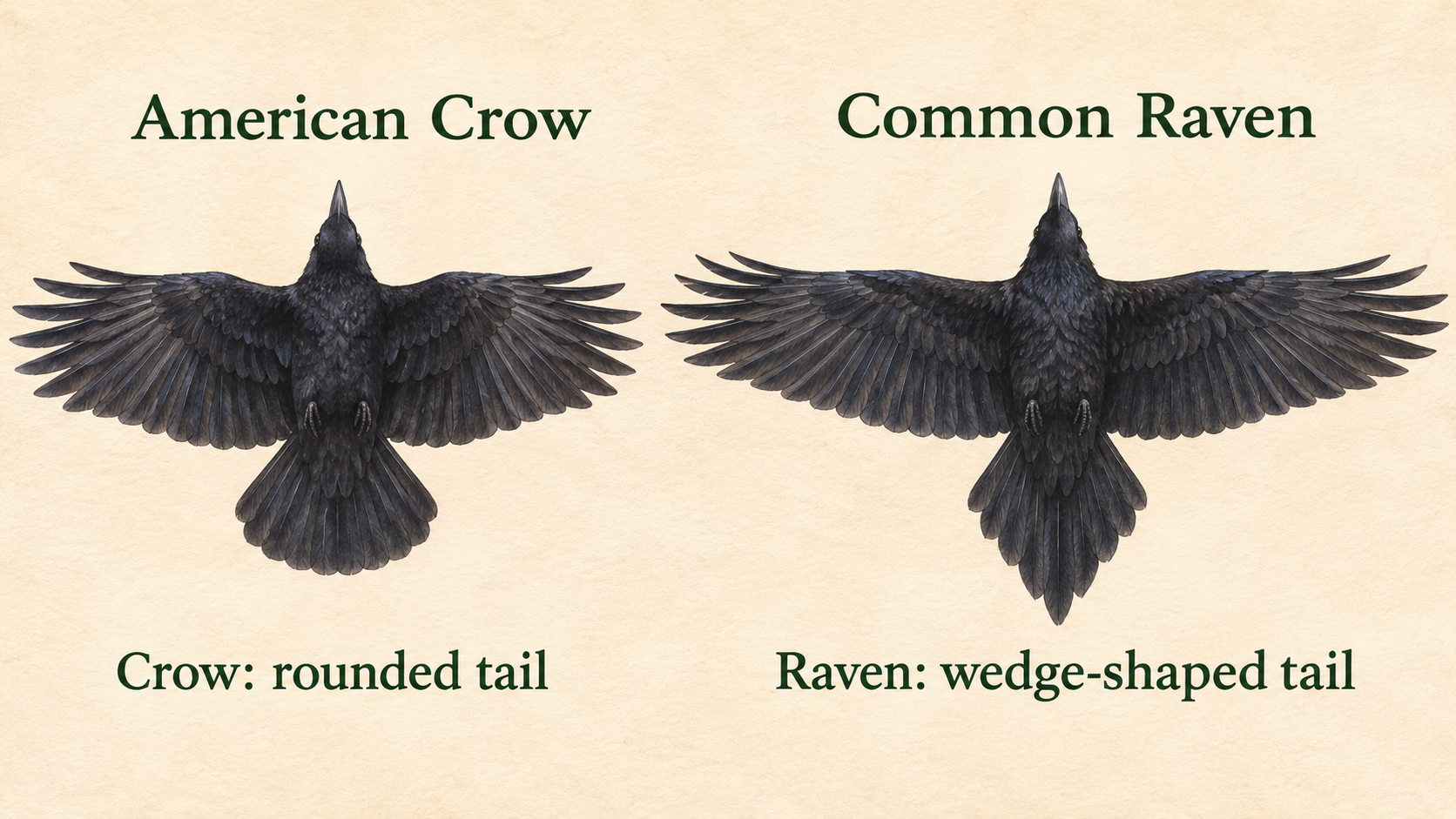
An American Crow’s tail appears squared or gently rounded when spread. A Common Raven’s longer central tail feathers create a tapered wedge or diamond outline. The wing shape helps too: the crow’s wings look broader and shorter, while the raven’s are longer. Examine the entire silhouette instead of identifying the bird from a single primary feather.
Common Ravens often glide or soar between bouts of flapping, while American Crows commonly show a steadier flapping flight. These are useful impressions rather than absolute limits on what either bird can do. Wind, distance, and the bird’s activity can change the movement you happen to see.
4. Habitat and Company Add Context
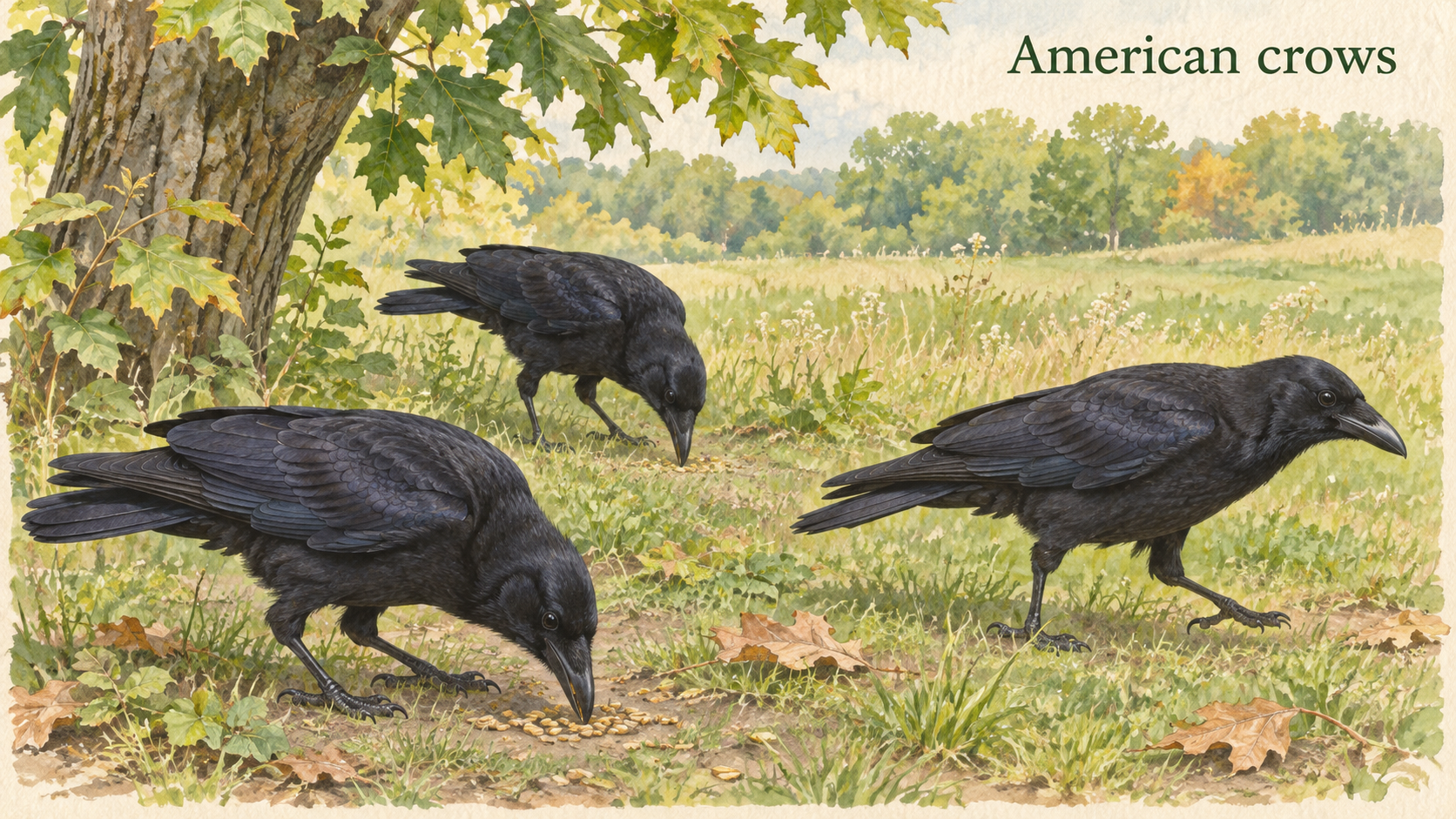
American Crows thrive in many semi-open environments, including farmland, shores, woodlands, and cities. They can gather in large communal roosts, especially outside the nesting season. A flock in town therefore fits crow behavior, but group size by itself cannot provide a species identification.
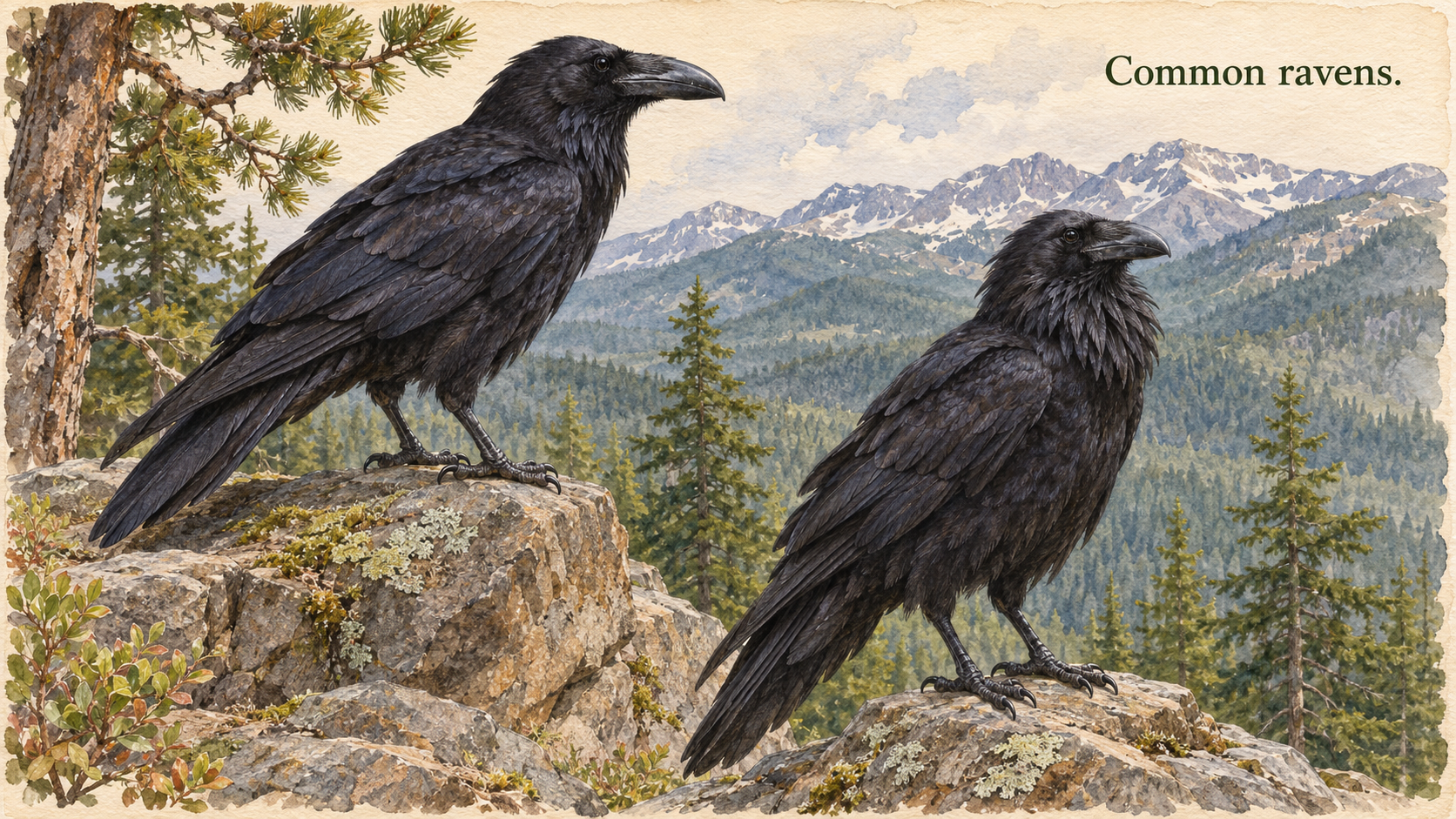
Common Ravens occur from desert landscapes to northern forests and tundra. A pair soaring above rocky country is a familiar sight, but ravens may also forage in groups or gather at a food source. The bird’s location can suggest possibilities without replacing a check of voice and shape.
5. Remember the Other Crows and Ravens
Fish Crows occur in the eastern and southeastern United States and can be especially difficult to separate from American Crows by appearance. Their more nasal calls are a key clue. In the southwestern United States and Mexico, Chihuahuan Ravens add another possibility; they are smaller than Common Ravens and also have a tapered tail.
A useful observation therefore records place, sound, bill, throat, and tail. When only one feature is visible, keep the identification tentative. A crow-or-raven impression is a worthwhile beginning, and a second view or a call may supply the detail that settles the species.
Find more bird names in our guides to animals that start with C and animals that start with R.


James Miller grew up on the Oregon coast, exploring tide pools and watching seabirds. He has a particular fondness for owls and keeps a notebook of his bird sightings.
Read More »