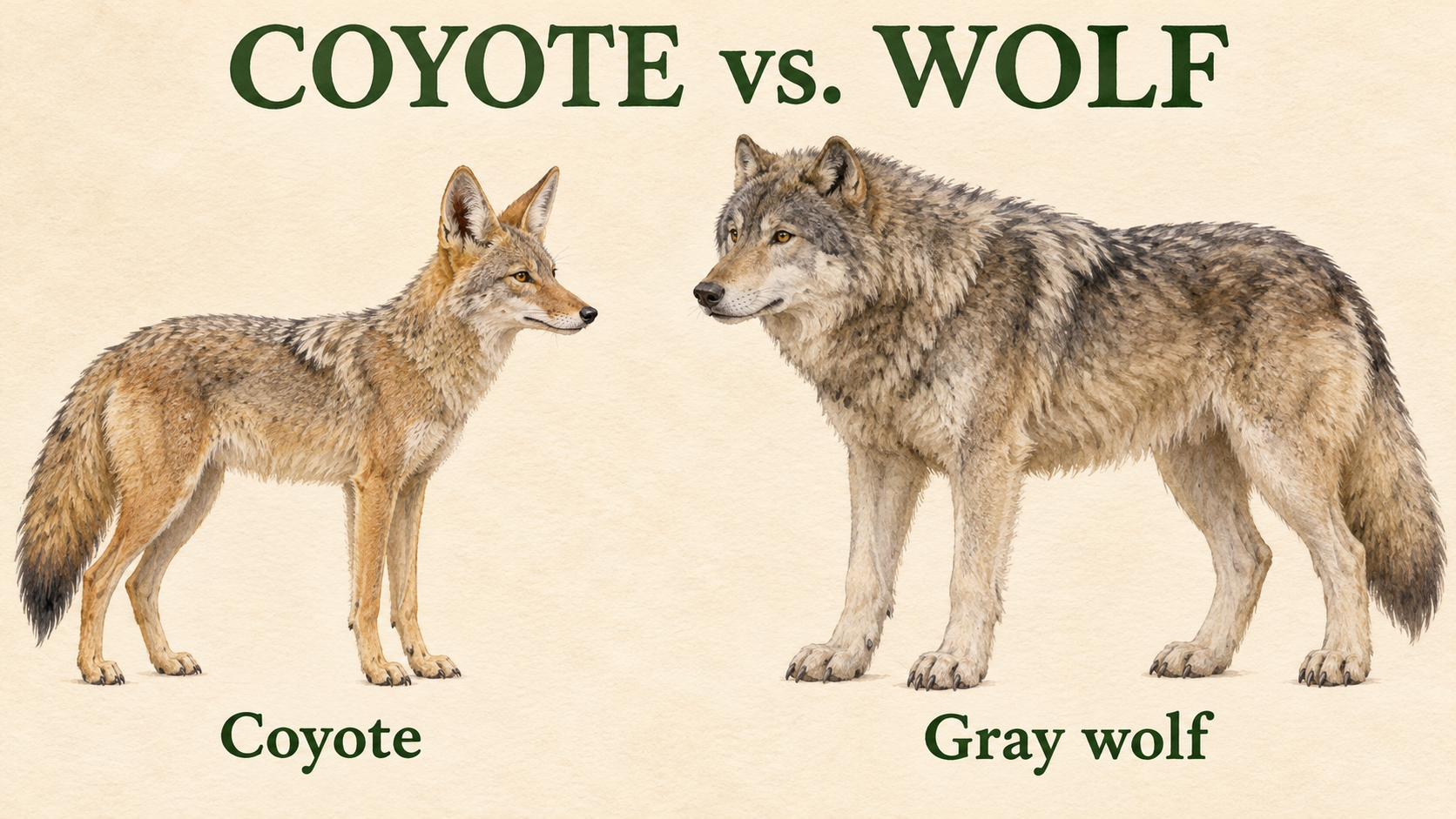
A coyote usually has a slimmer build, a more pointed muzzle, and larger-looking ears relative to its head than a gray wolf. A wolf generally has a broader head, a blockier muzzle, and much larger feet. Those proportions are more helpful than coat color or a quick estimate that an animal looks “dog-sized.”
Size still matters, but it needs context. A distant animal is hard to measure, winter fur adds apparent bulk, and eastern coyotes tend to be larger than their western relatives. Using several features together gives a better starting point than treating any large, gray canid as a wolf.
Coyote and Gray Wolf Differences at a Glance
| Feature | Coyote | Gray wolf |
|---|---|---|
| Muzzle | Longer-looking, narrow, pointed | Broad and blocky |
| Ears relative to head | Large and pointed | Smaller-looking, with rounder tips |
| Build | Usually slender | Generally heavier, with a deeper chest |
| Feet | Smaller paws | Larger, broader paws |
| Coat | Variable mixtures of gray, tan, brown, and other shades | Also variable; gray wolves can be gray, black, or pale |
| Social life | Pairs, family groups, and solitary individuals | Packs are a central part of normal social life |
| Calls | Howls as well as yips and other sounds | Howling is also part of communication |
1. Compare the Head, Muzzle, and Ears
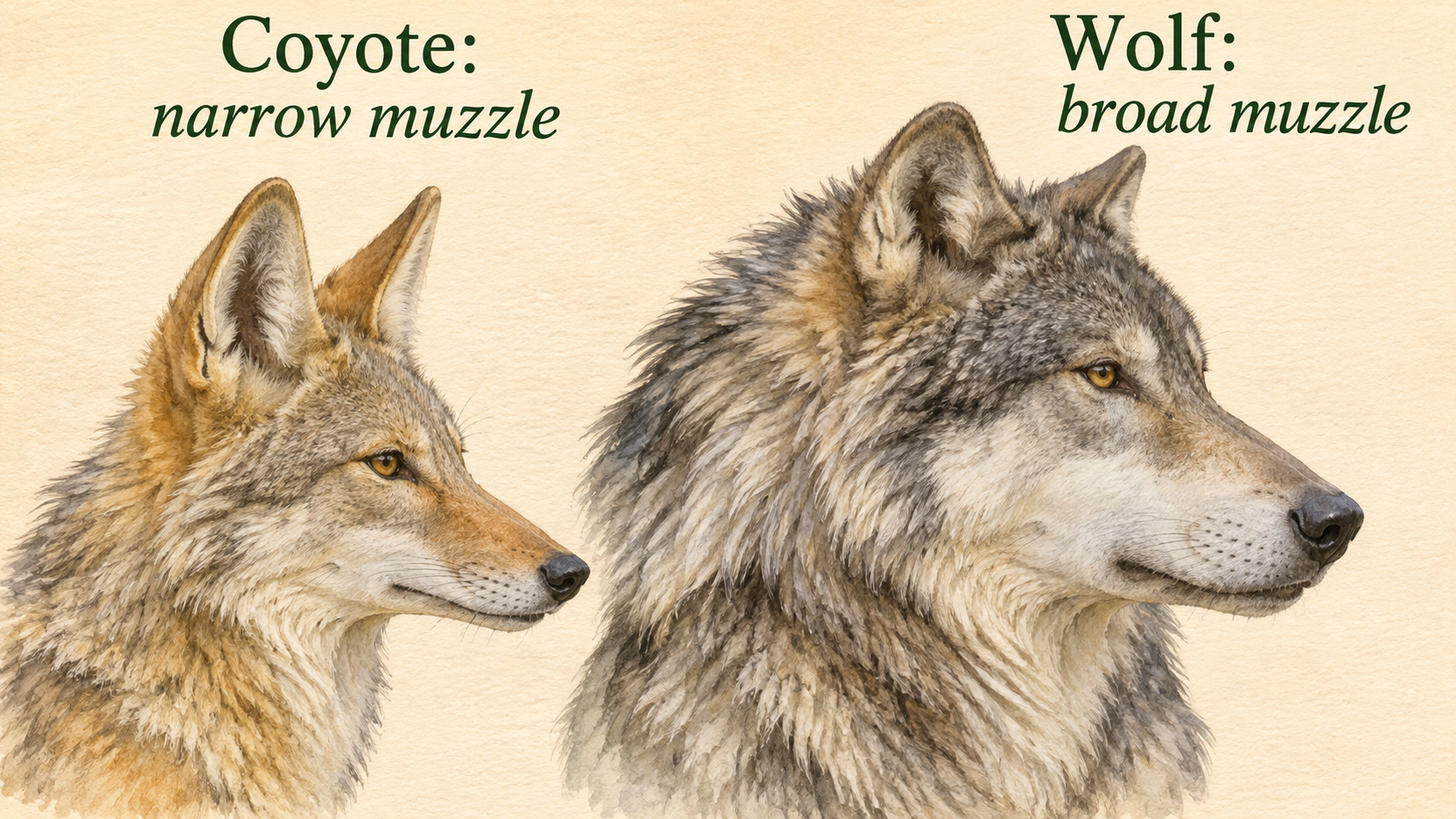
A coyote’s narrow face and prominent pointed ears often produce an alert, fine-featured outline. A gray wolf’s head is more substantial, with a broad muzzle and relatively short ears. Compare these features in the same view when possible. A head turned toward the camera can make a narrow muzzle appear shorter than it really is.
The rest of the body reinforces the difference. Wolves generally have larger paws and a heavier frame; coyotes usually look lighter and more slender. Deep fur can hide the chest and legs, so a clear side view is especially helpful. An image that cuts off the feet removes one of the useful clues.
2. Size Changes with Region and the Animal
Yellowstone’s National Park Service gives typical coyote weights of 25–35 pounds, compared with 80–110 pounds for female wolves and 100–130 pounds for males in that region. Those figures illustrate a substantial local contrast. They should not be treated as fixed boundaries for every wolf and coyote across North America.
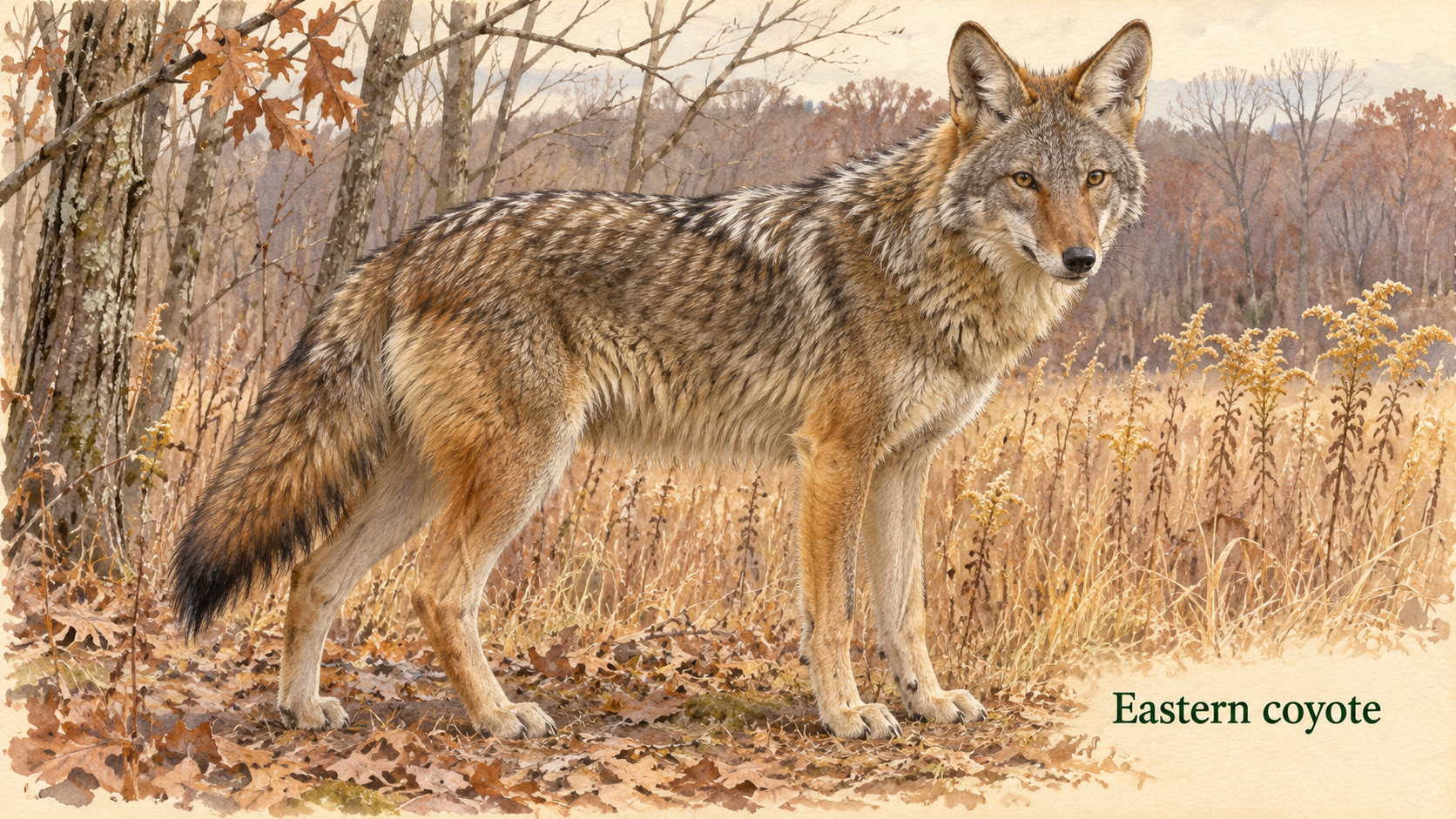
New York’s wildlife agency describes eastern coyotes as larger than coyotes west of the Mississippi, with ancestry that includes coyote, wolf, and domestic dog. They remain distinguishable in the usual comparison by their smaller overall size than wolves, pointed ears, and narrow snouts. A large eastern coyote therefore needs careful observation rather than an automatic wolf label.
3. Gray Wolf Does Not Mean a Gray Coat
Gray wolves can have a mixture of buff, gray, brown, black, or white in their coats. Yellowstone contains both black and gray-coated wolves. The word gray is part of the species’ common name, rather than a promise about every individual’s appearance.
Coyotes vary too. The familiar western animal often looks tan, buff, or gray, sometimes with warmer tones on the ears and tail. Massachusetts describes eastern coyote coats ranging from pale blonde to red or nearly black. A color match is therefore weaker evidence than a clear view of the animal’s head, limbs, and overall proportions.
4. Their Feeding Habits Overlap, but Differ in Emphasis
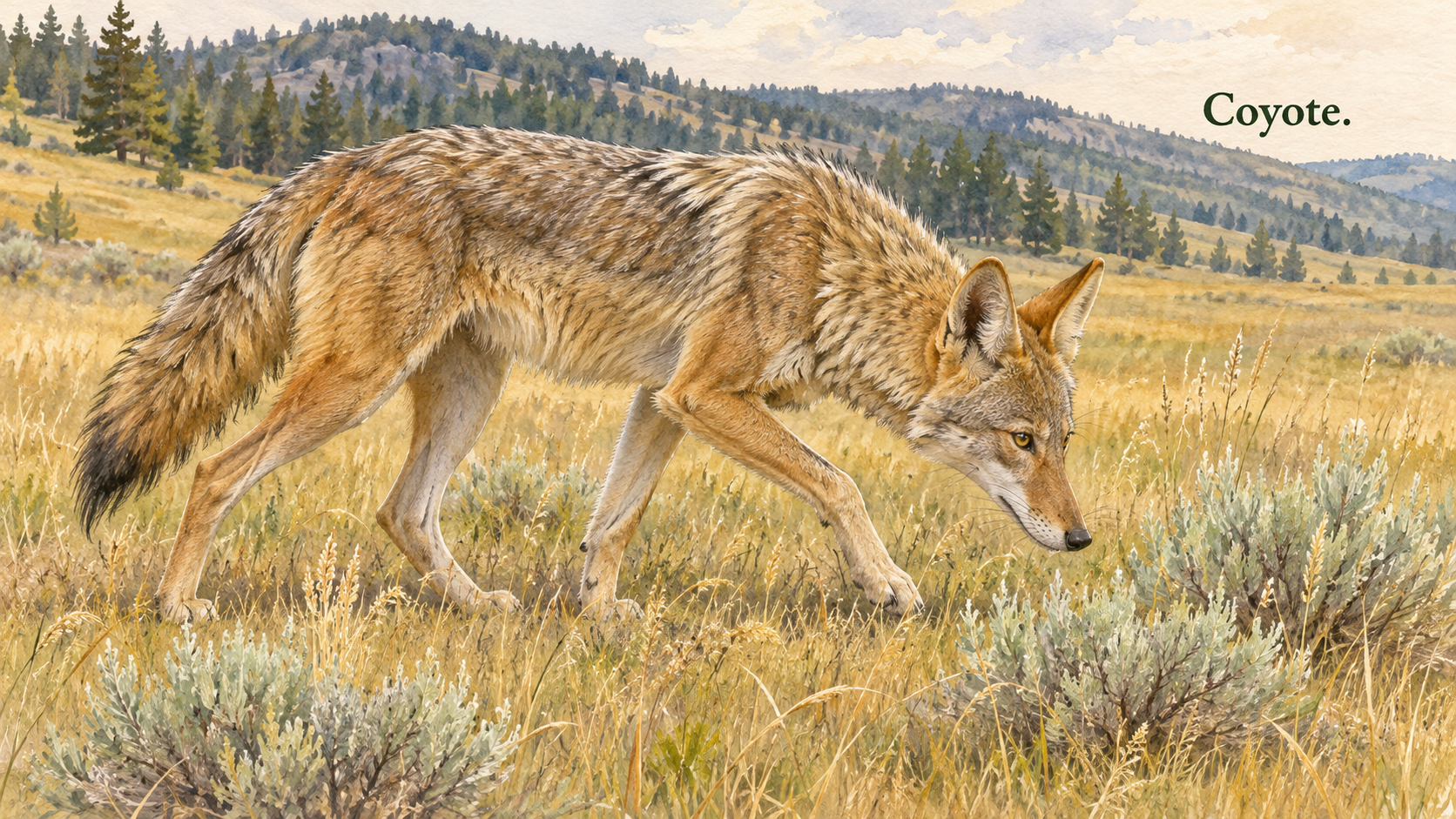
In Yellowstone, coyotes commonly eat small mammals such as voles, mice, and rabbits, along with carrion and other available food. Their adaptability also allows them to live far beyond remote wilderness, including urban and suburban places. Seeing a wild canid near people does not itself tell you its species.
Wolves can hunt large hoofed mammals cooperatively, and elk are an important prey in Yellowstone. They also eat smaller animals. A pack’s feeding ecology depends on the prey available where it lives, so the familiar wolf-and-elk picture is one regional example rather than its entire diet.
5. Coyotes Have Family Lives Too
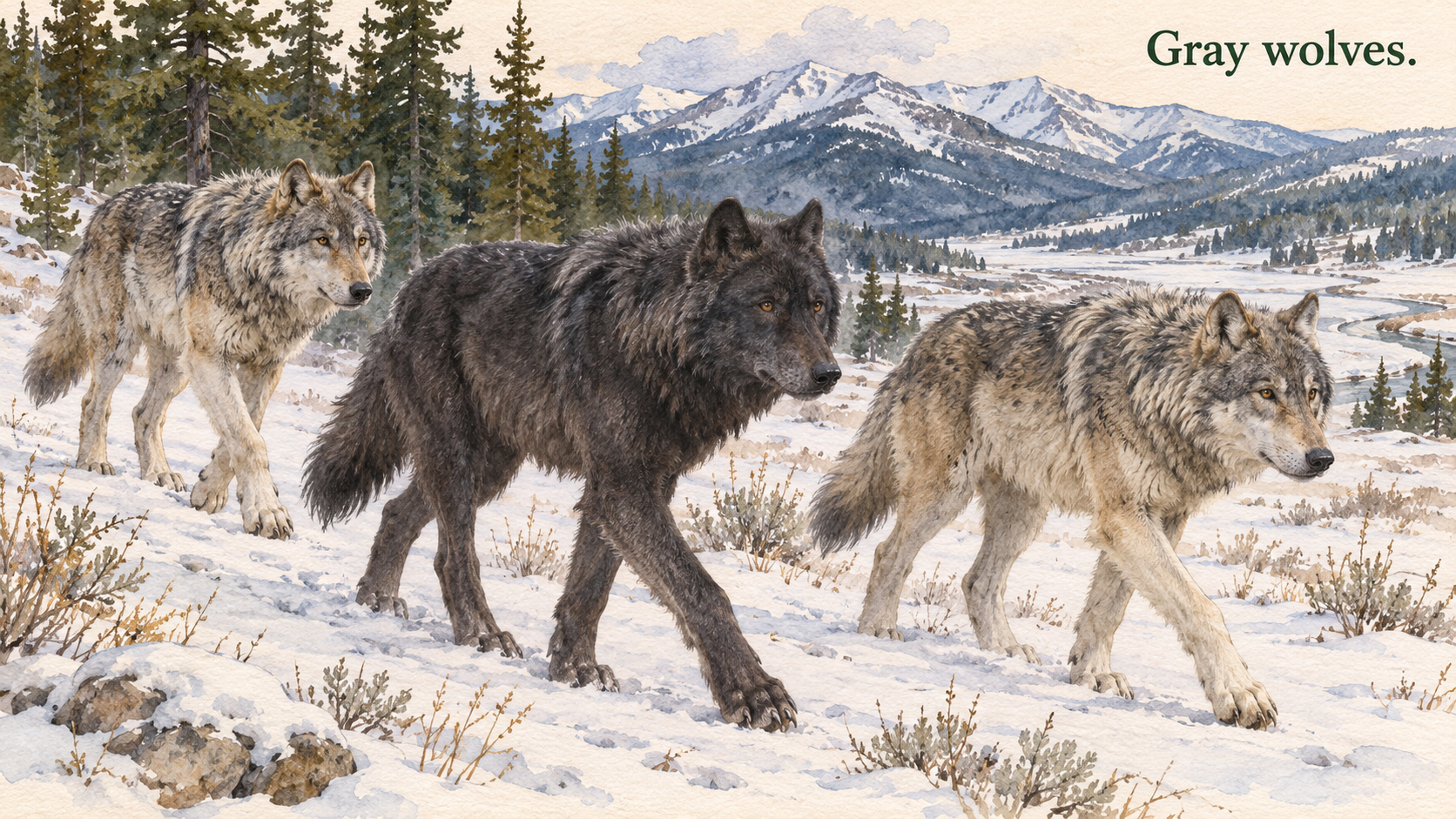
Wolves live in packs that cooperate in raising young, defending territory, and hunting. Coyotes can also live as pairs or family groups. Massachusetts describes seasonal units consisting of an adult pair and their pups before the young disperse. The contrast is therefore more complicated than “wolves have packs, coyotes are always alone.”
Both species howl. Coyotes also make the yipping calls that contribute to their reputation as vocal animals. A chorus can signal social communication without revealing a reliable head count or proving that the animals are wolves. Match sounds with a clear sighting when possible, while allowing an uncertain observation to remain uncertain.
For more canid and mammal names, explore our guides to animals that start with C and animals that start with W.


James Miller grew up on the Oregon coast, exploring tide pools and watching seabirds. He has a particular fondness for owls and keeps a notebook of his bird sightings.
Read More »