A salamander is an amphibian, while a lizard is a reptile. Both can have four legs and a long tail, making the overall silhouette misleading. Skin offers a better starting point: salamanders have glandular skin without scales; lizards have a scaly covering. Their development and ways of obtaining oxygen also differ.
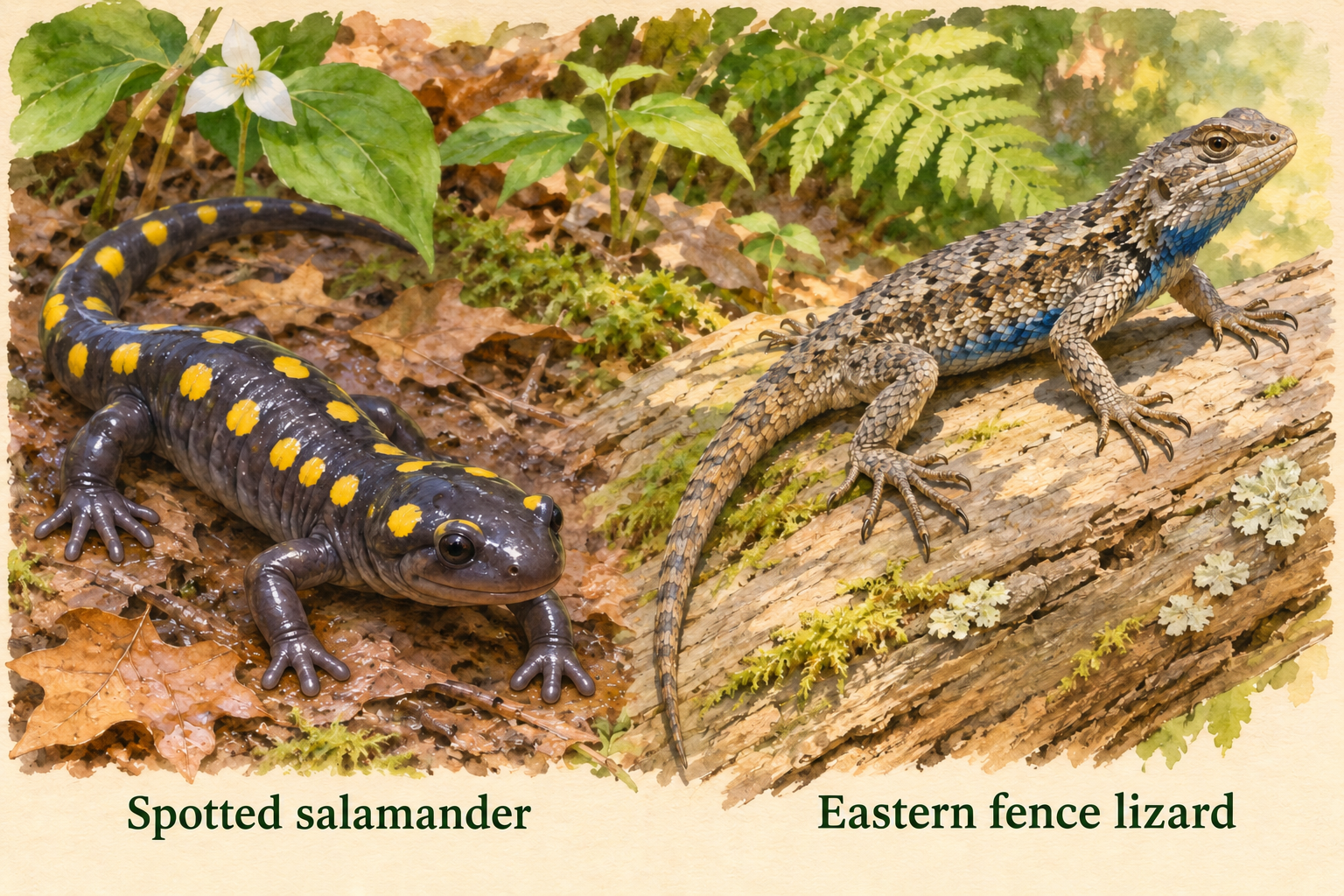
A damp woodland log can shelter either animal, so location alone does not answer the question. The useful comparison combines the body surface, feet, behavior, and a local species guide. A spotted salamander and an eastern fence lizard illustrate familiar forms, but neither group is limited to that one shape or habitat.
| Feature | Salamander | Lizard |
|---|---|---|
| Group | Amphibian | Reptile |
| Body covering | Glandular skin without scales | Scales |
| Typical toes | Soft, without the usual lizard claws | Usually clawed |
| Oxygen exchange | Skin is important; lungs/gills vary | Lungs |
| Development | Aquatic larvae or other pathways, depending on species | Young resemble small adults; no amphibian-style larva |
| Habitat clue | Often cool, damp shelter or freshwater | Varied settings; many use sunny basking sites |
Scales Are the Most Useful Visible Difference
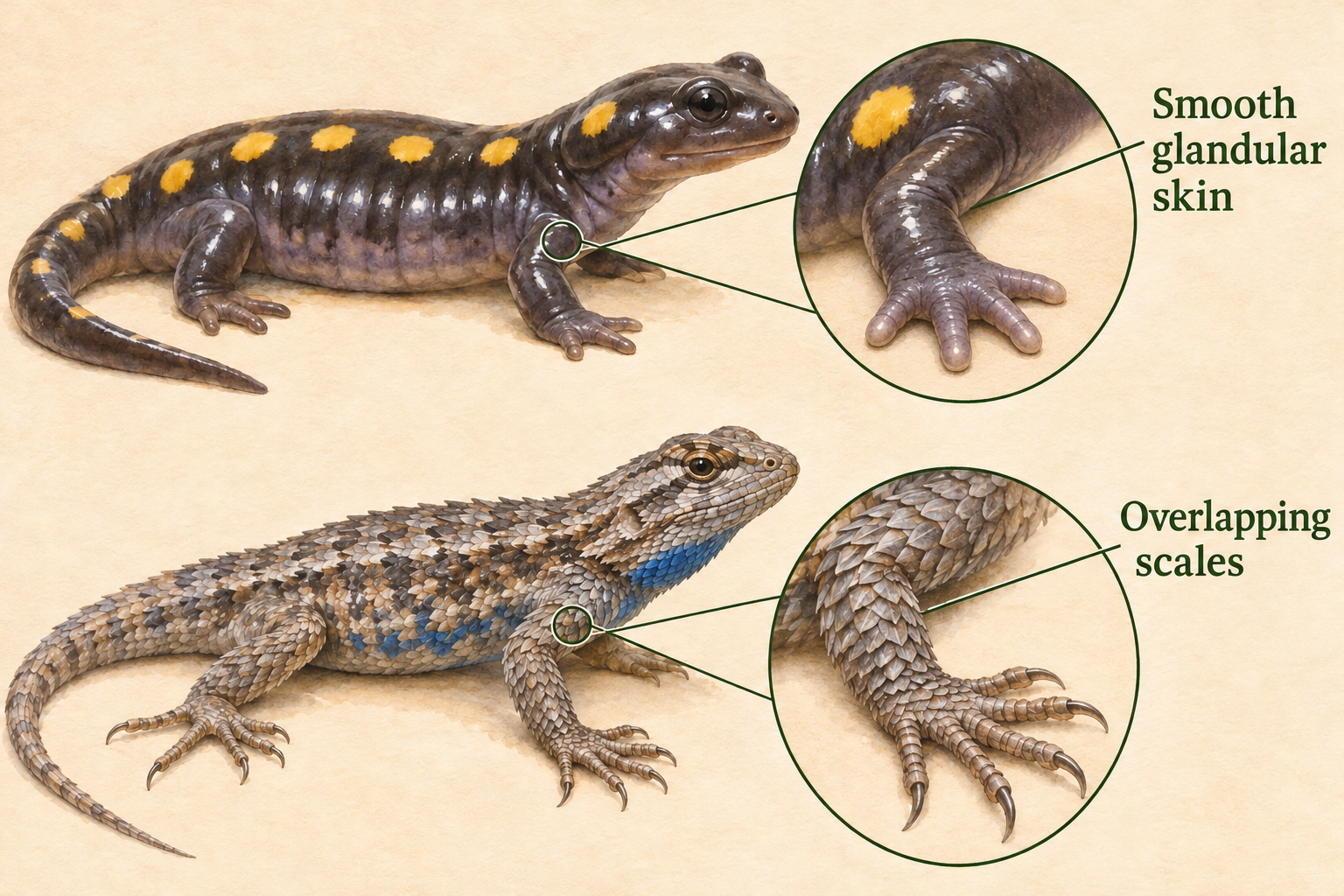
A lizard’s scales form a protective barrier that limits drying. They may be rough and conspicuous, as in a fence lizard, or much smoother-looking in other species. A shiny body is therefore not automatically a salamander. Look for the repeating scale pattern instead of relying on whether a photograph seems glossy or dull.
Salamander skin must function in close contact with moisture. For lungless salamanders, oxygen passes through the skin and moist tissues lining the mouth and throat. This makes a damp refuge especially important. It also explains why a tiny animal concealed under leaf litter may be using a very specific microhabitat rather than merely hiding wherever it happens to land.
Feet Help, but Four Legs Are Not a Rule
Typical salamander toes are soft and lack the conspicuous claws of many lizards. Their limbs often look short beside the body. Lizards commonly have longer, clawed toes suited to gripping surfaces. These are useful supporting observations, but counting toes in a distant photograph can be unreliable when feet overlap or disappear behind a log.
Both groups include unusual forms. Slender salamanders have very small limbs and can appear wormlike at first glance. Some lizards are legless. A long body, short legs, or a missing limb therefore cannot decide amphibian versus reptile on its own. The covering of the skin and a species-specific reference remain more dependable.
Their Life Cycles Need More Than a Simple Pond Story
Many salamanders hatch as aquatic larvae with external gills, then transform as they grow. Others retain aquatic features, while some develop directly in terrestrial eggs and hatch as miniature salamanders. Eastern red-backed salamanders have no free-swimming aquatic larval stage. Moisture remains essential even when a species does not need a pond nursery.
Lizards breathe with lungs and do not pass through that gilled amphibian larval stage. Many lay eggs, but some give birth to live young. A young lizard emerges with the basic adult body plan. Saying that every lizard lays an egg, or that every salamander starts as a swimming larva, would erase real variation in both groups.
A Sunlit Perch and a Moist Refuge
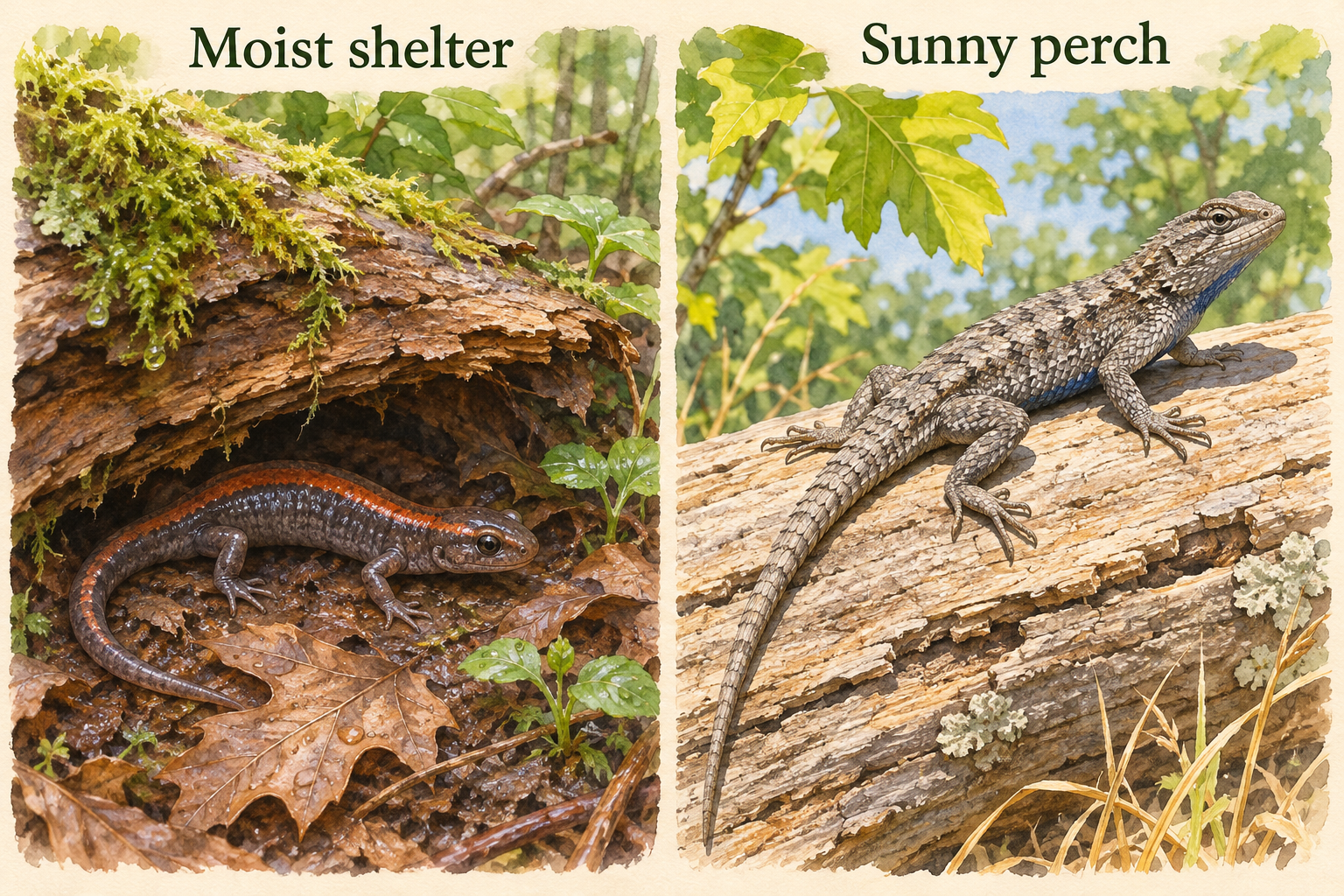
An eastern red-backed salamander often forages among moist logs and leaf litter, eating small invertebrates. An eastern fence lizard can be seen on logs or tree surfaces in woodland and more open settings, feeding on insects and other small prey. Their diets can overlap, even though their skin and activity patterns place different demands on the habitat.
Observe the animal where it is, using a close photograph when possible rather than testing its skin by touch. Start with scales, then use feet and local species information to confirm the identification. Explore more examples in our guides to animals that start with S and animals that start with L.


James Miller grew up on the Oregon coast, exploring tide pools and watching seabirds. He has a particular fondness for owls and keeps a notebook of his bird sightings.
Read More »