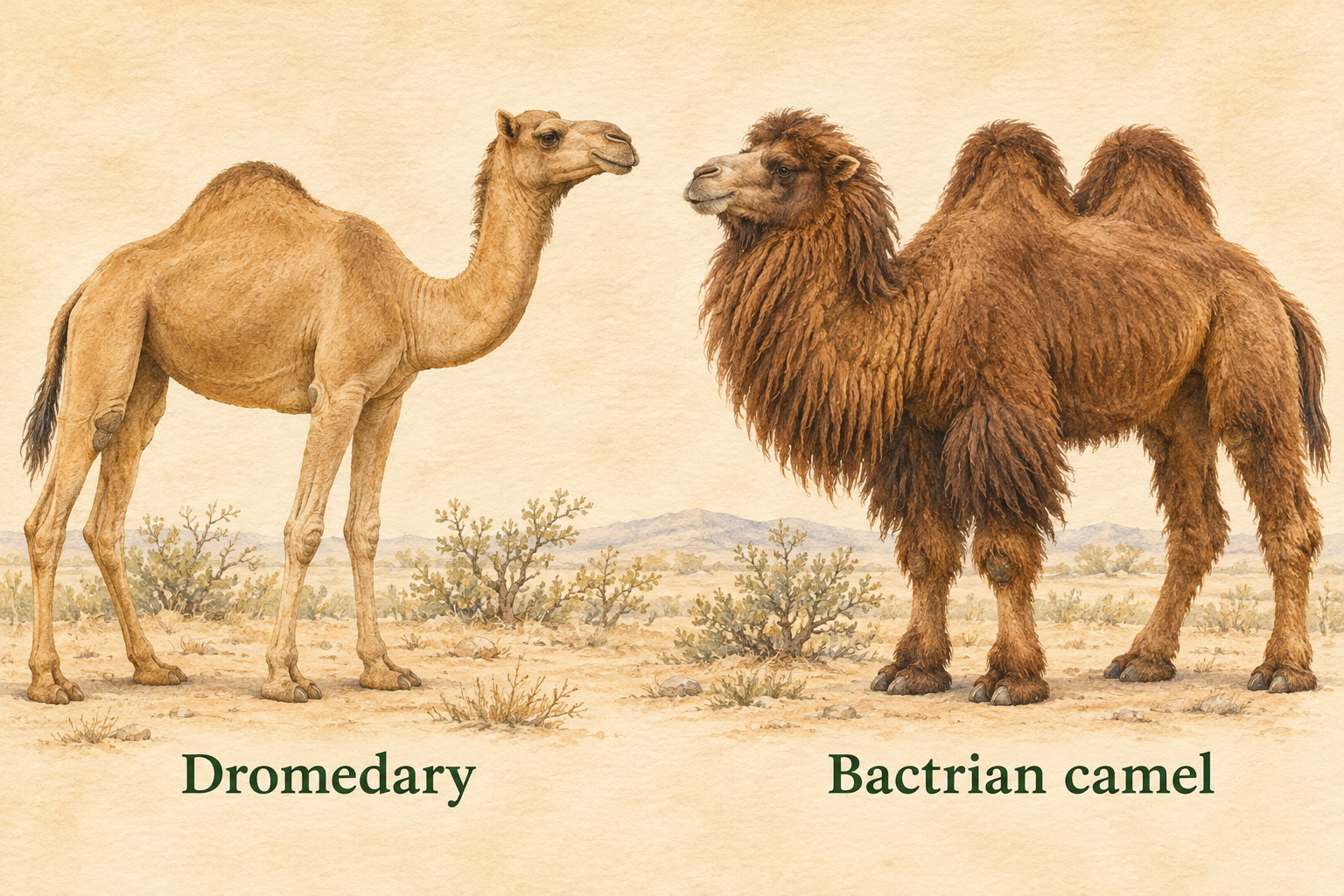
A dromedary has one hump, while a Bactrian camel has two. That memorable difference is the best starting point, but it does not tell the whole story. Coat, body outline, climate, and the distinction between domestic and genuinely wild animals all make the comparison more useful.
In this comparison, Bactrian camel means the domestic species Camelus bactrianus. The wild camel, Camelus ferus, is a separate two-humped species from China and Mongolia. It is not simply a domestic Bactrian that escaped. Keeping those names clear prevents an apparently simple hump count from obscuring an important biological distinction.
| Feature | Dromedary | Domestic Bactrian camel |
|---|---|---|
| Scientific name | Camelus dromedarius | Camelus bactrianus |
| Humps | One | Two |
| Typical outline | Long-legged, relatively lightly coated | Stockier-looking, often shaggy |
| Climate association | Hot, dry regions | Central Asian climates with cold winters |
| Hump contents | Fat | Fat |
| Feet | Broad pads and two toes | Broad pads and two toes |
Humps Store Fat
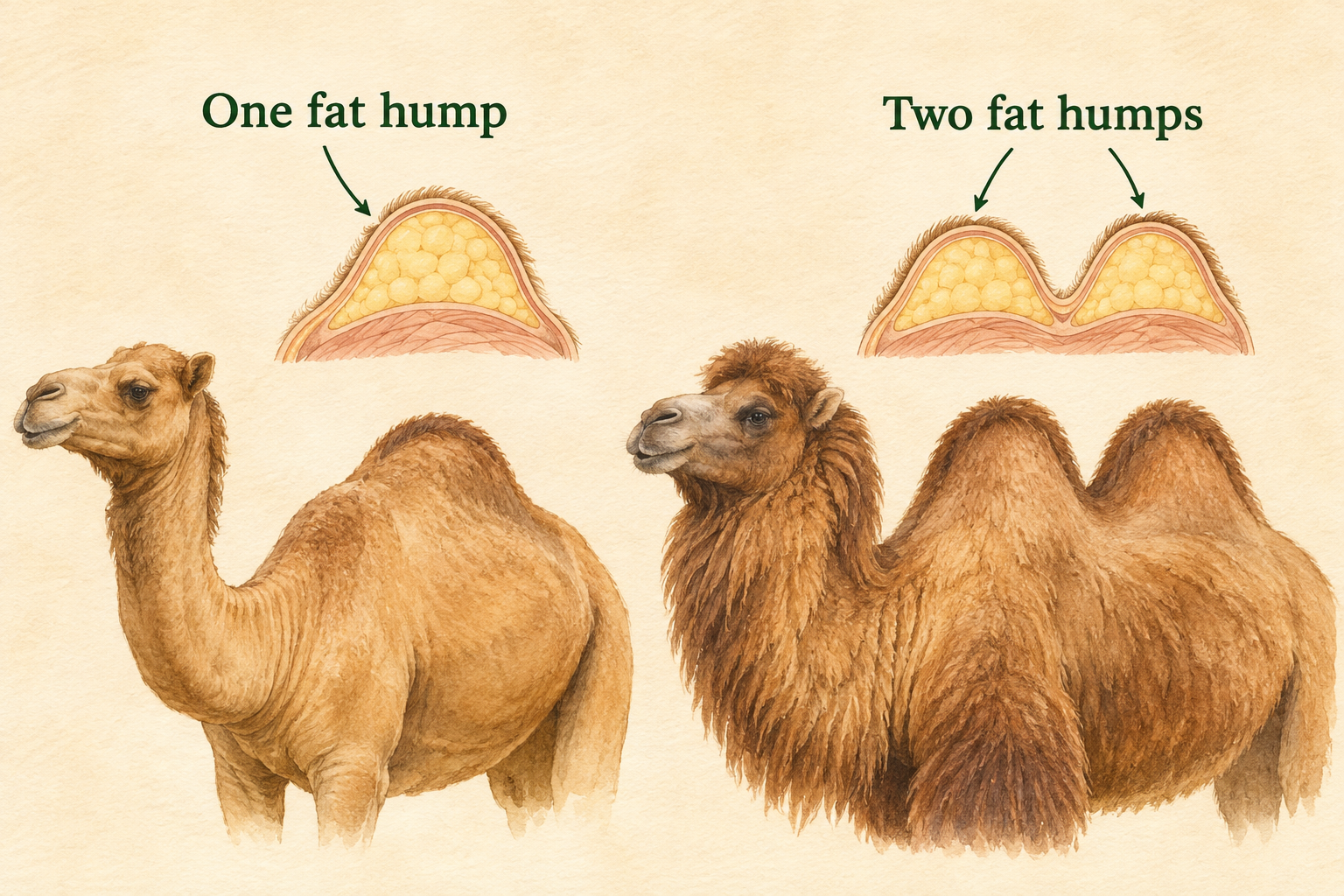
The material inside a camel’s hump is fat. When food is scarce, the animal can draw on that stored energy. A well-filled hump looks different from one that has lost much of its reserve; the latter can shrink or lean. Hump appearance therefore says something about an individual’s condition as well as its species.
This is why a camel should not be imagined as carrying a water bottle on its back. Camels have several adaptations for coping with dry conditions, but hump shape is not a water gauge. The useful identification question is how many humps the animal has, allowing for a camera angle or a sagging hump that may partly hide the outline.
A Desert Can Be Cold
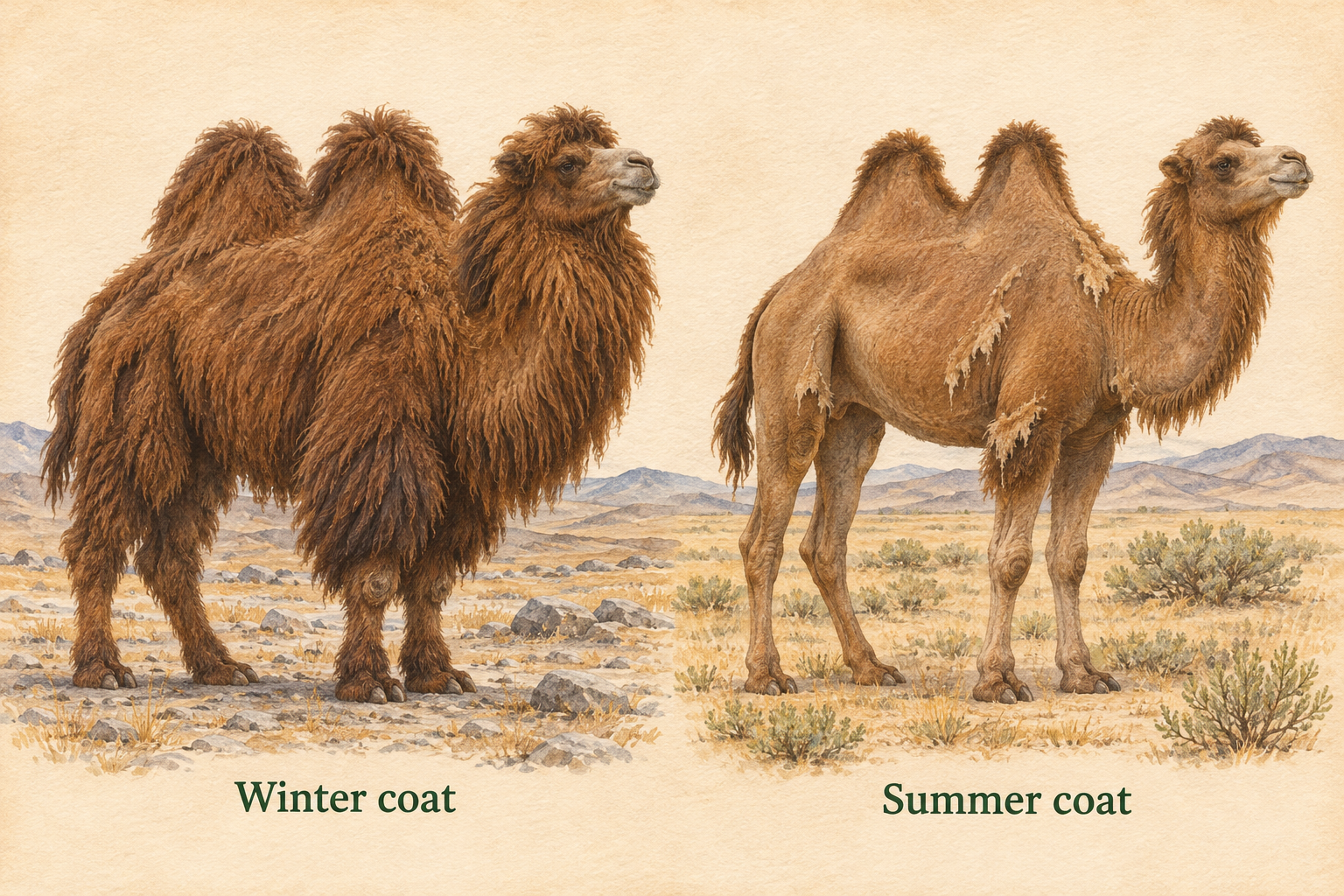
Bactrian camels are associated with Central Asian environments where seasonal temperatures can change sharply. They grow a long, heavy coat, particularly around the neck, humps, and parts of the legs. When the weather warms, they shed it. A shedding animal can look patchy and untidy while still showing the same basic two-humped body plan.
Dromedaries are familiar from arid areas of North Africa and the Middle East. Their coats are generally shorter, though hair can be longer around the throat, shoulders, and hump. Color varies from light cream to dark brown, so the familiar sandy tan is not a rule. One hump is a stronger clue than color alone.
Shared Feet, Lips, and Desert Tools
Both camels have broad, padded feet with two toes. Their feet spread their weight across the ground, giving a very different impression from a horse’s hard, single hoof. Long necks allow them to reach vegetation, while flexible lips help gather coarse plant foods. These shared features reveal their close relationship even when their backs and coats look different.
They also have features that protect against dusty surroundings, including long eyelashes and nostrils that can close. These adaptations do not mean that every camel lives on soft dunes. Dry landscapes include gravel, scrub, and cold steppe as well as sand. Matching the animal only to a postcard desert scene makes its ecology seem narrower than it is.
Domestic, Feral, and Wild Mean Different Things
Dromedaries are a domesticated species. Free-ranging descendants of introduced domestic animals, such as the camels in Australia, are described as feral. That word concerns their relationship to domestication; it does not create a new species. A camel can roam without a herder and still belong to the domestic dromedary species.
The wild camel is a separate case. Genetic research distinguishes Camelus ferus from the domestic Bactrian camel, despite both having two humps. Hump count separates an ordinary dromedary from these two-humped camels, but a reliable species label is needed to tell the two-humped species apart. For most zoo and working-camel comparisons, one hump versus two remains the clearest first observation. Meet more members of the wider animal world in our guide to animals that start with C.


James Miller grew up on the Oregon coast, exploring tide pools and watching seabirds. He has a particular fondness for owls and keeps a notebook of his bird sightings.
Read More »