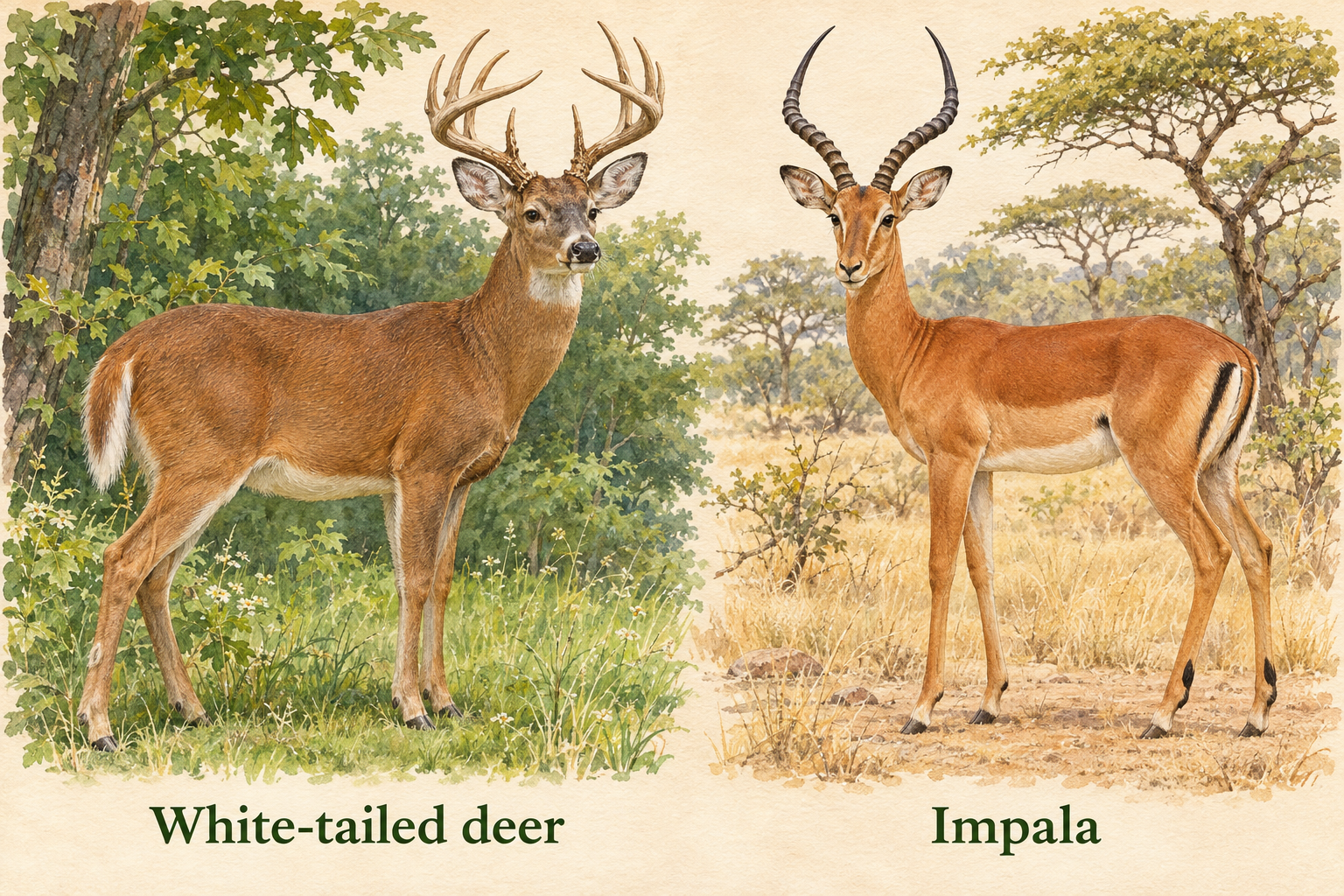
Deer belong to the family Cervidae; the animals commonly called antelope belong to Bovidae. The clearest familiar difference is on the head: deer typically grow antlers made of bone, while antelope have horns with a bony core and a keratin covering. Antlers are shed and replaced; bovid horns are generally permanent.
That distinction needs context. Most female deer have no antlers, a male deer may have shed his, and young animals may have little visible headgear. Antelope also vary in whether females bear horns. A bare-headed animal cannot be assigned to either group simply because nothing is growing above its ears.
| Feature | Deer | Antelope |
|---|---|---|
| Family | Cervidae | Bovidae |
| Typical headgear | Antlers, often branching | Unbranched horns, sometimes curved or spiraled |
| Material | Bone | Bone core with keratin sheath |
| Replacement | Usually shed and regrown on a seasonal cycle | Generally retained and growing |
| Sex difference | Usually males; reindeer are a notable exception | Horns in males, and in females of some species |
| Name trap | Elk and moose are deer too | Pronghorn is in a different family |
The Families Include More Than the Familiar Examples
White-tailed deer, elk, moose, and reindeer are all cervids, despite their different sizes and antler forms. The word deer is therefore broader than the small, brown woodland animal that often comes to mind. Antlers can range from relatively simple spikes to broad or intricately branching structures. Their shape also changes as an individual matures.
Antelope is a convenient common name covering a variety of bovids, rather than one neat counterpart to all deer. Bovidae also includes cattle, sheep, and goats. Gazelles, impalas, wildebeest, and other antelope can look quite different from one another. A photograph of one slender gazelle does not define the build or habitat of the entire group.
Antlers and Horns Grow Differently
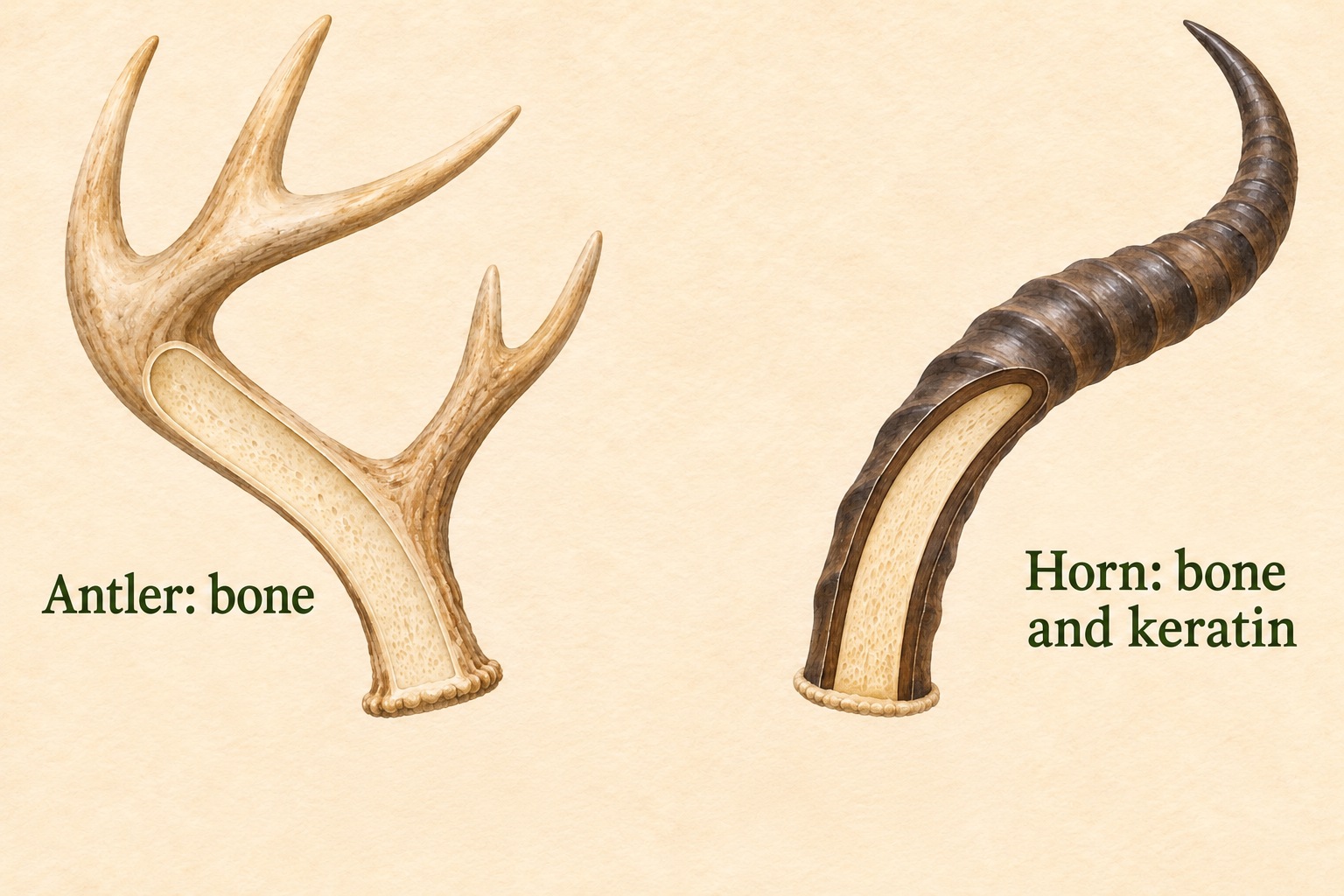
A growing antler is covered by velvet: living skin with blood vessels that support development. As the antler matures, that covering is lost and hard bone is exposed. Later, the antler separates from its attachment on the skull, leaving the animal to grow a replacement. The cycle is especially conspicuous in temperate deer.
A bovid horn has a bony center surrounded by a sheath made largely of keratin, the protein also found in fingernails. The sheath remains attached rather than being cast off each season. Horns can bend into sweeping curves or twist into spirals without becoming the branched antlers of a deer. A spiral is not the same structural feature as a tine.
The Same Deer Changes Through the Year
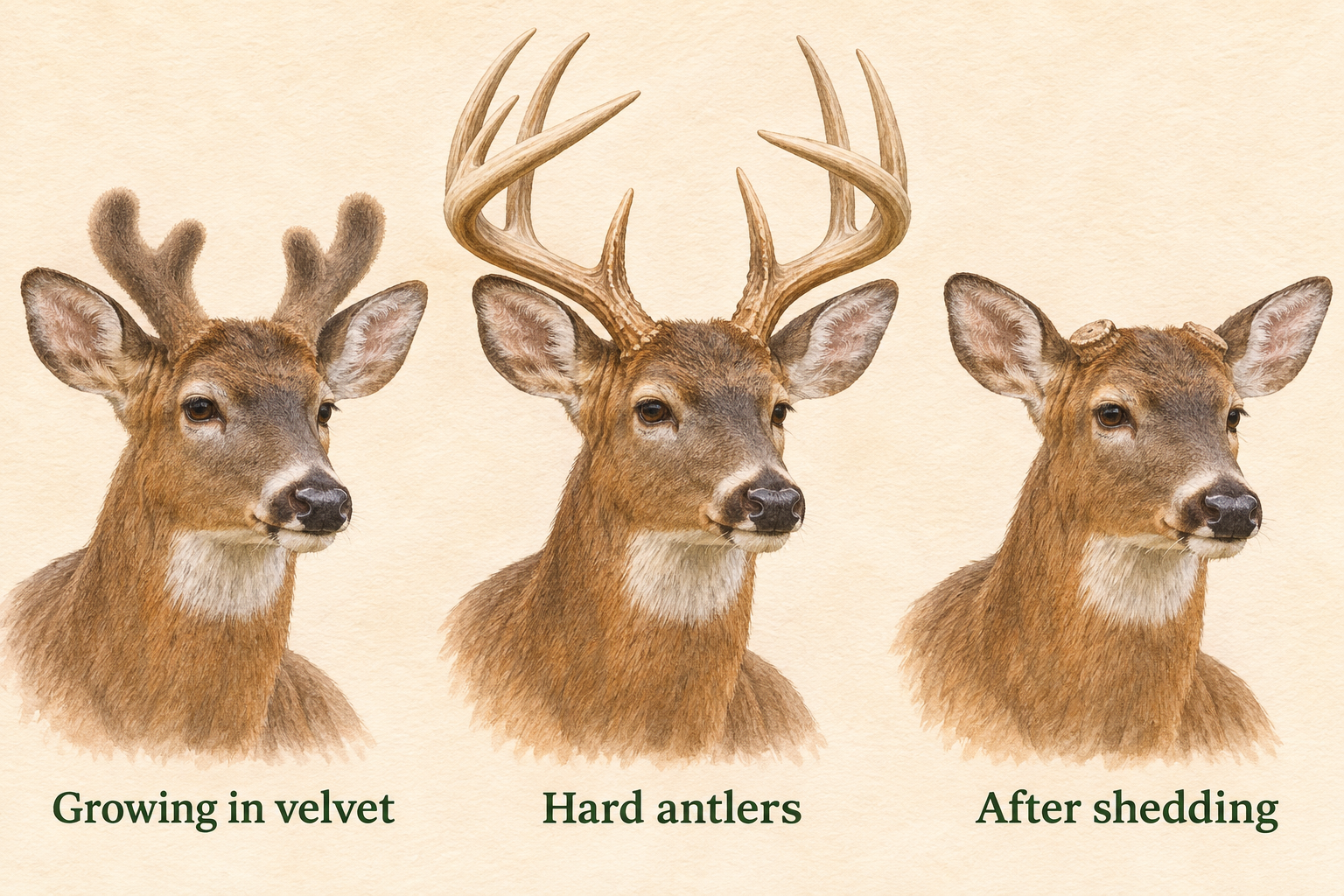
A deer photographed after shedding may look unlike a male of the same species photographed during the breeding season. A young male’s short spikes can also be mistaken for small horns. The shape at one moment is only a snapshot of growth. Species, age, and season all help explain what an observer sees.
There are biological exceptions too. Chinese water deer lack antlers, while both male and female reindeer can grow them. Reindeer sexes also shed at different times. These examples are good reasons to avoid turning a useful generalization into an absolute rule, especially when identifying an isolated head portrait with little other context.
The American Antelope Is a Name Trap
The North American pronghorn is often called an antelope, but it belongs to Antilocapridae. Its horns have a permanent bony core and an outer sheath that is shed and replaced. The male’s sheath also has a projecting prong. It is therefore a particularly poor animal to use as the standard example of an African or Asian antelope.
Begin a comparison with the known species and family, then examine the headgear’s structure and seasonal state. Body pattern, location, and proportions provide additional clues when horns or antlers are absent. Find more hoofed mammals in our guides to animals that start with D and animals that start with A.


James Miller grew up on the Oregon coast, exploring tide pools and watching seabirds. He has a particular fondness for owls and keeps a notebook of his bird sightings.
Read More »