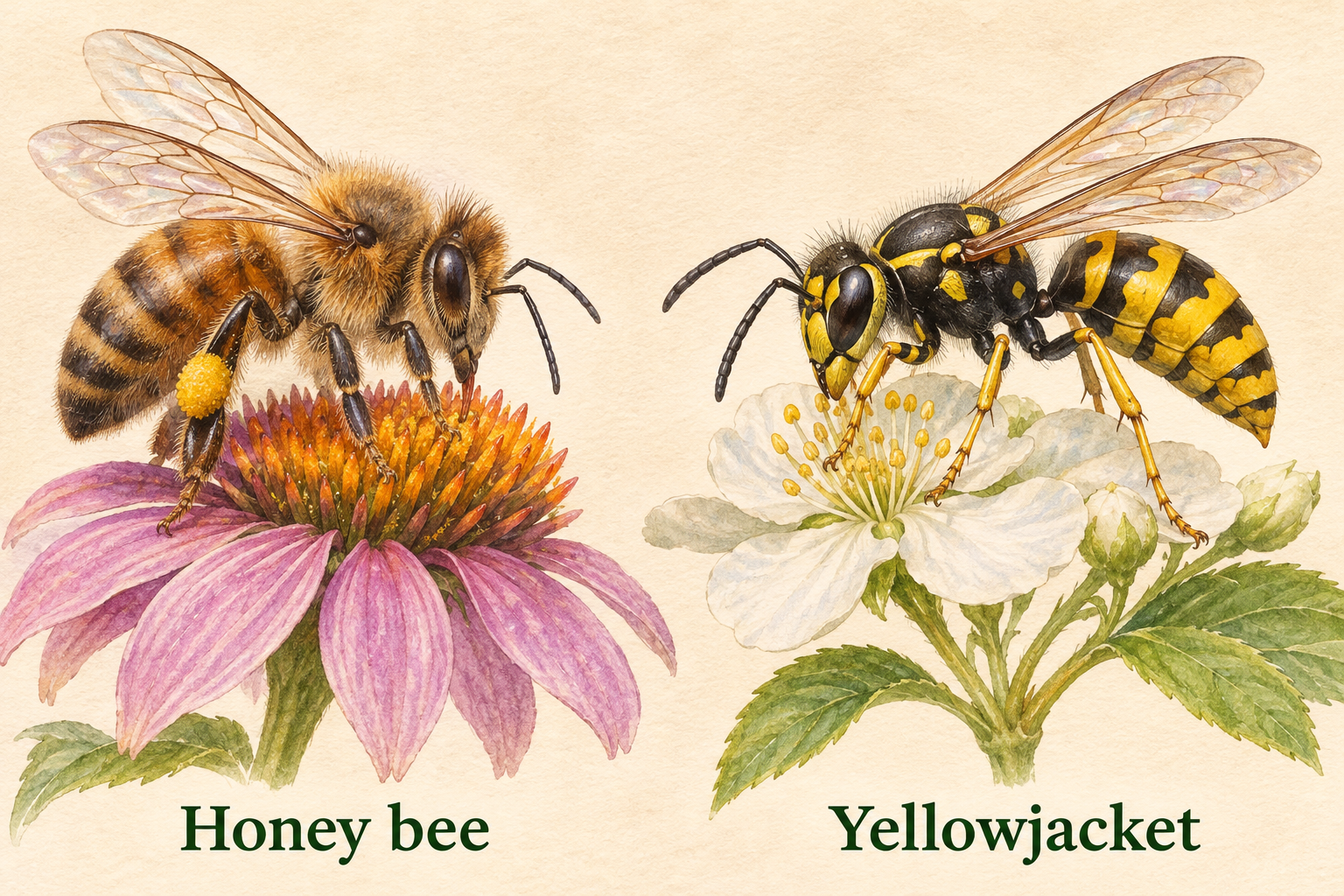
Bees are usually hairier and more robust than the familiar yellowjackets and paper wasps. Wasps often have a smoother-looking body and a more conspicuous narrow waist. Those are useful starting clues, but the most revealing difference is often what they collect for their young: pollen for most bees, animal prey for many wasps.
Neither bee nor wasp describes just one body shape or lifestyle. Both groups include solitary species as well as species that live in colonies. A yellow-and-black pattern does not settle an identification, and seeing an insect on a flower does not prove it is a bee. Adult wasps visit flowers for nectar too.
| Clue | Typical garden bee | Familiar social wasp |
|---|---|---|
| Body surface | More conspicuous hair | Often smoother-looking |
| Waist | Present, but may be less obvious | Often sharply narrowed |
| Food for young | Mostly pollen-based provisions | Insects or other animal prey |
| Adult flower visits | Nectar and pollen collection | Often nectar feeding |
| Nest materials | Varies; honey bees use wax | Paper wasps and yellowjackets use paper pulp |
| Social life | Solitary or colonial, depending on species | Also part of a much wider solitary-and-social group |
Hair and Legs Give Better Clues Than Stripes
Bee hairs are branched, helping pollen cling to the body. On a honey bee, the thorax looks especially fuzzy; on a bumble bee, hair covers much of the body. The common social wasps have comparatively sparse hair and slender legs. In a photograph, these details often reveal more than a bright yellow band on the abdomen.
Pollen can provide another clue. A female bee may carry a packed load on its hind legs or among specialized body hairs, depending on the species. A little loose pollen dust on a wasp is different from a deliberate transport load. An insect that has just brushed a flower can acquire pollen without being a pollen-collecting bee.
Watch What Leaves the Flower
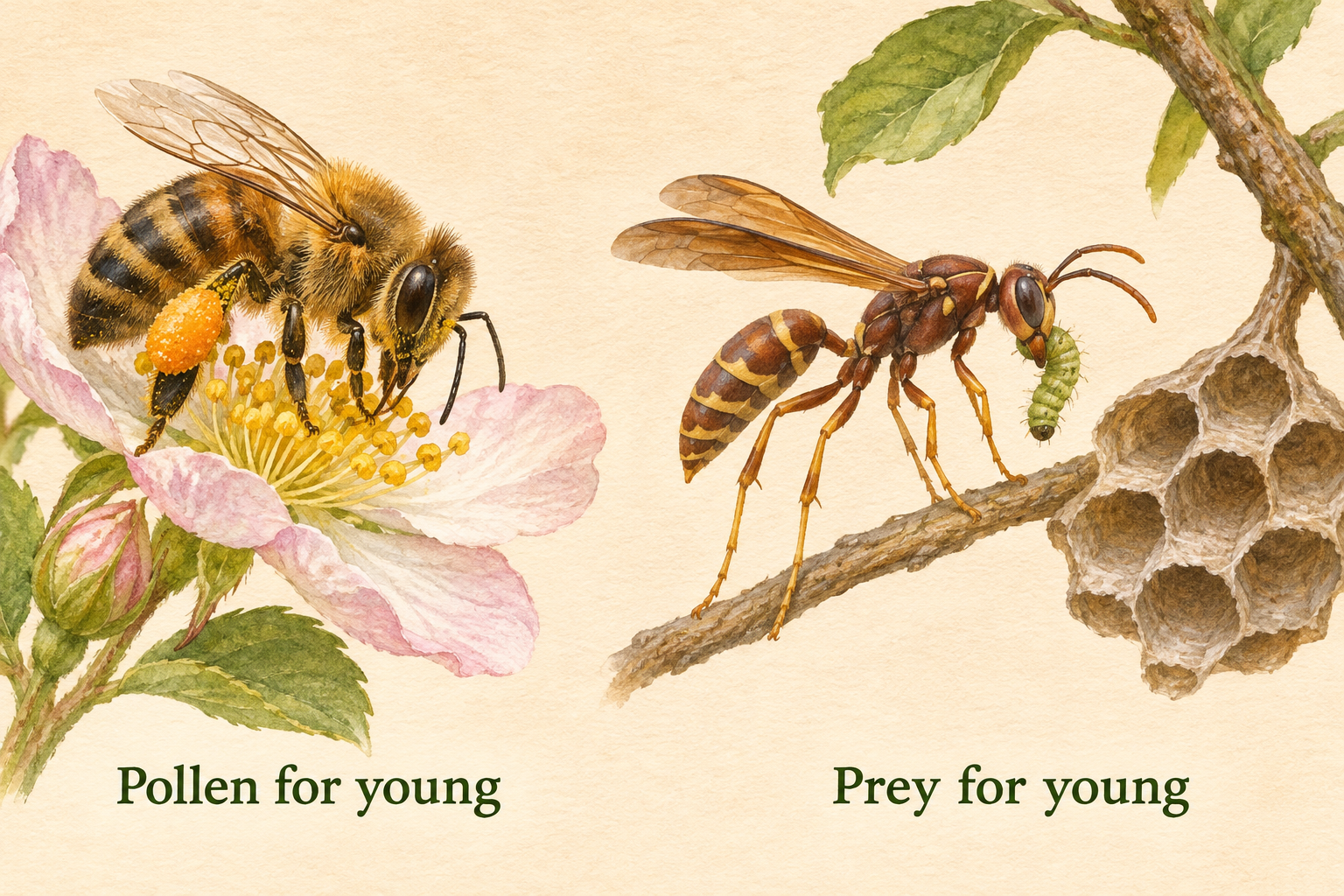
Many bees provide young with pollen and nectar. A solitary female may stock a nest cell, lay an egg, and seal it before moving on to the next cell. Her larva feeds on the provisions. Honey bees have a more elaborate social system, but flower resources are still central to the colony’s food supply.
Paper wasps and yellowjackets collect insects and other arthropods for their larvae. A wasp carrying a caterpillar is therefore performing a useful role in a food web. The adults also need sugars, which they can obtain from nectar, fruit, or other sources. Adult nectar feeding and animal food for larvae can occur within the same species.
Wax, Paper, and Mud Tell Different Stories
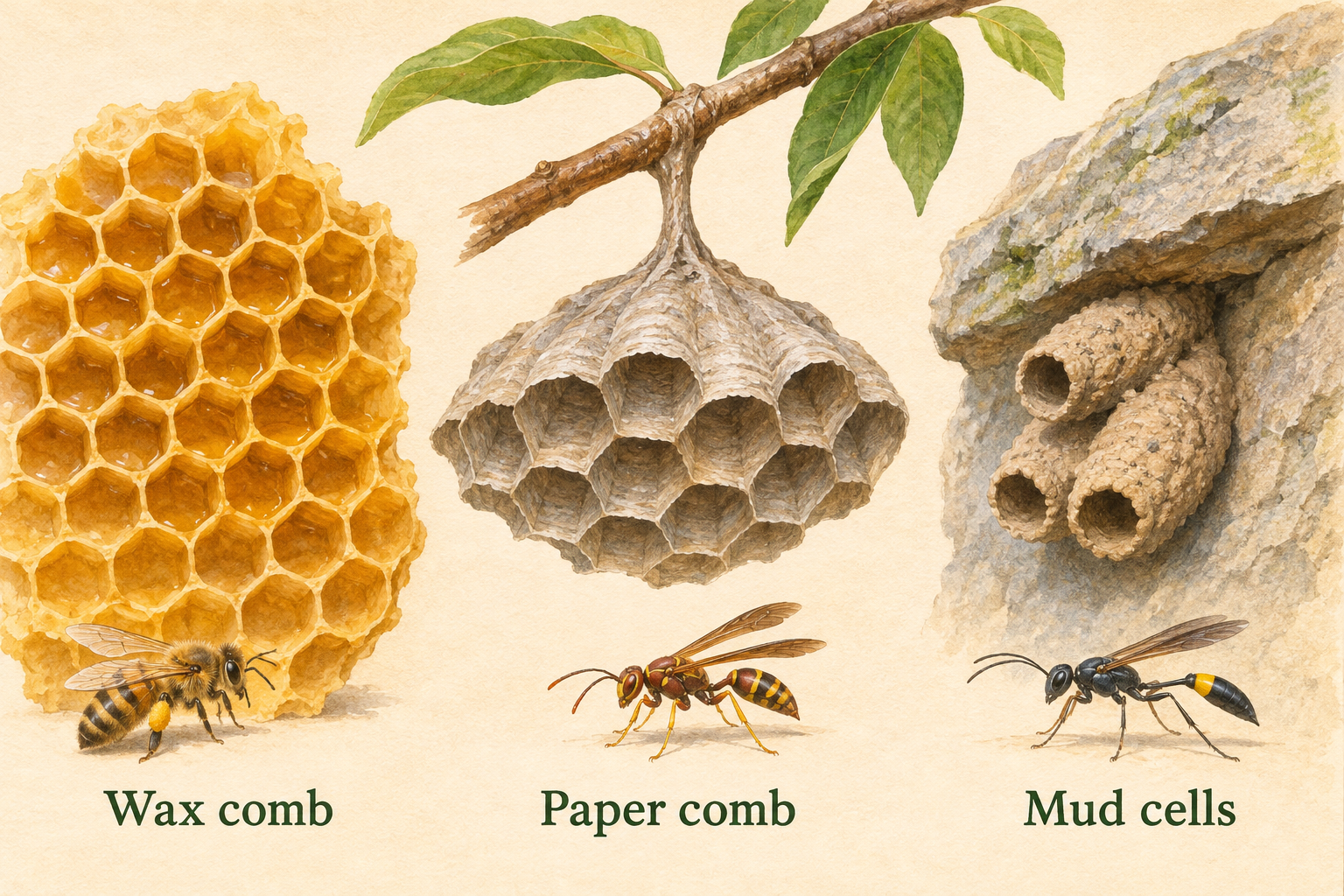
Honey bees build wax comb. Paper wasps construct an exposed comb from chewed wood fibers mixed with saliva, while yellowjackets usually surround their combs with a paper envelope. An underground entrance may hide the entire structure. The location alone is not enough: both bees and wasps include species that nest below ground.
Solitary species expand the possibilities. Mud-dauber wasps make mud cells, while mason bees can partition existing cavities with mud. Leafcutter bees use pieces of leaves. A small hole in a stem or a mud patch under shelter may be a complete nursery without housing a large society. Nest materials are evidence about a particular kind of insect, rather than a universal bee-or-wasp rule.
A Colony Is One Lifestyle Among Many
Honey bees, bumble bees, paper wasps, and yellowjackets have queens and workers sharing nest duties. Many other bees and wasps are solitary: each female provisions her own offspring. Some wasps develop in or on other insects rather than stocking a visible comb. The familiar busy nest is one branch of a much more varied story.
For a practical garden identification, look at the body’s hair, the waist, the pollen-carrying structures, and the activity you can actually see. Observe without blocking a nest entrance or handling the insect. Then use a local guide for a species name. Explore other garden wildlife in our guides to animals that start with B and animals that start with W.


James Miller grew up on the Oregon coast, exploring tide pools and watching seabirds. He has a particular fondness for owls and keeps a notebook of his bird sightings.
Read More »