A red panda is not a small, red version of a giant panda. Giant pandas are bears; red pandas belong to a separate family called Ailuridae. Both are Asian mammals with a strong appetite for bamboo, but their shared name hides very different bodies and evolutionary histories.
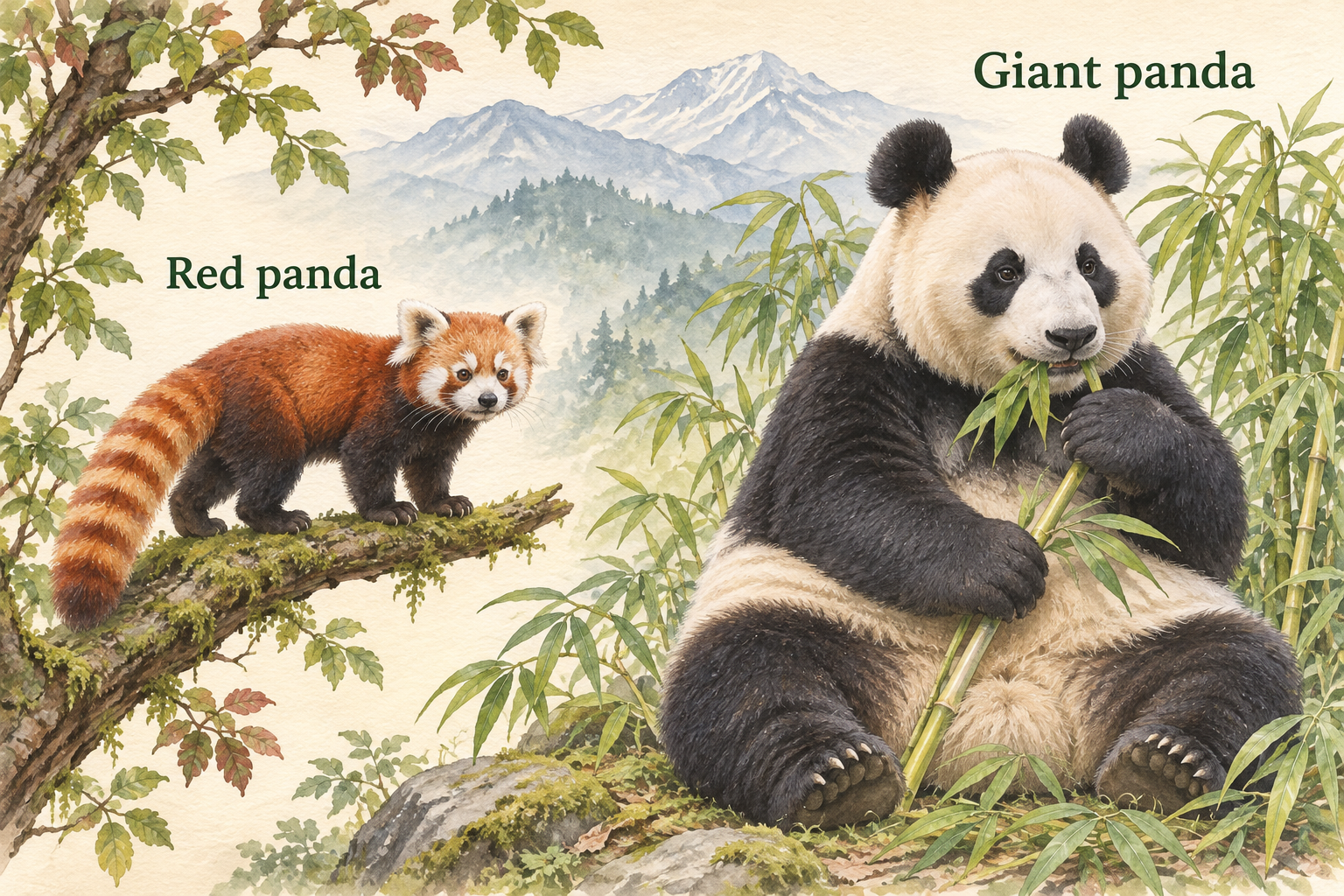
The animals are easy to separate in a clear view. A red panda has reddish fur, dark legs, a pale face, and a long ringed tail. A giant panda has the heavy build of a bear, bold black-and-white markings, and a short tail. The more interesting comparison is how each makes a living in a bamboo-rich forest.
| Feature | Red panda | Giant panda |
|---|---|---|
| Family | Ailuridae | Ursidae, the bears |
| Overall build | Small, long-tailed climbing mammal | Large, sturdy bear |
| Coat | Rust-red above, dark below, pale facial markings | Black-and-white with dark eye patches |
| Tail | Long, bushy, and ringed | Short |
| Feeding tool | Modified wrist bone helps grip | Modified wrist bone helps grip |
| Typical bamboo feeding | Selects leaves and tender parts | Uses strong jaws on leaves and substantial stems |
One Name, Different Families
The giant panda’s scientific name is Ailuropoda melanoleuca. Its classification within Ursidae places it alongside other bears, even though bamboo dominates its diet. The red panda sits on a different branch of the mammal family tree. It is more closely associated with the broader group containing raccoons, weasels, and skunks than with bears.
The red panda received its panda name before the giant panda did. The larger animal was later given the familiar name because of similarities including bamboo feeding. Names can preserve an early impression long after scientists have worked out the relationships. In this case, using the word panda as if it meant one close-knit family leads in the wrong direction.
The Tail Changes the Silhouette
A red panda’s tail is a conspicuous part of its outline. It helps with balance in trees and can be wrapped around the body in cold weather. The animal’s dark underside and reddish back also look very different from the giant panda’s broad black shoulder band and pale torso. These are useful clues even before the face is visible.
Size matters, but photographs can distort it. A close portrait of a red panda may fill more of a frame than a distant giant panda. Look for proportions: the red panda is elongated and long-tailed, whereas the giant panda has a broad head, substantial limbs, and a compact bear-like outline. Comparing similarly framed full-body views avoids that trap.
Two Ways to Handle Bamboo
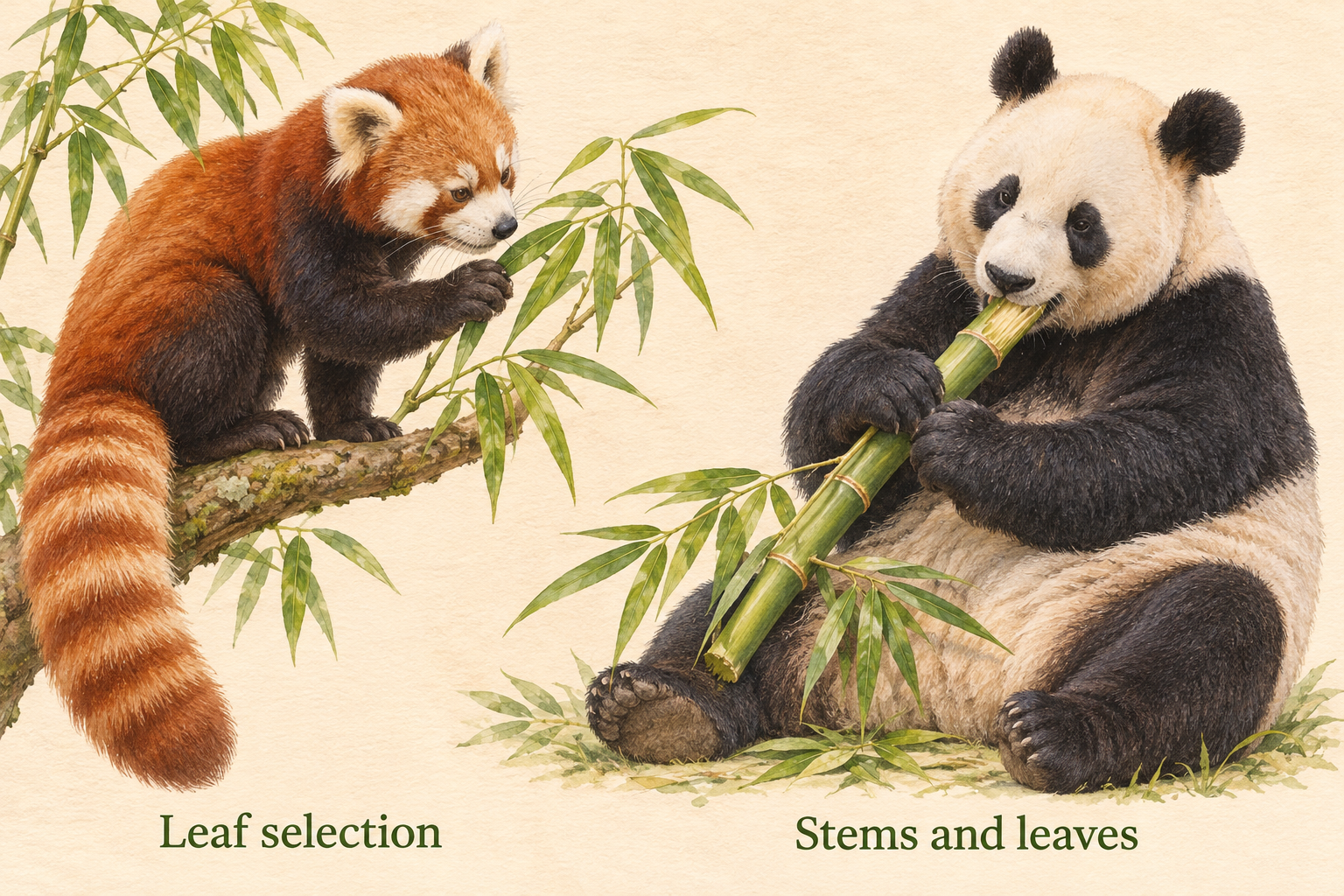
Both animals have a false thumb: an enlarged wrist bone that helps the forepaw grasp. It is not an extra true finger, and it does not make the paw a human-like hand. This shared feature is striking because the animals are not close relatives. A fossil wrist bone from an ancient giant-panda relative also gives researchers evidence about the history of bamboo handling.
The feeding action is different at close range. Red pandas shear selected bamboo leaves with their mouths. Giant pandas can crush tough bamboo with large molars and powerful jaw muscles. They often sit while feeding, leaving the front paws available to turn and position a stem. Bamboo is central to both diets, but the meal is not processed in exactly the same way.
A Forest Is More Than Its Bamboo
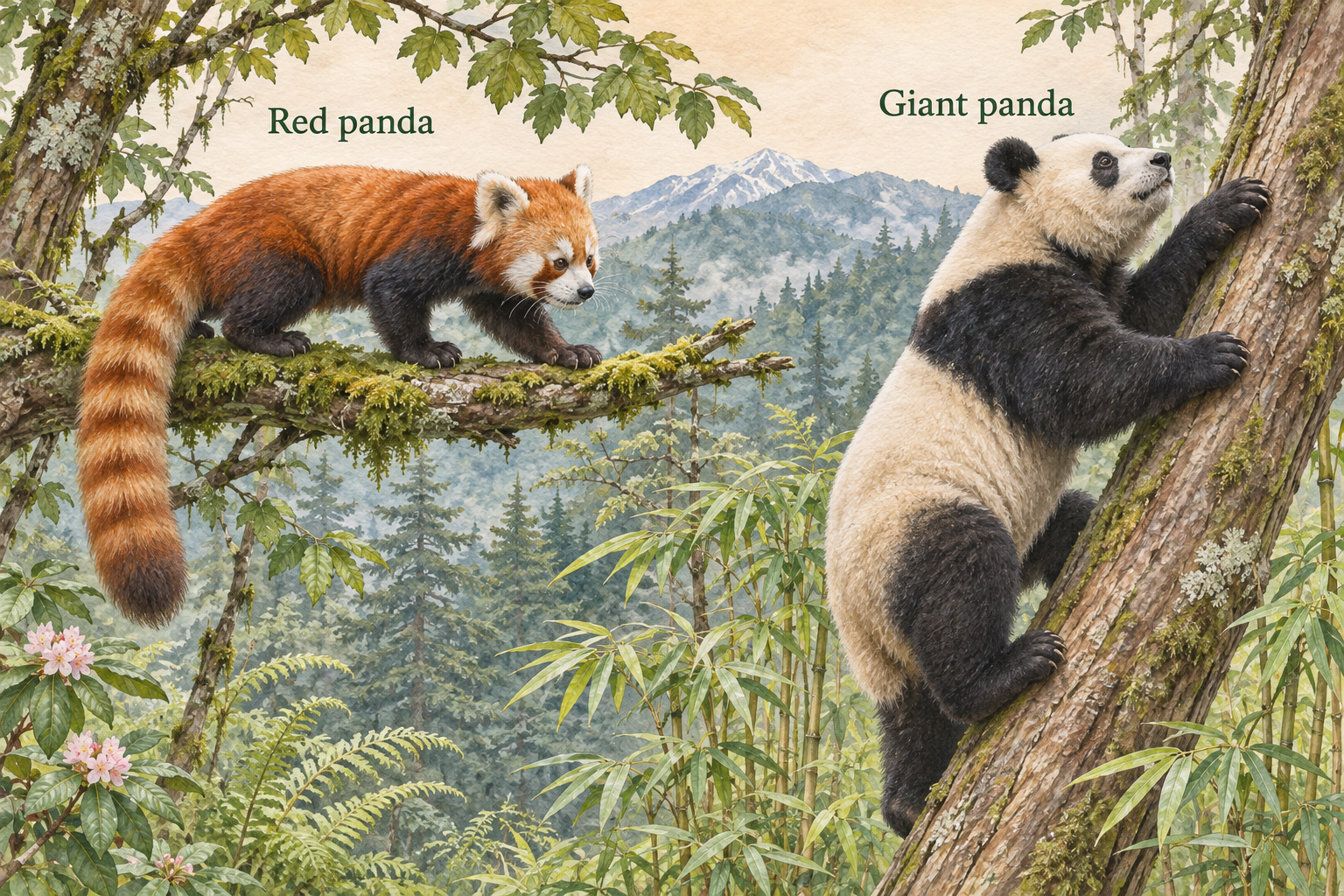
Red pandas use high-elevation Asian forests with trees for resting and shelter and bamboo beneath the canopy. Giant pandas live in mountain forests of central China. Their ranges are not identical, even where suitable habitat overlaps. A bamboo plant in a zoo background therefore says little about which part of Asia a particular animal’s wild relatives inhabit.
Tree use is also a matter of degree, rather than a simple can-or-cannot distinction. Red pandas spend much of their time above ground and move along branches with their long tails behind them. Giant pandas can climb as well, especially when young. The red panda’s tree-centered silhouette remains a helpful distinction, while the family names explain the deeper difference. Find more forest mammals in our guide to animals that start with R and more panda names among animals that start with P.


James Miller grew up on the Oregon coast, exploring tide pools and watching seabirds. He has a particular fondness for owls and keeps a notebook of his bird sightings.
Read More »