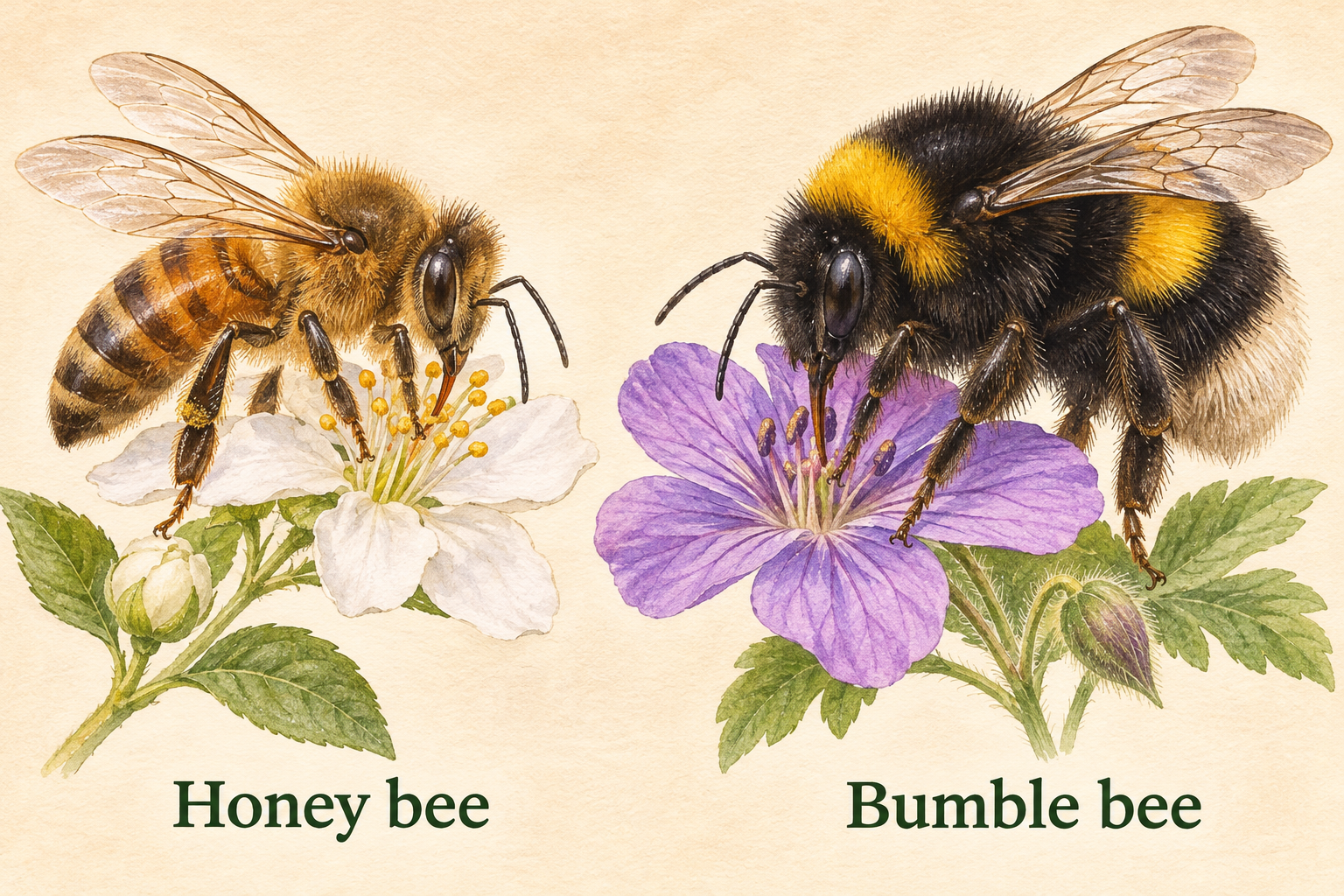
A honey bee usually looks slimmer and less shaggy than a bumble bee. A bumble bee has a rounded body thickly covered in hair, often with contrasting bands. Both visit flowers and live in colonies, but their nests, annual routines, and ways of collecting pollen differ in revealing ways.
Here, honey bee means the western honey bee, Apis mellifera, the species commonly kept in managed hives. Bumble bees belong to the genus Bombus, which includes many species with different color patterns. Comparing a honey bee with one familiar yellow-and-black bumble bee is helpful, provided that pattern is not treated as universal.
| Feature | Western honey bee | Bumble bees |
|---|---|---|
| Body outline | Slender, banded abdomen | Robust and rounded |
| Hair | Especially obvious on the thorax | Dense across much of the body |
| Pollen transport | Workers use hind-leg baskets | Most females use hind-leg baskets |
| Nest structure | Wax combs with regular cells | Wax pots and brood clusters in a sheltered cavity |
| Temperate winter | Colony persists together | Newly mated queens usually overwinter |
| Buzz pollination | Does not perform it | Many are skilled buzz pollinators |
Use Shape Before Color
Honey bees have a distinctly elongated abdomen, with a hairy thorax in front of it. Their coloring can range from orange-brown to quite dark brown. Bumble bees are generally more robust, with hair that can include white, orange, or rusty tones as well as yellow and black. Queens, workers, and males can also differ in appearance.
A bee moving rapidly between flowers may hide its legs and abdomen. A side view or a photograph can be more informative than a brief look from above. Size is supporting evidence rather than a complete answer: bumble bee queens can look especially large, while smaller workers may overlap the size of other bees visiting the same patch.
Both Can Carry Pollen Baskets
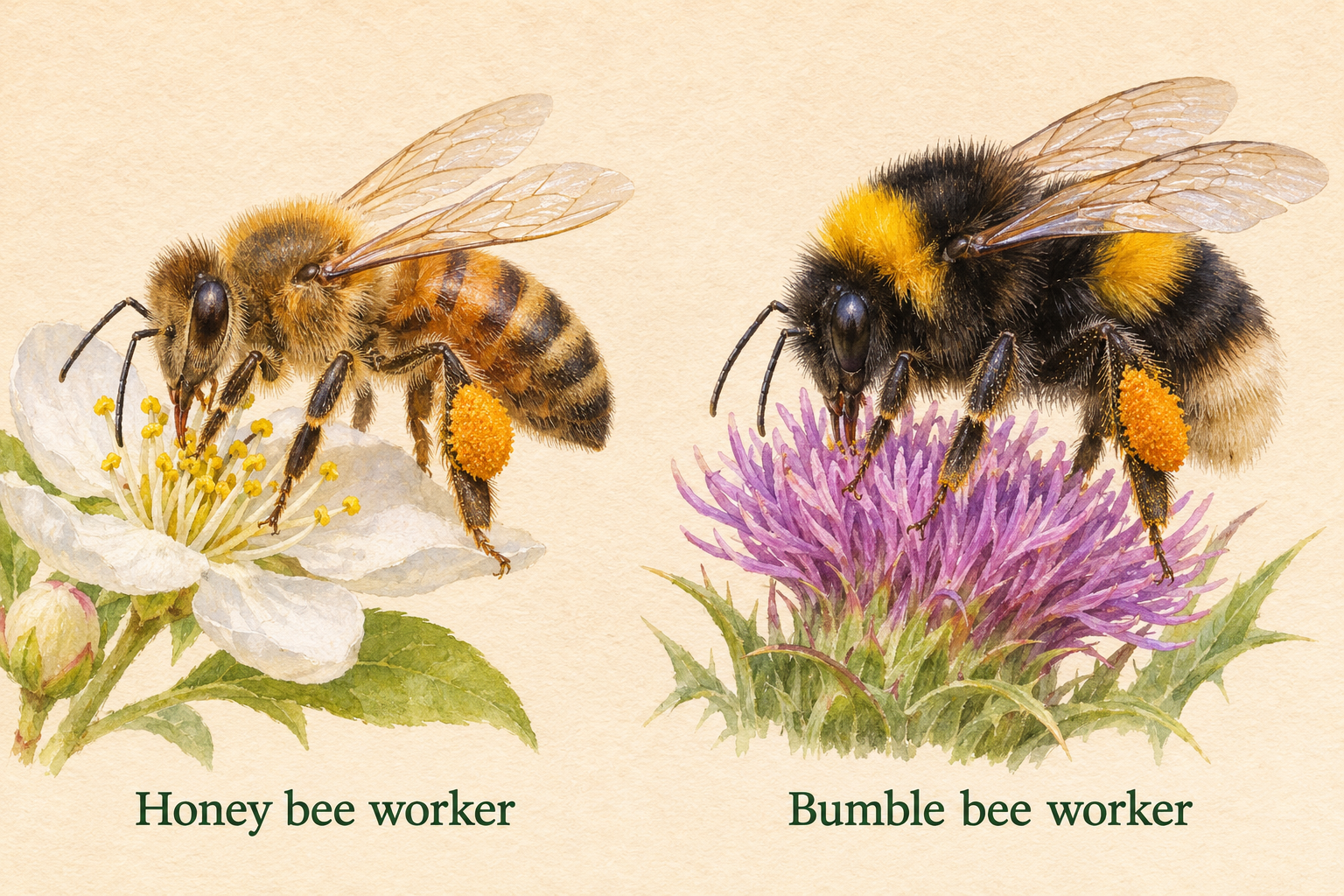
Honey bee workers and most female bumble bees carry moistened pollen in specialized areas on their hind legs called corbiculae, or pollen baskets. A loaded basket can look like a yellow or orange lump. Both types therefore have a trait that a casual observer might mistakenly assign to only one of them.
Not every bumble bee has a pollen basket, and an empty leg does not prove that a bee is male. Males do not collect pollen for a nest, and cuckoo bumble bees have a different lifestyle from nest-founding species. A female forager can also be traveling without a conspicuous load. Combine the legs with the body shape and hair pattern.
Bumble Bees Can Shake Pollen Loose
During buzz pollination, a bumble bee grips a flower and vibrates its flight muscles to release pollen. Some flowers hold pollen inside anthers with small openings, so vibration is particularly useful. Tomatoes and blueberries are familiar examples of plants that benefit from this behavior. The audible buzz is connected to muscle activity, not wings flapping against the flower.
Honey bees do not perform this technique. That does not make them ineffective pollinators overall: different flowers offer different rewards and require different handling. Watching which flowers each visitor chooses is more informative than trying to rank one kind of bee as best at every pollination task. A garden can support several kinds working in different ways.
The Colonies Follow Different Calendars
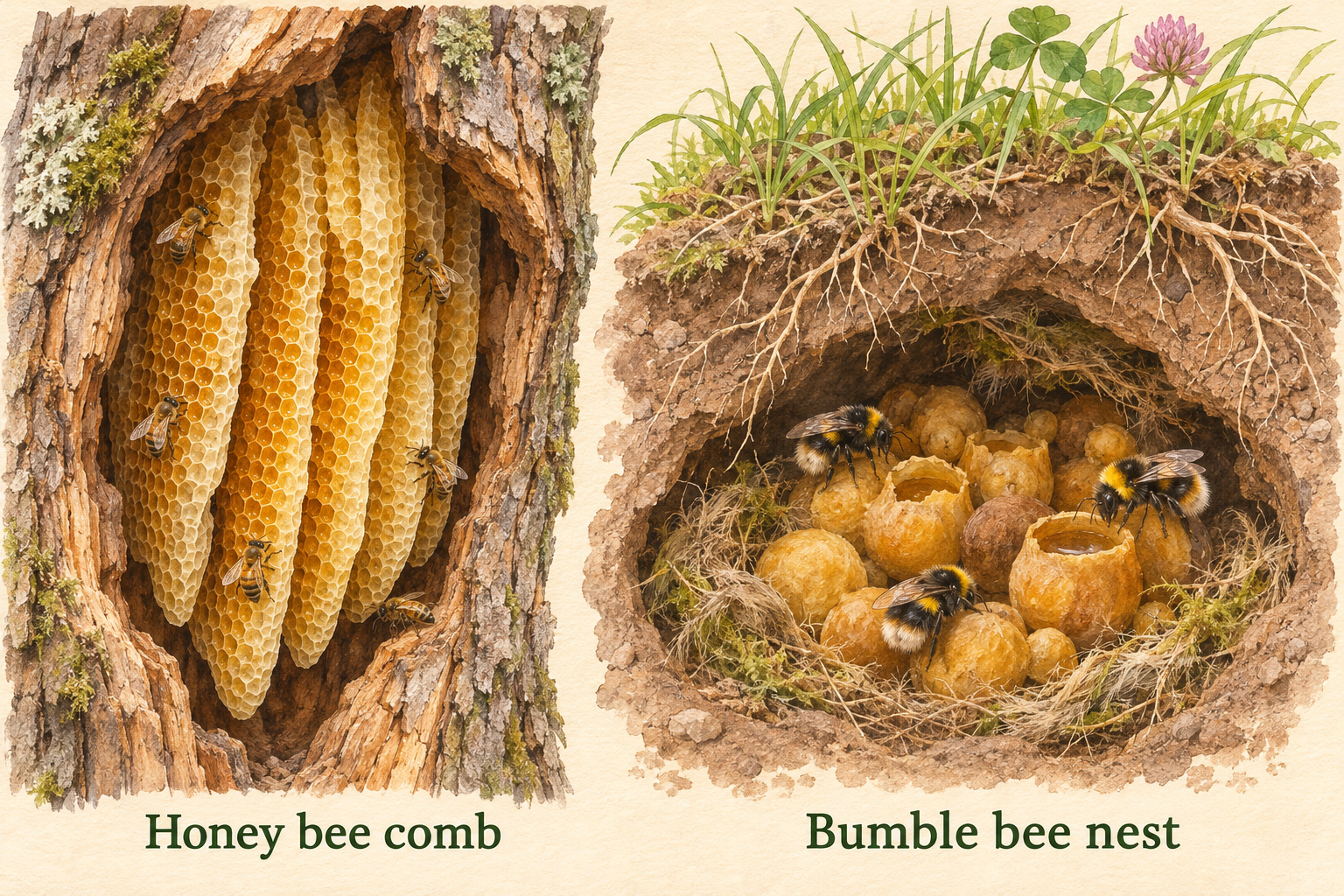
A honey bee colony builds wax comb and stores substantial honey reserves. In temperate climates, the queen and workers remain a colony through winter. Bumble bee nests are often placed in insulated cavities, including old rodent nests, and contain irregular wax pots and brood structures rather than hanging sheets of honey bee comb.
For the familiar temperate bumble bee cycle, newly mated queens survive winter and found new colonies when conditions improve. Workers and the old queen do not carry the colony through winter in the honey bee fashion. Bumble bees store some nectar-derived food, but they do not need the same large winter larder. The round, furry visitor and the slimmer hive bee thus represent two different solutions to colonial life. Compare more garden visitors in our guide to animals that start with B.


James Miller grew up on the Oregon coast, exploring tide pools and watching seabirds. He has a particular fondness for owls and keeps a notebook of his bird sightings.
Read More »