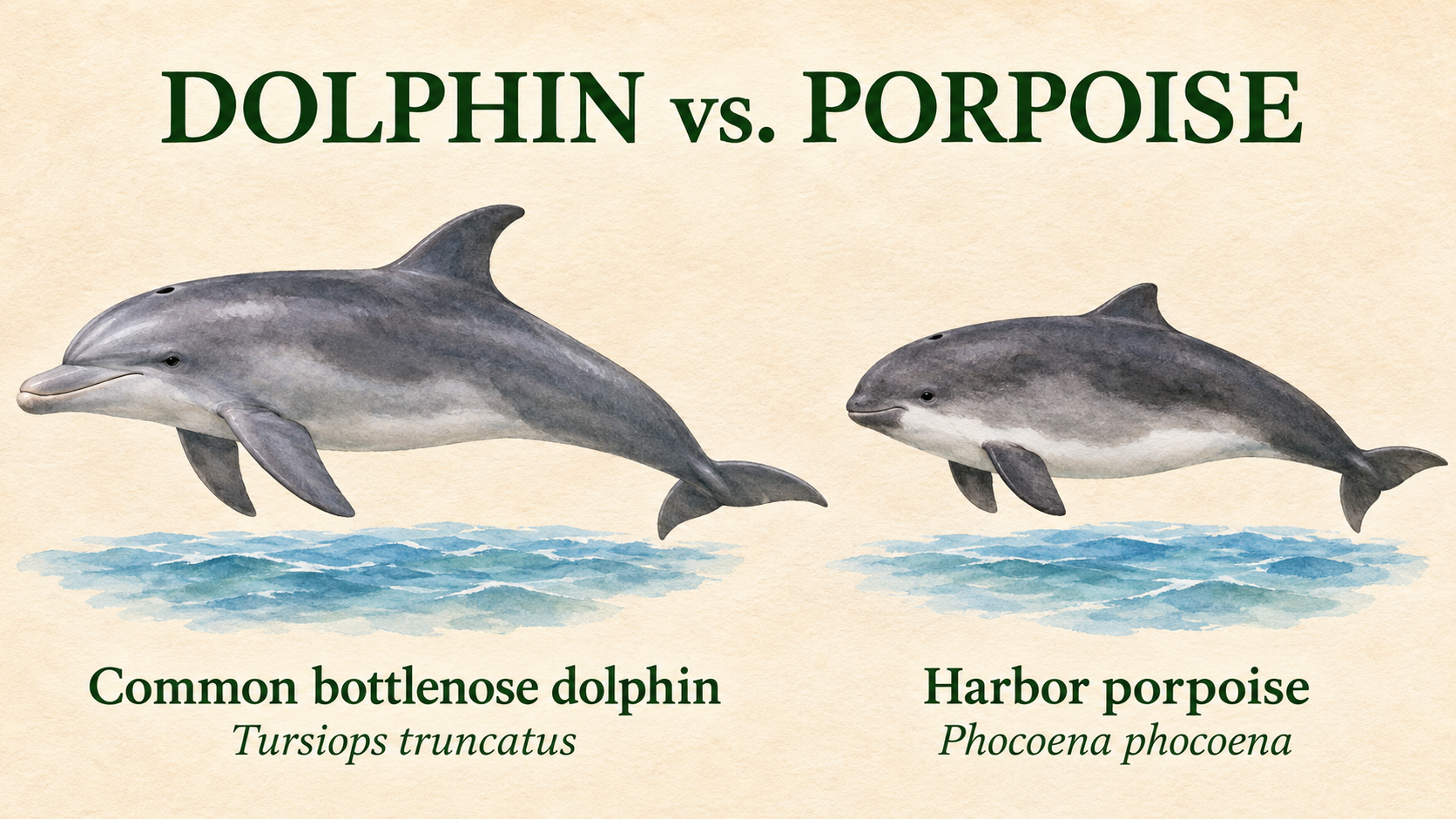
A common bottlenose dolphin has a projecting beak and a curved dorsal fin. A harbor porpoise has a short, blunt face, a more compact body, and a triangular dorsal fin. Those features make a useful first comparison, but the wider dolphin and porpoise groups include animals that do not fit every familiar generalization.
Both are mammals and toothed whales, rather than fish. They breathe air, nurse their young, and use sound underwater. The difference is therefore between related groups of cetaceans, not between an animal that lives like a whale and one that lives like a fish. A species name gives the general comparison much more precision.
Dolphin and Porpoise Differences at a Glance
| Feature | Common bottlenose dolphin | Harbor porpoise |
|---|---|---|
| Face | Clearly projecting short, thick beak | Short, blunt face without a prominent long beak |
| Dorsal fin | Curved or falcate | Triangular |
| Body | Relatively long and streamlined | Smaller, compact and robust |
| Teeth | Pointed, cone-shaped teeth | Flattened, spade-shaped teeth |
| Typical sighting | Alone or in changing groups; may show active surface behavior | Often a quiet rolling surface appearance |
| Usual habitats | Temperate and tropical coastal and offshore waters | Northern temperate and colder coastal and offshore waters |
| Family | Delphinidae | Phocoenidae |
1. Start with the Face When You Can See It
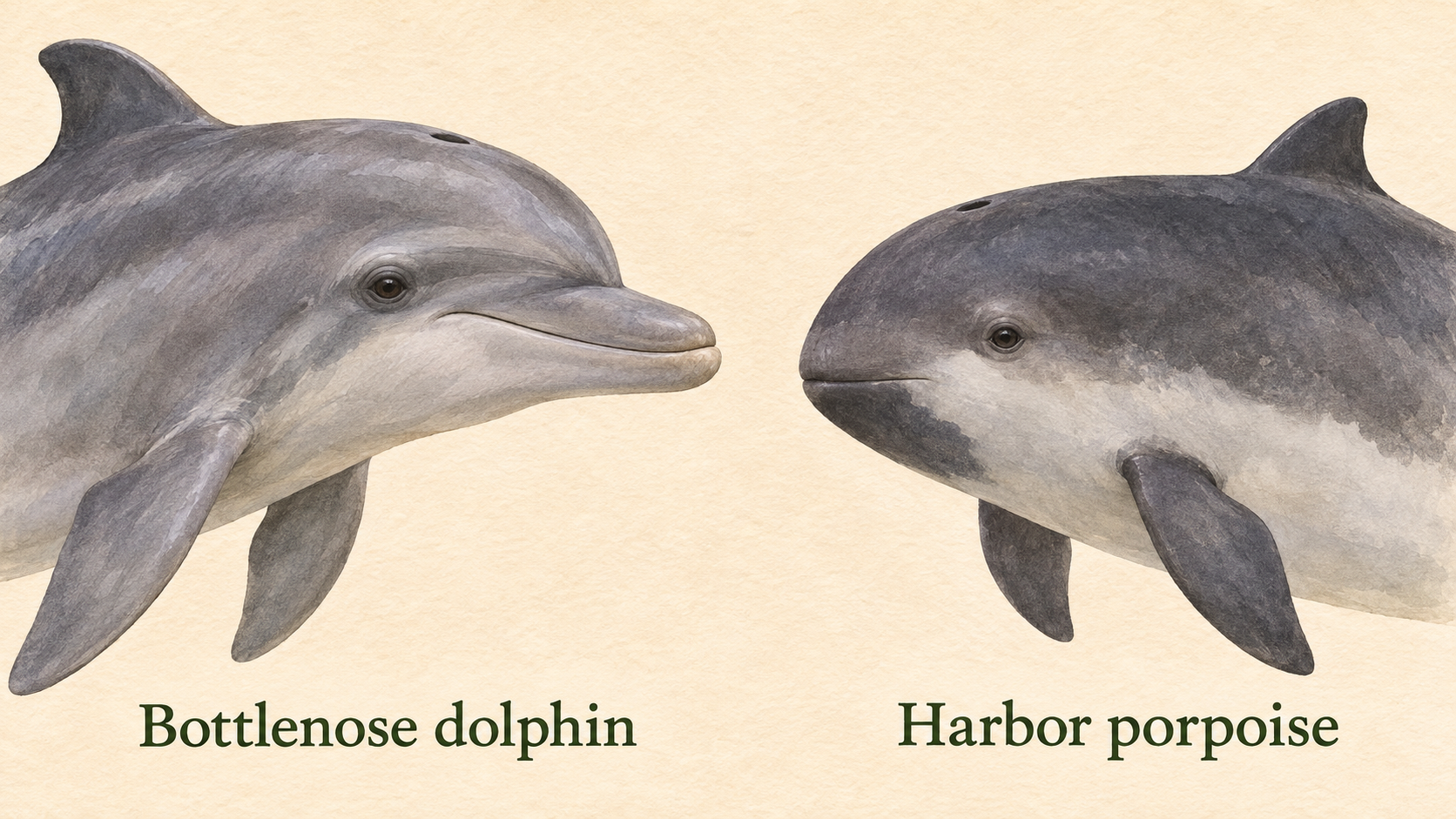
The common bottlenose dolphin gets its name from its short, thick rostrum, or snout. The rounded forehead meets a distinct projecting beak. A harbor porpoise’s face is shorter and blunter, with less separation between forehead and snout. These details can be clear in a side view and almost invisible in a fleeting view of the back.
Avoid turning the beak into an absolute rule for every dolphin. Killer whales, also called orcas, are members of the oceanic dolphin family despite looking very different from the bottlenose example. Common names and familiar aquarium shapes do not capture the full variety of these animals.
2. Compare the Fin with the Rest of the Body
A curved, backward-sweeping dorsal fin is characteristic of the common bottlenose dolphin, while a harbor porpoise’s dorsal fin makes a more triangular outline. Their overall shapes differ too: the harbor porpoise has a small, sturdy body, whereas the dolphin looks more elongated. A fin alone offers fewer clues than a view that includes the head and body.
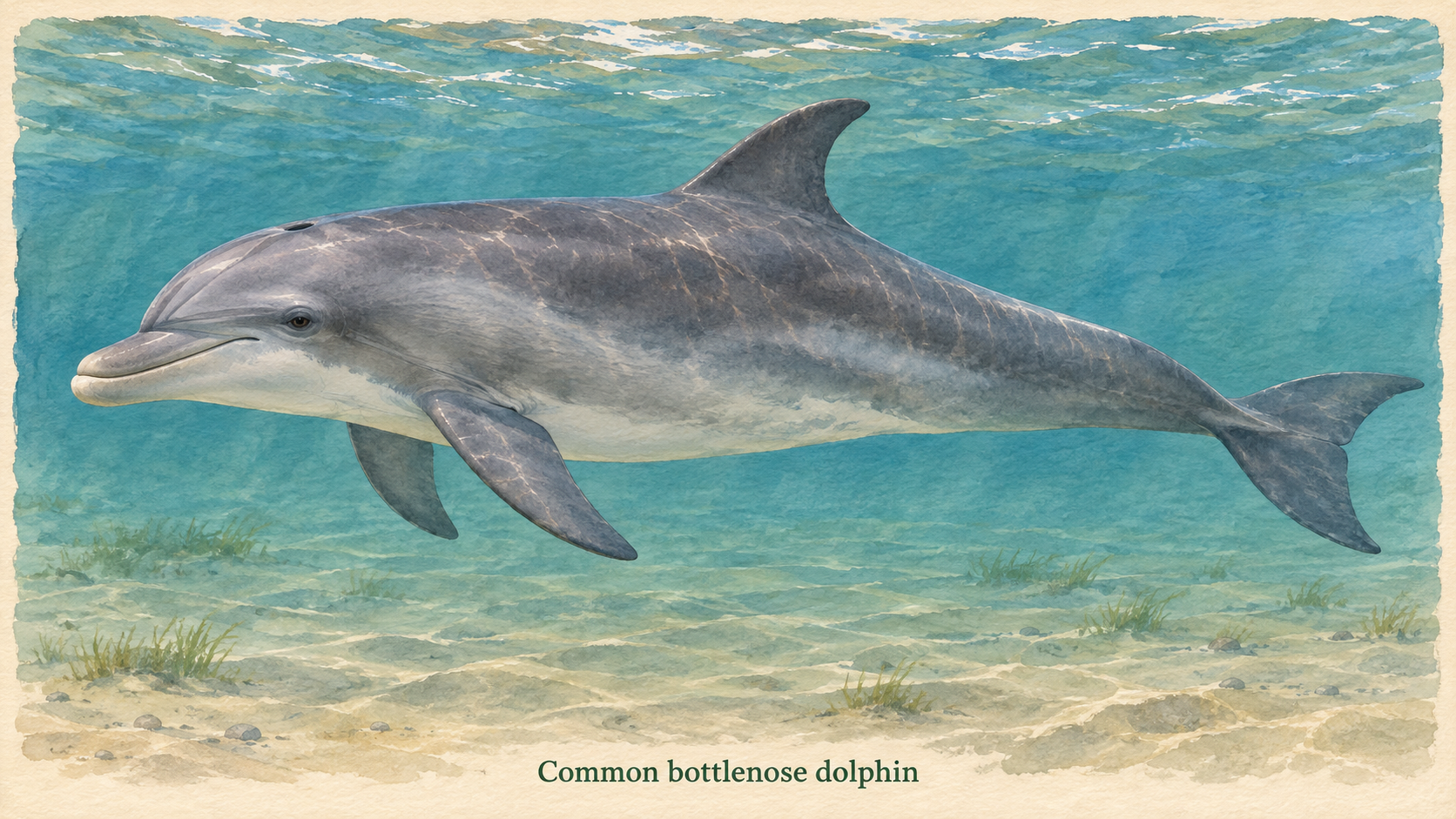
Bottlenose dolphin coloration ranges from light gray to very dark gray above, with a lighter belly. Coastal and offshore animals can differ in size and color. A darker back does not automatically indicate a porpoise, and water color or shadow can change the apparent shade of either animal.
3. Teeth Provide an Anatomical Difference
Dolphins generally have pointed, cone-shaped teeth, while porpoises have flatter, spade-shaped teeth. This is an important anatomical comparison, but it is not usually a feature visible from shore. An animal surfacing with its mouth closed cannot be identified by teeth that the observer has not actually seen.
The distinction also does not mean that dolphins chew fish as people chew food. Bottlenose dolphins use their teeth to grasp prey and commonly swallow fish whole. For ordinary wildlife watching, head shape, the fin, movement, and location are much more accessible evidence than the dentition.
4. Behavior Needs a Species Name Too
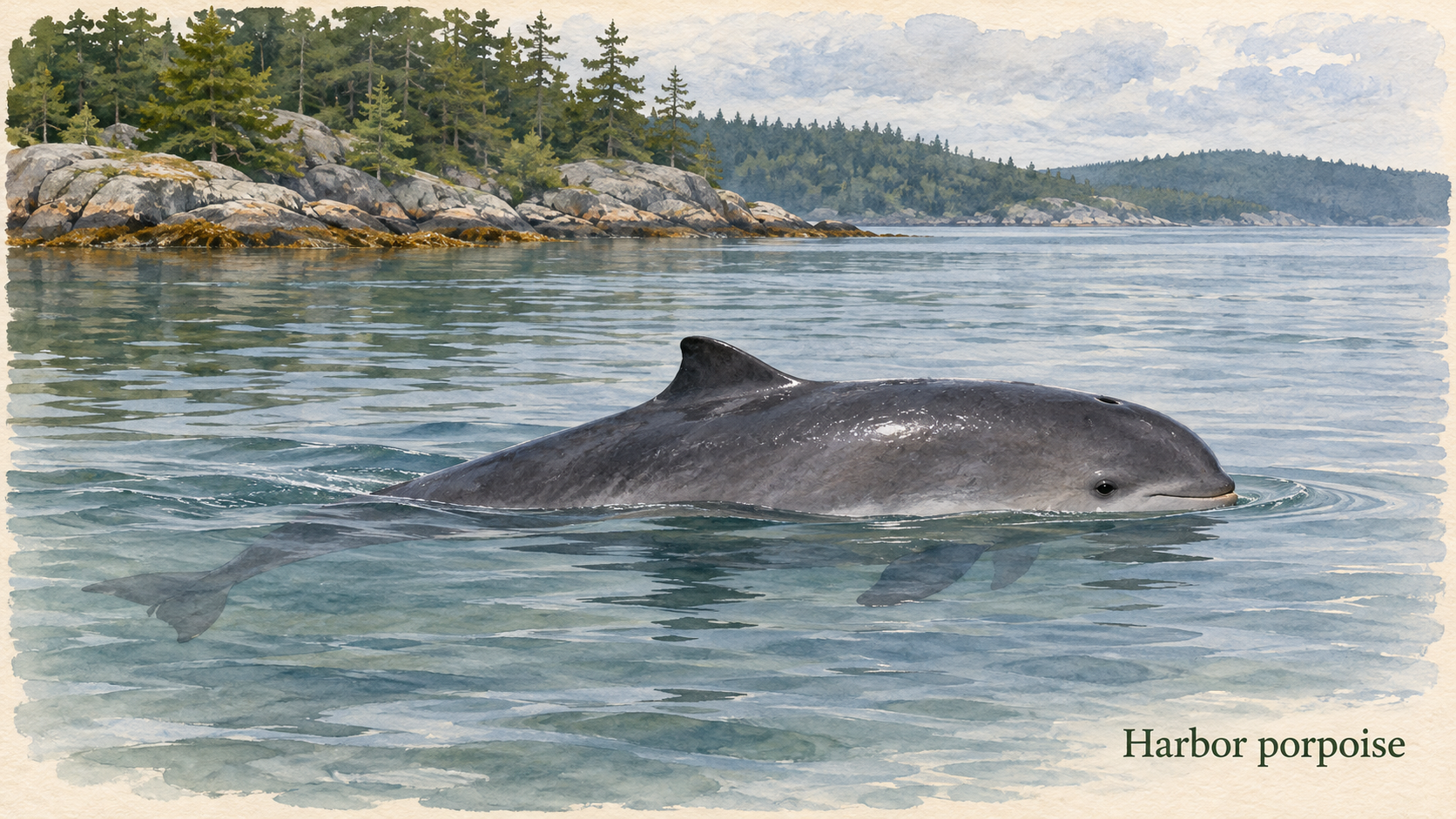
Harbor porpoises are often shy around boats and commonly surface with a rolling motion. They may be seen alone, in pairs, or in groups, and use bays, estuaries, harbors, fjords, and offshore waters. Their behavior helps explain why a harbor porpoise sighting can be brief and understated.
Dall’s porpoises show why “all porpoises avoid boats” would be misleading. These robust North Pacific animals are rapid, social swimmers and may ride the bow waves of vessels. A distinctive spray can form as they surface at speed. Their behavior differs markedly from the usual harbor porpoise picture.
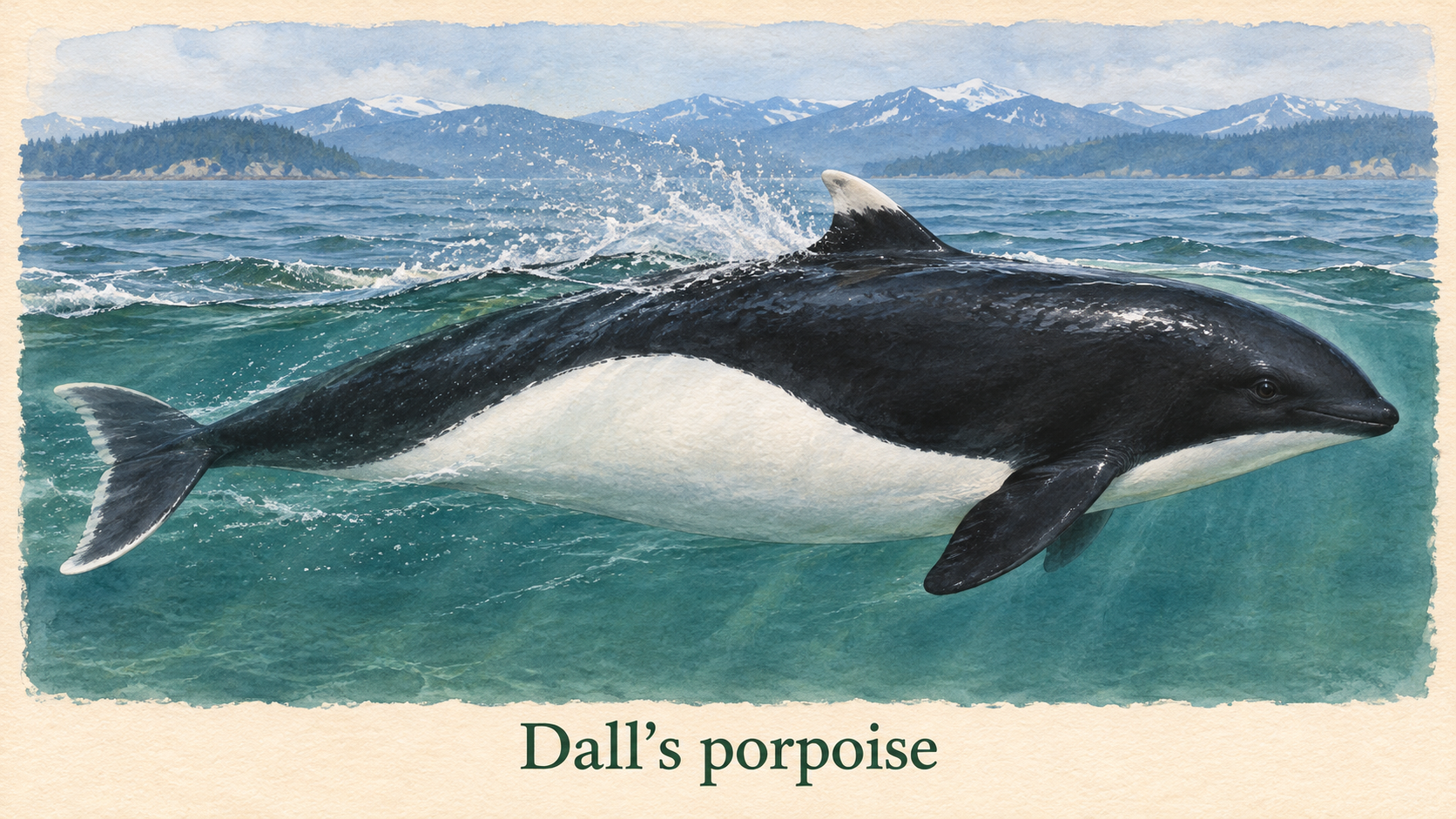
A Dall’s porpoise has a thick body, little or no projecting beak, and conspicuous white markings along its sides and underside. It lacks the white eye patch and gray saddle patch familiar on a killer whale. The comparison is a reminder to read the complete pattern, rather than calling any black-and-white cetacean a young orca.
5. Both Groups Use Sound and Return for Air
Dolphins and porpoises use echolocation: sound and returning echoes help them find food and navigate. Their communication differs among species, and porpoises should not be described as silent animals. Clicks and whistles belong in a more detailed comparison than a simple claim that one group talks and the other does not.
Begin an identification with what was actually visible: a face, fin, body pattern, or surfacing movement. Add the location and any repeated views. The bottlenose-and-harbor comparison is a useful starting point, while Dall’s porpoises and killer whales show why the final step is to identify the species.
Explore more marine animal names in our guides to animals that start with D and animals that start with P.


James Miller grew up on the Oregon coast, exploring tide pools and watching seabirds. He has a particular fondness for owls and keeps a notebook of his bird sightings.
Read More »