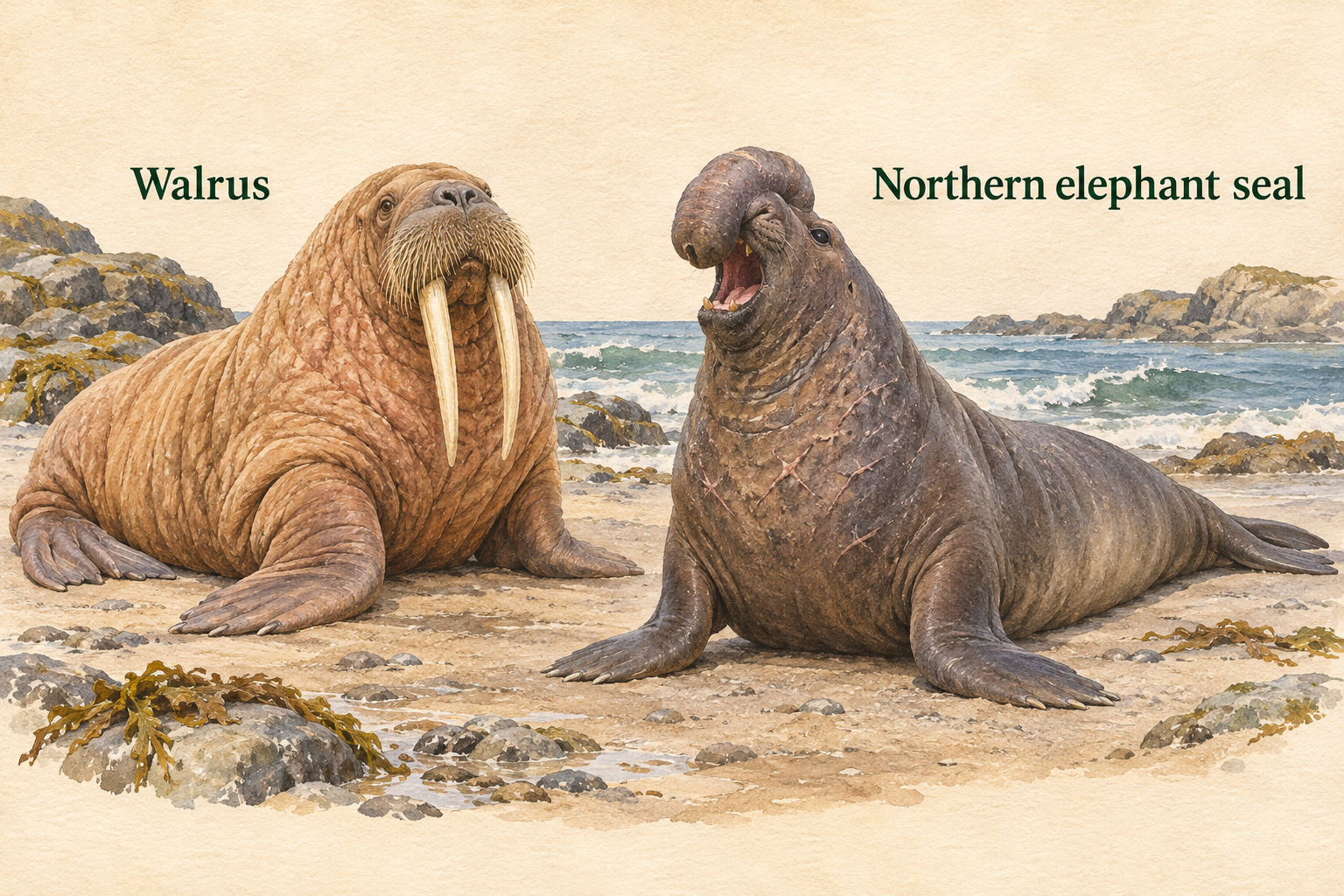
A walrus has tusks and a broad, bristly muzzle. A mature male elephant seal has an enlarged fleshy nose, called a proboscis, and no tusks. Both are large marine mammals with flippers, but they belong to different pinniped families and use the ocean in different ways.
The dramatic male elephant seal is only part of the comparison. Females and young animals lack his conspicuous nose, whereas both male and female walruses develop tusks. Here, the Pacific walrus and northern elephant seal provide the main examples; elephant seals also include a separate southern species.
| Feature | Walrus | Northern elephant seal |
|---|---|---|
| Family | Odobenidae | Phocidae, the true seals |
| Face | Broad whiskered muzzle and paired upper canine tusks | Male develops large proboscis; female has smaller nose |
| External ears | No external ear flaps | No external ear flaps |
| Land movement | Can bring rear flippers beneath body | Moves with body undulations; rear flippers trail |
| Foraging example | Benthic invertebrates on the seafloor | Fish and squid during repeated dives |
| Resting places | Sea ice and coastal haulouts | Coastal beaches for breeding and molting |
Tusks and Noses Are Different Structures
Walrus tusks are enlarged upper canine teeth. They grow in both sexes and have important social uses, including display and competition. Walruses also use them in activities such as hauling onto ice. Despite a familiar image of a walrus plowing for clams with its tusks, they are not its normal seafloor digging tools.
A bull elephant seal’s nose is soft tissue. It develops as the male matures and helps amplify vocal displays. His thick neck and chest also become prominent. A female retains a much smaller nose, so an identification based only on the adult male’s face will fail for many perfectly ordinary elephant seals.
Whiskers Find Clams; Deep Dives Find Other Prey
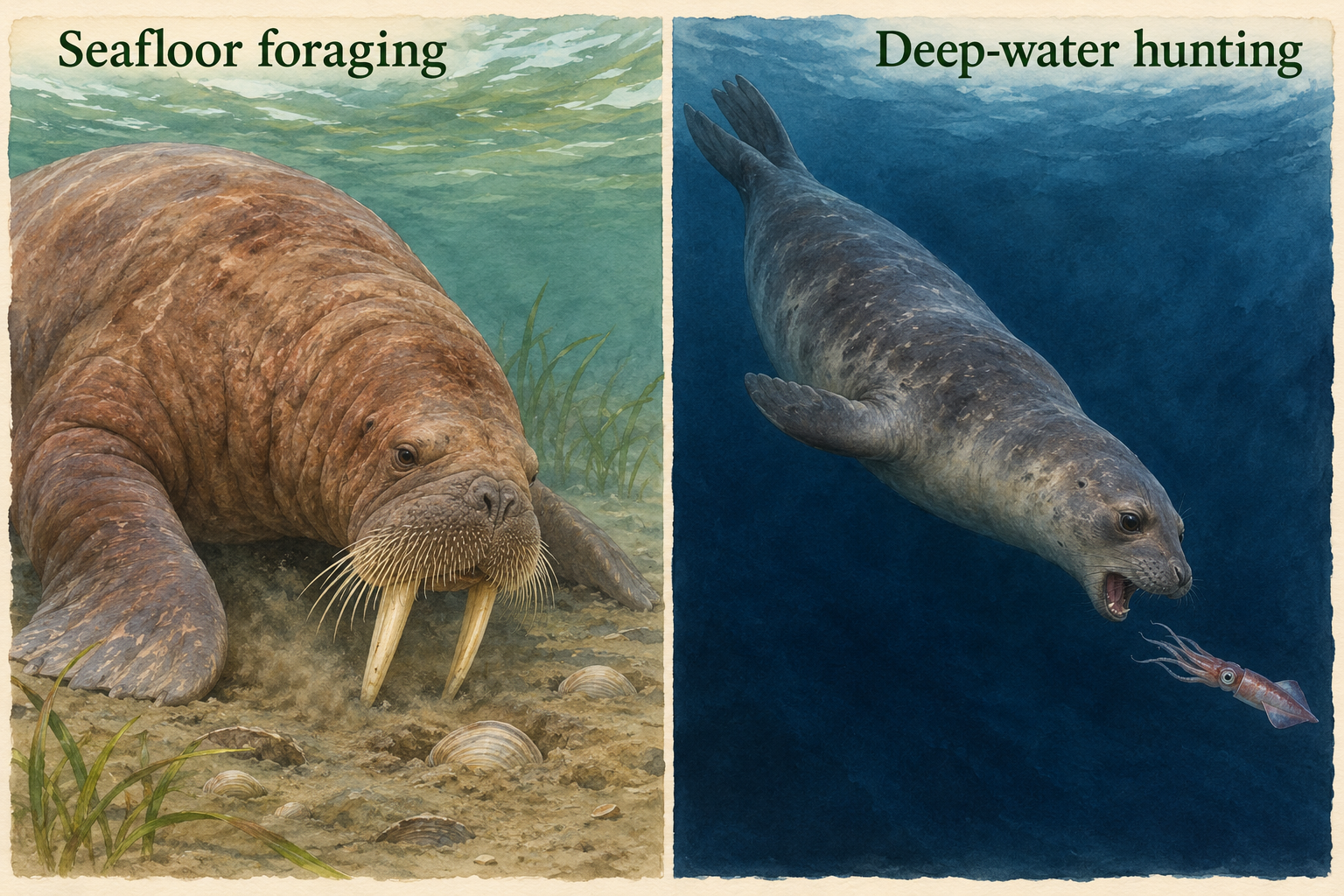
A walrus sweeps its sensitive whiskers near the seabed to locate prey. Its lips and powerful tongue help produce suction that removes soft tissue from shellfish. Clams are important, but other bottom-dwelling invertebrates are eaten too. The broad muzzle is a working sensory surface, not merely a distinctive face beneath the tusks.
Northern elephant seals spend long periods at sea making repeated dives to feed on fish and squid. Their foraging grounds and patterns differ between males and females. A resting animal on a beach offers only a small glimpse of that life. It is built for prolonged underwater travel, even though its movement on sand can appear laborious.
Watch the Rear Flippers
A walrus can rotate its hind flippers forward to support its body on land. An elephant seal cannot bring them underneath in the same way. It moves forward through undulations of the spine and body, with the foreflippers helping stabilize it. Both are capable swimmers; this comparison concerns how their bodies work on shore.
Neither animal has the visible external ear flap of a sea lion. That shared absence is useful when comparing pinnipeds more broadly, but it does not distinguish a walrus from an elephant seal. The tusks, muzzle, body proportions, and movement provide the stronger combination when the animal’s age and sex are taken into account.
Sex, Age, and Setting Change the View
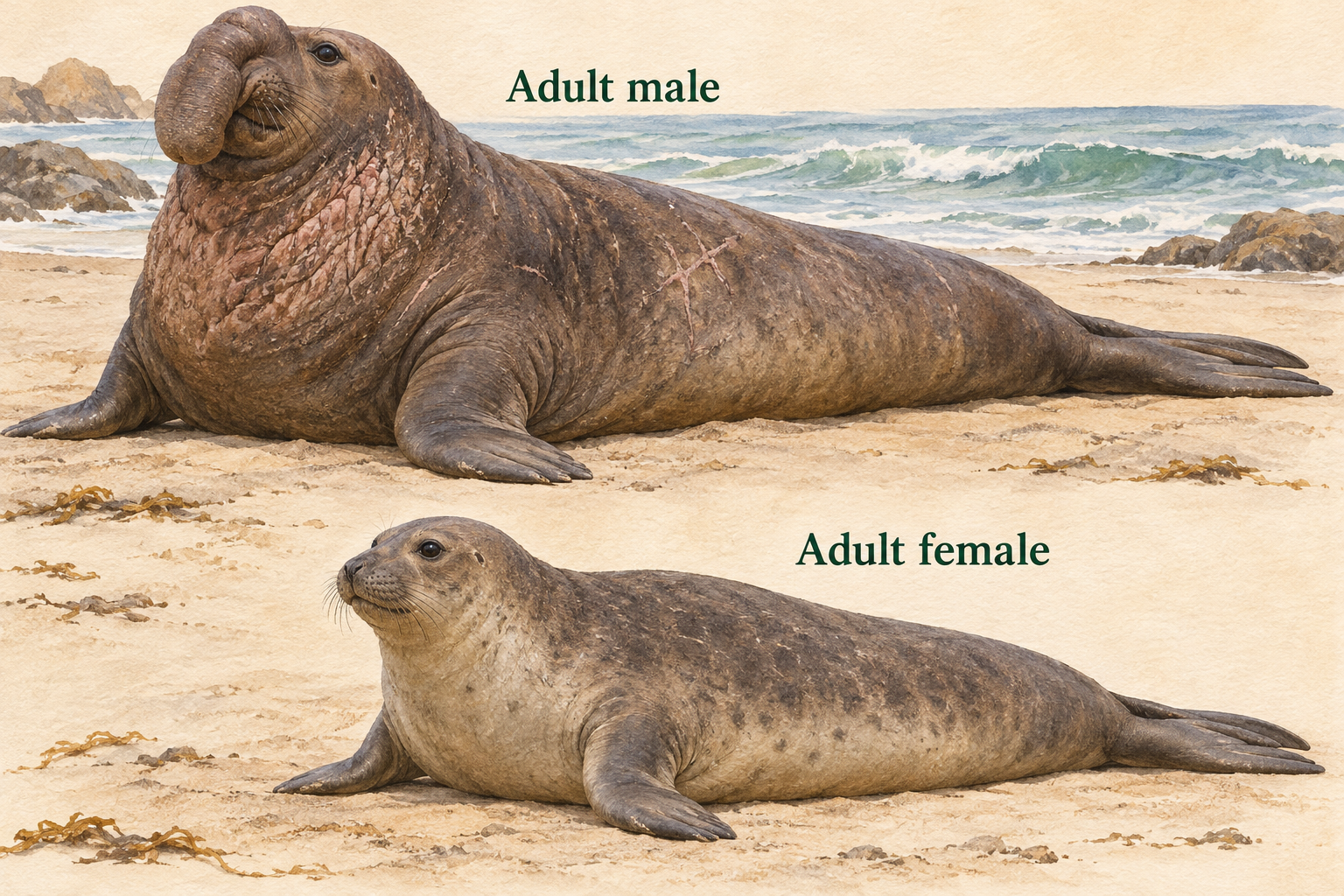
A mature northern elephant seal male is much larger than a female. The animals can also look different while molting, when patches of old hair and skin are shed. A patchy coat is therefore not a new species trait. Comparing photographs taken at different seasons without that context can exaggerate the differences between individuals.
Pacific walruses use sea ice and coastal resting sites in the Bering and Chukchi seas. Northern elephant seals range widely in the North Pacific and return to shore to breed and molt. Place helps frame an identification, while anatomy settles the main comparison. Find other ocean mammals in our guides to animals that start with W and animals that start with E.


James Miller grew up on the Oregon coast, exploring tide pools and watching seabirds. He has a particular fondness for owls and keeps a notebook of his bird sightings.
Read More »