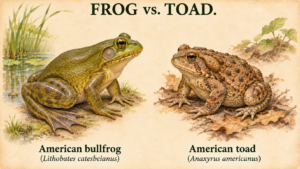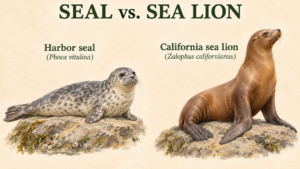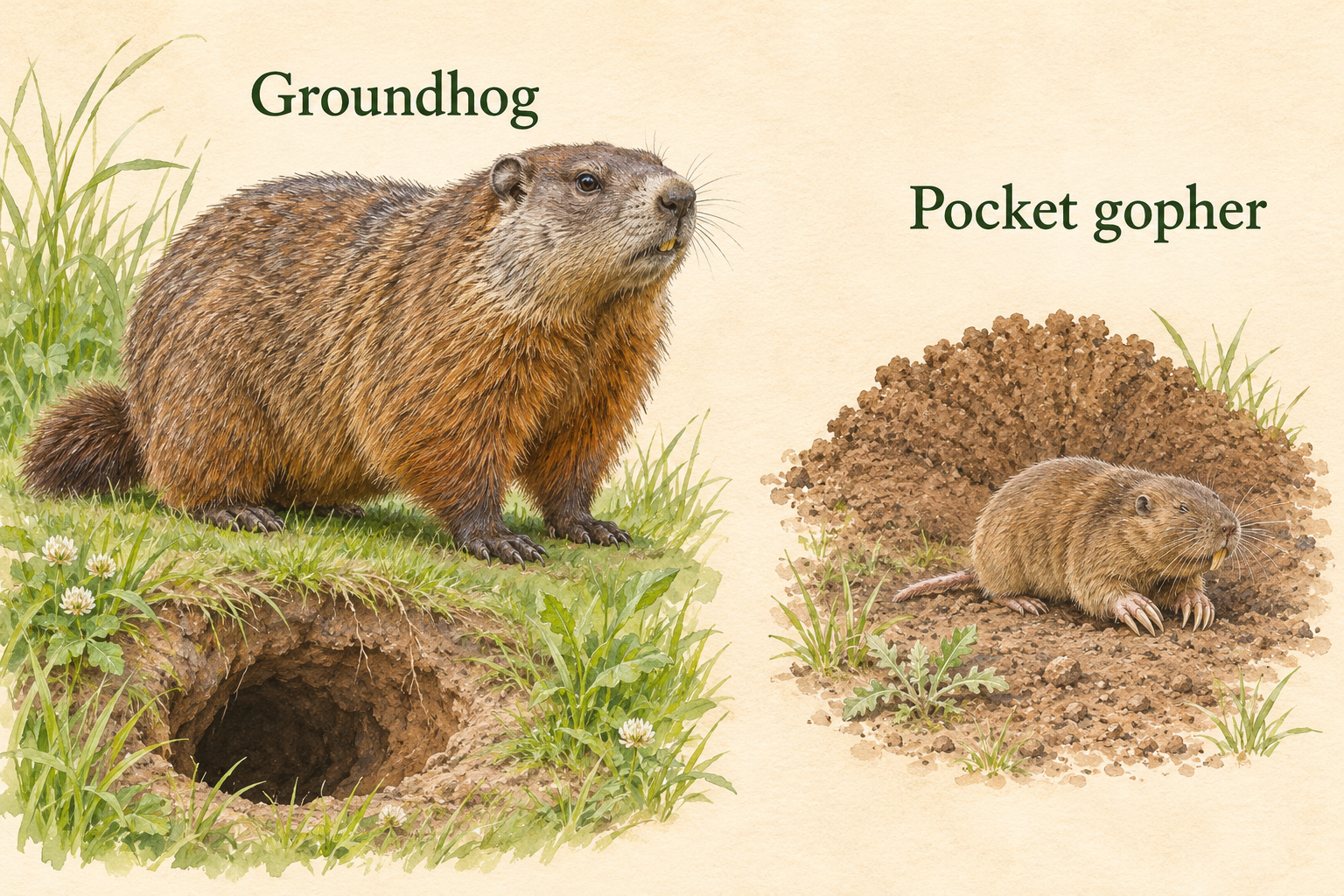
Groundhogs and pocket gophers both dig, but they are different rodents with different routines. A groundhog is a large marmot in the squirrel family. A pocket gopher is a smaller, specialized underground mammal named for the external cheek pouches it uses to carry food and other material.
The word gopher can cause confusion because people also use it for various ground squirrels. Here, gopher means a true pocket gopher in the family Geomyidae. Identifying the animal itself is the clearest evidence, but a view of its tail, head, or freshly moved soil can narrow the possibilities when the body is hidden.
| Clue | Groundhog | Pocket gopher |
|---|---|---|
| Family | Squirrel family, Sciuridae | Geomyidae |
| Build | Large, chunky marmot | Smaller, compact underground rodent |
| Tail | Short but visibly bushy | Short and sparsely haired |
| Head | Blunt muzzle and visible rounded ears | Tiny eyes and ears; strong incisors |
| Food transport | No external pocket-gopher pouches | External, fur-lined cheek pouches |
| Common surface sign | Open burrow entrance, sometimes with excavated soil | Fan or crescent mound with a plugged side opening |
Start with the Head and Tail
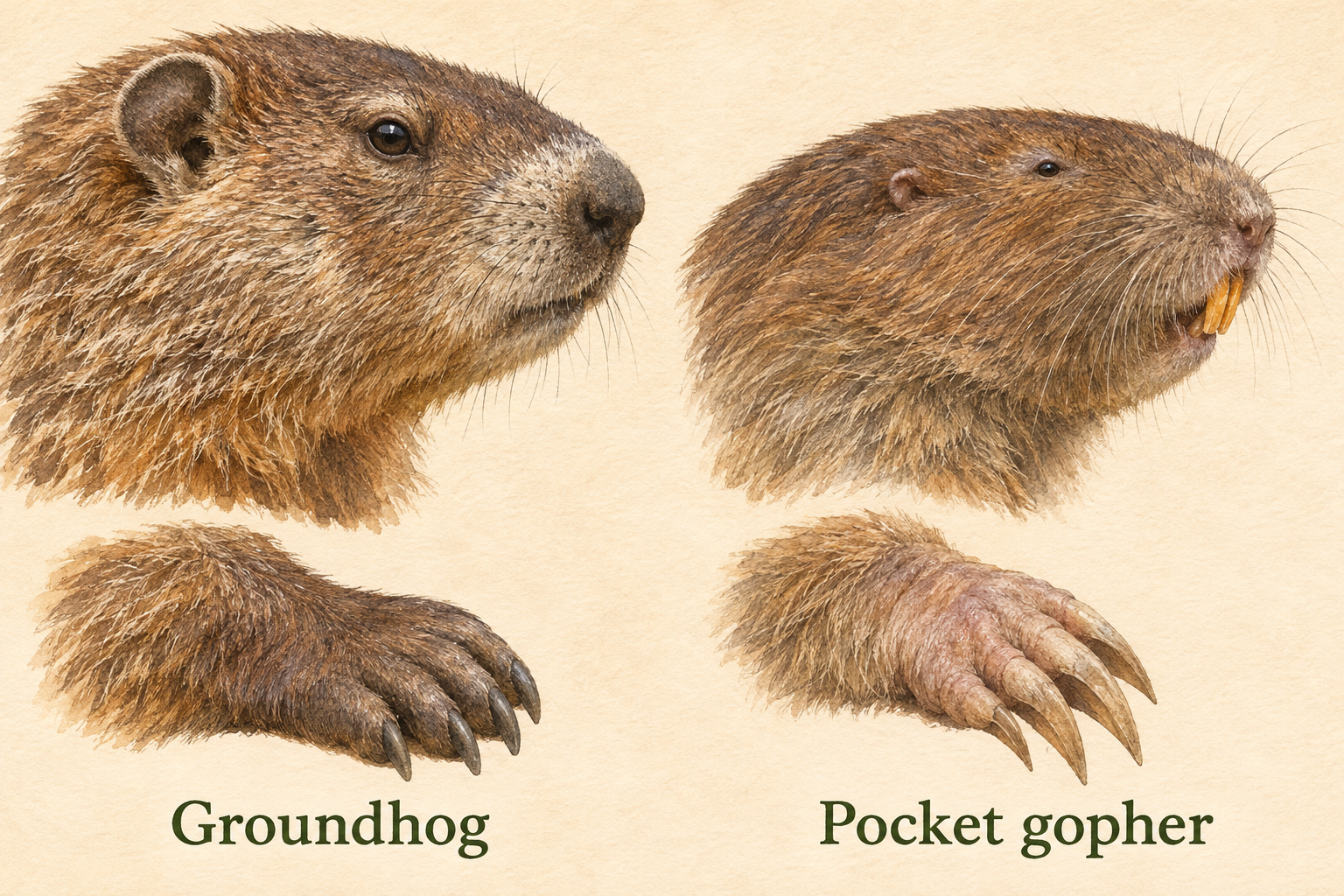
A groundhog has a broad body, short legs, a blunt face, and a furred tail. Its rounded ears are readily visible in a clear side view. Northern pocket gophers have much smaller eyes and external ears, long front claws, and a short tail with little hair. These proportions are more useful than color: both animals can appear brown.
The pocket gopher’s incisors and foreclaws are tools for working through soil. Its pouches open outside the mouth, along the cheeks, so it can transport plant material separately from the oral cavity. A puffy cheek on an ordinary squirrel is not by itself evidence of these external pockets. Their position and the rest of the animal’s anatomy matter.
One Grazer Is Easier to See
Groundhogs are often seen feeding in meadows and along woodland edges, then standing alert or retreating to a burrow. They eat seasonal vegetation including grasses, clover, leaves, and other plant foods. Their burrows provide shelter, but much of the feeding that an observer notices takes place above the surface.
Pocket gophers do much of their feeding underground, reaching roots, bulbs, tubers, and other plant parts from their tunnels. They may also collect vegetation near an opening. A gopher can be present beneath a meadow without offering the long, open view that a grazing groundhog does. Repeated fresh mounds may be the most obvious sign of its work.
Read the Entrance Along with the Mound
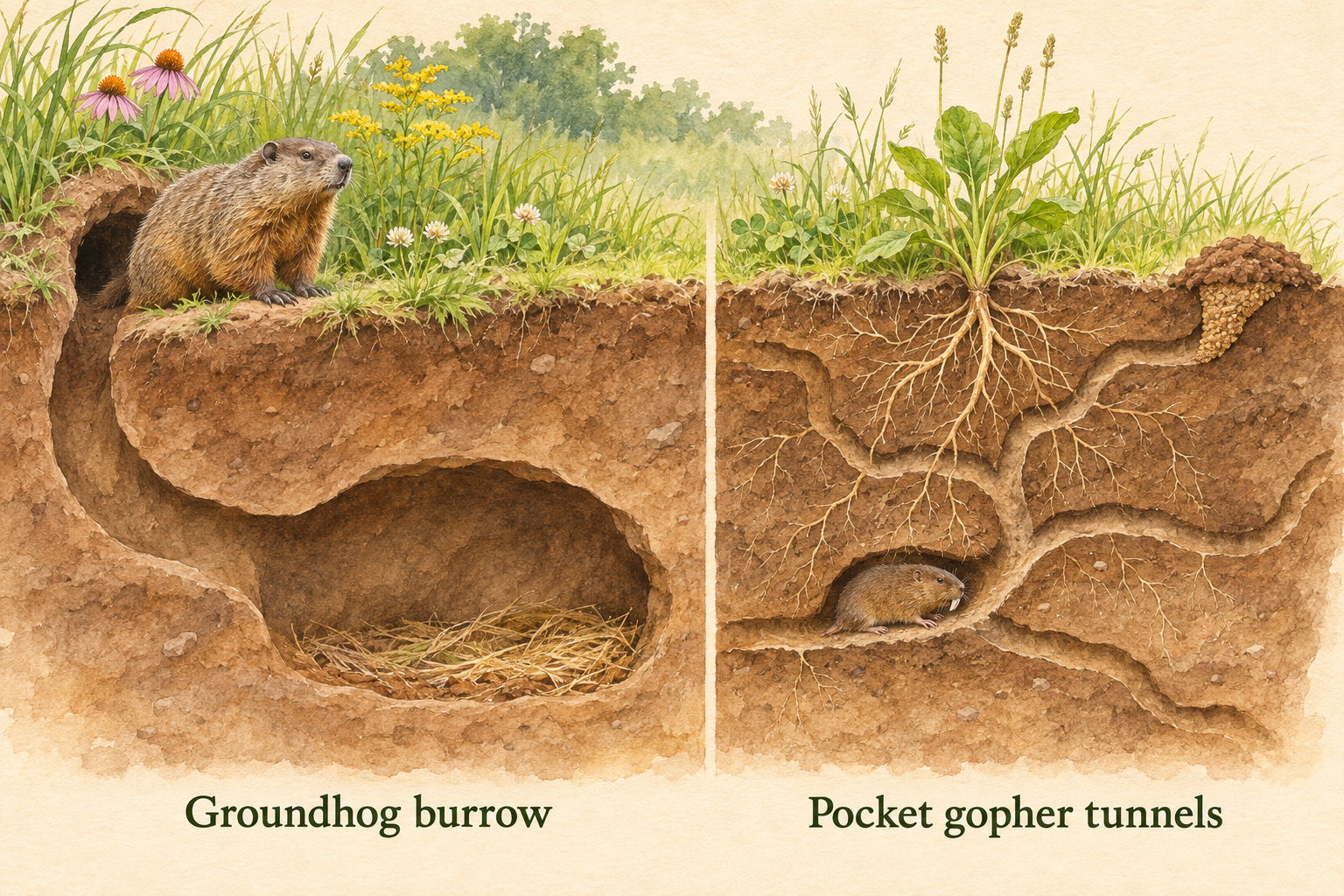
A pocket gopher commonly pushes loose soil through a side tunnel, leaving a fan-shaped or crescent-shaped mound. The opening is then plugged. This differs from an obvious open burrow mouth, although weather, vegetation, and later disturbance can blur the pattern. Several nearby mounds can belong to one branching tunnel system rather than several separate animals.
Groundhog systems can have multiple entrances and chambers. A visible entrance and an animal using it are stronger evidence than a mound alone. Moles, ground squirrels, and other digging mammals can create confusing signs too. For a careful identification, combine the shape of fresh soil with the kind of opening, the habitat, and any direct glimpse of the resident.
Their Winter Routines Differ
Groundhogs are well known for hibernation. They build fat reserves before the cold season, and activity varies across their broad range; southern animals may remain active in conditions that send northern animals underground. Hibernation involves substantial changes in metabolism and body temperature, rather than simply choosing a long night’s sleep.
Northern pocket gophers remain active beneath the surface in winter. In snowy places they can tunnel at the soil-snow boundary, leaving soil-filled casts that become visible after melting. Winter activity is therefore another distinction, but a single quiet burrow cannot reveal an animal’s identity. The strongest identification still begins with the body and is supported by its surroundings. Explore other burrowing mammals in our guide to animals that start with G.


James Miller grew up on the Oregon coast, exploring tide pools and watching seabirds. He has a particular fondness for owls and keeps a notebook of his bird sightings.
Read More »